
Reviewed · JEWISH QUARTER TOURS
Private Walking Tour in The Jewish District Budapest
Budapest’s Jewish District tells stories fast. In this private 2.5-hour walk, I love how you connect big history like Zionism origins and the Holocaust to real streets and real buildings. It’s led by a local guide who grew up in the area, and they turn facts into human stories you can actually picture.
Second, I like the mix of sacred and everyday stops. You’ll see major synagogues like Dohány Street Synagogue and Rumbach Street Synagogue, then shift to places that show how Jewish life continues today, including a kosher market stop.
One thing to plan for: synagogue admission isn’t included. Tickets for Dohány and other synagogues can run about €12–45 per person, so your final total will depend on how many interiors you choose to enter.
In This Review
- Key things you’ll notice on this Budapest Jewish Quarter walk
- Why this tour hits the right pace for the Jewish District
- Meeting point and route: from Dob Street to Shoes on the Danube
- Stop 1: Dohány Street Synagogue and why it feels different
- Stop 2: Rumbach Street Synagogue after 60 years of abandonment
- Stop 3: Szimpla Kert and the idea of ruin bar culture
- Stop 4: Wesselényi utca 21 and the feel of the quarter
- Stop 5: Kazinczy u. 55 and the mystery in the façade
- Stop 6: Kóser Piac (Kosher Market) and what Jewish life looks like now
- Stop 7: District VII Jewish Quarter walk and modern context
- Value and price: is €228.29 per person worth it?
- Who should book this tour
- What to ask your guide before you start
- Should you book it?
Key things you’ll notice on this Budapest Jewish Quarter walk
- A guided story path, not a checklist, with comic, tragic, and heart-warming moments
- Dohány Street Synagogue stop at Europe’s largest, and listed as the world’s second-largest
- Rumbach Street Synagogue’s Moorish look, reopened after decades of abandonment
- Ruin bar culture at Szimpla Kert, right in the middle of the neighborhood story
- Modern Jewish life cues, including a stop at a kosher market for Shabbat basics
- End at Shoes on the Danube Bank, a strong emotional landing point
Deeper into old District VII
- Budapest Jewish Heritage Memorial Walking Tour & Synagogue Entry★ 5.0 · 568 reviews
- Budapest: Jewish Heritage Guided Tour with Synagogue Ticket★ 4.8 · 533 reviews
- Jewish Quarter of Budapest Walking Tour★ 4.7 · 369 reviews
- German tour in the Budapest city centre & the Jewish quarter★ 5.0 · 359 reviews
Why this tour hits the right pace for the Jewish District
This is the kind of tour that works because it keeps moving, without making you feel rushed. With about 2 hours 30 minutes, you get enough time for multiple stops, explanations, and questions, even if you pause to look up at façades and side streets.
The biggest advantage for me is how it organizes history into layers you can see. Instead of treating the Jewish Quarter as a museum, it treats it as a living neighborhood. That means the Holocaust and Zionism context comes with street-level context—where people walked, worshiped, socialized, and still do.
You’ll also benefit from a true private setup: only your group. If you like asking questions, this format makes it easier to go where your curiosity leads instead of waiting your turn with a big group.
Meeting point and route: from Dob Street to Shoes on the Danube
You start at Budapest, Dob u. 1, 1072 Hungary. It’s a practical launch point because it’s near public transportation, so you can arrive without a stressful scramble.
The walk ends at Shoes on the Danube Bank in 1054 Hungary. That final stop matters because it reframes what you’ve been learning. Even if you come in knowing some history, the closing location gives the stories a physical emotional weight.
Along the way, you cover key parts of Budapest’s District VII Jewish Quarter area, including streets where the architecture and “small details” help the guide explain bigger ideas.
Stop 1: Dohány Street Synagogue and why it feels different
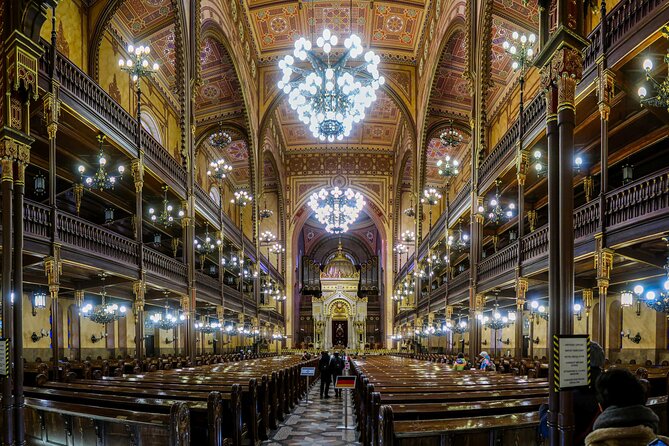
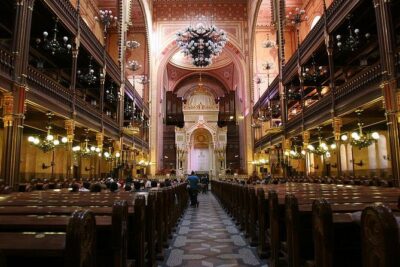
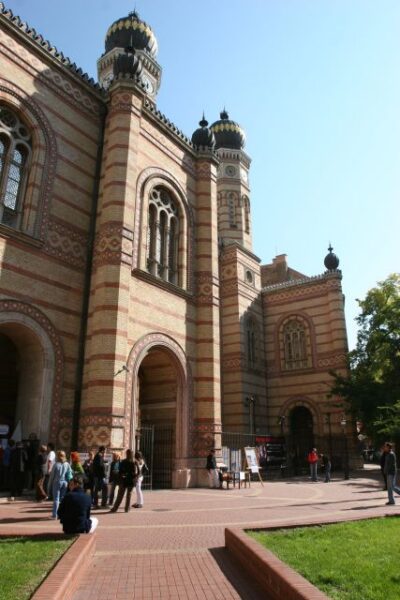
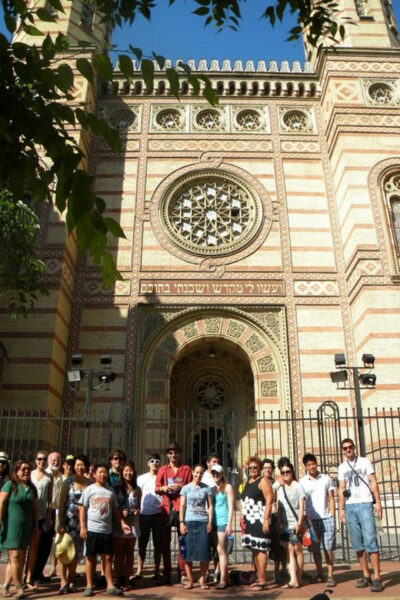
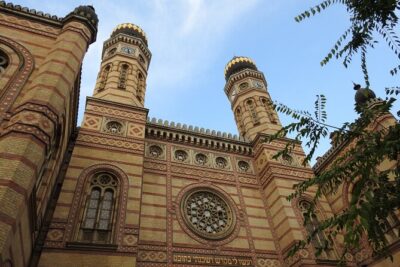
Your first major landmark is Dohány Street Synagogue. It’s described as the biggest synagogue in Europe and the second in the world, and the tour emphasizes that it doesn’t feel like a standard synagogue you might already know.
You’ll spend about 30 minutes here. That’s long enough to take in the scale and hear context without feeling like you just posed for photos and left.
Important: admission is not included. Expect to budget about €12–45 per person if you want to enter and go through the full visitor experience. If you’re watching costs closely, you can still learn plenty from the exterior and the guide’s explanations—but if you want the deeper interior look, plan for the ticket.
Stop 2: Rumbach Street Synagogue after 60 years of abandonment
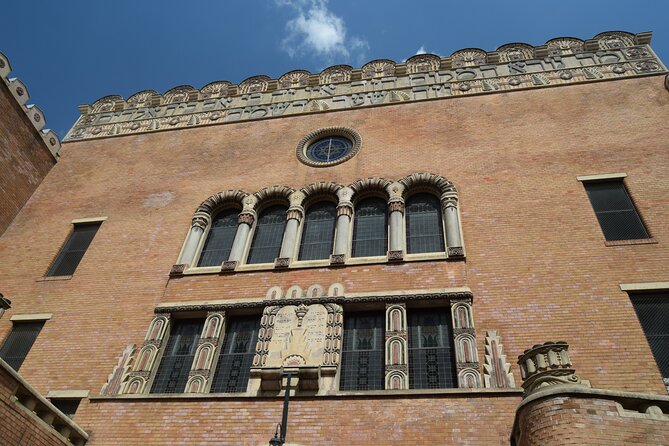
Next up is Rumbach Street Synagogue. This stop is built around a good story you can see with your eyes: it was recently renovated after roughly 60 years of being abandoned, and it’s known for Moorish-style architecture.
You get about 15 minutes here. That short time works because the guide can focus on the defining visual features and connect them to why the building matters to the neighborhood.
As with Dohány, admission for synagogues isn’t included. If you decide to go in, check the ticket situation ahead of time so you don’t lose momentum at the stop.
Budapest at street level, more routes on foot

Stop 3: Szimpla Kert and the idea of ruin bar culture
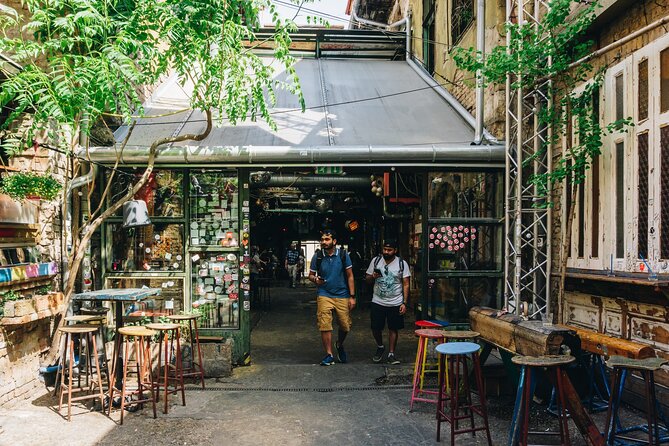
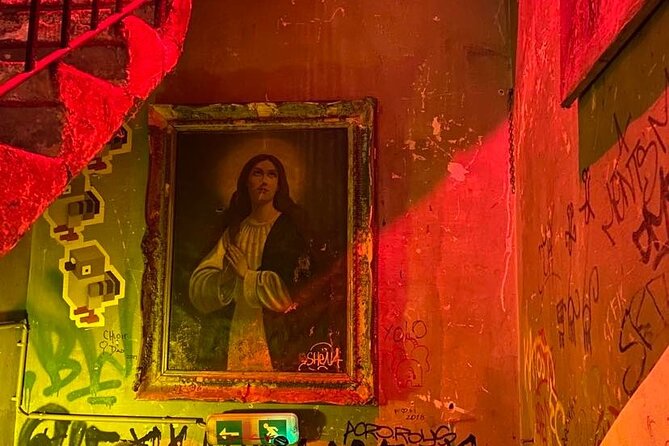
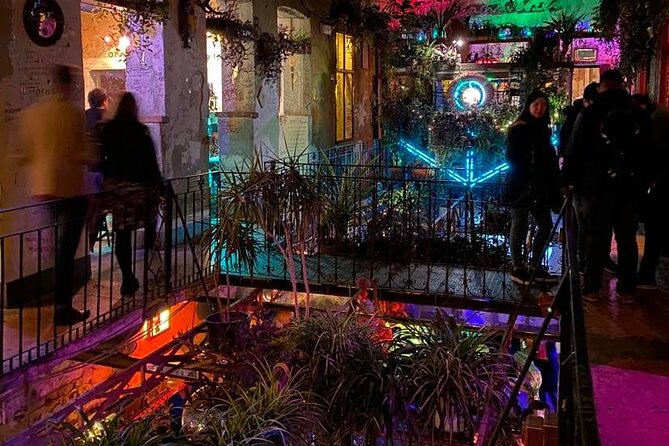
Then the tour takes a smart turn: you stop at Szimpla Kert, part of Budapest’s famous ruin pub culture. The idea here isn’t to “party.” It’s to show how spaces can change meaning over time while staying anchored to place.
You’ll spend about 15 minutes. That’s enough to absorb what makes the building memorable—especially if you like atmospheric architecture and street-level culture.
This stop is marked as admission free, which is great value. You’re not paying extra just to experience the setting and hear the guide’s perspective on what these spaces say about the city’s later layers.
Stop 4: Wesselényi utca 21 and the feel of the quarter
At Wesselényi utca 21, you get more of a “walk-and-look” moment. It’s about reading the neighborhood: facades, street geometry, and the sense of how the Quarter is stitched together.
The time is about 15 minutes, with admission free listed for this stop. So think of it as a guided way to get your bearings—less about ticketed entry, more about understanding how the Quarter evolved into what you see today.
If you’re the type who likes history you can sense from the street itself, this is a good balance point between formal landmarks (synagogues) and everyday community spaces.
Stop 5: Kazinczy u. 55 and the mystery in the façade
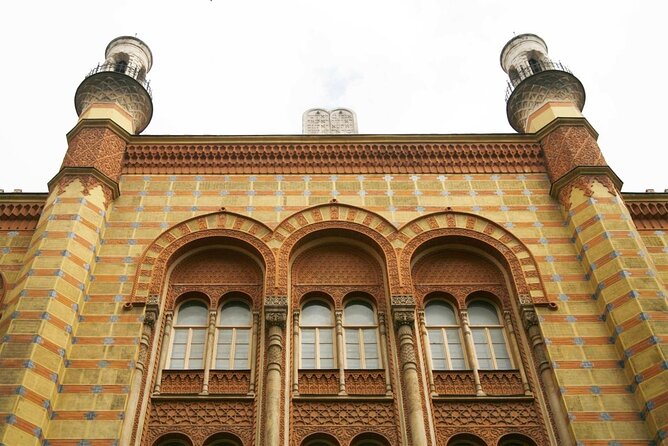
Next is Kazinczy u. 55. The tour description puts the focus on its façade and the sense that there’s more inside. It’s framed as a two-story building with a long history and a little mystery behind what you can see from outside.
You’ll spend about 15 minutes here, and the stop is admission free. That means you’re relying on the guide’s explanation—how the building connects to what happened in the neighborhood and why those visual cues matter.
If you like architectural storytelling, you’ll probably enjoy this part. It’s the kind of stop that turns “just a building” into a clue.
Stop 6: Kóser Piac (Kosher Market) and what Jewish life looks like now

One of the best ways to understand a neighborhood is to see how people buy what they need. Here you stop at Kóser Piac / Kosher Market, described as a small shop stocked with essentials for Shabbat and other Jewish holidays.
Time is about 15 minutes, and it’s admission free. Even if you don’t plan to shop, you’ll likely find it useful as a reality check. History is part of the story, but so is daily life.
This is also where your guide’s explanations about branches of Judaism and what it’s like to be Orthodox today become more tangible. The stop is brief, but it helps your understanding shift from theory to the practical rhythms of community.
Stop 7: District VII Jewish Quarter walk and modern context
The tour finishes with more time inside the overall feel of District VII / the Jewish Quarter. This is the “bring it together” moment, where the guide can connect earlier stops into a single narrative: origins, survival and loss, and how Jewish life continues in different forms.
This portion is listed as admission free. In practice, it’s a flexible wrap-up—your guide can keep pointing out details you may have missed earlier.
Value and price: is €228.29 per person worth it?
At $228.29 per person, this isn’t a budget walking tour. So the question is what you get for that price.
You’re paying for a private format, a guide, and a tight 2.5-hour structure that balances major landmarks with small street-level stops. You also get a guide who can cover serious material—Zionism origins and Holocaust context—while keeping the tone human. The best feedback we have about the guide type is that they’re local, they grew up in the area, and they encourage questions.
The big financial variable is that synagogue tickets aren’t included. Since tickets can run roughly €12–45 per person, your total cost could be higher depending on whether you enter interiors and how many places you choose to do so.
My practical take: this tour is best value when you want guided context and you’ll actually use it. If you’re the type who likes a real storyline and you’d otherwise be reading guidebooks for hours, then a private guide can feel like a smart shortcut to understanding.
Who should book this tour
I think it fits well if you:
- Want history explained through a living neighborhood, not just monuments
- Like walking tours with time for questions and thoughtful storytelling
- Care about understanding religious differences and what Jewish life looks like today
- Prefer a private experience rather than coordinating with a large group
It may feel less ideal if you:
- Only want exterior photos and don’t want to pay synagogue entrance fees
- Are hoping for a short, casual “see a couple sights” visit with minimal talking
What to ask your guide before you start
Since the tour is private, you can steer it. A few good questions to try:
- Which part of the Jewish Quarter’s story did you grow up understanding most personally?
- How do you see the Quarter changing since the buildings you’re showing?
- In your own words, how do today’s Orthodox practices shape daily life compared with other branches?
If you ask questions early, you’ll likely get more out of the stops like Kóser Piac and the synagogue conversations, because they respond to what you want to understand.
Should you book it?
If you want a guided, emotionally aware Jewish Quarter walk that connects Zionism and Holocaust history to present-day life, I’d say this is worth booking—especially because it’s consistently rated highly and many people highlight the guide’s local perspective and willingness to answer questions.
Just be ready for the one cost detail that changes everything: synagogue admission is extra. If you budget for those tickets and you like a serious story told in a way you can follow, this tour is a strong way to spend a morning or afternoon in Budapest’s District VII.
More Tour Reviews in Budapest






More of Budapest, Step by Step





Around the Old Jewish Quarter





Just Added: More Budapest Reviews
- Sightseeing flight over Budapest
★ 5.0 · 3 reviews - Budapest: Walking Tour with Chimney Cake & Polaroid Photos
★ 5.0 · 3 reviews - Self Guided Tour In Budapest With 100 Captivating Audio Stories
★ 5.0 · 3 reviews - Budapest Art Nouveau Walking Tour
★ 5.0 · 3 reviews - Hungary today: a no-taboo conversation
★ 5.0 · 3 reviews
Jewish Quarter Tours, compared.
 ★ 5.0Budapest Jewish Heritage Memorial Walking Tour & Synagogue EntryFrom $83568 reviews
 ★ 4.8Jewish Heritage Guided Tour with Synagogue TicketFrom $81533 reviews
 ★ 4.7Jewish Quarter of Budapest Walking TourFrom $2369 reviews
 ★ 5.0German tour in the Budapest city centre & the Jewish quarterFrom $23359 reviews
 ★ 5.0Past and Present of Budapest Jewish District TourFrom $3264 reviews
 ★ 5.0Budapest City Walk in Jewish QuarterFrom $356218 reviews
 ★ 4.5Budapest Dohany Synagogue & Hungarian Jewish Museum & free extrasFrom $44218 reviews
 ★ 4.8Jewish History Guided Walking Tour with HistorianFrom $63205 reviews
Browse the lists this tour appears in