
Reviewed · HISTORICAL TOURS
Budapest Historical Sightseeing – Free Walking Tour
History here walks right alongside you. This Budapest Historical Sightseeing walk strings together Communist-era stories and modern street life across Pest and the Danube, with a guide who keeps the pace brisk and the context clear. You get an instant orientation for where to go next, plus real human details behind the headlines.
What I like most is the big-picture sweep in just 2.5 hours, hitting major landmarks without feeling like a bus tour. I also love that the route mixes famous views with specific architecture and local quirks, so you’re not only seeing buildings—you’re learning why they matter.
One consideration: it’s still a lot of walking. If you can’t handle about 3 miles on cobblestones and along busy squares, you’ll probably feel it, especially in cold weather or if you’re stuck in the back of the group.
In This Review
- Key highlights to expect on this Budapest history walk
- Why this Pest-to-Danube walk makes sense for first-timers
- Price and value: what you’re really paying for
- Meeting point and route shape: how to make the start smooth
- The walking reality: timing, distance, and comfort tips
- Stop-by-stop: National Museum gardens to the Danube’s hardest memorial
- Kálvin tér and the National Museum gardens: turul, 1948, and district secrets
- Kalvin Square and the city’s Reform-era name
- Unger’s House: why one building can look like many eras
- Elizabeth Square and the Budapest Eye: monuments and modern hangouts
- Astoria and the French Empire look: hotels that acted like movie sets
- The Jewish Quarter: community life, ghetto history, then modern street energy
- St. Stephen’s Basilica (outside): quick naming lesson, bigger skyline presence
- Szabadság tér and the communist memorial: what the plaza is trying to say
- Stock Exchange Palace: one of Budapest’s big private landmarks
- Ronald Reagan statue: American figures in a Hungarian setting
- Hungarian Parliament Building: neo-gothic drama and Danube views
- Fisherman’s Bastion view from the Pest side: tiled roofs and far-off landmarks
- Széchenyi Chain Bridge: why it matters and why it was rebuilt
- Shoes on the Danube Bank: 60 pairs and Holocaust memory
- Guides, group size, and hearing the story without missing details
- Toilets, drinks, and the small logistics that matter on a cold day
- Should you book this tour?
- FAQ
- How long is the Budapest Historical Sightseeing walking tour?
- Where do I meet the guide?
- Where does the tour end?
- What’s the price?
- Is the tour fully free?
- Do I need tickets for the stops?
- Is there food or coffee included?
- Is the tour good for people with limited mobility?
- Are there any pet or service animal rules?
- What’s the cancellation window if plans change?
Key highlights to expect on this Budapest history walk
- Communist past to present culture: you’ll connect monuments, institutions, and daily life
- Pest-side landmarks plus Danube icons: ending near Széchenyi Lanchid with great photo angles
- Short outdoor stops: most points are explained from the sidewalk, so you keep moving
- Serious topics handled in street-level context: the Jewish Quarter and the Shoes on the Danube Bank hit hard
- Low entry cost, strong tip culture: the value comes from your guide’s time and effort
- Guide quality can make the day: names like Peter, Victoria, Elizabeth, Sabi, and George have been mentioned with very positive styles
Budapest at street level, more routes on foot
- Big Bus Budapest Hop-On Hop-Off Bus and Walking Tour★ 3.5 · 2,206 reviews
- Budapest: Buda Castle District Walking Tour★ 4.6 · 2,108 reviews
- 3-Hour Orientation Walking Tour of Buda and Pest★ 4.8 · 1,834 reviews
- Budapest Historical Sightseeing – Free Walking Tour★ 5.0 · 1,302 reviews
Why this Pest-to-Danube walk makes sense for first-timers
Budapest can feel like two cities stuck together. This tour gives you the bridge between them fast: Pest landmarks, Danube viewpoints, and the historical forces that shaped what you see today. Even if you’ve only got a day or two, you’ll walk away with a mental map and a better sense of what each area is for.
The best part is that it’s not only about pretty facades. The guide frames the stops around bigger themes—Communism, national identity, war memory, and how people rebuilt after it all—so your sightseeing starts clicking into place. That makes later museum visits and neighborhood wandering far easier.
Price and value: what you’re really paying for
The price is listed very low (around $3.63 per person), but this is still a guide-run experience where tipping matters. In practice, you’re buying two things: the route design and the guide’s live storytelling. If you invest in a tip you feel good about, the deal usually feels fair.
Here’s the value logic I’d use for you: you’re paying far less than a private tour, yet you still cover a dense slice of Budapest’s core. And because most stops are outside, you’re not waiting in lines or paying extra at every turn.
Meeting point and route shape: how to make the start smooth
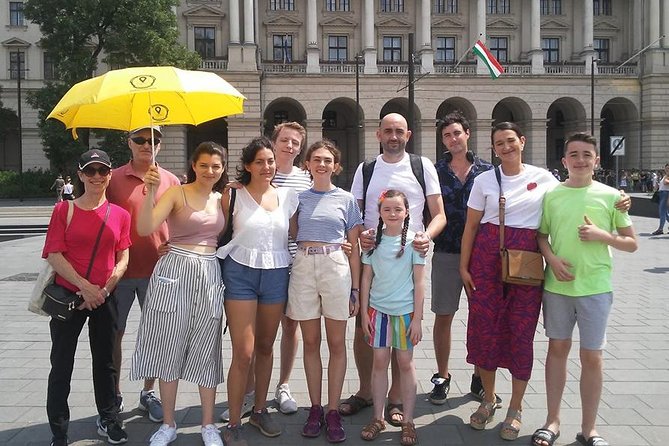
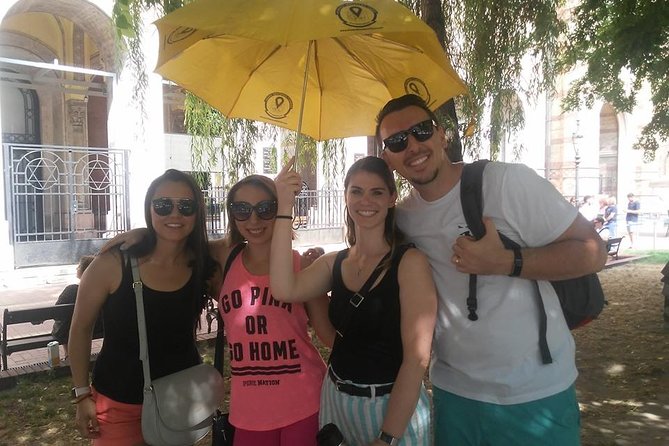
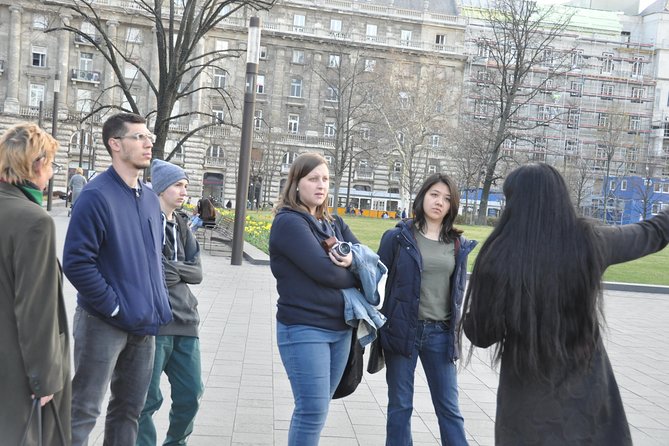
You meet at OTP Bank, Kálvin tér 12–13 (1085), and your guide is dressed in yellow. The end point is Id. Antall József rkp. 1, near Lánchíd. That matters because it shapes your plan: once you finish, you can walk back into the city center or keep exploring around the Danube right away.
The group is capped at 50 travelers, which keeps things moving, but it can still get loud in major squares. If you’re sensitive to hearing, try to stay closer to the front early, and if you genuinely can’t hear, flag it immediately so the guide can adjust.
The walking reality: timing, distance, and comfort tips

It lasts about 2 hours 30 minutes, with lots of short stops. You’ll stand, look, and listen more than you’ll sit. That means shoes matter. Budapest streets can be rough underfoot, and even perfect weather won’t fix sore feet.
Bring water and plan for changing temperatures. The tour guidance suggests sunscreen and umbrellas or warm layers depending on the forecast. One note from a cold-weather experience: it can be brutally chilly (even down to around -9°C, with colder snaps possible), so a warm jacket and gloves make a real difference.
More Budapest on foot

Stop-by-stop: National Museum gardens to the Danube’s hardest memorial
Below is the flow you’ll follow, with what each stop adds and what to watch for.
Kálvin tér and the National Museum gardens: turul, 1948, and district secrets
The walk starts with city context and then quickly gets specific at the gardens of the Hungarian National Museum. You’ll spot the statue of the mythical turul bird, then get explanations tied to the museum and its founder. The guide also brings up the 1948 uprising, which is one of those moments you’ll see referenced again and again when you learn Budapest’s modern story.
You’ll also hear about the “secrets” of the VIII district, once known for grand palaces. That’s a good cue for you as you keep walking: architecture here often reflects power, wealth, and political shifts, not just taste.
Kalvin Square and the city’s Reform-era name
At Kalvin Square, you’ll gather near 12 Kalvin ter, where the square is named for John Calvin, a French Protestant Reformer. It’s a short stop, but it helps you read Budapest as a layered city. Even the street names carry older European currents, not only Hungarian ones.
Practically, this square works well as a pause point because it has places to sit and shelter from the elements.
Unger’s House: why one building can look like many eras
Next comes Unger’s House, in the courtyard area of Miklós Ybl’s unusual creation. This one is a feast for your eye: Byzantine, Gothic, Moorish, Renaissance, and Romantic elements mixed into one structure.
What I love about stops like this is the mental shortcut they give you later. When you see a similar style mix on your own, you’ll remember that Budapest often “borrows” shapes from elsewhere—then turns them into something local.
Elizabeth Square and the Budapest Eye: monuments and modern hangouts
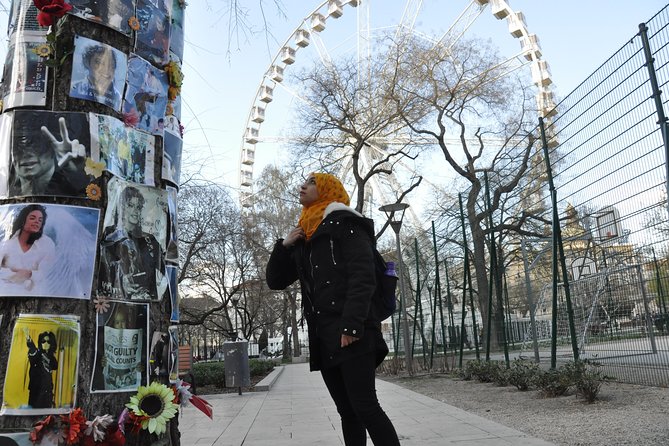
At Elizabeth Square, the guide ties together landmarks and today’s leisure. You’ll learn about the history of the square and see the Budapest Eye, then get pointers about where people go for nightlife and bars nearby.
This is also one of your orientation moments. After hearing the history, you’re better at choosing what to visit at night without wandering aimlessly.
Astoria and the French Empire look: hotels that acted like movie sets
At Danubius Hotel Astoria, you’ll pass the grand French Empire-style building, both inside and out. The story here is cosmopolitan: it pulled in international stars and even shows up in cinematic production stories, including the Josephine Baker film narrative directed by Brian Gibson.
Even if you don’t step inside, it’s useful to understand why certain hotels in Budapest became social hubs. That context makes other landmark buildings feel less random.
The Jewish Quarter: community life, ghetto history, then modern street energy
As the walk continues, you’ll move through the Jewish Quarter, where the guide explains the arc from a home of a major Jewish community, to the wartime ghetto period, and then the later years when the area became a creative mix with artists, students, and independent businesses.
This is one of the stops where you’ll feel the weight of history. You’ll also see how memory and daily life overlap here—people don’t just visit, they live and work. Plan to slow down mentally even if your feet want to speed up.
St. Stephen’s Basilica (outside): quick naming lesson, bigger skyline presence
You’ll stand outside St. Stephen’s Basilica (Szent Istvan Bazilika) and hear why it carries the name of Hungary’s first king. The stop is about 10 minutes and admission isn’t included, so this is a “look and learn from the street” moment more than a full building visit.
If you want to go in later, you’ll know what the name connects to—and you’ll recognize it more clearly once you’re inside.
Szabadság tér and the communist memorial: what the plaza is trying to say
At Szabadság tér (Liberty Square), you’ll spend about 15 minutes and see the communist memorial. This isn’t just a photo stop. The guide frames how monuments function in public space—what governments want people to remember, and how memory becomes part of ordinary walking routes.
Pay attention to the surrounding layout too. Plazas like this are designed for movement, ceremonies, and visibility.
Stock Exchange Palace: one of Budapest’s big private landmarks
You’ll then pass by the Stock Exchange Palace, where the guide notes it as the largest privately owned historic landmark in Budapest, about 50,000 m². Admission isn’t included, so again, you’re mostly absorbing scale and design while the guide gives context from outside.
Even short stops like this do something helpful: they teach you what “important” looks like here, so you can spot similar landmarks later.
Ronald Reagan statue: American figures in a Hungarian setting
At the Ronald Reagan statue, you’ll learn why the figure is shown walking away from Parliament looking happy. The guide also points out the Bush statue standing nearby.
It’s a strange-but-fun moment in an otherwise solemn tour. And it’s useful: it shows how Budapest (and this region) references world politics in its public art, even decades later.
Hungarian Parliament Building: neo-gothic drama and Danube views
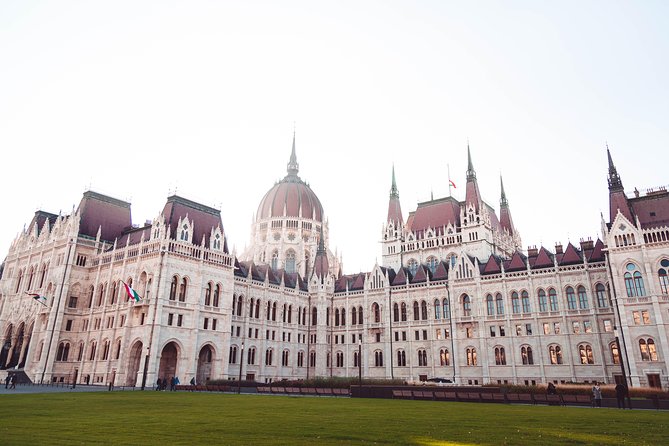
Outside the Hungarian Parliament Building, you’ll get the outside look—electric/neo-gothic style—and a classic view down toward the Danube. You’ll also hear about nearby important buildings on the square, including a chocolate museum, a former ministry of Justice, and an agricultural museum.
This is about more than architecture. When you understand the square’s institutions, you’ll feel less like you’re staring at random statues and more like you’re looking at the stage where modern Hungary talks to itself.
Fisherman’s Bastion view from the Pest side: tiled roofs and far-off landmarks
You’ll get sightlines toward Fisherman’s Bastion and learn about the surrounding area’s history. You’ll also see St Maytas church with its colorful tiled roof from the Pest side, plus the Hungarian National Palace from afar. The guide also points out St Margit’s Island and Gellert Hill from this side.
This stop is short, but it’s a high-value perspective lesson. It teaches you how Budapest’s geography makes certain views possible without you changing areas every ten minutes.
Széchenyi Chain Bridge: why it matters and why it was rebuilt
At Szechenyi Lanchid, you’ll see the chain bridge and hear the story of its history and reconstruction. This is a strong finish-line moment because it’s both practical and symbolic: bridges connect the halves of the city, and the reconstruction story adds a layer of resilience.
Shoes on the Danube Bank: 60 pairs and Holocaust memory
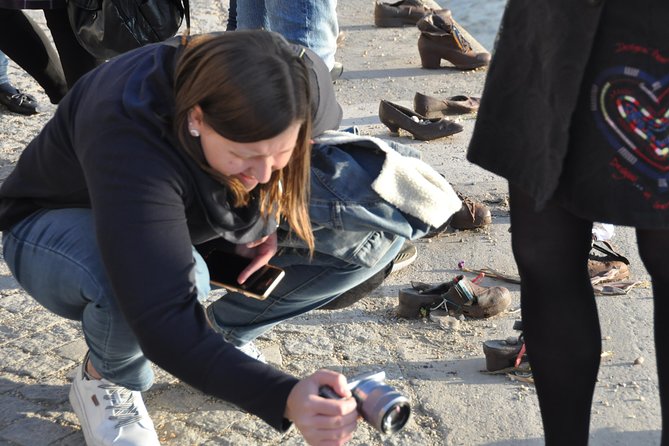
Finally, you’ll reach the Shoes on the Danube Bank memorial, a simple but haunting monument of 60 pairs of shoes dedicated to Holocaust victims who were lined up and shot along the banks. The guide keeps it direct, and I recommend you treat this as a pause. Don’t rush the photos. Stand and let the meaning land.
It’s not a “fun fact” stop. It’s one of those places where the tour earns its seriousness.
Guides, group size, and hearing the story without missing details
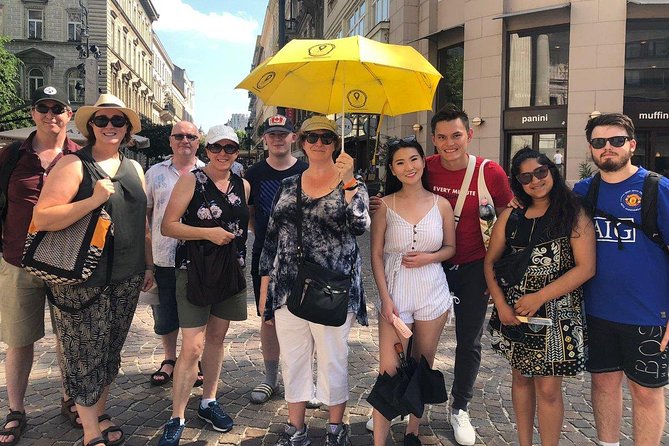
The guide is the main variable in any walking tour, and this one depends heavily on that. In past departures, people have praised guides like Peter and Victoria for clear explanations, humour mixed with seriousness, and being patient when questions come up.
At the same time, a large group can make it harder to hear in louder squares. If you’re in a big group or it’s busy, position matters: stay near the front and don’t be afraid to speak up if you can’t hear. The tour guidance expects that you’ll alert the guide if audio isn’t working.
Toilets, drinks, and the small logistics that matter on a cold day
No coffee or tea is served. You get a short break (about 5 minutes) to buy drinks and use the toilet, and you pay for anything you want to drink. Public toilet costs can run from 100 HUF to 500 HUF.
If you want a smoother experience, bring your own water. Also, use the break timing wisely: if you wait until the end, you’ll often miss your chance.
Should you book this tour?
I think this is a great option if you’re:
- visiting Budapest for the first time and want a quick map and context
- focused on political history and how it shows up in real places
- comfortable walking in a group for about 2.5 hours
I would hesitate if you:
- can’t handle walking around 3 miles
- need a lot of seating or step-free pacing
- want constant indoor time, since this is mostly outdoor standing and walking
One more practical note: the experience requires decent weather, and if it’s canceled for weather, you’ll be offered a different date or a full refund. You can cancel for a full refund if you do it at least 24 hours before the start.
If you’re on the fence, I’d book it earlier in your trip. This tour doesn’t just show you where to go—it helps you understand what you’re seeing so your next days feel easier.
FAQ
How long is the Budapest Historical Sightseeing walking tour?
It runs for about 2 hours 30 minutes.
Where do I meet the guide?
The start point is OTP Bank, Budapest, Kálvin tér 12–13, 1085 Hungary.
Where does the tour end?
The tour ends at Id. Antall József rkp. 1, 1052 Hungary, near Lánchíd (the Chain Bridge).
What’s the price?
The price is listed as $3.63 per person.
Is the tour fully free?
It’s described as a free walking tour style experience, but there is a small set price. Tips for the guides are expected.
Do I need tickets for the stops?
Admission tickets are not included for a few places, like St. Stephen’s Basilica, the Stock Exchange Palace, and the Hungarian Parliament Building. Many stops are explained from outside.
Is there food or coffee included?
No. There is no food or drink served. You get a short 5-minute break to buy drinks, and toilet access is available with a fee at public facilities.
Is the tour good for people with limited mobility?
Most travelers can participate, but it’s not recommended for anyone unable to walk about 3 miles.
Are there any pet or service animal rules?
Dogs are not permitted. Service animals are allowed.
What’s the cancellation window if plans change?
You can cancel up to 24 hours in advance for a full refund.
More Tours in Budapest





More Tour Reviews in Budapest






More of Budapest, Step by Step





Just Added: More Budapest Reviews
- Sightseeing flight over Budapest
★ 5.0 · 3 reviews - Budapest: Walking Tour with Chimney Cake & Polaroid Photos
★ 5.0 · 3 reviews - Self Guided Tour In Budapest With 100 Captivating Audio Stories
★ 5.0 · 3 reviews - Budapest Art Nouveau Walking Tour
★ 5.0 · 3 reviews - Hungary today: a no-taboo conversation
★ 5.0 · 3 reviews
Historical Tours, compared.
 ★ 4.7Historic Cruise with Welcome DrinkFrom $126,512 reviews
 ★ 4.5Buda Castle District Dark History, Legends and Vampire Night TourFrom $211,240 reviews
 ★ 4.9BloodThirsty Hungary: Walking tour & Dark Historical StoriesFrom $21633 reviews
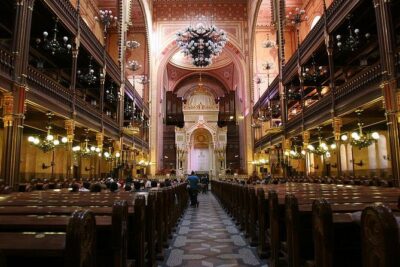 ★ 5.0Budapest Jewish Heritage Memorial Walking Tour & Synagogue EntryFrom $83568 reviews
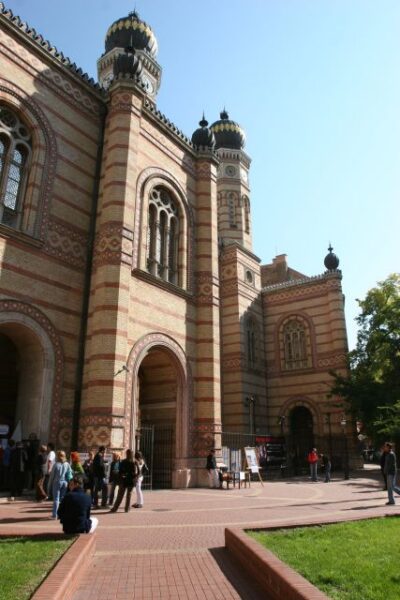 ★ 4.8Jewish Heritage Guided Tour with Synagogue TicketFrom $81533 reviews
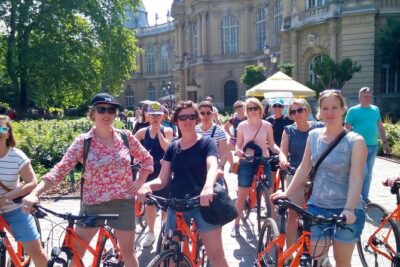 ★ 5.0Budapest Historic Downtown Bicycle Tour in small groupsFrom $41288 reviews
 ★ 5.0Historic Downtown ride on E-Bicycles Buda & PestFrom $65227 reviews
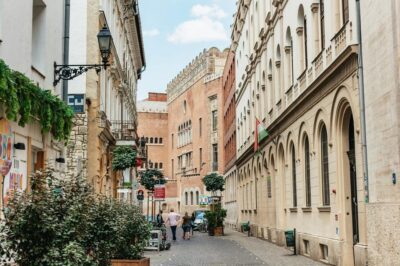 ★ 4.8Jewish History Guided Walking Tour with HistorianFrom $63205 reviews
Browse the lists this tour appears in