
Reviewed · BUDAPEST WALKING TOURS
Budapest Art Nouveau Walking Tour
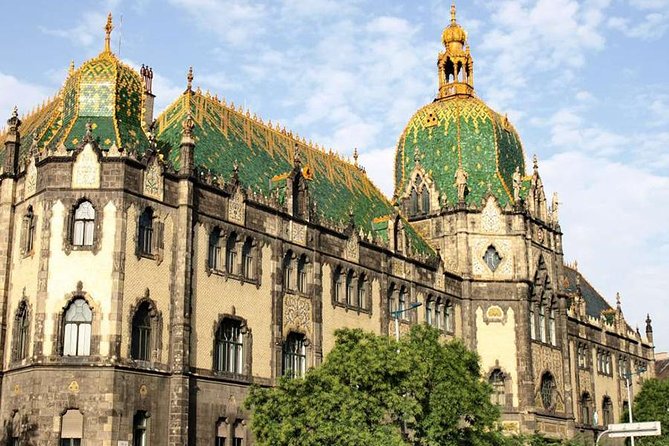
Budapest wears Art Nouveau like jewelry. This 3-hour walk is built around the city’s early-1900s design ambition, with a historian guide who helps you read the buildings instead of just posing in front of them. I especially like the chance to see Art Nouveau interiors in real entrance halls (not just street facades), and I like that the tour explains the Hungarian twist through porcelain and Asian motifs. One thing to consider: a couple of standout stops can be closed on certain days, so your route may adjust.
If you care about how style connects to culture, you’ll get a lot here—Hungarian Secession ideas, Ödön Lechner’s influence (often nicknamed Hungary’s Gaudi), and why Zsolnay ceramics matter beyond decoration. The one likely drawback for some people is that you’ll be walking, and tram/metro tickets aren’t included, so you’ll want to plan your start point and shoes accordingly.
In This Review
- Key highlights you’ll actually notice
- Hungarian Art Nouveau in Budapest: Why this tour feels different
- The 3-hour pace and what the guide brings to the walk
- Bedö House: where you start reading the style
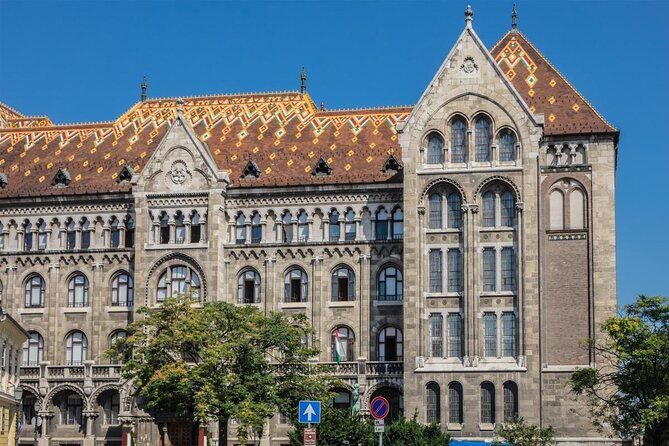
- Hungarian State Treasury: the sort of architecture you remember
- The Royal Post Palace by Ödön Lechner: Hungary’s Gaudi
- Gresham Palace: why the entrance hall matters
- Thonet House, Zsolnay porcelain, and the craft obsession
- Rózsavölgyi utca and Paris Passage: Art Nouveau in the everyday
- Kazinczy Street Synagogue: a dramatic ending with day-of-week caveats
- Price and value: where the $123 really goes
- Who should book this Art Nouveau walk
- Should you book this Budapest Art Nouveau walking tour?
- FAQ
- FAQ
- How long is the Budapest Art Nouveau walking tour?
- What’s the price per person?
- Is this tour guided by a historian and does it include an English guide?
- What are the main buildings you’ll see on the tour?
- Can you enter the buildings, or is it mostly outside viewing?
- Are there extra costs for some stops?
- Are the Hungarian National Bank and the Kazinczy Street Synagogue always open?
- Does the tour include tram or metro tickets?
- Where do you meet if you choose optional pickup?
Key highlights you’ll actually notice
- Hungary’s Gaudi, the Royal Post Palace: Lechner’s flamboyant design energy in a building you can enter at least partway.
- Gresham Palace interior details: You get more than exterior photos when you step into the entrance hall.
- Zsolnay porcelain tiles: You’ll see how ceramics became a signature material in Hungarian Art Nouveau.
- Asian motifs explained (with context): You learn how Eastern references and European Orientalism shaped the look.
- Stop choices adapt to closures: If certain sites are shut, the guide can swap in other Art Nouveau landmarks.
- A strong finish at Kazinczy Street Synagogue: An atmospheric way to end a design-focused walk.
Budapest at street level, more routes on foot
- Big Bus Budapest Hop-On Hop-Off Bus and Walking Tour★ 3.5 · 2,206 reviews
- Budapest: Buda Castle District Walking Tour★ 4.6 · 2,108 reviews
- 3-Hour Orientation Walking Tour of Buda and Pest★ 4.8 · 1,834 reviews
- Budapest Historical Sightseeing – Free Walking Tour★ 5.0 · 1,302 reviews
Hungarian Art Nouveau in Budapest: Why this tour feels different
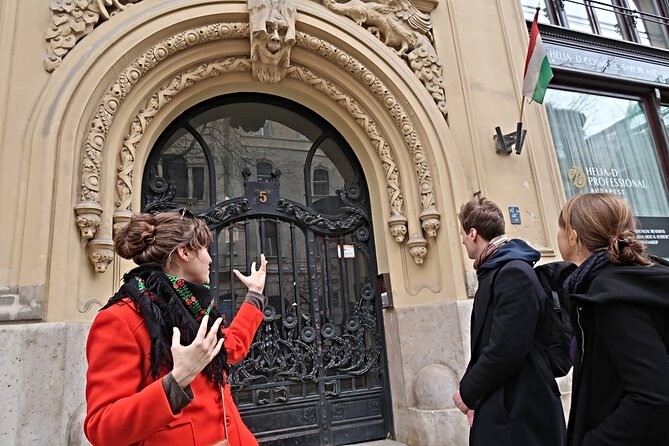
Budapest’s Art Nouveau isn’t the soft, floral kind you might expect from postcards. Here, the style shows up as attitude: sharp shapes, bold ornament, and materials chosen for drama. In Hungary, the movement took on its own voice, often discussed under Hungarian Secession, with Ödön Lechner as a key founding figure. This tour frames everything through that lens, so you’re not just learning names—you’re learning what those choices were trying to communicate.
I like that the guide doesn’t treat decoration as random. You’ll look closely at the porcelain used on facades and learn why Zsolnay ceramics became so central to the Hungarian approach. You’ll also get context for the Asian motifs, including the supposed eastern origins tied to Hungarian identity, plus the wider European fascination with the East that influenced Art Nouveau design. That combination is why these buildings can feel both local and cosmopolitan at the same time.
The 3-hour pace and what the guide brings to the walk
This is a 3-hour walking tour with a live guide in English, led by a historian guide. That matters because Art Nouveau rewards attention: the difference between a “pretty facade” and a “you get it” facade is usually in the small design logic. The tour focuses on explanations that connect materials, symbolism, and architectural style—especially around major works like the Royal Post Palace and Gresham Palace.
There’s also a practical advantage: the biggest moments aren’t locked behind long museum-style waiting. Two of the most important stops—the Palace of the Royal Post and Gresham Palace—allow visitors into the entrance hall. That means you can take in outside details and get a peek at interiors without turning the day into an all-day ticket-and-queue marathon.
If you’re relying on public transit, plan ahead. Tram and metro tickets aren’t included. Pickup is optional too: if you’d rather meet centrally, the tour arranges a meetup at Madal Café, Budapest, Alkotmány u. 4.
Bedö House: where you start reading the style
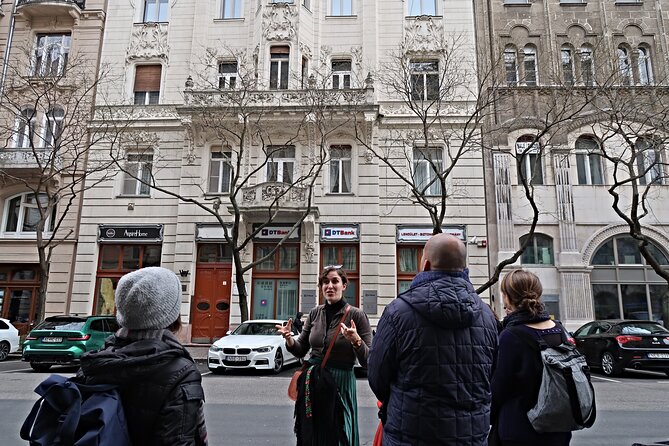
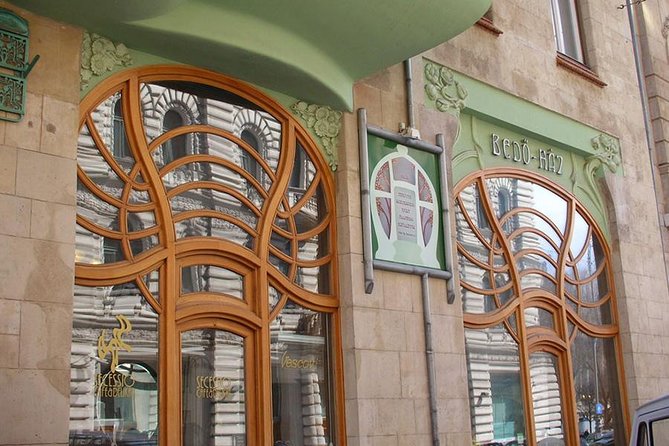
The walk begins with a guided tour stop at Bedö House. Even if you’re not a design person, this is a good early anchor because it sets the tone for what Hungarian Secession looks like when you’re standing close enough to see surfaces, not just silhouettes.
A smart way to experience Bedö House is to treat it like a lesson in “How did they build the look?” The guide helps you notice the elements that repeat through the city’s Art Nouveau world—ornament that feels structural, and design choices that look intentional rather than applied like wallpaper.
The drawback here is also simple: early in a walk, you may not have warmed up your feet yet. Wear comfortable shoes and keep water handy, because later stops ask you to keep looking upward and inward.
Hungarian State Treasury: the sort of architecture you remember
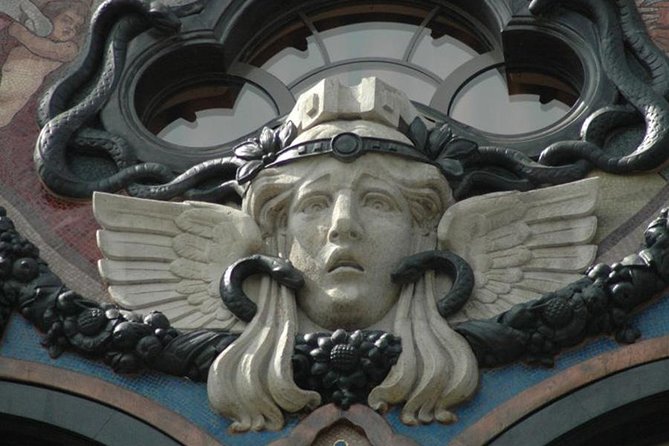
Next up is a stop at the Hungarian State Treasury. This kind of building helps you understand how Art Nouveau wasn’t only for cafés and shops. It also appeared in spaces tied to national wealth and public identity—important for understanding the “affluence and cosmopolitanism” vibe the tour highlights from the early 20th century.
What you’re really looking for is the relationship between ceremony and craft. These buildings use design to project stability and sophistication. Even when you’re just glimpsing an entrance or corridor space, you start to see how Hungarian Secession could feel both modern and authoritative.
If you’re visiting on a weekend, keep in mind that some financial-institution examples tied to the tour may not be accessible. The tour notes that on weekends you can’t enter the Hungarian National Bank, which has very fine examples of Zsolnay porcelain. When that happens, the guide can adapt.
More Budapest on foot
The Royal Post Palace by Ödön Lechner: Hungary’s Gaudi
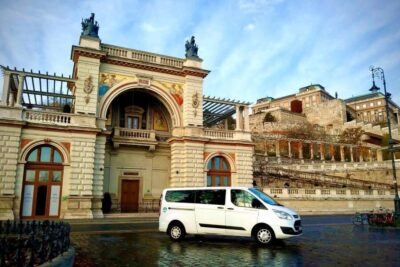
One of the tour’s headline experiences is the flamboyant Palace of the Royal Post, linked to Ödön Lechner. You’ll hear the nickname Hungary’s Gaudi for a reason: the design energy feels expressive and individual, with ornament that looks like it’s driving the architecture forward.
This is also where the tour’s structure pays off. You can admire exterior character, but you can also see details in the entrance hall. That interior peek gives you a better sense of scale and texture—how ornament plays with light and how materials shift from street-level drama to closer-up craft.
Tip for getting the most out of the Royal Post Palace: slow down at transition points. Exterior-to-interior is where design often changes register. Let the guide’s explanation steer your eye toward specific elements so you’re not just doing a quick walk-by photo.
Gresham Palace: why the entrance hall matters
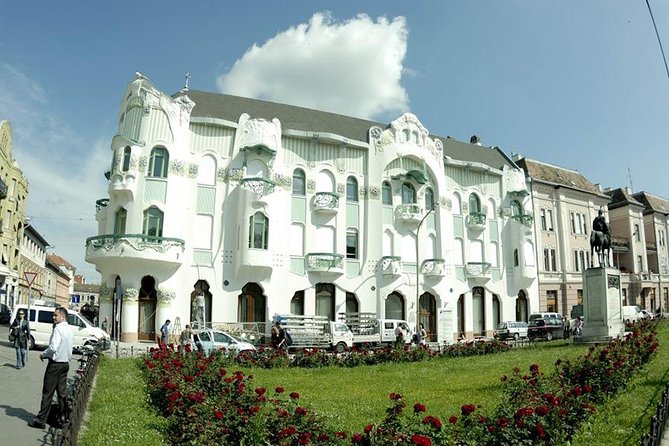
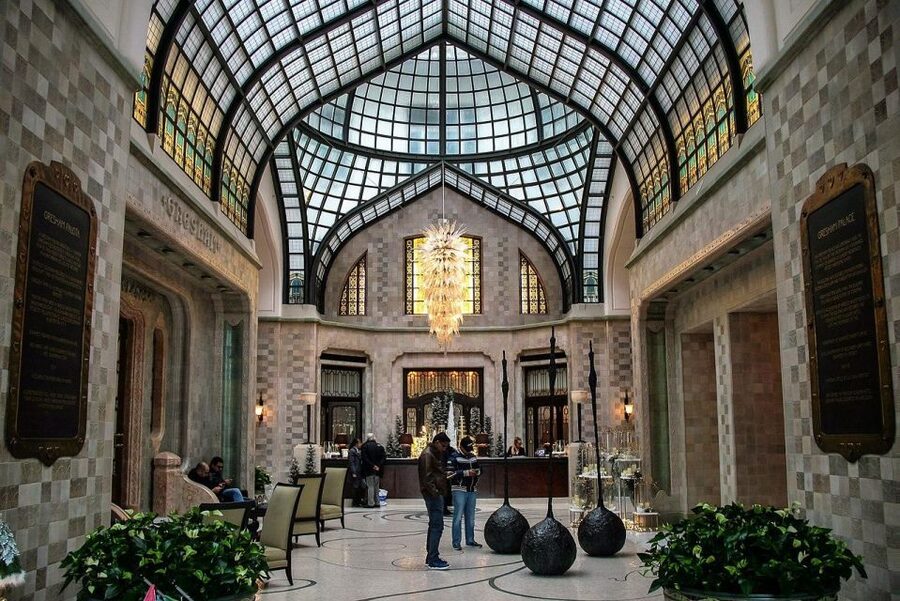
The tour includes a guided visit at Gresham Palace, one of the city’s best-known Art Nouveau landmarks. The main advantage is that the entrance hall is accessible, so you can appreciate the design beyond the facade.
Outside, you can study the boldness and theatrical quality of the building. Inside the entrance hall, you’ll understand the “grammar” of Art Nouveau more clearly: the way ornament and architecture combine, and how visual rhythm guides your gaze. You’ll also hear how the building reflected Budapest’s cosmopolitan early-1900s personality—important context for why people at the time wanted this kind of look in a major commercial address.
If you’re comparing tours, this one earns its place because you get that rare two-for-one experience: outside details plus an interior look where your feet can actually pause.
Thonet House, Zsolnay porcelain, and the craft obsession
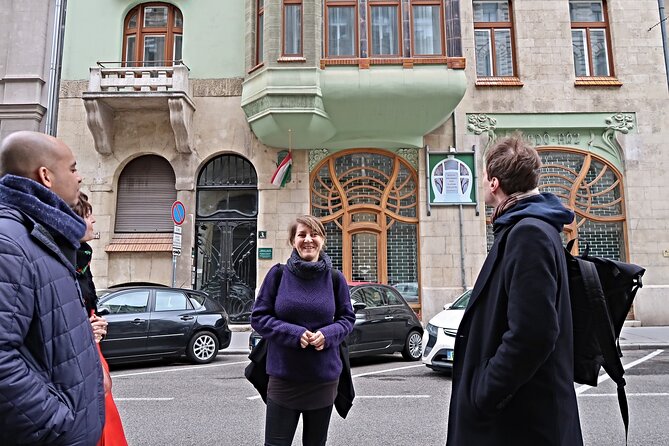
Another signature stop theme is Thonet House and the use of Zsolnay porcelain tiles on facades. This is one of the most distinctive “Hungarian Art Nouveau” tells. Instead of treating ceramics as an accent, the design uses it as a structural part of the aesthetic identity.
You’ll also spend time on the way designers used Asian motifs and elements. The tour explains this through two overlapping ideas: a reference to the supposed eastern origins of the Hungarian nation, and also the European-wide Orientalism that influenced Art Nouveau across the continent. In other words, you’re not just learning what symbols look like—you’re learning how fashion, identity, and interpretation shaped the era’s designs.
A practical note: porcelain details can be easier to spot from certain angles. Move with purpose instead of standing still. If the guide points at a section, follow the cue with your feet, not just your eyes.
Rózsavölgyi utca and Paris Passage: Art Nouveau in the everyday
The itinerary includes guided stops at Rózsavölgyi utca and Paris passage, and these are the kinds of places that make a design tour feel more like real city life. These are not “stand there and read a plaque” moments. They’re the side streets and passageways where Budapest hides its design ambition.
You’ll likely notice a mix of commercial spaces reflected through Art Nouveau sensibilities—where interior decoration and storefront identity were taken seriously. This is also where the tour’s storytelling helps: the guide ties architecture to how people moved through the city, how businesses wanted to look modern, and how Art Nouveau spread beyond a single building type.
One small consideration: these areas can mean more walking turns and short photo pauses. If you’re traveling with kids or you dislike crowded indoor moments, you’ll appreciate the guide’s timing and group management, especially since the tour also includes some entry-based peeks.
Kazinczy Street Synagogue: a dramatic ending with day-of-week caveats
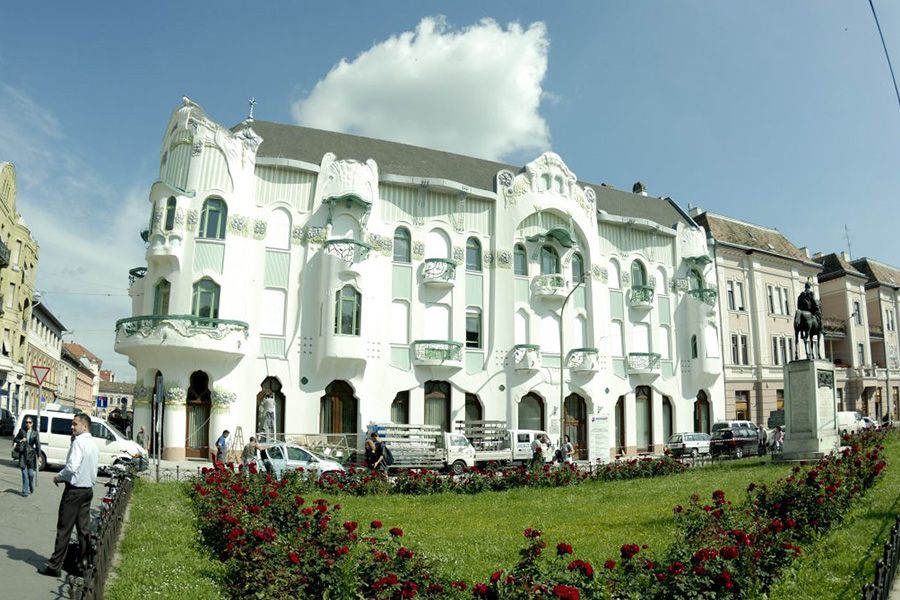
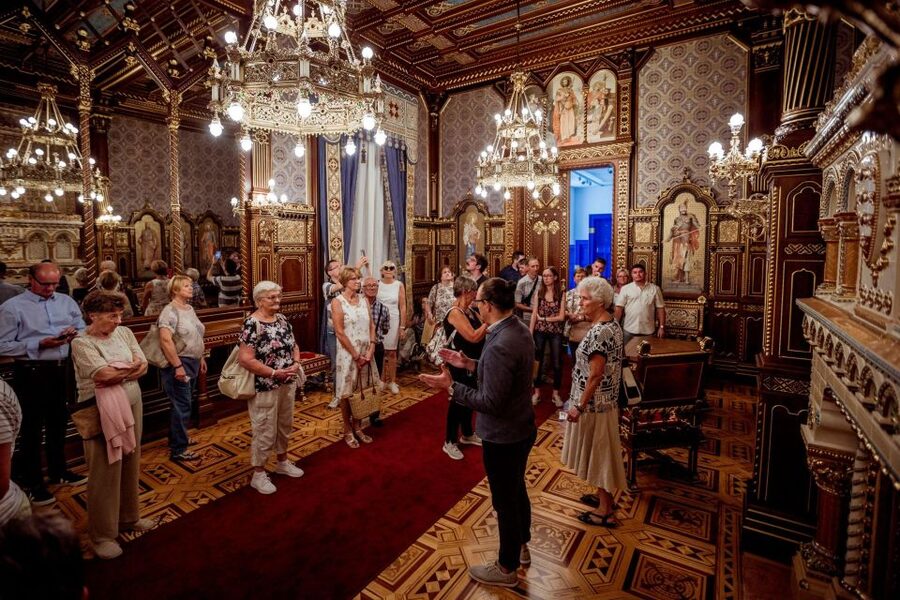
The walk finishes at the Kazinczy Street Synagogue, a fascinating Art Nouveau Orthodox synagogue with a strong interior presence. If you’ve been focusing on facades for most of the tour, this ending is a good reset: it brings you back to interior design, symbolism, and atmosphere.
The tour also warns you about closures. The Orthodox Synagogue on Kazinczy street is closed on Saturdays. If your schedule lands on a Saturday, the route can be adapted, and the guide may extend to other Art Nouveau jewels like the Gellért Bath Hotel, the Museum of Applied Arts, and the Geology Museum.
There can also be an additional cost to enter. The information provided notes 2000 HUF per person for the synagogue interior, about $7.00. The tour mentions another small-entry possibility too: the House of Hungarian Art Nouveau at 1000 HUF per person, about $3.50.
Price and value: where the $123 really goes
At $123 per person for about 3 hours, this tour isn’t the cheapest thing you can book in Budapest. But it also isn’t just a “see buildings” photo walk. You’re paying for an historian guide who helps you interpret the style, plus a route designed around meaningful access—especially the entrance-hall ability at key sites like the Palace of the Royal Post and Gresham Palace.
Think of the value like this:
- You get expert context on Hungarian Secession, Ödön Lechner, Zsolnay porcelain, and the Asian motif references.
- You get more interior access than you’d expect from a walking-only format.
- You’re guided through multiple building types (banks, treasury spaces, passageways, and a major synagogue interior when open).
Budget for the fact that there may be extra site fees depending on what’s open on your day. Two specific add-ons are mentioned: 1000 HUF for the House of Hungarian Art Nouveau and 2000 HUF for the Kazinczy Street Synagogue. Those are small amounts compared with the overall tour price, but they can still affect your plans if you’re sticking to a tight budget.
Who should book this Art Nouveau walk
This tour is a great fit if you:
- want to understand why Budapest looks the way it does in the early 1900s, not just see it
- enjoy architecture and design, especially Hungarian Secession and Lechner-related works
- like tours where you can actually enter parts of famous buildings (entrance halls are a big plus)
It might be less ideal if you prefer minimal walking, or if you only want “fully inside museums” experiences. This is a walking experience built around architecture and access points, so your comfort level with moving between stops will matter.
Also, check your calendar. If you’re visiting on a weekend, some interiors may be harder to access, like those tied to the Hungarian National Bank, and the synagogue is closed on Saturdays. The guide can adjust the route, but it’s worth aligning your expectations with your day-of-week.
Should you book this Budapest Art Nouveau walking tour?
I’d book it if you want a guided, historian-led way to see Budapest’s Art Nouveau at a higher level than surface sightseeing. The combination of Lechner’s Royal Post Palace, Gresham Palace interior hall access, and the focus on Hungarian Secession materials like Zsolnay porcelain makes the route feel purposeful instead of random.
Skip it only if you’re looking for a totally unguided self-walk, or if you strongly dislike the idea of small extra entry fees and day-of-week closures. Otherwise, this is one of those tours that helps you leave town looking at buildings differently—less like background scenery, more like a design story you can read.
FAQ
FAQ
How long is the Budapest Art Nouveau walking tour?
It lasts 3 hours.
What’s the price per person?
The price is listed as $123 per person.
Is this tour guided by a historian and does it include an English guide?
Yes. The tour includes a historian guide, and the live guide speaks English.
What are the main buildings you’ll see on the tour?
Two of the most important stops are the Palace of the Royal Post and Gresham Palace.
Can you enter the buildings, or is it mostly outside viewing?
Both the Palace of the Royal Post and Gresham Palace allow visitors into the entrance hall, so you can see details from inside as well as on the exterior.
Are there extra costs for some stops?
Yes. The House of Hungarian Art Nouveau is 1000 HUF per person (approximately $3.50), and the Orthodox Synagogue on Kazinczy street is 2000 HUF per person (approximately $7.00).
Are the Hungarian National Bank and the Kazinczy Street Synagogue always open?
No. On weekends, you cannot enter the Hungarian National Bank, and the Orthodox Synagogue on Kazinczy street is closed on Saturdays.
Does the tour include tram or metro tickets?
No. Tram and metro tickets are not included.
Where do you meet if you choose optional pickup?
If you choose to meet centrally instead of personal pickup, the meetup point is Madal Café, Budapest, Alkotmány u. 4.
More Tours in Budapest





More Tour Reviews in Budapest






More of Budapest, Step by Step




Just Added: More Budapest Reviews
- Sightseeing flight over Budapest
★ 5.0 · 3 reviews - Budapest: Walking Tour with Chimney Cake & Polaroid Photos
★ 5.0 · 3 reviews - Self Guided Tour In Budapest With 100 Captivating Audio Stories
★ 5.0 · 3 reviews - Budapest Art Nouveau Walking Tour
★ 5.0 · 3 reviews - Hungary today: a no-taboo conversation
★ 5.0 · 3 reviews
Budapest Walking Tours, compared.
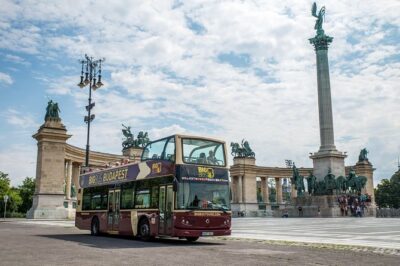 ★ 3.5Big Bus Budapest Hop-On Hop-Off Bus and Walking TourFrom $422,206 reviews
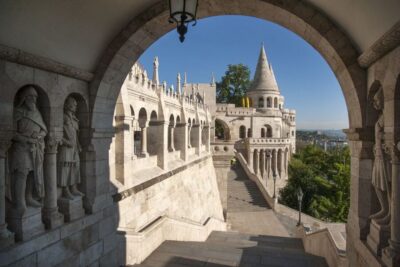 ★ 4.6Buda Castle District Walking TourFrom $142,108 reviews
 ★ 4.83-Hour Orientation Walking Tour of Buda and PestFrom $411,834 reviews
 ★ 5.0Budapest Historical Sightseeing – Free Walking TourFrom $31,302 reviews
 ★ 5.0Budapest All in One Small Group Walking Tour with Strudel StopFrom $1001,277 reviews
 ★ 4.8Budapest Food Walking Tour: Eat, Sip & Explore Like a LocalFrom $731,027 reviews
 ★ 4.9Buda Castle District Walking Tour with a HistorianFrom $63867 reviews
 ★ 4.9BloodThirsty Hungary: Walking tour & Dark Historical StoriesFrom $21633 reviews
Browse the lists this tour appears in