
Reviewed · BUDAPEST WALKING TOURS
Budapest City Landmarks Walking Tour in 2 Hours
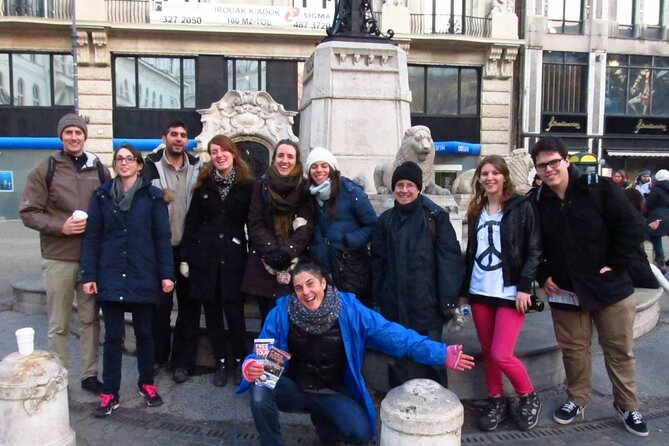
Two hours, and Budapest clicks. This is an English walking tour that strings together the city’s biggest icons, plus the stories behind them, from architecture and public art to food culture and a few Hungarian phrases along the way, starting near the Budapest Eye and finishing by the Parliament.
I love the value: the price is low, and the stops themselves are ticket-free. I also like how the guide turns landmarks into practical context, including what to eat and how to spot tourist traps, not just what to look at.
One thing to consider: this is a fast-moving overview, so you’ll spend only minutes at each highlight, and the tour explicitly does not enter places like St. Stephen’s Basilica (outside photos, not inside touring).
In This Review
- Key things I’d watch for
- A two-hour Budapest walk that doubles as your bearings plan
- Price and tipping reality for a low-cost tour
- Start at Erzsébet Square: Budapest Eye meeting point and the quick orientation style
- St. Stephen’s Basilica exterior and St. Stephen’s Square: church scale and food culture cues
- Jozsef Nador Ter: Habsburg stories plus Herendi and Zsolnay porcelain
- Vorosmarty Square and Váci út: people-watching, café history, and the underground surprise
- Danube embankment at Korzo: tram views, UNESCO sights, and the Castle Hill picture set
- Little Princess Statue wish and Vigadó Square’s royal music era
- Chain Bridge history at Széchenyi Lánchíd and Art Nouveau at Gresham Palace
- Hungarian Academy of Sciences and the Nobel-per-capita angle
- Shoes on the Danube Bank: the memorial stop that changes the tone
- Final stop: Hungarian Parliament Building and end-of-tour planning
- How to turn this walk into the rest of your day
- Should you book this 2-hour Budapest City Landmarks walk?
- FAQ
- How long is the Budapest City Landmarks Walking Tour?
- What does the tour cost?
- Is the tour offered in English?
- Where do I meet the guide?
- Where does the tour end?
- Does the tour include entry tickets?
- How big is the group?
- Do I need to tip?
- What’s the most serious stop on the walk?
- What if the weather is bad?
Key things I’d watch for

- Budget-friendly orientation with a price that’s hard to beat for a city-wide first pass
- All stops are ticket-free and most are quick exterior looks, built for seeing more with less time
- Hungarian language + food tips, so the walk helps you eat and explore better later
- Big emotional stop at the Shoes on the Danube Bank memorial
- Ending at Parliament gives you a strong anchor for planning the rest of your day
Budapest at street level, more routes on foot
- Big Bus Budapest Hop-On Hop-Off Bus and Walking Tour★ 3.5 · 2,206 reviews
- Budapest: Buda Castle District Walking Tour★ 4.6 · 2,108 reviews
- 3-Hour Orientation Walking Tour of Buda and Pest★ 4.8 · 1,834 reviews
- Budapest Historical Sightseeing – Free Walking Tour★ 5.0 · 1,302 reviews
A two-hour Budapest walk that doubles as your bearings plan
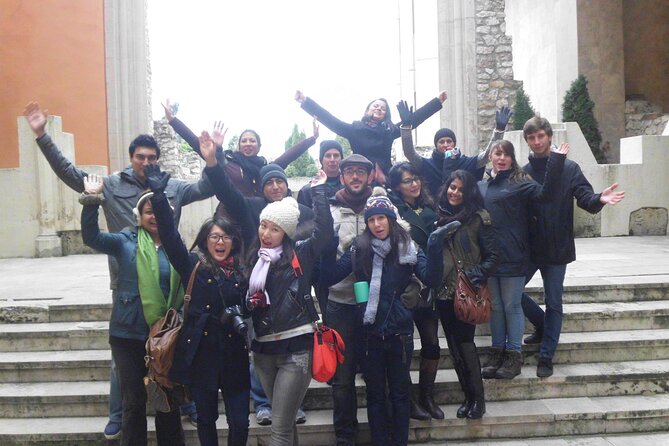
If you’re arriving in Budapest and feeling that mix of excited and slightly lost, this tour is designed for the moment right after you step off the bus or train. In about 2 hours, you’ll cover a long stretch of central sights without having to figure out routes, neighborhoods, or what’s worth your limited vacation time.
The route also does something smart: it doesn’t just point at pretty buildings. You get the city through small “why it matters” stories—how different periods shaped Budapest’s look, how public art fits into daily life, and how Hungarians think about food, politics, and identity. The group stays small (up to 30 people), which helps the pace stay human.
It’s offered in English, and it uses a mobile ticket, so you’re not juggling paper confirmations. This is a good fit if you want a first-day overview and then a free afternoon to roam where the stories sparked your curiosity.
Price and tipping reality for a low-cost tour
The listed price is $3.63 per person, which is genuinely affordable for a guided walking tour across central Budapest. All the stops are marked as admission ticket free, and the itinerary is built around exterior viewing and brief learning stops rather than paid entry tickets.
One practical note: the booking fee goes toward administration and does not go to the guide’s earnings, and the tour is clear that guides rely on your donation at the end (tips aren’t included). So if you’re comparing it to a ticketed attraction, compare it like this: you’re paying mostly for guidance and time, then topping off what your guide’s effort is worth.
If you’re the type who loves conversation, this structure usually feels fair—because you can decide the donation based on how helpful the guide was. And given the consistently high rating (about 4.9 across 2,000+ bookings), many people seem to be getting their money’s worth in the guide’s storytelling and recommendations.
Start at Erzsébet Square: Budapest Eye meeting point and the quick orientation style
Your tour starts at Erzsébet tér (Elisabeth Square), near the Budapest Eye. You’re instructed to meet a licensed local guide holding a small blue flag about 20 meters from the Ferris wheel—an easy visual target once you’re on the right square.
This first stop sets the tone. The guide gives you a broad overview of the city and how to read it: history and architecture, yes, but also public art, society, food, and even basic Hungarian language. The guide also shows you on a map where you’ll go next and what iconic landmarks (plus some off-the-beaten-track backstreets) are scheduled.
What I like about starting this way is that it helps the rest of the walk “click.” When you later see major landmarks like the Parliament or the riverfront memorial, it’s not just sightseeing—it’s meaning.
Practical drawback: if you arrive late or miss the blue-flag meeting moment, you can lose time. Build in a little buffer, and if you’re unsure where you are, double-check the exact square before you commit.
St. Stephen’s Basilica exterior and St. Stephen’s Square: church scale and food culture cues
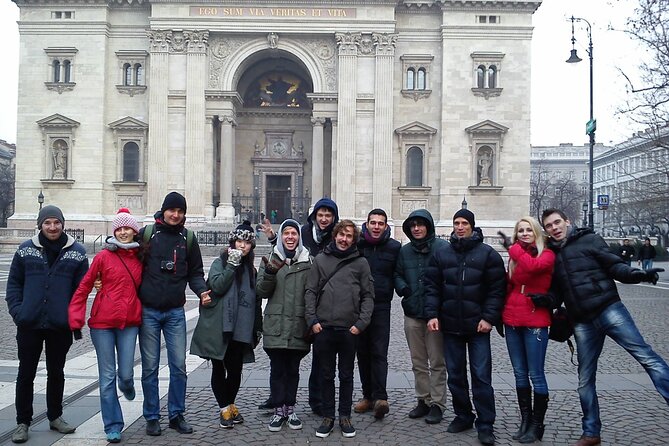
Next you head to Szent István Bazilika, the largest church in Budapest by seating capacity (about 8,500). The tour covers the church’s architecture and how it reflects different eras of splendor—but it’s explicitly not entered. Expect an exterior-focused stop aimed at helping you “understand the building you’re seeing,” not a timed interior visit.
Then comes St. Stephen’s Square, where the tour adds a lighter angle through public art—specifically a piece featuring “fat policemen” with shiny bellies. It’s the kind of detail you’d miss if you were speed-walking straight to the next big attraction.
From there, you get a practical theme: Hungarian cooking and what to eat in Budapest. The guide talks about the history of cooking and how to avoid tourist traps, which matters more than it sounds. A city’s most famous restaurants can be fine, but you’ll often enjoy your meals more when you know what locals treat as normal.
If you want to eat well without turning your day into research mode, this food-focused storytelling at a key square is one of the tour’s smartest ideas.
More Budapest on foot
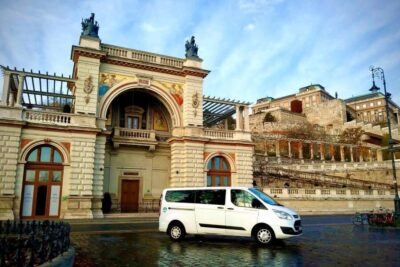
Jozsef Nador Ter: Habsburg stories plus Herendi and Zsolnay porcelain
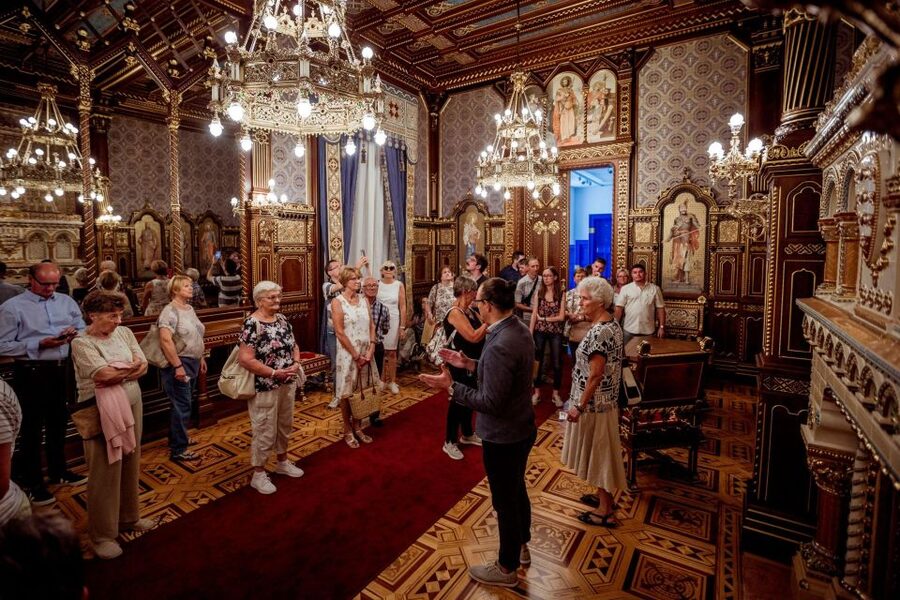
At József Nádor tér, the tour shifts from monumental architecture to a more cultural kind of detail: Hungarian Habsburg connections and decorative arts. You’ll get a chance to see famous types of porcelain tied to Hungarian craftsmanship—Herendi pieces and Zsolnay glazed ceramic works.
This stop is short, but it’s memorable because it gives you a “sensory” layer to Budapest. You’re not only looking at what’s old—you’re looking at what the city produced, admired, and exported through design.
Possible drawback: if you’re hoping for a deep, museum-style explanation, the timing is brief. The value here is awareness and context. You’ll leave knowing what to watch for later if you browse shops or markets, or if you decide to add an arts-focused visit.
Vorosmarty Square and Váci út: people-watching, café history, and the underground surprise
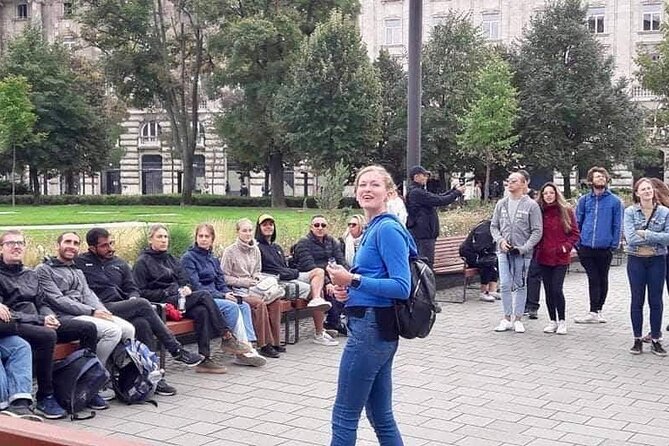
The walk continues to Vorosmarty Square (Vorosmarty tér), located at the end of Váci út, one of the most famous pedestrian streets. This stop is built for atmosphere: watching people, spotting major historic-style buildings, and picking up that Budapest has a “public life” vibe in many central plazas.
The tour also points out the second oldest underground in the world, noting the terminal here. That’s a neat way to connect Budapest’s modern transit history with the visual city center you’re already walking through.
You’ll also hear about the posh Gerbaud café and how Budapest traditions show up—especially around Christmas markets. If you’re visiting in colder months, this is the moment where those holiday details will stop feeling like abstract calendar trivia and start making sense.
Tip for the best photos: stand where the flow of Váci út feeds into the square, then pause. It’s one of those areas where your camera will thank you for taking 20 seconds instead of rushing.
Danube embankment at Korzo: tram views, UNESCO sights, and the Castle Hill picture set
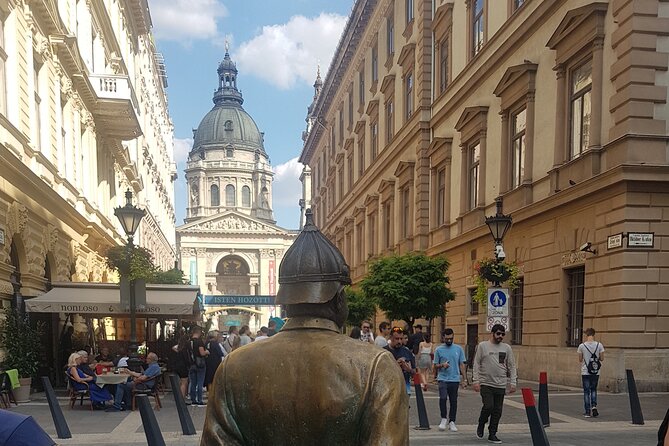
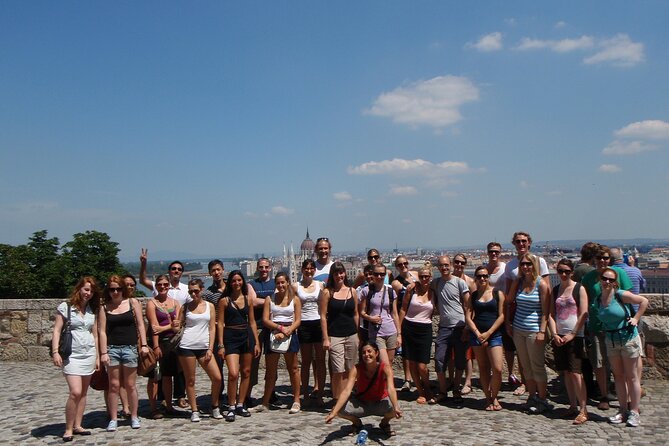
One of the tour’s big visual payoff stops is along Korzo – Danube Embankment (Dunakorzo). This is where the guide uses the riverfront to connect multiple “must-see” areas into one coherent view. You’ll be shown panoramic sightlines toward Castle Hill, including Matthias Church, Fisherman’s Bastion, Buda Castle, and farther along toward Gellért Hill and the Citadel.
The tour also mentions the first non-Communist statue in Budapest and the most panoramic tram line in Central Europe. Even if you don’t ride it that day, the way you’re pointed toward it here helps you understand why tram routes matter as much as museums.
It’s also part of the UNESCO story: many of the sights highlighted are connected to Hungary’s World Heritage listings. That matters because it explains why the center looks the way it does—and why the city preserves certain views so carefully.
Drawback to plan around: the time here is brief (around 10 minutes), so treat it as a setup. If you want deeper time at Matthias Church or Fisherman’s Bastion, you’ll be glad you got your first “map-in-your-head” from this stop.
Little Princess Statue wish and Vigadó Square’s royal music era
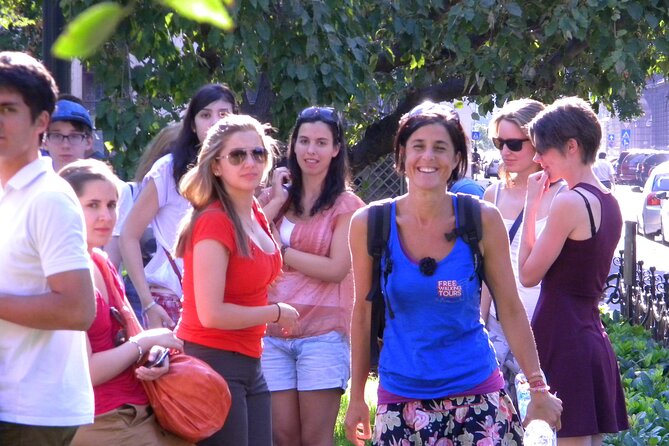
After the riverfront, the tour does something fun and slightly magical at the Little Princess Statue. You stop for a quick wish and touch the shiny knees—simple, silly, and exactly the kind of pause that makes a long walk feel like a story instead of a checklist.
Then you move to Vigadó tér, where the guide ties place to moment. This is associated with the coronation banquette of Franz Joseph and Sissy in the 19th century. The tour also connects the square with major Central European musicians—Franz Liszt, Debussy, and Brahms—so you get Budapest as a cultural crossroads, not just a photo backdrop.
If you prefer quieter sites over big memorials, this pair of stops gives you emotional contrast. You’re not only learning serious WWII history; you’re also absorbing the city’s arts and ceremonies.
Chain Bridge history at Széchenyi Lánchíd and Art Nouveau at Gresham Palace
Next is Széchenyi Lánchíd, the Chain Bridge. The tour gives you the history through the story of the bridge as the first permanent crossing built in the city. It’s a strong narrative anchor, because the bridge isn’t just a connection—it’s a turning point in how people moved and lived between Buda and Pest.
Then you go to Gresham Palace, a secessionist building from the golden age of Budapest around the turn of the century. The guide explains the Art Nouveau look and points out how the building’s major ornaments fit the city’s changing style.
This is a good combo: you get engineering pride at the river crossing, then design pride in the city center. It also helps you see how Budapest’s identity shows up across scales—from structures you can drive across to details you might notice only if someone points them out.
Practical consideration: this is a “walk-and-look” segment. If you’re the type who likes to linger on architecture, plan to return later. The tour’s job is to show you what to notice.
Hungarian Academy of Sciences and the Nobel-per-capita angle
At Hungarian Academy of Sciences, the tour brings back the language and “how Hungarians think” theme. You’ll learn some Hungarian words and phrases—the kind you can use right away—and the guide explains why Hungary is known for a high number of Nobel Prize awards per capita.
The stop also mentions famous people of Hungarian origin and Hungarian inventions you might miss in everyday life. That’s the tour doing a subtle switch: it goes from what’s on the street to what’s behind the culture.
This stop is especially useful if you want your itinerary to do more than keep you entertained. It adds intellectual context without turning into a lecture.
Shoes on the Danube Bank: the memorial stop that changes the tone
Then you reach Shoes on the Danube Bank, where 60 pairs of shoes commemorate the Holocaust, set out on the riverside to mark the 60th anniversary of these atrocities. The guide talks about WWII history, deportations, and the recent history of the Hungarian Jewish community.
This is also one of the tour’s most emotionally direct moments. You’re asked to close your eyes and imagine the individuals who died here—from synagogue goers to more assimilated Jews, from factory workers to factory owners, including grandmothers and grandchildren. It’s not a quick “and then on you go” stop. It’s designed to make the reality of the story feel personal.
If you’re sensitive to heavy topics, you can still take this tour—but go in knowing it changes the mood. I find it’s worth the discomfort, because it gives Budapest a fuller, truer context than the scenic river views alone.
Final stop: Hungarian Parliament Building and end-of-tour planning
The tour ends at the Hungarian Parliament Building. You’ll learn about Hungary’s more recent history, elections, and the building’s neo-gothic architecture—described as harmonically beautiful.
The real value at the end, though, is what happens after the “last photo.” The guide provides useful recommendations for restaurants and nightlife and gives you an orientation for what to do in the next days. In a short tour, this is where you turn sightseeing into a plan.
Since you’re already ending near a major landmark, you’re also positioned well for future exploration in that central corridor. If you want to revisit Castle Hill areas from the river views earlier, or keep wandering along the Danube, the route gives you clear next steps.
If you only do one guided activity in Budapest early on, this is the one that helps your whole trip feel organized.
How to turn this walk into the rest of your day
Once you finish, don’t treat it as “completed.” Treat it as a map of what you’re drawn to. For example, you’ll have strong visual cues pointing toward Castle Hill and the view set that includes Matthias Church and Fisherman’s Bastion, so it’s easy to build a follow-up plan.
Use the food advice while you still have it fresh. The guide’s focus on what to eat—and how to avoid tourist traps—is meant to steer your first meals. If you take it seriously, you’ll likely spend less time hunting for something decent and more time eating and enjoying.
Also, I’d take a flexible approach with your timing. The tour moves across many stops, so you’ll probably want to return to one or two places for more time. If you want a simple rule: return to the stop where you felt the strongest curiosity.
Small practical tip: bring a drink. Even in good weather, you’re walking, and the pacing is steady enough that a hydration break won’t feel unnecessary.
Should you book this 2-hour Budapest City Landmarks walk?
Book it if you want a low-cost, English introduction that helps you understand Budapest quickly, not just photograph it. It’s especially worth it as a first morning or first full day because it ends at the Parliament and gives you enough context to plan the rest of your trip.
Skip it if you prefer slow, ticketed, inside visits. This tour is built for exterior stops and short stories, and it specifically does not enter St. Stephen’s Basilica.
If your main goal is getting your bearings fast and leaving with smart next steps for food and neighborhoods, this is an excellent fit.
FAQ
How long is the Budapest City Landmarks Walking Tour?
It’s listed at about 2 hours.
What does the tour cost?
The price shown is $3.63 per person.
Is the tour offered in English?
Yes, it’s offered in English.
Where do I meet the guide?
The start is at the Ferris Wheel of Budapest (Budapest Eye) at Erzsébet tér, 1051 Hungary. The guide holds a small blue flag near the Budapest Eye.
Where does the tour end?
The tour ends at the Hungarian Parliament Building at Kossuth Lajos tér 1-3, 1055 Hungary.
Does the tour include entry tickets?
The itinerary lists admission ticket free at each stop, and the tour does not enter St. Stephen’s Basilica.
How big is the group?
The tour has a maximum size of 30 travelers.
Do I need to tip?
Tips or donations to the guide are not included. The information says guides depend on donations at the end, and the amount is your choice.
What’s the most serious stop on the walk?
The Shoes on the Danube Bank memorial, connected to WWII and the Holocaust, is a key part of the tour.
What if the weather is bad?
The experience requires good weather. If it’s canceled due to poor weather, you’ll be offered a different date or a full refund.
More Tours in Budapest




More Tour Reviews in Budapest






More of Budapest, Step by Step





Just Added: More Budapest Reviews
- Sightseeing flight over Budapest
★ 5.0 · 3 reviews - Budapest: Walking Tour with Chimney Cake & Polaroid Photos
★ 5.0 · 3 reviews - Self Guided Tour In Budapest With 100 Captivating Audio Stories
★ 5.0 · 3 reviews - Budapest Art Nouveau Walking Tour
★ 5.0 · 3 reviews - Hungary today: a no-taboo conversation
★ 5.0 · 3 reviews
Budapest Walking Tours, compared.
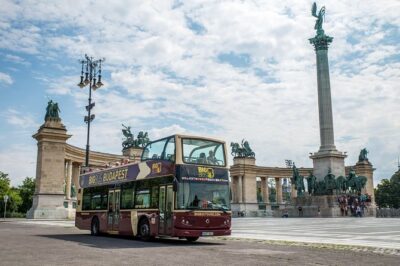 ★ 3.5Big Bus Budapest Hop-On Hop-Off Bus and Walking TourFrom $422,206 reviews
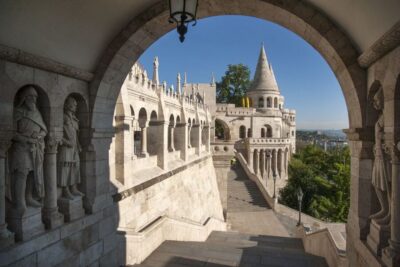 ★ 4.6Buda Castle District Walking TourFrom $142,108 reviews
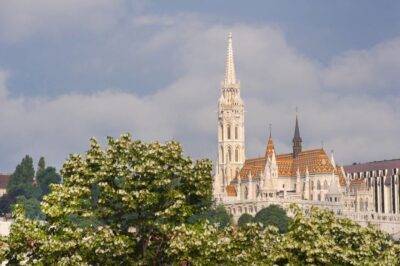 ★ 4.83-Hour Orientation Walking Tour of Buda and PestFrom $411,834 reviews
 ★ 5.0Budapest Historical Sightseeing – Free Walking TourFrom $31,302 reviews
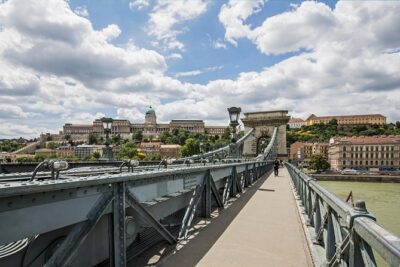 ★ 5.0Budapest All in One Small Group Walking Tour with Strudel StopFrom $1001,277 reviews
 ★ 4.8Budapest Food Walking Tour: Eat, Sip & Explore Like a LocalFrom $731,027 reviews
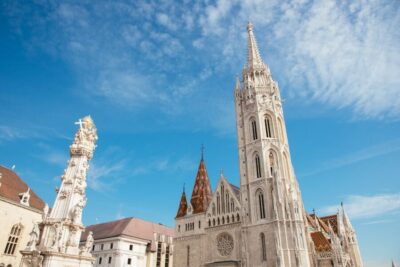 ★ 4.9Buda Castle District Walking Tour with a HistorianFrom $63867 reviews
 ★ 4.9BloodThirsty Hungary: Walking tour & Dark Historical StoriesFrom $21633 reviews
Browse the lists this tour appears in