
Reviewed · JEWISH QUARTER TOURS
Past and Present of Budapest Jewish District Tour
A good walk can do more than show streets. This one traces the Past and Present of Budapest Jewish District through famous sites you can actually see, with clear context from the Golden Age to the Holocaust and what came after. I especially like how the route keeps you moving while still covering big ideas, and how many guides manage to answer everything from daily Jewish life to political movements.
You’ll also get a practical feel for District VII, because the stops tie together buildings, street art, and places like Gozsdu Passage and Szimpla Kert, not just monuments on a postcard. One thing to know up front: it’s mostly an exterior walk, so you won’t do synagogue interiors during this time window—great for an overview, but not the same as a ticketed visit inside.
In This Review
- Quick hits: what makes this tour worth your time
- Where the walk begins: Erzsébet tér and the “orientation that matters”
- Erzsébet tér to Deák Ferenc tér: Belle Époque joy meets exclusion
- Outside the biggest synagogue: why the Great / Central Synagogue stop hits hard
- Rumbach Street and murals: religion, restoration, and street-level Budapest
- Gozsdu Udvar: where culture and the last ghetto wall piece meet
- Kazinczy Street Synagogue: Orthodox life topics without needing an interior ticket
- Szimpla Kert finish: murals, orientation, and a smart landing spot
- Price and value: why it’s so cheap, and what that means for your budget
- Group size, language, and timing: practical choices for your day
- What to watch for: the main trade-offs and who should choose this
- Should you book this Jewish District overview tour?
- FAQ
- FAQ
- How long is the Past and Present of Budapest Jewish District Tour?
- Where does the tour start and end?
- Does the tour enter the synagogues?
- What language is the tour offered in?
- How big are the groups?
- Can I cancel if my plans change?
Quick hits: what makes this tour worth your time
- A 1.5-hour overview with a clear storyline, moving from a flourishing community to the destruction and its aftermath
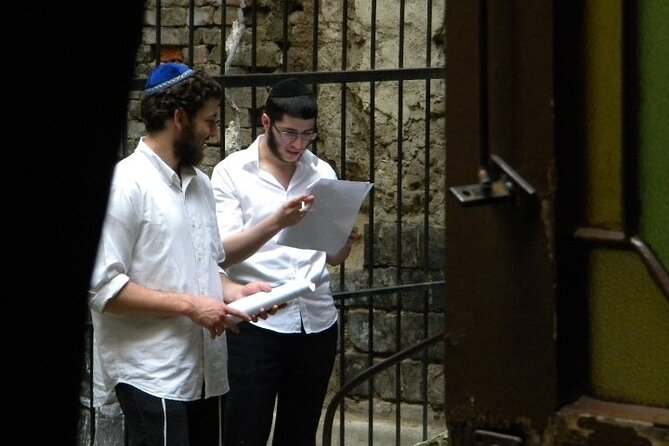
- Landmark synagogue exteriors only, with memorial areas and courtyards viewed from outside
- Stops that connect culture to everyday life, including kosher topics and the idea of ritual bathing
- District VII street art and murals built into the route, not added as an afterthought
- Small-ish groups (max 25), so you’re not just a number drifting along
- English guide availability with a strong track record of keeping the group engaged
Deeper into old District VII
- Budapest Jewish Heritage Memorial Walking Tour & Synagogue Entry★ 5.0 · 568 reviews
- Budapest: Jewish Heritage Guided Tour with Synagogue Ticket★ 4.8 · 533 reviews
- Jewish Quarter of Budapest Walking Tour★ 4.7 · 369 reviews
- German tour in the Budapest city centre & the Jewish quarter★ 5.0 · 359 reviews
Where the walk begins: Erzsébet tér and the “orientation that matters”
Most walking tours start somewhere convenient. This one starts at a place you can find easily: the Ferris Wheel of Budapest on Erzsébet tér. That helps on day one when you’re still learning your way around Pest, and you want an organized start before the stories start getting heavy.
From there, you’ll walk into District VII with an itinerary you can follow in your head. The guide sketches what you’ll see along the way, including major synagogue landmarks, so you don’t feel like you’re just tagging behind.
Also, the end point is a friendly one. You finish at Szimpla Kert in Kazinczy u. 14, a classic ruin-bar setting where it’s easier to reset your brain after serious history.
Erzsébet tér to Deák Ferenc tér: Belle Époque joy meets exclusion
The first stretch is where the guide sets the theme: the walk looks at the Jewish community’s rise during the Belle Époque / Golden Age, then shifts toward the destruction. You get “why this neighborhood looks like this” before you get “what happened here,” which makes the tragedy feel more specific instead of abstract.
At Erzsébet tér (Elizabeth square) you meet the guide and settle into the flow. Expect a big, structured introduction—where Jews in Hungary came from, how their community shaped Budapest, and how the story changes as power shifts.
Then you move to Deák Ferenc Square and get two key concepts explained with real places attached. One is Gaudiopolis, the City of Joy nickname, which frames the community not as a museum exhibit but as lived life. The other is Schutzpass, a lifesaving document that helped protect thousands—an important counterweight when the narrative turns darker.
You also see the former medieval city wall ruins linked to the way Jewish people were limited in where they could trade. Even if you only catch fragments of stone, the point lands: borders were physical, and policy had walls.
Outside the biggest synagogue: why the Great / Central Synagogue stop hits hard
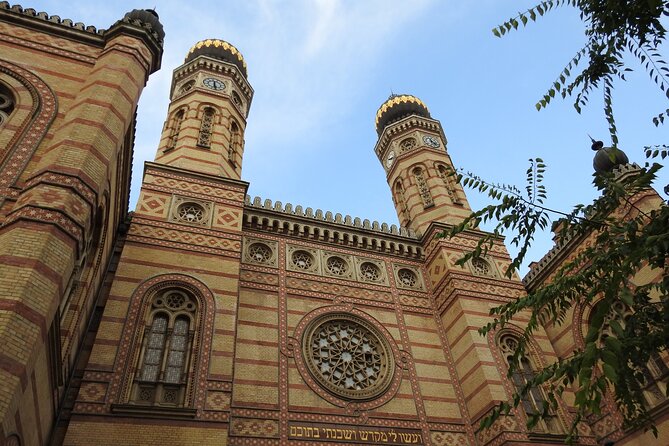
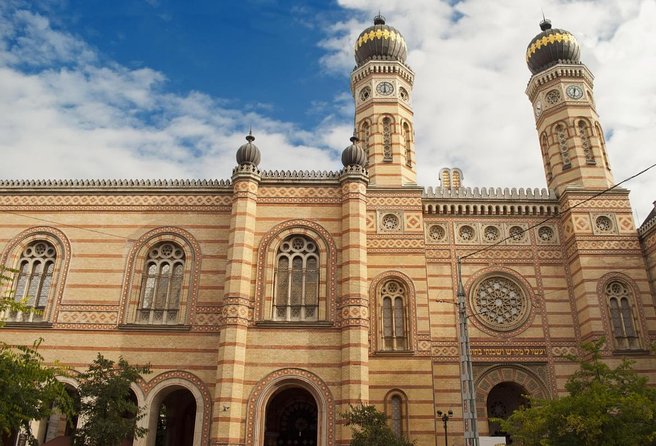
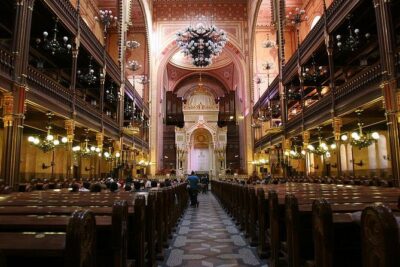
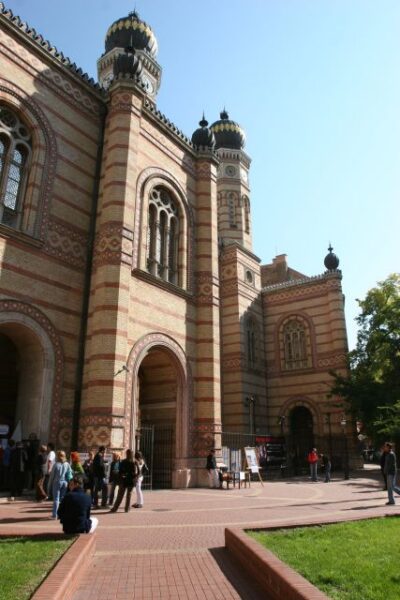
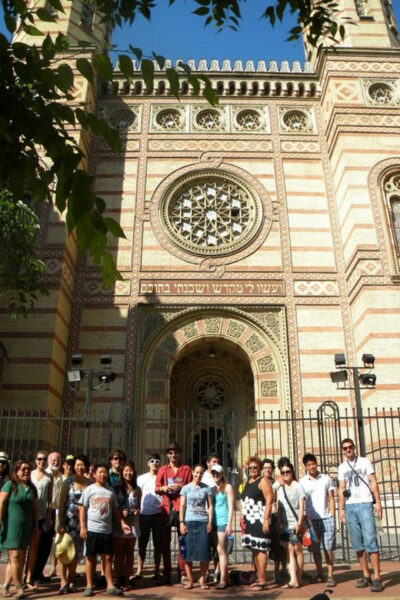
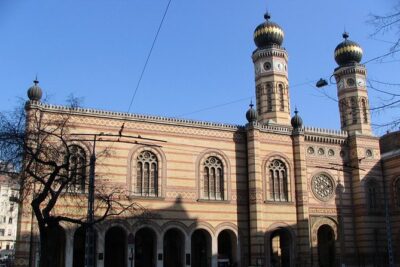
The centerpiece view is the Great / Central Synagogue (Nagy Zsinagóga). This is the stop most people recognize, because it’s described as the largest synagogue in Europe—and the scale is hard to ignore even from the outside.
Here, the guide connects architecture to ideas. You’ll hear about the Neologue and Orthodox movements, and how Zionism fit into the mix. That’s useful because it prevents the “one-size-fits-all” mistake some visitors make when they see Jewish landmarks without understanding internal differences.
Even though you don’t enter the synagogue, you still get meaningful context. You’ll see the Memorial Courtyard and the cemetery from outside, which is a quieter kind of impact than a museum room. It also keeps the tour moving at a realistic pace for a 1.5-hour walking format.
If you’re choosing between spending time inside buildings versus getting the full neighborhood arc, this stop is the compromise that works. You get the significance without adding long waiting times or ticketing.
Rumbach Street and murals: religion, restoration, and street-level Budapest
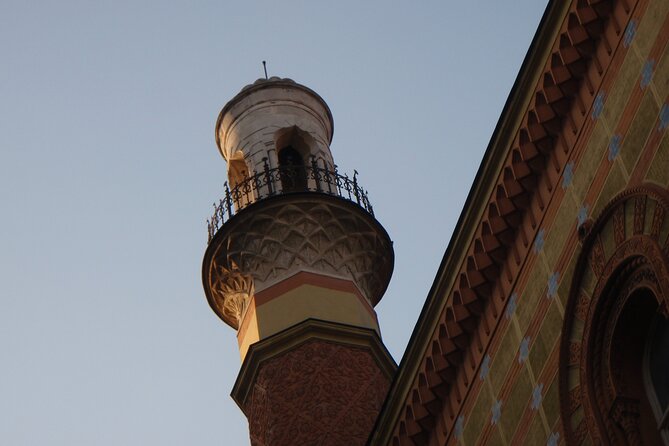
Next comes Rumbach Street Synagogue. This stop is about restoration and how the neighborhood’s visual language survived and changed. You learn about the beautifully restored synagogue and you look at murals and urban street art around it.
That pairing matters. It helps you understand that Jewish District VII isn’t frozen in 1940, or even frozen in 1890. It’s a living area where communities, art, and memory share the same streets.
The tour also keeps expectations clear: you won’t go inside here either. You’re walking, listening, and observing exterior details that set up what you might want to visit later on your own.



Gozsdu Udvar: where culture and the last ghetto wall piece meet
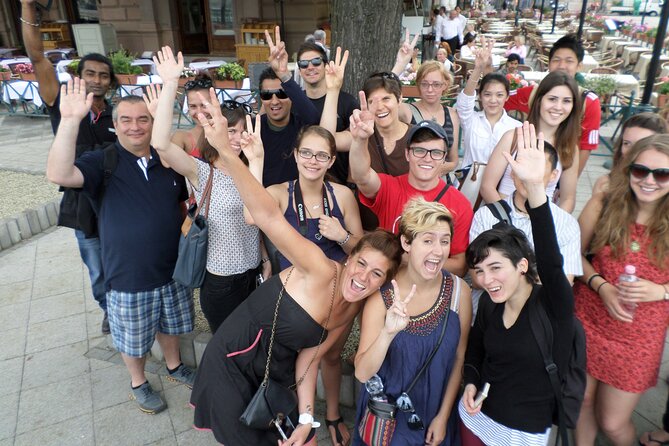
At Gozsdu Udvar, the guide shifts tone slightly—still serious, but more social. You pass the Gozsdu Passage and hear how it combines entertainment, gastronomy, culture, and market life.
That’s not a distraction from history. It’s part of the “past and present” concept in a very practical way. A place that now hosts nightlife and casual wandering sits on layers of older life, and the contrast helps you see why memory matters.
You’ll also spot the last piece of the ghetto wall. It’s a small remnant, but that’s often the point. The guide treats it as a physical reminder of boundaries people once couldn’t cross.
If you like learning with your eyes as much as with your ears, this is a strong stop. You’ll likely look at the passage and think: this whole area has been repurposed again and again.
Kazinczy Street Synagogue: Orthodox life topics without needing an interior ticket
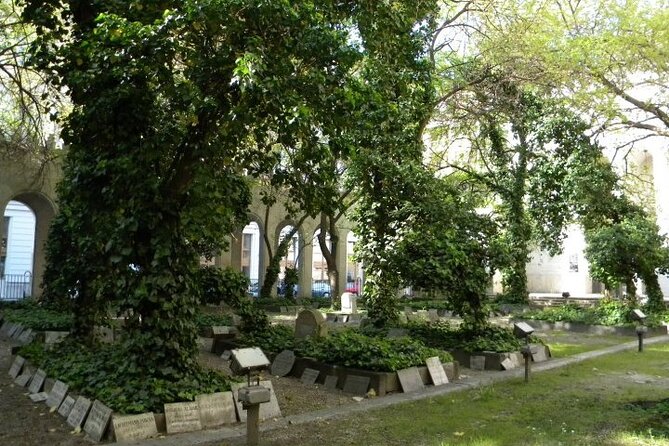
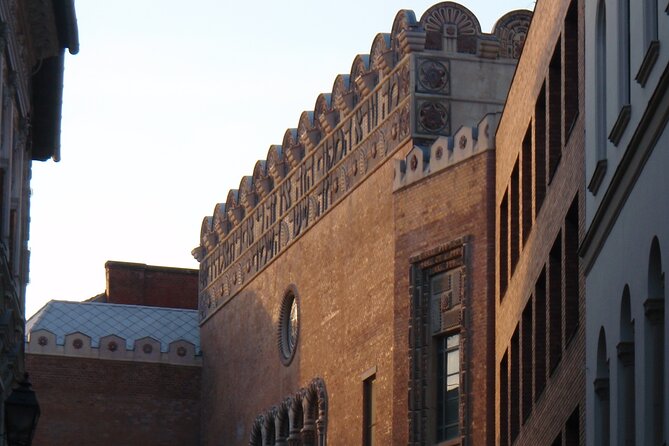
Another key exterior is the Kazinczy Street Synagogue, connected to the Orthodox community of 50–60 families (small by city standards, which makes the community feel real). The guide discusses kosher food and Jewish ritual bathing topics here.
Even without entering the synagogue, that discussion helps you understand what daily life could involve. It’s one thing to know the big political events. It’s another to hear what people ate, how rituals shaped routines, and how traditions were practiced on ordinary days.
Like the other synagogue stops, the focus stays outside. The advantage is you keep your timeline tight. The trade-off is you won’t see interior spaces that sometimes show different textures of worship and community.
Szimpla Kert finish: murals, orientation, and a smart landing spot

The final leg continues with more urban art and murals, then you end at Szimpla Kert, where you can see the ruin-bar vibe of the neighborhood. The guide takes you to Szimpla Ruin Bar as a last orientation point.
No entry fee here, which is nice if your history stamina runs out before your snack stamina does. You can sit, check your map, and decide what to do next—whether that’s a self-guided walk for details you want to linger on or heading back toward the Danube.
This is also a helpful moment psychologically. After hearing about exclusion and the Holocaust era, finishing in a place that’s lively (but not in a “celebrate immediately” way) helps you process instead of just walking on autopilot.
Price and value: why it’s so cheap, and what that means for your budget
The price is listed at $3.63 per person for about 1 hour 45 minutes. That’s unusually low for a structured, licensed guide-led walk with multiple major stops, and it usually signals one thing: you’re paying less for the ticket and more for access to the guide’s time and route planning.
The tour includes a booking fee, and the guide’s earnings come from donations at the end. In plain terms: if you want good guides to keep doing good work, you should plan to tip/donate if the experience clicks.
This matters because the overall quality here often comes down to the guide. The strongest versions of this walk are the ones where the guide can keep the group engaged while handling sensitive topics with care. You’ll hear stories, get direct answers to questions, and usually get the “so what” behind the sights—especially if you like history that connects to real places.
Also, you’ll want to be comfortable standing and walking. One excellent feature is pacing that can work even for slower walkers, but it’s still a walk, not a sit-down lecture.
Group size, language, and timing: practical choices for your day
The group has a maximum of 25 people, which is big enough to feel social but small enough that most guides can manage the group. You can find this tour in English, and you’ll get a mobile ticket.
I’d book ahead if you’re traveling in high season or have tight timing. This one is typically booked around 10 days in advance on average, so waiting can leave you with fewer time slots.
If you’re planning synagogue interiors elsewhere, remember the big limitation: this walk is built for an exterior overview. It’s a good first pass, not a replacement for a separate, ticketed visit.
What to watch for: the main trade-offs and who should choose this
This tour is best for you if you want a fast, coherent introduction to the Jewish District’s story in one afternoon. It’s especially good if you like a guided narrative that connects policy, community life, major movements, and visible sites in the neighborhood.
It may feel heavier than lighter sightseeing walks. You’ll hear about tragedy and the Holocaust era, including how documents like Schutzpass mattered. That can be emotionally intense, and it’s worth deciding in advance how much weight you want on your walking day.
Two other practical considerations:
- Since it’s outside-focused, you won’t get synagogue interior viewing during this timeframe.
- Understanding can vary with guide speaking style and accents. Most guides handle English well, but if you’re picky about clarity, it’s smart to choose a time when you’ll be fully alert.
Should you book this Jewish District overview tour?
Yes—if you want a structured way to see District VII and understand what you’re looking at. I’d book it if you’re visiting Budapest for the first time, have limited time, and want the big story from Golden Age to destruction to what remains today.
I wouldn’t book it as your only synagogue experience if you specifically want interiors and services. In that case, pair this walk with a separate visit later, so you get both the narrative arc and the spaces themselves.
FAQ
FAQ
How long is the Past and Present of Budapest Jewish District Tour?
It runs for about 1 hour 45 minutes.
Where does the tour start and end?
It starts at the Ferris Wheel of Budapest on Erzsébet tér (Erzsébet tér, 1051 Hungary) and ends at Szimpla Kert (Kazinczy u. 14, 1075 Hungary).
Does the tour enter the synagogues?
No. The tour focuses on learning about the synagogues while viewing them from outside, including memorial areas from outside where mentioned.
What language is the tour offered in?
The tour is offered in English.
How big are the groups?
The maximum group size is 25 travelers.
Can I cancel if my plans change?
Free cancellation is allowed up to 24 hours in advance for a full refund. Canceling less than 24 hours before the start time means the amount paid is not refunded.
More Tours in Budapest






More Tour Reviews in Budapest






Around the Old Jewish Quarter





Just Added: More Budapest Reviews
- Sightseeing flight over Budapest
★ 5.0 · 3 reviews - Budapest: Walking Tour with Chimney Cake & Polaroid Photos
★ 5.0 · 3 reviews - Self Guided Tour In Budapest With 100 Captivating Audio Stories
★ 5.0 · 3 reviews - Budapest Art Nouveau Walking Tour
★ 5.0 · 3 reviews - Hungary today: a no-taboo conversation
★ 5.0 · 3 reviews
Jewish Quarter Tours, compared.
 ★ 5.0Budapest Jewish Heritage Memorial Walking Tour & Synagogue EntryFrom $83568 reviews
 ★ 4.8Jewish Heritage Guided Tour with Synagogue TicketFrom $81533 reviews
 ★ 4.7Jewish Quarter of Budapest Walking TourFrom $2369 reviews
 ★ 5.0German tour in the Budapest city centre & the Jewish quarterFrom $23359 reviews
 ★ 5.0Budapest City Walk in Jewish QuarterFrom $356218 reviews
 ★ 4.5Budapest Dohany Synagogue & Hungarian Jewish Museum & free extrasFrom $44218 reviews
 ★ 4.8Jewish History Guided Walking Tour with HistorianFrom $63205 reviews
 ★ 5.0Budapest Dohany, Heroes’, Rumbach synagogues & Jewish Ghetto TourFrom $63200 reviews
Browse the lists this tour appears in