

Reviewed · JEWISH QUARTER TOURS
Budapest City Walk in Jewish Quarter
Synagogues and stones with stories. I love the guide-led pacing and the WWII context woven into real places, and I love the small-group feel with warm, conversational storytelling. The one drawback to plan for is steady walking (and a few extra synagogue entrance costs if you want to go inside).
Budapest’s Jewish Quarter is compact, so this kind of tour makes sense: you’re on foot, turning corners often, seeing how daily life and memory sit side by side. The best part is that the route is designed to give you a full sense of the neighborhood, from the synagogue triangle to memorial gardens and the Danube-edge Shoes Monument.
In This Review
- Key Highlights I Think You’ll Care About
- A Four-Hour Walk That Makes the Jewish Quarter Make Sense
- Your Guide Matters More Than the Route
- How the Synagogue Triangle Shapes the Day: Dohány, Kazinczy, Rumbach
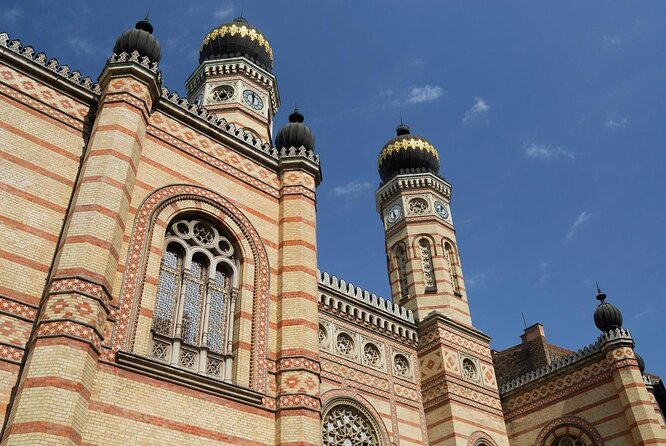
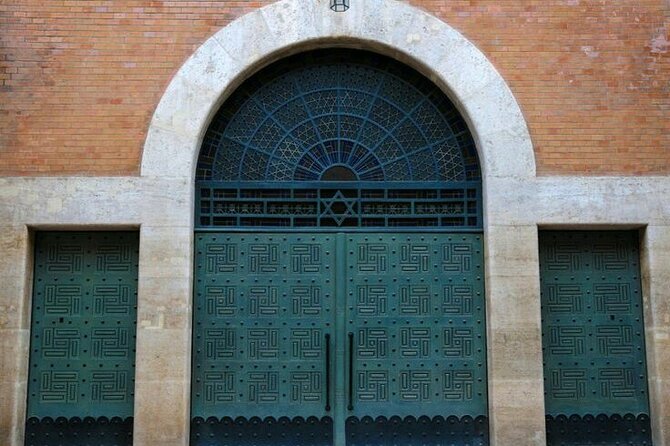
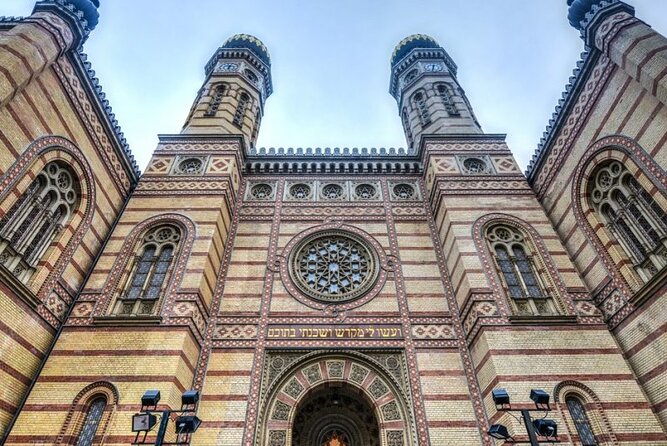
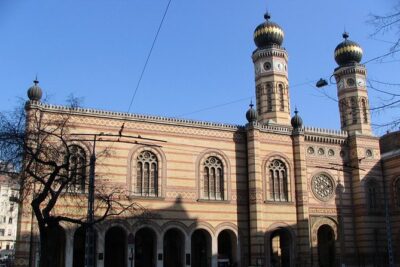
- Dohány Street Synagogue: the big visual anchor
- Kazinczy Street: synagogues and small-scale rituals
- Rumbach Synagogue: context and variety
- A practical note about entrances
- Raoul Wallenberg Memorial Garden and the “Emmanuel tree” Moment
- Museum and Jewish Archives: Facts with a Human Scale
- WWII on the Streets: Ghetto Wall Remnants and Carl Lutz
- Danube Edge Icon: Shoes Monument and the Weight of Place
- Courtyards, Cafés, Shops, and Ruin Bars: What Life Looks Like Now
- Logistics That Make the Tour Easier: Pickup, Pace, and Walking Comfort
- Dress guidance
- Price and Value: What You’re Really Paying For
- Who This Tour Fits Best
- Should You Book the Budapest Jewish Quarter City Walk?
- FAQ
- How long is the Budapest City Walk in the Jewish Quarter?
- How many people are on the tour?
- Is hotel pickup included?
- What language is the tour in?
- What are the main places you’ll see?
- Are synagogue entrance fees included?
- Is there a lot of walking?
- Can the guide help with kosher meals or restaurant plans?
- What’s the cancellation policy?
- What should I bring for visiting synagogues?
Key Highlights I Think You’ll Care About
- A guide who tells the story, not just recites facts: Many people come for history, then stay because the tour feels human.
- Synagogue triangle route in one walk: You can see major synagogues like Dohány, plus Kazinczy and Rumbach.
- WWII memorials you understand in context: From the ghetto wall to Raoul Wallenberg’s memorial garden.
- Museum and archives stops: The Budapest Jewish Museum and Jewish Archives exhibitions add real depth without making the day heavy.
- Local-life detours: Courtyards, cafés, shops, art spaces, and ruin bars like Szimpla show what’s here now.
- Hotel pickup and drop-off: Practical convenience in a city where taxis love to play games with traffic.
Deeper into old District VII
- Budapest Jewish Heritage Memorial Walking Tour & Synagogue Entry★ 5.0 · 568 reviews
- Budapest: Jewish Heritage Guided Tour with Synagogue Ticket★ 4.8 · 533 reviews
- Jewish Quarter of Budapest Walking Tour★ 4.7 · 369 reviews
- German tour in the Budapest city centre & the Jewish quarter★ 5.0 · 359 reviews
A Four-Hour Walk That Makes the Jewish Quarter Make Sense
This is a 4-hour walking tour focused on Pest’s 7th district Jewish Quarter, where the sights are packed close together. That’s why the format works. You’re not racing between far-apart monuments. You’re absorbing the neighborhood by walking it like locals do: slow enough to read the details, fast enough to keep momentum.
If you want the short version of what makes it special, it’s the way your guide connects three things:
1) the architecture and street layout,
2) the Jewish community’s changing life over time, and
3) the WWII-era trauma that still echoes through memorials and stone markers.
In the guides’ hands, the area stops feeling like a checklist. Places like the synagogues, memorial gardens, and even street-level details like the stumbling stones start to sound like a story you can actually picture.
Your Guide Matters More Than the Route
This tour is private, with pricing set for groups up to 6 people, and the experience capped at a maximum of 10. That small size isn’t just a comfort perk. It’s how you get questions answered and attention adjusted.
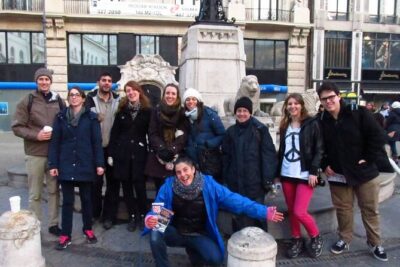
In the reviews and guide information, the name that keeps showing up is Timea Tarjani (often called Timea or Timi). People describe her as warm, energetic, and deeply connected to the area and its history. More importantly, she doesn’t treat WWII as a distant textbook topic. She brings it down to the street level, which is exactly where it belongs here.
You can also expect some flexibility. The tour aims to give you a big-picture view with lots of stories, but if you care more about one stop (or want to skip one), the route can shift.
How the Synagogue Triangle Shapes the Day: Dohány, Kazinczy, Rumbach
One of the smartest parts of this walk is that it doesn’t isolate one synagogue and call it done. Instead, you get the synagogue triangle idea in real walking order, which helps you understand how the neighborhood worked as a community.
Dohány Street Synagogue: the big visual anchor
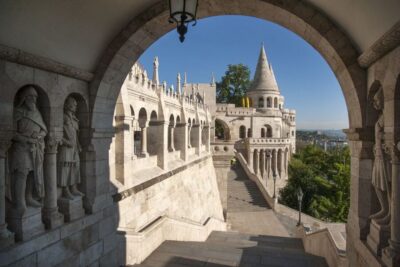
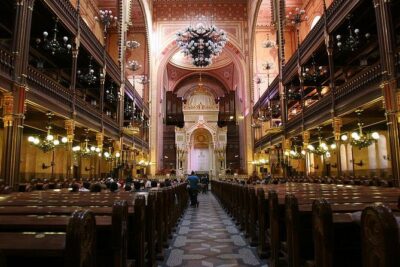
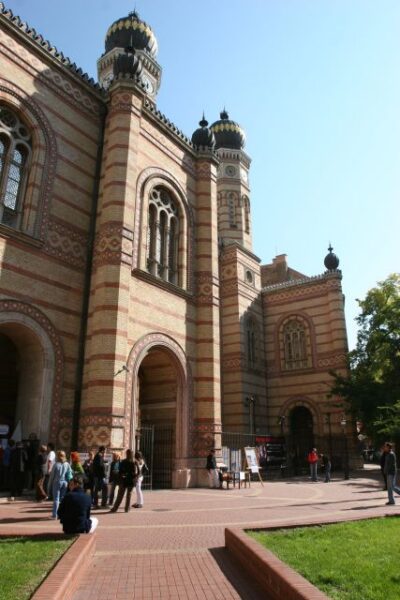
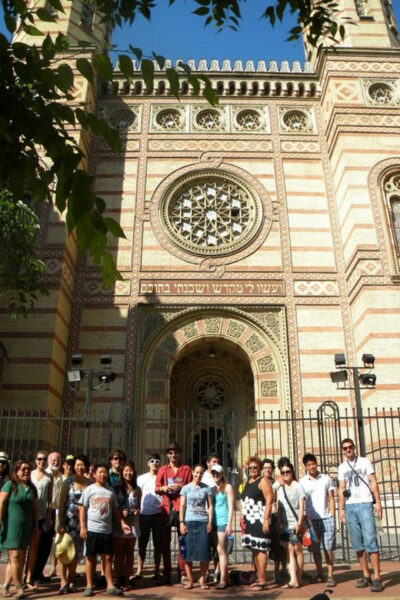
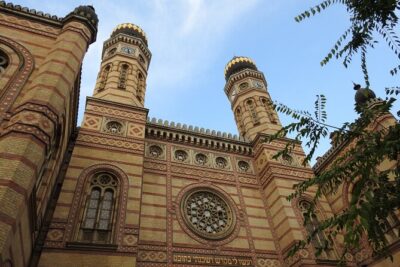
You’ll visit Dohány Street Synagogue, often the first name people learn for Budapest Jewish history. Even if you’ve seen photos before, standing nearby is different. Your guide frames what you’re looking at in terms of community life, identity, and the long arc of history that brought people to live, worship, and suffer in this area.
Budapest at street level, more routes on foot
Kazinczy Street: synagogues and small-scale rituals
Next is the quieter, more intimate layer of Jewish Quarter life around Kazinczy Street. The tour includes stops connected to a mikveh on Kazinczy Street. That matters because it’s not only about grand buildings. It’s about the everyday religious rhythm that shaped how people lived.
Rumbach Synagogue: context and variety
You’ll also see the Rumbach Synagogue. The point isn’t just to say, I saw three synagogues. The point is to feel how different places carry different meanings—different communities, different traditions, and different roles within a shared neighborhood.
A practical note about entrances
Synagogues often charge admission. Here, entrance fees are not included, and the additional cost is capped at up to €46 per person. The tour format also indicates you can choose to visit one synagogue only, and you may qualify for discounted rates (family or senior, for example). If you want the inside photos and the architectural details, budget for this and plan your priorities in advance.
Raoul Wallenberg Memorial Garden and the “Emmanuel tree” Moment
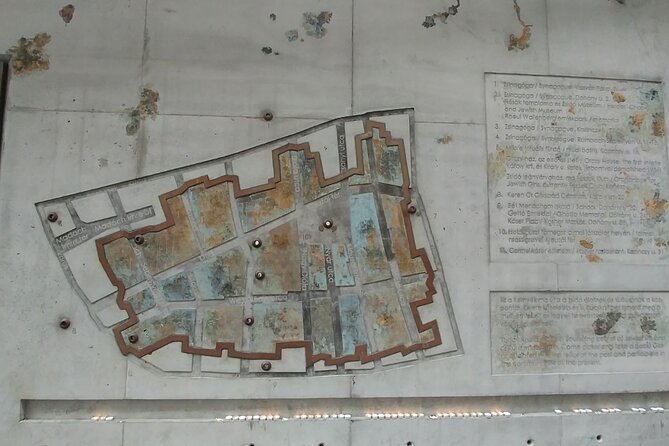
WWII memorials in Budapest can feel heavy fast. That’s why I like that this tour includes a meaningful, guided context stop: the Raoul Wallenberg Memorial Garden with the Emmanuel tree.
This isn’t framed as a quick photo stop. It’s part of the narrative structure. Your guide connects who Wallenberg was, why this site matters, and how remembrance works in public spaces. Standing here gives the history a face, then a heartbeat, then a reason to keep walking with purpose.
Museum and Jewish Archives: Facts with a Human Scale
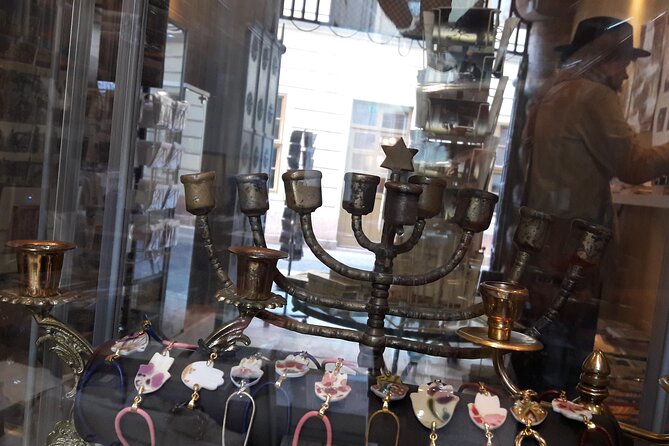
The day also includes cultural stops like the Budapest Jewish Museum and exhibitions of the Jewish Archives. This is one of the best ways to balance a walking tour that otherwise can turn into “outside viewing only.”
You’re not just learning names and dates. You’re seeing records and context that explain why certain streets and memorials exist where they do. For many people, this is the moment the tour clicks from background information into something grounded.
If you prefer a day that’s mostly outdoors, you’ll still get this museum layer without it turning into an all-day indoors marathon.
WWII on the Streets: Ghetto Wall Remnants and Carl Lutz
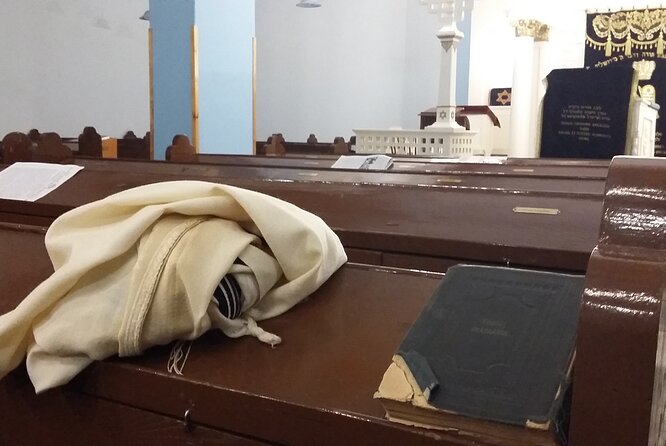
Budapest’s Jewish Quarter includes physical reminders of the WWII ghetto era, and this tour points them out. Among the most striking are:
- stumbling stones in the quarter’s streets
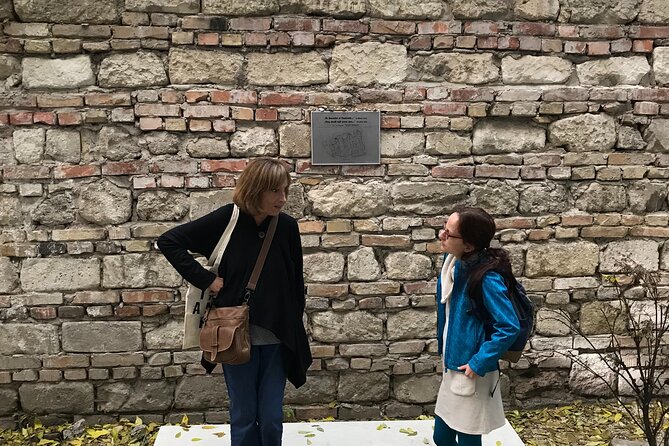
- the last remaining part of the WWII ghetto wall
- the Carl Lutz Memorial
Walking past these features with an informed guide changes how your brain processes them. They stop being “sight numbers” and start feeling like evidence. Evidence of confinement, survival, loss, and the terrifying closeness of history to everyday life.
One detail worth noting: people say the guide can provide access in some cases to areas that aren’t normally open. That can be a big deal when you want to see the remnants clearly rather than from the edge of a fence. If you care about getting the best view of the ghetto wall section, ask the guide what’s accessible on your day.
Danube Edge Icon: Shoes Monument and the Weight of Place
You’ll also reach the famous Shoes Monument on the Danube riverbank. This is the kind of monument that makes you lower your voice without anyone telling you to.
Why it works on this itinerary: it lands after the ghetto and memorial context, so it doesn’t feel like an isolated shock moment. It becomes the emotional punctuation at the end of a long sentence your guide has been writing with the streets.
If you want quiet time here, build it in mentally. Give yourself a full minute or two without rushing for the next photo.
Courtyards, Cafés, Shops, and Ruin Bars: What Life Looks Like Now
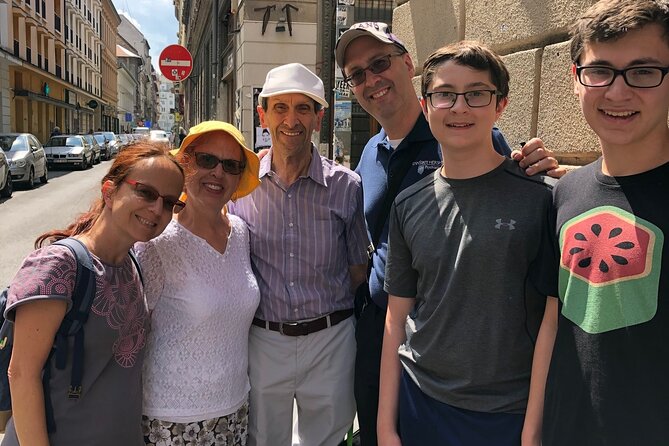
This tour doesn’t only point backward. It also shows what’s here today, including places used by locals. You might pass:
- Gozsdu Courtyard, with its lively café-and-shop vibe
- little shops, eateries, and confectioneries
- art galleries and festival scenes (timing matters here)
- old and newly opened cafés
- and the ruin bar scene, including Szimpla
This is more than “fun add-ons.” It helps you understand the Jewish Quarter as a living neighborhood, not a museum set. The WWII story is central, but the modern street life keeps you from turning the area into only tragedy.
Logistics That Make the Tour Easier: Pickup, Pace, and Walking Comfort
For practical comfort, hotel pickup and drop-off are included (from the hotel lobby or your accommodation). That’s huge in Budapest, where the center is walkable but not always simple with luggage or heat.
The tour includes a moderate amount of walking. You’re encouraged to take breaks if you need them, and the experience is positioned for people with at least moderate physical fitness. Bring water if you can, and pace yourself. Four hours can feel long if you’re not used to constant turns and street-level looking.
Dress guidance
Synagogues may provide head coverings and pieces, but the tour asks you to come prepared with your own hat/cap and scarf if you’d rather not wear what’s provided. This is one of those details that can save you stress mid-route.
Price and Value: What You’re Really Paying For
The price is $356.90 per group (up to 6) for about 4 hours with a professional licensed local guide. There’s also a note that it’s booked on average about 77 days in advance, which is a clue that it fills up near well-planned travel weeks.
The value depends on your group size:
- If you can fill close to 6 spots, the cost per person becomes fairly reasonable for a private, guide-led history walk with museum time and multiple major stops.
- If you’re a smaller party, it costs more per person, but you still get the advantage of a focused, flexible experience instead of squeezing into a large crowd.
Also remember what’s not included:
- Food and drinks
- Entrance fees (up to €46 per person, with the option to visit one synagogue only)
The good news is that the tour includes help with practical meals planning. Your guide can recommend and even help book a table at a local restaurant, and you can request kosher meals/snacks if needed.
That restaurant guidance can easily save you time hunting around on your own, especially if you want something close to the route.
Who This Tour Fits Best
This walk is a strong fit if you:
- want history that connects to street-level places
- care about how communities live now, not only how they suffered then
- enjoy asking questions and getting direct answers
- like a guided day that feels personal rather than rigid
It’s also a good match for families, including teens, since guides often keep interest through storytelling and scene-setting (which matters when you’re covering emotional topics without losing pacing).
If you want a quick drive-by overview with no emotional weight, this might feel intense. The WWII material is central. The upside is that it’s handled with context and care, not sensational shock.
Should You Book the Budapest Jewish Quarter City Walk?
Book it if you want the Jewish Quarter to feel real. The combination of synagogue sights, WWII memorial stops, and museum/archives context gives you more than surface-level understanding. Add in hotel pickup, a small-group setup, and a guide like Timea Tarjani known for warmth and conversation, and you’re looking at a day that’s both informative and emotionally grounded.
Skip it (or consider a shorter option) if you’re not up for a few hours of walking, or if you’re looking for something purely light and casual. Also, if entrance fees matter to your budget, think ahead about which synagogue you want inside, since the additional costs are structured around that choice.
If your goal is to get your bearings fast and still come away with something meaningful, this is a smart, worthwhile choice.
FAQ
How long is the Budapest City Walk in the Jewish Quarter?
It’s about 4 hours (approx.).
How many people are on the tour?
The tour is priced for groups up to 6, and it has a maximum group size of 10 people.
Is hotel pickup included?
Yes. Pickup is from your hotel lobby or in front of your accommodation, with drop-off included after the tour.
What language is the tour in?
The tour is offered in English.
What are the main places you’ll see?
You’ll cover key stops in the Jewish Quarter such as Dohány Street Synagogue, Kazinczy Street, Rumbach Synagogue, the Raoul Wallenberg Memorial Garden, the Budapest Jewish Museum and Jewish Archives exhibitions, memorial sites like Carl Lutz, the ghetto wall remains, and the Shoes Monument by the Danube.
Are synagogue entrance fees included?
No. Entrance fees are not included. The maximum additional entrance cost is given as €46.00 per person, and you can choose to visit one synagogue only with possible discounted rates.
Is there a lot of walking?
There is a moderate amount of walking. You can ask for breaks, and the tour expects moderate physical fitness.
Can the guide help with kosher meals or restaurant plans?
Yes. The tour includes recommending and booking a table, and it can also arrange kosher meals or snacks if required.
What’s the cancellation policy?
You can cancel for a full refund up to 24 hours before the experience starts. If you cancel less than 24 hours before, you do not get a refund.
What should I bring for visiting synagogues?
Bring your own hat/cap and scarf if you don’t want to wear pieces provided by the synagogues.
More Tour Reviews in Budapest






More of Budapest, Step by Step





Around the Old Jewish Quarter





Just Added: More Budapest Reviews
- Sightseeing flight over Budapest
★ 5.0 · 3 reviews - Budapest: Walking Tour with Chimney Cake & Polaroid Photos
★ 5.0 · 3 reviews - Self Guided Tour In Budapest With 100 Captivating Audio Stories
★ 5.0 · 3 reviews - Budapest Art Nouveau Walking Tour
★ 5.0 · 3 reviews - Hungary today: a no-taboo conversation
★ 5.0 · 3 reviews
Jewish Quarter Tours, compared.
 ★ 5.0Budapest Jewish Heritage Memorial Walking Tour & Synagogue EntryFrom $83568 reviews
 ★ 4.8Jewish Heritage Guided Tour with Synagogue TicketFrom $81533 reviews
 ★ 4.7Jewish Quarter of Budapest Walking TourFrom $2369 reviews
 ★ 5.0German tour in the Budapest city centre & the Jewish quarterFrom $23359 reviews
 ★ 5.0Past and Present of Budapest Jewish District TourFrom $3264 reviews
 ★ 4.5Budapest Dohany Synagogue & Hungarian Jewish Museum & free extrasFrom $44218 reviews
 ★ 4.8Jewish History Guided Walking Tour with HistorianFrom $63205 reviews
 ★ 5.0Budapest Dohany, Heroes’, Rumbach synagogues & Jewish Ghetto TourFrom $63200 reviews
Browse the lists this tour appears in