
Reviewed · JEWISH QUARTER TOURS
German tour in the Budapest city centre & the Jewish quarter
Budapest rewards a good walk. This one threads Parliament, basilica views, and the Jewish Quarter in just 2.5 hours. You’ll get live German guiding plus a sensible route that helps you see how the city works, not just what it looks like. My two favorite parts are the small-group feel and the guide’s story-driven stops. The main catch: it’s in German, so if you need English, this may not be your best fit.
I also like that the tour focuses on the places you’ll actually recognize later—banks, squares, synagogues, monuments, and the street-level energy around ruin pubs. You end near Karavan Street Food and Szimpla Kert, so you can keep the day going without hopping across town.
In This Review
- Key highlights you’ll actually feel on the street
- From Gyula Andrássy statue to Parliament: get your bearings fast
- Szabadság Square and St. Stephen’s Basilica: architecture you can map to the city
- Downtown Budapest 1890s buildings: banks, daily life, and what people did with money
- Jewish Quarter walkthrough: synagogues, monuments, and modern street life
- Ending at Kazinczy Street and Szimpla Kert: turn the walk into a real plan
- Price and value: $23 for a route that teaches you how to see
- Small-group rhythm and the guides’ style: why the tour feels personal
- Who this fits best (and who should think twice)
- Should you book this German walking tour?
- FAQ
- What language is the tour guided in?
- How long is the walking tour?
- Where do I meet the guide?
- What does the tour include?
- Are entrance fees included?
- Is hotel pickup or drop-off included?
- Is the tour wheelchair accessible?
- Is there free cancellation?
Key highlights you’ll actually feel on the street
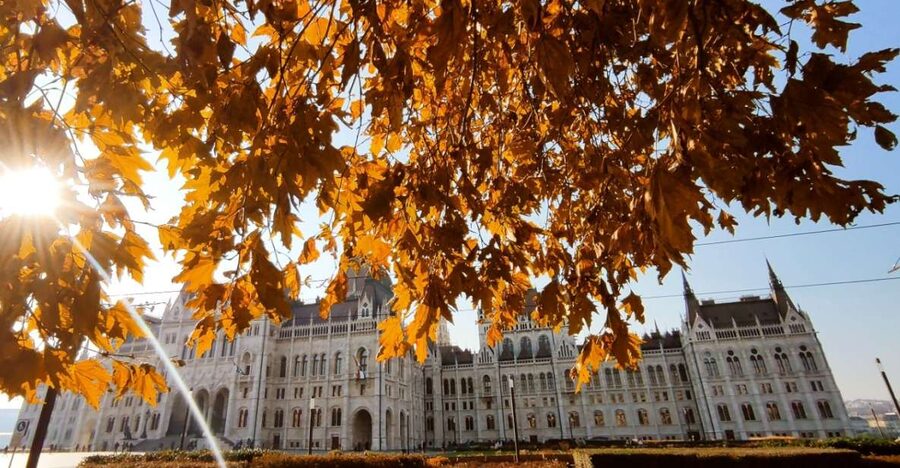
- Parliament photo stop with context that makes the building more than a postcard
- 1890s Downtown architecture including the National Bank area and classic civic buildings
- St. Stephen’s Basilica landmark time for photos and orientation
- Jewish Quarter walk with major synagogues: Rumbach, Dohány, Kazinczy
- Street art and ruin pub culture in the same stretch as heritage sights
- Restaurant and money-saver digital guides so you can spend wisely after the tour
Deeper into old District VII
- Budapest Jewish Heritage Memorial Walking Tour & Synagogue Entry★ 5.0 · 568 reviews
- Budapest: Jewish Heritage Guided Tour with Synagogue Ticket★ 4.8 · 533 reviews
- Jewish Quarter of Budapest Walking Tour★ 4.7 · 369 reviews
- German tour in the Budapest city centre & the Jewish quarter★ 5.0 · 359 reviews
From Gyula Andrássy statue to Parliament: get your bearings fast
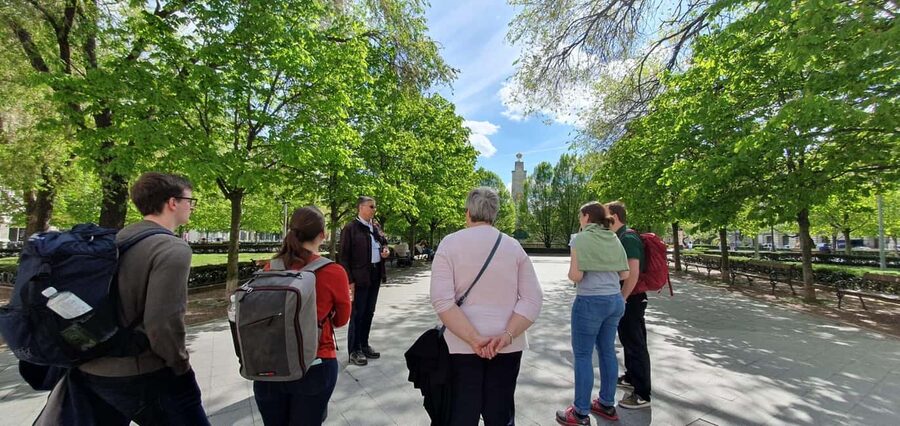
The meeting point is by the statue of Gyula Andrássy, where your guide will be easy to spot with a tour guide card. That matters more than you’d think on your first morning in Budapest. One of the best things about starting here is that you’re immediately in the “big picture” zone: river-hill views, major civic buildings, and the city’s classic axes.
The tour begins with a short explanation of Hungarian history right as you’re standing in place. It’s not an overload of dates. The goal is practical: you learn enough so the rest of the walk makes sense as you go. You’ll also see why Hungary’s story gets braided into everyday politics, culture, and even the way people talk about public life.
Then comes the first big stop: the Houses of Parliament. You get a photo stop plus a guided tour (about 15 minutes). Even if you’re only viewing from outside, it’s still one of the most dramatic façades in the city. The guiding here helps you notice details you’d normally skip—because someone gives you a reason to look at the right parts.
Szabadság Square and St. Stephen’s Basilica: architecture you can map to the city
After Parliament, the walk heads through the downtown spine with a stop at Szabadság Square. This is another photo stop with guided sightseeing (around 15 minutes). Squares in Budapest aren’t just open space. They’re where the city “announces itself,” and they often connect to commerce, public life, and the flow of daily routines. You’ll learn how to read that layout as you walk.
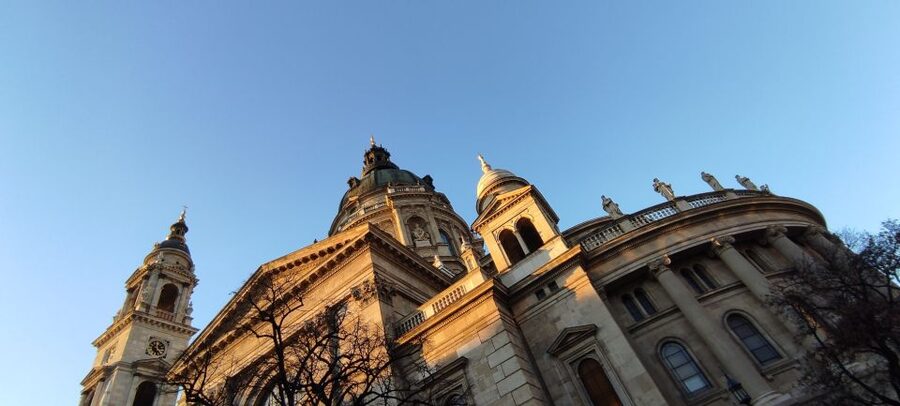
Next you’ll reach St. Stephen’s Basilica for another photo stop and guided sightseeing (again about 15 minutes). This is the kind of landmark that can feel generic if you only glance at it. With a guide, it becomes a reference point you can use later—especially if your plans include churches, museums, or simply wandering through the center.
Two helpful details you’ll get here:
- how the building fits into Budapest’s identity as a capital city
- how nearby streets and sightlines connect, so you don’t feel lost once the tour moves on
You also won’t be bored by the pacing. With a total duration of 2.5 hours, the tour keeps each stop snappy enough to maintain momentum, but long enough to make the main sights feel anchored.
Downtown Budapest 1890s buildings: banks, daily life, and what people did with money
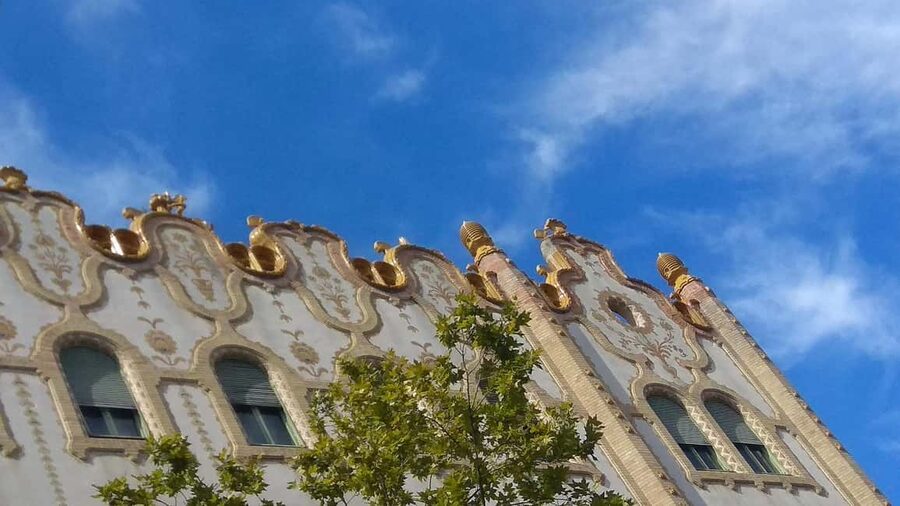
The middle of the walk is where Budapest really turns into a living city. You’ll pass 19th- and 20th-century style civic architecture, including Art Nouveau–influenced palaces and standout financial buildings. The route specifically highlights places like the Postal Saving Bank and the Hungarian National Bank area, which is a smart choice for first-time visitors.
Why does this matter? Because it connects the city to real human habits—how money, institutions, and politics shape daily life. You’ll hear about the history and habits of Hungary and Hungarians in a way that makes street-level details click. Instead of memorizing facts, you learn to interpret what you’re seeing.
The tour’s approach also helps you understand Budapest’s center as a system: public buildings create “meeting points,” squares organize movement, and grand architecture sits right alongside normal life. That blend is one reason Budapest feels different from cities where the historic core is frozen into museum mode.
Also note what you won’t get: the tour is no-entrance-fees and does not include going inside buildings. That’s not a downside for everyone—if you’re mostly there to orient yourself and enjoy the city from the street, outside viewing is plenty. But if you were hoping for interior access, you’ll want to plan separate tickets for specific attractions.
Jewish Quarter walkthrough: synagogues, monuments, and modern street life
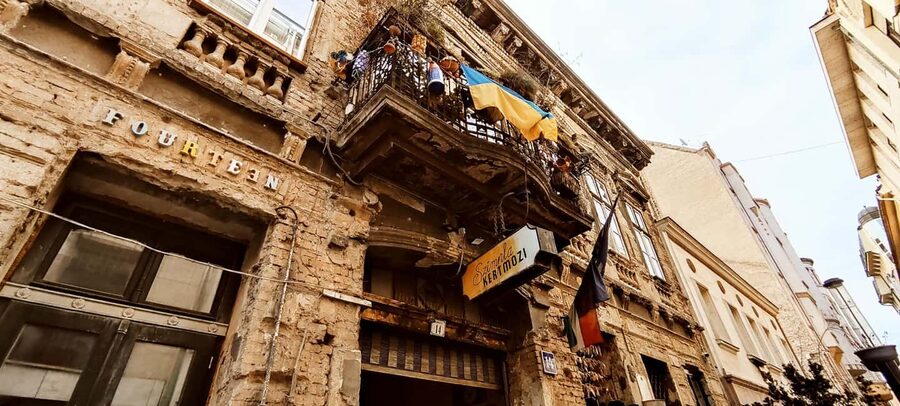
Now for the part most people remember: the Jewish Quarter stretch. The walking time here is longer (about 50 minutes), and that’s appropriate. This neighborhood can’t be understood in ten seconds. It’s layered—old religious landmarks right next to newer voices in street art and nightlife.
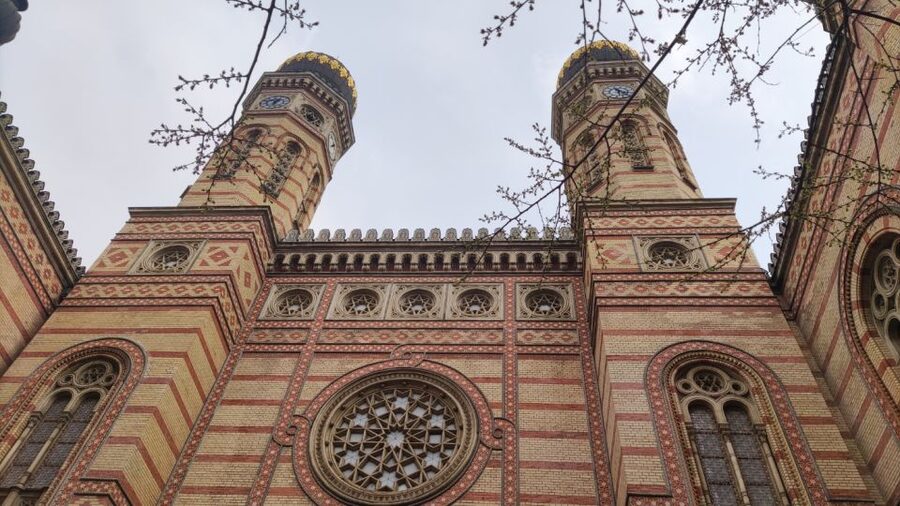
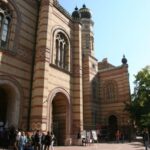
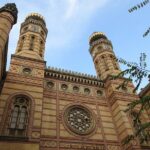
You’ll see several major synagogues on this route, including:
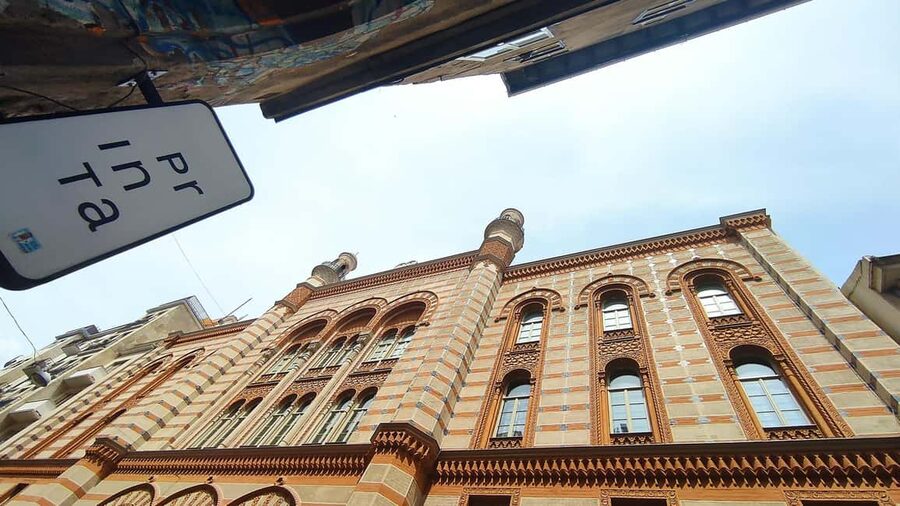
- Rumbach Synagogue
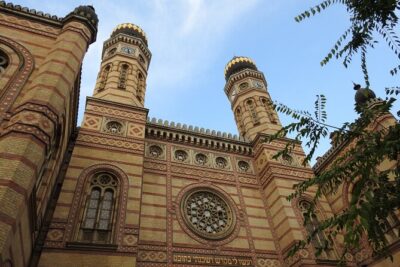
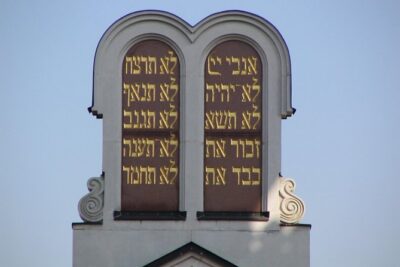
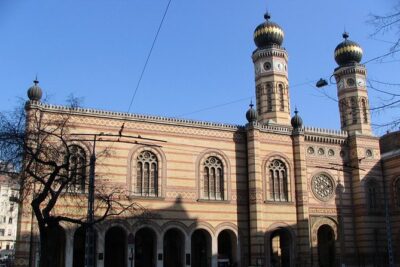
- Dohány Synagogue
- Kazinczy Synagogue
And you’ll also learn about Jewish monuments in the area. The guiding style matters here. From the tone of guides who have led this tour—people like Georgiana, Zsuzsanna Berts, Zsuzsanna (often praised as Szusza), and Gábor—you can expect stories and small anecdotes that help you connect history to the street. Multiple guides are noted for being friendly, funny, and quick to answer questions, which is a big deal when you’re walking through a neighborhood with emotion and complexity.
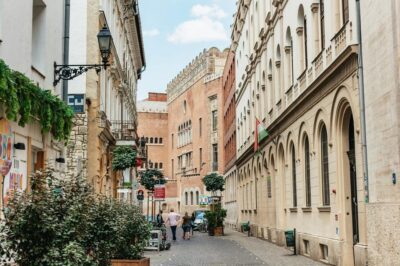
One thing I appreciate about the route is that it doesn’t treat the Jewish Quarter as frozen history. Your walk also includes modern street art and the presence of ruin pubs, which are part of how the district lives today. You’ll get tips on where to eat and drink, but it’s not random. It’s tied to the geography so you can follow through after the tour.
Wider sweeps across the two banks


Ending at Kazinczy Street and Szimpla Kert: turn the walk into a real plan
The tour finishes around Kazinczy Street, near Karavan Street Food and the famous Szimpla ruin pub area. The listed end point is Szimpla Kert, which is a very practical place to stop because it’s already part of the neighborhood’s social map.
If you like your evenings casual, this ending helps you keep momentum. Instead of scrambling for dinner far from where you’ve just been, you can grab something close by and keep wandering while the tour information is still fresh in your head.
It’s also a good point to pause and reflect. By the time you reach the finish, you’ve moved through:
- major political architecture (Parliament)
- landmark civic/religious visibility (basilica)
- downtown institutions tied to money and public life
- Jewish Quarter sites tied to both heritage and current culture
That sequence helps you see Budapest as a connected city rather than separate attractions.
Price and value: $23 for a route that teaches you how to see
At $23 per person for 2.5 hours, this is priced like a serious value, not a “just show me the sights” stroll. What you’re paying for isn’t only walking time. You’re paying for:
- live German guiding
- a tight, high-impact route through central Budapest
- small/medium group dynamics
- digital add-ons: a Budapest Restaurant guide (digital issue) and a Budapest Money Saver & Guide (digital issue)
The included digital guides are especially useful because they extend the experience beyond the 2.5 hours. After a walking tour, your biggest problem is usually choice overload. These guides help you narrow down where to go next and how to avoid the tourist traps that drain your budget.
And since the route focuses on outside viewing, you also avoid the “ticket fatigue” that comes with stacking entrances on a short trip. You get orientation plus context, then you decide later what deserves a paid ticket.
Small-group rhythm and the guides’ style: why the tour feels personal
This tour runs with small/medium-sized groups, which tends to change the vibe immediately. You’re more likely to be able to ask questions without shouting over a crowd. You’re also more likely to keep up with the pace and actually hear the explanations clearly at street level.
The guiding also seems to lean on human storytelling. In multiple notes about this tour, guides are praised for combining history with light humor and personal attention. Names that come up again and again include Zsuzsanna, Szusza, Georgiana, and Gábor. Whether your guide is one of these or someone else, you can reasonably expect the same philosophy: quick context, then walk with purpose.
That style pays off particularly in the Jewish Quarter, where respectful framing matters. A good guide helps you avoid the two extremes: either turning everything into trivia, or making it so heavy you stop noticing the neighborhood’s real character.
Who this fits best (and who should think twice)
This is a strong match if you want:
- a first-time Budapest walk that covers the center efficiently
- an easy way to understand the city’s institutions and street life
- a guided route through the Jewish Quarter that includes major synagogues like Dohány and Kazinczy
- practical restaurant and money-saving ideas you can use right away
It might be less ideal if:
- you don’t understand German well enough to follow the explanations
- you specifically want inside access to buildings, since the tour focuses on exterior viewing
One more practical note: since it’s a walking tour with multiple photo stops, comfortable shoes matter. You’ll be on sidewalks and city surfaces for most of the 2.5 hours.
Should you book this German walking tour?
If you’re in Budapest for a short stay and you want the fastest path to feeling oriented, I’d book this. The route hits high-impact places—Parliament, St. Stephen’s Basilica, and the Jewish Quarter—and the guide work is repeatedly described as engaging and story-driven. For the price, you also get useful digital guides to help you spend time (and money) wisely after the tour.
The only real decision point is language. If German is fine for you, this is a smart, efficient way to start your trip. If not, you may want to look for an English-language alternative so you don’t miss the context that makes the walk click.
FAQ
What language is the tour guided in?
The tour is guided in German.
How long is the walking tour?
The duration is 2.5 hours.
Where do I meet the guide?
Meet by the statue of Gyula Andrássy. The guide will be wearing a tour guide card.
What does the tour include?
It includes live German-language guiding, plus a Budapest Restaurant guide (digital issue) and a Budapest Money Saver & Guide (digital issue). Groups are small or medium-sized.
Are entrance fees included?
No. Entrance fees are not included, and the tour does not go inside buildings.
Is hotel pickup or drop-off included?
No. Hotel pickup and drop-off are not included.
Is the tour wheelchair accessible?
Yes, the tour is wheelchair accessible.
Is there free cancellation?
Yes. You can cancel up to 24 hours in advance for a full refund.
More Tours in Budapest





More Tour Reviews in Budapest





Around the Old Jewish Quarter



Just Added: More Budapest Reviews
- Sightseeing flight over Budapest
★ 5.0 · 3 reviews - Budapest: Walking Tour with Chimney Cake & Polaroid Photos
★ 5.0 · 3 reviews - Self Guided Tour In Budapest With 100 Captivating Audio Stories
★ 5.0 · 3 reviews - Budapest Art Nouveau Walking Tour
★ 5.0 · 3 reviews - Hungary today: a no-taboo conversation
★ 5.0 · 3 reviews
Jewish Quarter Tours, compared.
 ★ 5.0Budapest Jewish Heritage Memorial Walking Tour & Synagogue EntryFrom $83568 reviews
 ★ 4.8Jewish Heritage Guided Tour with Synagogue TicketFrom $81533 reviews
 ★ 4.7Jewish Quarter of Budapest Walking TourFrom $2369 reviews
 ★ 5.0Past and Present of Budapest Jewish District TourFrom $3264 reviews
 ★ 4.5Budapest Dohany Synagogue & Hungarian Jewish Museum & free extrasFrom $44218 reviews
 ★ 5.0Budapest City Walk in Jewish QuarterFrom $356218 reviews
 ★ 4.8Jewish History Guided Walking Tour with HistorianFrom $63205 reviews
 ★ 5.0Budapest Dohany, Heroes’, Rumbach synagogues & Jewish Ghetto TourFrom $63200 reviews
Browse the lists this tour appears in