
Reviewed · JEWISH QUARTER TOURS
Budapest Dohany, Heroes’, Rumbach synagogues & Jewish Ghetto Tour
Budapest’s Jewish Quarter hits hard and stays clear. This 2-hour 20-minute walking experience maps the past onto the present, from the Great Synagogue to the ghetto-era memorial grounds. I especially like how the stop at the Great Synagogue connects architecture, religion, and community history in one place.
My other big win is the emotional focus at the memorial park, where you’re not just reading dates. You see the Raoul Wallenberg memorial area, including the Tree of Life symbol and the Holocaust Cemetery on ghetto ground. The only real consideration is the pace and the focus: it packs in several key sites, and the name mentions Heroes’ Square even though the walk centers on the Jewish Quarter and synagogues.
In This Review
- What you’ll notice right away on this tour
- Entering the Great Synagogue on Dohány Street
- Raoul Wallenberg memorial park: specific symbols, specific loss
- Rumbach Street Synagogue: Otto Wagner’s Moorish return
- Király Street, Gozsdu Udvar, and the Jewish Quarter’s everyday layers
- Carl Lutz, Spinoza Szinhaz, and names that carry meaning
- Dob Street and Kazinczy Street: from ghetto lines to Orthodox life
- Walking pace, dress code, and how to prepare
- Price and value: what you’re paying for
- Is it worth it for you?
- Should you book this Budapest Jewish Quarter tour?
- FAQ
- Where does the tour start and where does it end?
- How long is the tour?
- Is the tour available in English?
- What is the price per person?
- Which stops include admission tickets?
- Are there any dress code rules?
- Is Kazinczy Street Synagogue admission included?
- What kind of walking is involved?
- What happens if synagogues close temporarily?
- What if the weather is poor?
What you’ll notice right away on this tour
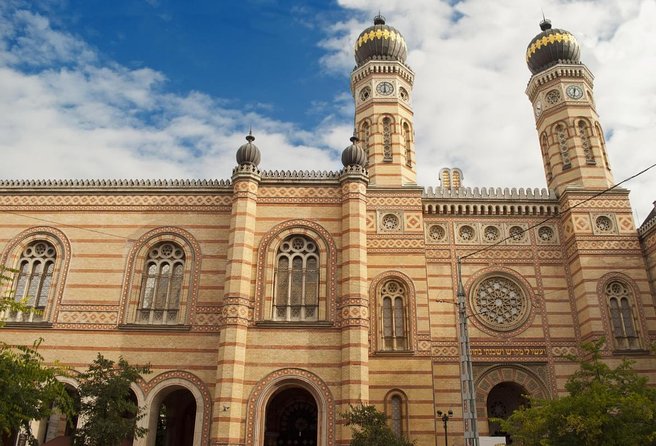
- Included entry at the Great/Central Synagogue, the Holocaust Memorial Park area, and the Rumbach Street Synagogue
- A guided story that ties people to places, not just buildings and dates
- Strong contrast in Jewish life in Budapest, from Neologue context to Orthodox spaces you pass by
- Architecture lovers get their money’s worth, from Otto Wagner’s design to Secession-era streetscapes
- Holocaust history is handled with specific markers, including the Holocaust Cemetery with more than 2,000 victims
Deeper into old District VII
- Budapest Jewish Heritage Memorial Walking Tour & Synagogue Entry★ 5.0 · 568 reviews
- Budapest: Jewish Heritage Guided Tour with Synagogue Ticket★ 4.8 · 533 reviews
- Jewish Quarter of Budapest Walking Tour★ 4.7 · 369 reviews
- German tour in the Budapest city centre & the Jewish quarter★ 5.0 · 359 reviews
Entering the Great Synagogue on Dohány Street
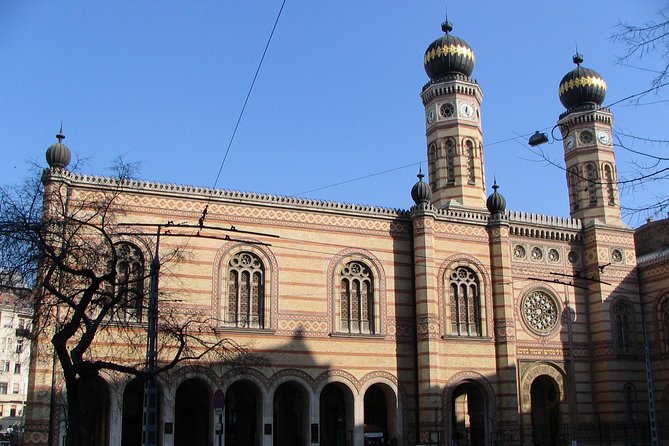
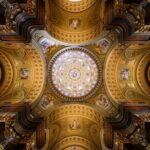
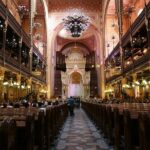
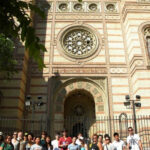
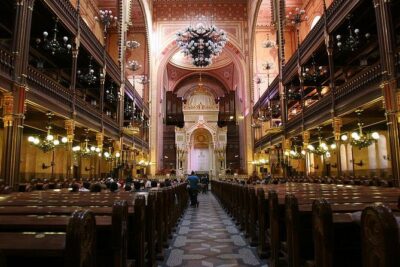
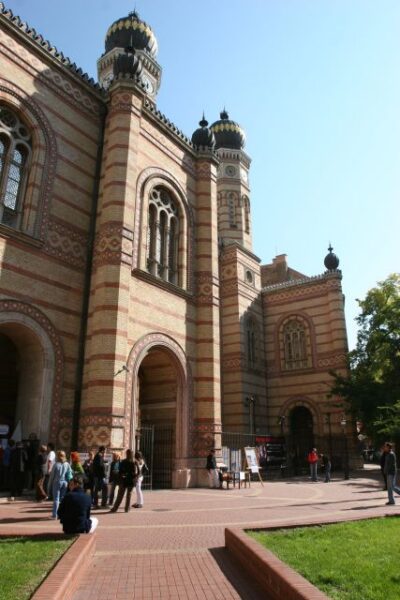
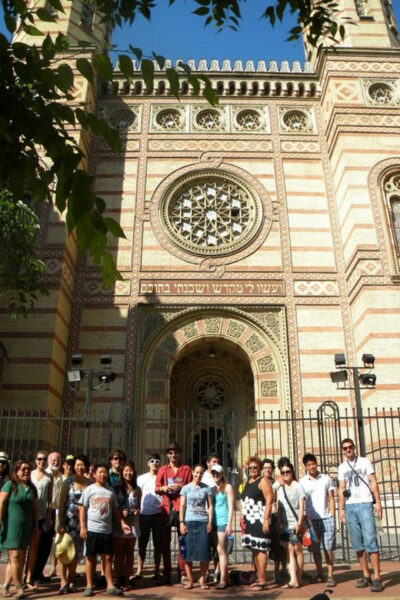
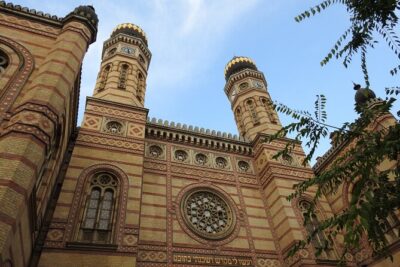
The tour starts at Dohány u. 2-4, right by the Great/Central Synagogue, and that matters because you get oriented fast. This is the largest Jewish temple of Europe, and the guide’s framing helps you notice what you’d otherwise miss: the building is not only impressive, it’s a statement about Hungarian Jewish identity and public life.
Inside, you’ll learn about the Hungarian Neologue Jewish Community and how Hungarian Jewry developed over time. You’ll also hear about musical life tied to the synagogue, including the organ connection linked to Franz Liszt. Even if you’re not a history nerd, that kind of detail makes the room feel alive instead of like a museum hall.
Practical note: the synagogue interior is a major highlight, and you should plan to slow down. People sometimes rush in big churches and big sites; here, I’d do the opposite. Look up, then look for details the guide points out.
Raoul Wallenberg memorial park: specific symbols, specific loss
Next you move to the Raoul Wallenberg Holocaust Memorial Park. This stop is the emotional core, and it works because it’s grounded in concrete elements, not vague summaries. You’ll learn about the Hungarian Holocaust and the Righteous Gentiles who saved tens of thousands of Hungarian Jews, risking their own lives.
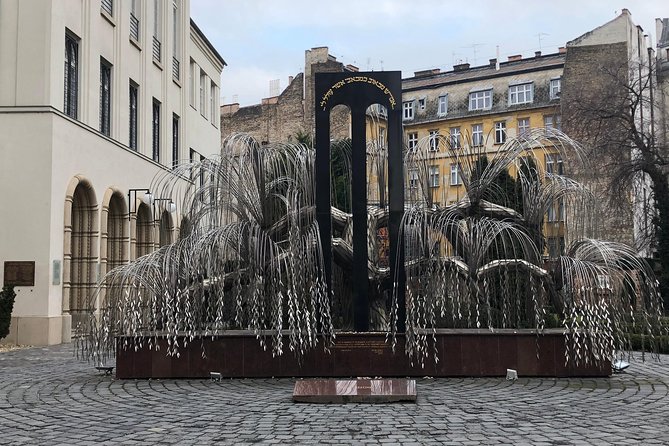
You visit the Emmanuel Tree of Life Memorial, a short stop but a powerful one because it gives the story a visual anchor. After that, you’ll go to the Holocaust Cemetery created on ghetto territory, where more than 2,000 victims are laid to rest. This is one of those places where your brain knows you’re outdoors, but your body feels like you’re in a solemn space.
One helpful tip: bring your attention with you. Don’t just listen while you walk. Pause for a few seconds when the guide calls out the cemetery area, because the emotional weight is easy to steamroll if you keep moving too fast.
Rumbach Street Synagogue: Otto Wagner’s Moorish return
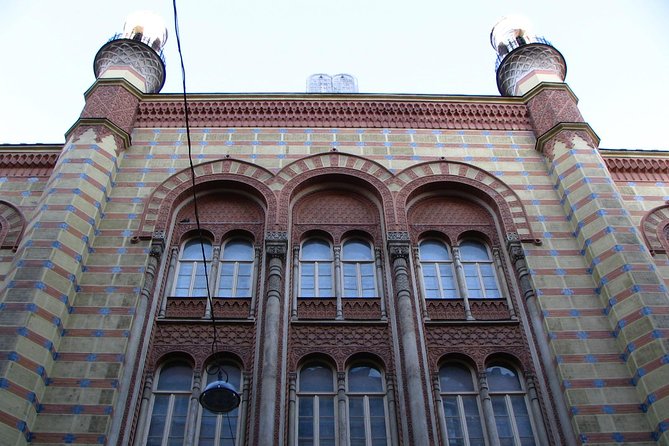
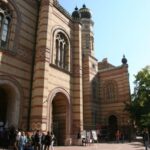
Rumbach Street Synagogue is the surprise for many people. The building itself is described as a masterpiece by Viennese architect Otto Wagner, originally from 1872, and the tone shifts from memorial gravity back into architectural wonder.
What you’ll like here is the “why” behind the style. The synagogue is Moorish in character, and that mix feels like a puzzle piece for Budapest: different influences, different eras, and a community shaping public space through bold design. The building also has a recent reopening after many years of renovations, so you’re seeing a space that’s been brought back with care.
This stop is also a good reminder that the Jewish Quarter isn’t only about loss. It’s also about cultural continuity and survival through time. You’ll walk along the streets of the former ghetto area toward the synagogue, so even the approach feels like part of the lesson.
Király Street, Gozsdu Udvar, and the Jewish Quarter’s everyday layers
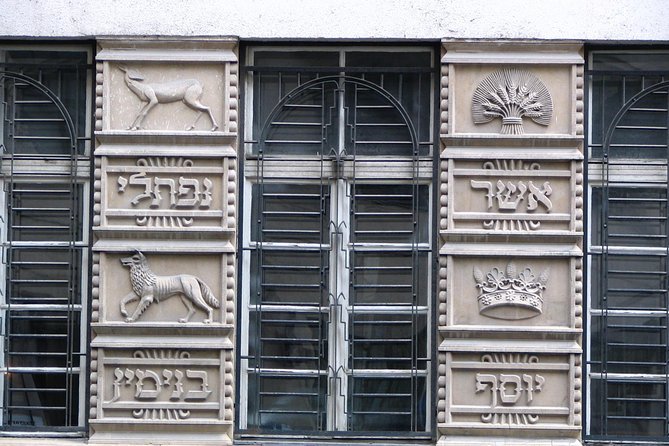
After the synagogues and memorial stops, the route shifts into streetscape mode. You’ll walk parts of Királ(y) Street, which was a high street of Pest in the 18th and early 19th centuries and became a cradle of Jewish life as a commercial and trade center. Today, you’ll see that commercial energy again, but now with a cultural mix that’s easy to experience on foot.
A short hop brings you to Gozsdu Udvar, one of the most colorful corners of the Jewish district. It’s also a place where the past hides under the present: in earlier days, it housed kosher salami stores and other food stores, plus apartments. Now it’s a meeting point for local Jewish artists and artisans, and you can stop for something to eat or drink if your schedule allows.
This is also where the tour notes a famous local treat: kosher flodni, a Hungarian Jewish cake. You likely won’t get time for a full sit-down tasting, so treat this as a “pass-by and decide” moment. If food is your priority, you can plan to return later on your own.


Carl Lutz, Spinoza Szinhaz, and names that carry meaning
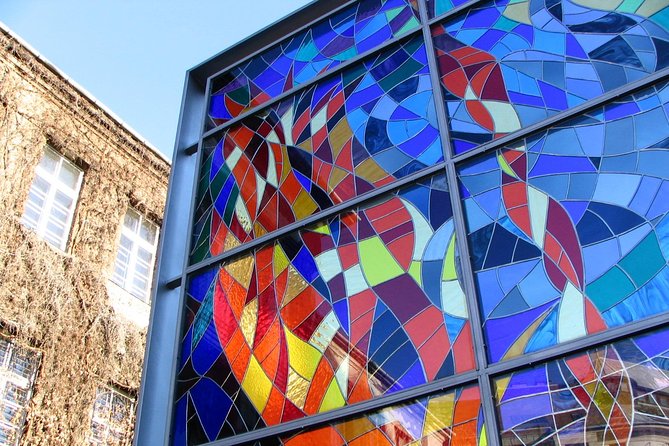
On the way, you’ll encounter the Carl Lutz Memorial, a short stop that spotlights another key strand of the rescue story. The guide’s framing connects this to the larger theme of Righteous Gentiles saving thousands of Hungarian Jews during the Holocaust.
Then you pass by Spinoza Szinhaz, a cultural stage named after the Jewish Dutch philosopher of Portuguese Sephardi origin, known as an early Enlightenment figure. The detail here is practical: it shows how Jewish heritage in Budapest isn’t stuck in the past. It also shows up in modern cultural spaces, street names, and institutions.
These smaller stops are quick, but that’s their job. They keep the tour from feeling like only big-ticket monuments. You get texture: memory, culture, and identity threaded through the neighborhood.
Dob Street and Kazinczy Street: from ghetto lines to Orthodox life
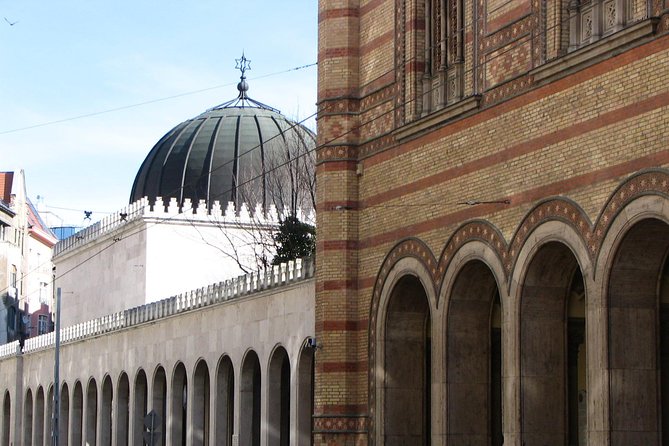
You’ll also walk Dob Street, which runs parallel to Királ(y) Street and was central to the Jewish district of Pest. The important historical note is that it ran through the center of the Budapest ghetto. Even if you’re just looking at storefronts and street life, the guide’s context can flip your perspective fast.
Later, you reach Kazinczy Street, known today as a cultural street with ruin bars and nightlife energy. But the tour also points out the Orthodox Jewish Center here, including a synagogue, a mikveh, kosher restaurants and cafes, schools, and kosher food stores. It’s a useful contrast to the Neologue context you saw earlier at the Great Synagogue.
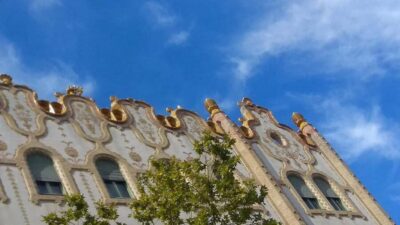
You’ll also admire early 20th-century Art Nouveau architecture in Budapest, often called Secession. The Kazinczy street synagogue stop notes that admission is not included, so if you want to go inside there, you may need to pay extra or adjust your expectations.
Walking pace, dress code, and how to prepare
This tour runs about 2 hours 20 minutes and is designed as a walking circuit. The experience is offered in English, and the group size is capped at 35 travelers, which usually keeps the flow manageable.
The dress code is real and specific: shoulders must be covered, and clothing must reach the knee or be covered before entering. There’s cover available for purchase on the spot, and men can get a head cover at entry. Bring something that works even if the weather is cool, because synagogue visits and memorial areas can feel chilly when you pause and stand.
Also keep in mind: synagogues may close temporarily without announced notice. If a closure affects one synagogue, the provider will offer an alternative visiting time. Refunds are not offered for those changes because it’s a package deal.
Price and value: what you’re paying for
The price is $63.52 per person, and the value is in the combo of major interiors plus guided context. Entry is included for the Great Synagogue, the memorial park area you visit, and the Rumbach Synagogue.
A few other stops are free exterior or short viewing moments, like Királ(y) Street, Gozsdu Udvar, Carl Lutz, Spinoza Szinhaz, and Dob Street. Kazinczy Street’s synagogue admission is not included, so that can be the one place where you might spend extra if you want full access.
If you’re deciding between doing this area on your own and booking a guide, ask yourself what you want more: quick photos or clear meaning. This tour is built for meaning. It also helps you avoid the common problem of wandering between sites with no connection between them.
Is it worth it for you?
I think this tour is a strong fit if you want Budapest’s Jewish Quarter to feel structured and explained. It’s also ideal if you like architecture with context and you want your Holocaust education to be tied to actual places, symbols, and memorial geography.
It’s less perfect if you want a long, leisurely stroll with lots of free time for cafes and shopping. This experience prioritizes key stops and narration, and it moves through the neighborhood efficiently.
And one more thing to watch: the tour title mentions Heroes’ Square, but the actual focus is on the Jewish Quarter and synagogue/memorial sites. Don’t plan your day around a Heroes’ Square visit based on the name alone.
Should you book this Budapest Jewish Quarter tour?
Book it if you want a guided walk that connects synagogues, neighborhood streets, and Holocaust memory into one clear route, with entry included for the biggest indoor stops. The strongest reason to go is the way the guide ties architecture and community history to the real stakes of survival and rescue.
If you hate structured tours, need long breaks, or are expecting Heroes’ Square as a guaranteed stop, you might want a different option. For most visitors who want an honest, place-based introduction to Budapest Jewish life, this one is worth your time.
FAQ
Where does the tour start and where does it end?
It starts at Budapest, Dohány u. 2-4, 1075 Hungary, and ends at the Rumbach Street Synagogue in Budapest, Rumbach Sebestyén u. 13, 1074 Hungary.
How long is the tour?
The duration is about 2 hours 20 minutes.
Is the tour available in English?
Yes, it’s offered in English.
What is the price per person?
The price is $63.52 per person.
Which stops include admission tickets?
Admission is included for the Great/Central Synagogue, the Raoul Wallenberg Holocaust Memorial Park area stops, and the Rumbach Street Synagogue.
Are there any dress code rules?
Yes. Shoulders must be covered, and clothing must reach the knee or be covered before entering. Cover is available for purchase on the spot, and men can receive head cover upon entry.
Is Kazinczy Street Synagogue admission included?
No. Admission for the Kazinczy Street Synagogue is listed as not included.
What kind of walking is involved?
The tour is a walking route around the Jewish district and synagogues. The activity notes that most travelers can participate, but it is not described as fully non-walking.
What happens if synagogues close temporarily?
If synagogues close unannounced and affect one synagogue, the provider offers an alternative visiting time. Refunds are not offered because it is a package deal. If all synagogues close unannounced, the provider will offer alternative hours/dates or full refunds.
What if the weather is poor?
The experience requires good weather. If it’s canceled due to poor weather, you’ll be offered a different date or a full refund.
More Tours in Budapest



More Tour Reviews in Budapest





Around the Old Jewish Quarter

Just Added: More Budapest Reviews
- Sightseeing flight over Budapest
★ 5.0 · 3 reviews - Budapest: Walking Tour with Chimney Cake & Polaroid Photos
★ 5.0 · 3 reviews - Self Guided Tour In Budapest With 100 Captivating Audio Stories
★ 5.0 · 3 reviews - Budapest Art Nouveau Walking Tour
★ 5.0 · 3 reviews - Hungary today: a no-taboo conversation
★ 5.0 · 3 reviews
Jewish Quarter Tours, compared.
 ★ 5.0Budapest Jewish Heritage Memorial Walking Tour & Synagogue EntryFrom $83568 reviews
 ★ 4.8Jewish Heritage Guided Tour with Synagogue TicketFrom $81533 reviews
 ★ 4.7Jewish Quarter of Budapest Walking TourFrom $2369 reviews
 ★ 5.0German tour in the Budapest city centre & the Jewish quarterFrom $23359 reviews
 ★ 5.0Past and Present of Budapest Jewish District TourFrom $3264 reviews
 ★ 4.5Budapest Dohany Synagogue & Hungarian Jewish Museum & free extrasFrom $44218 reviews
 ★ 5.0Budapest City Walk in Jewish QuarterFrom $356218 reviews
 ★ 4.8Jewish History Guided Walking Tour with HistorianFrom $63205 reviews
Browse the lists this tour appears in