
Reviewed · JEWISH QUARTER TOURS
Private Jewish Quarter Walking Tour with Synagogue entry
3 hours in Budapest feels like a full chapter. You’ll connect the Jewish Quarter’s architecture to the stories tied to the ghetto wall and the Holocaust memorial sites, with skip-the-line access at the Great Synagogue. I like how this tour balances street-level sights—memorial art and fragments of wall—with a real interior visit at Dohány Street Synagogue rather than just a photo stop.
What I also like: you’re not doing this solo. With a private English guide (Klaudia has been leading for this operator), you get context for details you’d otherwise miss, from the ghetto wall fragment to the religious and cultural landmarks like Rumbach and Kazinczy. One drawback to consider: the schedule is tight, and while the tour includes major synagogue admissions, some people may find the time inside Kazinczy or Rumbach is shorter than expected compared with the big focus at Dohány Street Synagogue.
In This Review
- Key Points Before You Go
- Why the Jewish Quarter Tour Feels Efficient in 3 Hours
- Meeting at Budapest Eye (Óriáskereke) with a Clear Start
- Raoul Wallenberg and the Streets That Lead You to the Past
- Rumbach Street Synagogue: Moorish Style and a Recently Restored Voice
- Gozsdu Udvar and Király Street: Where History Meets Modern Budapest
- The Ghetto Wall Fragment: Real Material, Real Impact
- Kazinczy Street Orthodox Synagogue: Art Nouveau Details You Can Actually Notice
- Emanuel Tree Budapest: A Short Stop with a Message
- Dohány Street Synagogue: The Main Event (and Why Skip-the-Line Matters)
- What to expect inside
- Ghetto Memorial Wall Near Dohány Street: A Final Reminder in Stone
- Price and What You’re Really Paying For ($129 for 3 Hours)
- Who This Tour Suits Best (and Who Might Want a Different Plan)
- Practical Tips That Make the Walk Easier
- Should You Book This Private Jewish Quarter Tour with Synagogue Entry?
- FAQ
- Where is the meeting point?
- How long is the tour?
- What do I get with the ticket?
- Which synagogues are included?
- What is the main synagogue visit length?
- Where does the tour end?
- What should I bring?
- Is flash photography allowed?
- Is it wheelchair accessible?
Key Points Before You Go
- Skip-the-line access helps you get into the Great Synagogue without the usual queue headache.
- Ghetto Wall Fragment + Ghetto Memorial Wall give you physical “proof” of what was once there.
- Two smaller synagogue stops (Rumbach and Kazinczy) add architectural variety: Moorish Revival and Art Nouveau.
- Your guide matters: English narration by Klaudia has been a highlight for many guests.
- You finish near Herzl Tivadar park, so you can keep exploring right after the tour ends.
Deeper into old District VII
- Budapest Jewish Heritage Memorial Walking Tour & Synagogue Entry★ 5.0 · 568 reviews
- Budapest: Jewish Heritage Guided Tour with Synagogue Ticket★ 4.8 · 533 reviews
- Jewish Quarter of Budapest Walking Tour★ 4.7 · 369 reviews
- German tour in the Budapest city centre & the Jewish quarter★ 5.0 · 359 reviews
Why the Jewish Quarter Tour Feels Efficient in 3 Hours
Budapest’s Jewish Quarter can be confusing if you’re walking it cold. The streets are close together, and memorials sit next to ordinary bars, cafes, and apartments. This tour keeps your bearings by grouping the most meaningful sites into a single flow.
In three hours, you cover multiple layers at once: daily street life, major synagogues, and the wartime geography of confinement. The key is that it’s not just about seeing big buildings. You’ll also get time at the ghetto wall remains and the Holocaust memorial complex around Dohány Street Synagogue, where the architecture is part of the message.
Meeting at Budapest Eye (Óriáskereke) with a Clear Start
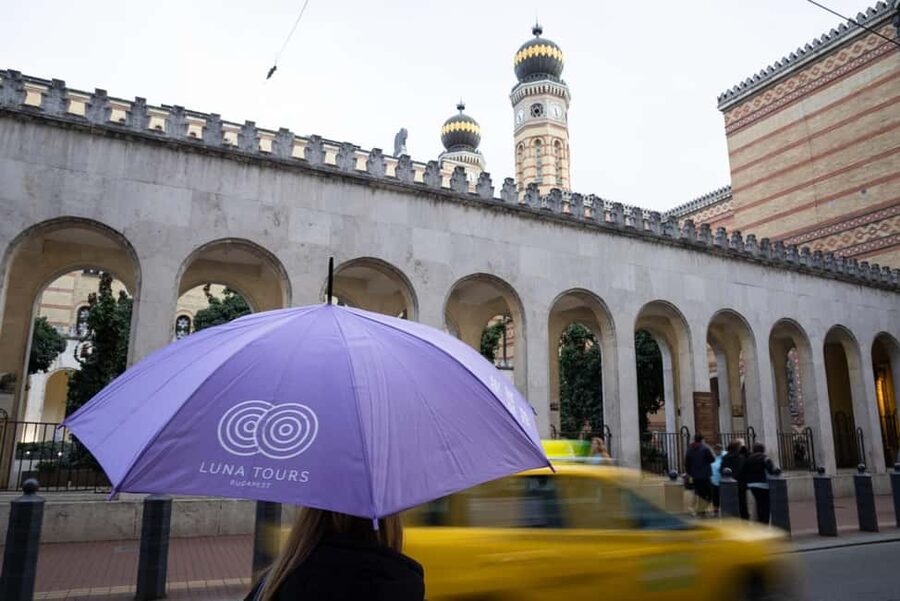
Your tour kicks off at Budapest Eye (the Óriáskereke Ferris wheel). Look for the PURPLE umbrella and a huge smile—yes, really. That makes an otherwise busy meeting point easier to find, especially if you’re arriving from the tram or metro.
This is a good start for practical reasons. From here, the tour can swing you into the heart of the Jewish Quarter without wasting time on awkward transit. Also, Elisabeth Square (Erzsébet tér) and the surrounding landmarks help set tone early, including the Raoul Wallenberg Suitcase Memorial, which anchors the tour in a real humanitarian story before you move into memorial and synagogue sites.
Raoul Wallenberg and the Streets That Lead You to the Past
Early on, you’ll pass through area points of interest that explain how this district has changed over time while still carrying visible marks of its former life. One of the most memorable early stops is the Raoul Wallenberg Suitcase Memorial—the bronze suitcase reference is a simple symbol with heavy weight.
You’ll also go through the area around Madách Imre Square, including that famous archway linked to former housing complex history. The practical value here is that it helps you understand why people once lived, worked, and gathered where they did—and how the neighborhood’s present-day street pattern connects to that past.
If you’re the type who likes to know where you are before you start snapping photos, this section helps a lot.
Rumbach Street Synagogue: Moorish Style and a Recently Restored Voice
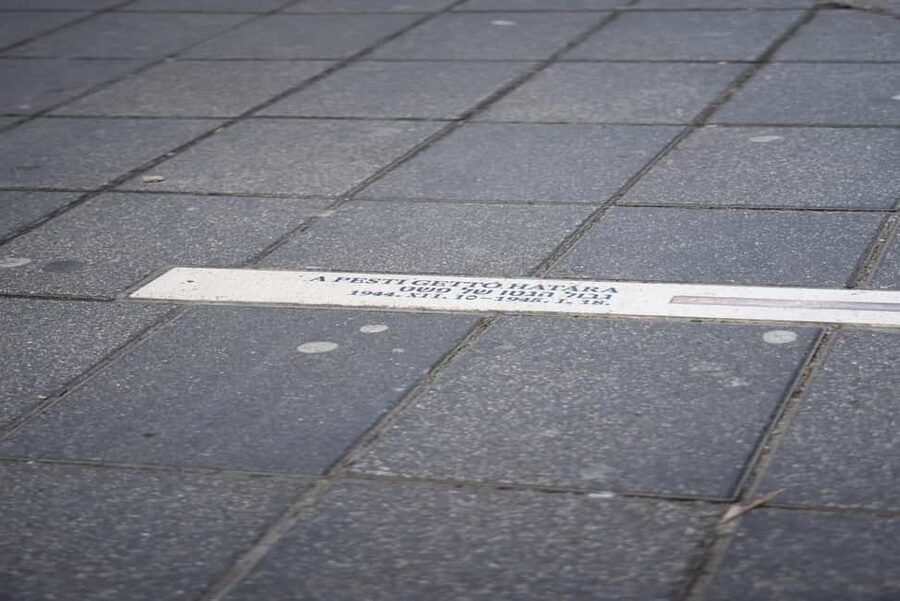
Rumbach Street Synagogue (on Rumbach Street) is one of the stops where you’ll immediately notice design. Expect the Moorish-style look, and it’s worth treating it as more than a pretty building. It’s a religious and cultural landmark tied to Budapest’s Jewish heritage, designed by Austrian architect Otto Wagner in 1872 and recently restored to support its current role.
The tour timing here is a quick pass (you’ll spend a short window near the synagogue). So don’t plan on a long, slow read of every detail unless you’re comfortable doing a fast architecture scan. Still, the value is that your guide can point out what to look for so you’re not just photographing walls.
Budapest at street level, more routes on foot
Gozsdu Udvar and Király Street: Where History Meets Modern Budapest
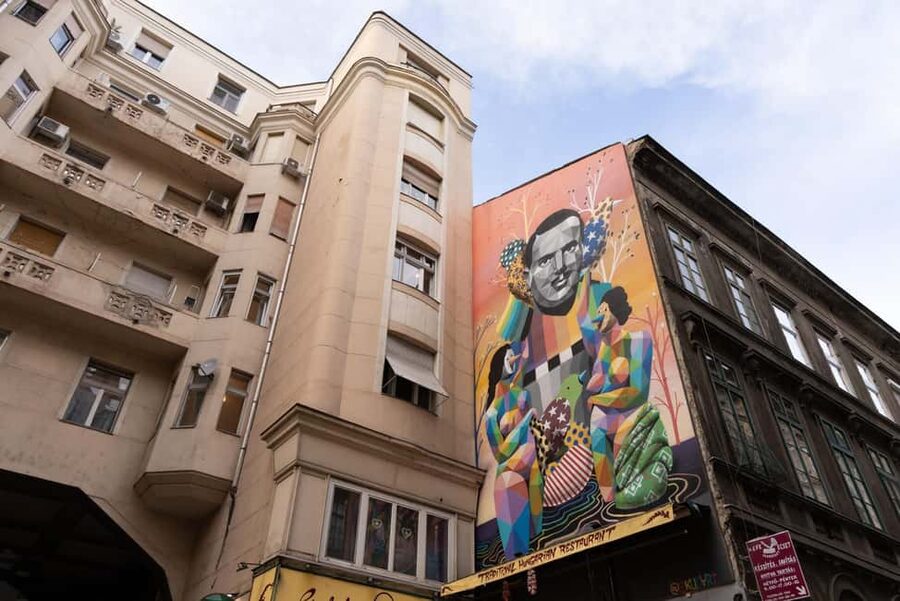
You’ll move through the area around Király Street and Gozsdu, which is part of the Jewish Quarter’s commercial story. Today it mixes historic buildings with modern food and drink culture, including the kind of street energy you’ll see in many central districts of Budapest.
This part matters because it prevents the tour from becoming only dark and solemn. You’ll see how the neighborhood functions now. Then, when you return to memorial sites later, they hit harder because you’re seeing the contrast between daily life and the history embedded nearby.
The Ghetto Wall Fragment: Real Material, Real Impact
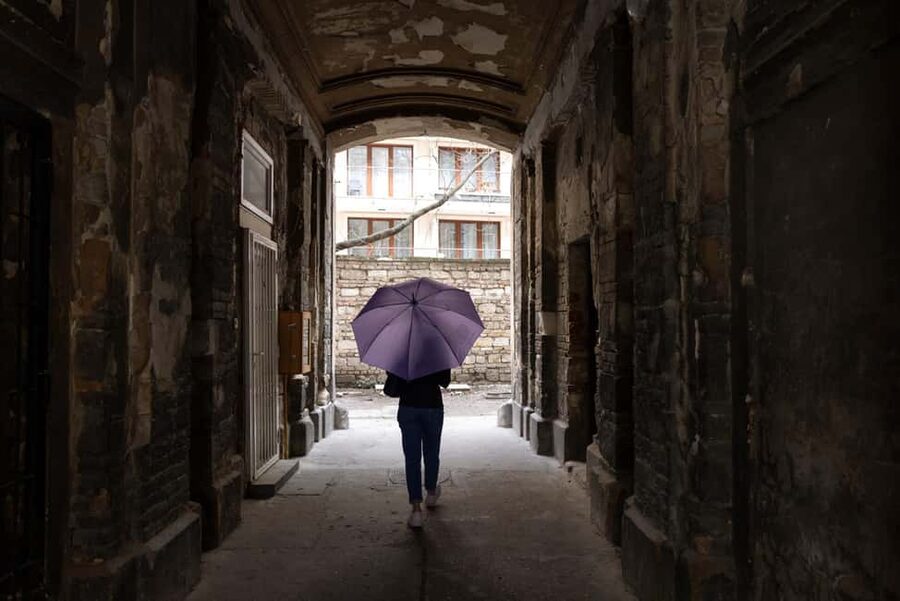
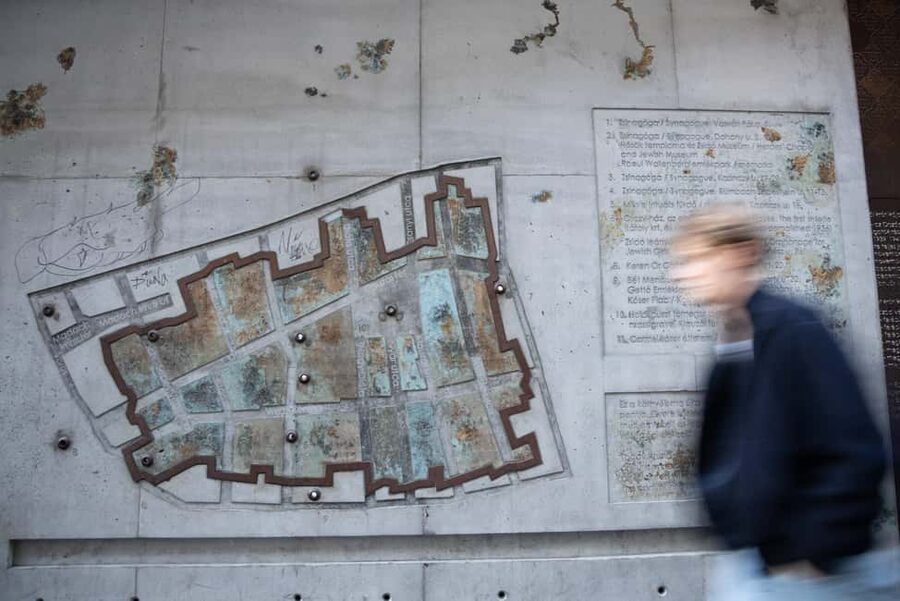
This stop is one of the emotional anchors of the walk. You’ll visit a Jewish Ghetto Wall fragment—one of the last remaining pieces of the wall that enclosed the Jewish ghetto during World War II. The fact that it’s fragmentary is important. You’re looking at what survived, not a full reconstructed wall.
Right near this area, there’s also the Ghetto Wall Exhibition setup with photos, documents, and personal stories that provide the context you’d need. Even if you don’t read everything on display in the time you have, the exhibition gives you a framework: who was confined, how daily life was constrained, and what the wall meant in practice.
Practical tip: bring patience for this stop. It’s not the type of place you rush through. If you like taking notes or reading captions, plan for a few extra minutes here even within the overall 3-hour pacing.
Kazinczy Street Orthodox Synagogue: Art Nouveau Details You Can Actually Notice
Next comes the Kazinczy Street Orthodox Synagogue. This one is tied to Art Nouveau architecture and serves as a religious center for Budapest’s Orthodox Jewish community.
You’ll likely spend less time here than at Dohány Street Synagogue, so your best move is to let your guide steer your eyes. This building has features that are easier to appreciate with explanation—things like stained glass and intricate interior woodwork (depending on what’s accessible during your visit). The tour includes entry for major synagogue stops, but the visit may feel shorter in this mid-route section compared with the big finale.
If Orthodox synagogue detail is what interests you most, treat this as a focused primer. You can always come back later on your own with more time.
Emanuel Tree Budapest: A Short Stop with a Message
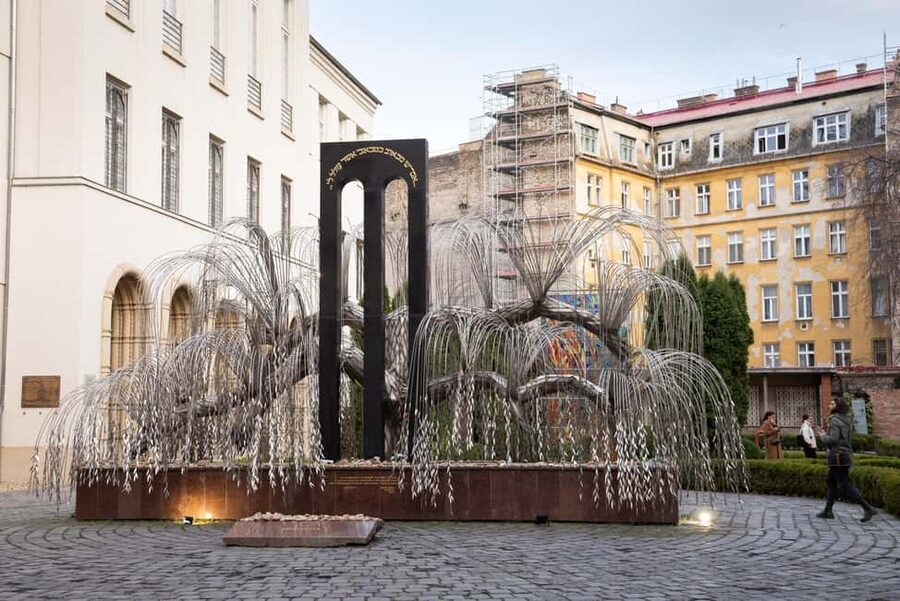
You’ll also visit Emanuel Tree Budapest for about 10 minutes. The tour doesn’t give you a long arc here, so think of it as a pause in the middle—an additional layer of how memory and identity show up in public art and symbolism around the district.
Since this is a short stop, I’d treat it like this: read what you can, look carefully, and don’t expect a full lecture. Your guide’s job here is to connect it to the broader story you’ve been building through the ghetto wall and synagogue sites.
Dohány Street Synagogue: The Main Event (and Why Skip-the-Line Matters)
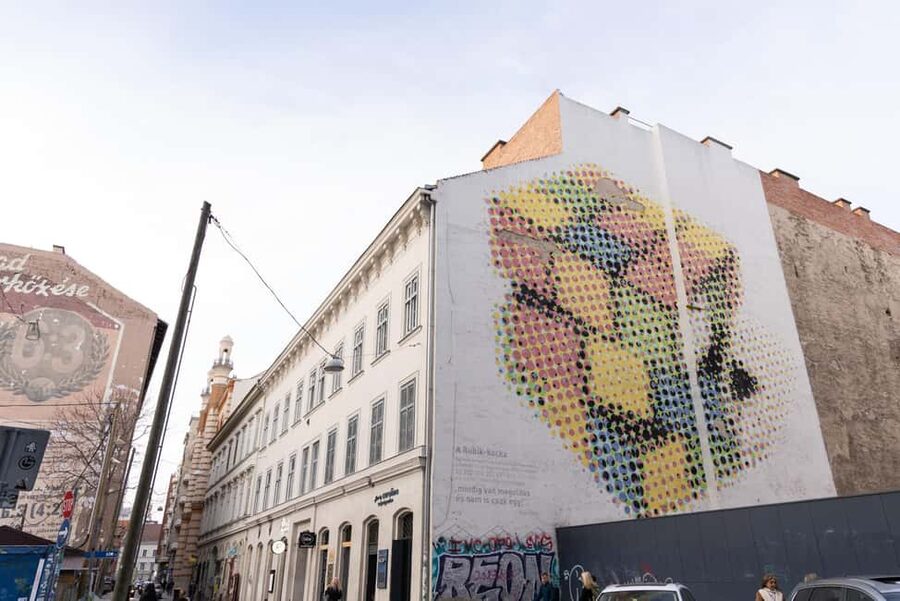
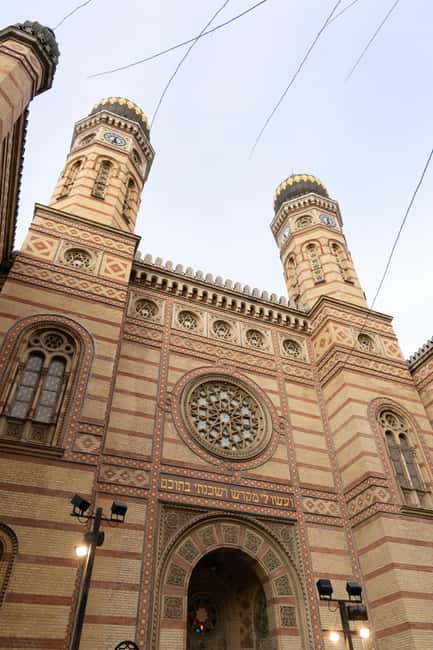
The tour’s centerpiece is Dohány Street Synagogue, also known as the Great Synagogue. It’s the largest synagogue in Europe, built in 1859, and it’s famous for its Moorish Revival architecture.
You get about one hour at Dohány Street Synagogue, which is the right amount of time to do more than the basics. This is where you’ll spend your longest interior focus, including the site’s combined roles as religious center, Holocaust memorial, cemetery, and museum.
This is also where the skip-the-line value really shows. Popular sites in Budapest can have long queues, and those lines eat time you don’t really have on a short tour. With skip-the-line entry, you spend more of your 3 hours looking, listening, and walking inside rather than waiting outside.
What to expect inside
Because you’re joining a guided experience at this stop, you’re not left guessing what you’re looking at. You should get explanation about the Holocaust memorial elements and how the synagogue complex uses space to tell the story of survival and remembrance in Hungary.
If you’re someone who wants time to just sit and absorb, you’ll find a bit of that here too, but don’t expect a totally free-form visit. Your guide’s narrative keeps you moving through the most meaningful areas.
Ghetto Memorial Wall Near Dohány Street: A Final Reminder in Stone
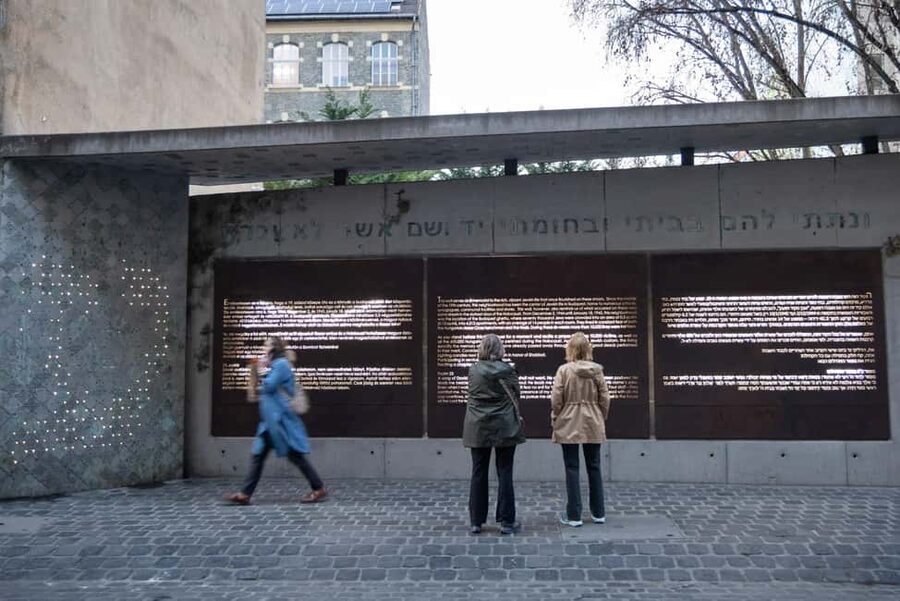
As part of the walk around the memorial area, you’ll also encounter the Ghetto Memorial Wall near Dohány Street Synagogue. This spot preserves a section of the original ghetto wall, and it’s meant as a solemn tribute to victims of the Jewish ghetto during World War II.
This is a good capstone before you leave the immediate complex area. By then, you’ve already seen the ghetto wall fragment earlier, so this stop gives you a wider sense of where the memorial is positioned and how the message evolves as you move through the district.
Price and What You’re Really Paying For ($129 for 3 Hours)
At $129 per person for a 3-hour private tour, the best way to think about value is not just the number of stops. It’s the combination of:
- Skip-the-line entry for the Great Synagogue
- guided time inside Dohány Street Synagogue
- admissions and visits connected to major synagogue landmarks
- a guide-led route through meaningful memorial sites (ghetto wall fragment and ghetto memorial wall)
If you’re used to saving money with self-guided walking, this will feel like a higher spend. But if you hate lines, want context, and prefer a route that doesn’t make you second-guess directions, it can feel fair quickly.
One caution: your time inside Rumbach and Kazinczy may feel shorter than the time at Dohány Street Synagogue. If your main goal is deep, slow interior viewing of multiple synagogues, you should ask the operator beforehand how the interior time is handled for your exact group and day.
Who This Tour Suits Best (and Who Might Want a Different Plan)
This tour is a strong fit if you:
- want a private, English-language guide
- care about history, architecture, and memorial sites in the same walk
- appreciate structure more than improvising your own route
It’s listed as not suitable for:
- children under 10
- pregnant women
- people with mobility impairments
- wheelchair users
So if mobility is a concern, look for an alternative tour format or ask for options that better match your needs.
Also, you’ll be on your feet, so comfortable walking shoes are not optional. Bring water and sunscreen, especially on bright days.
Practical Tips That Make the Walk Easier
A few small things will make your 3 hours smoother:
- Wear comfortable shoes; you’ll be walking between sites.
- Bring water and sunscreen.
- Avoid flash photography where restrictions apply.
- Plan your camera use carefully—there can be photo rules in certain areas.
And for the human part: show up on time at Budapest Eye so the guide can keep the flow.
Should You Book This Private Jewish Quarter Tour with Synagogue Entry?
I think you should book it if your priority is a guided Jewish Quarter walk that treats the big memorial sites with respect and gives you real access at Dohány Street Synagogue. The skip-the-line element and the longer interior focus at the Great Synagogue make it feel worth the price, especially in a city where waiting can quietly drain your day.
I’d hesitate only if you’re expecting equal time inside three different synagogues, with the same depth for each. In practice, Dohány Street is the main event, and the other synagogue stops may be shorter or more focused on what you need to see in the moment.
If you want the district’s story in a tight, organized route, this is a solid choice.
FAQ
Where is the meeting point?
The meeting point is Budapest Eye (Óriáskereke). The guide will be holding a PURPLE umbrella.
How long is the tour?
The tour lasts 3 hours.
What do I get with the ticket?
You get a guided tour of Budapest’s Jewish District, a skip-the-line ticket to the Great Synagogue, private guide time inside the Great Synagogue, admission to major synagogues (Rumbach, Kazinczy, Dohány), and visits connected to the Jewish Cemetery and Memorial Park and the ghetto wall.
Which synagogues are included?
The tour includes admission and visits related to Rumbach Street Synagogue, Kazinczy Street Orthodox Synagogue, and Dohány Street Synagogue.
What is the main synagogue visit length?
The visit at Dohány Street Synagogue is listed as about 1 hour.
Where does the tour end?
The tour ends at Herzl Tivadar park.
What should I bring?
Bring comfortable shoes, sunscreen, and water.
Is flash photography allowed?
Flash photography is not allowed.
Is it wheelchair accessible?
No—wheelchair users are listed as not suitable, and the tour is described as wheelchair accessible in the general activity notes. If this matters for you, confirm with the operator before booking.
More Tour Reviews in Budapest





More of Budapest, Step by Step





Around the Old Jewish Quarter



Just Added: More Budapest Reviews
- Sightseeing flight over Budapest
★ 5.0 · 3 reviews - Budapest: Walking Tour with Chimney Cake & Polaroid Photos
★ 5.0 · 3 reviews - Self Guided Tour In Budapest With 100 Captivating Audio Stories
★ 5.0 · 3 reviews - Budapest Art Nouveau Walking Tour
★ 5.0 · 3 reviews - Hungary today: a no-taboo conversation
★ 5.0 · 3 reviews
Jewish Quarter Tours, compared.
 ★ 5.0Budapest Jewish Heritage Memorial Walking Tour & Synagogue EntryFrom $83568 reviews
 ★ 4.8Jewish Heritage Guided Tour with Synagogue TicketFrom $81533 reviews
 ★ 4.7Jewish Quarter of Budapest Walking TourFrom $2369 reviews
 ★ 5.0German tour in the Budapest city centre & the Jewish quarterFrom $23359 reviews
 ★ 5.0Past and Present of Budapest Jewish District TourFrom $3264 reviews
 ★ 5.0Budapest City Walk in Jewish QuarterFrom $356218 reviews
 ★ 4.5Budapest Dohany Synagogue & Hungarian Jewish Museum & free extrasFrom $44218 reviews
 ★ 4.8Jewish History Guided Walking Tour with HistorianFrom $63205 reviews
Browse the lists this tour appears in