
Reviewed · JEWISH QUARTER TOURS
Original Budapest Alternative Street Art & Jewish Tour
Budapest street art hits different when you walk it. This Original Budapest Alternative Street Art & Jewish Tour links bold murals with the city’s lived-in neighborhoods, mainly the 6th and 7th districts. I like that it stays social and easy to follow, even if you have been to Budapest before, because the guide turns alleyways and facades into a story you can actually remember.
Two things I especially like: the art-and-history framing (street scenes plus context around the Jewish quarter area) and the fact that you are moving on foot through places you will want to revisit later with photos in your camera roll. One drawback to keep in mind: reviews include a small number of complaints about guide training and accuracy, so go with curiosity, ask questions, and don’t be afraid to verify key details on the fly.
In This Review
- Key highlights you should know
- Street Art Meets the Jewish Quarter: Why This Walk Works
- Price and Value: What You’re Really Paying For
- Getting Started at St. Stephen’s Basilica (11:00 am)
- The 3-Hour Flow: How the Stops Build a Story
- Stop 1: Lépcső Street Art and the “Look Closer” Moment
- Stop 2: Terézváros and the 6th District Perspective Shift
- Stop 3: Andrássy Avenue to Király u. and Into the 7th
- Stop 4: Színes Esernyők and the Colourful City Theme
- About Jewish-Quarter Context: What to Watch For
- Reviews: What’s Working and What Can Go Wrong
- What to Bring (and What to Skip)
- Who This Tour Fits Best
- Should You Book This Street Art & Jewish Quarter Tour?
- FAQ
- How long is the Original Budapest Alternative Street Art & Jewish Tour?
- Where does the tour start?
- What time does the tour start?
- Is this a walking tour, and are there street art stops with free admission?
- Which neighborhoods does the tour cover?
- Is bottled water included?
- How big are the groups?
- What if the weather is bad?
- Can I get a refund if I cancel?
Key highlights you should know
- Street art stops with a clear neighborhood focus in the 6th and 7th districts
- Multiple themed photo points built around Budapest’s Street Art culture
- Jewish-quarter context paired with urban art so it’s more than just murals
- Tip-friendly vibe since guides work for tips and you choose what feels fair
- Up to 100 people max, so pick a good spot to hear your guide
Deeper into old District VII
- Budapest Jewish Heritage Memorial Walking Tour & Synagogue Entry★ 5.0 · 568 reviews
- Budapest: Jewish Heritage Guided Tour with Synagogue Ticket★ 4.8 · 533 reviews
- Jewish Quarter of Budapest Walking Tour★ 4.7 · 369 reviews
- German tour in the Budapest city centre & the Jewish quarter★ 5.0 · 359 reviews
Street Art Meets the Jewish Quarter: Why This Walk Works
Budapest is not short on sights, but street art tours have a special advantage: they help you notice the city’s personality at eye level. This one is built for that. You are not only looking at color on walls. You are learning how people in Budapest use public space to comment on identity, community, and modern life.
What makes this tour feel practical is its geography. You stay in the city center zones most people reach anyway, but you do it on foot with a guided route that connects different streets and vibes. That matters, because Budapest can feel like several cities stacked together. By the end, you should feel like you can place neighborhoods faster on your own map.
I also like the tour’s angle: it’s not just a gallery hunt. It’s street art plus Jewish-quarter context, so you get a more complete sense of how these communities lived side by side in the same urban fabric. If you care about how art and history rub up against everyday streets, this is a solid match.
Price and Value: What You’re Really Paying For
The listed price is $25.20 per person for about 3 hours, with a mobile ticket. On the surface, that is not a bargain, but street art walking tours often cost what they cost because the main product is guide time and route design.
Here’s the value math that matters: you get a local guide, multiple focused stops, and guidance on what to look at beyond the obvious. For most people, that’s the difference between taking a few photos and actually understanding why certain walls look the way they do.
Also, the tour is set up with a guide who works for tips, so leaving a thoughtful tip matters. If you are the type who asks questions and stays engaged, you will likely get more out of it. If you just want to wander on your own, you might spend the money and still feel under-satisfied.
Getting Started at St. Stephen’s Basilica (11:00 am)
Your meeting point is St. Stephen’s Basilica (Szent István tér 1, 1051). The start time is 11:00 am, and the ending point varies. That’s pretty normal for walking tours in busy areas.
Plan to arrive a few minutes early. The Basilica area has lots of foot traffic, and meeting up is easier when everyone has a chance to find each other before the group starts walking. If you tend to run late, aim to build in extra cushion, because missing the opening beat can make the rest feel disconnected.
Bring comfortable shoes. This is a walking experience across streets and districts, and you will want your legs to feel good when the tour hits its photo-heavy moments.
The 3-Hour Flow: How the Stops Build a Story
This tour is structured around several segments, each around 30 minutes, with free admission at the specific street art stops. The rhythm matters. You are not getting one long lecture. You are getting short chunks of seeing, learning, and moving.
Between stops, you will also get orientation in the city—how streets connect, where neighborhoods shift, and how the atmosphere changes as you cross boundaries. That kind of mental map-building is underrated. It makes Budapest easier the rest of your trip.
Group size is capped at 100 travelers, which can mean the energy ranges from mellow to loud depending on the day. If you want a better ability to hear your guide, position yourself where you can see them clearly. Don’t get trapped behind tall hats or big camera rigs.
Worth setting beside this one before you book:
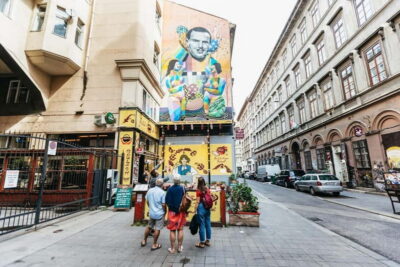

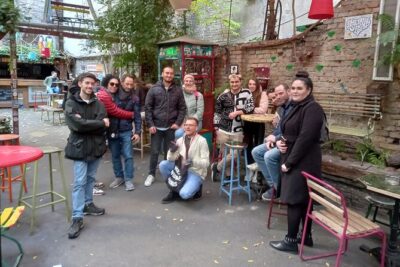
Stop 1: Lépcső Street Art and the “Look Closer” Moment
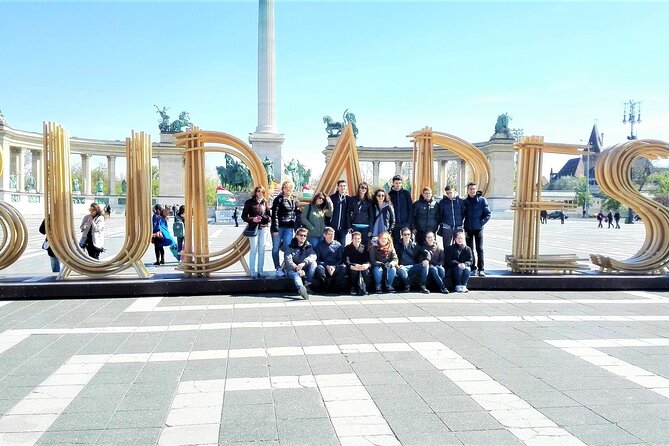
The first stop is Lépcső Street Art. This is where you start training your eyes. Street art can be easy to dismiss as just decoration if you don’t know what questions to ask, and an early stop is the right time to learn those.
Expect the guide to steer you toward details: style, placement, and how murals interact with the street around them. This start also sets expectations for the rest of the walk. If Lépcső clicks for you, the later themed pieces will feel even more satisfying.
One small consideration: because this is street art, you will likely see different works depending on what’s newly painted or temporarily changed. The experience is still about interpretation and context, not just a fixed list of murals.
Stop 2: Terézváros and the 6th District Perspective Shift

Next you move into Terézváros, part of the 6th district story. This section is about place and mood—what the neighborhood feels like and why it matters to Budapest’s wider identity.
From what this tour is set up to do, you should leave this segment with a better sense of how local life and public walls share space. That may sound abstract, but on the ground it means you start noticing how art fits into real streets, not only into curated spaces.
If you like walking tours that combine culture with urban reality, this part usually lands well. It also helps you understand the route, because you are building the logic of why you are heading toward the next district.
Stop 3: Andrássy Avenue to Király u. and Into the 7th
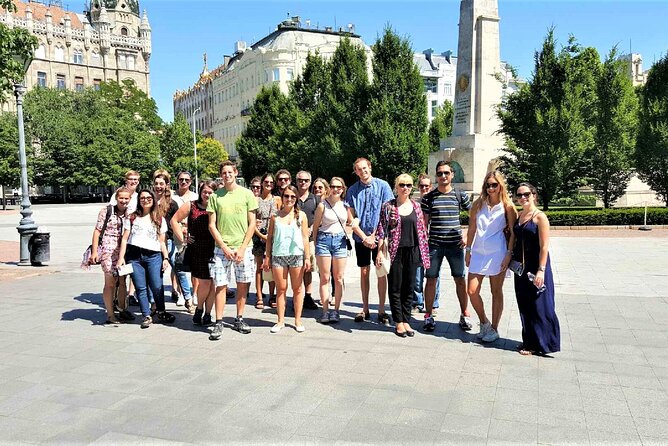
Then comes Andrássy Avenue, described as connecting ends near where Király u. begins. Crossing Király u. is a simple but meaningful moment: it puts you into Budapest’s 7th district.
Why does this matter? Because your brain starts learning boundaries by walking them. Streets act like chapters, and this segment helps you separate areas in your head without needing a map app every five minutes.
Also, this part is where the tour’s social side can really show. You will likely get a bit of chance to compare notes with other people and see what they are noticing. That can be fun if you like a relaxed group vibe.
The one drawback is practical: Andrássy Avenue is a major corridor, so it can feel busier than side streets. Keep an eye on where you stop so your guide can keep moving the group and you can hear them.
Stop 4: Színes Esernyők and the Colourful City Theme
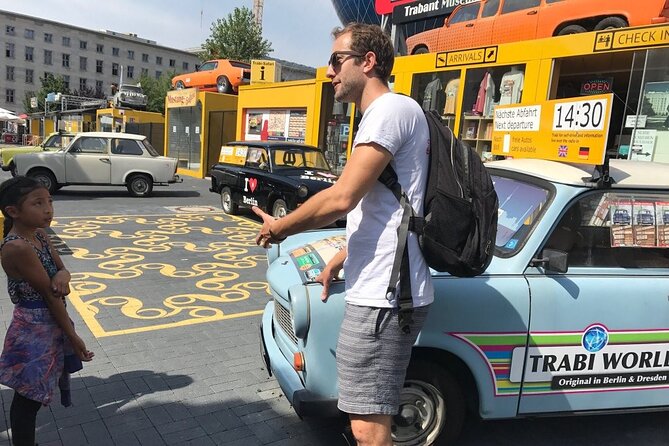
The final stop is Színes Esernyők, tied to the idea of Színes Város (Colourful City) and the larger concept of Street Art Budapest. In other words, this isn’t random graffiti sightseeing. It’s connected to a specific art theme that shaped how people talk about street art tours in Budapest.
This stop is where the visuals usually do the heavy lifting. Expect brighter, more iconic expressions that people recognize quickly and want to photograph. The guide’s job is to explain how those pieces contribute to the way certain landmarks and side roads feel like they belong to a bigger street art story.
If you want a takeaway you can use later, aim to understand how street art changes a place’s identity. Murals can make you slow down, look up, and feel like the street has a voice. That is the practical benefit: you stop treating the city as a background and start treating it as a conversation.
About Jewish-Quarter Context: What to Watch For
This tour is marketed as street art plus Jewish-quarter context. That blend can be compelling, because Budapest’s Jewish history is not only in grand monuments. It’s also in the way neighborhoods evolved and how people shaped the city around them.
At the same time, one important caution comes straight from review feedback: a small number of comments criticized a guide for placing the Jewish ghetto information incorrectly. That’s a red flag for anyone who cares about historical accuracy.
What should you do with that? Keep your expectations realistic. A walking tour may offer high-level orientation, not academic depth. If a historical point matters to you, ask a follow-up question while you’re there. If something sounds off, it’s okay to say so politely. Good guides can clarify on the spot.
In short: if you want art plus context, you’re likely to enjoy this. If you want exact historical facts with zero risk of minor mistakes, you might want to pair this with another source later.
Reviews: What’s Working and What Can Go Wrong
The overall rating is 4.4 from 14 reviews, which is decent but not perfect. The strong praise clusters around one theme: guides who are friendly and bring real confidence to the art and history side. People also mention the tour moves quickly (time flies) and that they get good recommendations for what to see next.
The weaker feedback is more specific: one review says a guide had only been on the job about a week and couldn’t answer questions well. Another mentions the Jewish ghetto reference being in the wrong place. That kind of issue can definitely affect your confidence in the tour.
Here’s my practical advice if you book:
- Come with a couple of questions about what you care about most (art style, neighborhood history, or what to look for next).
- If the answers feel shaky, adjust your focus. Treat the art as the main win and use the historical part as orientation, not your only source.
- If you have a history-first mindset, choose days when you expect more stable guide performance, if that option is shown at booking.
What to Bring (and What to Skip)
Bottled water is not included. Bring a small bottle or plan to buy water nearby between stops. In Budapest, you will usually find places to grab it, but don’t wait until you’re dehydrated to start looking.
Other helpful basics:
- Phone battery for photos and maps (the route ends varies, so your phone helps).
- A light layer, because street art districts can shift temperature quickly with wind and shade.
- Comfortable shoes. Street art tours are not the moment for fancy footwear.
Also, expect good weather to be important. This experience requires good weather, which means you should plan your trip so this is not your only outdoor activity on a day with possible rain.
Who This Tour Fits Best
This is a good fit if you:
- Want a guided walk that connects street art to neighborhood context
- Enjoy a social pace where you can talk with other people
- Like the idea of seeing Budapest through everyday streets, not just big landmarks
- Are curious about how art shapes identity in the 6th and 7th districts
You might want a different option if you:
- Are extremely strict about historical accuracy and want deep, sourced explanation
- Dislike walking tours that depend on guide interpretation
- Need a guaranteed quiet, small-group experience (this has a max of 100)
If you are doing Budapest for the first time and you already plan to see the big classics on other days, this one is a great way to add personality and modern culture.
Should You Book This Street Art & Jewish Quarter Tour?
Book it if you want a fun, walkable route with meaningful context, and you are excited by the idea of seeing Budapest through street-level art. The price is fair for a guided route, and the focus on the 6th and 7th districts is smart because it keeps you in the areas where your next day’s explorations will likely overlap.
Don’t book it expecting museum-level certainty. Use it as a strong orientation and a photo-friendly way to learn what to look for. If the historical portion matters a lot for you, ask questions during the walk and be willing to double-check key facts later.
If you can handle that, this tour can be a really enjoyable way to understand Budapest as a city made of both walls and memories.
FAQ
How long is the Original Budapest Alternative Street Art & Jewish Tour?
It runs for about 3 hours.
Where does the tour start?
The meeting point is St. Stephen’s Basilica, Szent István tér 1, 1051 Hungary.
What time does the tour start?
The start time is 11:00 am.
Is this a walking tour, and are there street art stops with free admission?
Yes, it is a walking experience with specific street art stops listed as free admission.
Which neighborhoods does the tour cover?
It focuses on Budapest’s 6th and 7th districts.
Is bottled water included?
No. Bottled water is not included.
How big are the groups?
This tour/activity has a maximum of 100 travelers.
What if the weather is bad?
The experience requires good weather, so if it’s canceled due to poor weather, you’ll be offered a different date or a full refund.
Can I get a refund if I cancel?
You can cancel for a full refund up to 24 hours in advance. If you cancel less than 24 hours before the start time, you won’t get a refund.
More Tours in Budapest






More Tour Reviews in Budapest






Around the Old Jewish Quarter





Just Added: More Budapest Reviews
- Sightseeing flight over Budapest
★ 5.0 · 3 reviews - Budapest: Walking Tour with Chimney Cake & Polaroid Photos
★ 5.0 · 3 reviews - Self Guided Tour In Budapest With 100 Captivating Audio Stories
★ 5.0 · 3 reviews - Budapest Art Nouveau Walking Tour
★ 5.0 · 3 reviews - Hungary today: a no-taboo conversation
★ 5.0 · 3 reviews
Jewish Quarter Tours, compared.
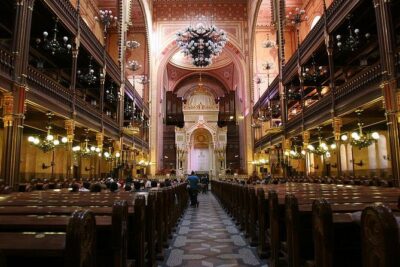 ★ 5.0Budapest Jewish Heritage Memorial Walking Tour & Synagogue EntryFrom $83568 reviews
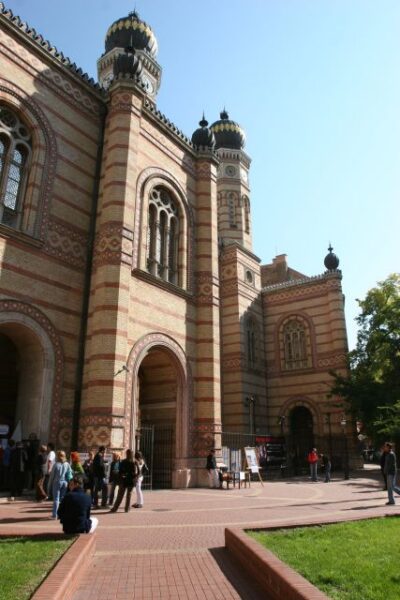 ★ 4.8Jewish Heritage Guided Tour with Synagogue TicketFrom $81533 reviews
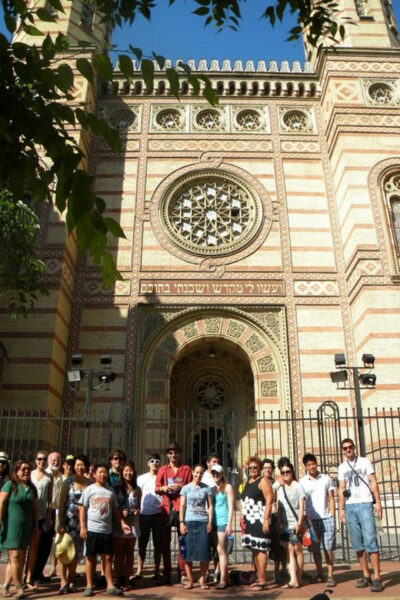 ★ 4.7Jewish Quarter of Budapest Walking TourFrom $2369 reviews
 ★ 5.0German tour in the Budapest city centre & the Jewish quarterFrom $23359 reviews
 ★ 5.0Past and Present of Budapest Jewish District TourFrom $3264 reviews
 ★ 5.0Budapest City Walk in Jewish QuarterFrom $356218 reviews
 ★ 4.5Budapest Dohany Synagogue & Hungarian Jewish Museum & free extrasFrom $44218 reviews
 ★ 4.8Jewish History Guided Walking Tour with HistorianFrom $63205 reviews
Browse the lists this tour appears in