
Reviewed · BUDAPEST WALKING TOURS
Budapest: Street Art and Underground Movements Walking Tour
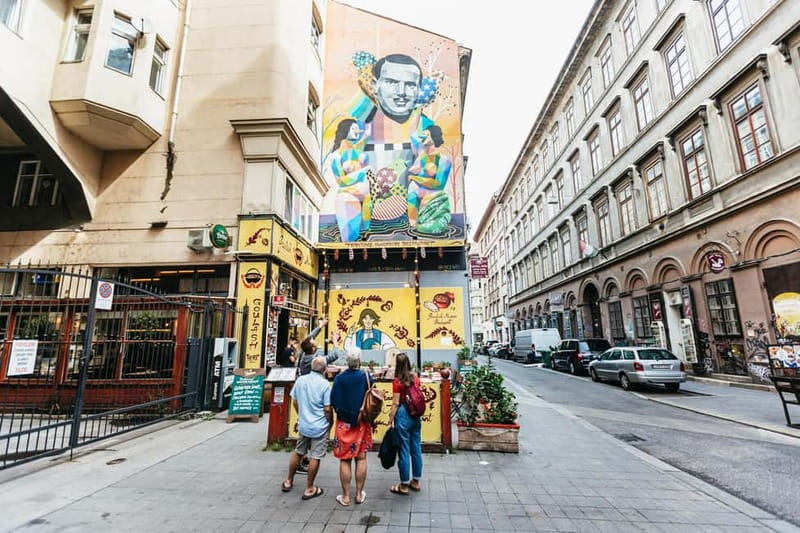
Budapest has graffiti lessons hidden in plain sight. This street art and underground movements walking tour is a fast, focused way to learn how Budapest locals read walls, stickers, and symbols—often with political and social messages. You’re out for 2 hours with a guide who points, explains, and keeps you moving.
I love two things most: you’re trained to notice more than big murals—think stickers, lettering, and street-level art details—and you get the story behind what you’re seeing. I also like the small group setup (limited to 8 participants), because it makes it easy to ask questions and stay engaged even if street art isn’t your usual hobby.
One consideration: this is an on-foot, street-focused experience. If you want classic sightseeing stops or lots of seated museum time, the vibe may feel too “urban and conversational,” especially in cold weather.
In This Review
- Key highlights worth knowing
- Why Budapest Street Art Tells the City’s Real Story
- Telep-Art Galéria: Start Where Stickers Already Lead
- The 2-Hour Walk: Secret Stops, Short Stories, and How to Read Walls
- Underground Movements 101: Politics, Protest, and Everyday Symbols
- Meet E.T. and Suzie: Friendly Guiding for Questions, Not Lectures
- Where the Tour Ends at Központ (and How to Keep Looking)
- Price and Time: What $28 Buys You in 2 Hours
- Who Should Book This Street Art and Underground Culture Tour
- Should You Book This Street Art and Underground Movements Walking Tour?
- FAQ
- Where does the tour start?
- How long is the Budapest Street Art and Underground Movements walking tour?
- How much does the tour cost?
- Is the tour offered in English?
- How big is the group?
- Is food included?
- Can I book it as a private experience?
- Is the tour wheelchair accessible?
Key highlights worth knowing
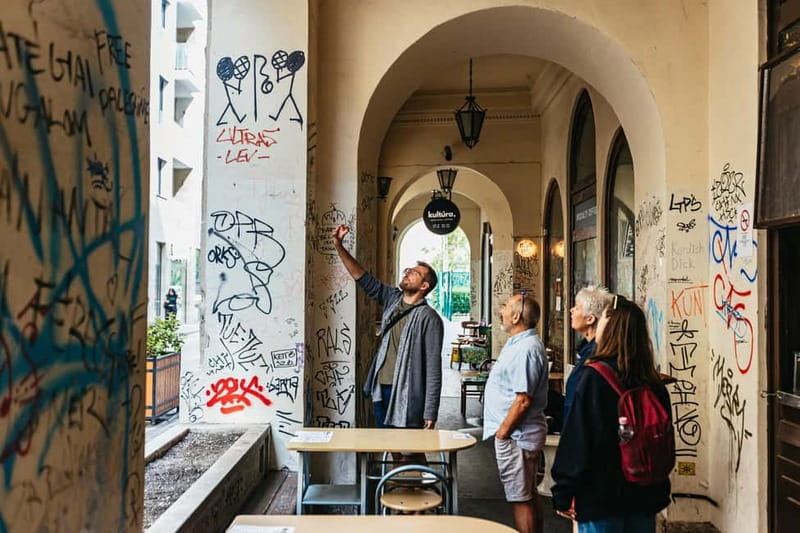
- Telep-Art Galéria as your starting point: a cool bar meeting spot with stickers on the walls
- Small group format: limited to 8 participants, so the guide can tailor the pace
- A secret artwork stop: part of the route that adds real surprise and variety
- Underground culture context: street art framed through social and political messages
- Mix of street art types: not just murals, but sticker subculture and other forms
- Follow-up after the tour: you get a summary to help you keep tracking artists
Budapest at street level, more routes on foot
- Big Bus Budapest Hop-On Hop-Off Bus and Walking Tour★ 3.5 · 2,206 reviews
- Budapest: Buda Castle District Walking Tour★ 4.6 · 2,108 reviews
- 3-Hour Orientation Walking Tour of Buda and Pest★ 4.8 · 1,834 reviews
- Budapest Historical Sightseeing – Free Walking Tour★ 5.0 · 1,302 reviews
Why Budapest Street Art Tells the City’s Real Story
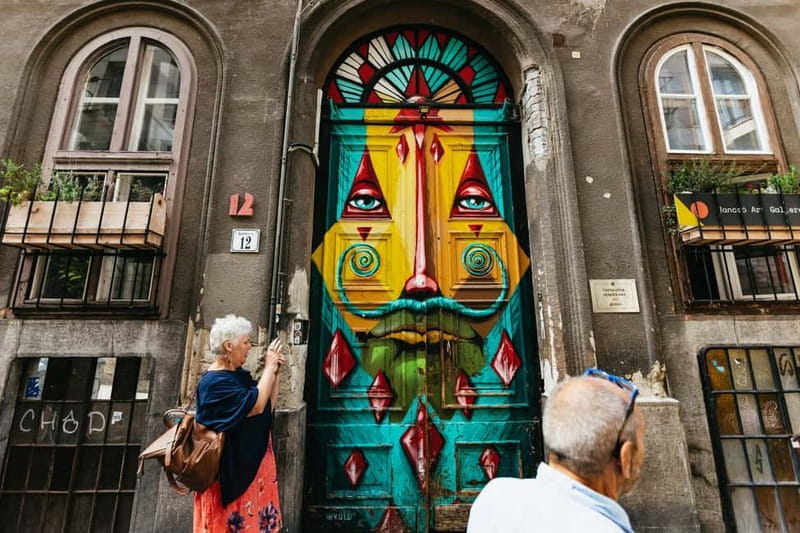
Budapest is famous for the big, obvious sights. But street art is where the city starts talking in shorthand. On this tour, you’ll learn how locals use walls like bulletin boards—sometimes playful, sometimes pointed, often tied to history and current issues. The point isn’t just to see art. It’s to learn how to read it.
What I like about this approach is that it makes you look differently the second you’re back on your own. After a couple of weeks in Budapest, you’ll start spotting the small stuff—tiny stickers, tag styles, recurring symbols—and you’ll understand what you’re looking at (at least more than you would have without guidance). This is exactly why the “underground movements” angle matters: it connects the art to people, not just paint.
Telep-Art Galéria: Start Where Stickers Already Lead
Your tour kicks off at Telep-Art Galéria, a bar-like meeting point where street art is already part of the environment. In reviews, people specifically mention the walls being covered with stickers—perfect for getting your eyes tuned early. You’ll start off with the guide setting the tone: how street artists communicate, why certain visuals matter, and what to watch for as you walk.
This is a smart start for first-timers. Instead of beginning at a landmark you’ve already heard about, you begin at a place that lives and breathes street culture. Even before you move, you can practice the skill the tour builds: scanning quickly for small elements, then slowing down to read the message.
If you’re coming from the classic tourist route, this meeting spot gives you a different entry point into Budapest right away—less postcard, more street-level.
The 2-Hour Walk: Secret Stops, Short Stories, and How to Read Walls
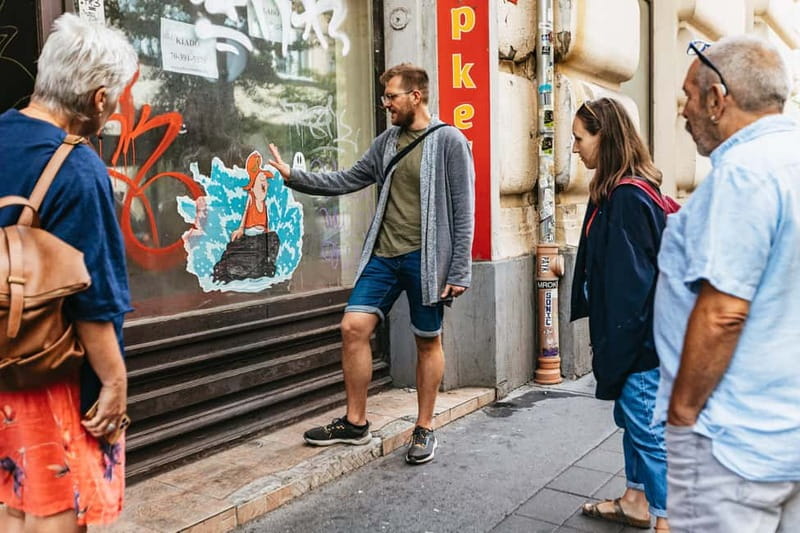
The tour is built around movement and interpretation. You’ll walk for 2 hours, with a guided route that includes a “secret stop” and ends at Központ. Since the route details aren’t laid out like a museum timeline, the best way to think about it is like an interactive scavenger hunt with explanations.
Here’s what you can expect in practice:
- You’ll be pointed toward specific artworks—often small ones you’d otherwise walk past.
- You’ll hear stories about the artists and techniques, not just descriptions like color or style.
- You’ll stop often enough to absorb meaning, but not so much that you lose the street vibe.
One reason people rate this so highly is the pacing. Several comments mention how quickly the time passes, even for people who aren’t experts. The guide keeps the tour active: you’re always looking at the next wall, the next sticker group, the next piece of lettering. That momentum is what makes “street art spotting” actually stick with you after the tour ends.
Also: food and drinks aren’t included, but pauses at cafes or bars can happen as part of the experience. Reviews mention quick coffee stops and even time in ruin-bar spaces like Szimpla Kert when it’s quiet. If that happens for your group, plan to buy your own drink/food.
Underground Movements 101: Politics, Protest, and Everyday Symbols
Street art isn’t only decoration. In Budapest, it often works like a public language. On this walk, the underground movements theme gives you a framework for what you’re seeing: who messages are aimed at, what symbols can mean, and why certain styles show up in specific neighborhoods.
A lot of reviews emphasize the thought-provoking side. People mention learning about social commentary and protest energy, and also how street art connects to contemporary issues. That’s valuable because it keeps you from treating the art like a random photo-op. Instead, you start asking better questions: Why is this placed here? Why this symbol? Why this tone?
You’ll also learn that street art includes more than murals. Sticker culture, paste-ups, lettering, and small-format works can carry messages just as clearly—sometimes more clearly—because they blend into everyday streets. That matters in Budapest, where you’ll find layers of neighborhoods, different communities, and constant visual change.
Some stops in reviews are tied to areas like Erzsebetvaros and the Jewish Quarter of Pest, and people mention seeing a range from sticker details to larger forms. Even if your exact route differs, the takeaway stays the same: you’ll learn to read the street as a kind of newspaper.
More Budapest on foot
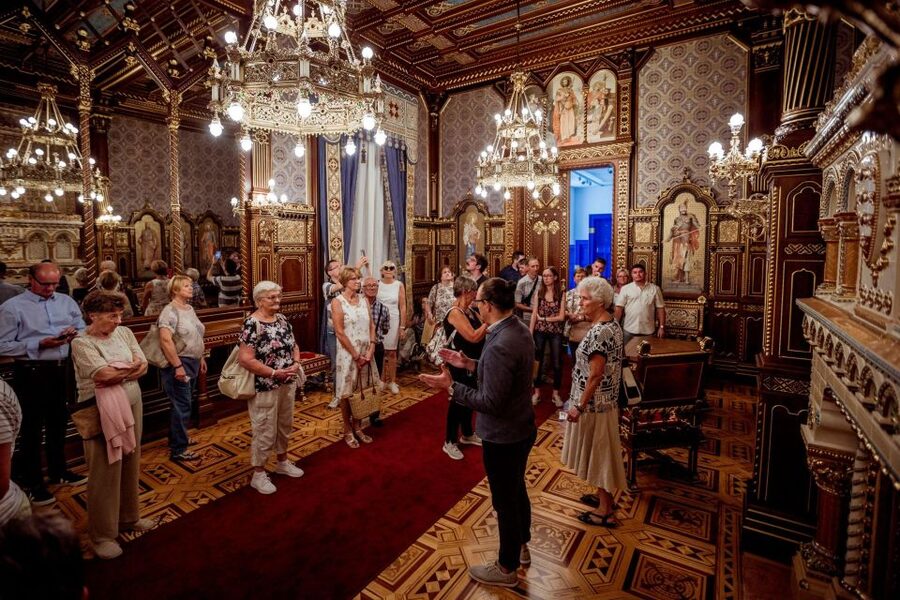

Meet E.T. and Suzie: Friendly Guiding for Questions, Not Lectures
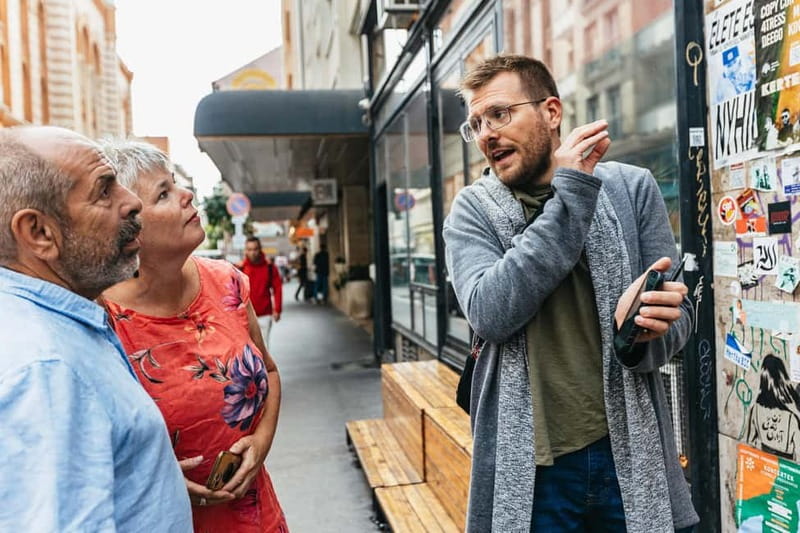
This tour is led by ET Alternative, and guides named E.T. and Suzie appear in the feedback. What comes through again and again is the guide’s energy and the willingness to answer questions. The atmosphere is interactive, and that’s a big part of why the tour works for both art fans and complete beginners.
A few standout patterns from the experience:
- People say the guide is passionate and brings personal understanding of the street art world.
- Several comments mention a friendly tone that encourages questions, not awkward silence.
- The guide shares cultural context so the art connects to Budapest history and neighborhood life, not just global street trends.
If you’re traveling with family, this style can be especially good. The tour is described as interactive and suitable for families, and the “spot it, explain it” format keeps kids and adults from zoning out.
If you’re traveling solo, the small group format helps too. With only up to 8 people, you’re more likely to have room for conversation during stops—and you’ll get better tips on what to look for next.
Where the Tour Ends at Központ (and How to Keep Looking)
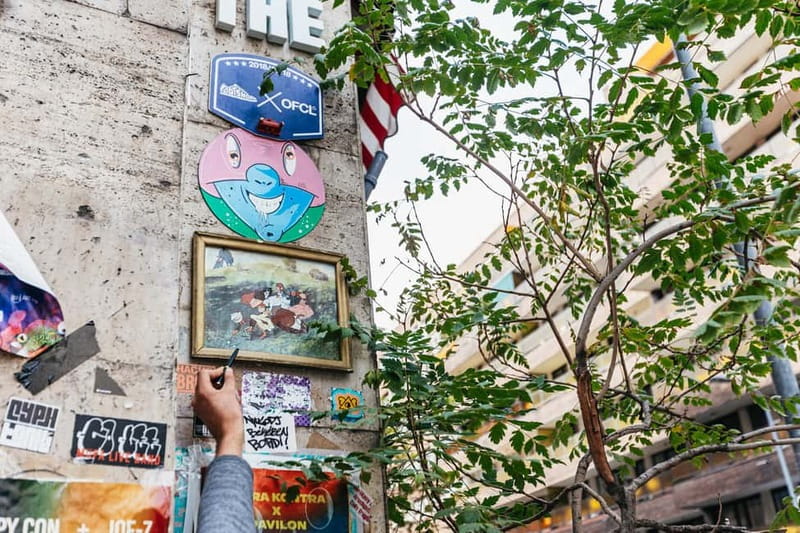
The walk ends at Központ. That’s a useful finish point because it helps you roll into the rest of your day without feeling stranded across town. More importantly, the tour doesn’t end with the final stop.
Included with the experience is a summary after the tour. In reviews, people also mention follow-up details—like artist names and guidance on where to find more—so you can keep exploring beyond the two hours. One review specifically mentioned an interactive map connected to Kolodko mini sculptures. Another theme: after the tour, people start spotting street art on their own because they finally know what to notice.
This is where value shows up. You pay for 2 hours, but you get a skill set that keeps paying off while you wander Budapest afterward.
Price and Time: What $28 Buys You in 2 Hours
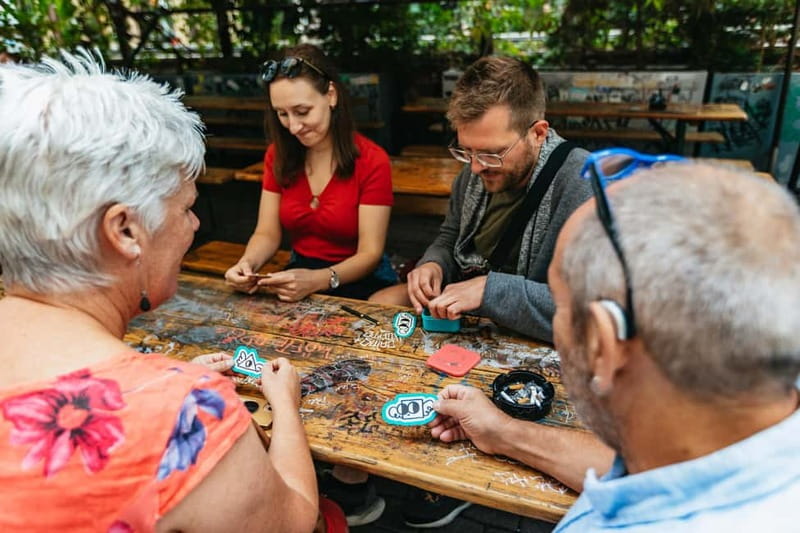
At $28 per person for a 2-hour small-group walk, this sits in the “seriously worth it” category for a city like Budapest—especially if you care about local perspective. You’re paying for more than walking from wall to wall. The price covers:
- a live English-speaking guide,
- a structured route (starting at Telep-Art Galéria, including a secret stop, ending at Központ),
- and follow-up support in the form of a post-tour summary.
The best way to judge the value is to compare it with the cost of “DIY street art searching” without context. You could certainly wander neighborhoods and take photos. But without training in street art language—stickers, lettering, symbols, placements—you’ll miss a lot of what makes the art meaningful.
If you’re budget-minded, this helps you stretch one day of sightseeing into something more personal. If you love street culture, it also feels efficient: 2 hours is long enough to learn patterns, short enough to fit early or late in your schedule.
And if you’re booking a private experience, you can get the same format tailored to your group pace and interests.
Who Should Book This Street Art and Underground Culture Tour
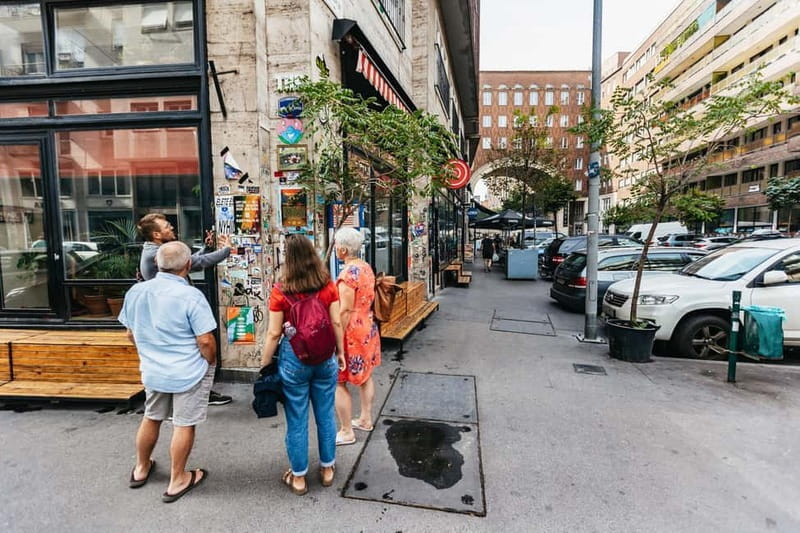
Book this if you want Budapest through the eyes of people who live there—especially if you like street-level culture more than polished attractions. It’s a good fit for:
- art-curious first-timers who want help noticing what matters,
- people interested in underground/protest movements and social messaging,
- families who benefit from an interactive walk,
- anyone who wants practical tips they can use immediately while wandering on their own.
It may feel less ideal if you’re chasing classic monuments only, or if you prefer a quiet guide-led experience with minimal discussion. This tour works because the guide talks and explains; you’ll get the most by being curious and asking questions when the guide invites them.
What to bring is simple: comfortable shoes, a phone for photos, and layers if it’s cold. Street art is meant to be seen up close, and the best viewing happens when you’re willing to stop and look longer than you usually would.
Should You Book This Street Art and Underground Movements Walking Tour?
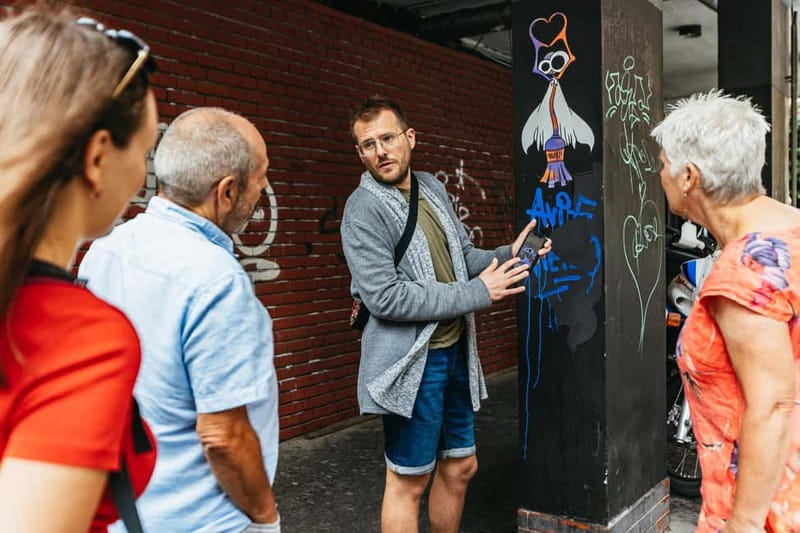
Yes, you should book it if you want more than “pretty walls.” For $28 and a small group size capped at 8, you’re getting guided street art interpretation, underground culture context, and a way to train your eyes so Budapest looks different after the walk.
You might hesitate only if your ideal tour is museum-style, sitting-heavy, and monument-first. Otherwise, this is an efficient, local-feeling experience with strong guide energy and plenty of chances to ask questions.
If you go early in your trip, you’ll get the most out of it. The real win is walking the rest of the city with new street-art literacy.
FAQ
Where does the tour start?
The tour meets at Telep-Art Galéria, described as a cool bar with lots of stickers on the wall.
How long is the Budapest Street Art and Underground Movements walking tour?
The duration is 2 hours.
How much does the tour cost?
The price is $28 per person.
Is the tour offered in English?
Yes, the live tour guide speaks English.
How big is the group?
It’s a small group limited to 8 participants.
Is food included?
No. Food and drinks are not included.
Can I book it as a private experience?
Yes, you can book this tour as a private experience.
Is the tour wheelchair accessible?
Yes, the tour is listed as wheelchair accessible.
More Tours in Budapest






More Tour Reviews in Budapest






More of Budapest, Step by Step





Just Added: More Budapest Reviews
- Sightseeing flight over Budapest
★ 5.0 · 3 reviews - Budapest: Walking Tour with Chimney Cake & Polaroid Photos
★ 5.0 · 3 reviews - Self Guided Tour In Budapest With 100 Captivating Audio Stories
★ 5.0 · 3 reviews - Budapest Art Nouveau Walking Tour
★ 5.0 · 3 reviews - Hungary today: a no-taboo conversation
★ 5.0 · 3 reviews
Budapest Walking Tours, compared.
 ★ 3.5Big Bus Budapest Hop-On Hop-Off Bus and Walking TourFrom $422,206 reviews
 ★ 4.6Buda Castle District Walking TourFrom $142,108 reviews
 ★ 4.83-Hour Orientation Walking Tour of Buda and PestFrom $411,834 reviews
 ★ 5.0Budapest Historical Sightseeing – Free Walking TourFrom $31,302 reviews
 ★ 5.0Budapest All in One Small Group Walking Tour with Strudel StopFrom $1001,277 reviews
 ★ 4.8Budapest Food Walking Tour: Eat, Sip & Explore Like a LocalFrom $731,027 reviews
 ★ 4.9Buda Castle District Walking Tour with a HistorianFrom $63867 reviews
 ★ 4.9BloodThirsty Hungary: Walking tour & Dark Historical StoriesFrom $21633 reviews
Browse the lists this tour appears in