
Reviewed · STREET ART
Street Art and Alternative Tour in Budapest
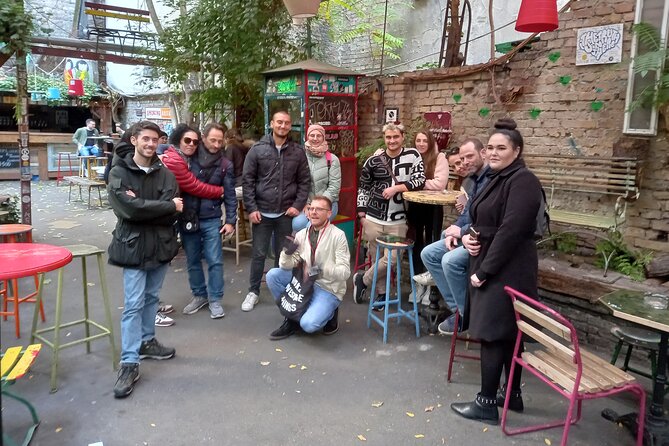
Street art in Budapest reads like a diary. This 2-hour walk with ET turns murals, stickers, and street politics into something you can actually understand. You’ll move through small streets at a steady pace and learn what artists are trying to say.
I particularly love how this tour focuses on the message behind the walls, not just the artwork. I also love the small group size (max 8), which keeps the pace human and makes questions feel welcome.
One thing to plan for: this is a walking-forward experience. If you hate time on your feet or expect mostly sitting still, you may want a different kind of tour.
In This Review
- Key things worth knowing before you go
- Street art in Budapest: more than decoration
- Meet at Telep-Art Galéria and get oriented fast
- The slow walk through tiny streets (and why it matters)
- Murals, stickers, smart-art, and bronze-style works on the walls
- ET’s street-art storytelling: history and politics in plain language
- Ending at Szimpla Kert: a ruin bar finish with real atmosphere
- Price and value: what $36.20 actually buys you
- Who should book this and who should skip it
- Practical tips to make your walk smoother
- Should you book this Budapest street art alternative tour?
- FAQ
- How long is the street art and alternative walking tour in Budapest?
- What language is the tour offered in?
- Where do I meet and where does the tour end?
- What is the group size limit?
- Do I get a mobile ticket?
- Are service animals allowed?
Key things worth knowing before you go
- Limited to 8 people, so you get real conversation time and more personal attention.
- ET’s approach is interpretive, meaning you learn what the street art is saying and why.
- You’ll spot more than murals: stickers, smart-art style pieces, and even bronze sculpture-like works.
- District VII walking focus, taking you through back streets that many first-timers skip.
- Interactive Q&A energy, where your questions shape the route and stops.
- End at Szimpla Kert, a classic ruin bar finish that makes the afternoon feel complete.
Worth setting beside this one before you book:
- Budapest: Street Art and Underground Movements Walking Tour★ 5.0 · 365 reviews
- Alternative Street Art Free Walking Tour of Budapest★ 4.5 · 53 reviews
- Street Art and Alternative Tour in Budapest★ 5.0 · 52 reviews
- Budapest: Alternative Street Art & Jewish Tour★ 4.8 · 49 reviews
Street art in Budapest: more than decoration
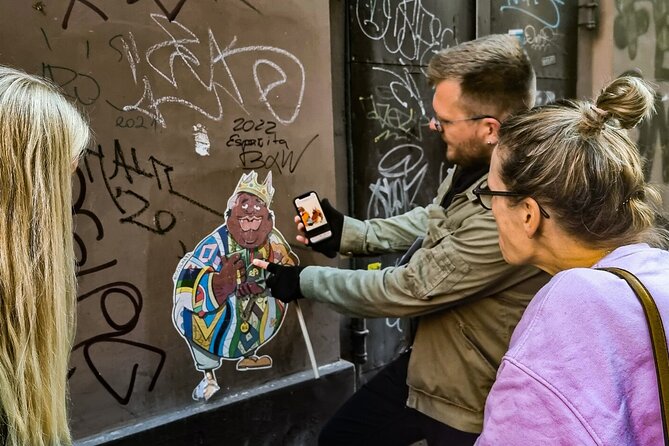
Budapest street art is not just about aesthetics. It’s a kind of public language. You’ll see it used to comment on power, everyday life, identity, and what’s changing in the city.
This tour is built for people who like art with opinions. The guide helps you read the symbols and wording you would otherwise treat like background. And because the pace is slow, you actually have time to notice details, not just pass them at speed.
The best part is that it doesn’t require you to be an art expert. You’re guided through the meaning, and you leave with a new habit: looking at walls like they’re telling you something.
Meet at Telep-Art Galéria and get oriented fast
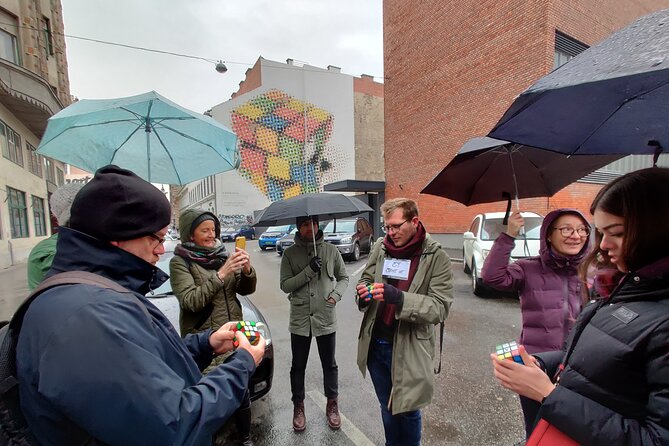
You start at Telep-Art Galéria, Madách Imre út 8, 1075 Hungary. It’s a solid launch point for the whole experience because it signals what the tour is about: contemporary, alternative, and locally grounded.
From the start, you’re set up to succeed on foot. The guide’s role here is practical as much as artistic. You learn how to spot the different types of street art, where to look for messages, and how to connect what you’re seeing to the wider District VII vibe around you.
If you’re arriving a bit early, take a moment before you meet the group to scan the area. You’ll start walking soon, and once you get into the back streets you’ll want your eyes already tuned in.
The slow walk through tiny streets (and why it matters)
This isn’t a bus-tour sprint. You walk slowly on narrow streets, with frequent stops to look closely. That matters because street art often works in layers: a small sticker near eye level can carry the same weight as a large mural.
Expect to cover enough ground for it to feel like a proper afternoon activity. The good news is that the tour rhythm is human, not rushed. The guide keeps moving at a pace that lets you absorb the art, ask questions, and reset your attention.
If you’re bringing a camera, I’d treat it as a tool, not the point. The goal is to see the messaging first. Photos come after you understand what you’re looking at.
Murals, stickers, smart-art, and bronze-style works on the walls
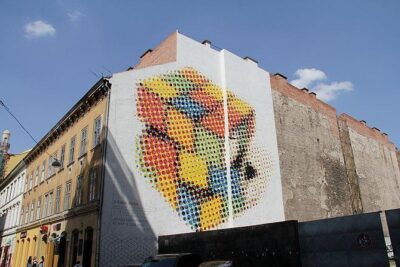
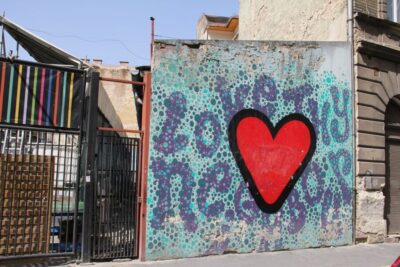
Budapest street art here includes more than painted walls. You might spot bronze sculpture-like elements, sticker-based campaigns, smart-art style images, and large wall murals. The variety is part of what makes the walk feel different from typical sightseeing.
The key is how the guide frames each piece. Instead of saying this is pretty, you’ll learn what it’s communicating. Sometimes the message is political. Sometimes it’s personal and local. Often it’s both.
You’ll also pick up a useful street-reading skill: learning to notice placement, repeated symbols, and how artists adapt their work for different surfaces. After this, you’ll start seeing patterns on your own, even after the tour ends.



ET’s street-art storytelling: history and politics in plain language
ET is the kind of guide who treats street art like something alive. People in the group come from different backgrounds, and the tour works best when you ask questions and share your reactions to what you see.
The talk includes context about how political events and the broader social climate influence artists. You’ll hear how creators use different media to express critical views, and you’ll notice that the street art isn’t aiming for neutrality. It’s usually pointing somewhere.
ET also shares resources during the walk, like social pages to follow so you can keep track of artists and what’s happening beyond what you saw in two hours. If you like knowing where to go next, that added layer is a big part of the value.
Ending at Szimpla Kert: a ruin bar finish with real atmosphere
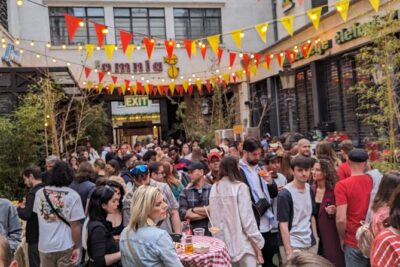
The tour ends at Szimpla Kert, Kazinczy u. 14, 1075 Hungary. This is widely known as Budapest’s oldest ruin bar and one of the city’s symbols, so it’s a fitting place to close an afternoon about alternative culture.
You’re finishing somewhere you’d likely want to revisit anyway. That’s practical: you can turn the walk into a longer night out without scrambling for a place to go next. Even if you only stay for a drink or a quick look around, the ending location helps the experience feel complete.
One small tip: plan your next step before you’re right at the end. The area can be lively, and you’ll enjoy the moment more if you’ve already decided whether you’re staying 20 minutes or an hour.
Price and value: what $36.20 actually buys you
At $36.20 per person for about 2 hours, the price is reasonable for a guided walking tour that’s built around interpretation. You’re not paying for a museum entry or transport. You’re paying for a guide who can read the art and explain the messages behind it.
The value jumps because the group is capped at eight. In a small group, the guide can respond to your questions and keep stopping for details. That makes the experience feel personal, not like you’re herded through a checklist.
Also, this tour tends to get booked ahead, with an average of about 25 days. That’s a clue to plan early if you’re traveling around weekends or peak dates. Booking ahead is one of the simplest ways to protect your schedule.
Who should book this and who should skip it
This tour is a great match if you want Budapest from a different angle. If you like art tied to ideas, enjoy street-level culture, or want something that feels local rather than postcard-only, you’ll probably have a strong time.
It’s also a good fit for families. The tour is described as working across ages, and the guide keeps things open for conversation. If your group includes people who think street art is just graffiti, this can reframe that idea fast.
I’d be cautious if you have limited mobility or if you really hate walking through compact streets. The experience is built on slow walking and frequent stops, so comfortable shoes matter.
Practical tips to make your walk smoother
A few practical choices can make this feel effortless.
- Wear comfortable walking shoes. The route includes thin streets and lots of step-by-step movement.
- Bring a charged phone if you like to save what you see. The guide can point out specific details you’ll want to remember.
- If you want more out of it, go in ready to ask questions. ET’s style is interactive, and the best moments come when you respond to the ideas you’re seeing.
- Dress for the weather. Street art walking is exposed, and the tour has a steady pace rather than frequent indoor breaks.
- Since it’s offered in English, you’ll be able to follow the explanations and history context without struggling for translations.
You’ll also appreciate the basics: confirmation is sent at booking, it uses a mobile ticket, and it’s near public transportation. Service animals are allowed too.
Should you book this Budapest street art alternative tour?
If your goal is to understand Budapest’s street culture instead of just photographing it, I’d book this. The combination of slow walking, a small group, and a guide who explains the meaning behind what you see is exactly what makes the experience click.
Skip it only if you’re looking for classic landmarks as the main event or if walking long enough will frustrate you. Otherwise, this is one of the most “you’ll remember it later” kinds of tours because it changes how you look at the city.
FAQ
How long is the street art and alternative walking tour in Budapest?
It lasts about 2 hours.
What language is the tour offered in?
The tour is offered in English.
Where do I meet and where does the tour end?
You meet at Telep-Art Galéria, Madách Imre út 8, 1075 Hungary, and the tour ends at Szimpla Kert, Kazinczy u. 14, 1075 Hungary.
What is the group size limit?
The tour has a maximum group size of eight travelers.
Do I get a mobile ticket?
Yes, the tour uses a mobile ticket.
Are service animals allowed?
Yes, service animals are allowed.
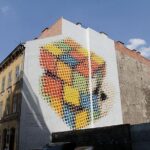
More Street Art in Budapest


More Tours in Budapest






More Tour Reviews in Budapest






Just Added: More Budapest Reviews
- Sightseeing flight over Budapest
★ 5.0 · 3 reviews - Budapest: Walking Tour with Chimney Cake & Polaroid Photos
★ 5.0 · 3 reviews - Self Guided Tour In Budapest With 100 Captivating Audio Stories
★ 5.0 · 3 reviews - Budapest Art Nouveau Walking Tour
★ 5.0 · 3 reviews - Hungary today: a no-taboo conversation
★ 5.0 · 3 reviews
Street Art, compared.
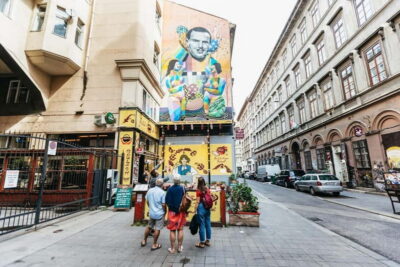 ★ 5.0Street Art and Underground Movements Walking TourFrom $28365 reviews
 ★ 4.5Alternative Street Art Free Walking Tour of BudapestFrom $353 reviews
 ★ 4.8Alternative Street Art & Jewish TourFrom $2349 reviews
 ★ 5.0Street Art Tour BudapestFrom $5340 reviews
 ★ 5.0Budapest Vibe: Ruin Bars, Street Art and Culture TourFrom $6014 reviews
 ★ 4.5Original Budapest Alternative Street Art & Jewish TourFrom $2514 reviews
 ★ 4.8Street Art TourFrom $536 reviews
 ★ 5.0Budapest Urban Art – Private Street Art Tour with a Drink in a Ruin BarFrom $1184 reviews
Browse the lists this tour appears in