
Reviewed · JEWISH QUARTER TOURS
Jewish Budapest Walking Tour
Jewish Budapest teaches you faster than museums. This Jewish Quarter walking tour strings together major synagogue stops, then shifts gears to everyday culture with a ruin bar and a restaurant-courtyard finish. You get a clear route that keeps the day efficient, plus plenty of guide time while you’re moving through places with real meaning.
Two things I really like: you visit the big Dohány Street Synagogue complex (including the Hungarian Jewish Museum and the Raoul Wallenberg memorial garden), and you also get an interior look at Szimpla Kert, so the area doesn’t feel frozen in time. A small heads-up: several synagogue interiors have separate admission costs, and one key exterior stop (Rumbach Street Synagogue) may be limited since the building is closed for an interior visit.
If you want the short version: plan on about three hours of walking and stops, then you’re done and free to roam the rest of the Jewish Quarter on your own.
In This Review
- Key highlights worth prioritizing
- Why this Jewish Quarter walk is such a good “first pass” in Budapest
- Meeting at Elizabeth Square, with pickup that actually reduces stress
- Stop 1: Rumbach Street Synagogue’s beautiful exterior—and why the interior matters
- Stop 2: Dohány Street Synagogue complex, the Raoul Wallenberg garden, and the Tree of Life Monument
- Stop 3: Szimpla Kert ruin bar interior—when culture and survival meet the street
- Stop 4: Kazinczy Street Orthodox Synagogue—art nouveau style you can go inside
- Stop 5: Gozsdu Udvar for food plans and party places
- Price and value: what $218.94 covers, and what you’ll pay on top
- Guides like Petra and Emi: what you can expect from the guiding style
- Who should book this Jewish Budapest walking tour
- Should you book it?
- FAQ
- How long is the Jewish Budapest walking tour?
- What is the maximum group size?
- Is the tour available in English?
- Where does the tour start and end?
- Is pickup available?
- What’s included in the tour price?
- Which sites have admission fees not included?
- How much is the Dohány Synagogue admission fee?
- What if the weather is bad or I need to cancel?
Key highlights worth prioritizing
- Up to 15 people means you’re not lost in a crowd, and you can ask questions without shouting.
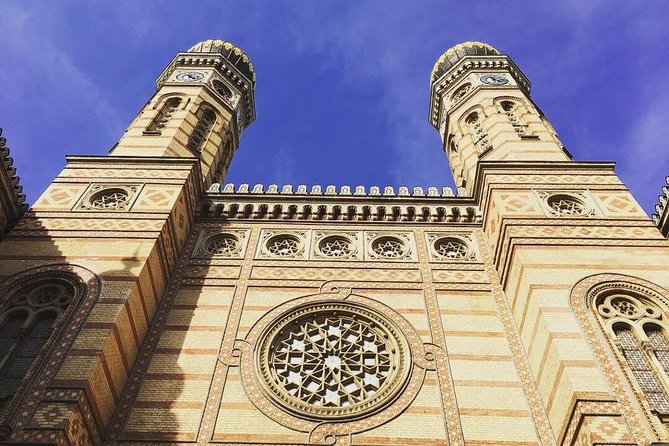
- Dohány Street Synagogue complex includes the Hungarian Jewish Museum plus the Raoul Wallenberg Memorial garden and Tree of Life Monument.
- A ruin bar inside visit at Szimpla Kert gives you the bohemian side right after the sacred sites.
- Kazinczy Street Orthodox Synagogue interior adds art nouveau style to the mix.
- Easy flow through a tight triangle keeps logistics simple and time efficient.
Deeper into old District VII
- Budapest Jewish Heritage Memorial Walking Tour & Synagogue Entry★ 5.0 · 568 reviews
- Budapest: Jewish Heritage Guided Tour with Synagogue Ticket★ 4.8 · 533 reviews
- Jewish Quarter of Budapest Walking Tour★ 4.7 · 369 reviews
- German tour in the Budapest city centre & the Jewish quarter★ 5.0 · 359 reviews
Why this Jewish Quarter walk is such a good “first pass” in Budapest
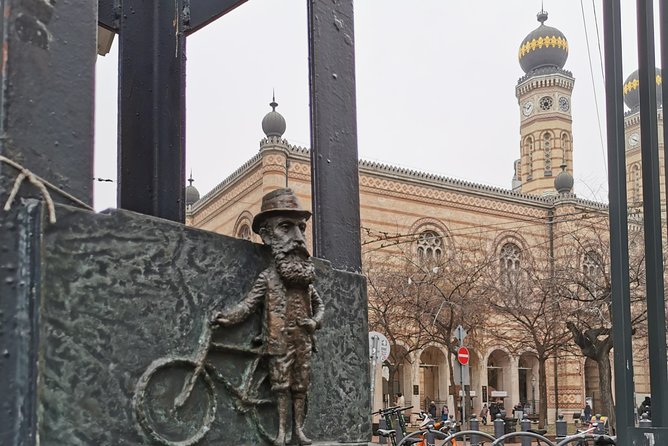
Budapest can be a lot. Great views, huge buildings, tons of history—and also plenty of decision fatigue when you don’t know what to see first. This tour helps you skip the guesswork by building a logical route across the Jewish Quarter, with the most important landmarks spaced so you’re not bouncing back and forth all day.
I like that it’s built for a half-day feel. You’re out there for about 3 hours, then you’re released to explore the surrounding streets, cafés, and shops at your own pace. That matters because synagogue visits can be powerful and a bit heavy; having time afterward lets you decompress instead of rushing straight into the next appointment.
It’s also offered in English, and it runs with a private local guide for a group size capped at 15. That combination is a sweet spot: you get structure and context, but you’re still with the same guide instead of being constantly passed along.
The pacing is “walking tour” pacing, so wear shoes you’re comfortable in for a few hours. And if you’re traveling with kids or teens, the guide’s attention can help keep everyone engaged without turning it into a lecture marathon.
Meeting at Elizabeth Square, with pickup that actually reduces stress
The tour starts and ends at Elizabeth Square (Deák Ferenc tér 2, 1052). If you like having a clean start point, this is convenient since it’s connected to a major public-transport hub. You’ll also be close to other central sights, which makes it easy to plan the rest of your day after the walk.
Even better: pickup is offered. The guide can pick you up at your hotel or cruise terminal, or pickup can be agreed on ahead of time. This is a real value if you’re juggling luggage, negotiating with a taxi line, or trying to keep a family schedule tidy.
You’ll have a mobile ticket, which helps if you want to reduce paper, queues, and last-minute confusion. And since the tour is near public transportation, you can adjust on the fly if your hotel isn’t right next to the meeting square.
One practical thought: plan to arrive a few minutes early so you’re not stressed when everyone is trying to gather. A good start keeps the whole tour smoother—especially when the next stops involve timed visits and separate admissions.
Stop 1: Rumbach Street Synagogue’s beautiful exterior—and why the interior matters
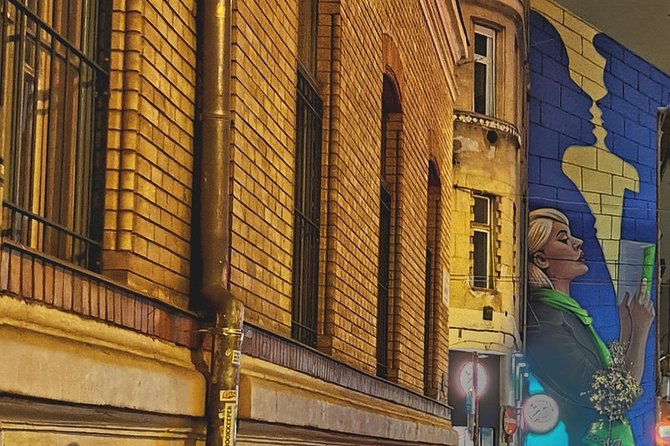
You’ll begin with Rumbach Street Synagogue. Here’s the tradeoff: the building is closed from an interior visit, so you won’t be stepping inside. But you’re still seeing a gorgeous structure with an interesting background, and that’s not a small thing.
Why it’s worth including even when the interior visit isn’t available: synagogue architecture often tells you what the community valued—style, visibility, and identity. Seeing the exterior first helps you “set the lens” for the rest of the route. Then when you reach Dohány Street later, everything feels more connected instead of like separate random buildings.
Time at this stop is about 20 minutes. That’s enough to take photos, absorb the façade, and listen without turning it into a long detour.
If you’re the type who loves interior access above all else, you may wish this stop included entry. Still, it’s a strong opener and gives your guide a chance to frame what you’re going to see next. Think of it as your warm-up before you step into the larger complex.
Stop 2: Dohány Street Synagogue complex, the Raoul Wallenberg garden, and the Tree of Life Monument
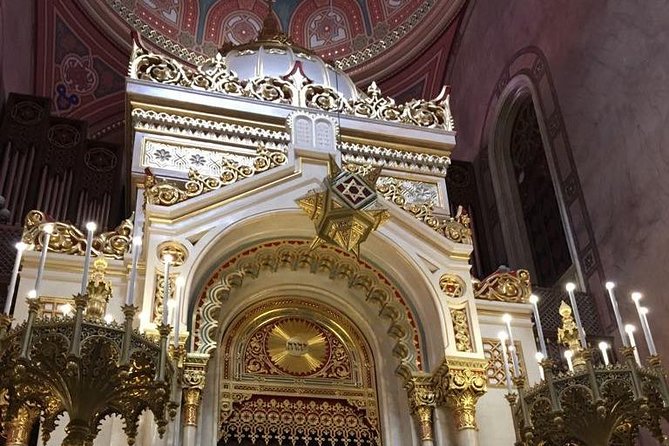
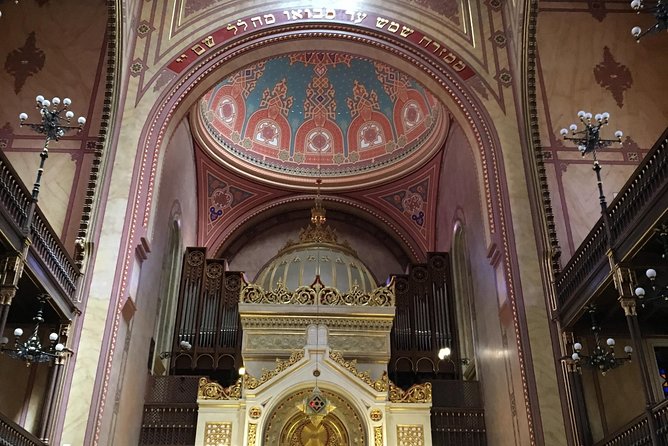
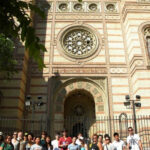
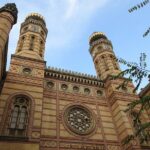
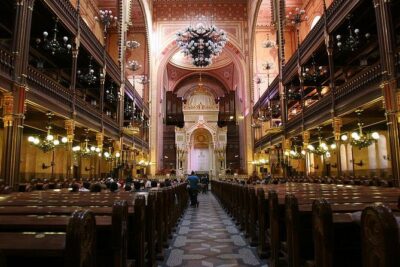
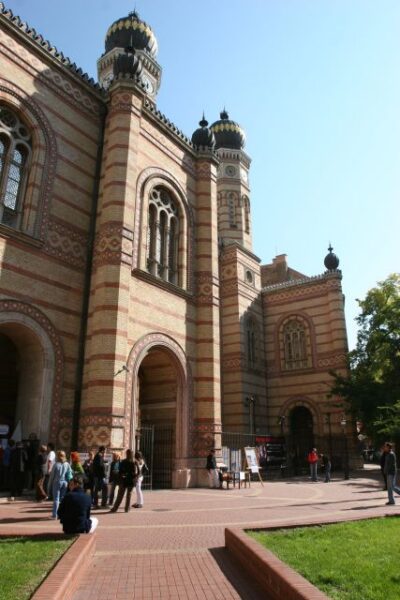
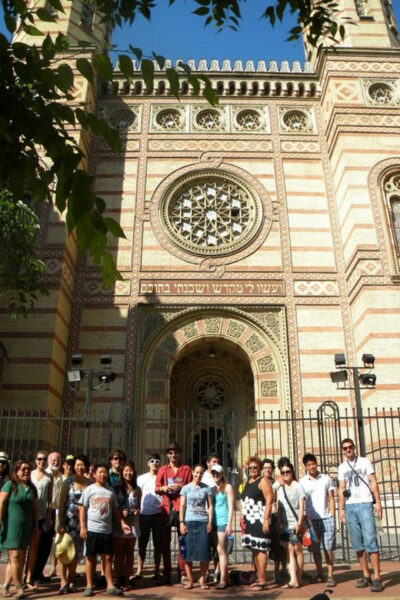
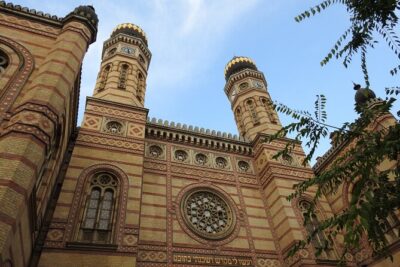
This is the centerpiece. Dohány Street Synagogue is described as the largest European synagogue, and the tour includes the full complex. Plan about 1.5 hours here, and give yourself mental space for what you’ll learn as you walk through the site.
The complex includes the Hungarian Jewish Museum and the Raoul Wallenberg Memorial garden, plus the Tree of Life Monument. Those elements give the visit more than architectural interest. You’re not just looking at a building; you’re connecting place to people and memory—especially through the Wallenberg element.
One important budget note: admission tickets are not included for the Dohány complex, and the adult entrance fee is listed as €35 per person. That cost is separate from the tour price, so if you’re planning for the day, it’s worth treating it like part of your total travel budget rather than a surprise at the counter.
Why I like how this stop is handled: the tour doesn’t rush you through a single room and call it a day. You’re guided through a larger area with multiple points of interest. That’s where a guide pays off—because otherwise it’s easy to wander without understanding what you’re looking at and why it’s there.
If you want to maximize your visit time, wear layers. Synagogue interiors can vary in temperature, and you’ll be moving through indoor and outdoor parts of the complex.
Budapest at street level, more routes on foot

Stop 3: Szimpla Kert ruin bar interior—when culture and survival meet the street
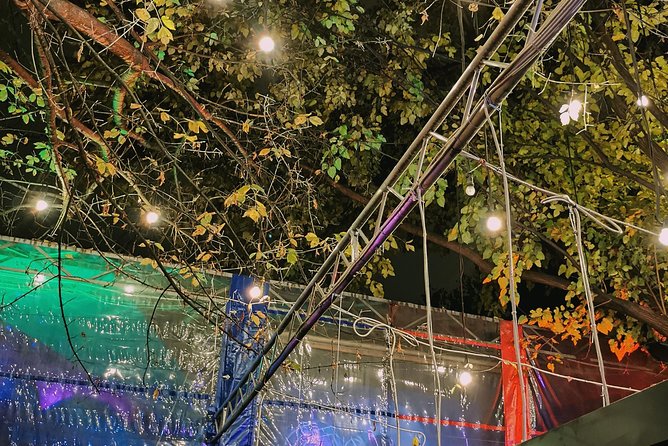
After leaving the synagogue complex, the tour shifts to the bohemian side of the Jewish Quarter with a stop at Szimpla Kert. Specifically, you’ll get an interior visit of a famous ruin bar, called Szimpla Garden, and this one is free.
Time here is short—about 30 minutes—but it’s a meaningful contrast. You go from a site of memorial and museum context into a place that represents how communities adapt, rebuild, and repurpose space over time. Even if you’re not a nightlife person, you’ll probably enjoy this stop because it’s a different kind of “history”—the living kind.
A ruin bar is also a good way to understand Budapest’s practical creativity. You’re seeing how an area can stay connected to its past while also becoming part of the city’s everyday social life.
What to do with this stop: if you want a snack or a drink, you can. But even without spending money, you’ll have time to walk around, look at the space, and get a sense of the neighborhood’s energy.
Because it’s free and scheduled late in the religious portion of the day, it works like a palate cleanser before the final synagogue stop and the courtyard finish.
Stop 4: Kazinczy Street Orthodox Synagogue—art nouveau style you can go inside
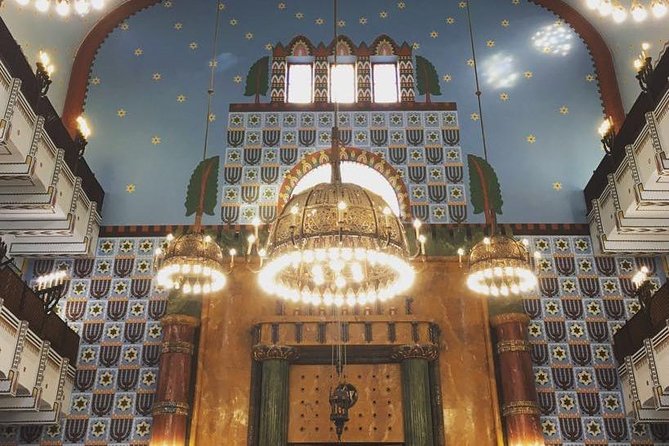
The tour’s next sacred stop is Kazinczy Street Orthodox Synagogue, and this one is special for a different reason: it’s described as a very special art nouveau treasure, and you’ll go inside.
Time here is about 30 minutes, and the interior access is a big deal. If you’ve been hoping for more than exterior viewing, this is your payoff stop.
Why I think this stop is a highlight: it adds architectural variety. Instead of seeing only one “type” of synagogue style, you get another example with distinct visual cues. That helps you understand that Jewish communities expressed identity in different ways across buildings and eras.
It also breaks up the emotional intensity in a productive way. You’re still in a place of faith, but the guide can steer attention toward what you’re seeing—materials, design choices, and the overall vibe—so the visit stays readable and not purely solemn.
Bring your phone for photos if photography is allowed inside, and if it isn’t, don’t worry. The point here is learning and seeing the space firsthand rather than collecting a thousand pictures.
Stop 5: Gozsdu Udvar for food plans and party places
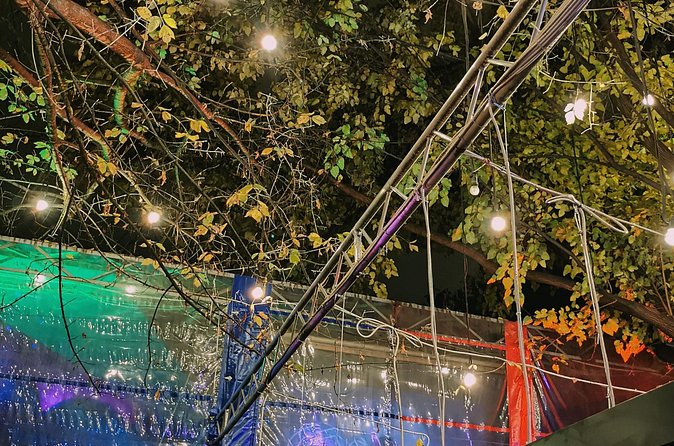
To close out the triangle, you’ll end at Gozsdu Udvar, a courtyard known for restaurants and party places. This stop is brief—about 5 minutes—and it’s free.
Think of it as a signpost. You’re getting a quick look at a concentrated cluster of choices, so afterward you’re not standing in the street trying to guess where to eat. Since the tour ends where you can easily keep wandering, this final stop helps you turn the day into a plan, not just a sequence of sights.
I like that this isn’t an extended restaurant stop. You still get the cultural context without sacrificing your free time. After the tour, you can choose where you want to eat based on your budget and mood.
Also, if you want a night out later, you’ve got a practical starting point already. If you want something quieter, this area can still deliver—just look around and pick the vibe that fits you.
Price and value: what $218.94 covers, and what you’ll pay on top
The tour price is $218.94 per group for a maximum group size of 15. That’s a huge difference-maker compared with per-person ticket tours.
Here’s the math you should keep in mind:
- If you fill the group size (15 people), you’re effectively paying about $15 per person for the guide and tour coordination.
- If you only have a small group, the per-person cost rises quickly, so the guide fee becomes the main cost.
That said, the tour includes a private local guide, plus the structure that saves time and reduces hassle. You’re also getting a guided visit through multiple stops in a tight area, with built-in context at each place.
Now, the add-on costs:
- Dohány Street Synagogue admission is €35 per adult and is not included.
- Rumbach Street Synagogue and Kazinczy Street Orthodox Synagogue also have admissions not included in the tour price.
- Szimpla Kert and Gozsdu Udvar are listed as free.
So the real value equation is this: the tour price is great if you’re a group, and the admissions fees are worth it if you want interior access at key sites. If your top goal is paying as little as possible and you’re fine with only exteriors, then this may feel more expensive. But if you want guided context plus actual entries at major places, it’s a solid deal.
Also, because this is offered in English and runs about three hours, you’re buying efficient time. In a city where you might otherwise spend hours figuring out routes and tickets, that time has value.
Guides like Petra and Emi: what you can expect from the guiding style
From prior experiences with guides on this route, the pattern is clear: the guide matters here. The names Petra and Emi come up with praise for being friendly and for keeping the tour enjoyable while still hitting the important points.
What that means for you in plain terms: you’re not just walking from door to door. You’re getting context that helps you connect what you see to the story behind it. One highlight described going inside a synagogue and feeling the weight of Hungarian Jewish history through the guide’s explanations.
Some guides also help you with practical day planning. Food and fun recommendations have been mentioned as spot on, which is exactly what you want when you finish the tour and start choosing where to go next.
If you get a bubbly, upbeat personality, don’t expect the tone to be purely solemn. This route mixes memorial sites with everyday culture, so the guide’s ability to shift gears is part of the value.
Who should book this Jewish Budapest walking tour
This tour fits best if you want:
- A guided route through major stops in the Jewish Quarter without doing ticket and route research all day
- Interior time at major synagogue sites, plus a quick culture stop at a ruin bar
- A small group format (up to 15) that keeps questions possible
It’s also a strong match for families and mixed-age groups, since the duration is manageable and the stops vary between architecture, museum elements, and a lively neighborhood setting.
If you’re a total solo wanderer who loves total freedom, you might prefer to build your own schedule and pay only for the sites you choose. But if you like having someone else do the hard parts—route logic, sequencing, and explaining what you’re seeing—this tour is built for you.
Should you book it?
Yes—if you want an efficient, well-structured way to see the Jewish Quarter’s key landmarks in about three hours, with a guide who brings the stops to life. The value is especially strong for small groups sharing the group price, and the Dohány complex plus the Raoul Wallenberg garden are worth prioritizing.
I’d skip or reconsider if you’re trying to avoid synagogue admission fees or if you only want interiors and none of the synagogues have exterior viewing. Also plan around the shortfalls: Rumbach Street Synagogue may be limited to viewing since the interior is closed for this visit.
If you’re going in good weather and you like the idea of finishing with easy options for food and evening plans, this walking tour is a smart way to start (or refresh) your Budapest understanding.
FAQ
How long is the Jewish Budapest walking tour?
It runs for about 3 hours (approx.).
What is the maximum group size?
This is a private tour for your group, with a maximum of 15 people.
Is the tour available in English?
Yes, it’s offered in English.
Where does the tour start and end?
It starts and ends at Elizabeth Square (Deák Ferenc tér 2, 1052 Hungary).
Is pickup available?
Yes. The guide picks you up at your hotel, cruise terminal, or as agreed before the tour.
What’s included in the tour price?
The tour includes a private local guide. A mobile ticket is also provided.
Which sites have admission fees not included?
Admission fees are not included for Rumbach Street Synagogue, Dohány Street Synagogue (including the complex), and Kazinczy Street Orthodox Synagogue.
How much is the Dohány Synagogue admission fee?
The adult entrance fee is listed as €35.00 per person.
What if the weather is bad or I need to cancel?
The tour requires good weather. If it’s canceled due to poor weather, you’ll be offered a different date or a full refund. You can cancel for a full refund up to 24 hours in advance.
More Tour Reviews in Budapest






More of Budapest, Step by Step





Around the Old Jewish Quarter



Just Added: More Budapest Reviews
- Sightseeing flight over Budapest
★ 5.0 · 3 reviews - Budapest: Walking Tour with Chimney Cake & Polaroid Photos
★ 5.0 · 3 reviews - Self Guided Tour In Budapest With 100 Captivating Audio Stories
★ 5.0 · 3 reviews - Budapest Art Nouveau Walking Tour
★ 5.0 · 3 reviews - Hungary today: a no-taboo conversation
★ 5.0 · 3 reviews
Jewish Quarter Tours, compared.
 ★ 5.0Budapest Jewish Heritage Memorial Walking Tour & Synagogue EntryFrom $83568 reviews
 ★ 4.8Jewish Heritage Guided Tour with Synagogue TicketFrom $81533 reviews
 ★ 4.7Jewish Quarter of Budapest Walking TourFrom $2369 reviews
 ★ 5.0German tour in the Budapest city centre & the Jewish quarterFrom $23359 reviews
 ★ 5.0Past and Present of Budapest Jewish District TourFrom $3264 reviews
 ★ 5.0Budapest City Walk in Jewish QuarterFrom $356218 reviews
 ★ 4.5Budapest Dohany Synagogue & Hungarian Jewish Museum & free extrasFrom $44218 reviews
 ★ 4.8Jewish History Guided Walking Tour with HistorianFrom $63205 reviews
Browse the lists this tour appears in