
Budapest’s Jewish District tells two stories at once. This walk connects past and present through courtyards, street symbols, and modern neighborhood life.
I love how the history stays clear and human, moving from 19th-century Jewish community life to the 20th century with care. I also like the ending at Szimpla Kert, where you get orientation and time to ask questions before heading off on your own.
One drawback: it’s still a walking tour. Bring comfortable shoes, expect mostly outdoor stops, and dress for the weather.
In This Review
- Key things to know before you go
- Getting Oriented at the Budapest Eye and Raoul Wallenberg Memorial
- From Danubius Fountain to Deák Ferenc tér: How a Neighborhood Forms
- Dohány Street Synagogue Exterior: More Than a Photo Stop
- Rumbach Street Synagogue and Kazinczy Street Synagogue: Layered Community Signals
- Ghetto-era Streets and Ghetto Wall Remains: Where Memory Lives in Plain Sight
- Gozsdu Udvar Courtyards: Everyday Life in a Historic Shell
- Street Art and Murals: Modern Walls Speaking About Collective Memory
- Szimpla Kert: Why Ending at a Ruin Pub Works
- Price and Timing: Real Guide Value at a Budget-Friendly Level
- Practical Tips That Make This Walk Easier
- Who This Tour Fits Best
- Should You Book the Budapest Jewish District Past & Present Walk?
- FAQ
- Where is the meeting point?
- How long is the tour?
- What language is the guide?
- Is the tour wheelchair accessible?
- What should I bring?
- Are there any rules during the tour?
Key things to know before you go
- Licensed local guides in English keep the story grounded; one standout guide named Andre is praised for clear explanations and answering questions.
- Dohány Street Synagogue exterior and multiple synagogue sights give you landmark context without needing to rush.
- Ashkenazi and Sephardic traditions are explained as part of everyday community life, not just dates on a timeline.
- Ghetto-era streets, courtyards, and even remaining wall traces help you understand memory you can still see in the city.
- Street art and murals point out how Hungarian history and Jewish heritage show up in modern visuals.
- Szimpla Kert ruin pub visit at the end turns your new knowledge into practical next steps for exploring farther.
Deeper into old District VII
- Budapest Jewish Heritage Memorial Walking Tour & Synagogue Entry★ 5.0 · 568 reviews
- Budapest: Jewish Heritage Guided Tour with Synagogue Ticket★ 4.8 · 533 reviews
- Jewish Quarter of Budapest Walking Tour★ 4.7 · 369 reviews
- German tour in the Budapest city centre & the Jewish quarter★ 5.0 · 359 reviews
Getting Oriented at the Budapest Eye and Raoul Wallenberg Memorial
You start near the Budapest Eye Ferris wheel by the Danubius Fountain, a short walk from major transit at Deák Ferenc tér. The vibe here is instantly “Budapest modern,” but that is exactly the point: this tour is about how layers of history keep shaping everyday life.
One nearby landmark sets the tone early. You’ll pass the Raoul Wallenberg Memorial area, and the guide uses that proximity to frame the neighborhood story with a sense of memory and responsibility. It helps you move from simply looking at buildings to actually reading what the city is trying to say.
The tour is about 1.5 hours and follows a relaxed pace. Still, plan to spend most of that time walking outside, with stops designed for seeing details at street level.
From Danubius Fountain to Deák Ferenc tér: How a Neighborhood Forms
The early walking stretch is short, but it matters. The guide explains how the Jewish Quarter developed from the 19th century onward, and how Jewish life shaped the area’s architecture, commerce, and social fabric.
This is the part where you start noticing things you might otherwise miss. Deák Ferenc tér is a hub of movement, shops, and everyday foot traffic, so it’s a good place to understand how a “historic district” is also a working district. You’re learning to spot continuity: the city keeps changing, but it doesn’t erase what came before.
If you like context that makes later sights make sense, this opening works well. You’ll understand why the guide later points out courtyards, symbols, and street layouts instead of only naming famous sites.
Dohány Street Synagogue Exterior: More Than a Photo Stop
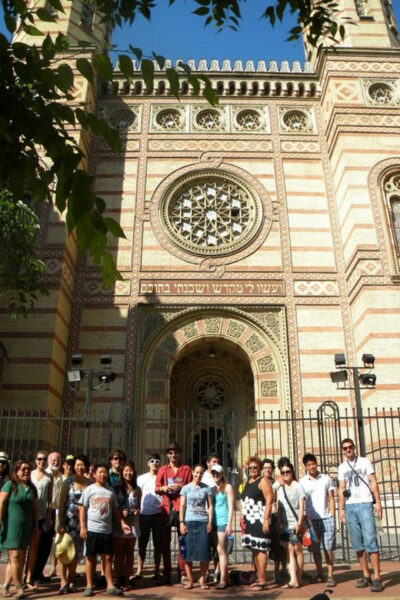
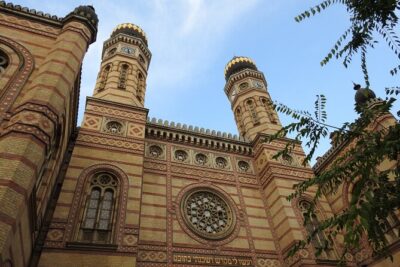
The tour’s first big landmark moment is the exterior of the Dohány Street Synagogue. Even if you’ve seen photos online, seeing it in context on a guided walk is a different experience.
Expect a guided stop that takes time—about a half hour—because the guide doesn’t treat it as a static monument. You’ll get history and meaning around Jewish religion and community life, including how the community included both Ashkenazi and Sephardic traditions.
Here’s the practical value: the guide helps you connect religious architecture to community life. That means later, when you see other synagogue-related sites or neighborhood symbols, you’ll know what you’re looking at and why it’s there.
Also, take your camera. The tour is built around seeing and remembering, and you can ask the guide for help getting photos without feeling rushed.
Rumbach Street Synagogue and Kazinczy Street Synagogue: Layered Community Signals
Next come additional synagogue exteriors, including the Rumbach Street Synagogue stop and later the Kazinczy Street Synagogue area. These aren’t treated as “less famous” alternatives. The guide uses them to show how Jewish life left different kinds of marks across the district.
At these stops, pay attention to the smaller cues: the way buildings sit on the street, how spaces connect to nearby courtyards, and how the neighborhood’s geography supports community life. The guide’s explanations focus on how Jewish heritage shows up in everyday spaces, not only in major monuments.
This is also where the tour’s balanced approach shows up. You’ll hear about the 20th century and World War II with sensitivity, but the talk keeps pulling you back to how history still shapes the neighborhood today. It doesn’t feel like you’re being pushed through a list of tragedies. Instead, you’re being taught to read the district as a place where memory is built into the city fabric.
More Budapest on foot
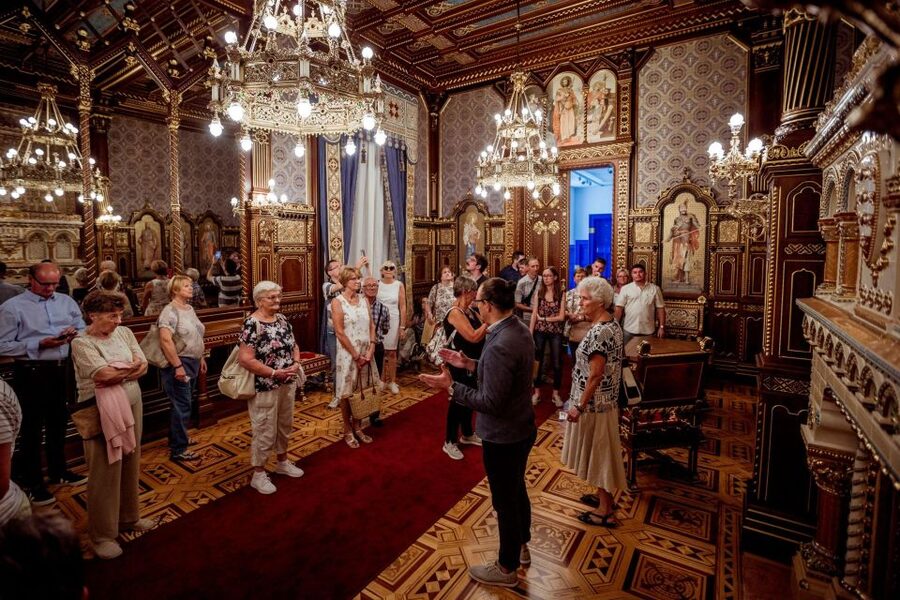


Ghetto-era Streets and Ghetto Wall Remains: Where Memory Lives in Plain Sight
One of the most important sections of the walk is the discussion of the Budapest Ghetto Wall and former ghetto streets. The tour moves from explanation to careful on-the-ground context: where the remains can still be seen, and how to interpret what you find.
A key feature here is practical guidance. The guide explains historical background and also tells you where visitors can view remnants independently, so you’re not left guessing after the tour ends. That turns a “history lesson” into something you can actually follow up on with your own feet and your own eyes.
As you walk through these areas, you’ll also hear about courtyards, street layouts, and urban details where memory is embedded. This is the kind of information that pays off on the next day, when you’re wandering and suddenly realize you’re looking at more than a street corner.
It’s handled with balance and sensitivity, which matters a lot in a district like this. You’ll come away with a clearer sense of how the neighborhood’s past continues to influence what you see now.
Gozsdu Udvar Courtyards: Everyday Life in a Historic Shell
Between the synagogue stops and the heavier ghetto-wall context, the walk also makes room for “everyday Budapest.” You pass through the Gozsdu Udvar area, and the guide uses the space to highlight how layered history shows up in urban life.
This is where you learn to pay attention to courtyards and the way buildings hold space. Many visitors sprint from major landmark to major landmark. This tour slows the lens down. It asks you to notice the quiet, in-between parts of the city—the spots that reveal how people actually moved, gathered, and lived.
If you like street-level travel—symbols, layout, and human-scale details—this is one of the most rewarding parts. You’ll start seeing the district as a living neighborhood shaped by more than one era.
Street Art and Murals: Modern Walls Speaking About Collective Memory
Later in the walk, the guide brings you to urban street art and murals that reference Hungarian history, Jewish heritage, and collective memory. This isn’t treated like random decoration. You’ll learn how ongoing urban change reshapes the area and how artists and residents keep pointing back to shared history.
This section helps you understand the tour’s title in real life. The Jewish District isn’t just a museum zone. It’s a place where new meanings get added onto old ones, sometimes respectfully, sometimes in ways you’ll want to think about.
If you’re the type who likes to connect visuals to context, keep your phone camera ready here too. The guide’s notes turn the murals into clues you can read later.
Szimpla Kert: Why Ending at a Ruin Pub Works
The tour finishes at Szimpla Kert, Budapest’s first ruin pub. Ending here makes practical sense. It gives you a social, modern anchor after the heavier history, and it’s also a place where you can settle and regroup without ending the day too abruptly.
You get guided time inside the ruin pub, plus room for remaining questions and discussion with the guide. In other words, if something didn’t click earlier—synagogue context, ghetto-wall references, or how the district evolved—you can ask before you go wandering.
It’s also a smart orientation stop. Many people leave a walking tour wanting a plan for what to do next. This ending is designed to help you keep exploring the Jewish District independently, with a little more confidence about what you’re looking at.
Price and Timing: Real Guide Value at a Budget-Friendly Level
At about $1.89 per person for a roughly 1.5-hour guided walk, this is one of the cheaper ways to get a licensed local guide in a sensitive, historically layered neighborhood. The math here is simple: you’re paying for interpretation, pacing, and context—things you can’t easily recreate on your own in the same time.
The tour also gives you multiple “types” of value in one package:
- major synagogue exteriors for landmark context
- courtyards and street layouts for everyday life
- ghetto-wall traces and practical pointers for follow-up
- modern murals that explain how memory shows up today
- a guided finish with Q&A at Szimpla Kert
Timing matters too. Ninety minutes is long enough to learn a lot, but short enough that you’re not stuck in one place all day. You can still make it a half-day plan: history first, then free wandering with clearer instincts.
Practical Tips That Make This Walk Easier
A few small things will improve your experience a lot.
Wear comfortable shoes. The tour is relaxed, but it’s still walking with outdoor pauses. Bring a camera, and don’t be shy about asking for help with photos. Keep in mind that limited public toilets are available near the meeting point and along the route, so plan ahead.
The tour is English, and it’s wheelchair accessible. If you’re coming with mobility needs, it helps to know the pace is described as relaxed.
Also note the rules: no alcohol and drugs, no making noise, no audio recording, and bachelor or bachelorette groups aren’t allowed. It’s designed to keep the atmosphere respectful and focused.
If you want weather flexibility, the tour runs in most conditions, so dress accordingly and expect you’ll be outside for most of it.
Who This Tour Fits Best
I think this walk is ideal if you want more than a checklist of sights. You’ll do well here if you like understanding how a neighborhood works—how religion, community life, and urban design leave traces that still shape today’s streets.
It’s also a good choice for history-minded travelers who appreciate balance. You get World War II context, but the tour doesn’t lose sight of daily life and how memory coexists with modern urban change.
If you hate long lectures or you prefer learning by walking and looking, this format suits you. Stops are timed, and the guide uses each place to build meaning rather than repeating the same theme in a different street.
Should You Book the Budapest Jewish District Past & Present Walk?
Yes, book it if you want a guided, city-reading experience that connects synagogues, ghetto-era remnants, and today’s visual culture. The price is a strong value for a licensed English guide in a district where context really changes what you see.
I’d especially choose this tour if you want help interpreting the ghetto-wall traces and knowing where to look on your own afterward. And if you appreciate practical wrap-up time at Szimpla Kert, you’ll likely find the ending useful rather than random.
If you only want quick landmark photos with zero history, you might feel the talk takes time. But for most visitors, this is a smart way to earn the right to wander the Jewish District with better eyes.
FAQ
Where is the meeting point?
You meet about 10–15 meters from the Budapest Eye Ferris wheel, next to the Danubius fountain in the middle of the square.
How long is the tour?
The tour lasts about 1.5 hours.
What language is the guide?
The tour is conducted in English.
Is the tour wheelchair accessible?
Yes, the tour is wheelchair accessible.
What should I bring?
Bring comfortable shoes for walking and a camera if you want photos.
Are there any rules during the tour?
Yes. Alcohol and drugs are not allowed, you can’t make noise, audio recording isn’t allowed, and bachelor or bachelorette party groups are not allowed.
Still Walking Budapest




More Tour Reviews in Budapest






Around the Old Jewish Quarter






Just Added: More Budapest Reviews
- Sightseeing flight over Budapest
★ 5.0 · 3 reviews - Budapest: Walking Tour with Chimney Cake & Polaroid Photos
★ 5.0 · 3 reviews - Self Guided Tour In Budapest With 100 Captivating Audio Stories
★ 5.0 · 3 reviews - Budapest Art Nouveau Walking Tour
★ 5.0 · 3 reviews - Hungary today: a no-taboo conversation
★ 5.0 · 3 reviews
Jewish Quarter Tours, compared.
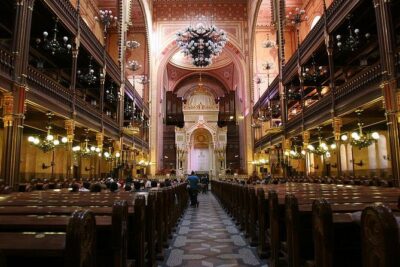 ★ 5.0Budapest Jewish Heritage Memorial Walking Tour & Synagogue EntryFrom $83568 reviews
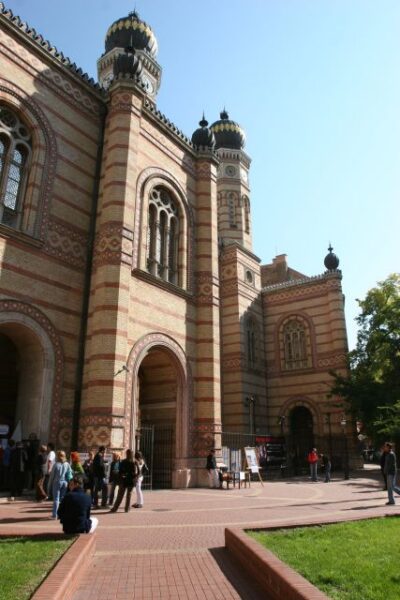 ★ 4.8Jewish Heritage Guided Tour with Synagogue TicketFrom $81533 reviews
 ★ 4.7Jewish Quarter of Budapest Walking TourFrom $2369 reviews
 ★ 5.0German tour in the Budapest city centre & the Jewish quarterFrom $23359 reviews
 ★ 5.0Past and Present of Budapest Jewish District TourFrom $3264 reviews
 ★ 5.0Budapest City Walk in Jewish QuarterFrom $356218 reviews
 ★ 4.5Budapest Dohany Synagogue & Hungarian Jewish Museum & free extrasFrom $44218 reviews
 ★ 4.8Jewish History Guided Walking Tour with HistorianFrom $63205 reviews
Browse the lists this tour appears in