
Budapest’s Jewish quarter tastes like history. This 4-hour food-and-culture walk threads you through the Seventh District’s Jewish story, from ghetto-era streets to today’s art, cafés, and design shops, with stops anchored around the Dohány Street Synagogue area. You’ll also get practical, meal-sized context as you walk, so the neighborhood makes more sense than a quick map-and-museum visit.
I really like two things here. First, the focus on Jewish-Hungarian cuisine isn’t random snacking; it’s built around classic dishes and pairings, with a full Jewish lunch included. Second, the tour is led by a food-focused guide who can connect what you’re eating to what the community went through, and guides such as Endre, Georg, Andra, and Ursula have been praised for that mix of story + food.
One consideration: it’s a lot of walking for 4 hours, and the number of food stops can land a bit lower than the 4–6 range on some days (lunch may be one of the stops). Also, it isn’t suitable for vegans, and synagogue access isn’t available on Saturdays.
In This Review
- Key highlights worth your attention
- Budapest’s Jewish Quarter still feels like a living neighborhood
- Your 4-hour plan: synagogues, streets, and full lunch
- Arriving at Madách Imre Tér and getting your bearings fast
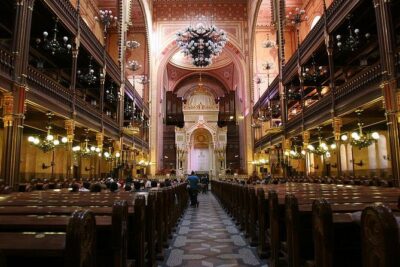
- Dohány Street Synagogue and the Jewish landmarks you’ll actually remember
- Hungarian-Jewish tastings: what you might eat on your day
- The Seventh District’s modern face: murals, cafés, and design shops
- Price and value: does $155 buy you enough?
- Who should book—and who should skip—this Jewish Cuisine Walk
- Should you book this Budapest Jewish Cuisine and Culture Walk?
- FAQ
- How long is the Budapest Jewish Cuisine and Culture Walk?
- How much does the tour cost?
- Where is the meeting point?
- What’s the group size?
- What food is included?
- Is this tour suitable for vegans?
- Can I visit synagogues on Saturdays?
- Is the tour wheelchair accessible?
- What’s the weather like—does it run rain or shine?
Key highlights worth your attention
- Small group (up to 8) means more Q&A and less time waiting around for tastings
- Dohány Street Synagogue and multiple Jewish sites give you a clear sense of where Jewish life centered
- Hungarian-Jewish classics you might try include matzo ball soup, gefilte fish, cholent, and flódni
- Full Jewish lunch helps you leave satisfied, not just nibbling
- Modern Seventh District stops add street art, cafés, and design shops to the same walk as history
Deeper into old District VII
- Budapest Jewish Heritage Memorial Walking Tour & Synagogue Entry★ 5.0 · 568 reviews
- Budapest: Jewish Heritage Guided Tour with Synagogue Ticket★ 4.8 · 533 reviews
- Jewish Quarter of Budapest Walking Tour★ 4.7 · 369 reviews
- German tour in the Budapest city centre & the Jewish quarter★ 5.0 · 359 reviews
Budapest’s Jewish Quarter still feels like a living neighborhood
The Seventh District is one of Budapest’s most watchable areas. You’ll see quirky bars, cool cafés, hidden art, and design shops that feel much more 2020s than 1940s. Yet right beneath that modern energy sits the weight of the neighborhood’s Jewish past—first as a major center of Jewish life, then as the part of the city where Jews were herded into a ghetto behind walls.
That contrast is exactly what makes this tour worth it. Instead of treating history as a sealed-off chapter, you walk through a place that still functions as a community. By the time you’re eating, you’re not just tasting food; you’re tasting a tradition shaped by real disruptions, survival, and change.
And while the Seventh District today can feel like an art-and-food hotspot, the tour keeps its focus on Jewish-Hungarian culture—so you’re not left wondering what you’re seeing or why it matters.
Your 4-hour plan: synagogues, streets, and full lunch
This is a walking tour designed to move at a lively pace. Over about 4 hours, you’ll cover the main beats of the Jewish Quarter in the Seventh District, with multiple stops for both learning and eating.
Here’s the practical idea of how it works:
- You’ll get cultural context and route guidance as you walk through the neighborhood
- You’ll visit Jewish landmarks—especially around the synagogues that have long anchored Jewish communal life in Budapest
- You’ll eat in several places, with tastings at 4–6 venues that can vary by day, plus a full Jewish lunch
A big plus: you’re not choosing restaurants on your own. You’re following a pre-planned route that blends history with meal structure. That matters because Jewish-Hungarian food spans both “everyday comfort” and festival-style dishes, and it’s hard to sample both well without some local help.
One watch-out: the tour is active, and you’ll be on your feet. It’s not ideal if you want a sit-down museum pace. Also, the walking route is not wheelchair accessible.
Arriving at Madách Imre Tér and getting your bearings fast
The meeting point is Madách Imre Tér (1075 Budapest) near the statue of Sisi. Your guide will be holding a tote bag with the local operator logo, so you can spot them quickly once you’re there.
In terms of transit, the closest options listed are Deák Ferenc tér (M1/M2/M3 lines) or Astoria (M2 line), plus tram 47 or 49. If you’ve already decided to base yourself in the center, this meeting spot is convenient.
Also, do yourself a favor and bring comfortable shoes. You’ll cover a lot of ground in a short window, and your reward is that the route stays compact enough to feel “one story” rather than scattered stops across town.
Dohány Street Synagogue and the Jewish landmarks you’ll actually remember
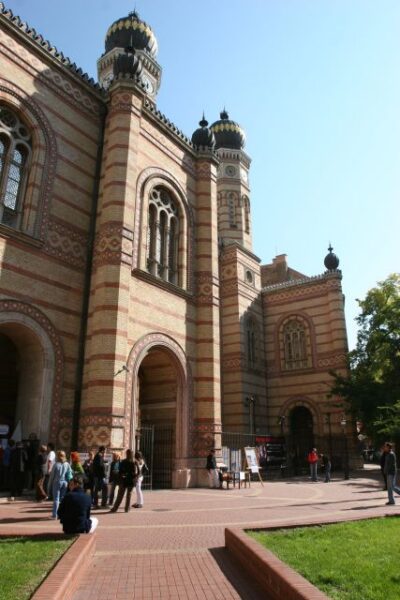
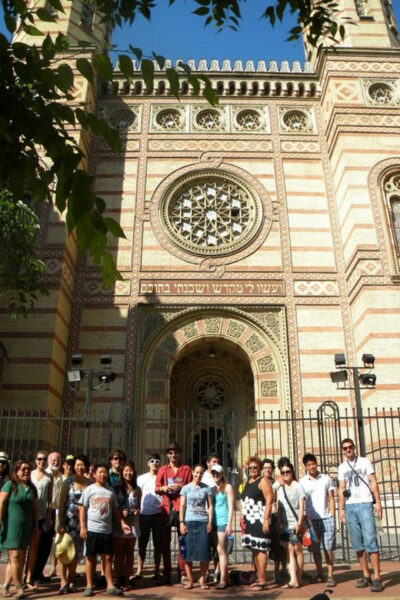
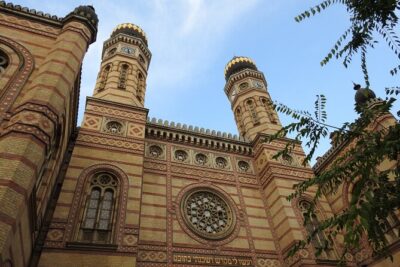
The tour is anchored in Jewish landmarks, and the headline is the area around the Dohány Street Synagogue. You’ll also see other Jewish sites as you walk.
A useful detail: the tour mentions you’ll see the neighborhood’s four synagogues, which is a key reason this walk works. Instead of only focusing on one major building, you’re getting a wider view of where communal life concentrated over time.
Two important context points you should keep in mind as you go:
- The neighborhood’s Jewish story includes both growth and catastrophe. Before World War Two, it was one of Europe’s large Jewish communities. During the war, Jews were herded into these streets, walls were put up, and a ghetto was created.
- After the war, and even into later years, the neighborhood’s fabric changed as historic buildings were demolished. That helps explain why you’ll notice the mix of older memorial feeling and newer street-life energy.
One operational note that can affect your day: you won’t be admitted to synagogues on Saturdays. If your dates include Saturday, expect the tour to still cover history and sights, but synagogue entry won’t be part of your experience.
More Budapest on foot



Hungarian-Jewish tastings: what you might eat on your day
This is a food tour, not a lecture with snacks. The guide’s job is to connect the neighborhood’s past to what people ate and how those traditions survived and evolved.
You’ll have food pairings at 4–6 venues, plus a full Jewish lunch. Depending on the day, you could try some of these Hungarian-Jewish specialties:
- sausages
- matzo ball soup
- gefilte fish
- Jewish eggs
- cholent
- roasted goose
- flódni
What I like about this list is that it covers different “modes” of Jewish-Hungarian cooking. Some dishes read as classic comfort food (like matzo ball soup). Others feel more like hearty, meal-as-a-stew traditions (cholent) or holiday-style centerpiece energy (roasted goose). Flódni brings in the dessert side—sweet, pastry, and not something you’ll likely stumble into by accident.
You should also know the tour is not suitable for vegans. That’s not a minor detail. The dishes mentioned are meat-heavy or made with animal products, so it’s best to treat this as a “go hungry” plan for omnivores.
About the number of stops: while the tour advertises 4–6 venues, it’s possible on some days you may end up with fewer tasting stops, especially if lunch is counted among them. The practical takeaway is simple: don’t book this if you’re hoping for a guaranteed “six mini-meals” every day. Do book it if you want a solid lunch plus several bites of Jewish-Hungarian favorites.
The Seventh District’s modern face: murals, cafés, and design shops
One reason to pick this walk over a pure food crawl is that it balances past and present. The Seventh District today is described as an art and food hotspot, with murals, street art, cool cafés, and cutting-edge design shops.
As you walk, those modern details aren’t meant to distract you. They help you see how the neighborhood keeps moving forward. This matters because the Jewish Quarter’s story isn’t only tragedy—it also includes community resilience, cultural creativity, and everyday life.
So you’ll get a mix of:
- street-level art and murals that make the district feel current
- cafés and small venues that show how the neighborhood eats and drinks now
- design shops that give you a sense of how Budapest’s “cool scene” took root in older streets
If you like neighborhoods where you can look at a wall and then understand the story behind it, this portion clicks.
Price and value: does $155 buy you enough?
At $155 per person, this isn’t a cheap “wandering and tasting” add-on. But it can still be good value if you use what you’re paying for.
You’re paying for three things that are hard to DIY:
- A guide who can connect Jewish history and culture to what you’re tasting, rather than sending you off with a generic food list
- Multiple structured tastings at venues around the Jewish Quarter, plus a full Jewish lunch
- A small group experience (limited to 8 participants) that tends to work better for timed meals and real conversation
- Skip-the-ticket-line included for relevant stops
If you were to try this on your own, you’d likely spend time figuring out which restaurants match Jewish-Hungarian traditions, then coordinate a walking route that covers the right landmarks. Here, the route and meal logic come together in one package.
Is it worth it if you’re a slow eater or you prefer a very relaxed pace? Maybe not. But if you like active, guided city walking plus a meaningful meal, the value makes sense.
Who should book—and who should skip—this Jewish Cuisine Walk
This tour fits best if you want all of the following:
- You’re interested in Budapest’s Jewish story, especially how Jewish life shaped the Seventh District
- You want to taste Jewish-Hungarian food in multiple styles, not just one restaurant
- You don’t mind walking a lot in about 4 hours
- You like small group tours where you can ask questions and keep momentum
You should probably skip it if:
- You’re vegan (it’s not suitable for vegans, based on the tour info)
- You use a wheelchair (it’s not wheelchair accessible)
- You need guaranteed synagogue admission—Saturday visits won’t include synagogue entry
Also, keep your expectations realistic: the experience is dynamic and food-forward. The goal is to leave with a full belly and a clearer sense of place, not to slow down for a textbook-style pace.
Should you book this Budapest Jewish Cuisine and Culture Walk?
Book it if you want one outing that does three jobs at once: teaches the Seventh District’s Jewish background, helps you connect history to food, and serves a meal that actually feels part of the story. The best fit is a curious eater who enjoys walking and wants more than just a photo of a synagogue.
Skip it if you can’t do a fairly active 4-hour walk, need vegan options, or are traveling on a Saturday and specifically want synagogue entry. In those cases, you’ll be happier choosing a different format.
If your plan includes exploring Budapest’s Jewish Quarter anyway, this is a strong way to turn that neighborhood time into something delicious and memorable.
FAQ
How long is the Budapest Jewish Cuisine and Culture Walk?
It lasts 4 hours.
How much does the tour cost?
The price is $155 per person.
Where is the meeting point?
Meet at Madách Imre Tér (1075 Budapest) near the statue of Sisi. The guide will be holding a tote bag with the local operator logo.
What’s the group size?
It’s a small group limited to 8 participants.
What food is included?
You’ll have food and drink tastings at 4–6 venues, plus a full Jewish lunch. Dishes may vary by day and can include options like matzo ball soup, gefilte fish, cholent, and flódni.
Is this tour suitable for vegans?
No, it is not suitable for vegans.
Can I visit synagogues on Saturdays?
You will not be admitted to synagogues on Saturdays.
Is the tour wheelchair accessible?
No, it is not wheelchair accessible.
What’s the weather like—does it run rain or shine?
It runs rain or shine except for Hungarian national holidays, when venue closings may affect the tour.
Still Walking Budapest





More Tour Reviews in Budapest






Around the Old Jewish Quarter






Just Added: More Budapest Reviews
- Sightseeing flight over Budapest
★ 5.0 · 3 reviews - Budapest: Walking Tour with Chimney Cake & Polaroid Photos
★ 5.0 · 3 reviews - Self Guided Tour In Budapest With 100 Captivating Audio Stories
★ 5.0 · 3 reviews - Budapest Art Nouveau Walking Tour
★ 5.0 · 3 reviews - Hungary today: a no-taboo conversation
★ 5.0 · 3 reviews
Jewish Quarter Tours, compared.
 ★ 5.0Budapest Jewish Heritage Memorial Walking Tour & Synagogue EntryFrom $83568 reviews
 ★ 4.8Jewish Heritage Guided Tour with Synagogue TicketFrom $81533 reviews
 ★ 4.7Jewish Quarter of Budapest Walking TourFrom $2369 reviews
 ★ 5.0German tour in the Budapest city centre & the Jewish quarterFrom $23359 reviews
 ★ 5.0Past and Present of Budapest Jewish District TourFrom $3264 reviews
 ★ 5.0Budapest City Walk in Jewish QuarterFrom $356218 reviews
 ★ 4.5Budapest Dohany Synagogue & Hungarian Jewish Museum & free extrasFrom $44218 reviews
 ★ 4.8Jewish History Guided Walking Tour with HistorianFrom $63205 reviews
Browse the lists this tour appears in