
Ruins, synagogues, and a hard history walk.
This self-guided Budapest route uses the Rewind app to play story segments with professional guides and actors as you move between landmarks, so you set the pace and can start when it suits you. I really like the blend of light and heavy moments: the largest synagogue in Europe plus the energy of Szimpla Kert. One drawback to plan for: if you have trouble linking your booking to the app, help may take time, so give yourself a buffer before you go.
You’ll also get an efficient “orientation tour” feel, with short stops that help you understand what you’re looking at without dragging you through long museum-style pacing. I like that it walks you along major sights such as Andrássy Avenue and the Hungarian State Opera, then threads into the old Jewish quarter (today often called the festive district). If you want deep time inside buildings, you may need to extend your day on your own, because some stops are intentionally brief.
In This Review
- Key points before you go
- Why this self-guided format beats a standard group walk
- Start points, flow, and what 1.5 hours usually feels like
- House of Terror Museum: a sharp opener before the elegance
- Andrássy Avenue and Oktogon: UNESCO boulevard energy
- Jókai Street and a quick food cue you can remember
- Hungarian State Opera: Paris-style architecture, Budapest identity
- The Jewish Quarter and the Great/Central Synagogue: what to watch for
- Gozsdu Passage: when the tour shifts from stories to social life
- Szimpla Kert: the ruin-bar icon that started a trend
- Price and value: when $14.47 makes sense
- Booking, app hiccups, and how to avoid frustration
- Who should book this tour (and who should skip it)
- Quick decision: should you book?
- FAQ
- How long is the Budapest Festive and Old Jewish District Self-Guided Walking Tour?
- What does it cost?
- Is the House of Terror Museum ticket included?
- Do I choose the start time, or does it run at fixed hours?
- Do I get a mobile ticket?
- Can I cancel for a full refund?
Key points before you go
- Rewind audio that triggers as you walk: you follow the story through the streets at your own rhythm.
- A smart mix of neighborhoods: Andrássy Avenue glamour meets the Jewish quarter and classic ruin-bar culture.
- Landmarks you can’t really miss: the Great/Central Synagogue and Szimpla Kert anchor the route.
- Mostly walking outside: you’ll be in the city streets for the whole experience, so weather matters.
- House of Terror is on you for entry: the museum ticket isn’t included, so budget that in.
- Private for your group: only your group participates, not a big shared crowd shuffle.
Deeper into old District VII
- Budapest Jewish Heritage Memorial Walking Tour & Synagogue Entry★ 5.0 · 568 reviews
- Budapest: Jewish Heritage Guided Tour with Synagogue Ticket★ 4.8 · 533 reviews
- Jewish Quarter of Budapest Walking Tour★ 4.7 · 369 reviews
- German tour in the Budapest city centre & the Jewish quarter★ 5.0 · 359 reviews
Why this self-guided format beats a standard group walk
Budapest can be confusing if you only rely on big-name sights. This walk fixes that by turning key locations into a simple story chain you can follow on your phone. The Rewind app plays automatically triggered segments, so you’re not standing around trying to figure out what comes next.
I also like that it’s genuinely flexible. You can start whenever you want, and you can do it solo or with others in your group. That matters in a city where you might want to time your Jewish Quarter stop around dinner, or squeeze it in between transit and other plans.
The main thing to respect is the tradeoff: it’s designed to be quick and efficient. Each stop is short, so you’ll get context fast, but you won’t magically become an expert without adding extra time on your own when something really hooks you.
Start points, flow, and what 1.5 hours usually feels like
The experience starts at Budapest, Vörösmarty u. 37, 1064 Hungary and ends at Budapest, Kazinczy u. 14-1075, 1075 Hungary. That end point is near the Jewish Quarter area, which is a nice way to finish because the streets around Szimpla Kert and the nightlife passages are right in the same orbit.
The total duration is about 1 hour 30 minutes. In practice, that means you’re moving between landmarks with brief introductions at each one, not lingering for long entries. If you’re slow on your feet or you want lots of photos, plan to stretch it a bit rather than treating the time as strict.
The route is also listed as running every day from 12:00 AM to 11:30 PM. That’s extremely convenient, especially if you’re trying to fit it between other timed activities.
You’ll use a mobile ticket, and the route is set up for you to use your smartphone on-site. If you’re traveling with a low battery or shaky reception, bring a charger and keep your phone power in check.
House of Terror Museum: a sharp opener before the elegance
Your first major moment is the House of Terror Museum. This museum focuses on the story of the communist period in Hungary, so it sets a tone that’s heavier than the later streetscapes.
Why that opening works: it prevents the rest of the day from feeling like only postcard Budapest. You quickly understand that this part of the city has layers—political, social, and cultural—that you can’t ignore if you want the Jewish Quarter and festive district to make sense.
The practical catch: the museum admission ticket is not included. That doesn’t make the stop useless, but it does mean you should decide ahead of time whether you’ll actually go in and pay entry, or treat it as an external orientation point and move on.
Andrássy Avenue and Oktogon: UNESCO boulevard energy
Next you step onto Andrássy Avenue, which has UNESCO World Heritage status since 2002. The Avenue is famous today for luxury boutiques—think Louis Vuitton, Armani, Dior, and Dolce & Gabbana—so it feels like a different Budapest than what you might expect.
I like this stop because it changes your visual expectations. You’re seeing how Budapest presents itself at street level: broad views, historic layout, and the kind of storefront lineup that signals wealth and tourism.
Then you pass Oktogon, a spot with an interesting origin story. Until the 19th century, it was a backwater of the Danube where boats could sail; later, it was integrated into the road network of Budapest. That’s a great lesson in how the city reshaped itself over time, literally moving waterways and city function.
Real-world tip: the stops here are short, so use it to connect dots. If you’re curious, you can always slow down after the app moves you along—just be sure you still want to keep your day on track.
Budapest at street level, more routes on foot


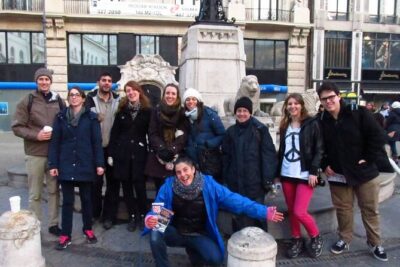
Jókai Street and a quick food cue you can remember
As you continue along Jókai Street, you get a playful connection to local food: Jókai soup, often cited as one of the best Hungarian soups. This is the kind of detail that makes a walking tour stick in your brain, because it ties a street name to something you can eat later.
The drawback is also simple: you only get a quick hit. If you’re hungry, you’ll likely want to turn this into a full food plan rather than just a name-check.
Still, it’s useful, especially if you’re pairing your walking tour with a meal in the Jewish Quarter area afterward. You’ll already know which soup to look for when you’re choosing a restaurant.
Hungarian State Opera: Paris-style architecture, Budapest identity
The next highlight is the Hungarian State Opera. The building is inspired by the famous Opera Garnier in Paris, which means you’re looking at a Europe-wide architectural language—but in Hungarian hands.
I like having this as a mid-route anchor. After the political tone of House of Terror and the commercial grandeur of Andrássy Avenue, the Opera building brings you back to culture through design. Even if you don’t go inside, you can appreciate the façade and get a sense of what this city invests in.
Keep expectations realistic: the stop is brief, and there’s no mention of included entry. If you want a guided interior visit, you’ll need to line that up separately with your schedule.
The Jewish Quarter and the Great/Central Synagogue: what to watch for
Then you enter the Jewish Quarter, described as the old Jewish neighborhood of Budapest—today often tied to what many people call the festive district. This is where the tour’s story focus sharpens.
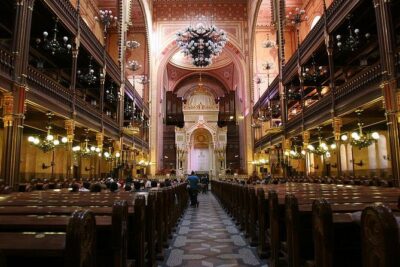
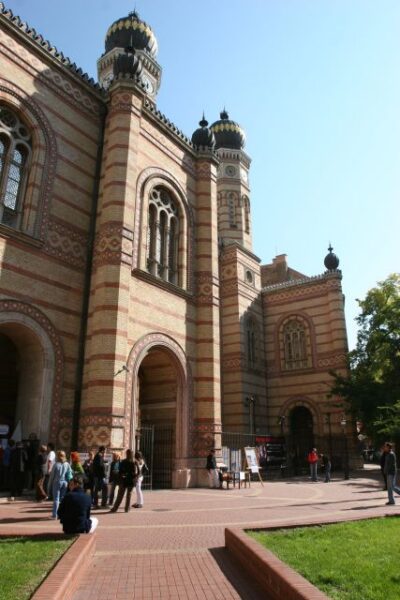
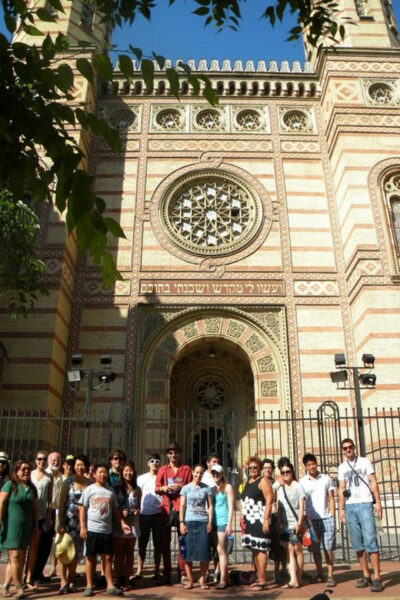
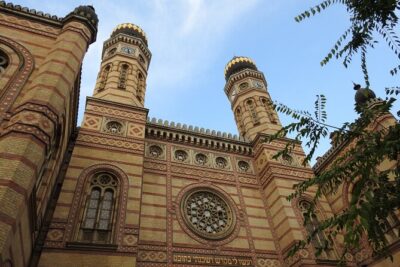
Your key landmark is the Great / Central Synagogue (Nagy Zsinagóga), noted as the largest synagogue in Europe. That size alone is impressive, but the more valuable part of this stop is the history framing: you’re learning about the Jewish community in the city while you’re standing in the surrounding streets.
What to watch for with a short stop like this: notice how the area reads. Even if you’re not studying every inscription, you can see the mix of historic identity and modern nightlife use nearby. That’s the “festive district” idea in one glance—history doesn’t freeze; it lives.
One planning note: the experience marks this as a free admission stop, so it’s not charging you for entry as part of the tour experience itself. If you plan to go inside, check what access is possible on the day you’re there, because buildings and schedules vary.
Gozsdu Passage: when the tour shifts from stories to social life
After the synagogue, the walk moves toward Gozsdu Passage. This area is known for restaurants and international specialties, plus artistic performances and bars where people socialize.
This is a clever placement in the route because your brain has gone through meaning-heavy content already. Now you’re given a practical payoff: a place where you can turn curiosity into a meal, a drink, or a relaxed break.
The stop is short, but you can use it like a decision point. If you’re thinking about dinner, this is a good area to scan menus and pick a place that fits your budget and your energy level. If you want nightlife, it helps you understand where the crowds will likely gather later.
Szimpla Kert: the ruin-bar icon that started a trend
Your final landmark is Szimpla Kert, described as the ruin bar of the Hungarian capital and one of the first of its kind. This is the spot that turns your day from “heritage walk” into “Budapest after dark attitude.”
Why this stop matters: ruin bars aren’t just a novelty photo op. They reflect a broader way of reusing space—taking something worn, repurposing it, and making it social again. In a city with layers like Budapest, that idea feels right.
The stop here is also brief, so don’t expect it to function like a long hangout built into the experience. Use it as a guided introduction, then stay only if it matches your vibe and timing.
If you’re visiting later in the day, consider how long you want to linger. The app can guide you through the history, but your last hour might be better spent choosing a seat and letting the atmosphere do its job.
Price and value: when $14.47 makes sense
At $14.47 per person for about 1 hour 30 minutes, this is priced in the range of a low-friction “helper guide.” You’re not paying for museum tickets, and you’re not hiring a live guide who escorts you in and out of buildings. Instead, you’re paying for story segments that make the street-level experience more meaningful.
That’s good value if you’re the type of traveler who likes structure but hates waiting for a group. It’s also good if you want a short plan that covers multiple key areas without turning your day into a checklist sprint.
It’s less of a bargain if you already know the history deeply and you’d rather spend that time inside museums or on a guided architecture tour. In that case, this works better as a quick orientation tool than a main learning experience.
If you plan to visit the House of Terror museum, remember admission is not included. Add that cost to your math, so you don’t get surprised once you decide to go in.
Booking, app hiccups, and how to avoid frustration
This is a mobile-ticket experience delivered through the Rewind app. Most of the time, that means you just download, start, and follow the triggered story segments.
But there’s one real risk to take seriously: linking problems can happen. Some people ran into trouble connecting their booking to the app and had to work through customer support, even when they reached out days ahead. The takeaway for you is simple—don’t treat it as a last-minute-only plan if you’re the kind of person who panics when tech doesn’t cooperate.
If you’re going during a busy travel day, do a quick test run before you leave your lodging. Make sure your phone is charged, your app is ready, and you can access the content once you arrive. That small habit can save your whole afternoon.
Also, this experience is listed as private for your group. That’s a nice perk if you don’t want to navigate other people’s pace around tight corners and major façades.
Who should book this tour (and who should skip it)
This walk is a strong fit for people who want:
- a short, efficient route that connects multiple landmarks,
- a way to learn without committing to a full museum schedule,
- and a flexible start time with smartphone audio.
You might skip it if you need long, guided time inside buildings, or if you want a live guide to answer questions on the spot. This isn’t designed to be a Q&A conversation; it’s designed to guide you through a storyline while you walk.
It can also be a smart choice on rainy days. One buyer specifically mentioned enjoying it even in bad weather, because it keeps moving and avoids the awkward standstill feeling that can happen with some walking tours.
Quick decision: should you book?
I’d book it if you want a low-stress way to connect Budapest landmarks into a coherent story, especially around the Jewish Quarter and the festive district vibe near Szimpla Kert. The price is fair for what you get: guided audio, a clear route, and a mix of major sights you’d likely piece together manually anyway.
I’d also book it with one condition: give yourself time to sort any app issues before you start. If tech cooperates, this is the kind of tour that makes your walk feel smarter without turning your day into homework.
FAQ
How long is the Budapest Festive and Old Jewish District Self-Guided Walking Tour?
The tour lasts approximately 1 hour 30 minutes.
What does it cost?
It costs $14.47 per person.
Is the House of Terror Museum ticket included?
No. The House of Terror Museum admission ticket is not included.
Do I choose the start time, or does it run at fixed hours?
You can start whenever you want. The experience is listed as available daily from 12:00 AM to 11:30 PM.
Do I get a mobile ticket?
Yes. The experience includes a mobile ticket.
Can I cancel for a full refund?
Yes. You can cancel up to 24 hours in advance for a full refund. If you cancel less than 24 hours before the start time, the amount paid isn’t refunded.
More Tour Reviews in Budapest






More of Budapest, Step by Step






Around the Old Jewish Quarter





Just Added: More Budapest Reviews
- Sightseeing flight over Budapest
★ 5.0 · 3 reviews - Budapest: Walking Tour with Chimney Cake & Polaroid Photos
★ 5.0 · 3 reviews - Self Guided Tour In Budapest With 100 Captivating Audio Stories
★ 5.0 · 3 reviews - Budapest Art Nouveau Walking Tour
★ 5.0 · 3 reviews - Hungary today: a no-taboo conversation
★ 5.0 · 3 reviews
Jewish Quarter Tours, compared.
 ★ 5.0Budapest Jewish Heritage Memorial Walking Tour & Synagogue EntryFrom $83568 reviews
 ★ 4.8Jewish Heritage Guided Tour with Synagogue TicketFrom $81533 reviews
 ★ 4.7Jewish Quarter of Budapest Walking TourFrom $2369 reviews
 ★ 5.0German tour in the Budapest city centre & the Jewish quarterFrom $23359 reviews
 ★ 5.0Past and Present of Budapest Jewish District TourFrom $3264 reviews
 ★ 5.0Budapest City Walk in Jewish QuarterFrom $356218 reviews
 ★ 4.5Budapest Dohany Synagogue & Hungarian Jewish Museum & free extrasFrom $44218 reviews
 ★ 4.8Jewish History Guided Walking Tour with HistorianFrom $63205 reviews
Browse the lists this tour appears in