
Reviewed · JEWISH QUARTER TOURS
A Journey through Jewish Budapest – Walking Tour
Budapest has a way of teaching you fast. This Jewish Budapest walking tour uses landmark buildings and street-level history to show Jewish life before WWII. I love the way it pairs big architecture with specific stories, and I love that the Shoes on the Danube stop pushes you to reflect, not just look.
The main thing to plan for is practical: the Dohány Synagogue has its own entry ticket and a strict dress code, so you’ll want to budget and pack accordingly.
In This Review
- Key things you’ll notice on this tour
- From Herzl’s birthplace square to Dohány Street
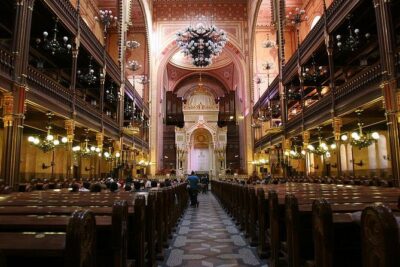
- Dohány Street Synagogue: Moorish Revival and what you’ll learn inside
- What’s special about the Dohány complex
- Ghetto Wall Memorial, the Mikveh, and Kazinczy Street’s orthodox synagogues
- Status Quo Ante Judaism and the Rumbach Street Synagogue facade
- Shoes on the Danube Bank: remembrance that asks something of you
- What this tour feels like in practice
- Budget and value: what $123 covers (and what doesn’t)
- Who should book this Jewish Budapest walking tour
- Should you book this Jewish Budapest walking tour?
- FAQ
- How long is the A Journey through Jewish Budapest walking tour?
- What language is the tour offered in?
- What is included in the tour price?
- Where do I meet the guide?
- Is the Dohány Synagogue ticket included?
- Are there any dress code rules?
- Which major sites are included on the route?
- Is this tour private or small group?
- What is the cancellation policy?
Key things you’ll notice on this tour
- Historian guide-led pacing: you get a professor, doctoral student, journalist, historian, or art critic style of explanation rather than a script.
- Dohány Synagogue inside the complex: you’ll see the Moorish Revival main space and then move through parts of the site like the Temple of Heroes, Jewish Museum, and Memorial Park.
- Ghetto Wall Memorial (2014): a modern memorial added to older layers of the city’s past.
- Mikveh and synagogue exteriors: you’ll learn what you’re looking at, even when the tour focuses on outside views on Kazinczy Street and near Rumbach Street.
- Shoes on the Danube Bank remembrance: the final stop is built for quiet attention and moral weight.
Deeper into old District VII
- Budapest Jewish Heritage Memorial Walking Tour & Synagogue Entry★ 5.0 · 568 reviews
- Budapest: Jewish Heritage Guided Tour with Synagogue Ticket★ 4.8 · 533 reviews
- Jewish Quarter of Budapest Walking Tour★ 4.7 · 369 reviews
- German tour in the Budapest city centre & the Jewish quarter★ 5.0 · 359 reviews
From Herzl’s birthplace square to Dohány Street
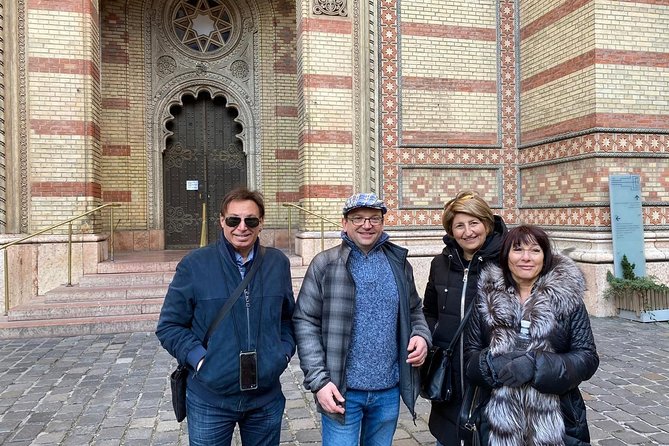
The tour starts in central Budapest, at Kamara Café, Dohany utca 1/A. Right away, it frames what you’re about to see: before WWII, about a quarter of Budapest’s population was Jewish. That context matters, because many visitors arrive thinking only about tragedy. This walk builds a fuller picture first.
One of the first moments is the area connected with Theodor Herzl, often called the father of modern Zionism. The tour begins at the square where Herzl was born, then uses that anchor point to talk about Jewish identity, political change, and the feeling of a community trying to shape its future.
What I like about this opening is that it gives you a lens. When you later stand in front of massive religious and memorial sites, you’re not just reading plaques. You can connect the buildings to the people they were for.
Dohány Street Synagogue: Moorish Revival and what you’ll learn inside
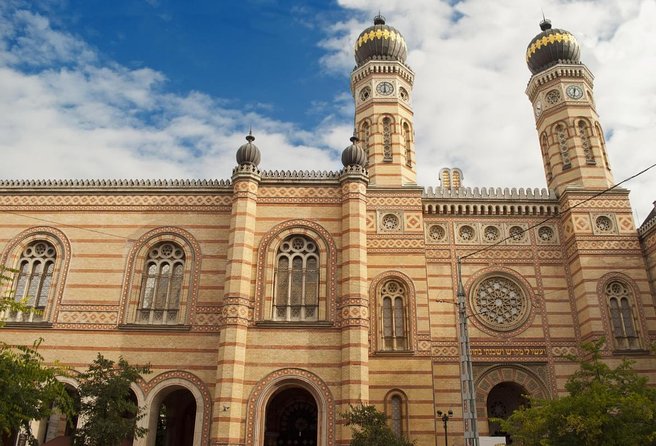
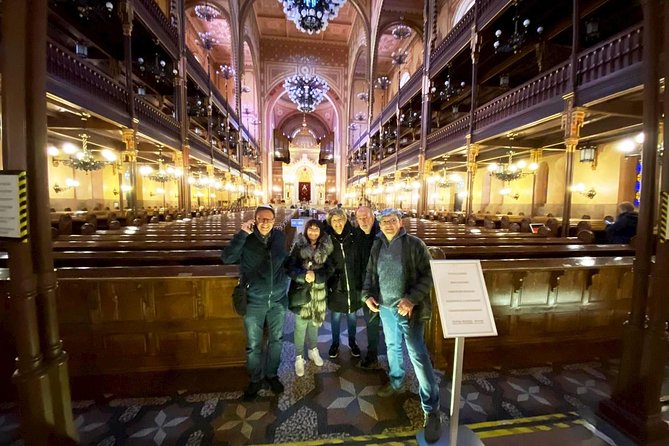
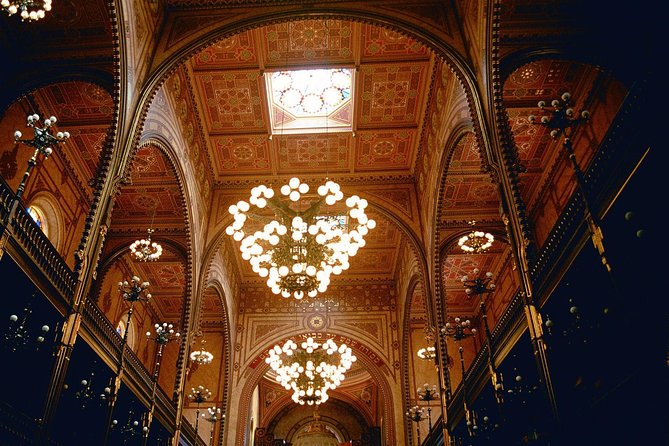
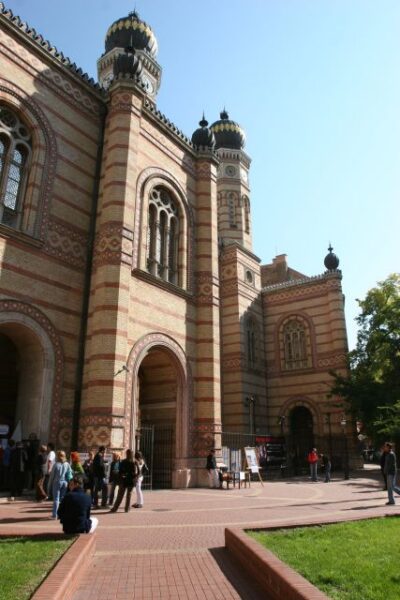
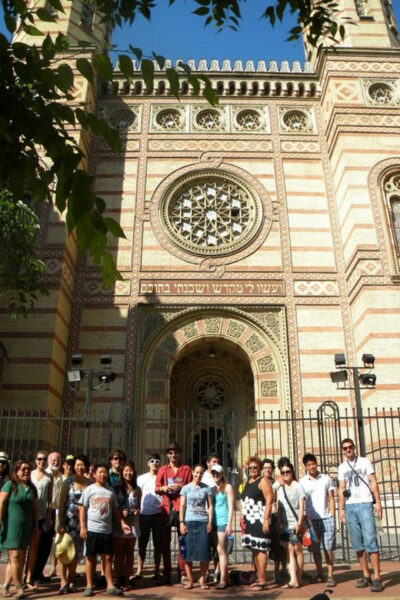
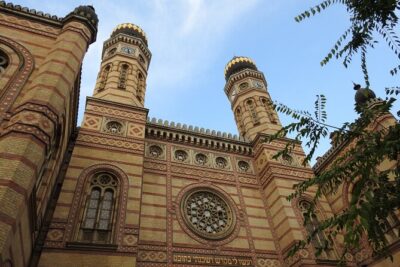
The centerpiece of the route is the Dohány Street Synagogue, described as the greatest Jewish house of worship in Europe. You visit with assistance from a Jewish Studies Scholar, which changes the experience. Instead of treating the synagogue as a sightseeing photo stop, you get guided context about what the space meant and how the community understood itself.
You’ll also need to plan for the main practical hurdle: Dohány Synagogue tickets are not included. The individual ticket price listed is 14,500 Ft. Budget for that up front so you don’t hit a snag once you arrive.
Even more important: visitors to the Dohány Synagogue are requested to have shoulders and knees covered. If you show up in shorts and a tank top, you may have to fix it fast. I’d rather you bring a light layer and skip the stress.
What’s special about the Dohány complex
Inside the Dohány complex, the tour doesn’t stop at the main sanctuary. You also pass through key areas of the site, including:
- the Temple of Heroes
- the Jewish Museum
- a Memorial Park
That order helps. The main synagogue impresses you visually, but the museum and memorial spaces shift the focus toward memory and continuity. It’s the difference between admiring a landmark and understanding why it exists.
A useful tip: even if you’ve read about Budapest’s Jewish community before, this is the part where questions tend to start. Why is the building styled the way it is? What does the layout signal? How did modern Jewish institutions take shape in a city that was changing quickly? A good historian guide helps you tie it all together without turning it into a lecture marathon.
Ghetto Wall Memorial, the Mikveh, and Kazinczy Street’s orthodox synagogues
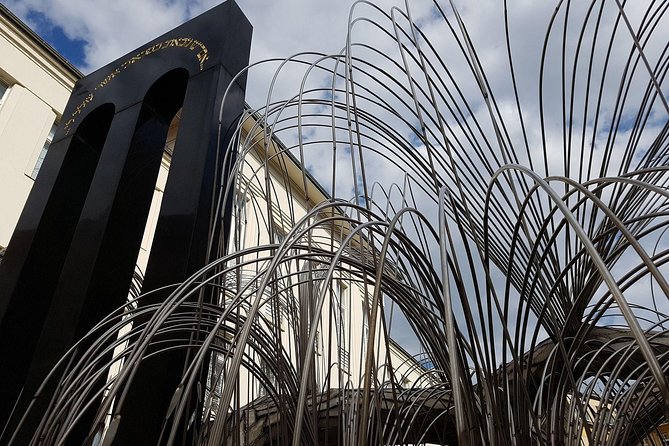
After Dohány, the route moves into a different emotional register. You’ll walk to the Ghetto Wall Memorial, erected in 2014, then continue toward the next cluster of religious sites.
The Ghetto Wall Memorial works well because it connects two time scales. It’s modern and specific, but it points to older events and forced boundaries that defined daily life. Seeing it as part of a walking route makes the history feel less abstract than a museum display.
From there, the tour passes by a Mikve (ritual bath). Even if you only see it on the route rather than step inside, the mikveh idea is powerful. It reminds you that Judaism in a community setting often showed up in routines—cleanliness, life cycles, and belonging—long before WWII made normal life impossible.
Next comes Kazinczy Street, where you’ll view the exteriors of an Art Nouveau orthodox synagogue. The exterior focus is worth knowing ahead of time: you’re not guaranteed a full interior visit at every stop. But the value is in the explanation—how different Jewish streams, communities, and architectural choices coexisted in the same city.
Budapest at street level, more routes on foot

Status Quo Ante Judaism and the Rumbach Street Synagogue facade
The tour also includes a stop that’s easy to miss if you’re just walking past buildings: discussion of the Status Quo Ante stream of Judaism. This matters because it shows that Jewish life in Budapest wasn’t one single story. Even within religious tradition, there were institutions, disagreements, and compromises about practice.
You’ll observe the impressive facade of the Rumbach Street Synagogue while learning about that context. Architecturally, it’s a strong visual moment. Historically, it helps you understand why multiple synagogues could exist side by side—serving different community preferences and maintaining different interpretations of tradition.
This is one of the reasons I think this tour is good value. The route keeps connecting the dots: buildings are not just objects. They’re signals of community organization, identity, and the way people negotiated belonging.
Shoes on the Danube Bank: remembrance that asks something of you
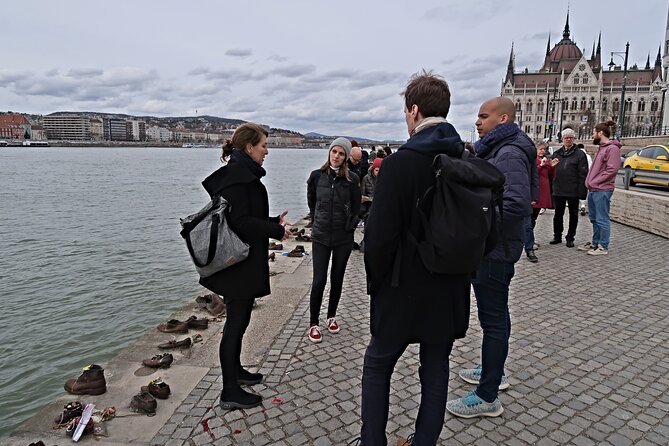
The final stop is Shoes on the Danube Bank memorial. It’s impossible to treat this place lightly. You’ll pause where the memorial is designed for reflection on Jewish lives lost at the riverbank.
What makes this stop especially meaningful on a guided walk is that it’s framed as remembrance with intent. The memorial doesn’t just ask you to remember names you may not know. It nudges you to consider the loss at human scale—and then, importantly, to think about what remains and what has been rebuilt.
Some tours also include a practical element of respect. In one guide-led example, a request to pay respect by cleansing several so-called stumbling stones was supported by materials provided by the guide, and the guide participated. That kind of detail isn’t guaranteed, but it fits the spirit of the final stop: you’re not only looking—you’re participating in remembrance in whatever respectful way the moment allows.
A simple tip: keep your phone low here. If you’re the type who likes to take lots of photos, save it for earlier sections. At Shoes on the Danube, the point is weight, not content.
What this tour feels like in practice
This is one of those tours where the guide can make or break the day. Here, the format is set up for real interaction. Guides are often professors, doctoral students, historians, journalists, art critics, and published authors, and that shows in how the stories land.
Group size also matters. The experience can be private or small groups available, and that usually means you won’t get rushed through everything. In small groups, you can ask follow-up questions like:
- What does the architecture reflect about identity?
- How did the community structure itself before WWII?
- Why do certain memorials take the form they do?
Pacing is part of the vibe too. One guide-style example described a thoughtful approach, checking in before moving on. That’s not a small detail. In a walk that covers both religious splendor and atrocities, you want time to absorb without feeling pushed.
Budget and value: what $123 covers (and what doesn’t)
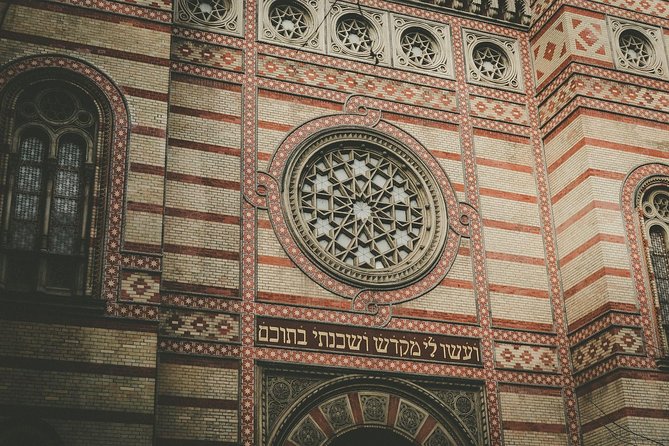
At $123 per person for a 3-hour walking tour, the value comes from two things: a historian guide and a route that strings together major sites with clear historical framing. You’re paying for interpretation, not just walking distance.
The extra cost you should plan for is the Dohány Synagogue ticket (14,500 Ft, individual). Since tickets are not included, you should treat that as part of your total budget. Also remember the dress code. If you need to cover up, do it before you arrive so you can spend your time learning instead of improvising.
If you’re comparing options, ask yourself what you want most:
- If you want a guided narrative across multiple sites, this format is strong.
- If you only want a quick look at the synagogue interior and nothing else, you might find a different tour better suited.
Who should book this Jewish Budapest walking tour
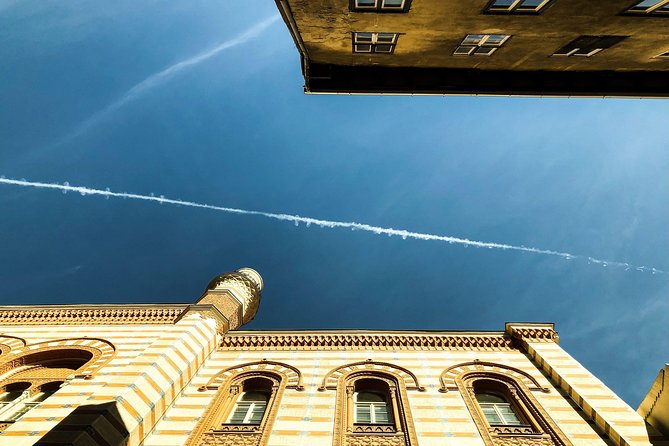
This tour fits best if you want a guided walk through Jewish Budapest that goes beyond postcards. It’s ideal for:
- history-minded travelers who like context tied to buildings
- people who want to understand Jewish life in Budapest before WWII, not only the aftermath
- visitors who appreciate a knowledgeable academic-style guide format without feeling stuck in a classroom
It may be less ideal if you:
- only want brief photo stops and minimal talking
- need lots of free time at each site (the tour is structured and runs about 3 hours)
- can’t follow a synagogue dress code, since the Dohány visit comes with shoulders and knees covered expectations
Should you book this Jewish Budapest walking tour?
Yes—if you’re looking for a guided, respectful route through key Jewish landmarks with a historian-led explanation. The combination of Herzl’s birthplace area, the Dohány Synagogue complex, stops tied to community life like the mikveh and Kazinczy Street, and a careful ending at Shoes on the Danube gives you a day’s worth of meaning in only 3 hours.
Before you go, do three things:
- budget the 14,500 Ft Dohány ticket
- wear layers so you meet the shoulders and knees covered request
- bring a quiet mindset for the final memorial stop
If that sounds like your kind of Budapest visit, book it and let the city teach you in sequence, not in scattered facts.
FAQ
How long is the A Journey through Jewish Budapest walking tour?
The tour lasts 3 hours.
What language is the tour offered in?
The live tour guide offers English.
What is included in the tour price?
The experience includes a 3-hour walking tour and a historian guide.
Where do I meet the guide?
You meet at Kamara Café, Dohany utca 1/A.
Is the Dohány Synagogue ticket included?
No. Dohány Synagogue tickets are not included. The individual ticket price listed is 14,500 Ft.
Are there any dress code rules?
Yes. Visitors to the Dohány Synagogue are requested to have shoulders and knees covered.
Which major sites are included on the route?
Key stops include Dohány Synagogue, Ghetto Wall Memorial, synagogues on Kazinczy Street and Rumbach Street (exteriors/facades as described), and the Shoes on the Danube Bank memorial.
Is this tour private or small group?
Private or small groups are available.
What is the cancellation policy?
There is free cancellation up to 24 hours in advance for a full refund.
More Tour Reviews in Budapest






More of Budapest, Step by Step





Around the Old Jewish Quarter





Just Added: More Budapest Reviews
- Sightseeing flight over Budapest
★ 5.0 · 3 reviews - Budapest: Walking Tour with Chimney Cake & Polaroid Photos
★ 5.0 · 3 reviews - Self Guided Tour In Budapest With 100 Captivating Audio Stories
★ 5.0 · 3 reviews - Budapest Art Nouveau Walking Tour
★ 5.0 · 3 reviews - Hungary today: a no-taboo conversation
★ 5.0 · 3 reviews
Jewish Quarter Tours, compared.
 ★ 5.0Budapest Jewish Heritage Memorial Walking Tour & Synagogue EntryFrom $83568 reviews
 ★ 4.8Jewish Heritage Guided Tour with Synagogue TicketFrom $81533 reviews
 ★ 4.7Jewish Quarter of Budapest Walking TourFrom $2369 reviews
 ★ 5.0German tour in the Budapest city centre & the Jewish quarterFrom $23359 reviews
 ★ 5.0Past and Present of Budapest Jewish District TourFrom $3264 reviews
 ★ 5.0Budapest City Walk in Jewish QuarterFrom $356218 reviews
 ★ 4.5Budapest Dohany Synagogue & Hungarian Jewish Museum & free extrasFrom $44218 reviews
 ★ 4.8Jewish History Guided Walking Tour with HistorianFrom $63205 reviews
Browse the lists this tour appears in