
Reviewed · JEWISH QUARTER TOURS
A Journey through Jewish Budapest – Walking Tour
Budapest history hits differently when you follow it by foot. This Jewish Budapest walking tour strings together major synagogues, the story of the former ghetto area, and the solemn Shoes on the Danube Bank memorial. I especially like the way the guide links Jewish community life to wider Hungarian events, and how the small group format keeps the questions coming; the one drawback is you’ll need to plan for extra time and money for synagogue entry tickets.
You’ll start near the Great Synagogue, then work your way through the VII and VIII districts, with several stops focused on what the buildings mean and how people lived. Because the interior access depends on public opening hours, I’d treat part of the schedule as “when possible,” not “guaranteed all the way in.” Also, plan for dress code: shoulders and knees covered are requested for the Dohány and Kazinczy synagogues.
In This Review
- Key things I’d mark on your map first
- Why This Jewish Budapest Walk Works
- Your Starting Point: Kamara Café Across from the Great Synagogue
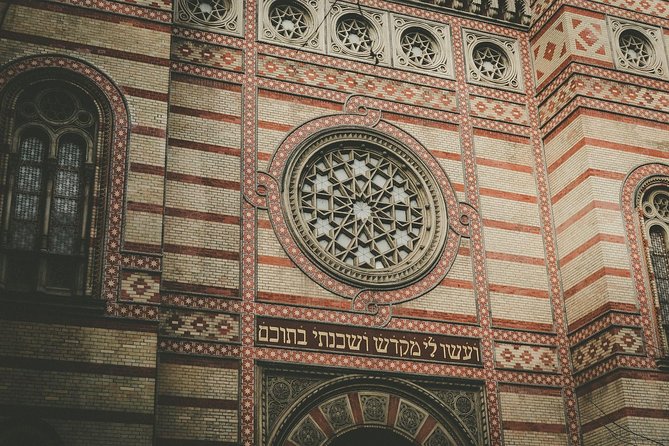
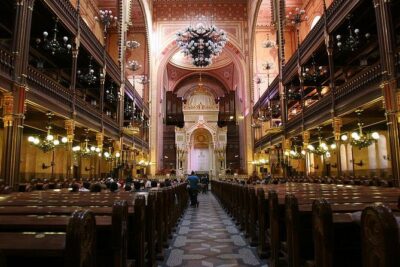
- Stop 1: Great / Central Synagogue (Dohány Street) and the Moorish Revival Complex
- Stop 2: Kazinczy Street Synagogue, Ghetto Wall Memorial, and a Ritual Bath
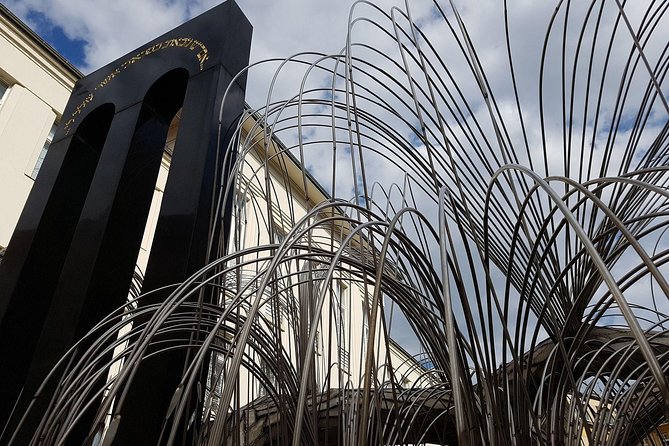
- Stop 3: Rumbach Street Synagogue and the Status Quo Ante Story
- Stop 4: Shoes on the Danube Bank, Free and Unavoidable
- Tickets, Dress Code, and How to Avoid Stress
- Price and Value: Is $126.16 a Good Deal?
- The Guides: When Storytelling Turns Into Understanding
- Who Should Book This Tour (and Who Might Not)
- My Booking Checklist (Practical, Not Precious)
- Should You Book This Jewish Budapest Walking Tour?
- FAQ
- How long is the walking tour?
- Where does the tour start?
- Is it in English?
- Are synagogue tickets included in the price?
- What is the dress code for synagogues?
- How many people are in the group?
Key things I’d mark on your map first
- Small-group feel (up to six, capped at eight) so you’re not just herded through.
- Historian guide who can connect synagogue architecture to the big, difficult moments in Hungarian Jewish life.
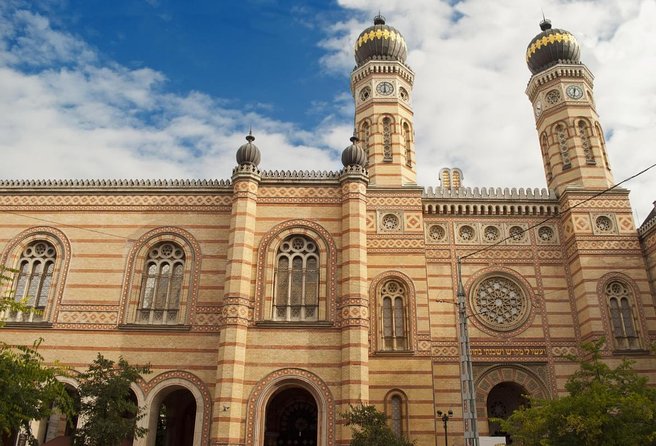
- Dohány Street Synagogue complex: Moorish Revival style plus the Temple of Heroes, Jewish Museum, and Memorial Park.
- Ghetto Wall Memorial (erected in 2014) and nearby sights that explain how the neighborhood changed.
- Status Quo Ante context at Rumbach Street Synagogue, including what that stream of Judaism means in practice.
- Shoes on the Danube Bank as a short, free finish with WWII remembrance built into the route.
Deeper into old District VII
- Budapest Jewish Heritage Memorial Walking Tour & Synagogue Entry★ 5.0 · 568 reviews
- Budapest: Jewish Heritage Guided Tour with Synagogue Ticket★ 4.8 · 533 reviews
- Jewish Quarter of Budapest Walking Tour★ 4.7 · 369 reviews
- German tour in the Budapest city centre & the Jewish quarter★ 5.0 · 359 reviews
Why This Jewish Budapest Walk Works
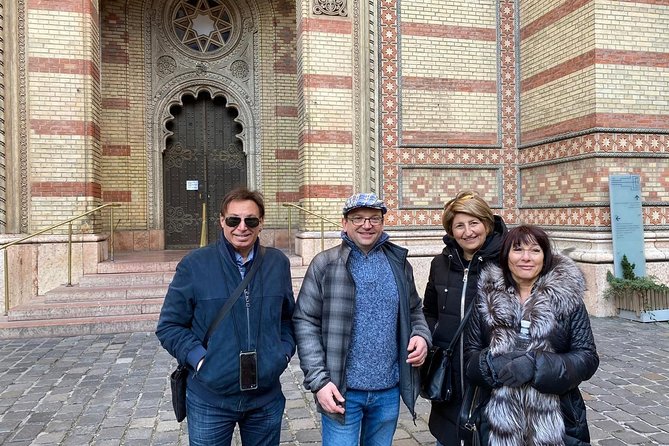
I like walking tours that do more than point at plaques. This one is built like a guided story in four strong chapters: a major synagogue complex, the ghetto-era neighborhood edge, another synagogue stop tied to a specific Jewish stream, and then a memorial that’s heavy enough to slow your pace.
The route matters because the buildings are not just landmarks. They’re symbols—of community, faith, architecture, survival, and loss. And the guide doesn’t treat them like museum objects. Instead, you’re guided toward “how this place functioned” and “what changed over time,” which is the difference between remembering dates and actually understanding a community.
A practical plus: the tour lasts about three hours, so it’s long enough to get context but not so long that you end up bargaining with your feet. The vibe is serious, yes, but it’s also clear and human—especially when your guide brings details that make the neighborhood feel lived-in rather than abstract.
Your Starting Point: Kamara Café Across from the Great Synagogue
The meeting spot is Kamara Café, Dohány u. 1b (with pickup described at Dohány u. 1a, just across the street). You’re close to public transportation, so you’re not stuck figuring out Budapest logistics the whole morning.
After booking, you’ll get your guide’s photo, phone number, and bio. That’s helpful when you arrive a few minutes early, spot nobody in the group, and want to confirm you’re in the right place—without playing twenty questions with strangers.
Timing note: the listed start time is 10:00 am, and the tour offers a choice of morning or afternoon departure. If you’re juggling other plans (ruin bars, museums, a Danube cruise), pick the slot that keeps you from rushing at the end. The walk finishes at the Danube, and that last section is not the moment you want to be late for dinner.
Stop 1: Great / Central Synagogue (Dohány Street) and the Moorish Revival Complex
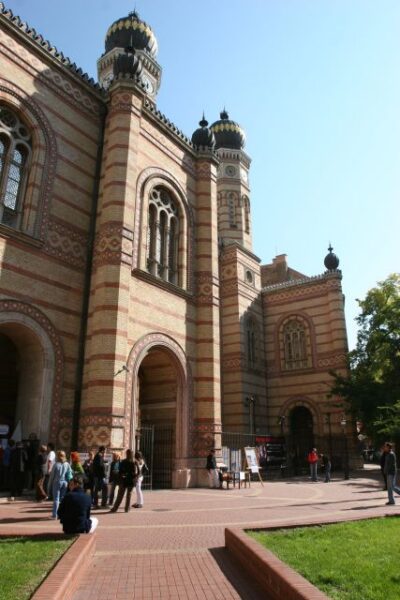
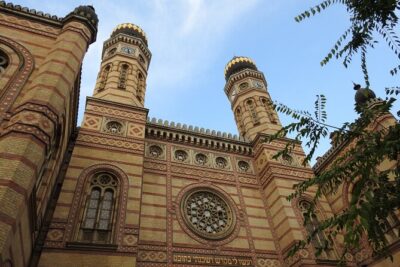
Your first anchor point is the Great / Central Synagogue (Nagy Zsinagóga), commonly identified with the Dohány Street Synagogue. This is the largest synagogue in Europe, and the exterior alone tells you you’re in the right place: lavish Moorish Revival style that feels bold against the Budapest streets.
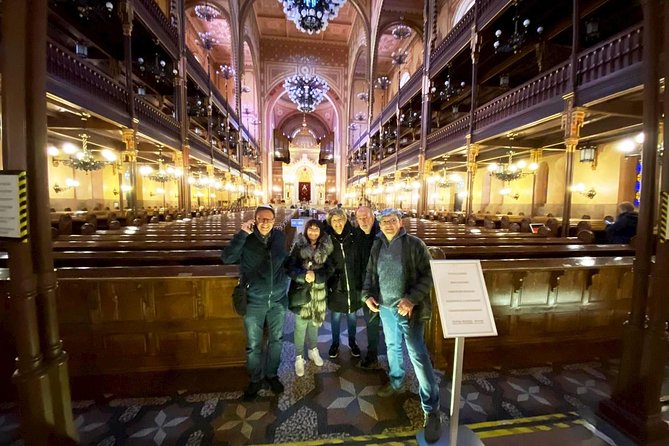
What I like here is that the tour doesn’t stop at “wow, that’s big.” You’re assisted by a Jewish Studies Scholar, and you’re guided through what the complex contains, including:
- the Temple of Heroes
- the Jewish Museum
- and a Memorial Park
You get about 30 minutes at this stop. Admission tickets are not included, so you’ll want to check what you’re buying and when you can enter. If you’re the type who freezes at the ticket counter because you’re unsure which line to join, give yourself a little buffer so you don’t lose time.
Also keep your eyes open for courtyard moments. One standout detail people mention is the courtyard area and a Tree of Life feature—small, but memorable if you pay attention instead of speed-walking.
Practical drawback: this is the most ticket-dependent stop of the day. If you arrive unprepared on dress code (more on that below) or miss entry timing, you can feel the pressure immediately. Still, if you plan ahead, this stop is the strongest “first understanding” point for the rest of the walk.
Stop 2: Kazinczy Street Synagogue, Ghetto Wall Memorial, and a Ritual Bath
Next you head to Kazinczy Street Synagogue, with about 35 minutes here. On the way, you stop at the Ghetto Wall Memorial, erected in 2014. That’s one of those reminders that history isn’t only archived—it’s marked, physically, in the modern city.
Then you pass by a mikve, a Jewish ritual bath. Even if you don’t linger long, this kind of stop helps you understand that the neighborhood wasn’t only about worship buildings. It was also about daily religious life and community rhythms.
The synagogue itself is described as an Art Nouveau orthodox synagogue. When it’s open to the public, your group visits the interior—another “timing matters” element. The tour schedules it so you still get meaningful context even if you can’t spend as long inside.
Dress code is requested here too: shoulders and knees covered. I know, it’s not the kind of rule you want to remember on vacation. But it’s also simple enough to handle—bring a light layer and you’ll be fine.
A word on expectations: this stop is less about “one room” and more about connecting dots. You’re seeing how the ghetto-era story fits into the urban fabric now. That’s where the tour earns its value—by turning what you see outside into a coherent neighborhood narrative.
Budapest at street level, more routes on foot
Stop 3: Rumbach Street Synagogue and the Status Quo Ante Story
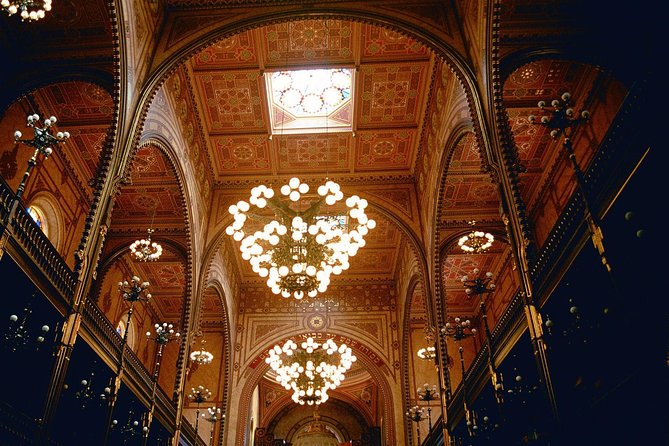
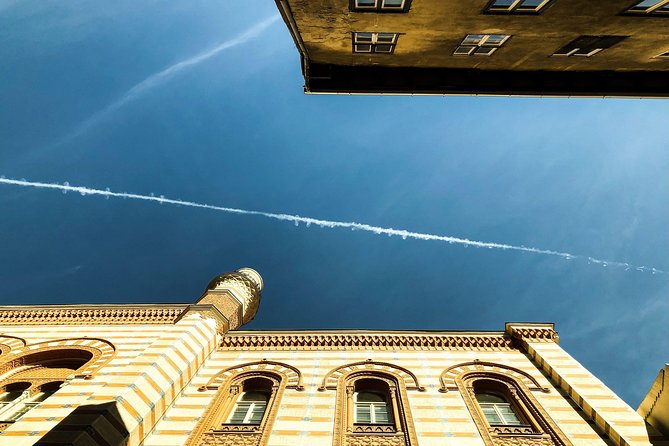
Your third synagogue stop is Rumbach Street Synagogue, with about 25 minutes. This one helps you understand that Jewish life in Budapest wasn’t one single uniform approach; it included different religious streams and community structures.
The key theme here is the Status Quo Ante stream. You learn what that means, not as academic trivia, but as something that shaped community decisions and synagogue identity.
As with Kazinczy, you may visit the interior when open to the public. That timing can affect how much you see, so try not to treat the interior visit as a “must.” If it’s open, it’s a bonus. If it’s not, you still come away with the framework the guide uses to explain why the building matters.
Why this stop is worth your attention: it pushes beyond the general story of “synagogues existed.” It shows how communities organize, argue, compromise, and preserve traditions. In a tour filled with powerful WWII symbolism later, this stop gives you a needed dose of everyday religious complexity.
Stop 4: Shoes on the Danube Bank, Free and Unavoidable
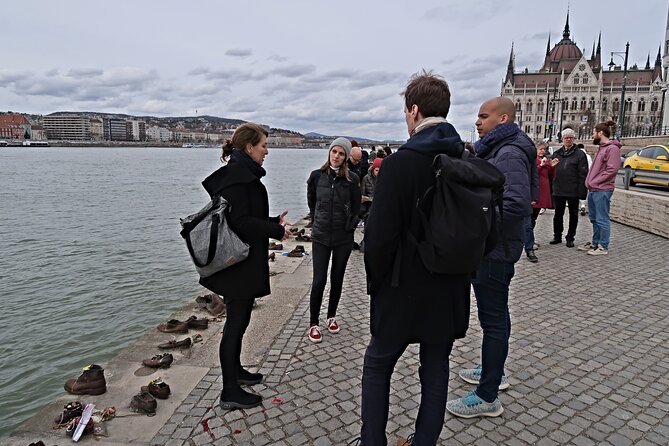
The walk finishes at Shoes on the Danube Bank, a memorial erected on April 16, 2005 to honor Jews murdered along the river during WWII. The description here is not gentle: people were ordered to take off their shoes and were shot at the water’s edge so their bodies fell into the river.
You’ll spend about 20 minutes there, and it’s free (no ticket needed). The memorial’s power comes from its restraint. You’re not being asked to interpret paintings. You’re looking at an arrangement that turns a tiny object—shoes—into a whole story of forced violence and stolen lives.
I find it’s one of the best places to end a walking tour like this because your brain can settle. The synagogues and streets explain how a community worked. Then the memorial explains what was taken away, in the most direct way possible.
If you’re someone who gets emotional fast, prepare yourself. If you’re someone who gets numb in the face of tragedy, prepare for that too. Either way, it’s the kind of stop that makes the earlier information stick.
Tickets, Dress Code, and How to Avoid Stress
This tour includes guidance and a historian guide, but synagogue admissions are not included for:
- the Dohány / Great Synagogue complex
- Kazinczy Street Synagogue
- Rumbach Street Synagogue
The Shoes on the Danube Bank memorial is free.
That means the real cost of the day may be more than the base price on your booking screen, depending on what ticket type you choose and what you’re able to enter within the scheduled time. I’d treat the listed $126.16 per person as the guidance cost, and then budget separately for entry.
Dress code matters at the Dohány and Kazinczy synagogues: shoulders and knees covered are requested. A practical trick: wear long pants or carry a light scarf/cover-up in your day bag. It’s not fun to scramble for an improvised solution while your group is waiting.
Finally, note the “open to the public” factor. Interiors for Kazinczy and Rumbach are visited only when open. That doesn’t make the tour weak—it just means you’ll get more or less interior time on that specific day. The guide’s value is in connecting everything even when doors are closed.
Price and Value: Is $126.16 a Good Deal?
For about three hours with a historian guide, I think this is solid value—especially because it’s a small-group experience and not a fast bus-stop series of photos.
The value case looks like this:
- You’re paying for context, not just access to buildings.
- The group size is intentionally small (listed as limited to six, and also capped at eight), which usually means you can ask questions without losing the thread.
- Several stops involve serious interpretation: ghetto-era neighborhood markers, WWII remembrance, and explanations of religious streams like Status Quo Ante.
Your main “cost surprise” risk is that synagogue entry tickets are not included. If you’re traveling on a tight budget, that’s the one thing to watch. But if you’re the type who likes to understand what you’re seeing—rather than just ticking off sights—this tour is likely to feel worth it.
Also: the tour offers pickup, and you can choose morning or afternoon departure. Those small conveniences add real value in a city where time can evaporate fast.
The Guides: When Storytelling Turns Into Understanding
One reason this tour earns such high marks is the way guides handle the material. I’m looking for two things in a guide: clarity and respect for complexity. This experience leans hard into both.
The tour may be led by guides such as Orsolya, Agi, Endre, or Veronika. People describe Orsolya as strong on academic credentials and able to explain Jewish community life alongside Hungary’s broader historical context. Agi is praised for passion and for making the locations feel connected instead of random. Endre is noted for bringing the Jewish Quarter story to life through lots of informative stops. Veronika is specifically mentioned for explaining tragic history clearly even without being Jewish herself.
You might also get a cultural side recommendation. One guide recommendation people mention is flodni cake—a reminder that food can be a doorway into a place, not just a side quest.
Bottom line: when the guide is good, the tour doesn’t feel like a script. It feels like Budapest is giving you the explanations you would have struggled to piece together alone.
Who Should Book This Tour (and Who Might Not)
This is a strong fit if you:
- want a guided, respectful approach to Jewish Budapest sites
- like historical context tied to real streets and real buildings
- prefer a small group with a historian rather than a big crowd
It might be less ideal if you:
- only want quick sightseeing photos and don’t want the WWII and neighborhood history context
- hate spending extra money on museum/synagogue tickets you planned to skip
- are likely to get stuck on dress code rules and would rather not plan for a cover-up
It also helps to have at least a mild interest in how communities and religious life shape a city. If you’re purely there for architecture, you’ll still see strong visuals—but you may enjoy the day more if you’re open to the story behind them.
My Booking Checklist (Practical, Not Precious)
Before you go, I’d do three simple things:
- Pack a layer for shoulders and knees so you don’t scramble at the synagogues.
- Decide how much time you want to spend on synagogue interiors so you don’t get rushed.
- Wear comfortable walking shoes. You’re on your feet for close to the whole three-hour session.
If you’re sensitive to heavy subject matter, it’s worth mentally preparing for the memorial ending. Shoes on the Danube Bank is short, but it lands hard.
Finally, if you see a guide name listed (like Orsolya, Agi, Endre, or Veronika), pick the departure that fits your schedule and shows the guide you’ll feel comfortable learning from.
Should You Book This Jewish Budapest Walking Tour?
Yes—if you want more than surface facts, book it. This tour is built for understanding: major synagogue sites, neighborhood markers that explain how life was restricted and reshaped, and an ending at Shoes on the Danube Bank that turns information into remembrance.
The main reason to hesitate is purely practical: synagogue tickets cost extra and interior access depends on opening hours. If you’re good with that, you’re likely to leave with a clearer picture of Jewish Budapest across centuries—and a route you’ll remember the next time you walk along these same streets.
FAQ
How long is the walking tour?
It runs for about 3 hours.
Where does the tour start?
The start point is Kamara Café, Dohány u. 1b, 1074 Budapest (pickup is described at Dohány u. 1a, right opposite the Great Synagogue). It ends at Shoes on the Danube Bank.
Is it in English?
Yes, the tour is offered in English.
Are synagogue tickets included in the price?
No. Tickets for the Dohány Synagogue, Rumbach Street Synagogue, and Kazinczy Street Synagogue are not included.
What is the dress code for synagogues?
Visitors to the Dohány and Kazinczy synagogues are requested to have shoulders and knees covered.
How many people are in the group?
The tour is described as small-group, limited to six people, and it’s also capped at a maximum of eight travelers.
More Tour Reviews in Budapest






More of Budapest, Step by Step






Around the Old Jewish Quarter




Just Added: More Budapest Reviews
- Sightseeing flight over Budapest
★ 5.0 · 3 reviews - Budapest: Walking Tour with Chimney Cake & Polaroid Photos
★ 5.0 · 3 reviews - Self Guided Tour In Budapest With 100 Captivating Audio Stories
★ 5.0 · 3 reviews - Budapest Art Nouveau Walking Tour
★ 5.0 · 3 reviews - Hungary today: a no-taboo conversation
★ 5.0 · 3 reviews
Jewish Quarter Tours, compared.
 ★ 5.0Budapest Jewish Heritage Memorial Walking Tour & Synagogue EntryFrom $83568 reviews
 ★ 4.8Jewish Heritage Guided Tour with Synagogue TicketFrom $81533 reviews
 ★ 4.7Jewish Quarter of Budapest Walking TourFrom $2369 reviews
 ★ 5.0German tour in the Budapest city centre & the Jewish quarterFrom $23359 reviews
 ★ 5.0Past and Present of Budapest Jewish District TourFrom $3264 reviews
 ★ 4.5Budapest Dohany Synagogue & Hungarian Jewish Museum & free extrasFrom $44218 reviews
 ★ 5.0Budapest City Walk in Jewish QuarterFrom $356218 reviews
 ★ 4.8Jewish History Guided Walking Tour with HistorianFrom $63205 reviews
Browse the lists this tour appears in