
Reviewed · JEWISH QUARTER TOURS
A Journey through Jewish Budapest – Private Walking Tour
Jewish Budapest hits harder when you have context in your pocket. This private walking tour connects the big monuments—like the Dohány Street Synagogue—to the neighborhoods and memories around them, with a historian guide who knows what to say and when to slow down. I love that you’re not shuffled into a crowd; you get focused answers and private time for questions. I also love the mix of sacred places and survivor-era memorials that helps the story feel human, not just historical. The main thing to plan for is practical: entry tickets for key synagogues are not included, and you will need covered shoulders and knees for some sites.
You can start from your hotel with pickup, or meet at Café Synago Kavehaz if you prefer. Either way, this is a clear 3-hour route built for walking, with a bit of flexibility depending on your interests—so if your group wants more architecture or more WWII history, your guide can adjust.
In This Review
- Quick hits before you go
- A private historian guide makes Budapest’s Jewish story click
- From pickup to your first landmark: how the day starts
- Entering the Dohány Street Synagogue complex without missing the point
- Kazinczy Street: ghetto wall memorials and a stop that feels painfully close
- Rumbach Street Synagogue: details that explain how traditions live
- Castle Hill and medieval ruins: the older layers under modern Budapest
- Shoes on the Danube Bank: the final memorial you shouldn’t rush
- Timing, walking comfort, and dress rules that actually matter
- Price and value: what you’re paying for
- Who this tour fits best
- Should you book A Journey through Jewish Budapest?
- FAQ
- Do I need to buy synagogue tickets in advance?
- What should we wear for the synagogue visits?
- Is hotel pickup included?
- Where does the tour start and end?
- How long is the walking portion?
- Can I cancel for a full refund?
Quick hits before you go
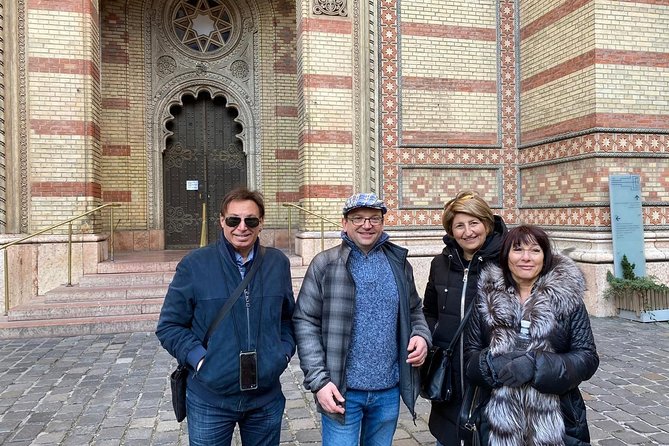
- Private historian guide for up to 10 people, with room for questions and pace changes
- Dohány Street Synagogue complex (Moorish Revival design plus the Temple of Heroes, museum, and memorial park)
- Ghetto Wall Memorial and working-class District VII/VIII streets for the “everyday” side of history
- Kazinczy Street and Rumbach Street synagogues—interiors when open to the public
- Shoes on the Danube Bank for a free, unforgettable WWII memorial stop
- Moderate walking plus dress rules at synagogues (shoulders and knees covered)
Deeper into old District VII
- Budapest Jewish Heritage Memorial Walking Tour & Synagogue Entry★ 5.0 · 568 reviews
- Budapest: Jewish Heritage Guided Tour with Synagogue Ticket★ 4.8 · 533 reviews
- Jewish Quarter of Budapest Walking Tour★ 4.7 · 369 reviews
- German tour in the Budapest city centre & the Jewish quarter★ 5.0 · 359 reviews
A private historian guide makes Budapest’s Jewish story click
Budapest can be toured by eras—one castle view, one viewpoint, one ruin. This tour does something different. It builds a single thread: Jewish life, community institutions, displacement, and remembrance. The difference is your guide. A historian guide is not just reading dates off a plaque. They explain why these places are arranged the way they are, what specific buildings meant to the community, and how the WWII-era events connect to the modern memorials you’ll see along the way.
I like that this is structured but not rigid. You stay on a walking route, but your guide has enough flexibility to spend extra time if a detail matters to your group. In past departures, guides have stood out for teaching in a clear, engaging way—people have been impressed with guides named Andrew, OSHI, and Kati/Kata for their Jewish history command and ability to keep younger travelers engaged without turning it into a lecture.
Group size matters here. With a group capped at 10, the tour stays conversational. That’s a big deal for a topic where people often want to ask: How could something like this happen? What did daily life look like? Why do synagogues differ in style and practice?
From pickup to your first landmark: how the day starts
Your experience is designed to start easily. Pickup is offered from your local accommodation. If you want to avoid the hassle of meeting up, that alone can be worth it—especially if your hotel is slightly off the main tram lines.
If you don’t want pickup (or you don’t send your address in time), you can meet your guide about 10 minutes before the start at the default meeting point: Café Synago Kavehaz (formerly Café Zenit), Dohany utca 1/A.
Once you’re with your guide, you’ll be routed by a mix of metro/tram/foot travel depending on how close sites are. The walking portions are moderate, so plan for comfortable shoes. This is a 3-hour route, not a long hike, but you’ll be on your feet enough that sore calves can steal your attention from the story.
Also note the practical item: you’ll have a mobile ticket, and tickets for some sites are handled depending on what you already have. The synagogue tickets for major stops are not included in the tour price, but you may still get help with admission if you need it on the day (your guide can provide tickets if you don’t have a pass).
Entering the Dohány Street Synagogue complex without missing the point
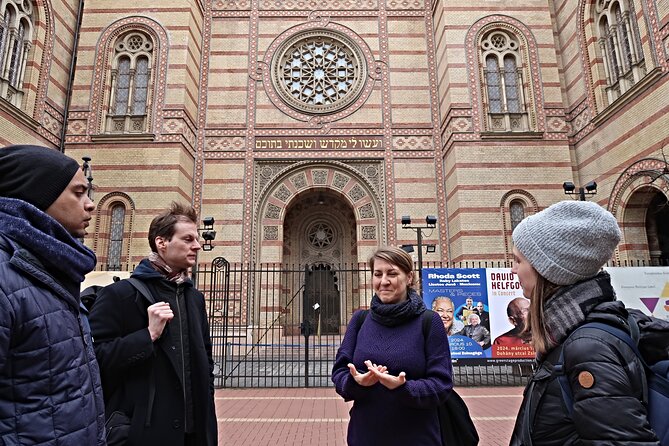
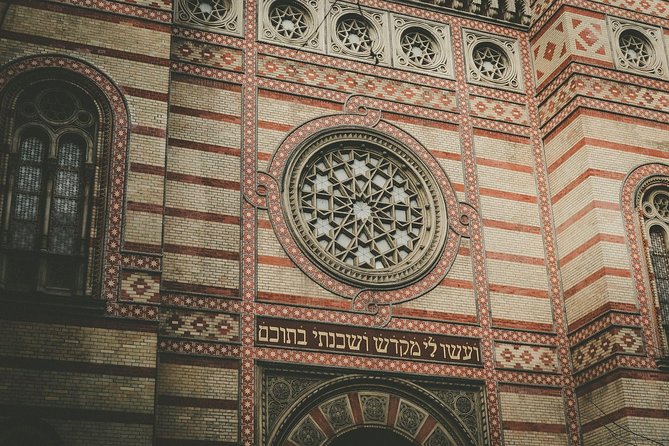
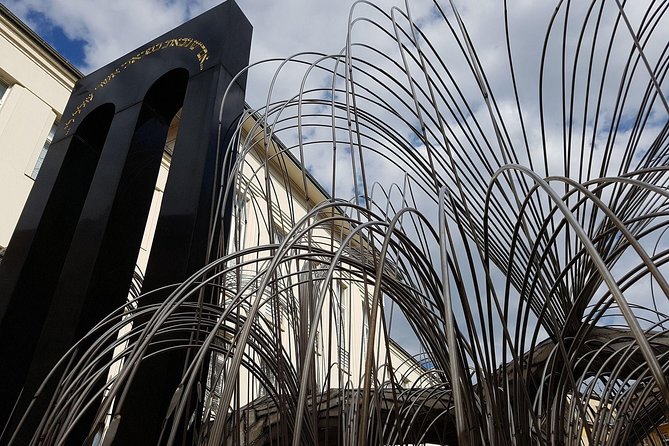
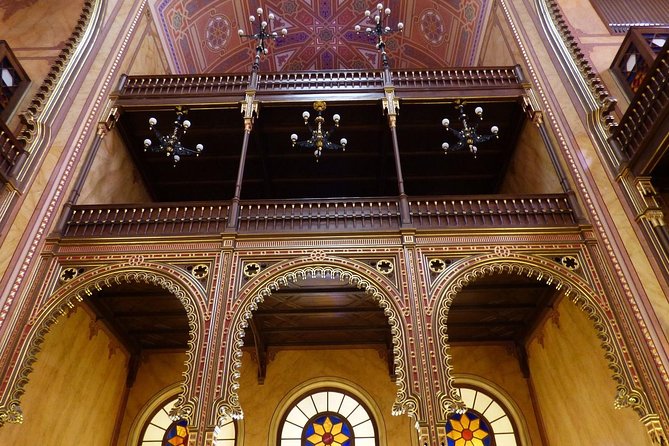
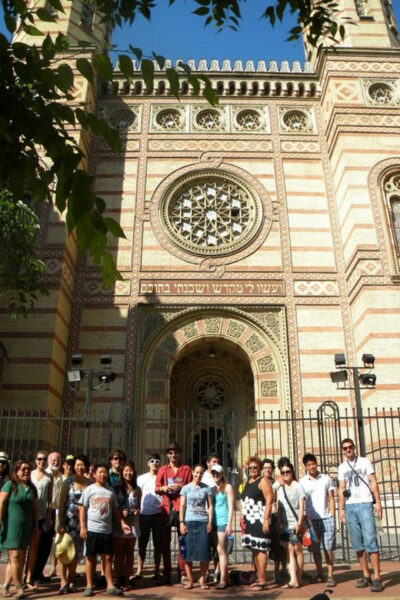
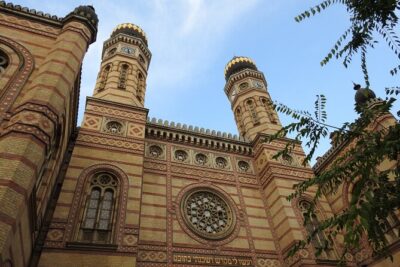
Dohány Street Synagogue is the headline. The scale is the first wow—this is the largest synagogue in Europe, often described as the giant religious landmark that signals how important Jewish community life became in Budapest.
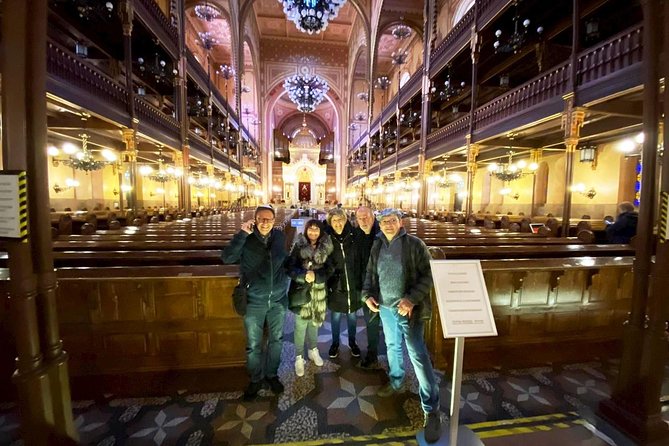
What makes this stop more than a photo-op is the way the tour frames the complex. You’ll spend time at the synagogue with the guidance of a Jewish studies scholar, then move through the Temple of Heroes, the Jewish Museum area, and the memorial park inside the overall site.
Here’s how I’d think about it as a visitor: Dohány Street is not one single building. It’s an entire statement in stone and design. The Moorish Revival style is dramatic, but it’s also symbolic: a deliberate visual identity that says the community wanted dignity, permanence, and visibility.
Plan for two practical details:
- Tickets are not included for this synagogue complex, so budget extra.
- You’ll need shoulders and knees covered for entry. Bring something simple if your outfit is too short or too sleeveless.
If you like architecture, you’ll get plenty to look at. If you care more about people and tragedy, your guide will point you toward the parts of the complex that connect to memory and Jewish communal life, not just design.
Kazinczy Street: ghetto wall memorials and a stop that feels painfully close
After Dohány Street, the tour moves into District VII and VIII—the areas historically tied to Jewish working-class neighborhoods and the experience of life under constraint. You’ll walk toward the Ghetto Wall Memorial, which was erected in 2014 to mark what was lost and what was enforced.
Then you’ll see a mikve (a Jewish ritual bath) and continue along to the exteriors of an Art Nouveau orthodox synagogue on Kazinczy Street. When it’s open, you can also visit the interior. That interior visit is important because it’s one thing to read about Judaism and another to stand inside a functioning worship space and understand what elements are designed to guide prayer.
Why this stop matters: it moves the story closer to daily reality. Synagogues are often treated like museum pieces. Here, they’re treated like community infrastructure—places that held routines, rituals, and identity. The ghetto wall reminder keeps the emotional weight in front of you, so the buildings don’t feel separated from the people who had to navigate fear and disruption.
Again, plan for clothing rules: shoulders and knees covered for the synagogues that require it.
Budapest at street level, more routes on foot

Rumbach Street Synagogue: details that explain how traditions live
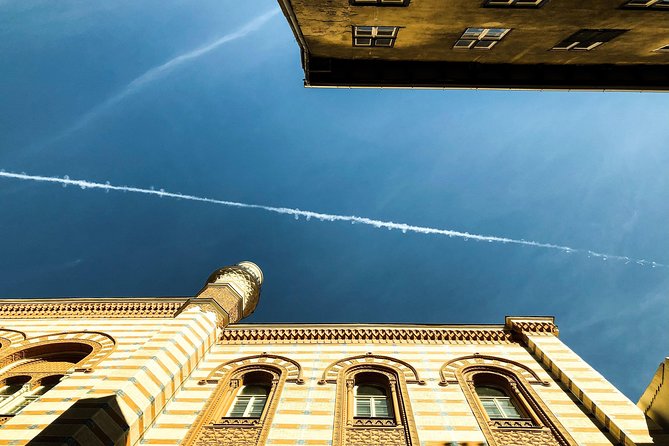
Rumbach Street Synagogue is a shorter stop, but it can feel surprisingly informative. Your guide helps you understand the history of the Status Quo Ante stream of Judaism, which is tied to how certain communities preserved specific agreements and practices over time.
Architectural fans will enjoy the facade, but the real value is the human explanation. You’ll observe how community decisions show up in physical space and in how a synagogue operates. The tour includes an interior visit when open to the public, which makes the stop feel alive instead of purely exterior sightseeing.
One more practical note: tickets for this synagogue are not included. So if you want maximum time inside, you’ll likely want to plan a day budget that includes synagogue admission.
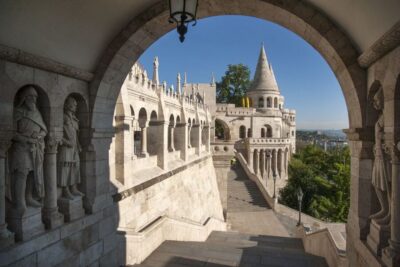
Castle Hill and medieval ruins: the older layers under modern Budapest
The route also reaches Castle Hill for ruins of synagogues dating to medieval times. This part is easy to miss if you only think of Budapest as a city of domes and grand boulevards. But it helps connect Jewish life to older eras, showing that the story doesn’t start in the 1800s and doesn’t end at WWII.
The emotional tone changes a bit here. You’re stepping into a landscape where you can see how later chapters were built on earlier ones. Your guide helps interpret what you’re seeing, even if the ruins themselves feel quiet and fragmentary.
If you enjoy “thinking with your feet,” this is the section where you start mentally layering eras: medieval presence, 19th-century community growth, the pressures of the 20th century, and the modern decision to remember publicly.
Shoes on the Danube Bank: the final memorial you shouldn’t rush
Every city has memorials. This one is different because it’s intimate without being soft.
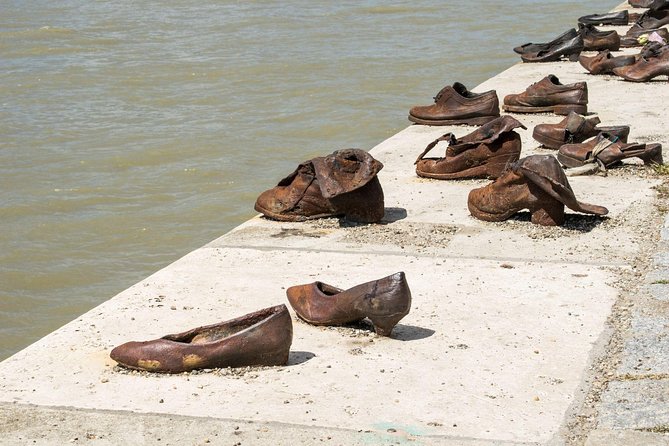
Shoes on the Danube Bank honors Jews massacred during WWII. The memorial depicts the shoes left behind: people were ordered to remove them and were shot at the edge of the water so their bodies would fall into the river and be carried away. It is direct, unsparing, and designed to make you stop walking for a moment.
This stop is free and typically takes about 20 minutes, but don’t treat it like a checkbox. The power of the memorial is in its simplicity. There’s nothing to decode. Instead, there’s space for you to feel what you’ve been learning during the earlier stops—community institutions, forced segregation, and then violence and erasure.
If your group has kids, this section can also be the hardest. A good historian guide usually knows how to frame the topic in a way that’s age-appropriate without becoming evasive. That’s one reason I’d choose a private historian setup rather than a generic walking route.
Timing, walking comfort, and dress rules that actually matter
This tour is about 3 hours on foot. You’ll want comfortable shoes and clothing that won’t make you tug at fabric every few minutes. The walking is described as moderate, but the sites are spread across areas where you’ll be standing and walking in city streets.
Your departure time can be morning at 10am year-round, and afternoon departures are available in certain seasons. If your group hates early starts, pick the seasonally available afternoon time. If you want cooler temps and steadier light for photos, the 10am slot is often the easiest.
Dress rules are a big deal here:
- Visitors to Dohány and Kazinczy Synagogues are requested to have shoulders and knees covered.
If you forget, you might slow down the day. Bring a light layer just in case—simple, practical, and it saves stress.
Price and value: what you’re paying for
The price is $396.52 per group (up to 10) for about 3 hours, with hotel pickup and a historian guide included.
That sounds like a lot until you spread it out. If you fill the group limit, you’re roughly in the neighborhood of $40 per person before synagogue admission. If you don’t fill it, the cost per person climbs, because it’s priced per group rather than per person.
Here’s the value logic I’d use:
- You’re paying for private guiding by a historian, not just a route.
- You’re also paying for interpretation—the kind that turns buildings into meaning.
- Major synagogue tickets are not included, so budget for admission separately. The tour does include at least one free stop (Shoes on the Danube Bank), but expect to add synagogue costs.
If you’re a couple or small family, this can still be worth it when you want thoughtful pacing and direct access to your guide. If you’re a big group and want everyone to stay together (instead of splitting up), the capped group size helps you keep cohesion.
Who this tour fits best
This is a strong pick if:
- you want a focused introduction to Jewish Budapest in one morning/afternoon,
- you care about context (not just seeing buildings),
- your group includes teens or a mix of ages and you want someone who can keep the energy moving while staying respectful.
If your group has limited mobility, this might be harder due to walking and frequent stops. The tour is described as most travelers can participate, but the moderate walking requirement is real—so plan accordingly.
If you’re only interested in one or two sites and don’t want guided interpretation, you could do it on your own. But if your goal is to understand the places and how they fit together, the private historian approach is the main draw.
Should you book A Journey through Jewish Budapest?
I’d book this if you want your Budapest synagogue and ghetto-area time to feel guided, grounded, and emotionally honest—without turning it into a speed-run. The private format, the historian-led approach, and the combination of Dohány Street, neighborhood context, and the Shoes memorial make it more than a list of famous stops.
One practical reason to book: it’s commonly purchased about 11 days in advance on average. Earlier booking gives you more flexibility if you’re aiming for a specific morning or afternoon departure.
If your group has the budget for synagogue tickets and you’re ready for moderate walking and respectful dress rules, this tour is a smart, high-impact way to understand Budapest’s Jewish landmarks in one coherent arc.
FAQ
Do I need to buy synagogue tickets in advance?
Dohány Street Synagogue, Kazinczy Street Synagogue, and Rumbach Street Synagogue admission tickets are not included. Your guide may provide tickets if you do not have a pass, but you should still plan on paying for entry.
What should we wear for the synagogue visits?
For the Dohány and Kazinczy Synagogues, visitors are requested to have shoulders and knees covered. Wearing something that meets those requirements will help you avoid delays.
Is hotel pickup included?
Yes. Hotel pickup is included. If you do not want pickup or if you do not respond with your address, you’ll need to meet your guide 10 minutes before the start time at Café Synago Kavehaz, Dohany utca 1/A.
Where does the tour start and end?
The tour starts at Budapest, Dohány u. 1, 1074 Hungary. It ends at the Shoes on the Danube Bank area in Budapest, 1054 Hungary.
How long is the walking portion?
The tour lasts about 3 hours. It includes walking between multiple landmarks, and moderate walking is required, so comfortable shoes help.
Can I cancel for a full refund?
Yes. Free cancellation is available. You can cancel up to 24 hours in advance of the experience start time for a full refund. If you cancel less than 24 hours before the start time, the amount you paid will not be refunded.
More Tour Reviews in Budapest






More of Budapest, Step by Step






Around the Old Jewish Quarter






Just Added: More Budapest Reviews
- Sightseeing flight over Budapest
★ 5.0 · 3 reviews - Budapest: Walking Tour with Chimney Cake & Polaroid Photos
★ 5.0 · 3 reviews - Self Guided Tour In Budapest With 100 Captivating Audio Stories
★ 5.0 · 3 reviews - Budapest Art Nouveau Walking Tour
★ 5.0 · 3 reviews - Hungary today: a no-taboo conversation
★ 5.0 · 3 reviews
Jewish Quarter Tours, compared.
 ★ 5.0Budapest Jewish Heritage Memorial Walking Tour & Synagogue EntryFrom $83568 reviews
 ★ 4.8Jewish Heritage Guided Tour with Synagogue TicketFrom $81533 reviews
 ★ 4.7Jewish Quarter of Budapest Walking TourFrom $2369 reviews
 ★ 5.0German tour in the Budapest city centre & the Jewish quarterFrom $23359 reviews
 ★ 5.0Past and Present of Budapest Jewish District TourFrom $3264 reviews
 ★ 4.5Budapest Dohany Synagogue & Hungarian Jewish Museum & free extrasFrom $44218 reviews
 ★ 5.0Budapest City Walk in Jewish QuarterFrom $356218 reviews
 ★ 4.8Jewish History Guided Walking Tour with HistorianFrom $63205 reviews
Browse the lists this tour appears in