
Reviewed · JEWISH QUARTER TOURS
Budapest Jewish Heritage Tour
Budapest’s Jewish history has real weight. This private half-day with György Rashad Salamon turns major sites into a clear, human story, and you’ll also start with hotel pickup plus public-transport support so you’re not wasting time working out routes. I love the way the Dohány Street Synagogue visit is paired with memorial spaces you’d miss or misunderstand on your own, and I love how the walk through District VII connects historic landmarks with what the area feels like today. A possible drawback: several indoor stops have entry fees at your own cost, so your final spend isn’t all-in.
You should plan for about 4 hours of walking at a moderate pace, starting at 2:30 pm. It’s serious material, but the guide keeps it grounded with context and practical connections, including time to move around between sites efficiently.
In This Review
- Quick reasons this tour scores high
- A Jewish quarter tour that actually connects the dots
- Price and time: what $272.20 per group really buys
- Meeting up and getting around without stress
- Stop 1: Dohány Street Great Synagogue and the memorial spaces around it
- Stop 2: Hungarian Jewish Museum and Archives (and one standout artifact)
- Stop 3: District VII Jewish Quarter, where old stories meet modern street life
- Stop 4: Kazinczy Street Synagogue and everyday Orthodox customs
- Stop 5: Rumbach Street Synagogue and what reconstruction changes
- Stop 6: Shoes on the Danube Bank, explained as memory, not just a photo stop
- A serious tour that doesn’t feel cold
- What to pack and how to time your day
- Who should book (and who might not love it)
- Should you book the Budapest Jewish Heritage Tour?
- FAQ
- How long is the Budapest Jewish Heritage Tour?
- What time does the tour start?
- Is this a private tour?
- Is hotel pickup included?
- What language is the tour offered in?
- Are entry tickets included for the synagogues and museum?
- Which stops are free of admission?
- Does the tour include transportation?
- Is food or drinks included?
- Do I need a special fitness level?
- Can I cancel for a full refund?
Quick reasons this tour scores high
- Private group format up to 10: you get time for questions instead of a rushed crowd shuffle.
- Great Synagogue + memorial setting: see the Holocaust memorial area and related park spaces in one organized visit.
- Hungarian Jewish Museum focus: you get specific artifact stories, including the world’s oldest Torah finial.
- District VII walk through today and yesterday: history plus the area’s current culture and food-shopping vibe.
- Shoes on the Danube Bank explained in context: this landmark hits harder when you know the story behind it.
- A route that uses walking and public transport: you cover more ground without overtaxing one long walk.
Deeper into old District VII
- Budapest Jewish Heritage Memorial Walking Tour & Synagogue Entry★ 5.0 · 568 reviews
- Budapest: Jewish Heritage Guided Tour with Synagogue Ticket★ 4.8 · 533 reviews
- Jewish Quarter of Budapest Walking Tour★ 4.7 · 369 reviews
- German tour in the Budapest city centre & the Jewish quarter★ 5.0 · 359 reviews
A Jewish quarter tour that actually connects the dots
If you want a Budapest experience that goes past postcards, this one works. The Jewish Quarter in District VII can feel like a cluster of must-see buildings and street names. With a guide, it becomes a timeline: how community life shaped the city, how tragedy changed it, and how the neighborhood carries both memory and everyday culture.
I also like the pacing. Instead of cramming in dozens of stops, you get a handful of major locations with breathing room. That matters here, because some places are meant to be walked through slowly, not skimmed for pictures.
Price and time: what $272.20 per group really buys
The tour costs $272.20 per group for up to 10 people, and it runs about 4 hours. That group price is the big value lever. If you’re traveling with friends or family, it can be cheaper than booking separate private entry-guides. If you’re solo, it may still be a good fit if you prefer a private experience over joining a general group.
Here’s the trade-off: the price includes the local/professional guide, hotel pickup, and transportation tickets, but it does not include entry tickets for several stops. That means you’ll likely pay extra for the synagogue buildings and the museum (while other parts are free). Before you book, I suggest you set aside a small “tickets buffer” so you’re not surprised halfway through.
Meeting up and getting around without stress
Hotel pickup is offered, and that’s not a small detail in Budapest. District VII isn’t hard to reach, but it is easy to lose time if you start late or hop on the wrong tram. Having the guide manage the first steps helps you get oriented fast.
The tour uses walking plus public transport, and you should have a moderate physical fitness level. It’s not an all-day hike, but you will be on your feet. Comfortable shoes matter. Also, bring a light layer; you’re walking between buildings and memorial spaces that can feel cooler and windier along the river approach.
Stop 1: Dohány Street Great Synagogue and the memorial spaces around it
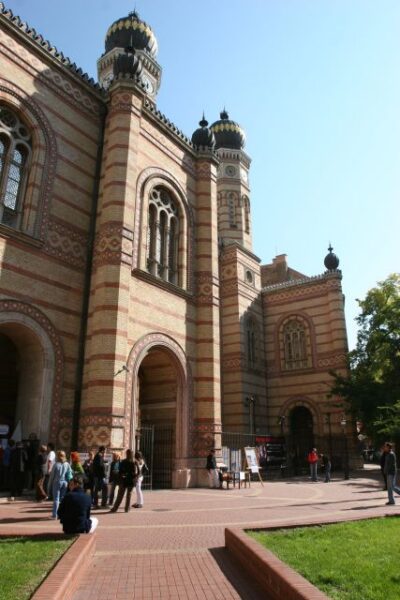
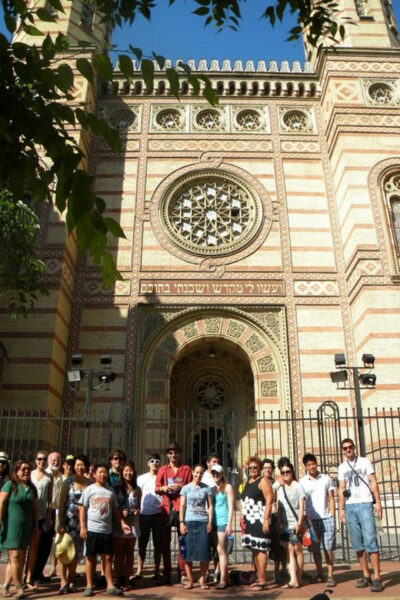
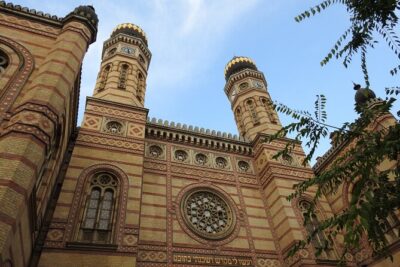
Your tour starts at the Great/Central Synagogue (Nagy Zsinagóga), the world’s second largest synagogue. This is the kind of place where size alone can feel overwhelming. With a guide, it becomes more than architecture. You’re shown how the site works as a living place of Jewish life and also as a memorial landscape.
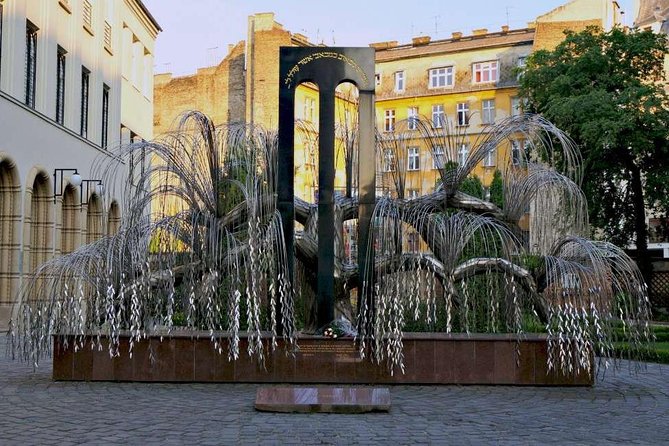
This stop includes time to explore the exhibitions and memorials, including the Holocaust Memorial, the Cemetery of Heroes, and the Tree of Life with Wallenberg Memorial Park. Those names aren’t random labels. They’re signposts for different strands of loss, remembrance, and the personal stories that history documents.
What you’ll appreciate most here is the structure: instead of wandering from one area to the next, you get a route through the main spaces in about an hour. If you want photos, plan on them taking longer than you think, because it helps to stop and read when the guide points out what matters.
Practical note: the Great Synagogue admission ticket is not included, so budget for it if you want to go inside the exhibition areas.
Further back into Budapest's past


Stop 2: Hungarian Jewish Museum and Archives (and one standout artifact)
Next comes the Hungarian Jewish Museum and Archives, with about 30 minutes on the inside. The museum’s strength is that it turns objects into stories you can carry with you as you continue walking.
You’ll see a unique collection of Jewish artifacts, including the world’s oldest Torah finial. That detail isn’t just trivia. It’s a reminder that Jewish history in Hungary isn’t only about events in the 20th century. It stretches back through craftsmanship, tradition, and community continuity.
The time here is tight but focused. If you’re the type who loves reading every panel, you might wish you had more minutes. But if you’d rather keep moving while still getting the key highlights explained, this stop hits the right balance.
Again, museum admission is not included, so tickets here are part of the “pay-as-you-go” plan.
Stop 3: District VII Jewish Quarter, where old stories meet modern street life
Then you transition from indoor sites to the neighborhood itself. District VII is the core of the Jewish Quarter, recognized as a World Heritage site, and your walking segment focuses on what makes it more than a historical label.
This is the part of the tour I like for perspective. You’re not only looking at the past—you’re seeing the area’s present-day textures: local art, ruin bars, eclectic boutiques, avant-garde galleries, and places to eat. The guide also frames how the long history of the Hungarian Jewish community links to what you’re seeing on the streets today.
You’ll spend about 1 hour here, and the highlight is that the guide connects the neighborhood’s landmarks with the broader narrative. That’s useful because District VII can look like a trendy nightlife zone if you’re not careful, and the context keeps it respectful and grounded.
One more benefit: this walking portion has no admission ticket needed, so it’s a good value stop.
Stop 4: Kazinczy Street Synagogue and everyday Orthodox customs
After the more public-feeling streets of District VII, the tour shifts to a smaller, calmer site: the Kazinczy Street Synagogue. You’ll get about 20 minutes here.
This stop focuses on the small orthodox community, including daily-life habits and customs. That kind of guidance matters, because the differences between Orthodox practice and what you might expect as an outsider aren’t always obvious just by looking at a building’s exterior.
The time is brief, so aim to slow down once you’re inside. Even if you only understand a few concepts, the guide’s explanations help the visit click into place.
Admission is not included for this stop, so plan on ticket costs if you want full access.
Stop 5: Rumbach Street Synagogue and what reconstruction changes
Next is the Rumbach Street Synagogue, listed as part of the Jewish Triangle. It’s scheduled for about 15 minutes, but there’s one important caveat: it’s under reconstruction at the moment.
That means your experience here may feel different from a fully operating synagogue. You might spend more time learning from the guide’s stories and less time inside, depending on what areas are accessible during the renovation. The value comes from understanding the broader triangle of sites and how they relate to each other, not from expecting a long, uninterrupted visit.
Admission is not included and, with construction underway, it’s also smart to approach the stop with flexible expectations. If you’re hoping for an extended interior visit here, you may be disappointed. If you want the history and location context, it still fits well.
Stop 6: Shoes on the Danube Bank, explained as memory, not just a photo stop
The final stop is the Shoes on the Danube Bank Memorial, a landmark that many people recognize in photos. What changes on a guided visit is the meaning—this memorial is tied to the story of victims who were forced into the river area during the Holocaust era.
You get about 15 minutes here, and the guide’s explanation brings the empty shoes into focus as a symbol of human loss. In reviews, people specifically remember the emotional impact of hearing how the men, women, and children were shot and thrown into the Danube—details that don’t belong to a quick glance.
This is also where the tour may use public transport or quick movement to reach the river area efficiently. One thing I’d plan for: keep your phone put away long enough to actually read what you can and take in the space. It’s not a “check it off” stop.
This segment has no admission ticket needed, which is good, because you’re paying for the guide’s context more than for an attraction fee.
A serious tour that doesn’t feel cold
The material here is heavy. Still, the tone is designed to keep it human, not clinical. In the reviews, people describe the guide as professional and emotionally aware, and they also mention small light moments along the way (like short breaks and simple conversation) that make the day more manageable.
That balance is important. If a tour turns everything into a lecture, you end up feeling detached. Here, the stories and the walking route aim to keep you present—while still giving you enough structure to understand what you’re seeing.
What to pack and how to time your day
This is a 4-hour outing with multiple stops, including indoor ticketed buildings and outdoor memorial ground. A few practical choices make a difference:
- Wear shoes you can stand in for a couple of hours.
- Bring a small bottle of water for the outdoor stretches (food and drinks aren’t included).
- If you’re sensitive to emotional history, plan some quiet time after the tour so you can decompress.
- Because indoor admissions aren’t included, bring a payment method you can use for tickets.
Also, start time is 2:30 pm, which is great if you want a morning for museums or a morning for recovery from jet lag. It also positions you for a late afternoon pace when the city is lively, but not as rushed.
Who should book (and who might not love it)
I’d especially recommend this Budapest Jewish Heritage tour if you:
- want a private experience with a guide who can answer questions as you go,
- care about understanding the Jewish Quarter beyond street-level sightseeing,
- are interested in the Great Synagogue setting and Holocaust memorial context,
- prefer a route that uses efficient public transport instead of only long walks.
You might think twice if you:
- only want attractions where everything is included (several entries cost extra),
- hate any walking in the city (it’s not extreme, but it is still walking),
- want an entertainment-style tour rather than a memory-centered history tour.
Should you book the Budapest Jewish Heritage Tour?
If your goal is Budapest that feels honest and organized, I think you’ll be glad you booked. The tour’s best strength is the way it connects major sites—the Great Synagogue, the museum, District VII’s street-level culture, and the Shoes on the Danube Bank memorial—into one clear story you can actually remember later.
Just go in with the right expectation: it’s serious history, and some parts require extra ticket purchases. If you can handle that and you like guided context, this is strong value for a private group format.
FAQ
How long is the Budapest Jewish Heritage Tour?
It runs for about 4 hours.
What time does the tour start?
The start time is 2:30 pm.
Is this a private tour?
Yes. It’s a private tour/activity, and only your group participates.
Is hotel pickup included?
Yes, hotel pickup is included as part of the experience.
What language is the tour offered in?
The tour is offered in English.
Are entry tickets included for the synagogues and museum?
No. Tickets for stops like the Great/Central Synagogue, the Hungarian Jewish Museum and Archives, the Kazinczy Street Synagogue, and the Rumbach Street Synagogue are not included. Some parts of the route are free.
Which stops are free of admission?
The walking tour in District VII / the Jewish Quarter and the Shoes on the Danube Bank memorial are listed as admission free.
Does the tour include transportation?
Yes. Transportation tickets are included, and the tour uses walking plus public transport.
Is food or drinks included?
No. Food and drinks are not included.
Do I need a special fitness level?
The tour lists a moderate physical fitness level. You should be comfortable with walking.
Can I cancel for a full refund?
Yes. Free cancellation is available if you cancel up to 24 hours in advance of the experience start time.
More Tours in Budapest






More Tour Reviews in Budapest






Around the Old Jewish Quarter





Just Added: More Budapest Reviews
- Sightseeing flight over Budapest
★ 5.0 · 3 reviews - Budapest: Walking Tour with Chimney Cake & Polaroid Photos
★ 5.0 · 3 reviews - Self Guided Tour In Budapest With 100 Captivating Audio Stories
★ 5.0 · 3 reviews - Budapest Art Nouveau Walking Tour
★ 5.0 · 3 reviews - Hungary today: a no-taboo conversation
★ 5.0 · 3 reviews
Jewish Quarter Tours, compared.
 ★ 5.0Budapest Jewish Heritage Memorial Walking Tour & Synagogue EntryFrom $83568 reviews
 ★ 4.8Jewish Heritage Guided Tour with Synagogue TicketFrom $81533 reviews
 ★ 4.7Jewish Quarter of Budapest Walking TourFrom $2369 reviews
 ★ 5.0German tour in the Budapest city centre & the Jewish quarterFrom $23359 reviews
 ★ 5.0Past and Present of Budapest Jewish District TourFrom $3264 reviews
 ★ 5.0Budapest City Walk in Jewish QuarterFrom $356218 reviews
 ★ 4.5Budapest Dohany Synagogue & Hungarian Jewish Museum & free extrasFrom $44218 reviews
 ★ 4.8Jewish History Guided Walking Tour with HistorianFrom $63205 reviews
Browse the lists this tour appears in