
Reviewed · JEWISH QUARTER TOURS
Budapest Jewish Heritage: Synagogues, Shoes, Secrets & Flódni
Budapest turns heartbreaking history into a walk. I like having an expert-led Jewish guide to connect the landmarks to real people, and I love that the route ends with a flódni pastry instead of sending you off hungry.
One caution: entrance tickets aren’t included for the synagogues, so you’ll want a little extra budget for what’s inside.
In This Review
- Key Highlights You’ll Actually Feel
- Starting at Dohány Street: your easy launch pad
- Great Synagogue (Dohány Street): big rooms, bigger stories
- Rumbach Street Synagogue: Otto Wagner’s Moorish twist
- Carl Lutz Memorial: the name you should know
- Kazinczy Street Orthodox Synagogue: 1913 design with art nouveau color
- Shoes on the Danube Bank: a memorial that forces focus
- The ghetto wall area: seeing a vanished daily life
- Flódni finale: sweet, local, and worth the walk
- Price and tickets: what $102.95 buys you (and what it doesn’t)
- Who should book this Jewish heritage tour in Budapest
- Should you book it? My honest take
- FAQ
- What is the total length of the Budapest Jewish Heritage tour?
- Where does the tour start and end?
- Is this tour private?
- What’s included in the price?
- Are synagogue entrance tickets included?
- What language is the tour offered in?
Key Highlights You’ll Actually Feel
- A private, personal pace across the Jewish Quarter instead of a loud, rushed group shuffle
- Three synagogue styles in one outing: Neolog, Conservative-leaning, and Orthodox details you can spot in person
- WWII memory sites with context—especially Shoes on the Danube and the ghetto-wall area
- Carl Lutz gets center stage—the Swiss diplomat credited with saving tens of thousands
- Flódni included as a sweet, edible wrap-up that ties culture to place
- Hotel pickup + mobile ticket make it easy to start on time and keep moving
Deeper into old District VII
- Budapest Jewish Heritage Memorial Walking Tour & Synagogue Entry★ 5.0 · 568 reviews
- Budapest: Jewish Heritage Guided Tour with Synagogue Ticket★ 4.8 · 533 reviews
- Jewish Quarter of Budapest Walking Tour★ 4.7 · 369 reviews
- German tour in the Budapest city centre & the Jewish quarter★ 5.0 · 359 reviews
Starting at Dohány Street: your easy launch pad
The tour meets at Dohány u. 1, 1074 Budapest, and it ends right back there. If you’re staying in the area, this is a big deal: you spend less time navigating and more time looking up and listening.
Pickup is offered, and the meeting point is near public transportation. That matters because the walking is part of the experience. You’re moving through streets that have changed over time, so it’s helpful when your start point is simple and central.
One practical note: the day has a natural rhythm. You’ll go from striking architecture to memorial gravity, with a pastry finish. If you’re the type who likes tidy “must-see” lists, you’ll still get them—but the guide puts the pieces together in a human way.
Great Synagogue (Dohány Street): big rooms, bigger stories
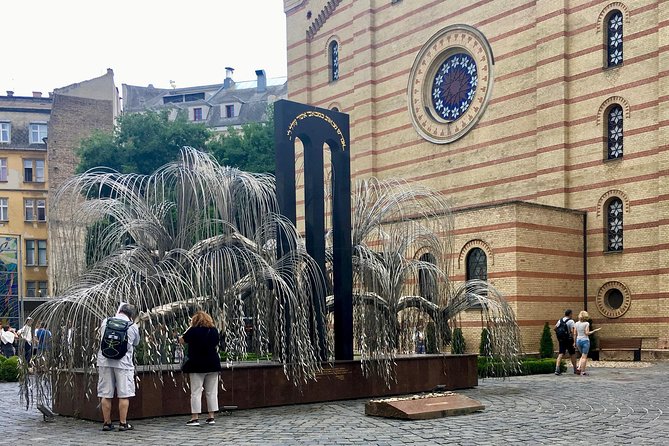
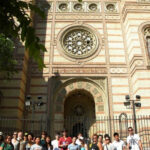
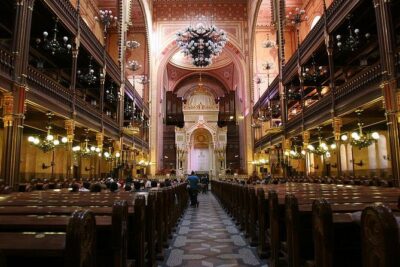
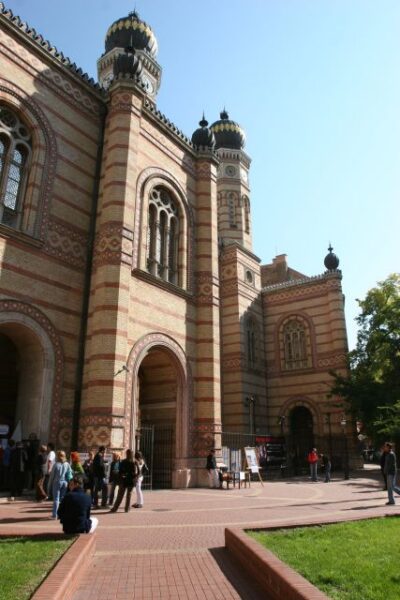
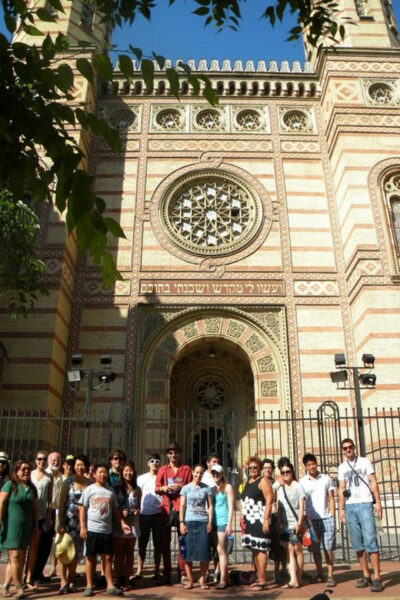
Your first major stop is the Great/Central Synagogue (Nagy Zsinagóga) on Dohány Street. This isn’t just a pretty facade moment. It’s the largest synagogue in Europe, seating about 3,000 people, and it served as a center for Neolog Judaism.
Expect the guide to connect architecture with meaning. You’ll also get the WWII story in a way that doesn’t feel like a history lecture dumped on top of sightseeing. The focus includes the fate of Hungarian Jewry during the Second World War and how many internationally famous figures were Hungarian Jews.
This stop is about 20 minutes, and admission isn’t included, so bring your energy for inside-and-outside learning. If you’re visiting Budapest for the first time, this is the anchor. If you’ve already seen other synagogues in Europe, it’s still worth it because the scale is unlike most places.
Tip: wear something comfortable for standing and looking up. The building asks you to slow down.
Rumbach Street Synagogue: Otto Wagner’s Moorish twist
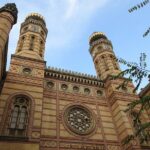
Next comes the Rumbach Street Synagogue, also called the Moorish Rumbach Sebestyén utca Synagogue. Built in 1872 by Austrian Secessionist architect Otto Wagner, it was designed for a moderate Conservative community.
What I like about this stop is the contrast. After the Great Synagogue’s grandeur, you get a different language of design. The interior decorations are described as shining in their light after a long-overdue facelift, which tells you the visit isn’t just about reading a label. You’ll actually see details that were harder to appreciate before the restoration.
This stop is shorter—about 15 minutes—and entrance tickets aren’t included. But it’s a high-payoff pause: one unusual building, lots of explanation about how Hungarian Jewish communities expressed themselves architecturally.
If you enjoy noticing patterns—arches, color, style shifts—this is where you’ll start “seeing” the differences the guide is talking about.
Carl Lutz Memorial: the name you should know
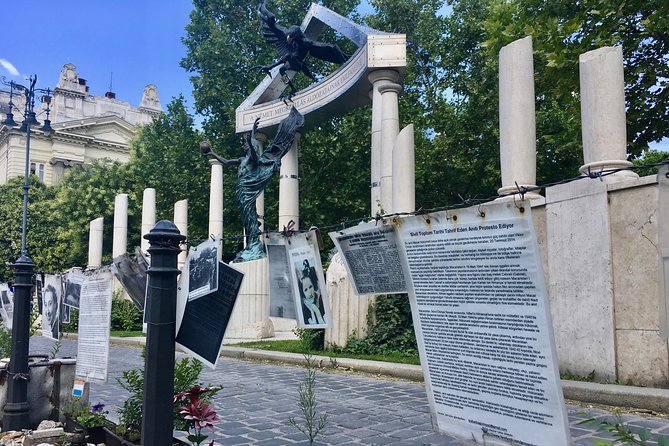
At the Carl Lutz Memorial, the mood shifts to quiet remembrance. During WWII, Swiss diplomat Carl Lutz helped save tens of thousands of Jews in Budapest from persecution and deportation.
This is a free stop (and included), around 10 minutes. It’s also a good reset point. By this stage you’ve seen the big synagogues and now you’re asked to hold one specific story in your mind: one person who used influence and paperwork to change outcomes.
This matters for how you leave the tour. If all you remember is buildings, the story becomes less complete. Carl Lutz gives you a human thread that runs through the rest of the day.
Further back into Budapest's past

Kazinczy Street Orthodox Synagogue: 1913 design with art nouveau color
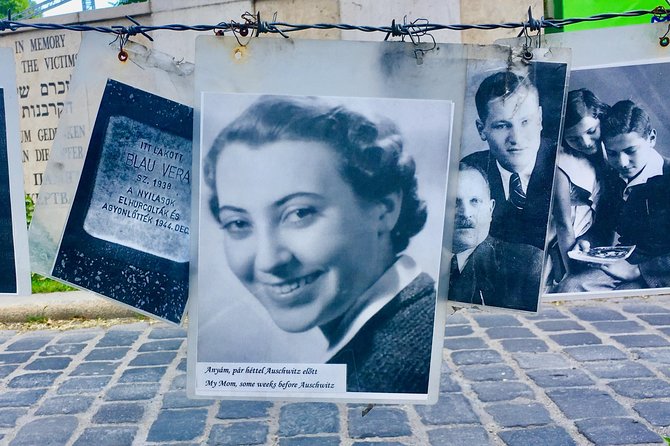
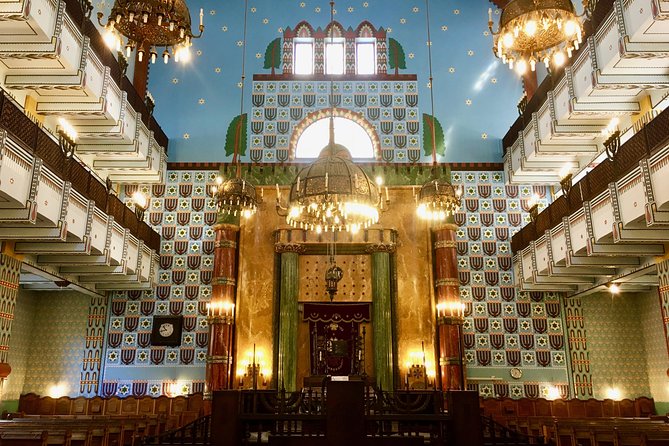
Then you head to Kazinczy Street, where you’ll find Budapest’s Orthodox synagogue. Built in 1913, it used a design that was considered very modern for its time, with late art nouveau touches and bright colors throughout.
There’s also a specific visual detail worth paying attention to: stained-glass windows in the ceiling designed by Miksa Róth. This is the kind of thing that makes a guided stop more worthwhile than a solo look—because you know what to look for once someone points it out.
This stop is about 10 minutes and again admission isn’t included. Even so, it’s an important piece of the puzzle. In a day like this, short stops can still be meaningful if they clarify a difference in community life and worship style.
Shoes on the Danube Bank: a memorial that forces focus
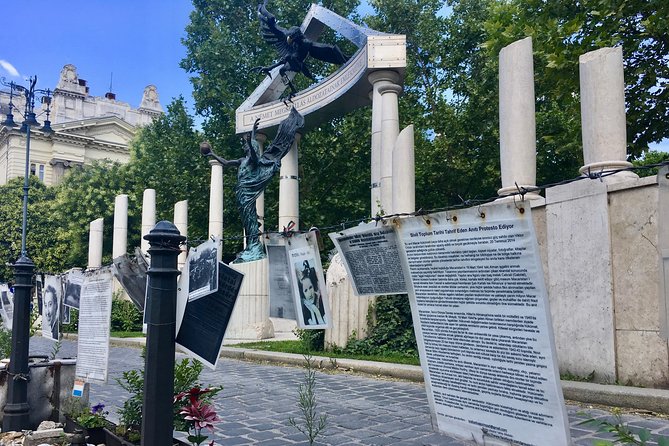
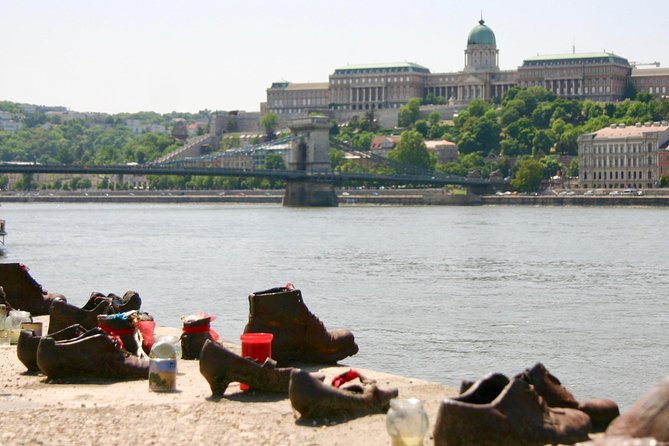
The Shoes on the Danube Bank memorial is the emotional high point for many people. It was unveiled on April 16, 2005 to honor Jewish victims murdered at this riverbank during WWII.
Here’s what makes it so powerful: people were forced to remove their shoes before being shot, and their bodies were carried away by the Danube. The sculpture shows shoes left behind, turning something ordinary into evidence of atrocity.
This stop is about 10 minutes, and it’s included. Because it’s outside and brief, it can feel “quick”—but don’t rush it. If you’re the type who likes photos, set that urge aside for a moment and just let your brain process what the guide explains.
Practical tip: if you’re visiting in cold weather, plan for wind off the river. It can make the moment feel sharper, for better or worse.
The ghetto wall area: seeing a vanished daily life
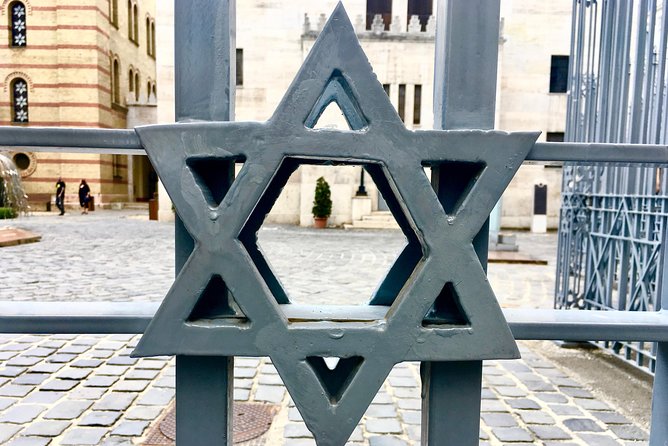
After the memorial, the tour moves into the Jewish Quarter area, specifically tied to the WWII ghetto. You’ll learn how Jews of Budapest were herded into a ghetto toward the end of WWII, and how a small section of the ghetto’s wall still stands in the heart of the city.
This stop is free and lasts about 15 minutes. The “secret” here isn’t a hidden door. It’s the way urban space keeps its memory even when life moves on. You might not see what the ghetto looked like in full, but you can understand it through stories about the life of inmates and their eventual fate.
One reason I like this part of the route: it connects the dramatic to the everyday. Memoral stops can feel abstract. A remaining wall makes it harder to treat history as something that happened elsewhere.
This is also where the guide’s tone matters. You want someone who can explain without turning it into a performance. A genuine Jewish guide, using careful pacing, makes a difference here.
Flódni finale: sweet, local, and worth the walk
To wrap up, you finish with flódni, a traditional Jewish pastry tied to Budapest’s flavors and heritage. This is a free included stop and takes about 20 minutes.
I like this ending because it gives your brain a landing spot. After synagogues and memorials, you’re not just standing in information overload. You’re also tasting something that belonged to daily life, not just surviving memory.
In real terms, it’s practical too: you get a proper snack at the end. If you’ve been snacking your way through Budapest all day, flódni is a satisfying change from tourist desserts.
If your guide offers context while you eat, take it. Flódni isn’t just a sugar hit—it’s part of the cultural story the day has been building.
Price and tickets: what $102.95 buys you (and what it doesn’t)
The tour costs $102.95 per person for about 2 hours 45 minutes. That price includes the big value items: hotel pickup, a historian guide, and the flódni snack at the end, plus the tour uses a mobile ticket.
What’s not included: entrance tickets for the synagogues. So your final cost depends on which entrances are required during your specific timing. Budget for that when you plan, because skipping it can turn into a late scramble outside.
Also, keep in mind you’re walking through multiple stops in one go. A short duration like this can feel efficient, but it’s also why a good guide matters. The guide needs to keep the story coherent: architecture, community differences, WWII context, and remembrance, all in one thread.
One more planning note: it’s often booked around 61 days in advance, so if your dates are tight, earlier is better.
Who should book this Jewish heritage tour in Budapest
This is a great fit if you want:
- A focused Jewish heritage walk that connects synagogues and WWII memory sites, not just sightseeing photos
- A private format where you can ask questions and keep the pace comfortable
- Community-specific detail, like how the synagogues differ and what those differences meant in Hungary
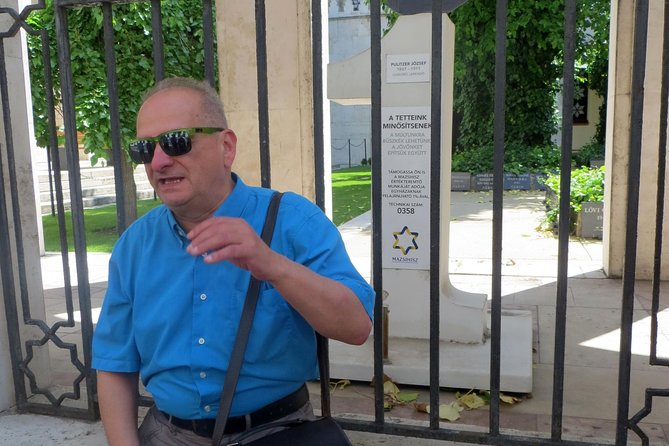
It’s also a smart choice for non-Jewish visitors who want context that goes beyond general “tour talk.” Several guides associated with this experience are praised for mixing facts with personal perspective, including guides such as Gabriella, Miklos, Kata, and Edith—with a style that can include personal family history and thoughtful Q&A.
Who might want to think twice? If you prefer a lighter, purely architectural outing with minimal emotional weight, this route includes memorial stops and ghetto context. It’s respectful, but it isn’t casual.
Should you book it? My honest take
If you want Budapest in a way that feels human—buildings with backstory, memorials with context, and a pastry payoff—this is the kind of tour that makes the city stick in your mind for the right reasons.
Book it if:
- You like your history explained clearly and tied to places you can stand in
- You don’t mind that some stops are meant for reflection, not sightseeing
- You want a guide who can handle questions without rushing you
Skip it if:
- You’d rather spend more time inside each synagogue on your own
- You want a day that avoids WWII memory sites entirely
If you do book, wear comfortable shoes and plan for extra time inside places where admission applies. Then let the guide do the connecting work. That’s where the value really shows.
FAQ
What is the total length of the Budapest Jewish Heritage tour?
The tour runs for about 2 hours 45 minutes.
Where does the tour start and end?
It meets at Budapest, Dohány u. 1, 1074 Hungary and ends back at the same meeting point.
Is this tour private?
Yes. It’s a private tour/activity, with only your group participating.
What’s included in the price?
The tour includes a historian guide, hotel pickup, a flódni snack at the end, and a mobile ticket.
Are synagogue entrance tickets included?
No. Entrance tickets are not included for the synagogue stops.
What language is the tour offered in?
The tour is offered in English.
The Old Budapest, Toured Properly




More Tour Reviews in Budapest





Around the Old Jewish Quarter


Just Added: More Budapest Reviews
- Sightseeing flight over Budapest
★ 5.0 · 3 reviews - Budapest: Walking Tour with Chimney Cake & Polaroid Photos
★ 5.0 · 3 reviews - Self Guided Tour In Budapest With 100 Captivating Audio Stories
★ 5.0 · 3 reviews - Budapest Art Nouveau Walking Tour
★ 5.0 · 3 reviews - Hungary today: a no-taboo conversation
★ 5.0 · 3 reviews
Jewish Quarter Tours, compared.
 ★ 5.0Budapest Jewish Heritage Memorial Walking Tour & Synagogue EntryFrom $83568 reviews
 ★ 4.8Jewish Heritage Guided Tour with Synagogue TicketFrom $81533 reviews
 ★ 4.7Jewish Quarter of Budapest Walking TourFrom $2369 reviews
 ★ 5.0German tour in the Budapest city centre & the Jewish quarterFrom $23359 reviews
 ★ 5.0Past and Present of Budapest Jewish District TourFrom $3264 reviews
 ★ 5.0Budapest City Walk in Jewish QuarterFrom $356218 reviews
 ★ 4.5Budapest Dohany Synagogue & Hungarian Jewish Museum & free extrasFrom $44218 reviews
 ★ 4.8Jewish History Guided Walking Tour with HistorianFrom $63205 reviews
Browse the lists this tour appears in