
Reviewed · JEWISH QUARTER TOURS
Budapest Grand Half-Day Jewish Heritage Tour
Budapest’s Jewish Quarter tells a story fast. This 4-hour tour connects major sights—starting at Dohány Synagogue—with museum rooms and Holocaust memorial parks, all explained in clear English so you get the big picture without getting lost.
I especially liked the start inside Dohány Street Synagogue, followed by the Jewish Museum Budapest. It helps you understand what you’re seeing before the walk turns into streets, corners, and names from the neighborhood’s past and present.
One thing to consider: the day is packed, and on at least one departure the timing ran short at the end due to a guide commitment. If your schedule is tight, I’d plan a little cushion after the tour and double-check the expected finish time when you book.
In This Review
- Key highlights you won’t forget
- Entering Dohány Street Synagogue: the “start here” moment
- Jewish Museum Budapest: why the museum matters before the streets
- Raoul Wallenberg Memorial Park and the Tree of Life: remembering with structure
- Carl Lutz and the rescue story: Hungary’s Schindler in context
- Rumbach Street, Heroes’ Temple, and the Jewish Quarter triangle feel
- Madách Square and Gozsdu Passage: where history meets foot traffic
- Kazinczy Street Synagogue: Art Nouveau, Orthodox life, and an inside visit
- What this tour is really like: pace, questions, and how long 4 hours feels
- Value check: is $116 a fair deal for this Budapest route?
- Kosher coffee and a small food break: what’s included
- Should you book the Budapest Grand Half-Day Jewish Heritage Tour?
- FAQ
- How long is the Budapest Grand Half-Day Jewish Heritage Tour?
- Where does the tour meet?
- How much does the tour cost?
- What’s included in the tour price?
- Is lunch included?
- Do I need to bring identification?
- Is pick-up included from hotels?
- Is the tour available in English?
- Are pets allowed or can I bring large bags?
- Is it wheelchair accessible?
Key highlights you won’t forget
- Dohány Street Synagogue interior right away, with a skip-the-line entrance
- Jewish Museum Budapest guided follow-through that adds meaning to what’s outside
- Raoul Wallenberg Holocaust Memorial Park plus the Tree of Life stop for a calmer, reflective stretch
- Carl Lutz memorial presented as Hungary’s Schindler, tying rescue to real history
- Kazinczy Street Synagogue (Art Nouveau) with an inside visit of a major Orthodox shul
- New and former Jewish Quarter streets where you pass synagogues, monuments, and kosher spots while your guide connects it all
Deeper into old District VII
- Budapest Jewish Heritage Memorial Walking Tour & Synagogue Entry★ 5.0 · 568 reviews
- Budapest: Jewish Heritage Guided Tour with Synagogue Ticket★ 4.8 · 533 reviews
- Jewish Quarter of Budapest Walking Tour★ 4.7 · 369 reviews
- German tour in the Budapest city centre & the Jewish quarter★ 5.0 · 359 reviews
Entering Dohány Street Synagogue: the “start here” moment
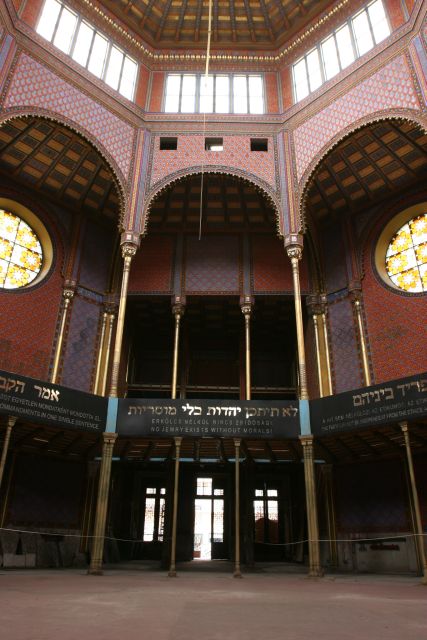
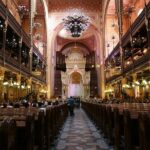
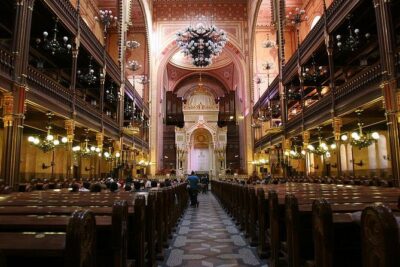
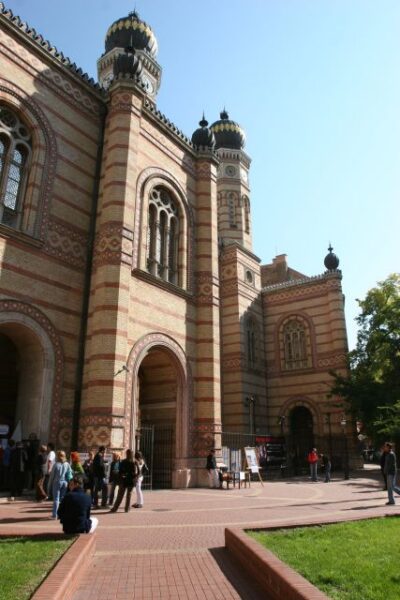
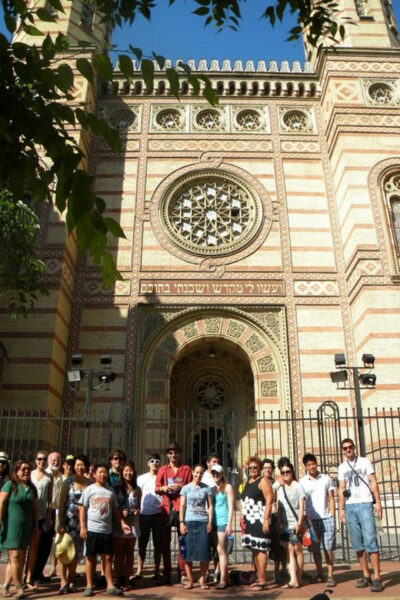
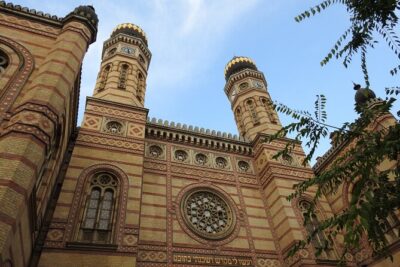
Your tour begins at Dohány Street Synagogue, one of the key anchors of Jewish Budapest. This isn’t a quick photo stop either. You go inside, and you skip the line via a separate entrance, which matters here because the building draws a lot of visitors.
What I like about starting at Dohány is that it sets the tone and the scale right away. You’re in a place that still works as a synagogue, not just a museum object. That difference changes how the rest of the walk lands. When you later hear names tied to persecution and survival, it doesn’t feel abstract. It feels like history happening in real rooms and real communities.
If you’re the kind of person who asks questions, this is also where the guide’s style becomes clear. Many guests mention guides like Benjamin for being funny, direct, and willing to answer real questions rather than reciting a script.
Jewish Museum Budapest: why the museum matters before the streets
After Dohány, you continue to Jewish Museum Budapest for a guided visit. This is one of those stops that turns random facts into a framework you can use while walking the Jewish Quarter. Without this context, you can see buildings and plaques and still miss the why. With it, the neighborhood starts making sense.
The museum portion is paired with other religious and memorial sites on the route, so it works like a hinge. You’ll learn how Jewish community life developed in Hungary, what changed over time, and what remains today. The practical payoff: when you walk the next streets, your guide isn’t just pointing at walls. You’re tracking how the story moved through daily life, worship spaces, and tragedy.
One more practical note: the tour includes time for interior viewing and guided interpretation, so comfortable shoes help. Even with only four hours total, you’ll cover enough ground that you’ll feel it if you’re wearing beat-up footwear.
Raoul Wallenberg Memorial Park and the Tree of Life: remembering with structure
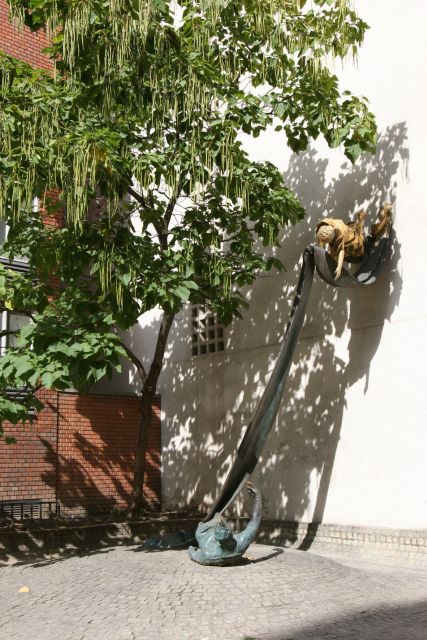
Then the tour shifts from rooms to outdoors. You’ll visit Raoul Wallenberg Holocaust Memorial Park, a Holocaust memorial space designed to slow you down. The included Tree of Life stop is the kind of detail that makes this part more than a checkbox.
Why it’s valuable: it gives you emotional context alongside factual context. The names and events matter, but the way a memorial is laid out helps your brain absorb what the words mean. You’re not only learning what happened. You’re also learning how Budapest chooses to remember.
You’ll also see that the tour isn’t only about the past. This route threads in people who tried to save others, and it does that again later with the Carl Lutz memorial. That combination is important. It avoids a one-note story and replaces it with something more human and more honest.
Carl Lutz and the rescue story: Hungary’s Schindler in context
A major stop on the route is the memorial park dedicated to Carl Lutz, who is also known as Hungary’s Schindler. The framing is specific: Lutz is presented as a key rescuer figure, not as a footnote.
I like this approach because it changes how you interpret the memorial spaces. Instead of only thinking about loss, you’re also tracking attempts to protect people when the world was closing in. That makes the later neighborhood walk feel different, too, because you’re seeing where community life returned and persisted.
If you’re studying European history in any depth, this is the kind of detail that helps you connect Budapest to broader rescue narratives. And if you’re traveling with kids or teens, it’s often the part that turns the topic from only tragedy into the reality of moral choices and actions.
Further back into Budapest's past

Rumbach Street, Heroes’ Temple, and the Jewish Quarter triangle feel
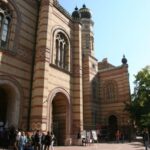
Once you’re past the memorial parks, the route moves through the Jewish Quarter area. You’ll pass Rumbach Street Synagogue as an outside visit, plus Temple of Heroes (outside) and a Jewish Centre stop.
These outside-view moments matter because they give you a visual map. You’re learning the city’s layout: how different synagogues sit within a dense urban neighborhood, how religious buildings and community institutions cluster, and how the past leaves traces even when streets change names or storefronts change.
One detail worth knowing: standard scheduling includes Rumbach Street Synagogue as an outside visit. But at least one guide, Borcsa, reportedly managed an extra look when possible, treating it like a rare permission-based bonus. If this matters to you, ask your guide on the day whether there’s any flexibility, but don’t count on it.
Madách Square and Gozsdu Passage: where history meets foot traffic
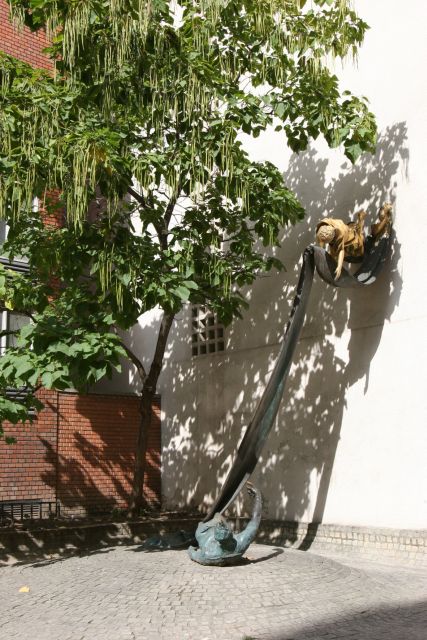
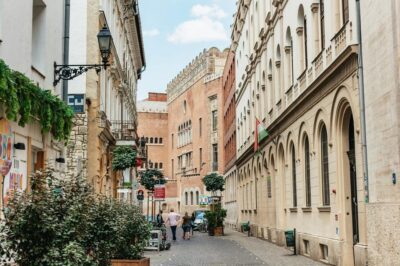
In the middle of the walk, you pass through Madách Square and the area around Gozsdu Passage. This is more than a random shopping corridor. It’s a useful reminder that the neighborhood has layers: you’re walking past modern streets while learning how the Jewish Quarter evolved.
This kind of stop helps you avoid the common problem with heritage tours, where everything becomes either fully solemn or fully touristy. Here, the route mixes memory and everyday city life. It’s a more realistic way to understand what a living neighborhood feels like.
Kazinczy Street Synagogue: Art Nouveau, Orthodox life, and an inside visit
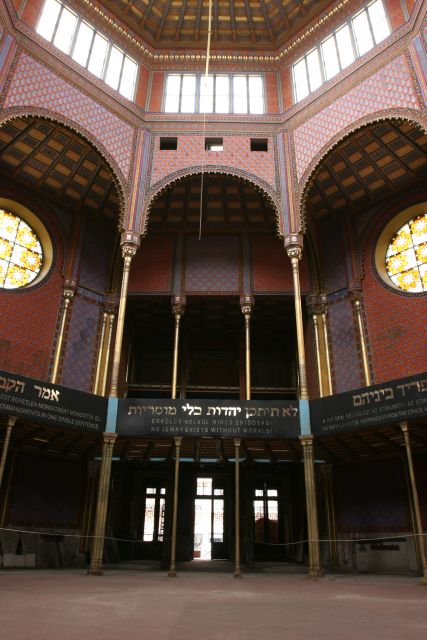
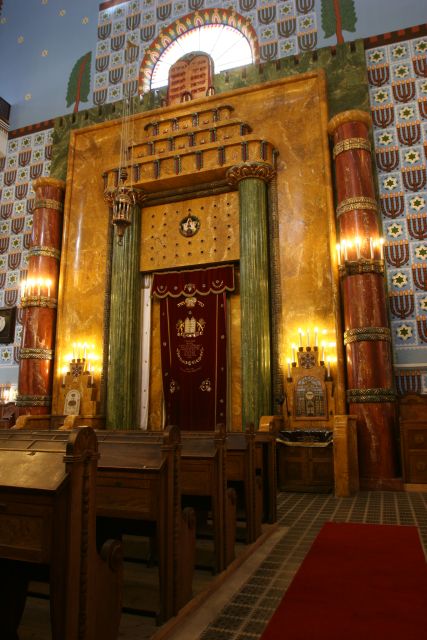
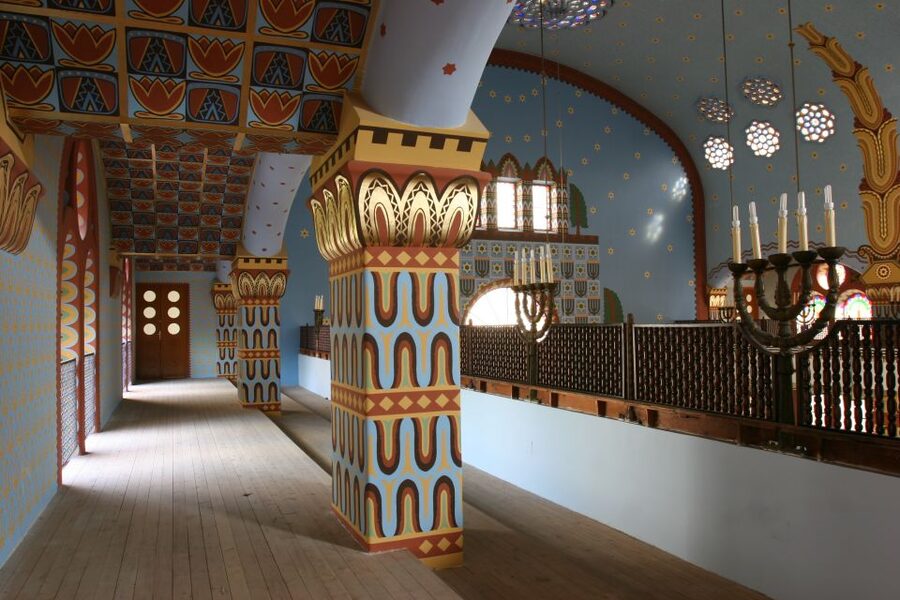
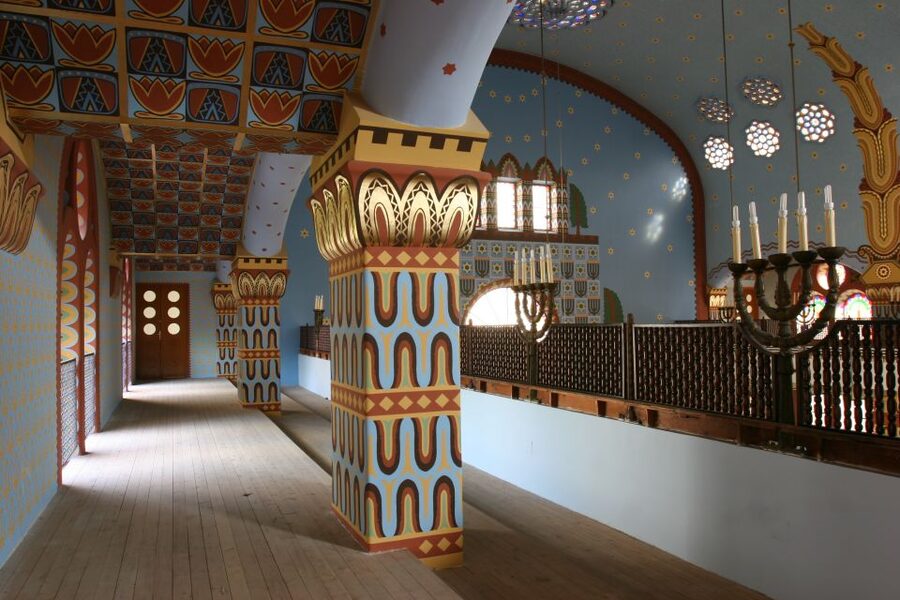
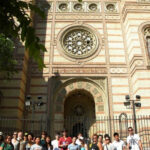
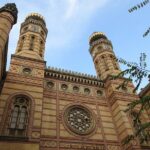
The final major synagogue stop is Kazinczy Street Synagogue, one of the largest operating Orthodox synagogues in Europe. Unlike the outside-view stops, this one includes an inside visit.
The building’s Art Nouveau style adds a different kind of contrast. You’re looking at a place of worship with distinct architecture, not a plain historical shell. Seeing it from inside is often where the tour clicks for people who came expecting only memorial stops. It brings you back to community life—past and present—within the same neighborhood circuit.
What this tour is really like: pace, questions, and how long 4 hours feels
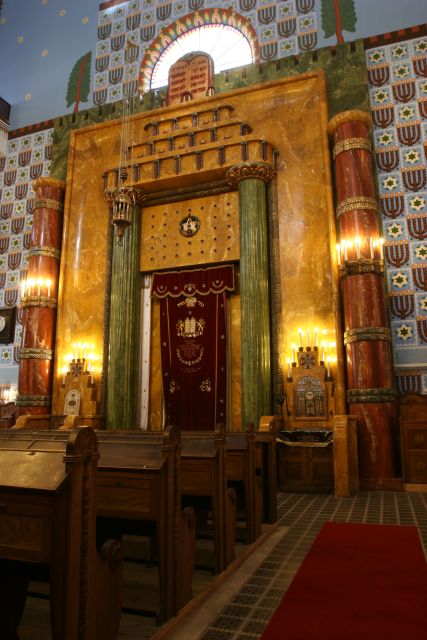
Four hours sounds short, but the way this route is organized makes it feel fast in a good way. The stops are varied: interior synagogue, museum guided time, memorial parks, and then more street-based context through the Orthodox Jewish Quarter and former-ghetto streets.
You should expect:
- Enough time inside major sites to absorb explanations
- Outdoor walking through the quarter with guide storytelling and local context
- A route that includes both solemn moments and practical neighborhood details
Still, it’s worth respecting the packed feel. Some guests praised the pace, and others noted that their group finished earlier than expected due to a guide timing issue. That doesn’t mean every day runs like that, but it is a signal: plan your afternoon with a cushion.
Also, the tour is not suitable for wheelchair users, and there are limits on what you can bring (no pets; no luggage or large bags). If you’re traveling with a big backpack, plan to travel light.
Value check: is $116 a fair deal for this Budapest route?
At $116 per person for about 4 hours, the value comes from what’s included. You’re not paying only for a guide’s time. The price covers entrance fees to key places like Dohány Street Synagogue, Jewish Museum Budapest, Raoul Wallenberg Memorial Park, and Kazinczy Street Synagogue.
You also get skip-the-line access via a separate entrance, which can save real time at the synagogue. That matters because Budapest isn’t slow everywhere—you’ll feel the efficiency when you’re moving from building to building.
The other value factor: the tour includes guided interpretation throughout, with multiple stops connected into one narrative. If you just bought museum tickets on your own, you’d see the objects. You might not get the same connecting thread.
Kosher coffee and a small food break: what’s included
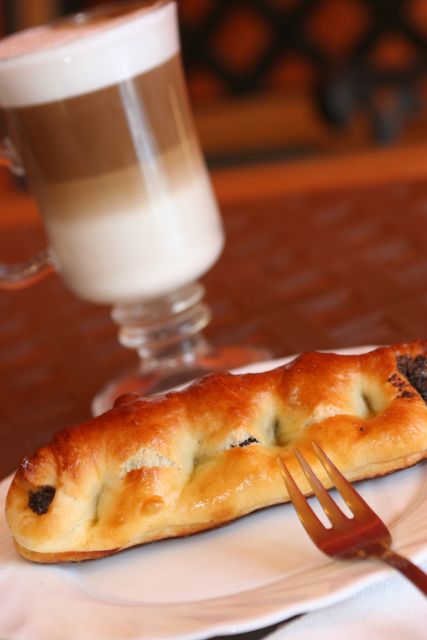
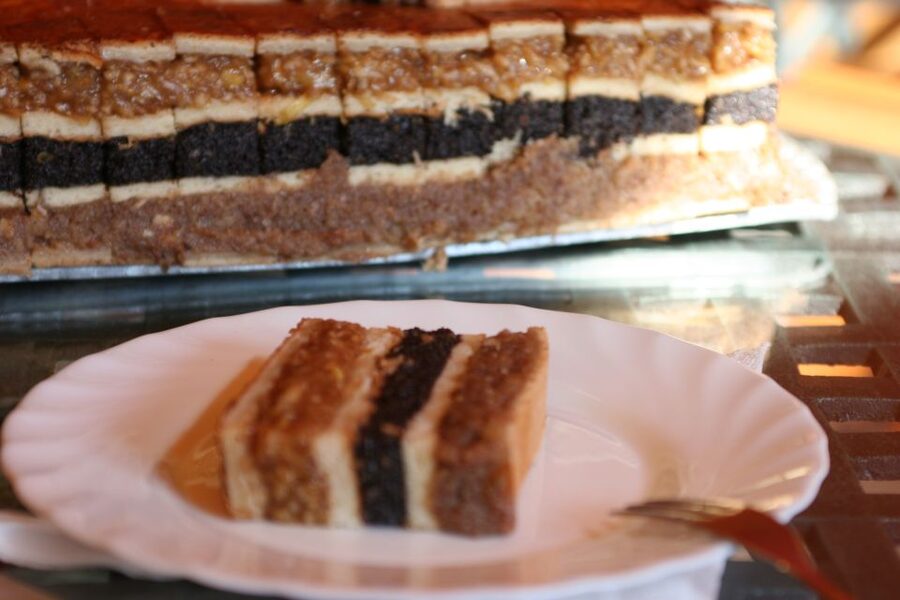
There’s a built-in refresh moment: cake and coffee in a kosher confectionery, plus a 10% discount at Carmel Restaurant if you choose the lunch option.
This is a smart inclusion for a half-day format. It keeps the tour from turning into one long stretch where everyone gets hungry and cranky. And because it’s kosher, it fits the theme of the Jewish Quarter without feeling like a tourist trap.
If you’re sensitive to food timing, you can also use it as your planning anchor: eat this break snack, then decide later about lunch based on what you want after the tour.
Should you book the Budapest Grand Half-Day Jewish Heritage Tour?
I’d book this tour if you want a guided, high-impact route through Budapest’s Jewish Quarter that balances major religious sites, museum context, and memorial spaces in just four hours. Starting inside Dohány Street Synagogue, then pairing that with the Jewish Museum, is a strong combo. The route also gives you human-history anchors like Raoul Wallenberg and Carl Lutz (Hungary’s Schindler) rather than only relying on general background.
I’d think twice if your schedule is razor-tight, because at least one departure has run short at the end. And if mobility is a concern, note that it’s not suitable for wheelchair users.
If you’re flexible on timing and you want your Budapest day to have meaning, this is one of the more efficient ways to learn the Jewish story of the city while still seeing the neighborhood as a living place.
FAQ
How long is the Budapest Grand Half-Day Jewish Heritage Tour?
The tour lasts 4 hours.
Where does the tour meet?
The meeting point is Dohány Street Synagogue, Dohány u. 2, 1074.
How much does the tour cost?
The price is $116 per person.
What’s included in the tour price?
A professional guide is included throughout, along with entrance fees for Jewish Museum, Dohány Street Synagogue, Raoul Wallenberg Memorial Park, and Kazinczy Street Synagogue.
Is lunch included?
The tour includes cake and coffee at a kosher confectionery, and there’s a 10% discount at Carmel Restaurant with a lunch option.
Do I need to bring identification?
Yes. You should bring a passport or ID card.
Is pick-up included from hotels?
No pick-up is included.
Is the tour available in English?
Yes. The live guide language is English.
Are pets allowed or can I bring large bags?
No pets are allowed, and luggage or large bags are not allowed.
Is it wheelchair accessible?
No. The tour is not suitable for wheelchair users.
More Tours in Budapest



More Tour Reviews in Budapest





Around the Old Jewish Quarter


Just Added: More Budapest Reviews
- Sightseeing flight over Budapest
★ 5.0 · 3 reviews - Budapest: Walking Tour with Chimney Cake & Polaroid Photos
★ 5.0 · 3 reviews - Self Guided Tour In Budapest With 100 Captivating Audio Stories
★ 5.0 · 3 reviews - Budapest Art Nouveau Walking Tour
★ 5.0 · 3 reviews - Hungary today: a no-taboo conversation
★ 5.0 · 3 reviews
Jewish Quarter Tours, compared.
 ★ 5.0Budapest Jewish Heritage Memorial Walking Tour & Synagogue EntryFrom $83568 reviews
 ★ 4.8Jewish Heritage Guided Tour with Synagogue TicketFrom $81533 reviews
 ★ 4.7Jewish Quarter of Budapest Walking TourFrom $2369 reviews
 ★ 5.0German tour in the Budapest city centre & the Jewish quarterFrom $23359 reviews
 ★ 5.0Past and Present of Budapest Jewish District TourFrom $3264 reviews
 ★ 5.0Budapest City Walk in Jewish QuarterFrom $356218 reviews
 ★ 4.5Budapest Dohany Synagogue & Hungarian Jewish Museum & free extrasFrom $44218 reviews
 ★ 4.8Jewish History Guided Walking Tour with HistorianFrom $63205 reviews
Browse the lists this tour appears in