
Reviewed · JEWISH QUARTER TOURS
Private Jewish Heritage Tour of Budapest with Local Expert
Budapest has a second map. This private Jewish Heritage tour stitches together synagogues, WWII ghetto sites, and a real food stop for Flódni over about 2.5 hours. I love the way the guide points at the important place names—Herzl Square, Dohány Street, and the Jewish Quarter streets—and explains what they meant for everyday life. I also like that you get a proper taste break at Fröhlich Patisserie, not just a quick snack. One consideration: it’s a walking route with a moderate fitness level, and several stops are about the areas outside or nearby, not a full inside museum experience.
The route keeps you oriented in the 7th district, starting in the Jewish Quarter and working through the synagogue triangle and key memorial stops. You’ll connect the neighborhood’s long Jewish community presence with the pressure of the WWII Ghetto of 1944, all while your guide stays next to you to make the names make sense. If you’re short on time in Budapest but want context, this format is practical.
You’ll likely enjoy it most if you come ready to ask questions and listen for the human side of the story, not just dates and facts. And keep a bit of flexibility—on one occasion, the tour was canceled because the guide got sick and couldn’t perform, with a full refund. When the guide is there, the tour seems to run smoothly and unhurried.
In This Review
- Key things I’d bank on before you go
- Jewish Quarter to Dohány Street: getting your bearings fast
- Herzl Square and the Great Synagogue area: the start that sets the tone
- Flódni first taste: why the food works here
- Dohány Street Synagogue area: the main draw, handled with care
- Rumbach Street Synagogue: the details you’ll miss without a guide
- Carl Lutz Memorial: a human story behind the headlines
- Kazinczy Street Synagogue and the Orthodox neighborhood feel
- Erzsébetváros and the old “city within a city” area
- Dob Street treats and Kazinczy’s street-market vibe
- Castle Garden and a ritual bath photo moment
- Finishing with the former ghetto streets in District VII
- Flódni at Fröhlich: the snack that turns facts into a memory
- What’s included vs. what you’ll pay for
- Price and logistics: when $220 feels fair
- Guide quality matters: the difference between a walk and a story
- Who should book this, and who should skip it
- Should you book this Private Jewish Heritage Tour?
- FAQ
- How long is the Private Jewish Heritage Tour of Budapest?
- Is this tour private or shared?
- What does the tour include besides the walking?
- Is Flódni included?
- Are synagogue entrance tickets included?
- Do you offer pickup?
- What kind of fitness level do I need?
- Is there a mobile ticket?
- Are there rest stops or food/drinks?
- Can I cancel for a full refund?
Key things I’d bank on before you go
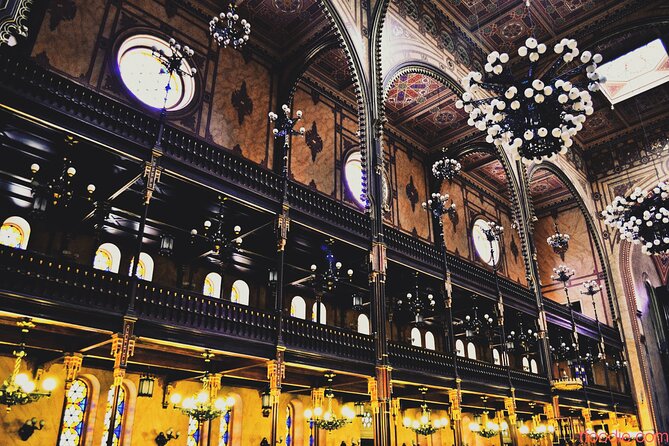
- A tight 2.5-hour route that links the Jewish Quarter to WWII landmarks and several major synagogues
- Flódni at Fröhlich Patisserie as a built-in taste of modern Jewish life in Budapest
- WWII focus with specific names, including Carl Lutz and the ghetto’s 1944 reality
- Synagogue triangle stops near Dohány, Rumbach, and Kazinczy for a clear geography
- Handouts plus a notebook and pen so you can keep track without squinting at your phone
- Local tips for ruin bars and nightlife, if you want to keep the night going after the walk
Deeper into old District VII
- Budapest Jewish Heritage Memorial Walking Tour & Synagogue Entry★ 5.0 · 568 reviews
- Budapest: Jewish Heritage Guided Tour with Synagogue Ticket★ 4.8 · 533 reviews
- Jewish Quarter of Budapest Walking Tour★ 4.7 · 369 reviews
- German tour in the Budapest city centre & the Jewish quarter★ 5.0 · 359 reviews
Jewish Quarter to Dohány Street: getting your bearings fast
The big win here is that the route is designed to help you read Budapest’s Jewish district like a story. The walk starts in the Jewish Quarter area and builds toward Dohány Street, so your brain keeps placing each new sight into the same mental map.
From the start, the guide sets the scene with the 7th district’s Jewish community presence—over 200 years—and how the neighborhood became a center for Jewish life. That matters because many visitors first see Budapest as castle views and Danube bridges. This tour redirects you to a different layer of the city.
Also, you get the benefit of staying with one local expert instead of hopping between websites. You’re not left to guess what you’re looking at or why it mattered. Your guide’s job is to make the “what” connect to the “who,” and it usually happens quickly when you’re walking.
Herzl Square and the Great Synagogue area: the start that sets the tone
Stop one is all about context. You begin at Herzl Square and the Great Synagogue area, which gives you the backbone of the Jewish Quarter story right away.
From there, you do a guided walk through the Jewish Quarter, and the tour includes major landmarks connected to the World War II Ghetto of 1944. The way this is built into the early part of the tour is smart: you’re not leaving the heavy stuff until the end when you’re tired or distracted.
You should expect a mix of history and place-making. The guide helps you notice how streets and squares carry meaning long after the original community rhythms changed. Even if you know a little already, it’s often the first time you can place the facts onto a street corner in Budapest.
Flódni first taste: why the food works here
The tour also stops for Flódni at Fröhlich Patisserie during the early segment. That’s not just about eating. A food stop breaks up attention before you head to more solemn places later on.
Dohány Street Synagogue area: the main draw, handled with care
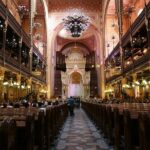
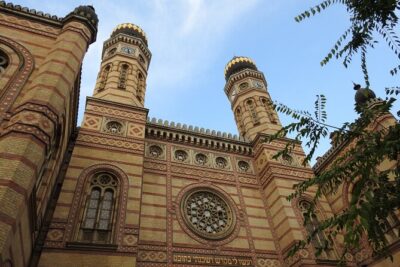
The tour’s main stop is the Dohány Street Synagogue vicinity. This is the heavyweight landmark on the walking circuit—described as the largest synagogue in Europe and the second largest in the world.
Important practical point: your time here is marked as about 20 minutes, and the tour focuses on the surrounding area. So think of it as getting the geography and significance down, while your guide points out what you should notice and what to remember.
If you’ve ever seen a list of synagogues and felt lost in the names, this is the moment when everything becomes easier. The guide ties the scale of Dohány Street to the community story and to the broader “synagogue triangle” you’ll visit later.
More just-your-group days in Budapest
Rumbach Street Synagogue: the details you’ll miss without a guide
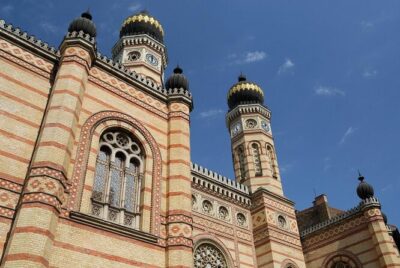
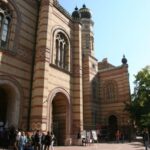
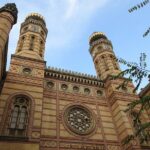
Next up is Rumbach Street Synagogue (Rumbach Sebestyén utca Synagogue). This stop has a strong visual angle: the interior decoration is described as Moorish and graceful light-filled—something you may not catch quickly if you’re just wandering.
The stop is shorter (about 15 minutes), which means the guide has to be selective. That’s good. When time is limited, you want someone to point to the right features instead of you trying to read architectural details solo.
If you care about design—arches, color, ornament—this stop gives you a reason to slow down. And even if you don’t consider yourself an architecture fan, it’s a useful counterpoint to the more memorial-heavy parts of the day.
Carl Lutz Memorial: a human story behind the headlines
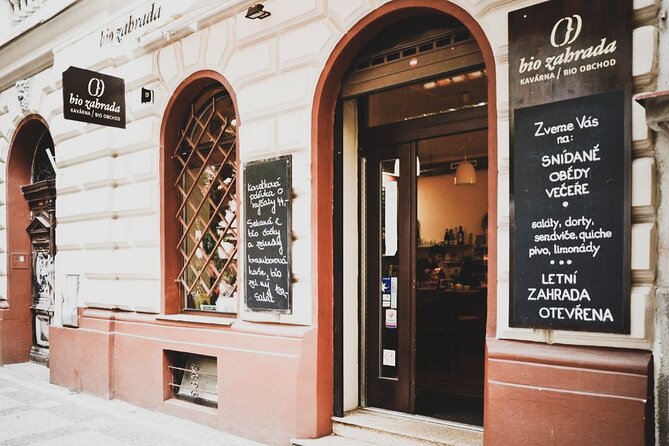
At the Carl Lutz Memorial, you’ll hear about Carl Lutz, one of the Righteous Among the Nations of the World—also known as the Hungarian Schindler.
This is the kind of stop where the guide’s pacing really matters. The time is about 20 minutes, so you won’t get lost in endless background. Instead, you get a guided explanation of why Carl Lutz is remembered and how his actions fit into the broader World War II context in Hungary.
If you like history that connects to real people, this is often the emotional anchor of the whole tour. It turns the story from a timeline into actions taken in specific moments.
Kazinczy Street Synagogue and the Orthodox neighborhood feel
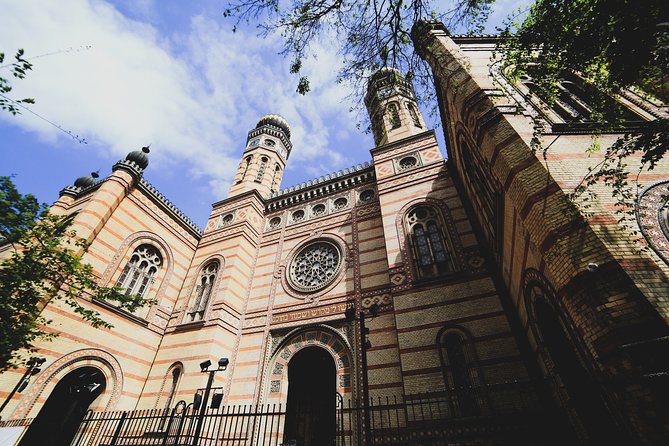
After Rumbach, you head to Kazinczy Street Synagogue. The big idea here is that it’s one of the largest functioning Orthodox synagogues in Europe, and it’s built in an Art Nouveau style.
This is also where you’ll get local flavor beyond architecture. The tour includes local tips about beer ruins and nightlife, plus hints about street art and other secrets. That matters because this area isn’t just a day-trip zone. It’s part of how Budapest lives now.
You’ll also get a sense of the synagogue triangle logic—how these major religious sites sit in relation to each other. That makes the district feel organized in your head instead of random and hard to repeat later.
Erzsébetváros and the old “city within a city” area
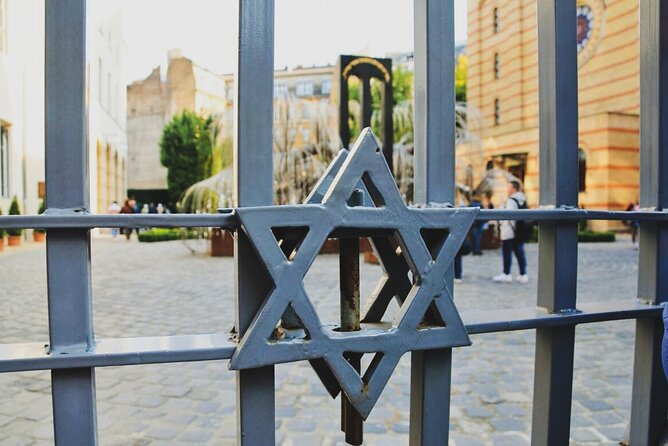
Then you shift to Erzsébetváros, where the tour frames Budapest as having 24 synagogues and pray houses. More than the number, the point is that this neighborhood functioned like a city within a city, centered around the historic Jewish Quarter and the former ghetto area.
The time here is about 20 minutes. Expect the guide to keep it focused on the recognizable landmarks and the key streets, without turning it into a lecture marathon. This segment works especially well if you’re the type who likes to walk and absorb.
A small but useful benefit: at this stage, the tour has already named several synagogues. So when you’re in Erzsébetváros, you can start noticing what’s still visible—monuments, the street rhythm, and the lingering sense of Jewish community presence.
Dob Street treats and Kazinczy’s street-market vibe
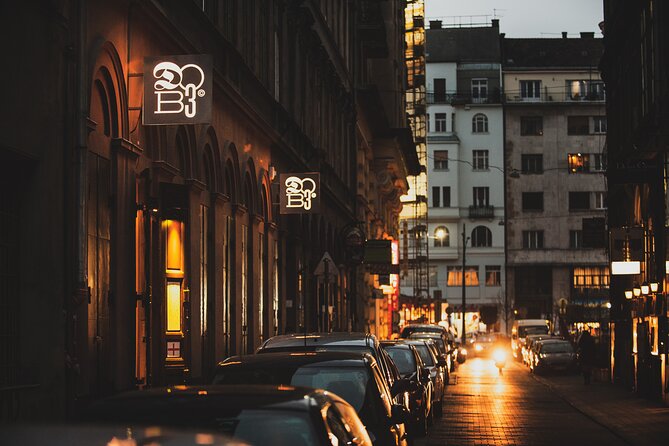
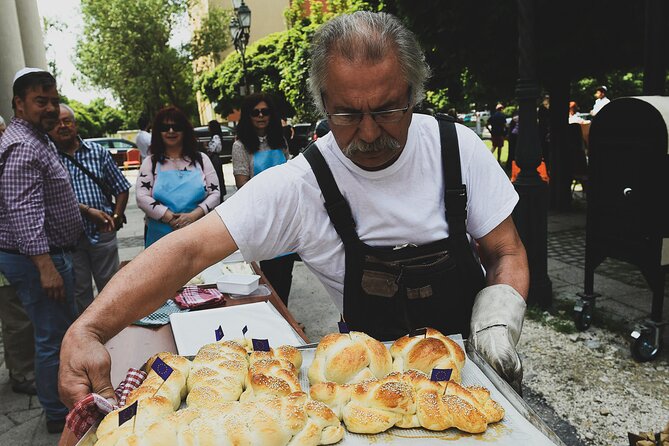
One of the more fun turns in the walk is Dob Street, where you visit Fröhlich Confectioner’s for another round of Jewish delicacies. This stop highlights flódni and also mentions Chanukkai donut and Purim Haman’s ears, plus other Jewish sweets.
Even if you don’t try every item mentioned, the key is that this is treated as a food moment tied to Jewish calendar culture, not just sugar. It’s a chance to taste what “Jewish heritage” can feel like in everyday life.
After that, you return to Kazinczy Street, described as a former buzzing Jewish market area. Today it has a wine-cellar vibe with kosher wine of high quality. If you want to continue the evening, this is the segment that gives you practical direction on where to go next.
Castle Garden and a ritual bath photo moment
The tour includes a quick stop at Castle Garden to take a picture with the oldest traditional Jewish baths, used for ritual purposes.
It’s only about 10 minutes, so don’t treat it as a full explanation of ritual bathing. Instead, think of it as a “place marker” that makes the district’s religious life more tangible. If you like photos that actually mean something, you’ll appreciate the pause here.
Finishing with the former ghetto streets in District VII
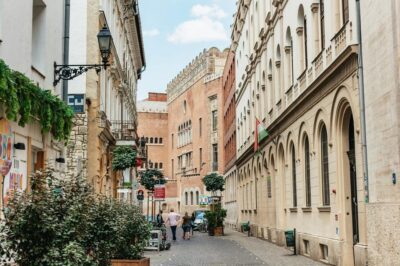
Your walk ends back in District VII / the Jewish Quarter area, where you stroll through streets of the former ghetto. You’ll see synagogues, monuments, kosher restaurants, and kosher shops, and you’ll hear local stories about Budapest.
This last part is about memory and atmosphere. By the time you reach it, you’ve already visited the major nodes, so your final stroll gives you the feeling of connecting the dots in real street terms.
Flódni at Fröhlich: the snack that turns facts into a memory
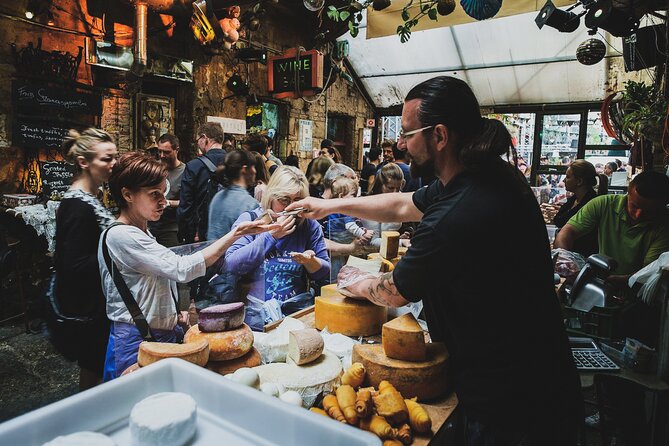
Let’s talk about the food, because Flódni is the standout. It’s offered at Fröchlich Patisserie, and it’s also explicitly planned as part of the tour experience.
Why I like this kind of inclusion: food stops make history stick. You remember where you were, the smells and taste, and the fact that Jewish culture in Budapest isn’t frozen in the past—it keeps showing up in modern sweets and comfort food.
You’ll also get coffee and/or tea as included, which is a nice practical touch. It keeps the energy up for the rest of the walking, especially if you’re pairing this with other Budapest plans.
What’s included vs. what you’ll pay for
The tour states that entrance tickets are not included, while the itinerary lists several stops as admission ticket free. Translation: you should expect most of the planned sights to be covered without separate admission fees, but if you want any additional ticketed entry beyond what’s built into the walk, you may need to confirm in advance.
Price and logistics: when $220 feels fair
At $220 per person for about 2.5 hours, value comes down to one thing: you’re buying a guided route with a private format. That means the pacing is for your group, not a herd. It also means you can ask questions when they pop up—especially around WWII and the memorial stops.
A few logistics points help justify the price:
- Pickup is offered, which reduces time wasted figuring out meeting points.
- You get a notebook and souvenir pen, plus visual handouts.
- There are multiple start times available, and the tour uses a mobile ticket.
The tour is also described as an eco-friendly and sustainable option. Realistically, that means you’re doing this mostly on foot with minimal fuss, which is exactly what you want in a dense city center.
One more planning detail: it’s commonly booked about 36 days in advance on average. If you’re visiting during peak dates, booking earlier is smart so you can pick a start time that doesn’t clash with your other reservations.
Guide quality matters: the difference between a walk and a story
One recurring theme in the experience is how much the guide can shape the day. In one highlight, the guide Miklos was described as exceptional, on time, clear, and not rushing despite limited time. That’s a big deal for this kind of tour because history can get overwhelming fast.
If you get a guide who’s calm and organized, you’ll likely feel the tour is moving efficiently but not hurried. If you want to get the most out of it, ask for:
- A quick timeline recap at the beginning
- One “place-to-people” example for the ghetto area
- What to do after the tour with the beer ruins and nightlife tips
This tour is set up so those conversations are natural. You’re walking past the places, so questions have instant answers.
Who should book this, and who should skip it
This is a strong match if you want:
- A guided orientation to the Jewish Quarter and synagogue triangle
- WWII context tied to street-level landmarks, including the ghetto-related sites
- A real Budapest food break with Jewish sweets, including Flódni
- A private group experience with a local expert
I’d think twice if you dislike walking routes or have very limited mobility, since it calls for moderate physical fitness. Also, if you’re expecting a pure inside-sightseeing day with heavy museum time, you might find the planned stop durations and the focus on areas nearby a bit too light.
Should you book this Private Jewish Heritage Tour?
Yes—if your goal is to learn the district in a short time and you like mixing history with local food. The route is structured to help you understand how the Jewish Quarter, key synagogues, and WWII memory connect on the ground.
I’d book it especially if you value a private walking format and want a guide to interpret what you’re seeing while you’re still close to the street signs and buildings. Just come with realistic expectations about walking and about entry fees: many stops are treated as admission-free in the plan, but entrance tickets aren’t listed as included across the board.
If you want a Budapest day that feels specific—not generic—this is the one.
FAQ
How long is the Private Jewish Heritage Tour of Budapest?
It’s approximately 2 hours 30 minutes.
Is this tour private or shared?
This is a private tour/activity, and only your group participates.
What does the tour include besides the walking?
Included items are all fees and taxes, a notebook and souvenir pen, visual handouts, and coffee and/or tea.
Is Flódni included?
Yes. Flódni is specifically included at Fröhlich Patisserie as part of the tour.
Are synagogue entrance tickets included?
Entrance tickets are not listed as included. Some stops are marked as admission ticket free, so most planned viewing may not require paid entry, but you should confirm if you’re hoping to go inside any specific places.
Do you offer pickup?
Pickup is offered.
What kind of fitness level do I need?
The tour says travelers should have a moderate physical fitness level.
Is there a mobile ticket?
Yes, the tour offers a mobile ticket.
Are there rest stops or food/drinks?
The tour includes coffee and/or tea and includes Jewish food tasting stops such as Flódni and other delicacies mentioned at Fröhlich Confectioner’s.
Can I cancel for a full refund?
Yes. You can cancel up to 24 hours in advance for a full refund.
More Tours in Budapest





More Tour Reviews in Budapest






Around the Old Jewish Quarter


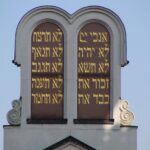
Just Added: More Budapest Reviews
- Sightseeing flight over Budapest
★ 5.0 · 3 reviews - Budapest: Walking Tour with Chimney Cake & Polaroid Photos
★ 5.0 · 3 reviews - Self Guided Tour In Budapest With 100 Captivating Audio Stories
★ 5.0 · 3 reviews - Budapest Art Nouveau Walking Tour
★ 5.0 · 3 reviews - Hungary today: a no-taboo conversation
★ 5.0 · 3 reviews
Jewish Quarter Tours, compared.
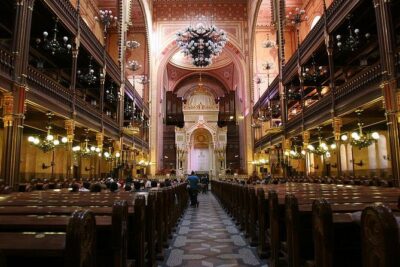 ★ 5.0Budapest Jewish Heritage Memorial Walking Tour & Synagogue EntryFrom $83568 reviews
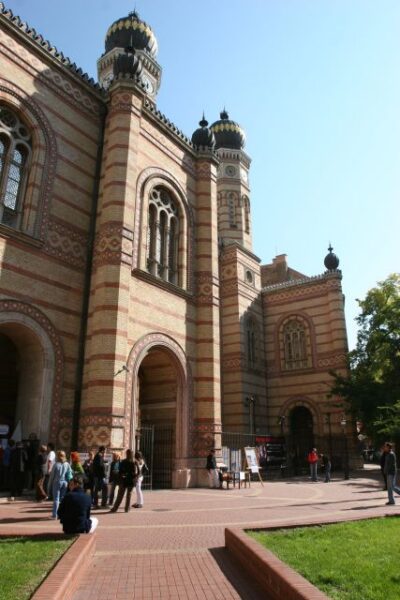 ★ 4.8Jewish Heritage Guided Tour with Synagogue TicketFrom $81533 reviews
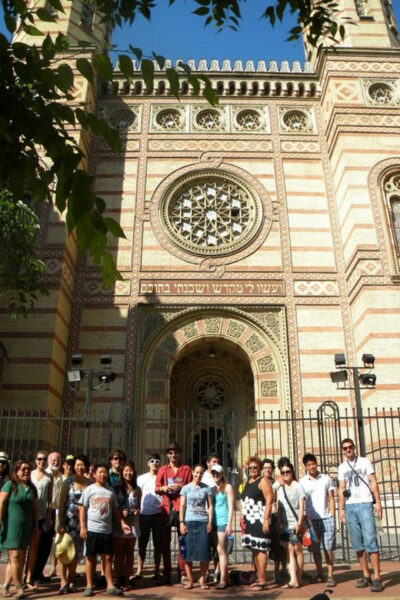 ★ 4.7Jewish Quarter of Budapest Walking TourFrom $2369 reviews
 ★ 5.0German tour in the Budapest city centre & the Jewish quarterFrom $23359 reviews
 ★ 5.0Past and Present of Budapest Jewish District TourFrom $3264 reviews
 ★ 5.0Budapest City Walk in Jewish QuarterFrom $356218 reviews
 ★ 4.5Budapest Dohany Synagogue & Hungarian Jewish Museum & free extrasFrom $44218 reviews
 ★ 4.8Jewish History Guided Walking Tour with HistorianFrom $63205 reviews
Browse the lists this tour appears in