
Budapest teaches fast, on foot. This Jewish Quarter tour strings together WWII memory, synagogue architecture, and real street corners you can still feel today, all in about 3 hours. You get a guided walk in English, built for an efficient first look at the area.
I love two things most: the guides bring history to life with clear, story-driven explanations, and the pace works well in a small group (up to 10 people). On the days this runs, I’ve seen how guides like Brigi Malik and Claudia keep things moving without rushing, so you’re not left trying to read everything yourself.
One possible drawback is ticket expectations. The tour title points to a skip-the-line Great Synagogue ticket, but entry depends on which version you book, and several synagogue stops are listed as ticket not included.
In This Review
- Key highlights you’ll notice right away
- The route: how this walk teaches the Jewish Quarter
- Raoul Wallenberg Statue: a strong moral starting point
- Madách Imre Square: the gateway feeling of the Quarter
- Rumbach Street Synagogue and Kazinczy Street Synagogue: two styles, two messages
- Rumbach Street Synagogue (Moorish-style, restored)
- Kazinczy Street Orthodox Synagogue (Art Nouveau detail)
- Ghetto Wall fragment + exhibition: when history becomes physical
- Fragment del mur del gueto de Budapest
- Ghetto Wall Exhibition context (included)
- Ghetto Memorial Wall and the Dohány Street Synagogue area
- Ghetto Memorial Wall (near Dohány Street Synagogue)
- Dohány Street Synagogue (Great Synagogue): where the timing matters
- Gozsdu Udvar and the Kazinczy Street vibe: history beside nightlife
- Price and logistics: when $18.06 feels fair
- Pacing, walking comfort, and what to wear
- Who should book this tour (and who should consider a different one)
- Should you book the Jewish Quarter tour with Great Synagogue skip-the-line entry?
- FAQ
- How long is the Jewish Quarter walking tour in Budapest?
- Where does the tour start and end?
- Is the tour in English?
- What is the group size?
- Do I get a mobile ticket?
- Does it include skip-the-line entry to the Great Synagogue?
- Are synagogue tickets included at every stop?
- Can I cancel for a full refund?
Key highlights you’ll notice right away
- Guides set the tone quickly, using memorable story anchors like Raoul Wallenberg and the ghetto wall
- Small group size (max 10) keeps the walk calmer and easier to follow for first-timers
- Ghetto Wall stops are time well spent, with a short included exhibition that adds context
- Synagogue architecture contrasts across Moorish Revival and Art Nouveau styles (mostly viewing/visiting depends on ticket)
- Gozsdu Udvar and Kazinczy area give you a modern hangout feel right next to the memorial sites
Deeper into old District VII
- Budapest Jewish Heritage Memorial Walking Tour & Synagogue Entry★ 5.0 · 568 reviews
- Budapest: Jewish Heritage Guided Tour with Synagogue Ticket★ 4.8 · 533 reviews
- Jewish Quarter of Budapest Walking Tour★ 4.7 · 369 reviews
- German tour in the Budapest city centre & the Jewish quarter★ 5.0 · 359 reviews
The route: how this walk teaches the Jewish Quarter
This is a focused 3-hour route that works like a timeline you can walk. You start with commemoration, move through places tied to community life and worship, then shift into the physical reality of wartime confinement. By the end, you’re standing at the Great Synagogue area (Dohány Street Synagogue), which is both a major place of Jewish religious life and a major memorial site.
Because it’s a walking tour, your “schedule brain” matters. Plan for short stops, then a steady pace between them. The upside: you don’t get stuck in one building for the entire experience. Instead, you get a sequence of meaningful visuals, from a memorial suitcase to the last stretches of the ghetto wall.
Also, in practice, an English-language guide makes the dense history easier to manage. When you’re looking at a statue or a wall fragment, you’ll know what to notice instead of just seeing a landmark.
Raoul Wallenberg Statue: a strong moral starting point
You begin at the Raoul Wallenberg Suitcase Memorial, tied to the Swedish diplomat who helped save thousands of Hungarian Jews during WWII. Even if you’ve heard the name before, seeing the memorial in person gives it weight fast.
The bronze suitcase isn’t just decorative. It symbolizes Wallenberg’s efforts and his mysterious disappearance. Starting here works well because it frames the tour with courage and human choices, not only tragedy. That matters—later stops hit hard, and this opening helps you understand the full emotional arc.
This stop stays brief (about 10 minutes), which is exactly right for the overall rhythm. You get the core idea without losing time before the walk moves into the heart of the Quarter.
Madách Imre Square: the gateway feeling of the Quarter
Next is Madách Imre Ter, a small square with cafes and bars around it. The archway connected with the former Madách housing complex can look like a quick streetscape moment, but it acts as a “threshold” between everyday Budapest and the neighborhood’s heavier past.
I like this stop because it’s not only about monuments. It shows you that the Jewish Quarter still lives as a city neighborhood. You’re not visiting a museum street. You’re walking through real urban space, which makes the memorials feel closer and more honest.
Expect another quick 10-minute stop. It’s a good chance to orient yourself before the synagogue sights begin.
Rumbach Street Synagogue and Kazinczy Street Synagogue: two styles, two messages
From there, the tour turns into architecture spotting, which is a smart way to break up WWII-focused content.
One card gets you through more of the doors


Rumbach Street Synagogue (Moorish-style, restored)
At Rumbach Street Synagogue, you’ll see a stunning Moorish-style synagogue designed by Otto Wagner in 1872. It has been recently restored and today functions as both a cultural space and a memorial.
The key detail for planning: the stop listing says admission is not included here. So think of this as a guided look at exterior and/or accessible areas around it. If you specifically want deep interior time, you may need to budget extra on your own.
Still, the exterior style matters. Moorish Revival elements instantly communicate that this community built with confidence and artistry, not just survival.
Kazinczy Street Orthodox Synagogue (Art Nouveau detail)
Then you move to Kazinczy Street Orthodox Synagogue, built in the 1910s. This one leans Art Nouveau, with stained glass and intricate woodwork highlighted as part of the interior experience.
Again, the stop indicates ticket not included, so you’ll likely spend time on observation and whatever parts are accessible during the walk. Even without a ticketed interior visit, you’ll understand the visual difference between the synagogues and what that suggests about different eras and community priorities.
If you love architectural variety, this portion is a win. It keeps the story from becoming only dates and names.
Ghetto Wall fragment + exhibition: when history becomes physical
One of the most powerful parts of this route is the ghetto wall segment.
Fragment del mur del gueto de Budapest
The tour includes a visit to a Jewish Ghetto Wall fragment, described as one of the last remaining pieces of the wall that enclosed the Jewish ghetto during WWII. Standing near what’s left of the barrier gives you a scale you can’t get from photos.
You’re not meant to linger forever here, but the included time (about 30 minutes at this stop) gives room for the guide’s explanations to land. The wall becomes a reference point for how people lived under control and restriction.
Ghetto Wall Exhibition context (included)
Near that fragment is the Ghetto Wall Exhibition, with photos, documents, and personal stories meant to clarify what life behind the wall actually meant.
This is where the tour becomes more than sightseeing. The wall is the symbol; the exhibition helps you understand the human reality behind the symbol. That included context is a major value driver, especially if you’re visiting Budapest with limited background reading.
If you tend to emotionally absorb history, bring a moment for yourself after this segment. A short reset helps you enjoy the rest of the walk instead of feeling stuck in a hard headspace.
Ghetto Memorial Wall and the Dohány Street Synagogue area
After the exhibition stop, the tour keeps you close to memorial spaces that make the wartime story hard to ignore—without turning the experience into a checklist.
Ghetto Memorial Wall (near Dohány Street Synagogue)
You’ll also visit the Ghetto Memorial Wall, presented as a solemn tribute to victims of the Jewish ghetto during WWII. It preserves a section of original ghetto wall in a location near the Dohány Street Synagogue.
This stop is listed as admission free and short (around 10 minutes). In practice, it works as a bridge from the exhibition’s documentation back toward the major synagogue complex, where the memorial story expands into a larger community narrative.
Dohány Street Synagogue (Great Synagogue): where the timing matters
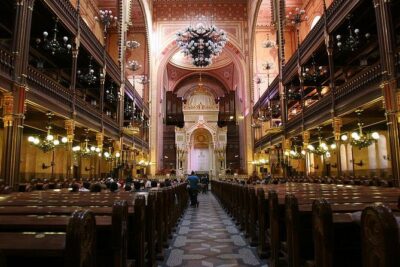
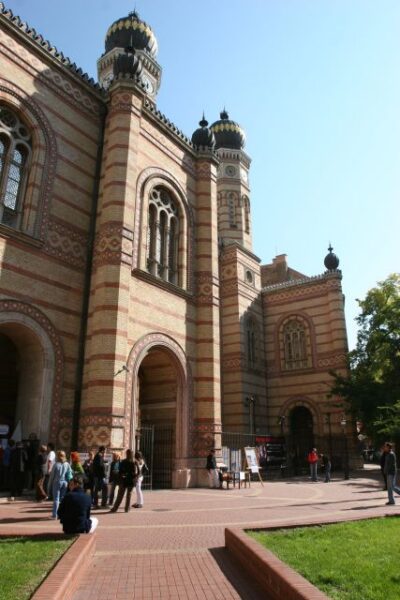
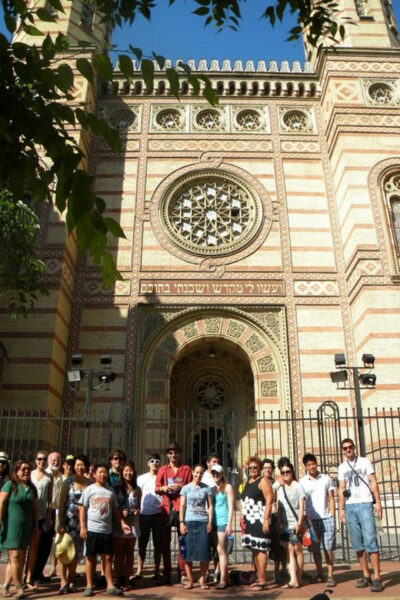
Finally comes Dohány Street Synagogue, known as the largest synagogue in Europe and a Moorish Revival masterpiece built in 1859. The tour description frames it as a religious center, Holocaust memorial, cemetery, and museum.
Here’s the planning reality: the stop listing says admission is not included. But the tour name you’re looking at includes skip-the-line for the Great Synagogue ticket, and the experience offering can vary depending on which version you select.
So, the best move is to double-check the exact version during booking:
- If your booking includes Great Synagogue entry, you should expect the skip-the-line benefit to apply.
- If your booking does not include entry, you’ll likely enjoy the guided approach and what you can access without the ticket.
This is the kind of detail that can make or break expectations, so it’s worth confirming before you show up.
Gozsdu Udvar and the Kazinczy Street vibe: history beside nightlife
Between synagogue stops, you pass through Gozsdu Udvar and the Király Street / Gozsdu area. This is where you’ll feel Budapest’s modern edge. The route describes it as one of the oldest streets in the Jewish Quarter and now known for cafes and ruin bars.
Stop time here is brief (about 15 minutes), and admission is free. Think of it as a pause point. It’s also a reminder that the Quarter is not only memorial land. It’s a place where people hang out, eat, and go out—right next to sites that carry heavy memory.
If you want a quick strategy: take a photo or two, then grab a drink or snack before you head into the next memorial segment. Your energy level will help you process the heavier stops later.
Price and logistics: when $18.06 feels fair
At $18.06 per person for about 3 hours, this tour is priced for a first-hit overview without a big investment. The value is strongest if you’re counting on:
- guided interpretation across multiple stops,
- a short included exhibition segment near the ghetto wall,
- and a group size capped at 10 travelers, which keeps questions and pacing realistic.
You also get a mobile ticket and English-language guiding, which helps a lot on the day of.
The one logistical consideration is the ticket mix for synagogues. Several synagogue stops on the route are listed as ticket not included. That’s not unusual for walking tours, but the Great Synagogue angle can cause confusion if you assume entry is automatic.
If you care about interior museum time, pick your version carefully. If you’re mostly here for the guided streetscape story, the lower-tension option can still work, as long as you know what’s included and what isn’t.
Pacing, walking comfort, and what to wear
This is not a “museum day with benches every five minutes” kind of tour. It’s a connected walking route with multiple short stops, plus one longer segment at the ghetto wall/exhibition area.
So wear shoes that can handle city walking without complaint. If you’re visiting in hotter weather, bring water. If you’re visiting in cooler months, dress in layers; you’ll be outside for most of the experience.
The guide’s job here is pacing, and the reviews you’ll find align with that idea: guides like Brigi Malik and Claudia have a reputation for moving at the group’s pace and explaining history with stories you can remember later.
Who should book this tour (and who should consider a different one)
I’d point this tour at:
- History buffs who want a guided route that connects memorials to community spaces
- First-time visitors who want a clear, walkable introduction to the Jewish Quarter
- People who prefer small groups and conversational guidance over large, impersonal tours
I’d suggest looking at a different option if:
- You specifically want deep, ticketed time inside every synagogue on the route
- You know you’ll feel disappointed if Great Synagogue entry isn’t included
- You hate walking and prefer longer sit-down museum segments
Should you book the Jewish Quarter tour with Great Synagogue skip-the-line entry?
Yes, if you want an efficient, meaningful walk that ties together multiple layers of Budapest’s Jewish Quarter. This is a good value use of time, especially with a capped group size and an included exhibition near the ghetto wall.
But book it with your eyes open. Before you finalize, confirm whether your selected version includes Great Synagogue entry (skip-the-line ticket) or not. If you’re expecting interior access and it’s not included, you’ll spend the day understanding the context while standing at the threshold rather than inside the museum-focused spaces.
If you do confirm the right version, this tour is one of the stronger ways to orient yourself fast—then you can decide what you want to revisit on your own time.
FAQ
How long is the Jewish Quarter walking tour in Budapest?
It runs for about 3 hours.
Where does the tour start and end?
It starts at the Ferris Wheel of Budapest (Erzsébet tér, 1051) and ends at Dohány Street Synagogue (Dohány u. 2, 1074).
Is the tour in English?
Yes, it’s offered in English.
What is the group size?
The tour has a maximum of 10 travelers.
Do I get a mobile ticket?
Yes, the tour provides a mobile ticket.
Does it include skip-the-line entry to the Great Synagogue?
It depends on which version you book. The skip-the-line Great Synagogue ticket applies to the version that includes Great Synagogue entry.
Are synagogue tickets included at every stop?
Not necessarily. The route includes several synagogue stops where admission is listed as not included, and the Great Synagogue entry depends on the selected version.
Can I cancel for a full refund?
Yes. You can cancel up to 24 hours in advance for a full refund.
More Tour Reviews in Budapest






One Card, Every Door




Around the Old Jewish Quarter




Just Added: More Budapest Reviews
- Sightseeing flight over Budapest
★ 5.0 · 3 reviews - Budapest: Walking Tour with Chimney Cake & Polaroid Photos
★ 5.0 · 3 reviews - Self Guided Tour In Budapest With 100 Captivating Audio Stories
★ 5.0 · 3 reviews - Budapest Art Nouveau Walking Tour
★ 5.0 · 3 reviews - Hungary today: a no-taboo conversation
★ 5.0 · 3 reviews
Jewish Quarter Tours, compared.
 ★ 5.0Budapest Jewish Heritage Memorial Walking Tour & Synagogue EntryFrom $83568 reviews
 ★ 4.8Jewish Heritage Guided Tour with Synagogue TicketFrom $81533 reviews
 ★ 4.7Jewish Quarter of Budapest Walking TourFrom $2369 reviews
 ★ 5.0German tour in the Budapest city centre & the Jewish quarterFrom $23359 reviews
 ★ 5.0Past and Present of Budapest Jewish District TourFrom $3264 reviews
 ★ 4.5Budapest Dohany Synagogue & Hungarian Jewish Museum & free extrasFrom $44218 reviews
 ★ 5.0Budapest City Walk in Jewish QuarterFrom $356218 reviews
 ★ 4.8Jewish History Guided Walking Tour with HistorianFrom $63205 reviews
Browse the lists this tour appears in