
Reviewed · DARK HISTORY & GHOST TOURS
Communist History Evening Walking Tour of Budapest
Communist history in Budapest can feel heavy.
This tour makes it concrete on the street, and I especially liked the way Victoria ties the communist era to daily life now, plus the small group feel that keeps questions flowing. One thing to plan for: you do need to be comfortable walking about 3 km at an evening pace.
You start at Blaha Lujza tér at 6:00 pm and end near Kossuth Lajos tér, right by the Hungarian Parliament area. It runs about two hours, stays in English, and keeps the focus on what those landmarks meant during the communist decades—not just what they look like today.
I also appreciated the practical touches. Bottled water is included, and the stops are marked as ticket-free (at least for the sites listed on the route), so you can spend your money on the experience, not more entrances. If the weather is poor, the operator may change plans or offer a different date.
In This Review
- Key takeaways before you go
- Why the 6:00 pm timing makes sense
- Walking Budapest’s communist geography, stop by stop
- Andrassy Avenue: how power reshapes the city
- St. Stephen’s Basilica: religion under pressure, and a sports story that hits
- Liberty Square: where protests and power collide
- Hungarian Parliament: the 1956 uprising in the shadow of the building
- The pace, the distance, and what to wear
- Group size and the guide effect (and why it shows)
- Price and value: $36.01 for a guided street story
- What makes this route different from a museum night
- Who should book this (and who might skip)
- Tips to get the most from the walk
- Should you book Communist History Evening Walking Tour of Budapest?
- FAQ
- How long is the Communist History Evening Walking Tour?
- What time does the tour start, and where does it begin?
- Is the tour offered in English?
- How large is the group?
- How much walking is involved?
- Is bottled water included?
- Do I need to buy admission tickets for the stops?
- What happens if the weather is bad?
- Is full cancellation available?
Key takeaways before you go
- A guide who connects past and present: Expect stories that explain how policies still show up in Hungary today.
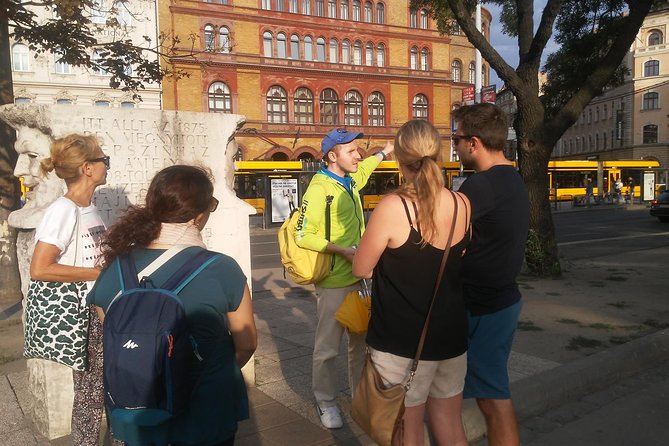
- A small group format: Max 15 people means you’re not shouting across a crowd.
- Church, squares, and Parliament on one route: You’ll link religion, protest, and revolution in a logical walk.
- Central landmarks with short stop times: Quick looks keep the flow moving for an evening schedule.
- Bottled water included: You won’t have to hunt for it mid-walk.
- Good for people who like street history: You get context without spending your night in museums.
Budapest at street level, more routes on foot
- Big Bus Budapest Hop-On Hop-Off Bus and Walking Tour★ 3.5 · 2,206 reviews
- Budapest: Buda Castle District Walking Tour★ 4.6 · 2,108 reviews
- 3-Hour Orientation Walking Tour of Buda and Pest★ 4.8 · 1,834 reviews
- Budapest Historical Sightseeing – Free Walking Tour★ 5.0 · 1,302 reviews
Why the 6:00 pm timing makes sense
Communism in Hungary isn’t a textbook subject here—it’s written into streets, stone, and big public buildings. A late-afternoon to early-evening walk helps because the landmarks you’re seeing are less frantic than during peak daytime hours. It also lets you notice details you’d otherwise rush past.
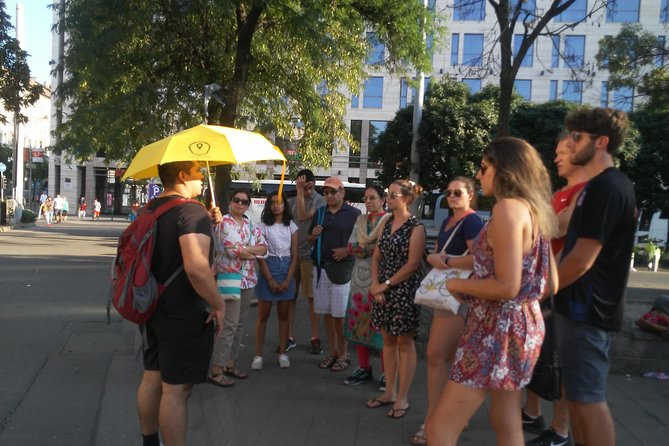
This is a 2-hour walking tour, offered in English, with a max group size of 15 travelers. That matters because the guide can actually pace the conversation. You’ll be able to ask questions without feeling like you’re tagging along behind a megaphone.
You’re also starting and ending in prime central areas: Blaha Lujza tér at the start, then ending on Parliament Square near Kossuth Lajos tér. From a practical view, that makes it easier to continue the evening with transit nearby (the tour notes closeness to the red metro line and tram 2).
Walking Budapest’s communist geography, stop by stop
This route is built around a simple idea: don’t just stare at monuments. Learn why they mattered, who suffered, who resisted, and what changed after.
The walk begins down Andrassy Avenue, where the guide explains how the area evolved and how earlier monuments were treated as power shifted. It’s a good opening because it frames everything else. You start noticing how public space gets reshaped by whoever controls the state.
The tour then moves into landmark stops, each one short enough to keep momentum, but long enough to connect stories to what you can see.
Andrassy Avenue: how power reshapes the city
Andrassy Avenue is the kind of street you recognize right away in Budapest. Even if you don’t know every detail, the scale and grandeur signal importance.
For this tour, that’s the point. The guide uses the avenue to explain changes in the district and the fate of former monuments as communist influence expanded. You’re not just getting background. You’re building a mental map of how ideology can rewrite the meaning of a place.
If you like history that shows up in everyday urban life, this early segment sets the tone well. It also helps you understand why later stops feel so emotionally charged.
St. Stephen’s Basilica: religion under pressure, and a sports story that hits
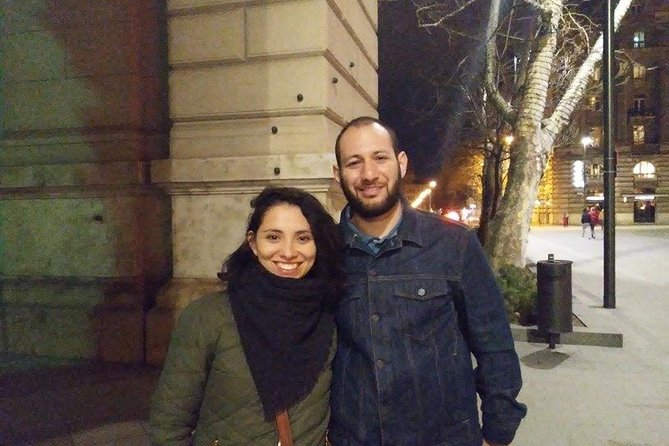
The tour’s first major stop is St. Stephen’s Basilica (Szent Istvan Bazilika). The visit is listed as 10 minutes, and it’s noted as ticket free for this tour.
Here’s what I find useful about this stop: the guide doesn’t treat the church like a postcard. You learn how Hungarian communism impacted church and religion, and that’s where the emotional weight begins. Places of worship weren’t just spiritual sites—they were social and cultural anchors, and the state couldn’t always tolerate independent influence.
You also hear a human-interest detail: a famous Hungarian football player who fled the communist system and was later buried at the basilica. Even without turning the tour into a sports lesson, that story gives you a concrete example of what leaving could cost, and how life events reconnect to national institutions.
Because the time is short, you won’t get a full inside tour of the basilica. You’ll get the story that explains why the building mattered during and after communist rule.
The darker Budapest, told after dusk
Liberty Square: where protests and power collide
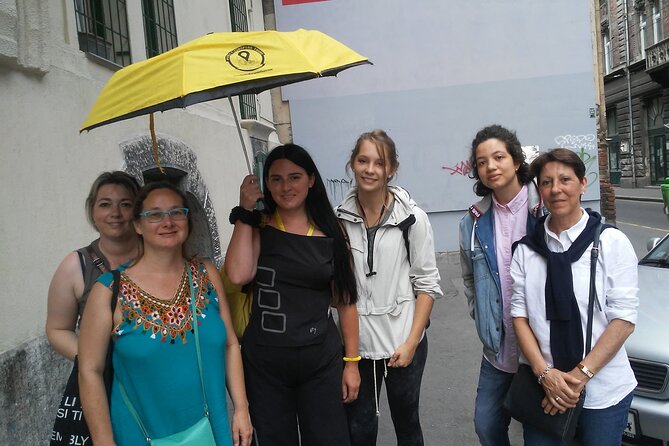
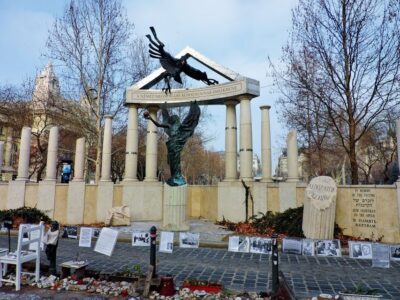
Next is Liberty Square, on a segment marked as about 15 minutes and also listed as ticket free for this tour.
Liberty Square is one of those places where you can feel layers. The tour focuses on why the square matters to communist-era memory: it’s where the stock exchange was located, and it closed down at the start of communism. That detail matters because it shows economic control wasn’t just theoretical—it was institutional and immediate.
The square is also described as the site of bloody protests. The guide’s framing here is important. Instead of making it purely grim, you learn how resistance looked on the ground and why public space became the stage for confrontation.
Practical tip: this stop is short, so keep your eyes up for street-level cues the guide points out. If you’re the type who likes photos, you’ll get them—but prioritize understanding what you’re seeing over perfect angles.
Hungarian Parliament: the 1956 uprising in the shadow of the building
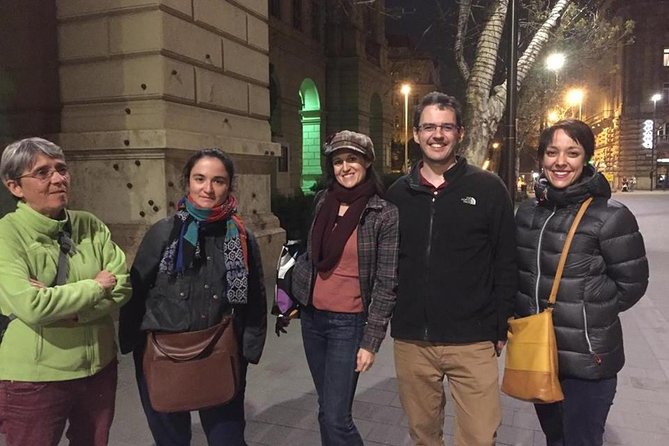
The final key stop is the Hungarian Parliament Building, also about 15 minutes and noted as ticket free for this tour.
This is the part where the whole theme comes together. The guide links the parliament area to the 1956 uprising against the ruling Communist party, including where blood was shed. It’s not abstract history. It’s a story of how people tried to break a political system, and what the consequences were.
I like that the tour doesn’t treat Parliament as a sightseeing target. You’re guided to view it as a symbol—of authority, conflict, and political change. Even if you’ve seen the building on postcards, hearing it explained in the context of 1956 changes how you look at it.
The tour ends on Parliament Square, near Kossuth Lajos tér, and the route notes proximity to the red metro line or tram 2. That’s handy if you want to keep walking afterward toward the river or hop to another evening plan.
The pace, the distance, and what to wear
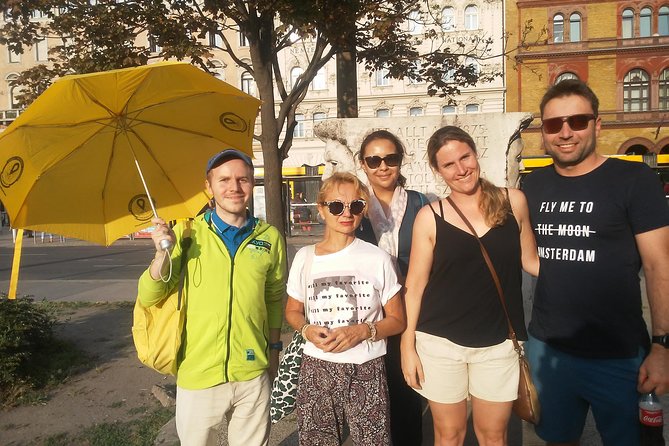
This is a walking tour, so the logistics matter. The requirement is you must be able to walk (or wheel) yourself about 3 km. That’s not a marathon distance, but it’s enough that footwear and stamina matter—especially at 6:00 pm when the light may fade quickly in summer or earlier in other seasons.
Here’s what helps most:
- Wear comfortable walking shoes you trust on uneven sidewalks.
- Bring a layer if the evening air cools down.
- Use the included bottled water as soon as you feel yourself slowing.
The tour is marked as requiring good weather. If weather doesn’t cooperate, you may be offered another date or a full refund. This isn’t the kind of tour I’d try to force through if rain is heavy.
Group size and the guide effect (and why it shows)
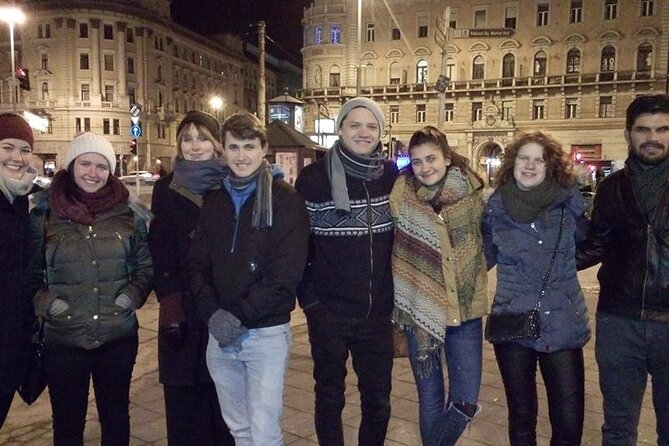
This tour caps at 15 people, and the ratings reflect why that’s a big deal. With fewer people, Victoria-style teaching—clear explanations, strong English, and direct answers—works better. You also get less time spent waiting and more time moving with context.
The reviews also point out that this isn’t a dry lecture. The guide is described as giving a real perspective on present-day life in Budapest and the ongoing repercussions of communist rule. That’s exactly what you should look for in a “history evening walk.” The point isn’t memorizing dates. It’s understanding how those years still echo.
If you enjoy asking questions, this format makes it easier. And if you prefer quiet absorption, the flow still works because the route is structured around visual landmarks.
Price and value: $36.01 for a guided street story
At $36.01 per person, this isn’t a budget grab, but it also isn’t museum-ticket pricing. For that money, you’re paying for:
- A guided walk that covers multiple high-impact sites
- English language instruction
- Bottled water included
- A small-group experience
A big value signal is that key stops are indicated as ticket free for the tour. That means you’re not paying extra just to stand near buildings while learning what they represent.
One other value point: you’re not stuck with only “building history.” The tour aims to connect communism to everyday life in Hungary now, which is where many walking tours either stop short or stay too vague. This one is trying to do the connecting work.
If your Budapest time is limited and you want a human explanation rather than a checklist, the price can feel fair.
What makes this route different from a museum night
Museums are great. But communism-era Budapest isn’t only contained behind glass.
On this walk, the guide uses a chain of places—Andrassy Avenue, St. Stephen’s Basilica, Liberty Square, and Parliament—to show how state power affected religion, economics, public protest, and revolutionary politics. You’re learning from the city itself.
That’s why I think this tour is especially good in the evening. You’ll walk from one symbolic space to the next, and the stories build like a timeline you can see.
Who should book this (and who might skip)
This tour is a great match if:
- You like history that you can see on the street.
- You want an English-speaking guide who can answer questions.
- You want the communist era explained with practical context for life in Hungary today.
It may be a less ideal fit if:
- You hate walking or aren’t comfortable with about 3 km on your own.
- You expect a long inside-the-building experience at each stop. The stops are short by design, so you’ll learn the meaning, not tour every room.
Also, think about your patience for evening street noise. One small caution: meeting and waiting spots can be near active sidewalks, and you might find the surroundings a bit chaotic depending on the exact curbside moment.
Tips to get the most from the walk
You’ll enjoy this more if you treat it like an outdoor conversation, not a passive show.
- Ask your first question early. The small-group setup makes it easier.
- Bring your curiosity about the church and religion angle at St. Stephen’s Basilica. That’s where many people’s mental model shifts.
- Listen closely at Liberty Square. Economic control and protest memory are linked there in a way you won’t get from photos.
- At Parliament, focus on the 1956 uprising context rather than just the architecture.
And if you’re a history student at heart, you can also pair this with a separate stop elsewhere related to communist-era memory. The tour itself is tightly focused on the route you walk.
Should you book Communist History Evening Walking Tour of Budapest?
I’d book it if you want a focused, story-driven walk through central Budapest that explains how communism shaped religion, economics, protest, and revolution. The small group, the English guide quality, and the way the tour connects past events to what you can still sense in the city make it a smart use of an evening.
I’d skip or reconsider if walking isn’t your thing or if you prefer long indoor museum time. This tour is made for the street, and it rewards people who like to learn while moving.
If you fit the “comfortable walker who likes context” profile, this one is an excellent value at $36.01 and a strong way to understand Budapest beyond the usual postcard circuit.
FAQ
How long is the Communist History Evening Walking Tour?
It lasts about 2 hours.
What time does the tour start, and where does it begin?
It starts at 6:00 pm. The meeting point is Budapest, Blaha Lujza tér, 1085 Hungary. The tour ends at Budapest, Kossuth Lajos tér 1-3, 1055 Hungary near Parliament Square.
Is the tour offered in English?
Yes, it’s offered in English.
How large is the group?
The tour has a maximum of 15 travelers.
How much walking is involved?
You need to be able to walk (or wheel) yourself about 3 km.
Is bottled water included?
Yes. Bottled water is included.
Do I need to buy admission tickets for the stops?
The tour notes free admission for St. Stephen’s Basilica, Liberty Square, and the Hungarian Parliament Building stops.
What happens if the weather is bad?
The tour requires good weather. If canceled due to poor weather, you’ll be offered a different date or a full refund.
Is full cancellation available?
Yes, you can cancel for a full refund up to 24 hours in advance.
More Tour Reviews in Budapest




The Darker Side of Budapest





More of Budapest, Step by Step

Just Added: More Budapest Reviews
- Sightseeing flight over Budapest
★ 5.0 · 3 reviews - Budapest: Walking Tour with Chimney Cake & Polaroid Photos
★ 5.0 · 3 reviews - Self Guided Tour In Budapest With 100 Captivating Audio Stories
★ 5.0 · 3 reviews - Budapest Art Nouveau Walking Tour
★ 5.0 · 3 reviews - Hungary today: a no-taboo conversation
★ 5.0 · 3 reviews
Dark History & Ghost Tours, compared.
 ★ 4.6Buda Castle District Vampires and Myths Night TourFrom $233,830 reviews
 ★ 4.5Buda Castle District Dark History, Legends and Vampire Night TourFrom $211,240 reviews
 ★ 4.9BloodThirsty Hungary: Walking tour & Dark Historical StoriesFrom $21633 reviews
 ★ 5.0Nightmare in Budapest Interactive Horror ExperienceFrom $24390 reviews
 ★ 4.8Communist History Tour with House of Terror OptionFrom $58182 reviews
 ★ 5.0BloodThirsty Hungary – Castle DistrictFrom $2180 reviews
 ★ 5.0Communism in Hungary with a HistorianFrom $5970 reviews
 ★ 4.73-Hour Walking Tour About Communism (Small Group)From $5770 reviews
Browse the lists this tour appears in