
Reviewed · DARK HISTORY & GHOST TOURS
Communism in Hungary with a Historian
Communism shows up on Budapest streets. This 3-hour small-group history walk links what you see—Stalin-era planning, Cold War monuments, and 1956 street-level tragedy—with coffee-included context at the end. I love the intimate size (max 10) and I love that the stories come through as real lives, not just dates. One heads-up: major stops like St. Stephen’s Basilica and the Hungarian Parliament are discussed and viewed from the outside, and admission is not included for those.
You’ll meet at the Kempinski Hotel Corvinus Budapest on Erzsébet tér, start at 2:00 pm, and move between sides of the city by metro with tickets included. The tour uses a mobile ticket, runs in English, and ends at Bambi Café (location shifts a bit on cold or wet days).
In This Review
- Key things to know before you go
- Erzsébet tér and the Stalin-square starting line
- The metro ride: how the tour connects Buda and Pest
- St. Stephen’s Basilica: religion under Communism, mostly from the outside
- Szabadság tér: the memorial world, statues, embassies, and a bunker piece
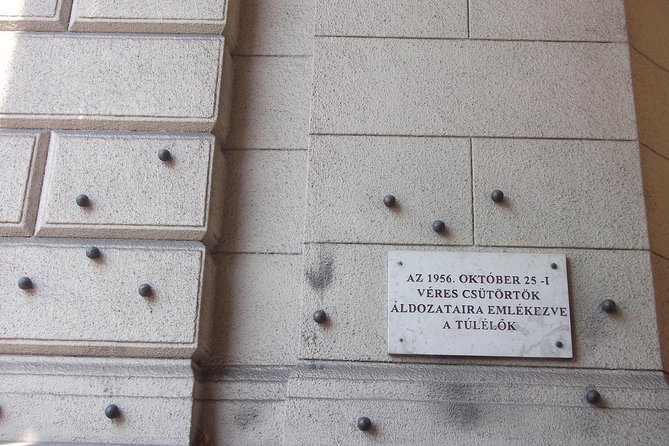
- The Parliament area and Bloody Thursday in 1956
- Bambi Café ending: included coffee and a quieter kind of history
- Price and logistics: what $59.13 buys you
- Who will enjoy this most (and who might not)
- Should you book this Communism in Hungary tour?
- FAQ
- Where is the meeting point and what time does the tour start?
- How long is the tour and what group size should I expect?
- Is the tour offered in English, and do I receive a ticket on my phone?
- Is metro included, and are metro tickets part of the experience?
- Do I need admission tickets for St. Stephen’s Basilica or the Parliament?
- Where does the tour usually end, and is there coffee at the final stop?
Key things to know before you go
- Erzsébet tér’s Stalin square legacy: monuments and stories from the Communist era
- Metro ride is part of the plan: tickets included, so you’re not just walking lines of stone
- Szabadság tér remnants of communism: memorials, statues, embassies, plus a bunker piece you can spot from outside
- 1956’s Bloody Thursday near the Parliament: the Revolution story is tied to the exact area
- St. Stephen’s Basilica outside perspective: you’ll hear how religion was treated under Communism
- Bambi Café with included coffee: a low-key ending where history connects to today
The darker Budapest, told after dusk
- Budapest: Buda Castle District Vampires and Myths Night Tour★ 4.6 · 3,830 reviews
- Buda Castle District Dark History, Legends and Vampire Night Tour★ 4.5 · 1,240 reviews
- BloodThirsty Hungary: Walking tour & Dark Historical Stories★ 4.9 · 633 reviews
- Nightmare in Budapest Interactive Horror Experience★ 5.0 · 390 reviews
Erzsébet tér and the Stalin-square starting line
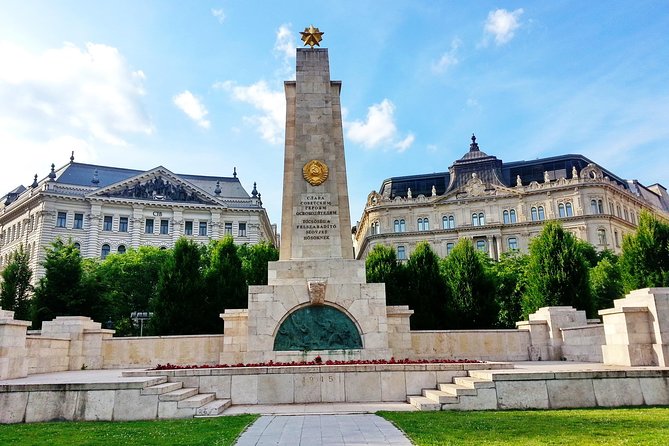
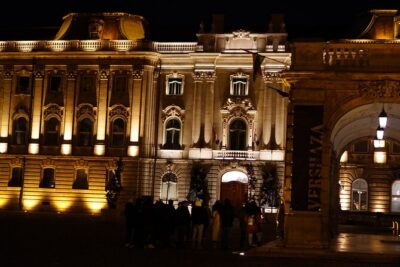
The tour begins at Erzsébet tér, in front of the Kempinski Hotel Corvinus Budapest (Erzsébet tér 7–8). From the very first minutes, the point is not to read plaques like a homework assignment. It’s to see how power wrote itself into the city.
Erzsébet tér is remembered as the former Stalin square, and the guide uses the surrounding monuments and layout to explain what “Communist space” looked like in real life. You’ll get a quick orientation to the area—enough to understand why certain symbols were placed where they are, and why they still feel intense when you’re standing there.
This first stop is short (about 15 minutes). That’s a good thing. It means you get moving while the energy is high, and you don’t burn time before the bigger, more story-heavy sites.
The metro ride: how the tour connects Buda and Pest
Budapest is split by the Danube, and Communism shaped the city across both sides—not just in one tidy district. This tour is designed to cover Buda and Pest, and it uses the metro to help you do that without tiring yourself out.
Metro tickets are included, so you don’t have to budget or puzzle through transit mid-tour. It also makes the timing work smoothly for a roughly 3-hour experience. When your itinerary includes multiple “meaning-rich” locations, transit matters. It keeps the tour focused on the people and events, not on your feet.
Practical note: the tour is designed for most people. Still, wear shoes you’re comfortable walking in. Even if the metro does the heavy lifting, you’ll be moving between points and standing while the guide explains what you’re seeing.
St. Stephen’s Basilica: religion under Communism, mostly from the outside
Next comes St. Stephen’s Basilica (Szent István Bazilika). The key detail here is that you’re not touring inside. You’ll walk by it and see it from the outside while the guide talks about the churches and religious life during Communism.
This matters because religion under Communism wasn’t just about beliefs. It was about control, negotiation, and survival. The guide often brings in family stories to make the system feel human. In the experiences I’ve heard, you may get examples like how religious communities learned to navigate official pressure—sometimes through practical arrangements and payments that kept institutions functioning under the state’s watch.
Because admission is not included for this stop, plan on exterior viewing as part of the tour design. If you want the inside experience, you’ll need to arrange that separately on your own time.
Szabadság tér: the memorial world, statues, embassies, and a bunker piece
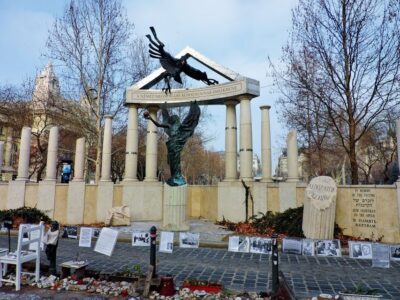
Szabadság tér is one of the tour’s most absorbing stretches. You’ll spend around 45 minutes here, which is long enough to really notice details you’d normally walk right past.
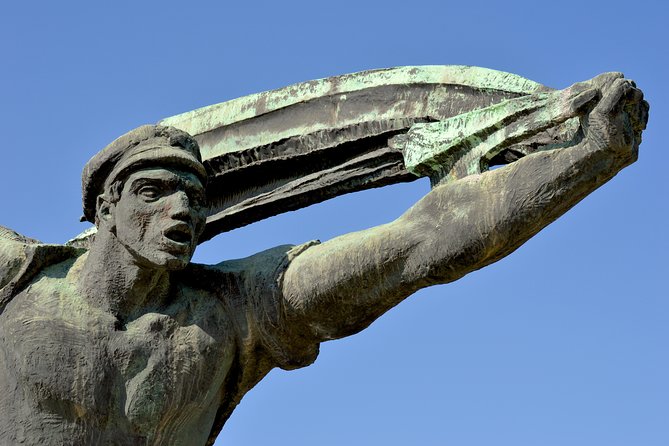
At Szabadság tér, the guide points out remnants of Communism through memorials, statues, and even nearby embassies. That mix is important. It shows how eras layer on top of each other: symbols of the old regime sit next to what came after.
You’ll also hear about a part of a bunker you can see from outside. That’s the kind of Cold War detail that turns “history” into something physical. Not a museum case. Not a lecture slide. Instead, you’re standing close to the leftover structure and hearing why it existed and what it meant for daily life.
If you like when a city explains itself through architecture and street corners, this is the stop. Give yourself time to look down side streets too. The guide’s stories are tied to what you can observe.


The Parliament area and Bloody Thursday in 1956
The tour’s final major historic stop is near the Hungarian Parliament Building, tied to one of the most important events of the 1956 revolution: Bloody Thursday. The guide focuses on what happened on Kossuth square in front of the Parliament area.
Again, admission is not included here. You’ll be learning through context and location—why this area became a flashpoint, and what the revolution looked like when it spilled into the open. Seeing it from outside keeps the tone broad: the guide builds the story around the space rather than around timed entry inside a building.
This is also a good segment for questions. If you’re the type who likes to connect big events to everyday consequences, you’ll usually get a clear, grounded answer here—especially since the tour’s size stays small.
Bambi Café ending: included coffee and a quieter kind of history
The tour typically ends at Bambi Café on the Buda side, close to the center and Margaret bridge. On colder or wet days, the ending point can shift to the Pest side in the center, closer to where you started. Either way, you’ll finish with time to absorb the day.
Coffee is included at the communist-style café stop. This is not just a break. It’s a deliberate pivot from monuments and dates to how people talked about the world they lived in.
In one guide-style approach, the conversation has the feel of comparing past and present. A few guides also mention the café’s long life in Budapest—Bambi opened in 1961 and has stayed fairly close to the way it has always looked. That kind of continuity is a real mood-setter: you’re finishing your tour in a place that’s been around through decades of change.
If you want the best final 10 minutes, don’t rush your coffee. Let the guide’s closing context land, then ask one or two follow-up questions before you head back out.
Price and logistics: what $59.13 buys you
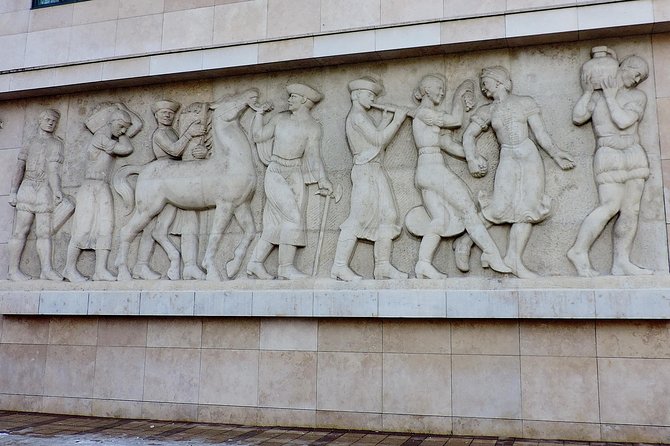
At $59.13 per person for about 3 hours, this tour is priced like an in-depth city history walk, not a casual photo loop. The value comes from three things:
- A cap of 10 travelers, which keeps the pace human and makes questions easier.
- Included metro tickets, so you’re not paying transit costs on top of the tour price.
- Included coffee at the end, plus free admission for Elizabeth Square and Szabadság tér.
Some stops don’t include admission for specific buildings (like St. Stephen’s Basilica and the Parliament), but the tour is built around exterior viewing and guided storytelling at those sites. So you’re not paying entry fees just to understand what the guide is explaining.
English is offered, and the tour uses a mobile ticket. It also runs near public transportation, which helps if you’re building the rest of your day around the end time.
Weather tip: because the ending can shift on cold or wet days, it helps to bring a rain layer or a compact umbrella. Budapest weather loves surprises, and this tour adapts.
Who will enjoy this most (and who might not)
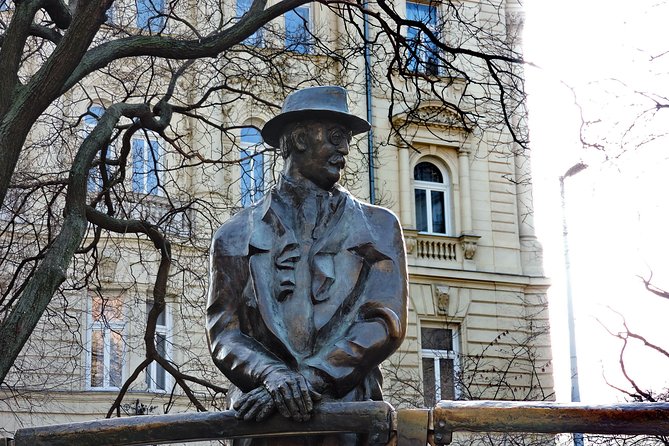
This is a strong fit if you:
- want Communism in Hungary explained through real places in Budapest
- enjoy guides who use family stories to show how politics affected jobs, apartments, church life, and fear
- like a small-group format where you can ask questions without shouting across a crowd
You might choose a different tour if you’re only interested in inside-access sightseeing. This one is focused on outside viewing and the historical meaning behind street-level landmarks. It’s not built around tickets to go inside major buildings.
Should you book this Communism in Hungary tour?
I’d book it if you want a Budapest walk that feels specific, local, and human. The small group size, metro + tickets included, free access at key outdoor stops, and the included coffee ending make it feel like solid value for your afternoon. Plus, the guides’ style—often bringing in personal angles, like what nationalization and forced changes could mean for families—helps the era feel real instead of distant.
If your travel style is mostly monuments on autopilot, you may find it harder to get traction. If your style is questions, context, and noticing what symbols try to do, this is the right kind of tour.
FAQ
Where is the meeting point and what time does the tour start?
You meet at the Kempinski Hotel Corvinus Budapest, Erzsébet tér 7–8, 1051 Hungary. The tour starts at 2:00 pm.
How long is the tour and what group size should I expect?
The tour lasts about 3 hours. It’s capped at a maximum of 10 travelers.
Is the tour offered in English, and do I receive a ticket on my phone?
Yes, it’s offered in English. You’ll receive a mobile ticket, and confirmation is sent at the time of booking.
Is metro included, and are metro tickets part of the experience?
Yes. The tour includes travel by metro, and metro tickets are included.
Do I need admission tickets for St. Stephen’s Basilica or the Parliament?
Admission is not included for St. Stephen’s Basilica and the Hungarian Parliament Building. Elizabeth Square and Szabadság tér have free admission.
Where does the tour usually end, and is there coffee at the final stop?
The tour usually ends at Bambi Café on the Buda side near the center and Margaret bridge. On colder or wet days, it often ends on the Pest side closer to where you begin. The tour includes a communist-style café stop with coffee included.
More Tour Reviews in Budapest




The Darker Side of Budapest


Just Added: More Budapest Reviews
- Sightseeing flight over Budapest
★ 5.0 · 3 reviews - Budapest: Walking Tour with Chimney Cake & Polaroid Photos
★ 5.0 · 3 reviews - Self Guided Tour In Budapest With 100 Captivating Audio Stories
★ 5.0 · 3 reviews - Budapest Art Nouveau Walking Tour
★ 5.0 · 3 reviews - Hungary today: a no-taboo conversation
★ 5.0 · 3 reviews
Dark History & Ghost Tours, compared.
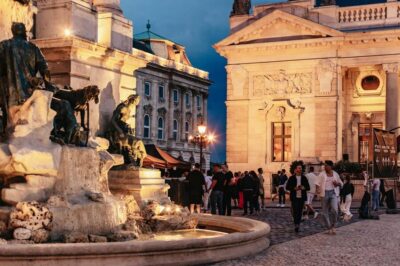 ★ 4.6Buda Castle District Vampires and Myths Night TourFrom $233,830 reviews
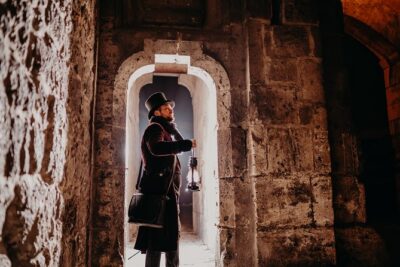 ★ 4.5Buda Castle District Dark History, Legends and Vampire Night TourFrom $211,240 reviews
 ★ 4.9BloodThirsty Hungary: Walking tour & Dark Historical StoriesFrom $21633 reviews
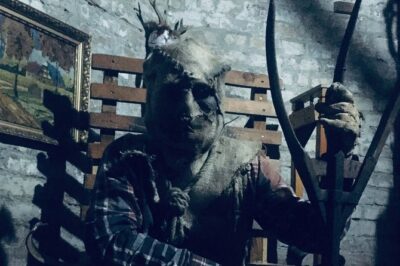 ★ 5.0Nightmare in Budapest Interactive Horror ExperienceFrom $24390 reviews
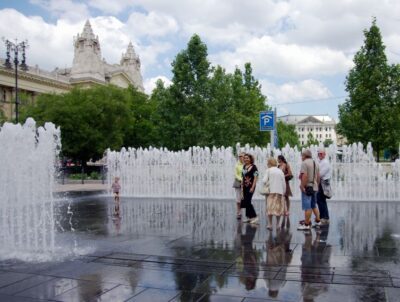 ★ 4.8Communist History Tour with House of Terror OptionFrom $58182 reviews
 ★ 5.0BloodThirsty Hungary – Castle DistrictFrom $2180 reviews
 ★ 4.73-Hour Walking Tour About Communism (Small Group)From $5770 reviews
 ★ 4.5Budapest Hammer & Sickle Communist Times TourFrom $7968 reviews
Browse the lists this tour appears in