
Reviewed · DARK HISTORY & GHOST TOURS
Budapest Hammer & Sickle Communist Times Tour
Budapest has a second timeline. This Budapest Hammer & Sickle Communist Times Tour threads together WWI–WWII aftermath, the 1956 Revolution, Soviet occupation, and the everyday reality behind slogans. You’ll walk to the kind of places where speeches, protests, and marches happened, then step inside a museum built to show how ordinary families lived when travel, food, and paperwork were controlled.
I especially like the way this tour connects big events to daily details. In guides like Anna, the tone stays even-handed, with clear historical context plus family stories—so you get the why, not just the dates. I also like the hands-on feeling of the Retro museum stop, where the point isn’t just to see objects, but to understand what life felt like.
One consideration: it’s a walking tour with some indoor stops, and there’s no audio equipment. If you’re sensitive to hearing issues or you’re visiting on a windy day, you’ll want to keep your group position tight and dress for the weather.
In This Review
- Key Things I’d Book This For
- From Deák Ferenc Square Into Cold War Budapest
- Szent István Bazilika: Where Communism Touched Religion
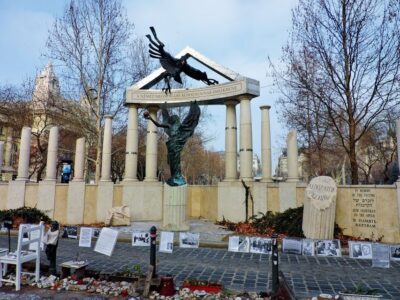
- Szabadság tér Soviet Memorial: The Occupation Story in One Place
- The Hungarian Parliament Building Square: Where 1956 Ignited
- In memoriam 1956 (October 25): Archive Footage and What It Felt Like
- Imre Nagy and October 23 Remembrance: A Leader’s Story
- WWI–WWII, the Iron Curtain, and the Holocaust Memorial Stop
- Budapest Retro Interactive Museum: Everyday Life Under Big Brother
- Pace, Weather, and Group Size: What to Plan for
- Coffee or Tea Break: The Small Included Reset
- Price and Value: Is $79.65 Worth It?
- Who This Tour Fits Best (and Who Might Skip It)
- Should You Book the Budapest Hammer & Sickle Tour?
- FAQ
- How long is the Budapest Hammer & Sickle Communist Times Tour?
- What time does the tour start?
- Where do I meet the guide?
- Where does the tour end?
- Is the tour offered in English?
- Are museum or monument tickets included?
- Do I need headphones or an audio device?
- Is the tour outside or inside?
- Is it appropriate for children?
- Can I cancel and get a refund?
Key Things I’d Book This For
- A small group (max 10) for easier questions and better pacing
- 1956 landmarks tied to protests, speeches, marches, and the Soviet invasion
- Religious life under communism at Szent István (churches affected by the state)
- Imre Nagy context including his execution and the significance of his reburial
- Budapest Retro Interactive Museum focused on how families handled everyday life
The darker Budapest, told after dusk
- Budapest: Buda Castle District Vampires and Myths Night Tour★ 4.6 · 3,830 reviews
- Buda Castle District Dark History, Legends and Vampire Night Tour★ 4.5 · 1,240 reviews
- BloodThirsty Hungary: Walking tour & Dark Historical Stories★ 4.9 · 633 reviews
- Nightmare in Budapest Interactive Horror Experience★ 5.0 · 390 reviews
From Deák Ferenc Square Into Cold War Budapest
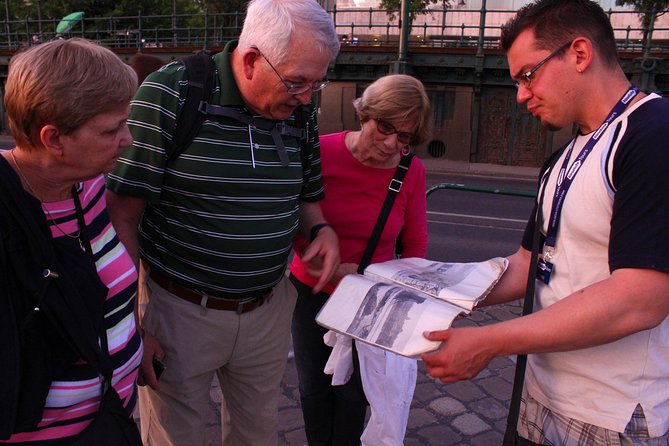
This tour starts in downtown, at the Lutheran Church area near Deák Ferenc tér. The timing matters: it’s set for 3:00 pm, which works well if you want a history-heavy afternoon without cutting into your morning sightseeing.
Right from the first moments, the guide frames Hungary’s modern story in a way that clicks. You start with the wider picture—WWI and WWII consequences, then how the communist government and Soviet influence reshaped the country. From there, the tour narrows into 1956, when Hungary’s quest for freedom boiled over.
What makes this experience useful for your whole trip is that it gives you a lens. Once you’ve heard how systems controlled travel, paperwork, and everyday choices, you’ll notice those themes in other parts of Budapest. It’s not just an educational walk; it helps you read the city more clearly.
Szent István Bazilika: Where Communism Touched Religion
The first major stop is Szent István Bazilika. Even though it’s known for its stunning church architecture, here the focus is different: you’ll learn how communism affected religious life and how different churches operated.
This is one of those stops that can be easy to skim on a standard sightseeing day. Not here. The guide puts the church into the political picture—what the state expected, what institutions could and couldn’t do, and why religion mattered under “big brother.” If you care about how governments shape culture, this part is especially strong.
Practical note: the basilica admission isn’t included, so if you want the inside visit, plan for an extra entry fee. Even if you’re mostly there for the conversation, it’s worth budgeting a little time.
Szabadság tér Soviet Memorial: The Occupation Story in One Place
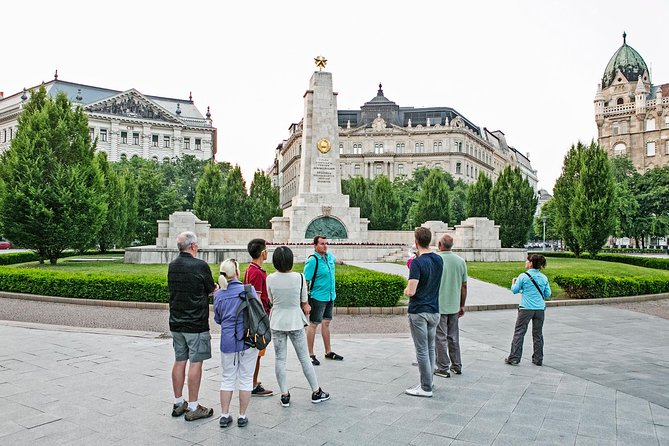
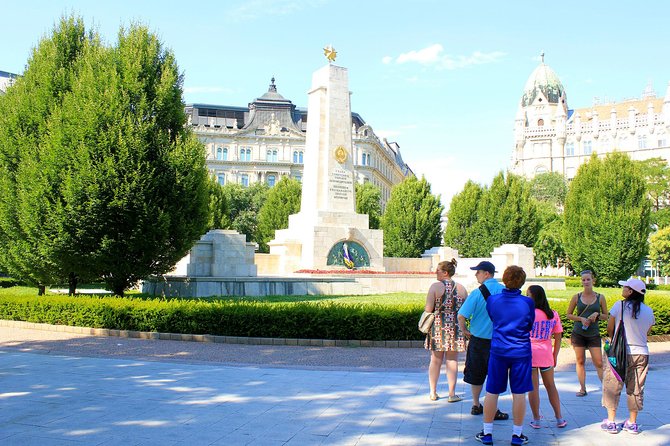
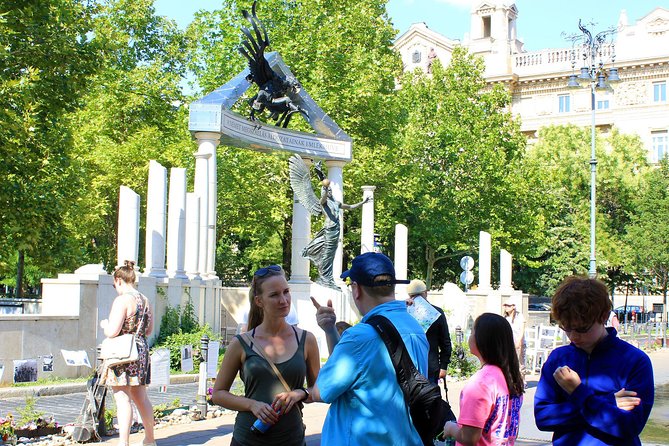
Next you’re at Szabadság tér for the Soviet Memorial. This is one of the tour stops that turns “history book” into “place you can stand in.”
You’ll get the story of the end of WWII and the shift from war to occupation—then the part that people remember least until it’s explained clearly: the communist takeover process. The guide explains how the Communist Party seized power, not just as an abstract political event, but as something that altered daily life for real families.
This stop also helps you understand why 1956 wasn’t a random uprising. It grew out of years of control and pressure. You’ll hear about speeches, protests, marches, and how people moved through fear and resistance in public spaces.
Good thing: this stop is free. If you’re budget-conscious, it’s a straightforward win.
The Hungarian Parliament Building Square: Where 1956 Ignited
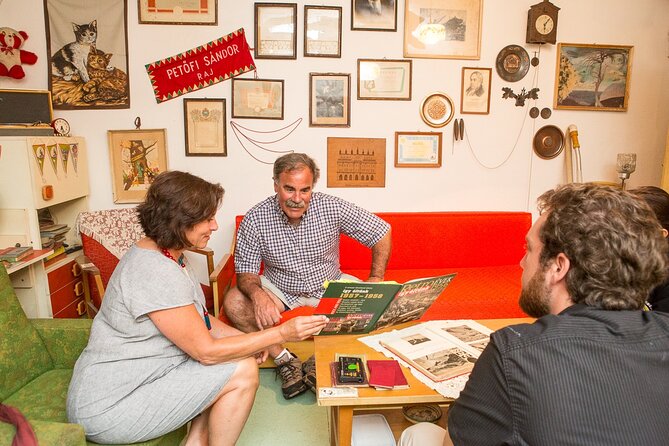
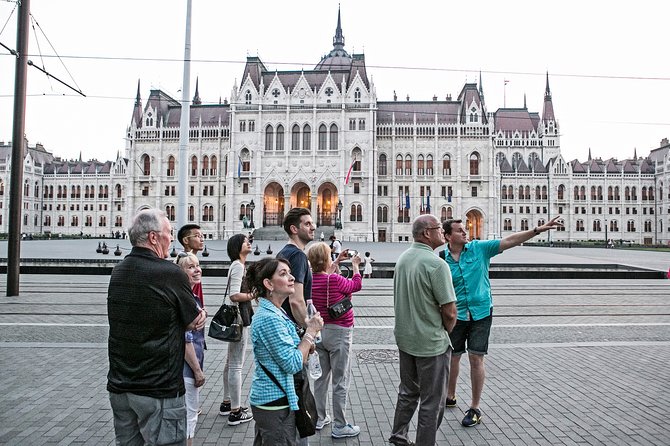
The square in front of Hungary’s Parliament building takes center stage in the 1956 story. The tour explains how the space mattered during the first days of the Revolution—why it turned into a focal point, and how the leadership handled events as they escalated.
This is also where the tour gives you a clean link between people and institutions. You don’t just hear that shots were fired—you learn why that moment mattered and how Hungary’s political tension reached a tipping point. If you like historical causality (the chain of events, not just the events), you’ll appreciate this section.
The Parliament stop is not included for admission, so plan for entry costs if you want to go inside. The exterior area is still meaningful, but budget for the ticket if your interest runs strong.


In memoriam 1956 (October 25): Archive Footage and What It Felt Like
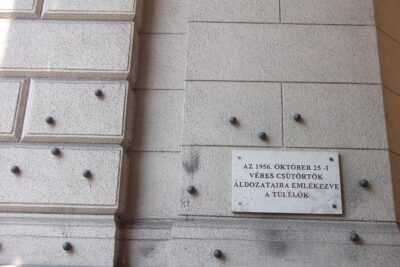
Then you move to In memoriam 1956. On October 25, 1956, Soviet tanks and military authorities fired into a crowd gathering during the second day of the uprising. This isn’t presented like a lecture you can walk away from. The memorial and exhibition use archive footage and recollections, which tends to make the history land in your body, not just your head.
What I like here is the emotional clarity. The guide ties the timeline together, so you don’t feel lost in dates. You also get a sense of how fast public hope could turn into danger.
This stop is free, so it’s a high-value moment. Even if you’re not the type who reads every panel, the guide’s context makes the exhibition easier to follow.
Imre Nagy and October 23 Remembrance: A Leader’s Story
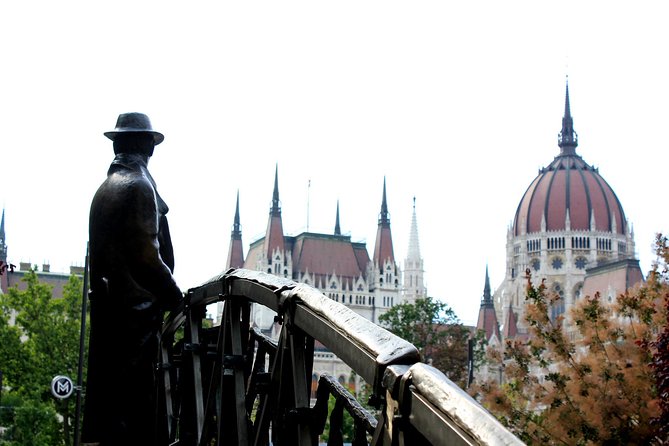
The tour includes a visit to the monument for Imre Nagy. Nagy is one of the key figures of 1956. You’ll learn why he became central to the Revolution, what happened after Soviet leaders moved against Hungarian autonomy, and the brutal outcome: he was executed for treason.
Then the tour shifts from his death to something less grim but equally important—the significance of his reburial as a turning-point moment in Hungary’s change of regime. That element matters because it shows how history doesn’t end when violence ends. Memory itself becomes part of political change.
This stop is free, and it’s also one of the easiest to connect to modern-day remembrance. If you’re visiting around October 23, you’ll likely see how public commemoration is woven into the city’s rhythm, though the tour content covers the core story regardless.
WWI–WWII, the Iron Curtain, and the Holocaust Memorial Stop
The tour doesn’t only focus on 1956. It includes a WWII overview and includes a visit to Shoes on the Danube Bank Holocaust memorial.
I like that this reminder is part of the walk. Communism and the Cold War are heavy subjects, but the Holocaust memorial changes the emotional gear. It grounds the broader European story in what mass persecution looked like and how it left permanent marks on the city.
At the same time, the tour keeps coming back to the Iron Curtain theme: how Hungary’s position in the political map shaped daily choices. You’ll hear about life behind the curtain—how families lived, how travel could be difficult, and how people navigated rules that weren’t written for ordinary needs.
Budapest Retro Interactive Museum: Everyday Life Under Big Brother
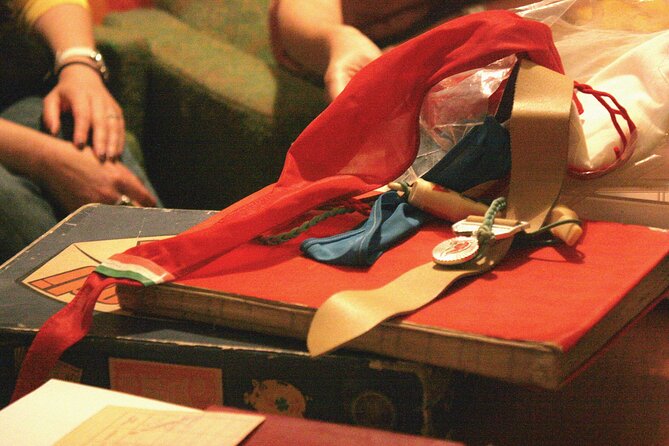
The tour includes entry to the Budapest Retro Interactive Museum, and this is where the tour earns its name. The museum isn’t just a static display of old items. It’s built to help you picture a household where daily life came with limits.
The guide walks you through the exhibition, explaining stories behind artifacts. You’ll learn about:
- how children were brought up
- how families lived and arranged home routines
- how travel worked (and didn’t work) under restrictions
- how long it could take to get a passport
- details like black markets and what people called banana lines
In a good way, this stop puts socialism on the ground. It turns policy into experience: scarcity, paperwork, rationing logic, and the coping strategies families used to stay afloat. Several guides highlighted how they bring the era to life with personal and family stories, and the museum format supports that approach.
If you’ve been to museums that feel like you’re walking past glass cases, this one plays differently. It’s more like stepping into a time period that explains itself through objects, explanations, and guided storytelling.
Pace, Weather, and Group Size: What to Plan for
This experience runs about 2 hours 30 minutes. That’s a solid length for a downtown walk plus a museum stop. It’s not a marathon, but you will be on your feet.
A few things to plan around:
- All-weather tour: the itinerary continues in rain or cold, so dress for comfort.
- No audio equipment: you’ll rely on your guide and the natural acoustics around you.
- Small groups: the cap is 10 travelers, and the tour can feel extra personal when groups are light.
Also, it’s not recommended under age 14. The material covers occupation and political violence, and the tour keeps a serious tone even when the day includes lighter moments.
Coffee or Tea Break: The Small Included Reset
You’re also included coffee or tea or a soft drink. It’s a small thing, but it helps on a tour like this. You’re dealing with heavy topics. A warm drink or a pause keeps the conversation grounded and lets you ask questions without feeling rushed.
Price and Value: Is $79.65 Worth It?
At $79.65 per person, this isn’t the cheapest walk in Budapest. But it also isn’t priced like a big luxury production. The value comes from the combination:
- A guided walk to politically important sites tied to the Revolution of 1956
- An interactive museum stop that focuses on everyday life, not just dates
- A tight group limit, typically 10 or fewer, which makes questions easier
- English guidance plus included refreshments
If you’re the type who usually skips “history talks” because they feel stiff, this is designed to feel human. Multiple guides were praised for clear, neutral historical context paired with everyday detail. That balance is exactly what helps you get more from Budapest later—especially if this is one of your first days in town.
There is one cost you should expect on your end: admission tickets aren’t included for Szent István Bazilika and the Parliament stop. Still, several memorial stops in the route are free, so you’re not paying for everything.
Overall, I’d call it good value if you want a structured story that connects the big events to ordinary life.
Who This Tour Fits Best (and Who Might Skip It)
This works best if you want:
- a guided walkthrough of Hungary’s path through WWI–WWII to the 1956 Revolution
- an explanation of Soviet occupation and how power shifted
- a museum stop focused on real family routines—passports, travel trouble, black markets
You might skip it if:
- you hate walking tours and want only one museum visit
- you’re very budget-tight and don’t want to plan for extra admissions at basilica/Parliament
- you dislike topics connected to political violence and oppression
If you do book it, it’s a strong choice early in your Budapest stay. You’ll get the political “key” that makes other sights make more sense.
Should You Book the Budapest Hammer & Sickle Tour?
If you want a meaningful afternoon with a guide who can connect the street-level locations to the political timeline, I’d book this. The tour’s biggest strength is that it doesn’t stay abstract. It moves from major landmarks—Parliament, Imre Nagy, Soviet memorial, and the 1956 memorial exhibition—to the Retro museum where everyday life under communism is explained through objects.
My advice: bring a curious mindset, expect questions (and answer time), and dress for weather. If you can handle heavy history, this is one of the better ways to understand modern Budapest without turning it into a textbook.
FAQ
How long is the Budapest Hammer & Sickle Communist Times Tour?
It runs about 2 hours 30 minutes.
What time does the tour start?
The start time is 3:00 pm.
Where do I meet the guide?
You meet at the Lutheran Church of Ferenc Deák Square area, Deák Ferenc tér 4, 1052 Budapest.
Where does the tour end?
It ends near Liberty Square, at Szabadság tér 1, 1054 Budapest.
Is the tour offered in English?
Yes, it’s offered in English.
Are museum or monument tickets included?
Entry to the Budapest Retro Interactive Museum is included. Admission tickets for Szent István Bazilika and the Parliament Building stop are not included. The Soviet Memorial and the In memoriam 1956 and Imre Nagy memorial stops are listed as free.
Do I need headphones or an audio device?
No audio equipment is available on this tour.
Is the tour outside or inside?
It’s a walking tour with multiple stops, plus an exhibition/museum entry. It continues in all weather conditions.
Is it appropriate for children?
It is not recommended under age 14.
Can I cancel and get a refund?
Free cancellation is available up to 24 hours in advance for a full refund.
More Tours in Budapest



More Tour Reviews in Budapest




The Darker Side of Budapest



Just Added: More Budapest Reviews
- Sightseeing flight over Budapest
★ 5.0 · 3 reviews - Budapest: Walking Tour with Chimney Cake & Polaroid Photos
★ 5.0 · 3 reviews - Self Guided Tour In Budapest With 100 Captivating Audio Stories
★ 5.0 · 3 reviews - Budapest Art Nouveau Walking Tour
★ 5.0 · 3 reviews - Hungary today: a no-taboo conversation
★ 5.0 · 3 reviews
Dark History & Ghost Tours, compared.
 ★ 4.6Buda Castle District Vampires and Myths Night TourFrom $233,830 reviews
 ★ 4.5Buda Castle District Dark History, Legends and Vampire Night TourFrom $211,240 reviews
 ★ 4.9BloodThirsty Hungary: Walking tour & Dark Historical StoriesFrom $21633 reviews
 ★ 5.0Nightmare in Budapest Interactive Horror ExperienceFrom $24390 reviews
 ★ 4.8Communist History Tour with House of Terror OptionFrom $58182 reviews
 ★ 5.0BloodThirsty Hungary – Castle DistrictFrom $2180 reviews
 ★ 5.0Communism in Hungary with a HistorianFrom $5970 reviews
 ★ 4.73-Hour Walking Tour About Communism (Small Group)From $5770 reviews
Browse the lists this tour appears in