
Reviewed · DARK HISTORY & GHOST TOURS
Communist Budapest Walking Tour
Budapest tells its Cold War story on foot. This 3-hour Communist history walking tour strings together the places that shaped postwar power in the city—Parliament-area 1956 monuments, Freedom Square memorials, and the former People’s Stadium—so you’re not just looking, you’re learning what the stones are trying to say.
Two things I really like: first, the guides are local historians, and they turn facts into a story you can follow street by street. Second, the pace is built for conversation—you get time to ask questions and connect the dots between the Hungarian revolt of 1956 and the wider Cold War game.
One thing to consider: this isn’t a relaxed sightseeing stroll. If you mainly want scenic photo stops and general vibes, the tour leans more political and historical, so come ready to pay attention and take notes.
In This Review
- Quick hits before you go
- Why Communist Budapest works best as a walking tour
- Parliament area to Liberty Square: how to read 1956 and the Cold War in stone
- Freedom Square context: your Reagan-and-Soviet moment
- House of Terror: why ending outside is a smart choice
- Puskás Stadium area: socialist realism and the politics of sports
- Bem József Square and the 1956 thread that runs the whole walk
- Walking, transit, and what to bring for a 3-hour loop
- Price and value: what $126.50 buys you
- Who this Communist Budapest tour suits best
- Should you book this Communist Budapest tour?
- FAQ
- How long is the Communist Budapest walking tour?
- Where does the tour start?
- Where does the tour end?
- What language is the tour offered in?
- How big is the group?
- Is the House of Terror Museum ticket included?
- Are other sites free to visit during the tour?
- Will I need public transport tickets?
- What departure options are available?
- What is the cancellation policy?
Quick hits before you go
- Small-group feel (up to 8): better Q&A, more personal explanations, fewer people blocking the view.
- Historian-led, not lecture-only: you walk between sites and talk through what each one meant.
- Freedom Square + Parliament area: you’ll connect 1956, Soviet presence, and Cold War symbolism in one flow.
- People’s Stadium to Puskás Stadium: socialist realist statues and propaganda details are part of the walk, not an afterthought.
- Finish outside the House of Terror: you can head in afterward if you want the heavier material, but it’s not required for the tour.
Budapest at street level, more routes on foot
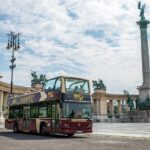
- Big Bus Budapest Hop-On Hop-Off Bus and Walking Tour★ 3.5 · 2,206 reviews
- Budapest: Buda Castle District Walking Tour★ 4.6 · 2,108 reviews
- 3-Hour Orientation Walking Tour of Buda and Pest★ 4.8 · 1,834 reviews
- Budapest Historical Sightseeing – Free Walking Tour★ 5.0 · 1,302 reviews
Why Communist Budapest works best as a walking tour
Budapest is one of those cities where power leaves fingerprints everywhere—on facades, statues, street layouts, and what governments chose to monumentalize. Doing this as a walking tour matters because you get to see the scale of messages: a monument isn’t just an object, it’s a signal placed in public space on purpose.
The route also helps you understand the timeline. You start near the political heart of Hungary, then move through Cold War-era symbolism, then end at the site most people associate with the communist secret police. It’s a smart arc for your brain: revolt and authority, Soviet influence, propaganda culture, then repression.
And the small group size—capped at 8, with the experience described as limited to six—keeps the discussion practical. You’re not lost in a crowd, and your questions about how ordinary people lived under the system make sense in context.
Parliament area to Liberty Square: how to read 1956 and the Cold War in stone
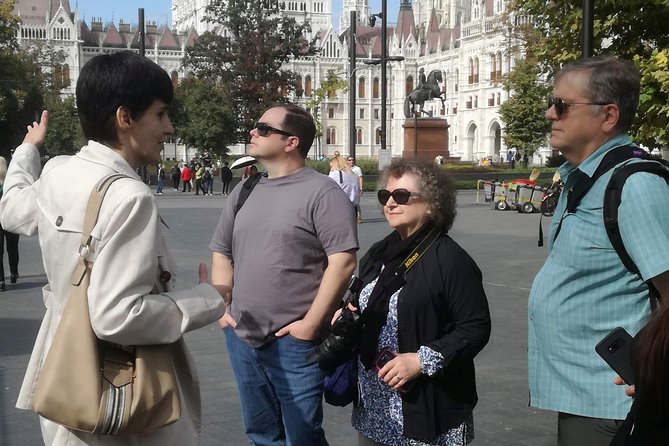
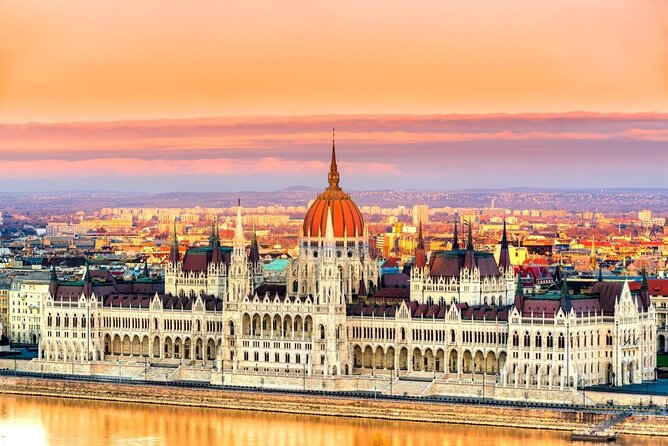
The tour begins with a subway ride to the Kossuth Square area in front of the Hungarian Parliament Building. Even if you’ve seen photos of Parliament before, the first payoff here is what you don’t get from a postcard: the specific monuments tied to the 1956 revolution. The guide helps you look past “cool architecture” and notice the political language built into the memorials.
From there, you keep moving toward Liberty Square. This part is where the Cold War becomes more than a term from a textbook. You discuss what was happening in the wider East-West standoff while pointing out Cold War reference points such as:
- the US Embassy area
- the monument to the Soviet Army
- a statue of Ronald Reagan
- an atomic shelter detail
That Reagan statue can feel surprising at first—why is a US president in the middle of the story of a communist regime? The point is the Hungarian perspective on how pressure, diplomacy, and resistance contributed to the collapse of the Iron Curtain. The guide’s job is to help you understand the symbolism without turning it into a one-note political rant.
Time at this stop is about 25 minutes, and admission here is free, so you spend your effort on interpretation rather than paperwork.
Freedom Square context: your Reagan-and-Soviet moment
You’ll hit a cluster of messages that often look like just “big statues” if you’re walking on your own. But with a historian guiding you, the same objects start to behave like a timeline.
The Soviet War Memorial on Freedom Square is one of those anchors. You’re not just learning that Soviet troops were present; you’re learning how the regime’s worldview was broadcast in public. Then you get the counterpoint with the Ronald Reagan statue, tied to the idea of obligation for his role in undermining the Iron Curtain.
This is also where the guide’s tone matters. A good local historian doesn’t treat the topic like a debate club. They explain motivations, propaganda goals, and what it meant for people on the ground. It’s the difference between knowing names and understanding the system those names served.
If you like when history has clear cause-and-effect, this section delivers. If you hate politics, try to focus on the question: what did each side want people to believe?
House of Terror: why ending outside is a smart choice
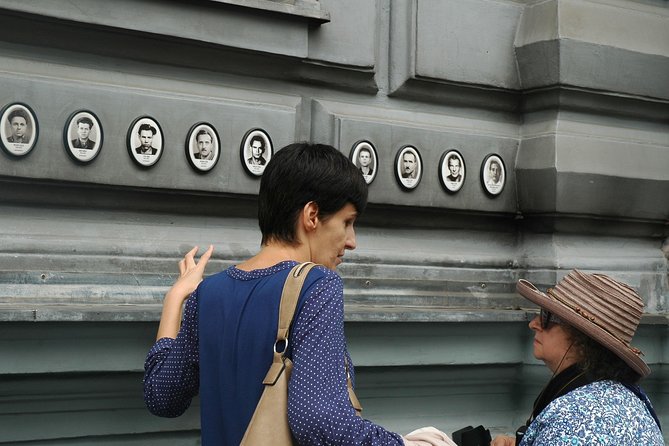
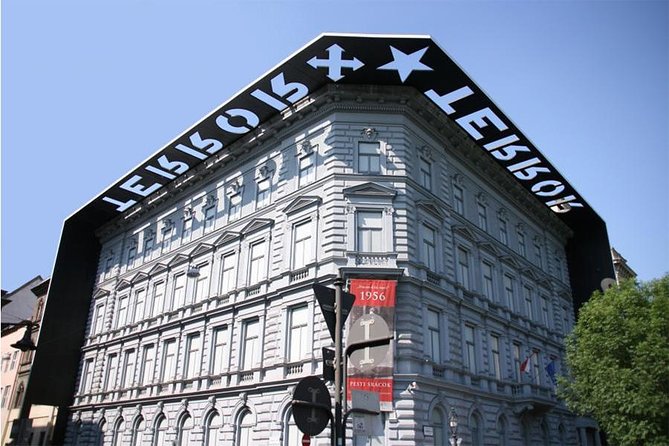
The tour includes a short stop outside the House of Terror Museum. The building itself is the message—it’s described as the imposing former headquarters of the communist secret services. Even without stepping inside during the main tour time, the location gives you an immediate sense of threat and control.
There’s also a Berlin Wall slab in front, which helps visually connect Hungary’s experience to wider communist-era structures. It’s the kind of detail you might miss if you were just passing by, but it sets the tone fast.
Important practical note: the tour does not include admission to the museum exhibit. You get about 15 minutes here to see the exterior and absorb the context. If you want the full story inside, you can choose to go next.
This is a good way to manage emotional load. You get the history framework first, then you decide how far you want to go. Some people are grateful for that pacing; others will wish the exhibit was included. Either way, you’re able to end your tour at a place that makes sense.
The darker Budapest, told after dusk
Puskás Stadium area: socialist realism and the politics of sports
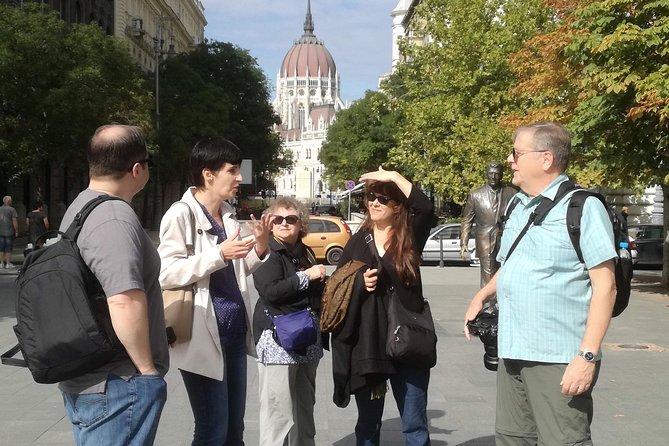
Next you head to the former People’s Stadium, now Puskás Soccer Stadium. Sports stadiums might sound like a random detour, but in communist states they were often used to shape identity and show off national strength.
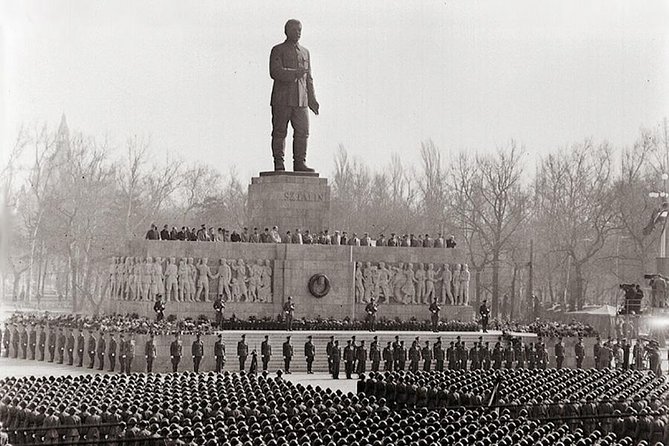
You’ll see classic socialist realist statues still standing. That’s key. These aren’t just decorative bits; they’re part of the propaganda style the regime favored—big forms, clear heroes, and an artwork vocabulary meant to tell you who matters and what the state wants you to admire.
You also get about 20 minutes at this stop, and admission is free. This is a nice moment to breathe and reset your brain after heavier political symbolism. But don’t treat it like a break from politics. The guide ties the imagery back to how the system sold itself as confident, organized, and forever.
If you enjoy art-as-history, you’ll likely like this part more than you expect.
Bem József Square and the 1956 thread that runs the whole walk
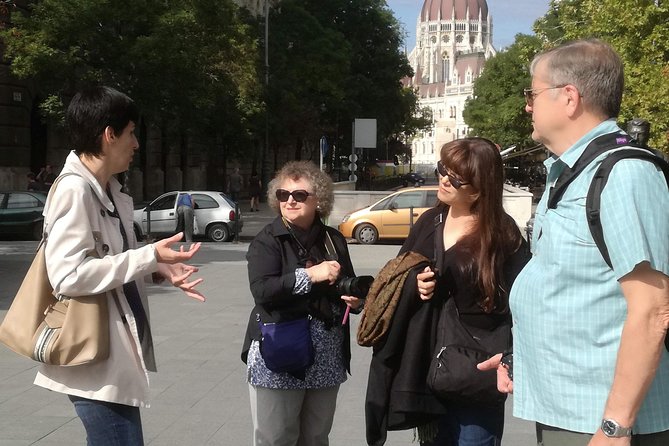
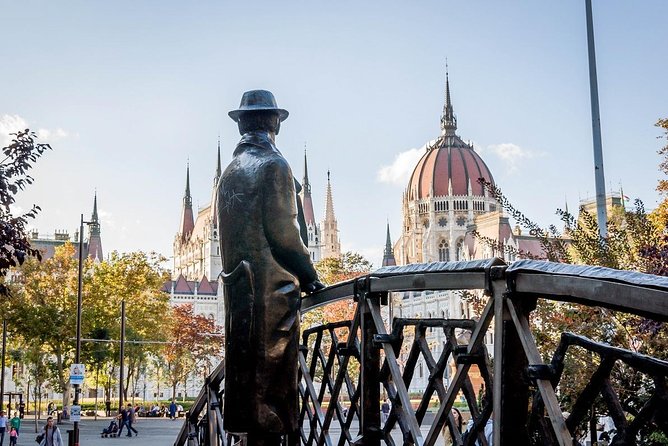
The last main segment is around Kossuth Lajos Square and Bem József Square. This is where the story lands back on the uprising. You learn that this square was where the first big demonstration of the 1956 uprising started.
That detail changes how you see the space. A public square isn’t just “a meeting point.” In Budapest’s communist-era history, it’s where people tested power—sometimes at great cost.
There’s also a practical, everyday-feeling touch: a coffeehouse on the square that has retained its original interior from the 1960s. The guide points it out as a reminder that the communist era wasn’t only about monuments and museums. It showed up in daily life too—where people met, what they drank, and how interiors were maintained.
This stop gets about 25 minutes and admission is free.
Walking, transit, and what to bring for a 3-hour loop
This tour is about 3 hours total and includes subway travel at the start. After that, it’s a walking loop through central Budapest sights.
So, practical stuff:
- Wear good walking shoes. One of the strongest pieces of advice from past participants is exactly that.
- Bring water. You’ll be on your feet, and the route includes outdoor memorial and statue viewing.
- Plan to pay attention. The tour rewards curiosity, and the guide answers questions with real detail.
You’re also not on your own for transit money. If you don’t already have a visitor pass, the guide can help you figure out Budapest Tram and Metro tickets before you go.
The tour is in English, and it’s described as “most travelers can participate.” Since it’s a walking-heavy experience, you’ll want to be comfortable with a few hours of walking and standing around at monuments.
Price and value: what $126.50 buys you
At $126.50 per person for roughly 3 hours, this isn’t a bargain-basement tour. But it can feel like good value if you want to understand what you’re seeing instead of collecting isolated facts.
Here’s where the value comes from:
- You’re paying for a guided walk in the company of a historian, not a phone app.
- The group stays small (up to 8), which makes the guidance more personal.
- Several sites on the route are free to access as part of the stops, so you’re mostly paying for interpretation and pacing.
- The ending position at the House of Terror area gives you an easy next step if you want to go further.
You still have one major cost-like factor: the House of Terror Museum exhibit isn’t included. The tour is designed so you can choose how heavy you want to go after the exterior context.
If your travel style is museum-first and lecture-second, this might feel like the perfect middle ground. If you’re only chasing photos, you might feel the price more than the content.
Who this Communist Budapest tour suits best
This is best for you if:
- you like history with a clear narrative, especially Cold War-era politics
- you enjoy asking questions and getting detailed answers
- you want your Budapest time to feel anchored in real events, not just landmarks
- you appreciate small-group guidance (the max group size helps with that)
This may not be ideal if:
- you want mostly sightseeing and minimal discussion
- you’re not interested in 1956, Soviet influence, or how regimes used public space
- you’re emotionally sensitive to repression-themed topics, even though the tour’s main timing ends outside the museum
One more note: the tour has been led by local historians such as András and Kata, and the common thread is strong discussion. If you like a guide who can talk, not just point, you’re in the right place.
Should you book this Communist Budapest tour?
I’d book it if you want Budapest to make sense through its political layers. The route is tight: Parliament-area 1956 monuments, Soviet-era symbolism on Liberty/Freedom Square, propaganda imagery around the former People’s Stadium, and then a purposeful ending near the House of Terror. It’s a smart way to get your bearings fast.
I’d skip or rethink it if you’d rather spend your time on purely scenic walks with little historical framing. This tour asks you to work a little—mentally. But the trade is worth it when the guide makes the “why” click.
If you’re deciding right now, this is the simplest test: do you want to understand how the Cold War played out in Budapest’s streets? If yes, this tour is a strong fit.
FAQ
How long is the Communist Budapest walking tour?
It runs about 3 hours.
Where does the tour start?
The start point is Frankel Leó út 2-4, 1027 Hungary.
Where does the tour end?
The tour concludes outside the House of Terror Museum at Andrássy út 60, 1062 Hungary.
What language is the tour offered in?
The tour is offered in English.
How big is the group?
It’s a small-group experience limited to six, with a maximum of 8 travelers.
Is the House of Terror Museum ticket included?
No. The tour stops outside the House of Terror, and admission to the exhibit is not included.
Are other sites free to visit during the tour?
The tour includes stops where the site access listed is free, such as the Parliament area stop and the Puskás Stadium area stop. (The House of Terror exhibit is the one called out as not included.)
Will I need public transport tickets?
Your guide can help you buy Budapest Tram and Metro tickets if you don’t already have a visitor pass.
What departure options are available?
You can choose a morning or afternoon departure.
What is the cancellation policy?
You can cancel for a full refund up to 24 hours before the experience starts. If you cancel less than 24 hours before, the amount paid won’t be refunded.
More Tour Reviews in Budapest




The Darker Side of Budapest




More of Budapest, Step by Step


Just Added: More Budapest Reviews
- Sightseeing flight over Budapest
★ 5.0 · 3 reviews - Budapest: Walking Tour with Chimney Cake & Polaroid Photos
★ 5.0 · 3 reviews - Self Guided Tour In Budapest With 100 Captivating Audio Stories
★ 5.0 · 3 reviews - Budapest Art Nouveau Walking Tour
★ 5.0 · 3 reviews - Hungary today: a no-taboo conversation
★ 5.0 · 3 reviews
Dark History & Ghost Tours, compared.
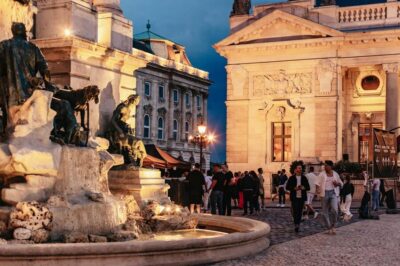 ★ 4.6Buda Castle District Vampires and Myths Night TourFrom $233,830 reviews
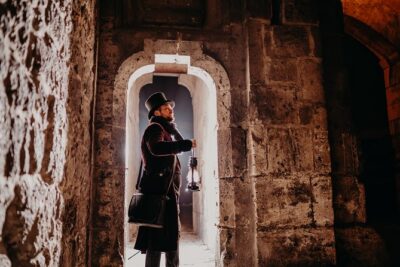 ★ 4.5Buda Castle District Dark History, Legends and Vampire Night TourFrom $211,240 reviews
 ★ 4.9BloodThirsty Hungary: Walking tour & Dark Historical StoriesFrom $21633 reviews
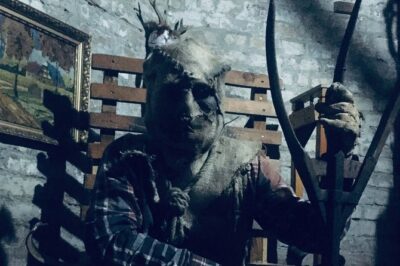 ★ 5.0Nightmare in Budapest Interactive Horror ExperienceFrom $24390 reviews
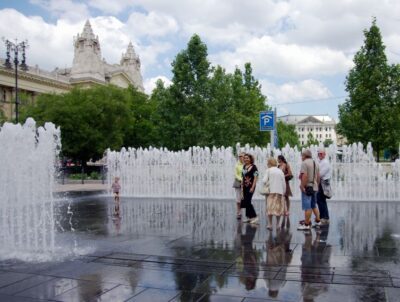 ★ 4.8Communist History Tour with House of Terror OptionFrom $58182 reviews
 ★ 5.0BloodThirsty Hungary – Castle DistrictFrom $2180 reviews
 ★ 5.0Communism in Hungary with a HistorianFrom $5970 reviews
 ★ 4.73-Hour Walking Tour About Communism (Small Group)From $5770 reviews
Browse the lists this tour appears in