
Reviewed · DARK HISTORY & GHOST TOURS
Communist Budapest Walking Tour
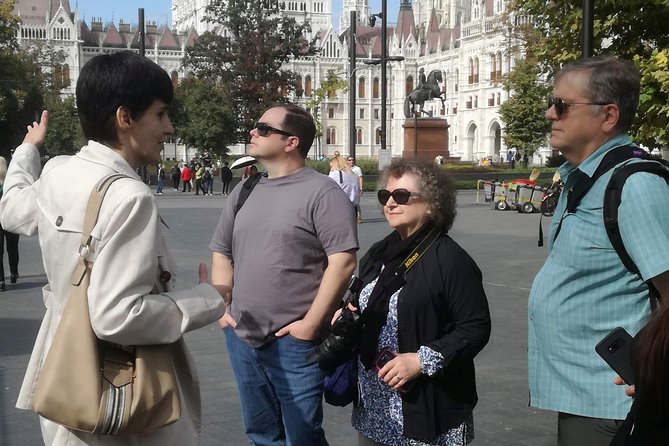
Budapest under communism comes alive on foot. You’ll track how a totalitarian system shaped daily life and public space, starting at Bem József Square and moving through key symbols of the 1956 uprising, including a coffeehouse that kept its original 1960s interior.
What I like most is the balance: big political moments are tied to real textures of life, from housing estates meant to feel modern to public art meant to teach the “right” future. And you’re not stuck with one fixed script, because a historian guide like Andras can adapt the pace and angle if you already know some of the background. One drawback to consider: if you’re already well versed in Hungary after 1968, you may feel the tour leans more on the basics than on deeper follow-on politics.
In This Review
- Key highlights you’ll feel fast
- Walking into 1956: Bem József Square to early protest energy
- Kossuth Square and Parliament’s 1956 monuments: what “memory” looks like in stone
- Freedom Square: Cold War symbolism you can point to
- 1970s housing estates at the city edge: modern comfort with strict limits
- Puskás Stadium and Social Realist statues: propaganda turned into public sculpture
- Dozsa György Street and Stalin-era trolley buses: May Day built into the route
- House of Terror: the cost of communism, right in the secret-services HQ
- Price and value for $123: what you’re paying for
- Should you book this Communist Budapest walking tour?
- FAQ
- How long is the Communist Budapest walking tour?
- Where does the tour meet?
- What languages is the tour offered in?
- Is the tour price $123 per person?
- Are metro and tram tickets included?
- What kind of guide leads the tour?
- What are the cancellation terms?
Key highlights you’ll feel fast
- Bem József Square as the setting of the first large 1956 demonstration
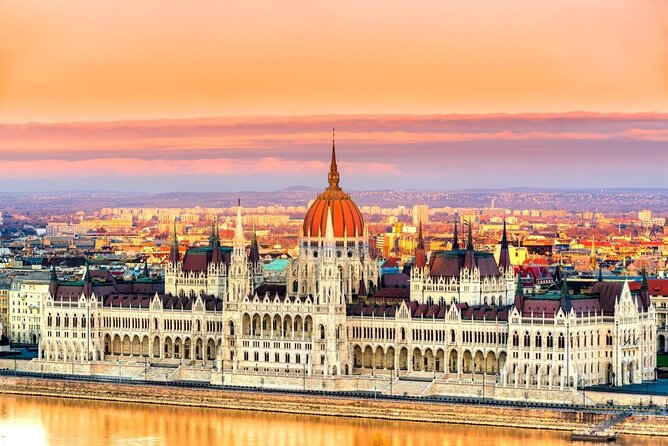
- Kossuth Square and the Parliament area with 1956 revolution monuments
- Freedom Square’s Cold War set-piece: U.S. embassy, Soviet army monument, a Ronald Reagan statue, and a secret atomic shelter entrance
- 1970s edge-of-center housing estates showing how “modern conveniences” changed family life
- Puskás (former People’s) Stadium with classic Social Realist statues of heroic workers, soldiers, and intellectuals
- House of Terror in the secret-services HQ, with a Berlin Wall slab outside
Budapest at street level, more routes on foot
- Big Bus Budapest Hop-On Hop-Off Bus and Walking Tour★ 3.5 · 2,206 reviews
- Budapest: Buda Castle District Walking Tour★ 4.6 · 2,108 reviews
- 3-Hour Orientation Walking Tour of Buda and Pest★ 4.8 · 1,834 reviews
- Budapest Historical Sightseeing – Free Walking Tour★ 5.0 · 1,302 reviews
Walking into 1956: Bem József Square to early protest energy
If you want Budapest to make sense fast, start with the place where momentum begins. This tour starts near Bem József Square, and you’ll learn why it mattered during the first major push of the 1956 uprising. The point isn’t just dates. It’s how crowds, slogans, and public buildings turned into a stage where power had to react.
From there, you’ll get a feel for how the communist era showed up in ordinary routines. One stop includes a coffeehouse that kept its original interior from the 1960s. That detail matters. You see how political life and everyday comfort could coexist in the same city, even when freedom was limited.
Practical tip: wear shoes that forgive long walks. This is a walking tour with some transit connections, and the route is meant to keep moving so you can compare eras while they’re still fresh in your head.
Kossuth Square and Parliament’s 1956 monuments: what “memory” looks like in stone
Next comes a metro ride toward Kossuth Square, right by Hungary’s Parliament area. This is where the city’s political imagination shows up in public space. You’ll stand where important events during the 1956 revolution unfolded and see monuments tied to the clashes—political and armed—that formed the backbone of the uprising.
Here’s the useful part: the tour doesn’t treat these pieces as tourist objects. You get help reading them. Why are some figures emphasized? What symbols are repeated? How does the city frame conflict after the fighting ends?
When I’m advising friends on this kind of history walk, I always say the same thing: monuments are rarely neutral. They’re designed to teach the viewer something—then the guide helps you figure out what that lesson was, and what changed over time.
Freedom Square: Cold War symbolism you can point to
The short walk to Freedom Square is a highlight for a reason. The square works like a compressed Cold War map, with four stone structures you can physically compare: the U.S. embassy, a monument to the Soviet army, a statue of President Ronald Reagan, and the entrance to a secret atomic shelter.
That lineup turns the “Cold War” label into something concrete. You’re not only hearing about East-West rivalry. You’re looking at how it was staged in architecture, monuments, and even the idea that survival might be hidden underground.
If you like historical themes that show up in street-level details—how ideology gets built into cities—this stop delivers. It also sets you up for the next part of the tour, where the story shifts from crisis politics (1956) to the slower, more physical story of daily life under communism.
1970s housing estates at the city edge: modern comfort with strict limits
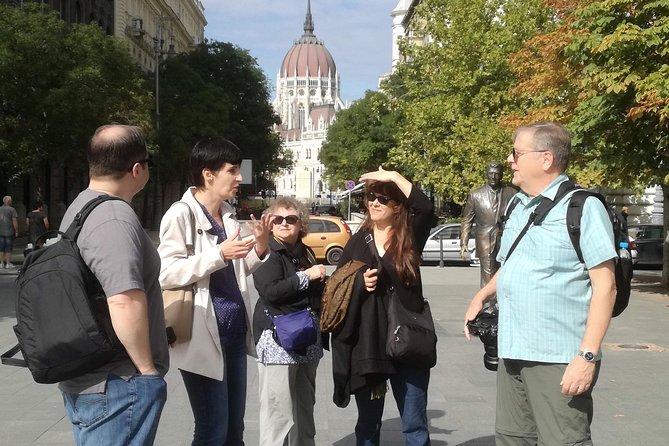
One of the most revealing segments is the metro ride to a 1970s housing estate at the edge of the city center. The blocks can look grey and functional today, but that’s exactly why the explanation is important. When these apartments were allocated, young Hungarian families were excited—because the buildings offered elevators and conveniences that were rare in older housing stock.
In other words, the tour doesn’t only show repression. It also shows trade-offs. Even in a system with heavy control, people could still gain real improvements in how they lived day to day. That tension is the heart of understanding life under authoritarian rule: public restrictions don’t erase private hopes.
What you’ll want to watch for during this stop is contrast. Pay attention to how the area feels compared with central Budapest. The tour asks you to connect design choices with ideology: what a state builds, and what it wants families to believe about the future.
The darker Budapest, told after dusk
Puskás Stadium and Social Realist statues: propaganda turned into public sculpture
Next is the former People’s Stadium, now Puskás Soccer Stadium. It’s one of the places in town where you can see typical Social Realist statues: heroic workers, soldiers, and intellectuals pointing toward a bright future.
This is where you get a practical lesson in visual language. The statues aren’t random art. They’re teaching tools. You’ll learn what these figures were meant to represent and why style mattered. A stern worker or idealized soldier wasn’t just decoration—it was a message about who mattered, who led, and what “progress” should look like.
The guide’s job here is to slow you down enough to really look. If you rush through public sculptures, they blur together. With a historian guide, you’ll notice how bodies, gestures, and themes repeat the same story in different forms.
Dozsa György Street and Stalin-era trolley buses: May Day built into the route
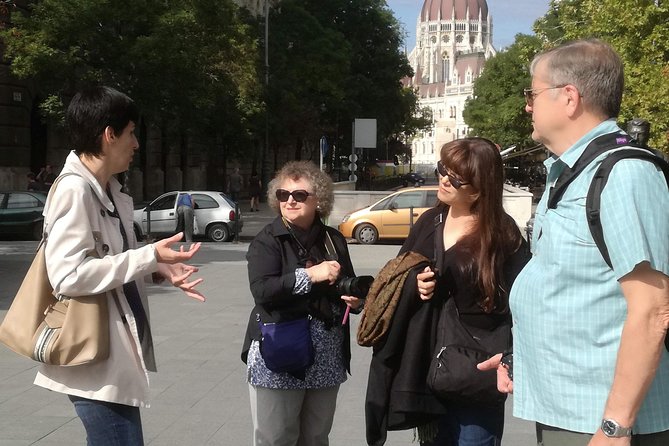
To keep the timeline moving, you’ll take a short ride in one of Stalin’s trolley buses toward Dozsa György Street, a broad boulevard used for May Day parades. This is another “context by movement” moment. When you travel by the same kind of route used for major state events, the city becomes part of the historical performance.
Your guide uses an iPad with old photos to show you the contrast between what you see now and how the city looked back then. That technique works well here, because it’s not only about information. It’s about how memory changes a place. With the photos as a reference, you can line up the skyline and street scale and understand why parades and mass gatherings felt so imposing.
If you’re sensitive to the emotional weight of political history, this segment can feel intense in a quieter way. It’s not drama for show. It’s the reality of how public space was used to demonstrate control and unity.
House of Terror: the cost of communism, right in the secret-services HQ
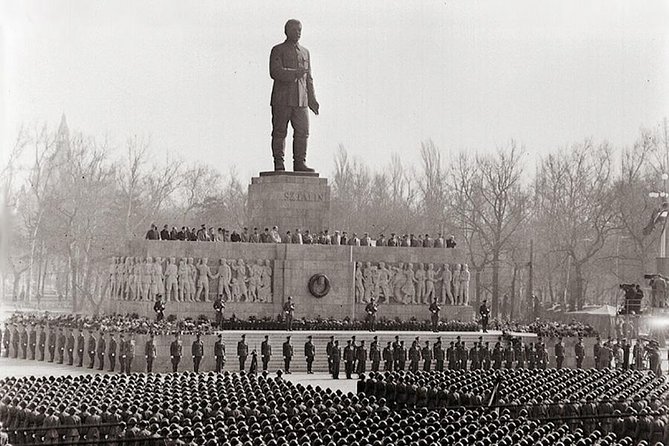
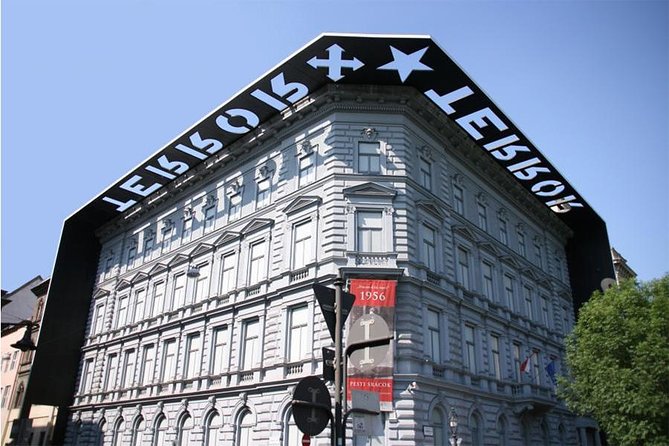
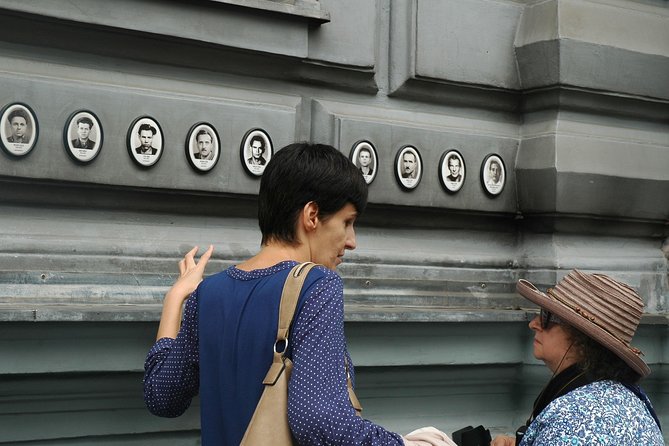
The tour rounds out around the House of Terror, housed in the former headquarters of Hungary’s secret services. This museum commemorates the crimes of communism, especially during the Stalinist years.
Seeing it after you’ve walked past monuments and housing blocks changes how you interpret everything you’ve seen. Before, you learned how the system offered promises, symbols, and improvements. Here, the story returns to what that system did to people when power tightened.
In front of the building, there’s also a slab of the Berlin Wall. It acts like a blunt reminder that walls were never only physical. They were part of a broader strategy to control information, movement, and hope.
Price and value for $123: what you’re paying for
At $123 per person for a 3-hour tour, this isn’t a cheap “see the sights” walk. The value comes from two things:
1) A historian guide (with backgrounds including professors, doctoral students, journalists, art critics, and published authors). You’re not just getting facts; you’re getting interpretation—why these places mattered and how they fit into the bigger political machinery.
2) A route that compares eras in real space, including metro rides and a trolley bus segment. That helps you understand the timeline without relying only on descriptions.
One practical note: metro and tram tickets aren’t included, so plan to have transit costs covered. If you forget, you’ll feel it late in the tour.
Should you book this Communist Budapest walking tour?
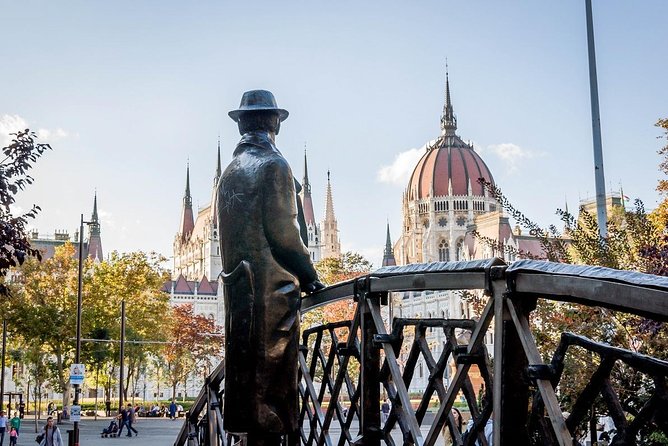
Book it if you want a guided path through 1956, Cold War symbolism, and the everyday “architecture of ideology.” It’s a strong fit when you’re in Budapest for a limited time and you want your first meaningful dose of communist-era context to connect street-level details to political meaning.
It may not be the best match if you’re already deeply comfortable with Hungary’s later political shifts. One potential issue with this kind of tour is that it can focus on establishing the core framework rather than going hard on the transition to democracy for people who already know that terrain.
A smart middle ground: if you’re the kind of traveler who enjoys turning monuments, housing estates, and public art into an explanation of power, you’ll likely come away feeling like Budapest is easier to read.
If you’re joining in a private or small group, you also improve your odds of getting the guide’s attention for your specific questions, especially if your background varies across the group.
FAQ
How long is the Communist Budapest walking tour?
The tour lasts 3 hours.
Where does the tour meet?
It meets at Bambi Eszpresszó, Frankel Leó út 2/4, 1027 Budapest, Hungary.
What languages is the tour offered in?
The tour is offered in English.
Is the tour price $123 per person?
Yes, the price is listed as $123 per person.
Are metro and tram tickets included?
No. Tram and metro tickets are not included.
What kind of guide leads the tour?
The tour is led by a historian guide, with guides described as professors, doctoral students, journalists, art critics, and published authors.
What are the cancellation terms?
Free cancellation is available up to 24 hours in advance for a full refund.
More Tour Reviews in Budapest




The Darker Side of Budapest




More of Budapest, Step by Step



Just Added: More Budapest Reviews
- Sightseeing flight over Budapest
★ 5.0 · 3 reviews - Budapest: Walking Tour with Chimney Cake & Polaroid Photos
★ 5.0 · 3 reviews - Self Guided Tour In Budapest With 100 Captivating Audio Stories
★ 5.0 · 3 reviews - Budapest Art Nouveau Walking Tour
★ 5.0 · 3 reviews - Hungary today: a no-taboo conversation
★ 5.0 · 3 reviews
Dark History & Ghost Tours, compared.
 ★ 4.6Buda Castle District Vampires and Myths Night TourFrom $233,830 reviews
 ★ 4.5Buda Castle District Dark History, Legends and Vampire Night TourFrom $211,240 reviews
 ★ 4.9BloodThirsty Hungary: Walking tour & Dark Historical StoriesFrom $21633 reviews
 ★ 5.0Nightmare in Budapest Interactive Horror ExperienceFrom $24390 reviews
 ★ 4.8Communist History Tour with House of Terror OptionFrom $58182 reviews
 ★ 5.0BloodThirsty Hungary – Castle DistrictFrom $2180 reviews
 ★ 5.0Communism in Hungary with a HistorianFrom $5970 reviews
 ★ 4.73-Hour Walking Tour About Communism (Small Group)From $5770 reviews
Browse the lists this tour appears in