
Reviewed · DARK HISTORY & GHOST TOURS
Communist Budapest Private Walking Tour
This city reads like a political novel. A private historian-led walk turns communist Budapest (1949–1989) into street-level stories you can actually picture, and I especially like how you’re guided through major landmarks tied to real turning points. One thing to plan for: the theme is heavy, and the tour stops outside House of Terror, so you’ll need to budget time if you want to go in.
You’ll move by public transport in a smart way—metro, tram, and on foot—so you spend less time figuring things out and more time listening. You can also choose a morning or afternoon departure, which helps if you’re matching the tour to your other plans. One more consideration: this is built for people who want context, not just photos of statuary.
In This Review
- Key Things to Know Before You Go
- Why This Communist-Era Walk Works in Budapest
- Getting There: Pickup, Tickets, and a Realistic Time Budget
- The Price: Private Value vs. What You’re Really Paying For
- Stop 1: Parliament and the Cold War Timeline on Kossuth Square
- Stop 2: House of Terror as a Powerful Endpoint (Outside Only)
- Stop 3: Former People’s Stadium (Puskás) and Socialist Realist Propaganda
- Stop 4: The Ronald Reagan Statue and Hungary’s Post-Iron Curtain Story
- Stop 5: Bem József Square and a 1960s Coffeehouse Time Capsule
- How the Guide Makes It Click (And Why the Private Format Matters)
- What You’ll Learn: More Than Dates and Statues
- Who This Tour Is For (and Who Might Want a Different One)
- Should You Book This Communist Budapest Private Walking Tour?
- FAQ
- How long is the Communist Budapest private walking tour?
- Is the tour private, and how large is the group?
- What language is the tour offered in?
- Do you get a pickup from your hotel?
- Are public transport tickets included?
- What parts of House of Terror are included?
- Where does the tour start and end?
- What happens if I cancel?
Key Things to Know Before You Go
- Private historian guide: expect narrative history, not a script recited at speed
- Communist-era focus (1949–1989): you’ll track how rule changed over decades
- Built-in transit help: your guide can assist with buying tram and metro tickets
- Cold War landmarks on the route: including major references tied to the Iron Curtain
- House of Terror is an endpoint: you’ll finish outside, with the museum as the natural next stop
- Small group size: it’s run as a private experience, with operator limits stated for the tour
Budapest at street level, more routes on foot
- Big Bus Budapest Hop-On Hop-Off Bus and Walking Tour★ 3.5 · 2,206 reviews
- Budapest: Buda Castle District Walking Tour★ 4.6 · 2,108 reviews
- 3-Hour Orientation Walking Tour of Buda and Pest★ 4.8 · 1,834 reviews
- Budapest Historical Sightseeing – Free Walking Tour★ 5.0 · 1,302 reviews
Why This Communist-Era Walk Works in Budapest
Budapest is beautiful, sure—but it also keeps reminders of power in plain sight. This tour is designed to help you read those reminders. Instead of treating socialist monuments like decoration, your guide connects them to events, campaigns, and the daily realities people lived through.
Two things I’d highlight right away: the historian hosting (you’re not stuck with generic explanations) and the way the route is paced around key political symbols. You’ll see how 1956 shaped what came next, and then how the system kept operating through Cold War pressure and propaganda.
The possible drawback is that you may come away feeling more unsettled than uplifted. That’s not the tour’s fault; it’s just the subject matter. If your idea of a great day is mostly light and breezy, you might want a different kind of Budapest walk.
Getting There: Pickup, Tickets, and a Realistic Time Budget
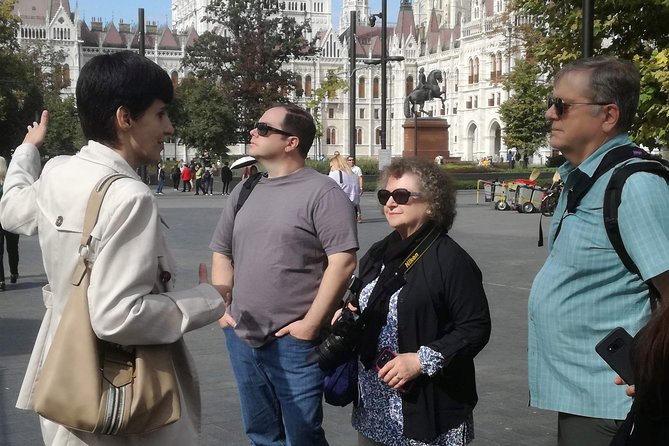
The tour offers pickup from your central hotel or flat. Your guide meets you, then brings the group along by metro, tram, or foot when sites are close. If you don’t want pickup—or you don’t respond with your address in time—you’ll meet your guide 15 minutes before start time at the default starting location.
This part matters because it keeps the tour from turning into a logistics scavenger hunt. If you don’t already have a transport pass, the guide helps you purchase the needed public-transport tickets.
Duration is listed as about 3 hours, but pacing can vary. One private outing was reportedly longer (around four hours) when the guide adjusted the plan to match your interests. So if you’re scheduling dinner right after, I’d give yourself a little buffer.
The Price: Private Value vs. What You’re Really Paying For
The price is stated as $393.17 per group (with a per-group cap mentioned in the tour details), and it’s structured as a private experience. That can sound steep until you factor in what you’re buying: a historian guide, private routing, and the ability to tailor the walk rather than follow a large group through quick photo stops.
Also, the core sites have free access for the exterior visits on the route. The main cost you might encounter is not ticketed attractions inside buildings—especially since the House of Terror Museum’s interior isn’t included. So your money is mostly going to the storytelling and interpretation, not admissions.
If you’re traveling as a couple or a small group, this can be strong value compared with stacking multiple guided activities. If you’re solo, it may feel less budget-friendly, but the private format is still useful when you want your questions answered in real time.
Stop 1: Parliament and the Cold War Timeline on Kossuth Square
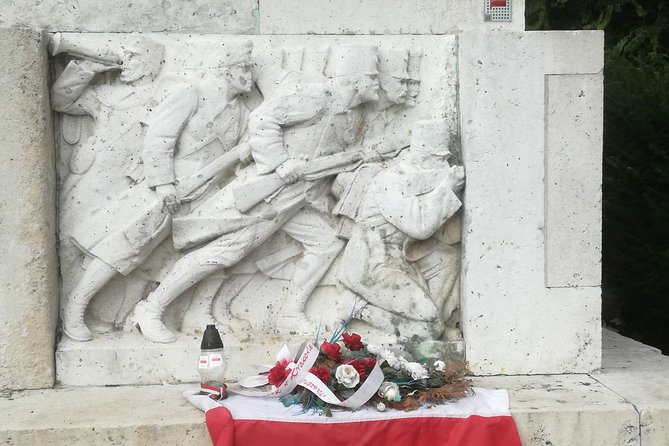
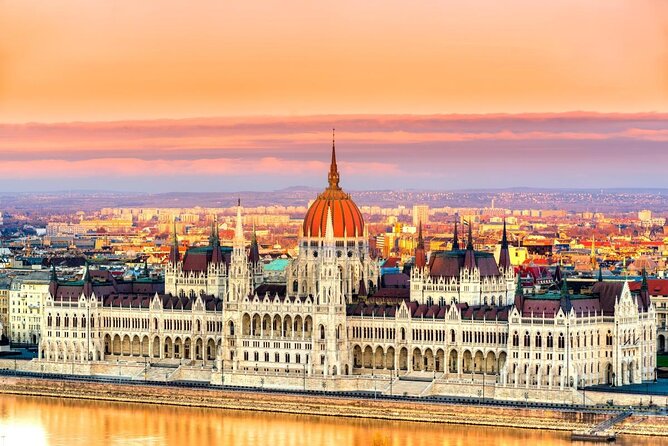
You start near the Hungarian Parliament Building and the area around Kossuth Square. From there, you’ll explore monuments tied to the 1956 revolution before continuing toward Liberty Square.
This is where the tour earns its keep: the guide uses the geography to show political logic—why certain spaces became stages, and why certain symbols matter. On the way, you discuss Cold War themes tied to the nearby US Embassy, then you’ll see references connected to the Soviet Army.
You’ll also encounter a Reagan-related monument and an atomic shelter reference. That’s a lot of messaging packed into a short walk, so don’t expect a purely visual stop. Your guide’s job here is to help you connect the dots.
What to watch for: Parliament and the central squares can be busy. If you prefer quieter photo moments, plan on a bit of waiting as you move between points.
The darker Budapest, told after dusk
Stop 2: House of Terror as a Powerful Endpoint (Outside Only)
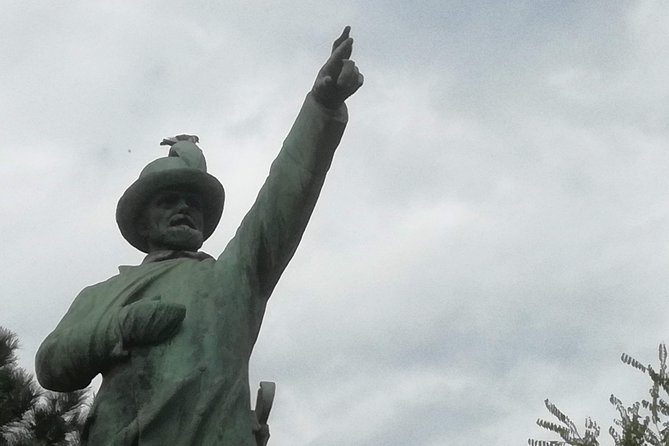
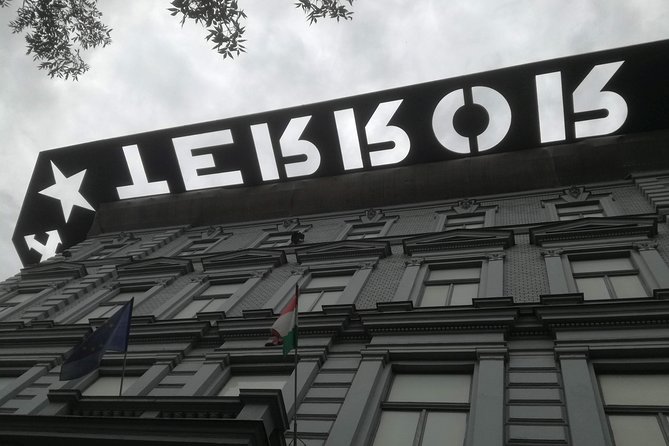
The tour ends at the imposing House of Terror Museum building on Andrássy út. You’ll finish outside, with a slab of the Berlin Wall in front.
Here’s the practical catch: the museum’s interior exhibit isn’t included in the tour. That said, stopping outside is still valuable. The building itself and the Berlin Wall slab communicate a lot, and it’s a strong point to decide how much you want to continue on your own.
If you’re curious about Hungary’s communist secret service system and the Cold War atmosphere, finishing here gives you an obvious next step. If you’re already tight on time or prefer not to go into museum exhibits, you can simply treat the exterior as the concluding statement.
Potential drawback: since the interior isn’t included, you might need extra ticket time and more stamina if you choose to go in.
Stop 3: Former People’s Stadium (Puskás) and Socialist Realist Propaganda
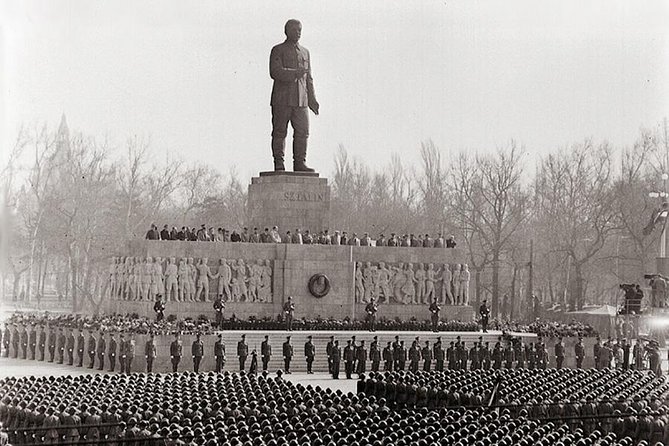
You’ll stop at the former People’s Stadium, now Puskás Ferenc Stadium. Even though it’s a sports venue today, the stop is about what remained from earlier messaging—especially socialist realist statues that still stand.
This works well because it shows propaganda isn’t only in government offices. It also appears in public spaces meant for mass attention. The guide ties those artistic choices back to how regimes tried to shape public life, including what people were meant to admire and repeat.
Why it’s worth your attention: socialist realist art can look strange if you only treat it as old decoration. With context, it becomes a clue to what the system wanted you to believe.
Stop 4: The Ronald Reagan Statue and Hungary’s Post-Iron Curtain Story
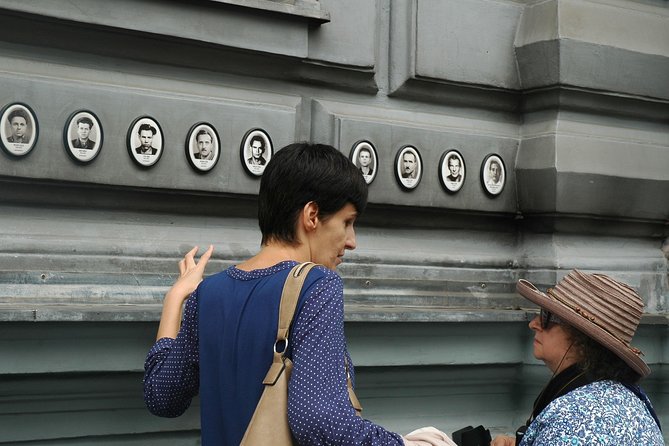
You’ll also spend time at the Ronald Reagan statue, with a focus on Hungary’s sense of obligation to the US president for his efforts connected to bringing down the Iron Curtain.
This stop is a reminder that communist history in Central Europe is not only about one side’s power. It’s also about the international pressure, the rhetoric, and the way leaders and symbols got interpreted locally after the Cold War.
If you like cause-and-effect history, this segment can be satisfying because it closes a political loop: the tour began with revolutionary symbols from 1956 and the structures of state power, and it ends by naming the era-shaping role of major Western political figures.
Stop 5: Bem József Square and a 1960s Coffeehouse Time Capsule
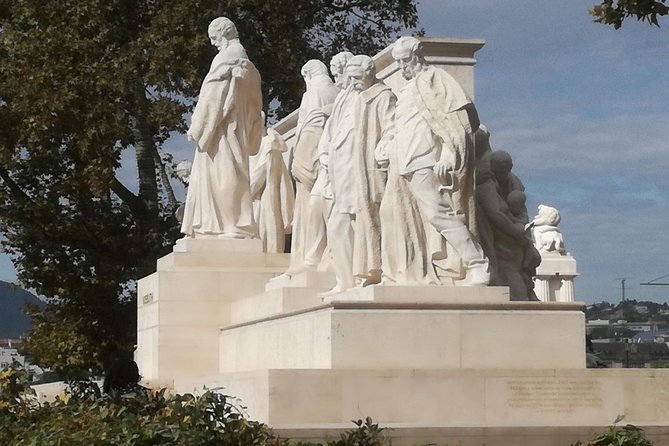
One of the most charming stops on a heavy itinerary is Bem József Square. You’ll learn that this is where the first big demonstration of the 1956 uprising started. That turns the square into more than a place to pass through—it becomes a memory lane with stakes.
On the square, you’ll also find a coffeehouse that kept its original interior from the 1960s. It’s a small detail, but it makes the story feel lived-in rather than purely academic. Even if you don’t sit down, knowing it’s there gives you a different lens on the era: people weren’t only dealing with politics and shortages; they also had routines, spaces, and social habits.
The tour also references a 1970s housing estate, which helps round out the timeline. When you pair the public demonstrations with housing-era life, you get a more complete picture of what changed (and what didn’t).
Tip: If you want that extra taste of everyday life, grab a coffee after the tour at your own pace—so you can let the history settle in without rushing.
How the Guide Makes It Click (And Why the Private Format Matters)
The biggest difference between a good history tour and a frustrating one is how the guide handles nuance. On this tour, the guiding style is very host-like: local historians bring context, but they also know how to keep the pace human.
In past private outings, guides have been praised for clear explanations and a broad world view. You may also get a sense of humor mixed into the serious parts, which matters. History under authoritarian systems can get intense fast; a guide who can balance tone helps you stay engaged instead of switching off.
You might hear names like András or Kata—local historians who have led private versions of this route. The common thread from feedback is that the guide adapts to your interests. If you care most about 1956, you’ll get more of that. If you’re focused on Cold War symbols in the streets, the route stays pointed in that direction.
What You’ll Learn: More Than Dates and Statues
This tour isn’t just about spotting monuments. You’ll learn about the privations of life under Hungary’s term goulash communism—the idea that everyday life had its own mix of rationing, compromise, and political control.
Your guide uses the built environment to explain why certain spaces look the way they do. That’s the real payoff: you stop treating socialist-era structures as random background and start seeing them as communication tools.
And because the route spans multiple decades, you’ll see how propaganda and power tactics can shift over time, even when the system’s core logic stays firm.
Who This Tour Is For (and Who Might Want a Different One)
You’ll likely enjoy this most if you:
- want a historical narrative tied to what you can see outside
- like Central European politics and the 1956 uprising
- enjoy guided context more than self-paced museum time
You might skip it if:
- you’re hoping for a light, scenic walk with minimal politics
- you want museum interior time included as a standard part of the tour
- you don’t handle heavy topics well (this is built around them)
Should You Book This Communist Budapest Private Walking Tour?
If you want Budapest history that feels specific—rooted in squares, embassies, monuments, and the physical logic of the city—this is a strong choice. The private historian format is the deciding factor: it turns a set of landmarks into an understandable story, and it gives you room to steer the focus toward what you care about most.
Book it if you’re comfortable with a serious theme and you want the Cold War era explained on the streets. Consider pairing it with extra time after the tour if you want to go inside the House of Terror Museum, since the tour finishes outside rather than including the interior.
FAQ
How long is the Communist Budapest private walking tour?
It runs for about 3 hours (approx.), with the pace adjusted by the guide based on your group.
Is the tour private, and how large is the group?
It’s a private tour with a small group size. The tour details list a maximum of 8 travelers, and the pricing is per group (up to 10) on the tour summary.
What language is the tour offered in?
The tour is offered in English.
Do you get a pickup from your hotel?
Yes. Pickup is offered from a central hotel or flat. The guide meets you and leads the group using metro, tram, or foot when sites are close.
Are public transport tickets included?
Tram and metro tickets are not included. The guide can assist you with buying the required tickets if you do not already have a transport pass.
What parts of House of Terror are included?
The tour concludes outside the House of Terror Museum. The exhibit inside is not included in the tour.
Where does the tour start and end?
It starts at Frankel Leó út 2-4, 1027 Hungary, and ends outside the House of Terror Museum at Andrássy út 60, 1062 Hungary.
What happens if I cancel?
Cancellation is free. You can cancel up to 24 hours in advance for a full refund.
More Tour Reviews in Budapest






The Darker Side of Budapest





More of Budapest, Step by Step



Just Added: More Budapest Reviews
- Sightseeing flight over Budapest
★ 5.0 · 3 reviews - Budapest: Walking Tour with Chimney Cake & Polaroid Photos
★ 5.0 · 3 reviews - Self Guided Tour In Budapest With 100 Captivating Audio Stories
★ 5.0 · 3 reviews - Budapest Art Nouveau Walking Tour
★ 5.0 · 3 reviews - Hungary today: a no-taboo conversation
★ 5.0 · 3 reviews
Dark History & Ghost Tours, compared.
 ★ 4.6Buda Castle District Vampires and Myths Night TourFrom $233,830 reviews
 ★ 4.5Buda Castle District Dark History, Legends and Vampire Night TourFrom $211,240 reviews
 ★ 4.9BloodThirsty Hungary: Walking tour & Dark Historical StoriesFrom $21633 reviews
 ★ 5.0Nightmare in Budapest Interactive Horror ExperienceFrom $24390 reviews
 ★ 4.8Communist History Tour with House of Terror OptionFrom $58182 reviews
 ★ 5.0BloodThirsty Hungary – Castle DistrictFrom $2180 reviews
 ★ 5.0Communism in Hungary with a HistorianFrom $5970 reviews
 ★ 4.73-Hour Walking Tour About Communism (Small Group)From $5770 reviews
Browse the lists this tour appears in