

Reviewed · CHIMNEY CAKE & COOKING CLASSES
Walk and Cook Budapest
Budapest gets edible fast. This is a small-group walking tour that turns into a hands-on cooking evening, with food tied directly to the city’s big, messy past. In about 5 hours, you’ll cover key landmarks and then head to the kitchen to cook and sit down for a full dinner.
I love how the walk is more than picture stops. You’ll connect what you see—Ottoman-era details, Jewish memorial sites, and Austro-Hungarian grandeur—to what ends up on your plate. And I especially like the group size capped at 10, which keeps the guide’s pacing friendly and your questions actually get answered.
One consideration: this is part sightseeing, part cooking, and it’s a proper meal. If you have strict dietary needs or you’re sensitive to heavier dishes (like goose or pork-based flavors), check in before booking so you aren’t stuck with only a couple of options.
In This Review
- Quick hits: what makes this Budapest day special
- Price and value: why this tour costs what it costs
- Meeting up and getting your bearings in Budapest
- The walking tour stops: where Hungary’s past shows up in stone
- 1) Gul Baba’s Tomb (Gul Baba Turbeje): Ottoman traces in plain sight
- 2) Hungarian Parliament Building: Austro-Hungarian power, Budapest style
- 3) Great / Central Synagogue (Nagy Zsinagoga): a Jewish story that shaped the city
- From tour to kitchen: how the cooking workshop fits the story
- What dinner actually feels like: a full meal with local rhythm
- Small-group magic: why a cap of 10 improves everything
- Who this tour is best for (and who should think twice)
- Tips to make your 5-hour plan smoother
- Should you book Walk and Cook Budapest?
- FAQ
- How long is the Walk and Cook Budapest tour?
- Is the tour offered in English?
- What group size should I expect?
- What are the main walking stops?
- What food will I cook and eat?
- Is there a mobile ticket?
- Where does the tour start and end?
- How does confirmation work after booking?
- Is free cancellation available?
Quick hits: what makes this Budapest day special
- A walk that teaches through food: landmarks lead into cooking, not just explanations you forget later.
- Max 10 people: you get a real conversation, not headset tours in a crowd.
- Cooking plus a sit-down dinner: you’re not just tasting—you’re making.
- History tied to daily life: Ottoman, Jewish, and Austro-Hungarian influences show up in flavors and dishes.
- A full menu, not a snack: stuffed peppers, goulash soup, dumplings, donuts, and more.
Aprons on for chimney cake and goulash
- Budapest All in One Small Group Walking Tour with Strudel Stop★ 5.0 · 1,277 reviews
- Budapest: Hungarian Chimney Cake Workshop in the City Center★ 4.7 · 1,263 reviews
- Budapest: Traditional Chimney Cake (Kürtőskalács) Workshop★ 4.8 · 323 reviews
- Chimney Cake Workshop Budapest Downtown – Kürtőskalács Class★ 5.0 · 220 reviews
Price and value: why this tour costs what it costs
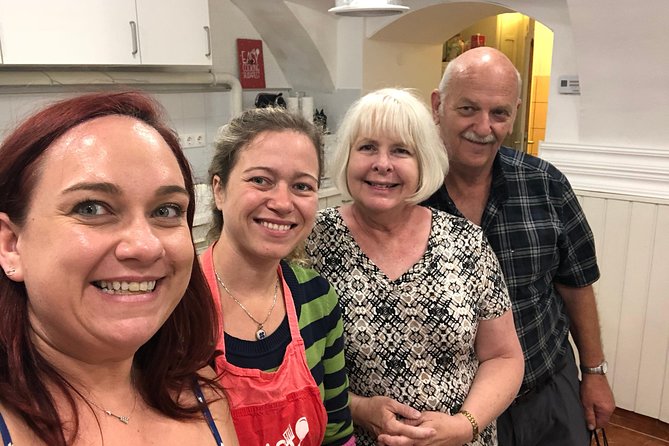
At $131.06 per person for about 5 hours, you’re paying for three things at once: guided walking time, a cooking workshop, and a full dinner. In a city where a “tour plus food” can sometimes mean a short tasting, this one is structured like an actual evening plan.
The value is in the way the experience flows. You’re not only learning what buildings represent; you’re learning why certain dishes make sense in Hungary’s mix of empires, migrations, and communities. Then you cook those ideas into real food. If you like practical experiences—doing something with your hands and eating what you made—that’s where the price starts to look fair.
You’ll also feel the difference of a small cap of 10. When a group is small, the guide can adjust how fast you walk, where you pause, and how much detail you want on each stop. That matters on a history-linked route, because the best parts are the links between eras.
Meeting up and getting your bearings in Budapest
The tour starts back at the meeting point and ends there too, so you don’t have to think about transport at the end of dinner. It’s also described as near public transportation, which is handy in Budapest where you’ll likely mix metro/tram options with walking anyway.
Your day is split into two phases. First, there’s roughly 1.5 hours of guided walking through the city’s major historical layers. Then you transition to the kitchen for the cooking portion and the meal. This pacing works well because you get context before you start cooking.
If you arrive early, I’d use that time to slow down and watch the street life around your meeting point. Budapest’s neighborhoods can feel different block to block, and the tour’s history story lands better when you’ve already taken a few minutes to notice what’s around you.
The walking tour stops: where Hungary’s past shows up in stone
1) Gul Baba’s Tomb (Gul Baba Turbeje): Ottoman traces in plain sight
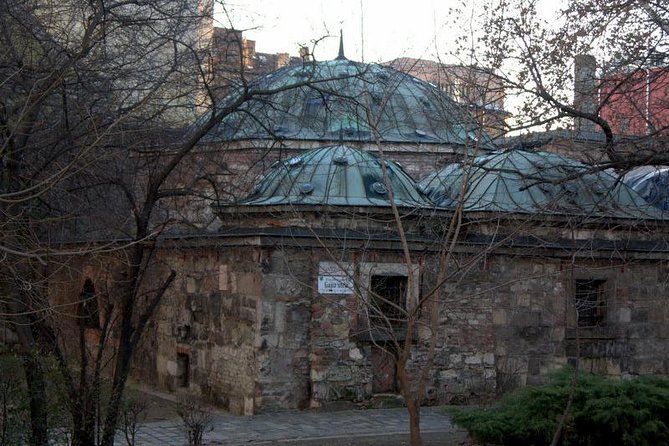
You start at Gul Baba’s Tomb, a site tied to the Ottoman presence in Hungary. Even if your first reaction is simply wow, this is beautiful, the value here is what the guide connects it to: how older empires didn’t just change borders—they changed everyday culture, including cooking traditions.
The lesson you’re meant to take from this stop is that food culture doesn’t appear from nowhere. It forms through long contact, trade, and political change. In practical terms, it helps you understand why Hungarian cuisine can include flavors and techniques that don’t sound purely local at first.
How to get the most out of it: slow down and look at details. This is the kind of stop where your brain fills in meaning once you know there’s a layered story behind it. If you’re the type who likes to take a minute to read plaques and notice architectural quirks, you’ll enjoy this stop.
More Budapest on foot


2) Hungarian Parliament Building: Austro-Hungarian power, Budapest style
Next is the Hungarian Parliament Building, a standout symbol of the Austro-Hungarian period. This stop works because it’s not subtle. You see the scale and you feel the message: this is state power made visible.
The tour’s approach matters here. Rather than treating architecture as just a photo backdrop, it ties what you see to what comes later in life—how identity and culture often get reflected in food during times of stability and during moments of change.
Consideration: if you’re already planning a separate Parliament visit later, you might feel like you’ve seen the landmark before. Still, in this tour, the point is the connection to what you’ll cook and eat afterwards.
3) Great / Central Synagogue (Nagy Zsinagoga): a Jewish story that shaped the city
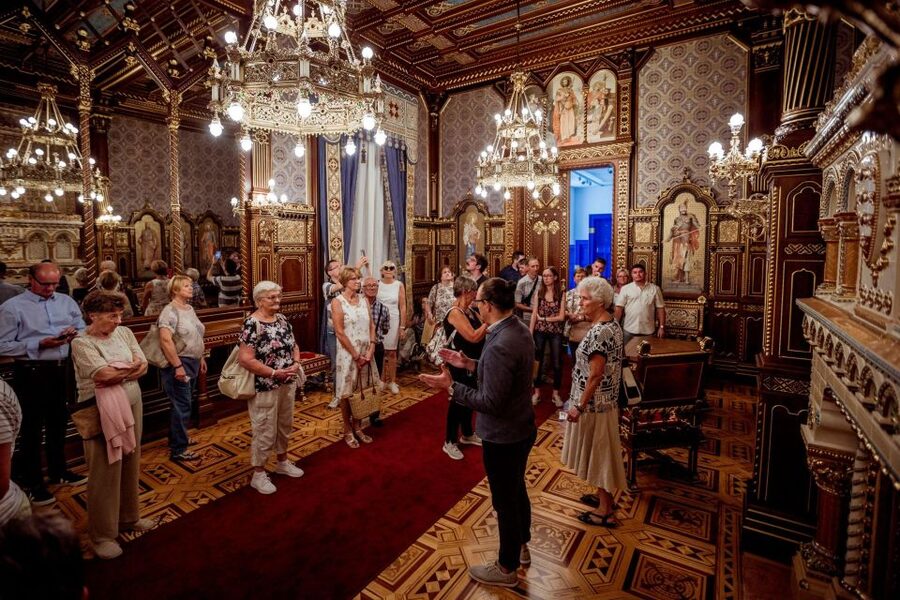
The walking portion then moves to the Great / Central Synagogue. This is where the tour turns toward the story of Jewish people in Budapest during the Second World War. That can feel heavy, and it’s supposed to.
But the goal isn’t gloom. It’s context: understanding why certain dishes, traditions, and community patterns persist even after disruption. And later, in the kitchen, you’ll see how food can act like a memory you can taste.
How to handle the emotion: go in with patience. This part may hit you more than the other stops. Give yourself a minute before moving on, and you’ll likely appreciate how the guide connects suffering and survival to the endurance of cultural foodways.
From tour to kitchen: how the cooking workshop fits the story
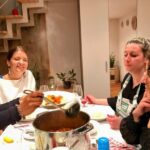
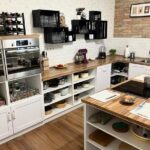
After the walk, you head to the kitchen. This is the moment where the tour stops being mostly informational and becomes personal. Instead of just hearing about Ottoman, Jewish, and Austro-Hungarian influences, you’re cooking dishes that carry those ideas forward.
The workshop is hands-on, and the structure is built around Hungarian classics plus the hints of influence from different nations tied to Hungary’s past. Even if you’re not a confident home cook, you can probably relax into it because the workshop is meant for small groups, not an industrial line.
What you’ll be cooking (menu highlights):
- töltött paprika (stuffed peppers)
- mákos guba (poppy seed dumplings)
- roast goose with onion potatoes and braised cabbage
- fánk (Hungarian donut)
- székelygulyás (goulash soup with sauerkraut)
- szilvásgombóc (plum dumplings)
That’s a lot of food, and it makes sense: you’re getting a real meal experience, not scattered bites. The menu mix also matters. Stuffed peppers, goulash soup, and cabbage show a hearty, practical tradition—food designed to keep people fed. Then the desserts bring the sweeter side that shows up in Hungarian home cooking.
What dinner actually feels like: a full meal with local rhythm
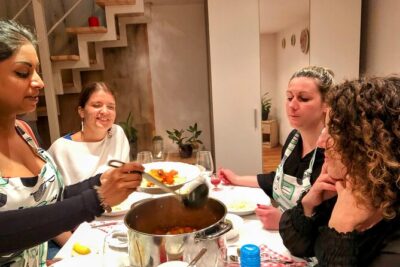
This tour ends with a sit-down dinner for the group. For me, that’s one of the biggest quality markers. When a tour only teaches you and sends you off to find your own dinner, the experience can feel unfinished. Here, the meal is part of the event, and you’re eating what you worked on.
The menu you’re likely to enjoy is comforting and classic, with both savory and sweet finishes. If you like flavors that lean savory-first, this is a great match. Stuffed peppers and goulash soup are the kind of dishes that taste even better when you understand the context behind them.
Desserts here aren’t random. You’ll likely see poppy seed dumplings, plum dumplings, and fánk. That trio makes the meal feel balanced: warm, nostalgic, and very Hungarian in spirit.
If you’re someone who normally skips desserts, don’t. This is the part where the tour’s cultural connections become easier to remember. You don’t need a lecture for dumplings; you just need a fork.
Small-group magic: why a cap of 10 improves everything
A maximum of 10 travelers changes the whole tone. In a group that size, the guide can slow down at the buildings that need it. You can ask follow-up questions without feeling like you’re hijacking the tour. And in the kitchen, it’s far easier to get help if you’re not sure what you’re doing.
It also affects how the night feels. You’ll likely spend more time interacting with the guide—one reason the experience has strong feedback around personable service. Guides such as Kata and Karolina have been specifically thanked for taking time to guide people and share memorable context, which fits the “small-group, human pacing” vibe.
Practical tip: if you have food preferences, say them clearly at the start. With a small group, the team is more likely to handle adjustments than with a larger operation.
Who this tour is best for (and who should think twice)
This experience is ideal if you want two things at once:
- a structured walking tour with real context, not just landmarks
- a cooking workshop that leads into a full dinner you can actually enjoy
You’ll also like it if you learn best by connecting stories to actions. History here isn’t just dates; it’s linked to food traditions and cultural changes across different periods.
You might think twice if:
- you have strong dietary restrictions that are hard to substitute in a fixed menu
- you don’t like mixing walking with cooking time in the same outing
If you fit the first group, you’re likely to leave with both better city understanding and full stomach satisfaction.
Tips to make your 5-hour plan smoother
- Wear comfortable shoes. Even though the walk is around 1.5 hours, you’ll be moving between major sites.
- Come hungry. The dinner menu is substantial, so you don’t want a big snack beforehand.
- If you’re interested in the historical angles, ask about how Ottoman, Jewish, and Austro-Hungarian influences show up in dishes you’re cooking. The tour is built for that connection.
- Bring curiosity, not a checklist. This is the kind of experience that pays off when you stay open.
Should you book Walk and Cook Budapest?
I’d book it if you want a Hungary experience that’s part city storytelling and part real food practice. The best reason is simple: the tour doesn’t treat dinner as an add-on. It uses the walk to frame the cooking, and the cooking to make the history stick.
Skip it if you’re only after architecture photos or if you have dietary limits that might be difficult with a fixed, classic menu. Otherwise, for a small-group outing with a full meal and a hands-on cooking finish, this is the kind of value that feels worth it in a city where time is always tight.
FAQ
How long is the Walk and Cook Budapest tour?
It runs for about 5 hours.
Is the tour offered in English?
Yes, it’s offered in English.
What group size should I expect?
The maximum group size is 10 travelers.
What are the main walking stops?
The tour includes Gul Baba’s Tomb, the Hungarian Parliament Building, and the Great / Central Synagogue.
What food will I cook and eat?
The sample menu includes töltött paprika (stuffed peppers), mákos guba (poppy seed dumplings), roast goose, fánk (Hungarian donuts), székelygulyás (goulash soup with sauerkraut), and szilvásgombóc (plum dumplings).
Is there a mobile ticket?
Yes, you’ll receive a mobile ticket.
Where does the tour start and end?
It starts in Budapest, Hungary, and ends back at the meeting point.
How does confirmation work after booking?
Confirmation is received within 48 hours of booking, subject to availability.
Is free cancellation available?
Yes, you can cancel for a full refund up to 24 hours in advance of the experience’s start time.
Still Walking Budapest




More Tour Reviews in Budapest






Chimney Cake and the Hungarian Kitchen



Just Added: More Budapest Reviews
- Sightseeing flight over Budapest
★ 5.0 · 3 reviews - Budapest: Walking Tour with Chimney Cake & Polaroid Photos
★ 5.0 · 3 reviews - Self Guided Tour In Budapest With 100 Captivating Audio Stories
★ 5.0 · 3 reviews - Budapest Art Nouveau Walking Tour
★ 5.0 · 3 reviews - Hungary today: a no-taboo conversation
★ 5.0 · 3 reviews
Chimney Cake & Cooking Classes, compared.
 ★ 5.0Budapest All in One Small Group Walking Tour with Strudel StopFrom $1001,277 reviews
 ★ 4.7Hungarian Chimney Cake Workshop in the City CenterFrom $421,263 reviews
 ★ 5.0Budapest Cooking Class & Market Tour with Local Guide & WinesFrom $99553 reviews
 ★ 4.8Traditional Chimney Cake (Kürtőskalács) WorkshopFrom $22323 reviews
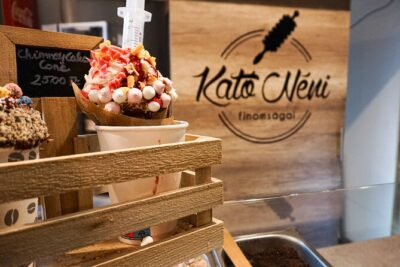 ★ 5.0Chimney Cake Workshop Budapest Downtown – Kürtőskalács ClassFrom $38220 reviews
 ★ 5.0Premium Hungarian Home Cooking Experience with Chef MartiFrom $131169 reviews
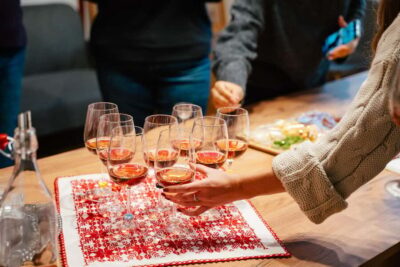 ★ 5.0Small-Group Cooking Class & Market Tour with LocalFrom $100138 reviews
 ★ 4.5Hungarian Cooking and optional Local Market TourFrom $12698 reviews
Browse the lists this tour appears in