
Reviewed · CHIMNEY CAKE & COOKING CLASSES
Budapest: Small-Group Cooking Class & Market Tour with Local
Budapest food days should start with paprika. This small-group class pairs a guided stop at the Central Market Hall with a hands-on, air-conditioned cooking session that feels like family-style cooking. You’ll shop with your eyes first, then use what you tasted to cook.
Two things I really like: first, the market portion is built around real Hungarian producers and quick tastings (cold cuts, cheeses, pickles, plus wine and Hungarian spirits). Second, you learn by doing, with a local English-speaking chef and host who keep everyone involved, whether you’re slicing, stirring, or learning the basics of getting flavors right.
One consideration: the dish you end up cooking depends on the meal choice you make in advance (chicken paprikash, goulash, or stuffed cabbage rolls). And while paprikash is a crowd-pleaser, it can feel a bit mild to some palates unless you’re paying attention to seasoning as you cook.
In This Review
- Key highlights you’ll actually feel during the 4 hours
- Central Market Hall: tastings, producers, and quick Hungarian flavor education
- From market to apartment: why the venue choice matters
- The cooking lineup: paprikash vs goulash vs stuffed cabbage rolls
- A fair heads-up about flavor expectations
- What you’ll eat first: cold cuts, cheeses, pickles, and the drink plan
- Wine pairing and pálinka: how to enjoy it without losing the recipe
- Dessert and the practical skills that stick with you
- The souvenir that makes it feel personal: vintage postcard + recipe booklet
- Who this class suits best (and who might want another option)
- When you might hesitate
- Price and value: what $100 buys beyond the kitchen
- Practical tips to make your cooking class day smoother
- Should you book Foodapest in Budapest?
- FAQ
- How long is the Budapest Foodapest cooking class and market tour?
- Where do I meet for the evening cooking class?
- Is there a market tour, or does it start at the apartment?
- What can I cook during the class?
- Are dietary accommodations available?
- What’s included with the cooking class?
- Do they teach in English?
- Can I cancel or pay later?
Key highlights you’ll actually feel during the 4 hours
- Central Market Hall tastings first, then cooking with ingredients you tasted and picked up
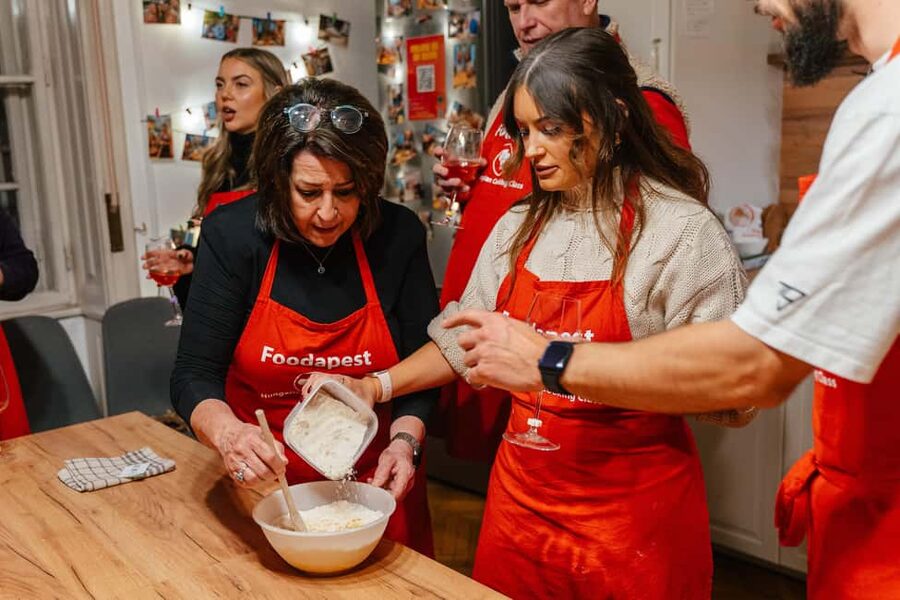
- Hands-on cooking in a local apartment kitchen with a communal, family-recipe vibe
- Wine pairing plus Hungarian spirit tasting alongside cold cuts, cheeses, and pickles
- A real dessert is made during class, not just a sit-and-watch moment
- Recipe booklet plus a vintage handwritten postcard as a personal keepsake
- Clear dietary options including gluten-free, vegan, and vegetarian (tell them your needs)
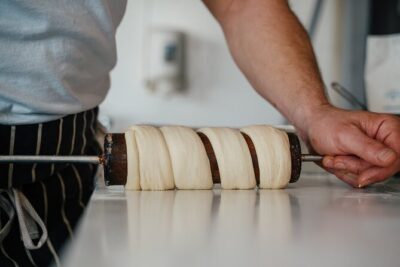
Aprons on for chimney cake and goulash
- Budapest All in One Small Group Walking Tour with Strudel Stop★ 5.0 · 1,277 reviews
- Budapest: Hungarian Chimney Cake Workshop in the City Center★ 4.7 · 1,263 reviews
- Budapest: Traditional Chimney Cake (Kürtőskalács) Workshop★ 4.8 · 323 reviews
- Chimney Cake Workshop Budapest Downtown – Kürtőskalács Class★ 5.0 · 220 reviews
Central Market Hall: tastings, producers, and quick Hungarian flavor education
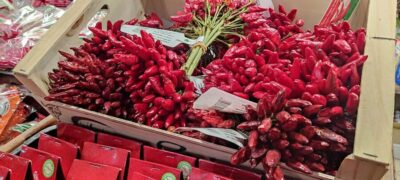
Your experience starts at Budapest’s Central Market Hall, widely known as the largest European indoor market. Even if you’ve walked markets before, this one works differently because it’s not only about sights. It’s about sampling: you walk with your guide, taste what’s coming from local producers, and start picking up how Hungarian flavors build.
This is also where the timing makes sense. You’re in and out without feeling rushed, and you learn by doing little things right away—tasting items that later show up in the cooking session. You’ll also get little history-and-ingredient cues along the way, which helps you understand why Hungarian cooking leans so hard on paprika, cured meats, dairy, and sour notes.
One practical bonus: the experience includes skip-the-line access through a separate entrance, so you don’t waste your limited class hours standing around.
If your guide’s name is Kinga, Mesi, Ben, George (György), Marcell, or Emese, you can expect the same core approach: clear explanations, friendly pacing, and frequent checks that the group is keeping up. Many classes like this work best when the host mixes cultural talk with real food facts—and that’s exactly the balance this one aims for.
What to watch for: Market halls have lots of smells and fast-moving stalls. If you know you’re sensitive to strong spice or alcohol scents, pace yourself during tastings. You’ll be cooking after.
From market to apartment: why the venue choice matters
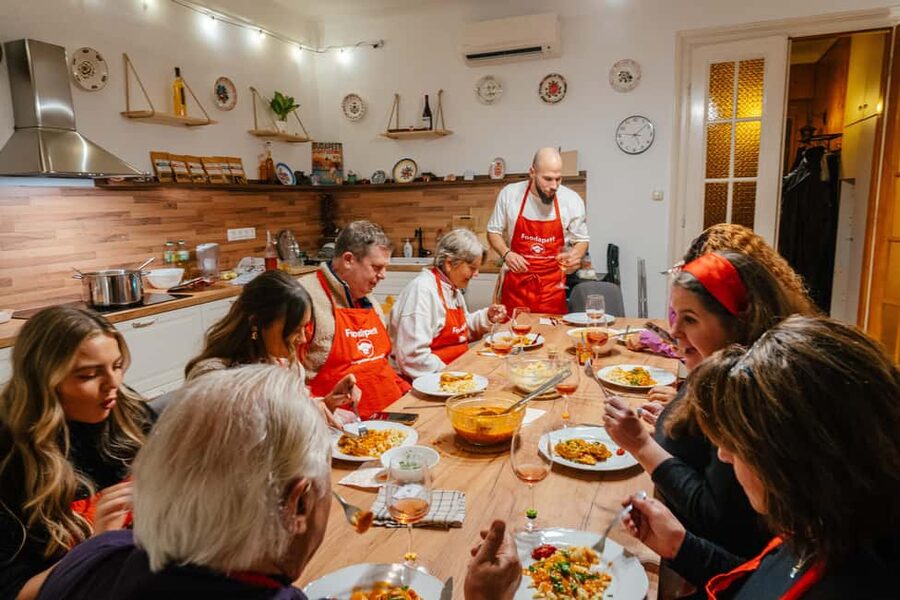
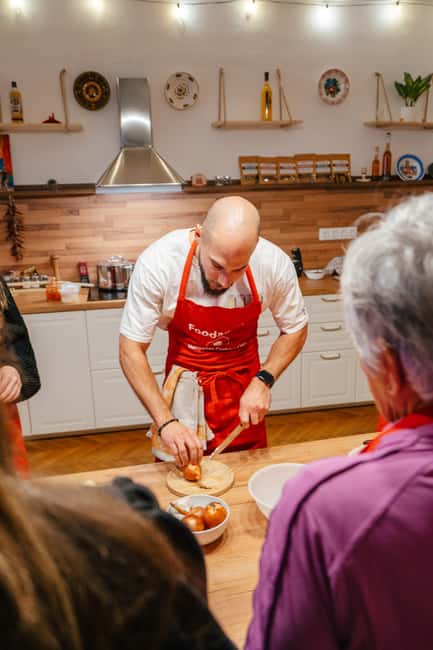
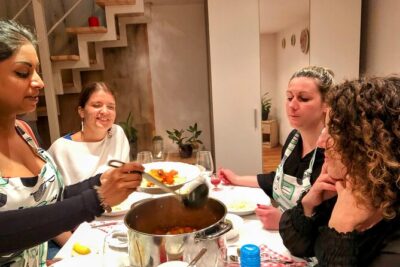
After the market, you head to the cooking location: a local apartment kitchen. That sounds casual, but the point is serious. Apartment cooking changes the energy. You’re not stuck in rows behind a counter. You’re in a working kitchen, which makes the class feel like a shared meal project.
You also get the comfort factor that matters in Budapest: the venue is fully air-conditioned, which is a big deal during summer heat. In other words, you’ll actually want to hang out, talk, and focus on technique, instead of swiping sweat off your cutting board.
Most classes are either too quiet (watching only) or too chaotic (everyone cooking at once without guidance). Here, the goal is communal style cooking inspired by family tradition. In practice, that means:
- People rotate roles instead of one person dominating.
- Your instructor gives hands-on steps you can repeat later.
- You eat together as you go, not after an exhausting wait.
This is also where the small-group format helps. In the past, groups have been around nine people, which is small enough to get attention but large enough to make conversation feel lively.
The cooking lineup: paprikash vs goulash vs stuffed cabbage rolls
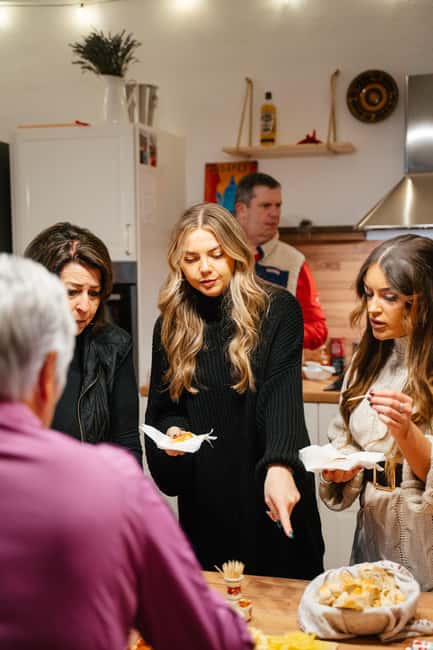
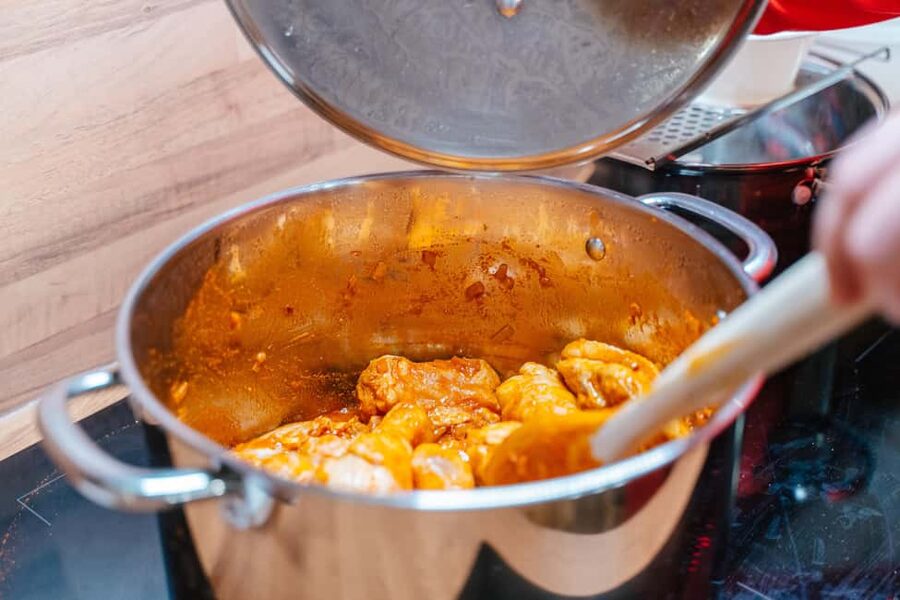
The menu centers on traditional Hungarian dishes, built around the ingredients you tasted at the market. Your meal preference is selected in advance from three options:
- Chicken paprikash
- Goulash
- Stuffed cabbage rolls
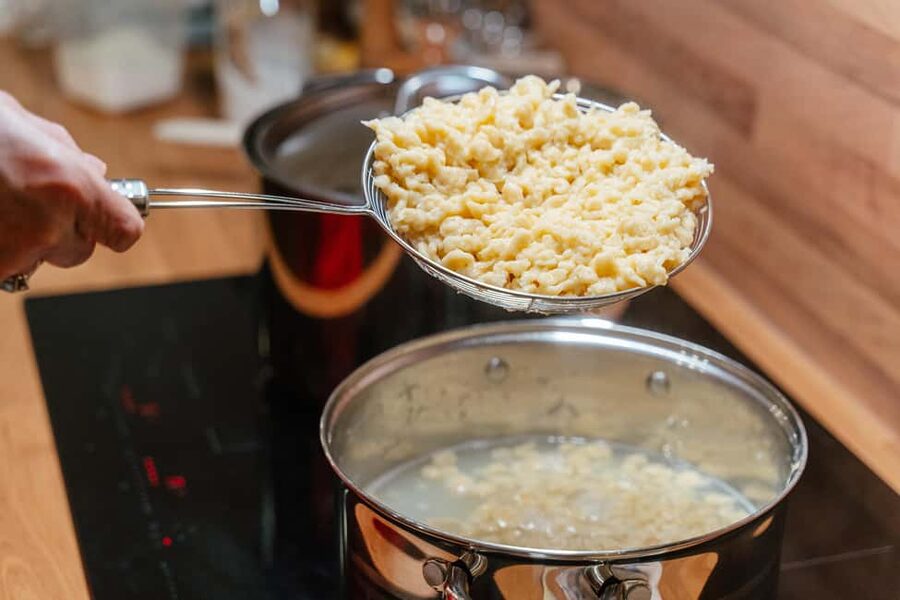
In multiple sessions, chicken paprikash is a common choice. It’s also the dish many people associate with Hungarian cooking, so you’re learning something you’ll likely crave again later. You’ll also get at least one additional component beyond the main course, and many classes include Hungarian dumplings or similar sides depending on the session.
Here’s the best way to think about it: don’t treat this like a one-time recipe demo. Treat it like a technique lesson tied to a specific dish. The cutting skills, ingredient handling, and sauce logic you practice transfer across meals. Even if you don’t cook Hungarian food at home often, you’ll leave understanding how Hungarian dishes build flavor in layers.
A fair heads-up about flavor expectations
One review note that’s worth taking seriously: chicken paprikash can come across as a little mild to some people if you were expecting a punchier profile right from the start. The fix is simple—pay attention to seasoning steps as you cook, and don’t be shy about asking your host what to taste for during the sauce stage.
More Budapest markets and shopping runs
What you’ll eat first: cold cuts, cheeses, pickles, and the drink plan
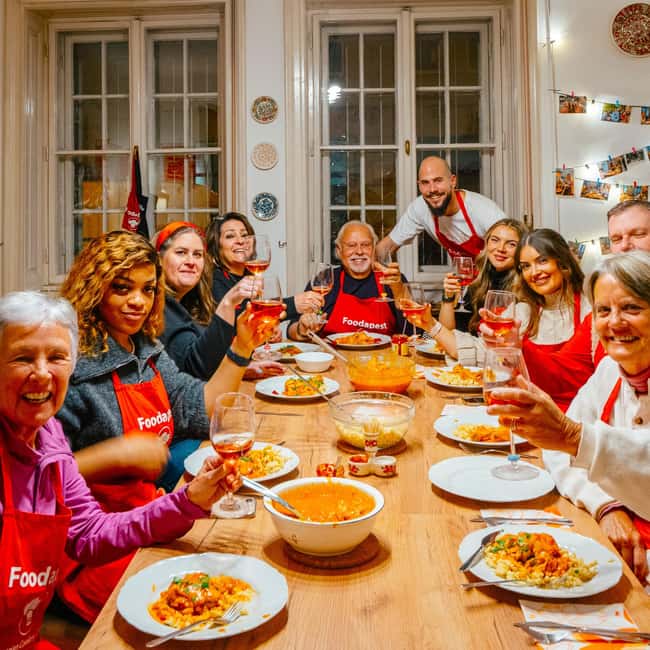
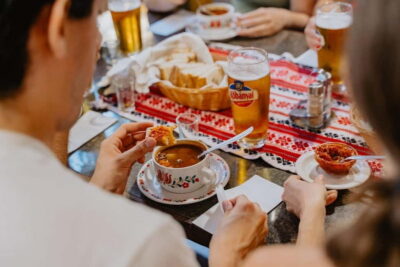
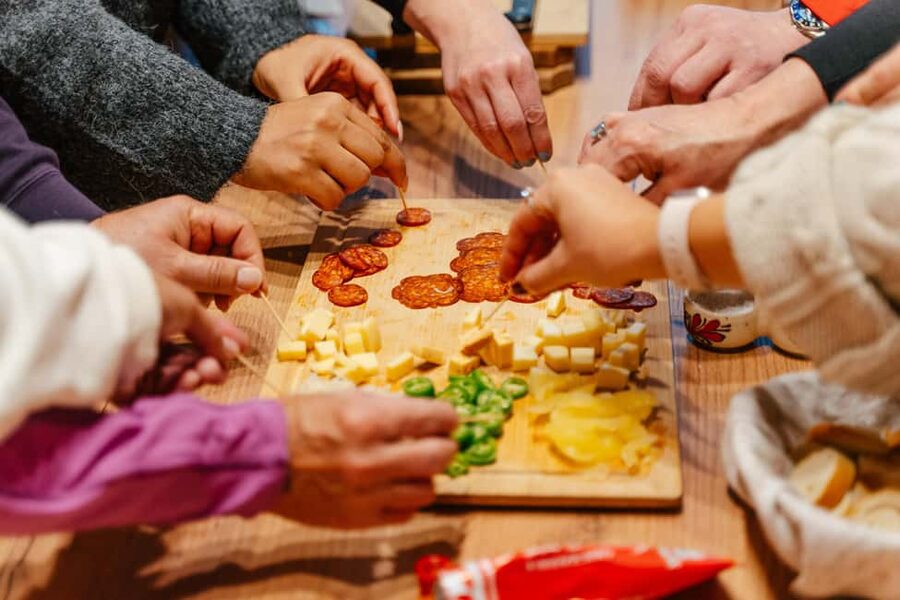
A huge part of this class is the food-and-drink welcome. Before you cook, you’ll get tastings of Hungarian cold cuts, cheeses, and pickles. It’s not just snacking. It sets your palate for what comes next and helps you recognize flavors once they show up again in cooking.
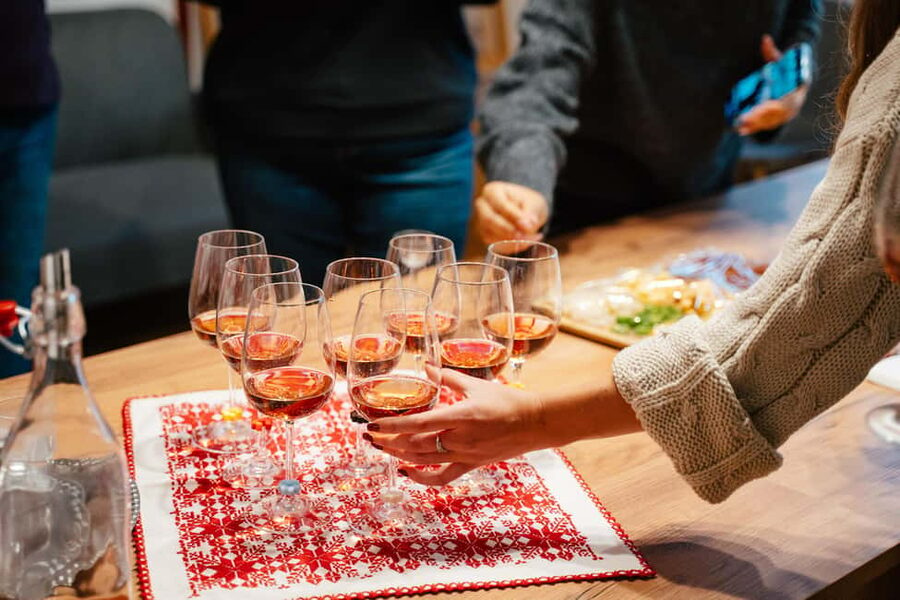
Then comes the drink pairing. You’ll have wine during the experience, plus a Hungarian spirit tasting (pálinka). This is one of those setups where the pacing matters. If you take tiny sips and keep water nearby (water is included), you’ll enjoy it. If you treat it like a party shot situation, cooking gets harder and the food stops tasting as clearly.
From what’s shown in past sessions, hosts often keep drinks flowing and conversation moving. The tone is social: you’ll talk with your group while you prep, and the cooking rhythm stays friendly rather than stiff or classroom-like.
Wine pairing and pálinka: how to enjoy it without losing the recipe
Wine and spirits are part of the charm here, but I always recommend a simple strategy: taste early, then taste again later with food on your spoon or fork. Alcohol can numb your sense of sweetness and salt if you overdo it at the start, and that can affect how you judge sauce thickness or seasoning.
During class, focus on what your host is telling you to watch for:
- Aroma changes as onions and spices cook down
- Sauce consistency as it simmers
- How acidity from pickles or sour elements balances richness
Even if you don’t become a Hungarian cooking expert overnight, you’ll start connecting flavors to technique.
Dessert and the practical skills that stick with you
A common disappointment in cooking classes is when dessert feels like an afterthought. Here, dessert is included and prepared during class. That matters because it gives you closure to the meal, and it also teaches you how Hungarians balance savory richness with something sweet.
The skills you take home tend to fall into two buckets:
- Basic prep technique (cutting, handling ingredients, building a workable mise en place)
- Sauce and assembly logic tied to the dish you cook
You’ll also get the recipe materials in writing. The included recipe booklet is the part you’ll actually use later when you shop for spices and try to reproduce the dish at home. Think of it as your reset button for a brain that’s been tasting wine and learning new words for ingredients all afternoon.
The souvenir that makes it feel personal: vintage postcard + recipe booklet
I love souvenirs that don’t feel generic. This one leans into character. You receive a one-of-a-kind, hand written historic vintage postcard as a souvenir, plus the recipe booklet from the class.
That postcard detail matters more than it sounds. It’s not just a photo. It’s handwritten and tied to real citizens, which makes it feel like a tiny piece of Budapest you can keep on a desk at home. It’s also a nice counterweight to modern travel culture where everything becomes a scroll.
Who this class suits best (and who might want another option)
This is a strong fit if you want:
- A true local cultural experience instead of a generic cooking demo
- Food plus story: market culture, everyday ingredients, and traditional methods
- Small-group conversation with a local host who answers questions
It can also work well for:
- Solo travelers who want built-in social time
- Couples who prefer shared work over a formal sit-down dinner
- Families with teens who are curious about food and like hands-on tasks
One reason people keep recommending it: the experience is designed around people cooking together, not watching a chef perform magic off to the side. If you like learning by doing, you’ll get a lot out of this.
When you might hesitate
If you want a fully meat-free menu with no alcohol involved, you should confirm your dietary needs ahead of time. The class supports gluten-free, vegan, and vegetarian options, but your best outcome depends on communicating restrictions and the meal preference you choose.
Price and value: what $100 buys beyond the kitchen
At $100 per person for about 4 hours, the price sits in the mid-range for Budapest food experiences—but the value comes from what’s included.
You’re getting:
- A guided market tour at Central Market Hall
- Included tastings of Hungarian cold cuts, cheeses, pickles
- Wine pairing and a Hungarian spirit tasting
- Hands-on cooking instruction plus all ingredients and equipment
- Main course and dessert made during class
- A recipe booklet and a handwritten vintage postcard souvenir
- An English-speaking chef/host
In other words, you’re paying for more than a recipe. You’re paying for a guided sensory intro to Hungarian food culture, plus the chance to eat what you cook. If you’ve ever paid for a class that covers only part of the meal, or that leaves you with a bland shopping bag of spices, this one feels more complete.
And if you’re the kind of traveler who likes to spend your limited time on experiences you can repeat later at home, the written recipes and technique practice make the cost feel more reasonable.
Practical tips to make your cooking class day smoother
You’ll enjoy the class more if you do these simple things:
- Let your host know your dietary restrictions and meal preference ahead of time. Options exist, but the experience works best when the plan matches your needs.
- Take notes during the cooking portion, even if it’s just a few bullet points about seasoning and sauce texture. The recipe booklet helps, but your memory matters too.
- Go easy on extra shopping at the market if you’re worried about carrying things back. The class already includes the core food experience.
- Wear comfortable shoes. You’ll move around the market and then stand at a kitchen station for part of the session.
- If you’re tasting wine and pálinka, sip slowly and drink water between tastings so you can still focus on the cooking steps.
Also, keep in mind the meeting style: for the evening cooking class, you meet at the apartment directly at Foodapest – Hungarian Cooking Class, Kinizsi u. 22-6/B, 1092 Hungary. For the daytime format, the market tour is part of the flow.
Should you book Foodapest in Budapest?
If your goal is a memorable mix of food, local market culture, and hands-on cooking, I’d say book it. This isn’t just about learning a dish name. It’s about tasting Hungarian flavors in context, then cooking them in a real local apartment with a host who keeps the group moving and comfortable.
Choose it especially if:
- you want a market stop that goes beyond sightseeing
- you like communal cooking and conversation
- you want wine and Hungarian spirit included
- you care about taking something home that feels personal (the handwritten vintage postcard and recipe booklet)
If you’re picky about the exact dish you cook or you have dietary needs, message them early about restrictions and pick your preferred option (chicken paprikash, goulash, or stuffed cabbage rolls). With that handled, this 4-hour class is one of the best ways to spend time in Budapest that doesn’t just look pretty—it tastes real.
FAQ
How long is the Budapest Foodapest cooking class and market tour?
It lasts 4 hours.
Where do I meet for the evening cooking class?
For the evening cooking class, you meet at the apartment directly: Foodapest – Hungarian Cooking Class, Kinizsi u. 22-6/B, 1092 Hungary.
Is there a market tour, or does it start at the apartment?
The experience includes a guided market tour at Budapest’s Central Market Hall, and then it moves to a local apartment for the cooking class.
What can I cook during the class?
You prepare a traditional Hungarian main course and a dessert. Your meal preference is selected in advance from chicken paprikash, goulash, or stuffed cabbage rolls.
Are dietary accommodations available?
Yes. Gluten-free, vegan, and vegetarian options are available. You should let them know your dietary restrictions beforehand.
What’s included with the cooking class?
Included items cover the guided market tour, hands-on cooking in a local apartment, a local English-speaking chef and host, all fresh ingredients and equipment, welcome tastings (cold cuts, cheeses, pickles), wine pairing and Hungarian spirit tasting, soft drinks and water, and a recipe booklet plus a vintage postcard souvenir.
Do they teach in English?
Yes, the instructor and host are English-speaking.
Can I cancel or pay later?
You can cancel up to 24 hours in advance for a full refund, and you can reserve now and pay later.
More Tours in Budapest






More Tour Reviews in Budapest






Chimney Cake and the Hungarian Kitchen




Just Added: More Budapest Reviews
- Sightseeing flight over Budapest
★ 5.0 · 3 reviews - Budapest: Walking Tour with Chimney Cake & Polaroid Photos
★ 5.0 · 3 reviews - Self Guided Tour In Budapest With 100 Captivating Audio Stories
★ 5.0 · 3 reviews - Budapest Art Nouveau Walking Tour
★ 5.0 · 3 reviews - Hungary today: a no-taboo conversation
★ 5.0 · 3 reviews
Chimney Cake & Cooking Classes, compared.
 ★ 5.0Budapest All in One Small Group Walking Tour with Strudel StopFrom $1001,277 reviews
 ★ 4.7Hungarian Chimney Cake Workshop in the City CenterFrom $421,263 reviews
 ★ 5.0Budapest Cooking Class & Market Tour with Local Guide & WinesFrom $99553 reviews
 ★ 4.8Traditional Chimney Cake (Kürtőskalács) WorkshopFrom $22323 reviews
 ★ 5.0Chimney Cake Workshop Budapest Downtown – Kürtőskalács ClassFrom $38220 reviews
 ★ 5.0Premium Hungarian Home Cooking Experience with Chef MartiFrom $131169 reviews
 ★ 4.5Hungarian Cooking and optional Local Market TourFrom $12698 reviews
 ★ 5.0Hungarian Strudel Making Class: Stretch & Fill Two WaysFrom $9576 reviews
Browse the lists this tour appears in