
Reviewed · MUSEUMS & IMMERSIVE EXHIBITS
Budapest: Time Machine Immersive Historical Exhibition
Time travel is fun when it’s practical, and this one works. Under the Twentysix restaurant on Király Street, Budapest’s past is staged across a 1,000 m² exhibition with VR, holographic projection, mist screen effects, and a Holopyramid—so the story isn’t just told, it’s shown. I also like that the exhibition leans on professional audio plays to bring key moments to life, from revolutions and wars to everyday people caught in big events.
Your main trade-off: it’s content-heavy. If you prefer a lighter, purely visual experience, you may find the narration and historical context a bit much—still interesting, just not minimal.
In This Review
- Key things to know before you go
- Király Street 26: Finding the right door under Twentysix
- Walking into 1,000 m² of Budapest’s past (not just a hallway show)
- The tech: VR, holograms, mist screens, and the Holopyramid
- The Budapest timeline you’ll actually remember
- Original audio plays by professional actors
- Timing and pacing: what 90 minutes feels like in real life
- Price and value: is $26 worth 1.5 hours of tech and acting?
- Who should book, and who might not love it
- Should you book Time Machine Budapest?
- FAQ
- How long is the Time Machine Budapest experience?
- Where is Time Machine Budapest located?
- What technologies are used in the exhibition?
- Is the exhibition available in English?
- Do guided tours include multiple languages?
- Is it suitable for children?
- How far in advance should I arrive for my tour time?
- How often do tours start?
- Is wheelchair access available?
- What’s the ticket price?
Key things to know before you go
- Practical location: It’s beneath Twentysix at 26 Király Street, down the stairs to the left.
- Big space, fast pacing: A 1,000 m² layout helps you move between eras in about 90 minutes.
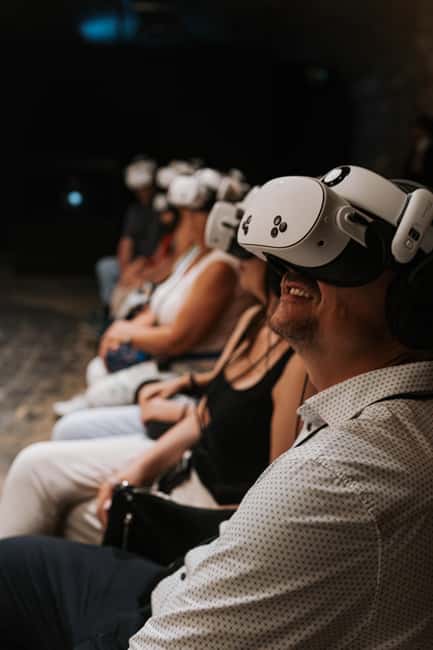
- Mixed tech toolkit: VR, holograms, mist projections, and the Holopyramid make the history feel physical.
- Professional-actor audio plays: You’ll hear original performances tied to Budapest’s story.
- Clear timeline themes: Habsburg rule, WWII devastation, the Ghetto of Budapest, and the socialist era.
- Language choices: The exhibition is available in English, German, Spanish, and Hungarian.
Out of the weather, more halls and screens
- Budapest: Cinema Mystica Entry Ticket★ 4.3 · 3,103 reviews
- Budapest: Cat Museum Budapest Entry Ticket★ 4.4 · 2,210 reviews
- Budapest: Light Art Museum Skip-the-Line Entry Ticket★ 3.9 · 1,531 reviews
- Budapest: Madame Tussauds Ticket + POP&ROLL Access★ 4.7 · 1,525 reviews
Király Street 26: Finding the right door under Twentysix
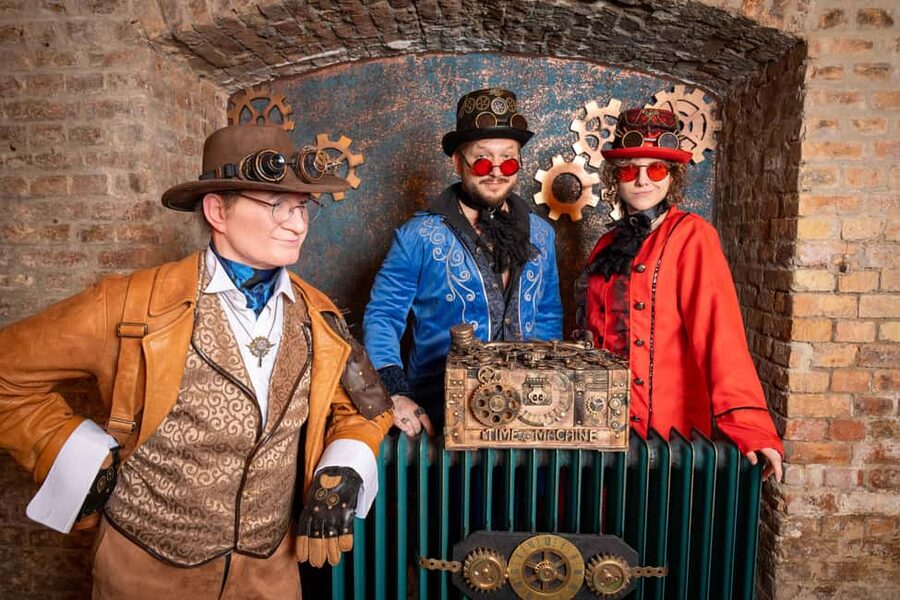
I like experiences that don’t waste your first hour. This one is easy to pinpoint: you’re looking for Time Machine Budapest at 26 Király Street, with the entrance near the street-facing ticket area. If you’d rather not hunt, go straight to the restaurant: find Twentysix, then head down to the lower ground floor where you’ll see the Time Machine entrance on the left.
One small detail that matters: the venue is down a set of stairs, but the attraction is listed as wheelchair accessible. When you arrive, don’t be shy about asking staff the simplest route for your situation. That’s the kind of quick help that keeps the day smooth instead of stressful.
Walking into 1,000 m² of Budapest’s past (not just a hallway show)
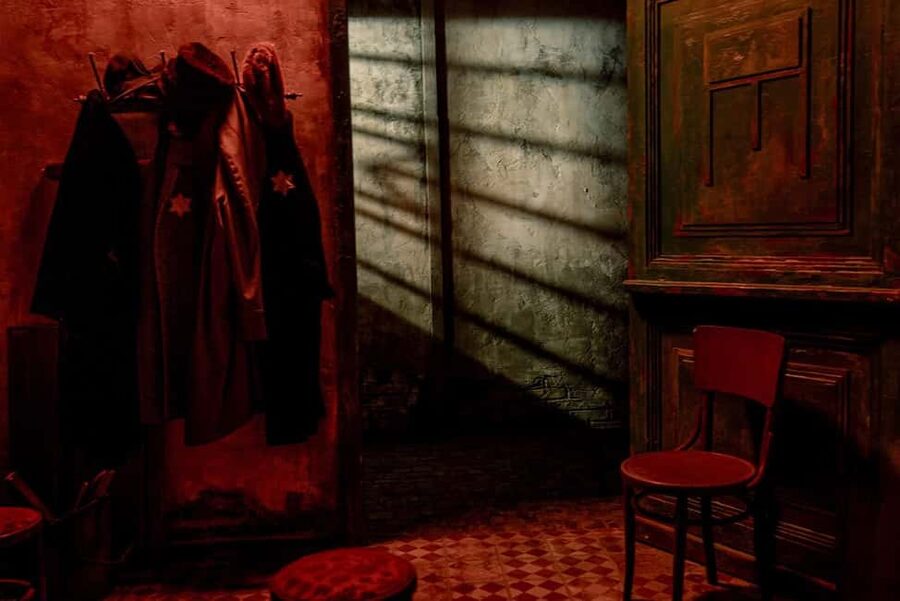
Inside, the space is built to keep you moving through time. Instead of a single room with posters, you’re placed in an atmospheric area designed to hold multiple technologies and scenes. That scale matters because it changes how you experience history: you can feel like you’re progressing through eras, not just watching one long presentation.
The exhibition follows Budapest’s story from an early idea of unifying the city to more modern times. You’ll meet themes you likely recognize from Budapest sightseeing—political turning points, wars, forced displacement, and shifts in daily life—but you’ll encounter them through scene-building rather than a lecture alone.
I also appreciate that it’s meant to connect dots for people who haven’t studied Hungarian history. If you’ve been doing the standard photo stops all morning, this gives you narrative anchors. If you already love history, it gives you fresh angles and names of periods to place on your mental map.
The tech: VR, holograms, mist screens, and the Holopyramid
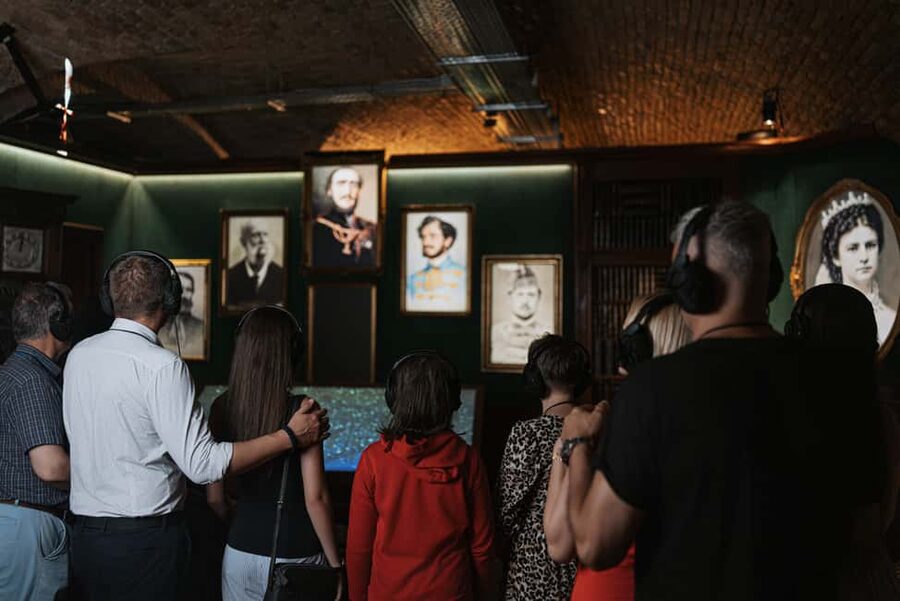
This is the headline, and it’s also where you should set expectations. You’re not just watching screens. The show mixes VR, holographic projection, and mist projections to create a layered experience. The Holopyramid adds another dimension—literally—by using a geometric projection effect to make certain moments feel more immediate.
Here’s the practical part: technology works best when it’s used to support the story, not replace it. In this exhibition, the tech is tied to historical themes—revolutions, war impacts, and the lives of everyday people—so you’re not left wondering what you’re looking at. Still, there will be moments where your brain is doing two jobs at once: listening to audio while also processing visual effects.
If you’re sensitive to sound or prefer calmer pacing, plan to take a breath between scenes. And if you really want the visuals without much history background, you might feel the narration is more detailed than you expected. On the other hand, if you like context, these tech moments are easier to enjoy because they come with meaning.
The Budapest timeline you’ll actually remember
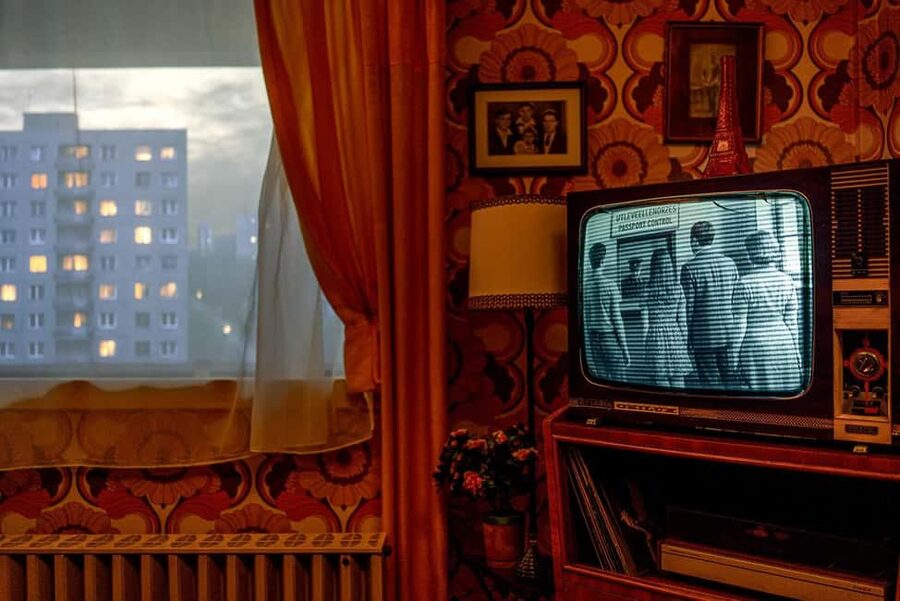
The exhibition doesn’t try to cover everything about Budapest. It focuses on eras and events that changed the city’s direction and the daily lives of people living there.
Expect coverage of:
- The Habsburg period, when imperial power shaped government and culture.
- The devastation of World War, including how conflict spills into civilian life.
- The Ghetto of Budapest, a dark chapter tied to forced segregation and persecution.
- The socialist era, which brought new systems and a new rhythm to public life.
It also threads in stories of revolutions, wars, and forgotten destinies—plus the “everyday heroes” angle. That last piece is important. History often feels like it’s only about politicians and battles. Here, you’re encouraged to notice how ordinary people experience big shifts, which is what helps the facts stick when you later walk past landmarks in Budapest.
One helpful mindset: treat this as your timeline foundation. After this, when you see a building, a street name, or a monument, you’ll have a better sense of what era you’re looking at.
Further back into Budapest's past


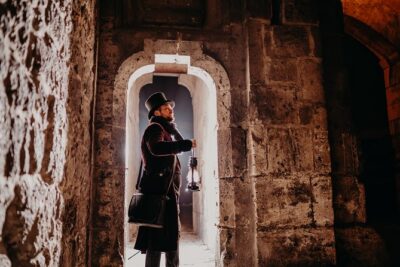
Original audio plays by professional actors
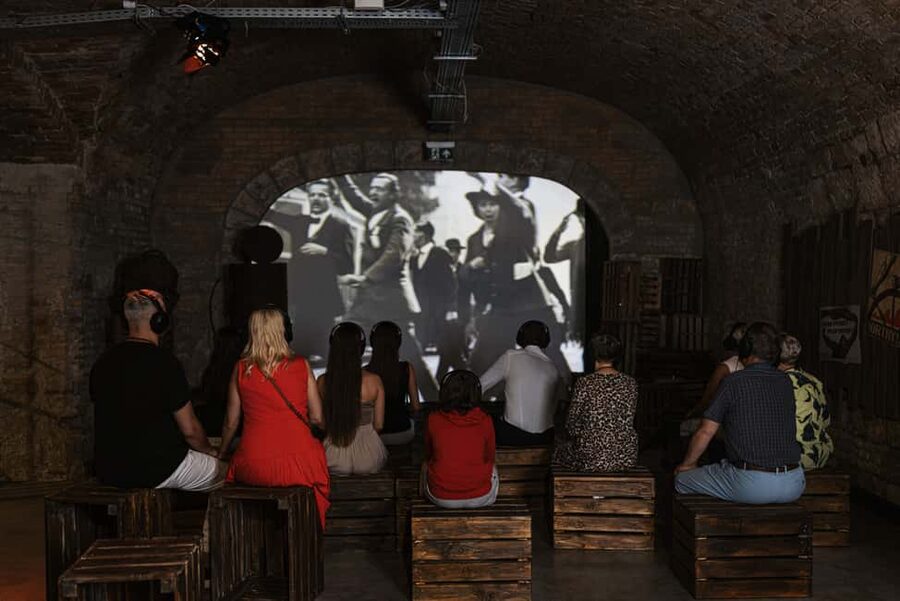
If I had to pick one ingredient that makes this experience work, it’s the audio plays. Professional actors bring a tone that recorded announcements often miss. Instead of hearing generic narration, you get original performances that feel like scenes with character.
That style matters for two reasons:
- It keeps attention when the tech changes quickly.
- It turns history from information into lived moments—voices, reactions, urgency.
The show is designed so the audio isn’t floating on its own. It’s part of the atmosphere, tied to what you’re seeing in the room. That combination is especially valuable if you’re visiting with older kids (the show is recommended for families with children over 12) or if you want something more engaging than a museum label.
You might get the sense that the production team really wanted the experience to be more than a one-time tech demo. The result is that your brain remembers the emotional beats, not just the dates.
Timing and pacing: what 90 minutes feels like in real life
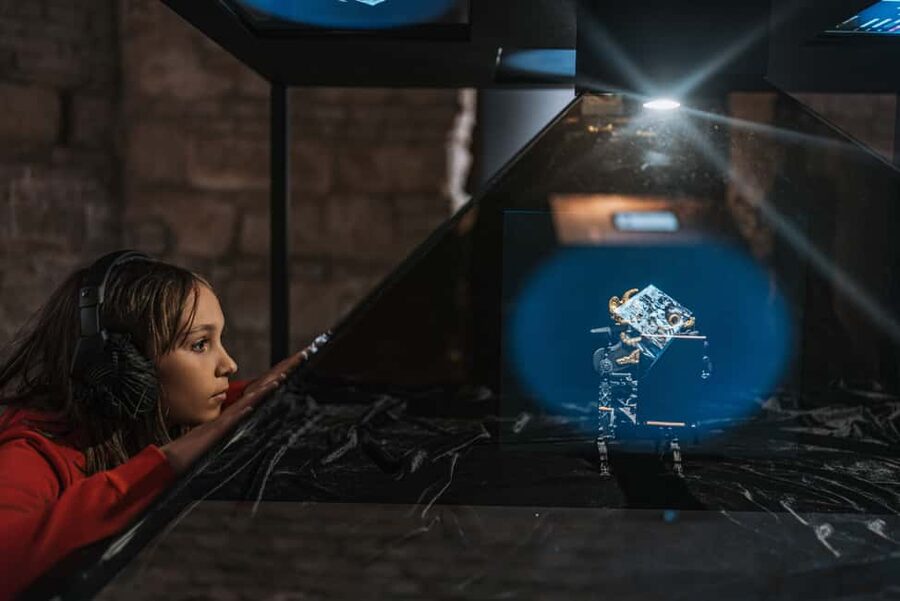
The stated duration is 90 minutes, and the guided tour portion is listed at about 100 minutes. Either way, you’re looking at roughly 1.5 hours inside—enough time to build a story arc, but short enough that you won’t feel dragged through a museum.
Tours start every 30 minutes, so the staff can keep the flow tight. That also means timing matters: arrive 10–15 minutes before your scheduled start. Do yourself the favor. You’re here for a show with an internal rhythm. Missing the start likely means you disrupt that rhythm for yourself.
About pacing: some people may think there’s a lot of explanation. I’d call that a feature if you want context, a drawback if you’re hoping for minimal talking. Your best strategy is to decide ahead of time what kind of visitor you are today: Do you want to get oriented for future sightseeing, or do you want pure entertainment with light history?
Either works. Just pick the mode.
Price and value: is $26 worth 1.5 hours of tech and acting?
At about $26 per person, this isn’t a free diversion. But it can be good value because you’re not just buying access to a room—you’re paying for multiple layers of production:
- VR and projection tech (not just screens)
- a Holopyramid element
- original audio plays performed by professionals
- guided elements tied to a set timeline
So ask yourself what you usually spend for similar “wow” experiences in a major European city. If you typically pay for a guided walking tour plus a museum ticket, this is a different package: less outdoor time, more show-time storytelling under one roof.
Where the price fits best:
- If you’re short on time and want a coherent history storyline in one sitting.
- If you enjoy technology when it’s paired with interpretation.
- If you’re the type who likes to leave with a framework you can use while exploring the city.
If you’re allergic to narration-heavy experiences, the value question depends on whether you’ll enjoy the explanations. In that case, it may feel like paying for “history you have to listen to,” not just “pictures you watch.”
Who should book, and who might not love it
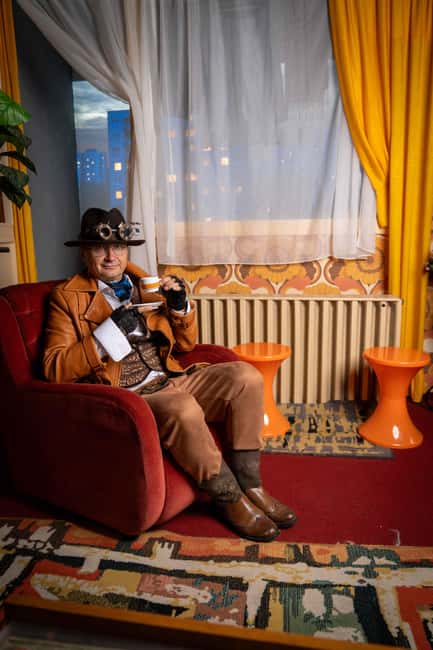
This show is recommended for adults and families with children over 12. Younger kids may struggle with the amount of content and the darker historical themes, so it’s smart that the experience doesn’t aim at pre-teen audiences.
You’ll likely be happiest if:
- You want a history starter kit that makes Budapest landmarks easier to understand.
- You like multimedia storytelling—VR, projections, and audio performances.
- You appreciate hearing history framed by human stories, not only dates.
You might want to think twice if:
- You strongly prefer quiet museum-style visiting with minimal narration.
- You dislike explanations and would rather focus only on visual effects.
- You’re visiting with very young kids who need a shorter, simpler attention span.
One more practical note: the vibe is theater-like. You’re there for a planned experience, not open-ended browsing.
Should you book Time Machine Budapest?
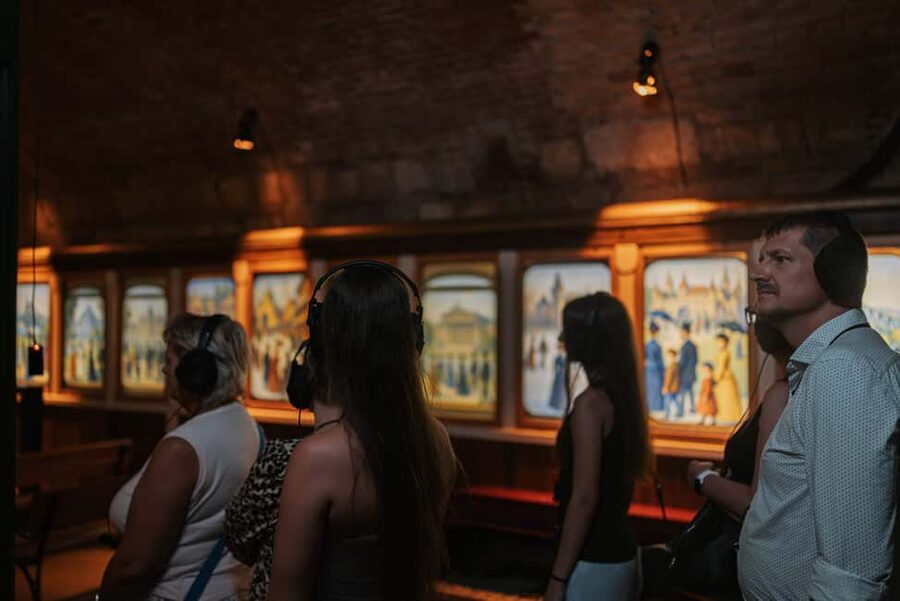
Book it if you want a fast, guided way to understand key Budapest eras—especially Habsburg rule, WWII impacts, the Ghetto of Budapest, and the socialist era—with technology that supports the story instead of distracting from it. It’s also a strong choice when you want to feel more confident walking the city afterward, because you’ll leave with a cleaner timeline.
Skip it (or at least reconsider) if you know you dislike narration-heavy experiences, because this one uses detailed historical explanations alongside the visuals. Also, if your group includes children under 12, this isn’t the right match.
If you’re on the fence, I’d frame it simply: you’re paying for a professionally produced history show under Twentysix, and it should work best for people who enjoy both context and tech.
FAQ
How long is the Time Machine Budapest experience?
The exhibition experience is listed as about 90 minutes.
Where is Time Machine Budapest located?
It’s under the Twentysix restaurant at 26 Király Street, with the entrance on the lower ground floor down the stairs to the left of the restaurant.
What technologies are used in the exhibition?
You’ll see VR, holographic projection, mist screen projection, and a Holopyramid.
Is the exhibition available in English?
Yes. The exhibition is available in English (and also German, Spanish, and Hungarian).
Do guided tours include multiple languages?
The live tour guide is available in English, German, and Spanish.
Is it suitable for children?
It’s recommended for families with children over 12 years old, and it is not suitable for children under 12.
How far in advance should I arrive for my tour time?
Plan to arrive about 10–15 minutes before your scheduled tour.
How often do tours start?
Tours start every 30 minutes.
Is wheelchair access available?
Wheelchair accessibility is listed for the activity, though the site is located on the lower ground floor down stairs, so it’s smart to ask staff about the easiest route when you arrive.
What’s the ticket price?
The price is listed as $26 per person.
The Old Budapest, Toured Properly






More Tour Reviews in Budapest






Indoors Done Well: More Exhibits





Just Added: More Budapest Reviews
- Sightseeing flight over Budapest
★ 5.0 · 3 reviews - Budapest: Walking Tour with Chimney Cake & Polaroid Photos
★ 5.0 · 3 reviews - Self Guided Tour In Budapest With 100 Captivating Audio Stories
★ 5.0 · 3 reviews - Budapest Art Nouveau Walking Tour
★ 5.0 · 3 reviews - Hungary today: a no-taboo conversation
★ 5.0 · 3 reviews
Museums & Immersive Exhibits, compared.
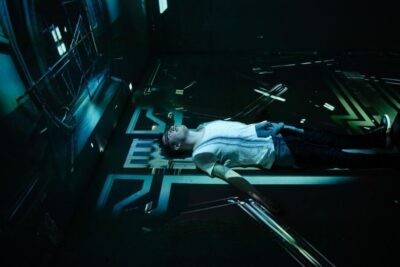 ★ 4.3Cinema Mystica Entry TicketFrom $213,103 reviews
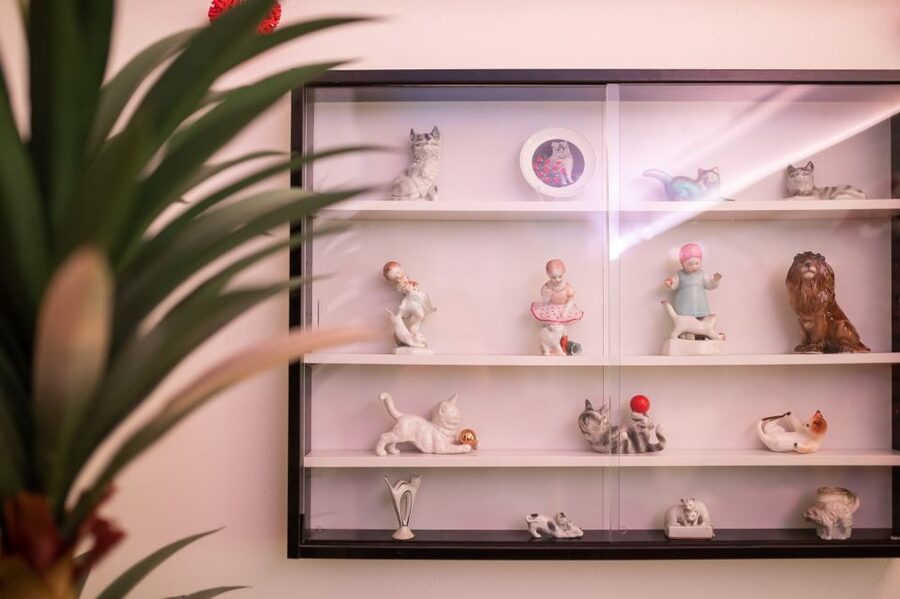 ★ 4.4Cat Museum Budapest Entry TicketFrom $142,210 reviews
 ★ 3.9Light Art Museum Skip-the-Line Entry TicketFrom $211,531 reviews
 ★ 4.7Madame Tussauds Ticket + POP&ROLL AccessFrom $341,525 reviews
 ★ 4.0Ikono Budapest Entry TicketFrom $18924 reviews
 ★ 4.5IKONO Budapest – Immersive ExperienceFrom $18626 reviews
 ★ 4.4Budapest Retro Interactive Museum TicketFrom $17569 reviews
Van Gogh Immersive Exhibition TicketFrom $18399 reviews
★ 4.4Budapest Retro Interactive Museum TicketFrom $17569 reviews
Van Gogh Immersive Exhibition TicketFrom $18399 reviews
Browse the lists this tour appears in