
Reviewed · DARK HISTORY & GHOST TOURS
Rise Against the Soviet: The 1956 Revolution – Private Tour
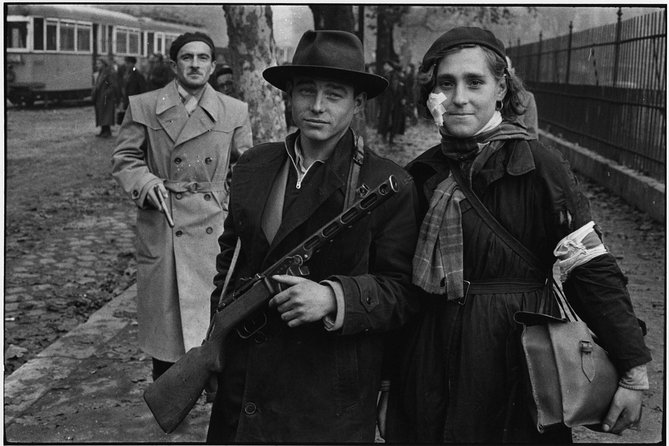
Revolution has a way of leaving footprints. This private 1956 Revolution tour uses major Budapest landmarks and short guided stops to turn the politics into something you can see, walk past, and question.
I love the personal, human scale of the story, especially when guides connect the events of 1956 to the long buildup and long aftermath. I also like that you can go in a small group (up to five) with hotel pickup, so you’re not just herded around. One drawback to consider: three hours is a tight window for a topic this huge, so some stops are brief by necessity.
In This Review
- Key highlights to look for
- Why this 1956 Revolution tour feels different in Budapest
- The private setup, pickup, and timing that actually matter
- Kossuth Lajos Square: where a demonstration met state violence
- Margaret Bridge and the Communist White House on the Danube
- Bem Square and Bambi Eszpresszó: students, intellectuals, and risk
- Sándor Petőfi Statue: the revolution in public space
- Radio Budapest and the call for help beyond Hungary
- Corvin Cinema and Corvin köz: the resistance gets specific
- Handouts, a souvenir, and why context matters after the walk
- Price and value: what you’re paying for at $228.66 per group
- Tips to make your 3 hours feel longer (in a good way)
- Who should book this tour?
- Should you book Rise Against the Soviet: The 1956 Revolution private tour?
- FAQ
- How long is the tour?
- How many people are in the group?
- Do I get pickup from my hotel?
- What language is the tour in?
- Is the tour admission included?
- What’s included in the price?
- Is food or drinks included?
- Is cancellation free?
- Is a service animal allowed?
Key highlights to look for
- Kossuth Lajos Square’s 1956 demonstration aftermath, where the government massacred dozens
- Margaret Bridge’s communist Party HQ, nicknamed The White House
- Imre Nagy’s legacy, referenced through his statue and what happened to him afterward
- Bem Square’s student protest of about 200,000 Hungarians, originally linked to support for Polish workers
- Radio Budapest’s role during the fighting, where revolutionaries pleaded for help from the world
- Corvin köz and Corvin Cinema resistance, with stories of Molotov cocktails and stolen guns
Your own guide and your own timing in Budapest
- Private Budapest TukTuk Tour: Custom Route, Hotel Pickup★ 5.0 · 1,307 reviews
- Budapest Essentials Private Tour Highlights and Hidden Gems★ 5.0 · 861 reviews
- Budapest Private Luxury Sightseeing Tour with Guide and Transport★ 5.0 · 442 reviews
- Private Budapest City tour with Classic Russian Jeep or G-Wagon!★ 5.0 · 386 reviews
Why this 1956 Revolution tour feels different in Budapest
If you think you already know 1956, this kind of tour is still worth it. Budapest puts the revolution on a human map: squares where crowds gathered, bridges where key power was managed, and corners where fighting and radio pleas for help happened. The guided framing matters because the uprising wasn’t a single movie-scene event. It was the result of years of pressure, fear, and public frustration.
What makes the experience practical is that you’re not just reading about the Communist era in theory. You’re learning why certain places became symbols, and why names like Imre Nagy still carry weight. The tour also helps connect the dots forward: you’ll hear how the revolution shaped what came after, including the eventual collapse of Communist rule in Hungary in 1990.
This is the sort of tour that history buffs tend to love, but it’s also approachable if you want context without getting buried in dates.
The private setup, pickup, and timing that actually matter
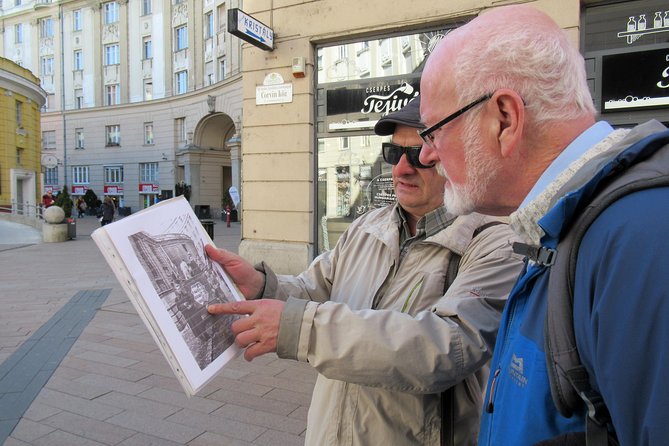
This is a private tour for up to five people, in English, and it runs about 3 hours. That group size is more than a comfort thing. It means you can ask questions, and the guide can slow down when something hits closer to home for your group.
Hotel pickup is offered, so you can start without figuring out transit right away. You’ll also have a mobile ticket and handouts during the walk. The stops are mostly short (often 15 to 25 minutes), so you’ll move at a steady pace with focused explanations at each point.
You should have moderate physical fitness. Expect walking plus short periods outside, and plan to wear comfortable shoes. One more practical note: the tour includes public-transport options in the mix in some cases, so it helps to be open to quick changes in pace (walk, then tram, then walk again).
Kossuth Lajos Square: where a demonstration met state violence
Kossuth Lajos Square is the kind of place that looks grand on purpose. With the Hungarian parliament standing here, you get an immediate sense of government power and public space colliding.
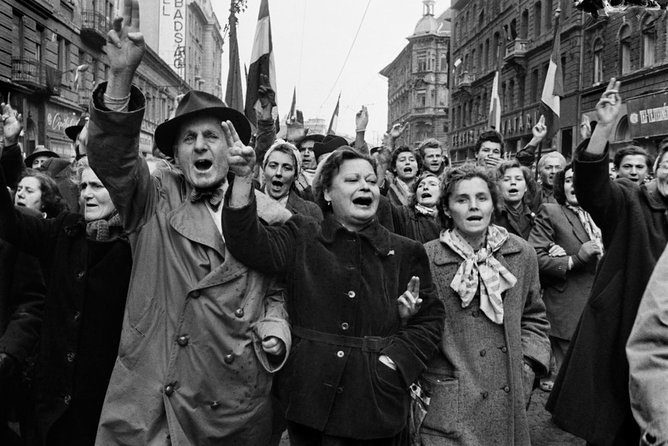
At this stop, the story lands on a specific turning point: after a mass demonstration in 1956, dozens were massacred by the government. That detail changes how you read the square. You’re not just admiring architecture. You’re seeing how quickly a peaceful crowd can be treated as a threat when the state feels cornered.
The good part here is the guide’s pacing. Even though the stop is about 25 minutes, you’ll usually get a clear explanation of why this moment became part of the revolution’s memory. Admission at this stop is free.
Margaret Bridge and the Communist White House on the Danube
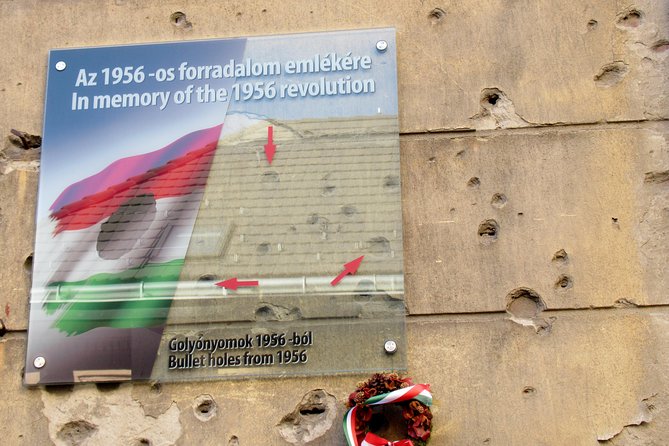
Crossing from Kossuth Square to the Danube area feels like shifting from public spectacle to power behind closed doors. On the riverbanks near the bridge, the tour focuses on a building that communist authorities dubbed The White House.
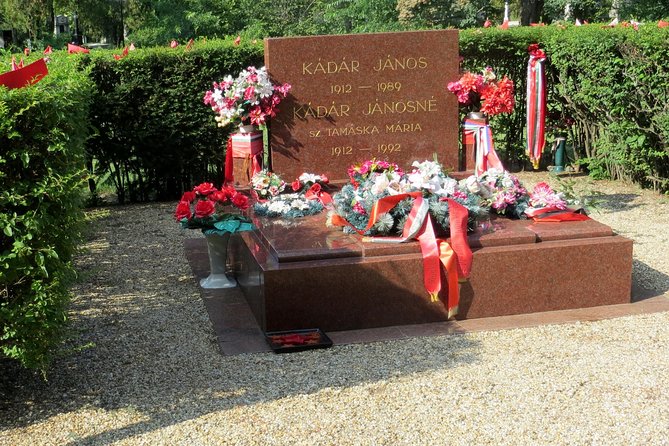
Here, you learn why the nickname mattered: it points to where the Party government operated and how the state tried to project control. The guide also connects this site to Imre Nagy, the 1956 prime minister later murdered. Seeing the statue in the area keeps his story from becoming an abstract name in a textbook.
This stop is about 20 minutes, so it’s best thought of as a “high-impact” location rather than a long discussion. Still, it’s valuable because the Danube setting helps you understand how the geography of Budapest carried political meaning.
The darker Budapest, told after dusk
Bem Square and Bambi Eszpresszó: students, intellectuals, and risk
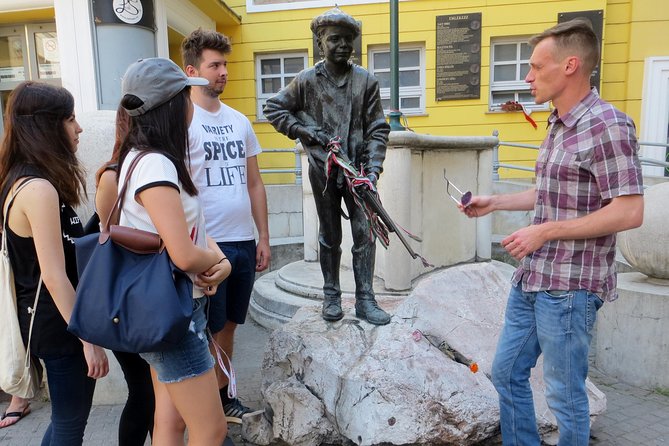
Bem Square is where the revolution shows its loudest youth energy. The tour highlights the student protests in 1956—around 200,000 Hungarian students—marching against Soviet rule. The rally had roots in support for Polish workers too, which is an important detail if you want the wider 1950s context rather than treating Hungary as isolated.
Then there’s a different kind of history at Bambi Eszpresszó on Frankel Leó utca. This café has served as a shelter for Buda-side intellectuals since the 1960s, and it has kept the same atmosphere and interior design. That’s not a random detour. It’s a reminder that resistance doesn’t always look like a barricade; sometimes it looks like conversation, ideas, and safe meeting places where people think out loud.
This stop runs about 30 minutes. The balance is usually what makes it work: political numbers and then a human setting where culture and politics mingle.
Sándor Petőfi Statue: the revolution in public space
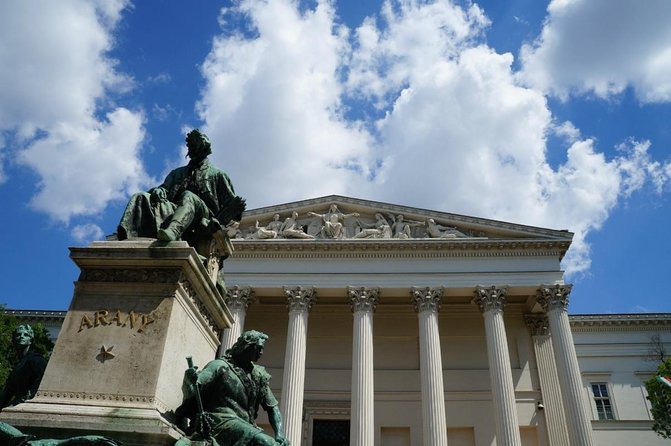
Sándor Petőfi is remembered as a key figure in Hungary’s 1948 revolution, and in 1956 his name became shorthand for struggle against government. The statue works as a meeting point for political events even today, so you’re not looking at a museum piece. You’re looking at a place where public meaning stays alive.
One of the most striking details tied to this location is about the actor Sinkovits Imre. In 1956, he came to the statue and recited Petőfi’s words that incited revolution. After that, he was arrested and imprisoned. Whether you know Hungarian literature well or not, that story gives the statue a sharper edge: public speech and public risk were tightly linked.
This stop is short (about 15 minutes), but it’s one of the most emotionally direct points on the walk. If you like stories with clear cause-and-effect, don’t skip taking a moment here and just look around.
Radio Budapest and the call for help beyond Hungary
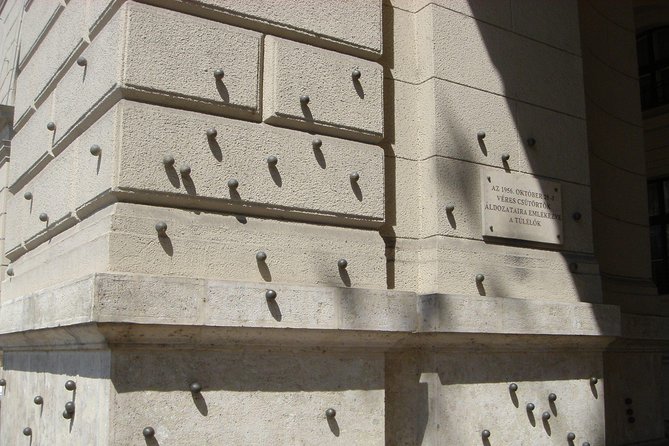
Budapest has places that feel like they were built for big narratives, and then it has places that are easy to miss unless someone points them out. The stop near Sándor Bródy Street focuses on the Magyar Rádió Building, also known as Radio Budapest.
It’s described as somewhat secluded, which helps explain why it mattered. During the fighting, this radio building was an epicenter. Revolutionaries used it to beg for help from the outside world—trying to get the international spotlight when information and control were life-or-death issues.
You’ll usually spend around 20 minutes here, and the value is in the “why this place” explanation. A radio station isn’t just a building; it’s a channel of power. When people take over a communications site, they’re not only trying to broadcast—they’re trying to shape reality.
Admission here is free, but the most important entry ticket is your guide’s framing.
Corvin Cinema and Corvin köz: the resistance gets specific
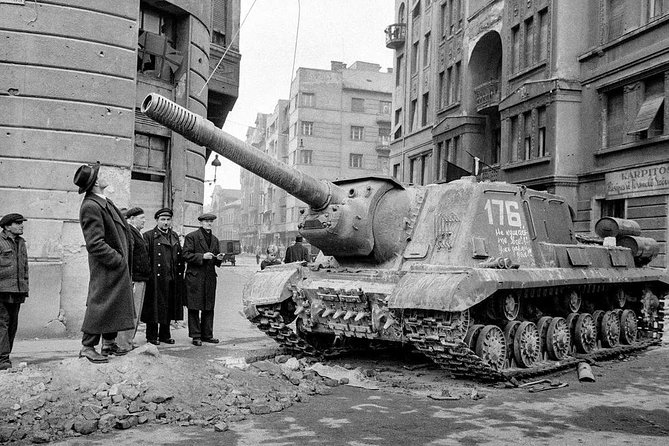
The final stop moves to the south-east part of the city, to Corvin köz, where the revolution’s local defense effort is described in concrete terms. This was the major resistance center in 1956, with local youngsters fighting invading Russians.
The story includes details that make it feel real: Molotov cocktails and guns stolen from soldiers were used against Soviet tanks. You’re not getting a generic “there was fighting” summary. You’re learning what people used, what they chose to risk, and why that area became part of the revolution’s memory.
At Corvin Cinema, the guide points out reminders of the battles and then talks about the invasion and what came afterward. This stop is about 30 minutes, giving you a little more time to absorb the aftermath rather than rushing past it.
If your interest is in how revolutions work on the ground, this is the stop that tends to stick.
Handouts, a souvenir, and why context matters after the walk
The tour includes educational handouts and a communism-related souvenir. Those aren’t just add-ons. Handouts are useful because they let you keep the timeline and key names straight once you’re back in your hotel. With a subject like 1956—where leaders, dates, and outcomes connect in messy ways—that follow-up paper helps.
The tour also does something subtle and valuable: it treats 1956 as part of a larger pattern. One guide named in recent experiences is Peter, and another is Miklos, both described as bringing a long-view approach and personal-era insight. Even if you’re not studying for an exam, that “big picture without skipping the people” approach helps you understand why events mattered.
If you’re traveling with someone older or you just prefer a slower pace, the better guides adjust. In one story, the guide slowed things down so a 91-year-old father could keep up, and the guide emphasized details most relevant to his memories. That’s a sign this experience can be flexible, not rigid.
Price and value: what you’re paying for at $228.66 per group
At $228.66 per group (up to five people), the value depends on how many of you are in the group. If you book as a couple, you’re paying $228.66 split between two people. If you book as a family of four or a group of five, the cost per person drops fast.
What you are getting for the money:
- A private guide for about 3 hours
- Pickup from your hotel or a central meeting point
- Short, purposeful stops at key sites tied to the 1956 revolt
- Handouts and a souvenir
- Admission is free at the listed stops
So the practical question isn’t only the total price—it’s whether you want expert interpretation instead of trying to piece the story together yourself. In Budapest, sites connected to 1956 are spread out, and a private guide saves time and prevents the common problem of seeing places without understanding why they matter.
If you love history, and you want the story told in a human, place-based way, this price usually pencils out.
Tips to make your 3 hours feel longer (in a good way)
- Wear shoes you can walk in comfortably. The route is active, and you’ll be outside for extended explanations.
- Bring a small bottle of water. The tour doesn’t include drinks or food, and you don’t want to cut conversations short due to hunger.
- Ask about cause and aftermath. The guides are best when you let them connect why things happened to what happened next.
- Don’t treat the stop times like a limitation. Each location is short, but the guide’s job is to give you the specific meaning of that spot.
- If you’re sensitive to heavy topics, keep expectations realistic. This is not a light “political landmarks” stroll. It includes massacres, arrests, and the human cost of the uprising.
Who should book this tour?
Book it if you’re one of these travelers:
- A history buff focused on the Communist era and the 1956 Revolution
- Someone who wants the story tied to specific Budapest sites, not just a general overview
- Travelers who appreciate a guide who can answer questions and explain how the pieces connect
- A small group that values privacy over joining a larger crowd
It’s also a strong fit if you have limited time in Budapest and want the highlights that explain why 1956 is still remembered here.
Should you book Rise Against the Soviet: The 1956 Revolution private tour?
Yes, if you want a focused, guided route through the places where 1956 becomes real. The tour’s strongest points are the specific locations and the guide’s ability to turn politics into something you can feel through personal stories and clear context. The private format helps you keep pace with the topic and ask follow-up questions.
Be aware that the subject is enormous, and three hours means some areas of the broader story won’t get the same attention as others. If you want an all-day lecture, this won’t replace that. But if you want a smart, place-based introduction with strong interpretation, it’s a good use of time.
FAQ
How long is the tour?
It lasts about 3 hours.
How many people are in the group?
It’s a private tour with only your group participating, up to 5 people.
Do I get pickup from my hotel?
Yes. Pickup is offered either from your hotel in Budapest or from a central point you agree on.
What language is the tour in?
The tour is offered in English.
Is the tour admission included?
Yes. The listed stops show free admission for the tour segments.
What’s included in the price?
The price includes handouts and a communism-related souvenir.
Is food or drinks included?
No. Other drinks or food are not included.
Is cancellation free?
Yes. You can cancel for a full refund up to 24 hours in advance.
Is a service animal allowed?
Yes, service animals are allowed.
More Tour Reviews in Budapest




The Darker Side of Budapest



Private Budapest, Your Pace


Just Added: More Budapest Reviews
- Sightseeing flight over Budapest
★ 5.0 · 3 reviews - Budapest: Walking Tour with Chimney Cake & Polaroid Photos
★ 5.0 · 3 reviews - Self Guided Tour In Budapest With 100 Captivating Audio Stories
★ 5.0 · 3 reviews - Budapest Art Nouveau Walking Tour
★ 5.0 · 3 reviews - Hungary today: a no-taboo conversation
★ 5.0 · 3 reviews
Dark History & Ghost Tours, compared.
 ★ 4.6Buda Castle District Vampires and Myths Night TourFrom $233,830 reviews
 ★ 4.5Buda Castle District Dark History, Legends and Vampire Night TourFrom $211,240 reviews
 ★ 4.9BloodThirsty Hungary: Walking tour & Dark Historical StoriesFrom $21633 reviews
 ★ 5.0Nightmare in Budapest Interactive Horror ExperienceFrom $24390 reviews
 ★ 4.8Communist History Tour with House of Terror OptionFrom $58182 reviews
 ★ 5.0BloodThirsty Hungary – Castle DistrictFrom $2180 reviews
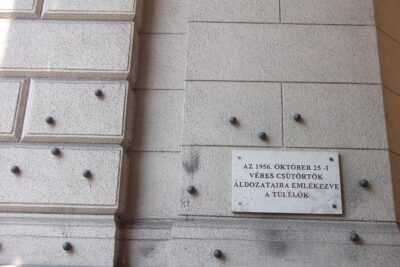 ★ 5.0Communism in Hungary with a HistorianFrom $5970 reviews
 ★ 4.73-Hour Walking Tour About Communism (Small Group)From $5770 reviews
Browse the lists this tour appears in