
Reviewed · DARK HISTORY & GHOST TOURS
Private Tour of Communist Era Budapest
Communism leaves fingerprints everywhere in Budapest. This private tour strings those clues together, from Stalin Baroque street corners to the big, open-air reminders at Memento Park.
What I like most is the way the route mixes major landmarks with everyday life: a preserved presszó coffee bar, planned youth culture spaces, and the housing estates where people lived under the system. You also get a guide who ties buildings and statues to the human story, using a calm, factual tone.
One thing to consider: the day is long (about 7 to 10 hours), and a few stops depend on timing and conditions. The Liberty Statue / Citadel area is under renovation with limited timing, and city traffic can shift how much you fit in.
In This Review
- Key Highlights You’ll Actually Feel
- Private Communist-Era Budapest: what the day is really like
- Price and value: is $245 per person fair for this much ground?
- Start with Tamas Varga: getting the pace and depth you want
- Szabadság Square to Stalin Baroque: learning the language of power
- House of Terror exterior stop: the building as an argument
- Bem József Memorial and 1956: how protests start in one square
- Bambi Café presszó: a communist-era time capsule for your caffeine break
- Youth culture space: Marczibányi 1972 and the idea of managed free time
- Hotel Budapest and Goulash Communism: the skyscraper message
- Gellért Hill Liberty Statue: victory symbolism with Soviet overtones
- Socialist Realism at the university buildings: Moscow awaits
- Fehérvári Way market hall: brutalism you can actually walk through
- Lunch at Restaurant Alba Regia: what to do if you only know a few Hungarian words
- Communist-era church architecture: worship spaces without traditional shapes
- Tower block estate life: prefabricated housing and a quick photo moment
- Experimental Housing Estate and Children’s Dentistry: where the guide lived
- Csepel Island: Red Csepel, the iron works, and 1956 resistance
- Gubacsi Road Housing Estate: ceramic reliefs and a post-war transition
- Memento Park: the emotional end of the communist statue era
- Budapest Retro Interactive Museum: when you want play plus context
- Practical Tips for a smooth communist-era day
- Should you book the Private Tour of Communist Era Budapest?
- FAQ
- How long is the Private Tour of Communist Era Budapest?
- What does the tour price include?
- Is hotel pickup available?
- What extra admission fees should I budget for?
- Is lunch included?
- What language is the tour offered in?
- Is this a private tour or a shared group tour?
- What are the operating hours?
Key Highlights You’ll Actually Feel
- A full day that reads the city like a document, not just a list of sights
- Time-capsule stops like a preserved communist-era presszó coffee bar
- Neutral, straight-shooting context around fascist and communist totalitarianism
- Architecture lovers get their fix, from Stalin Baroque reliefs to brutalist market ramps
- Real “after the revolution” texture in housing estates and industrial zones
- Emotional ending at Memento Park, with giant statues and even a Trabant photo moment
Your own guide and your own timing in Budapest
- Private Budapest TukTuk Tour: Custom Route, Hotel Pickup★ 5.0 · 1,307 reviews
- Budapest Essentials Private Tour Highlights and Hidden Gems★ 5.0 · 861 reviews
- Budapest Private Luxury Sightseeing Tour with Guide and Transport★ 5.0 · 442 reviews
- Private Budapest City tour with Classic Russian Jeep or G-Wagon!★ 5.0 · 386 reviews
Private Communist-Era Budapest: what the day is really like
The point of this tour is not to make you memorize dates. It’s to help you see how political power shaped what people could build, where they gathered, and what everyday places felt like.
You start in central Budapest and then keep moving outward, crossing neighborhoods that show different phases of the era: Soviet-influenced beginnings, the 1956 revolution backlash, the later “softer” decades, and the housing/industry side of control. It’s a rare route because it connects the famous memorials with the places most visitors never bother to seek out.
The format is a true private experience with pickup in Budapest at your hotel (or another agreed spot). You travel in an air-conditioned vehicle with a licensed driver/guide, and the tour runs roughly 7 to 10 hours depending on pace and the day’s logistics.
Price and value: is $245 per person fair for this much ground?
At $245 per person, you’re paying for two things that matter in this specific case: a guided route that covers far more than a standard city walk, plus the transport to reach the farther communist-era sites.
The “budget-friendly” part is that many stops have free admission, and the tour includes practical extras like bottled water, soda/pop, and snacks. Lunch is not included, and two attractions do carry extra admission fees, but you’re not paying ticket after ticket all day.
Here’s what you should mentally plan for:
- Memento Park: $9.00 per person (not included)
- Budapest Retro Interactive Museum: listed as $16.50 per person (not included), with a weekend price reference also given
- Lunch: not included
If you price that against a similar private, all-day transport + guide service, the math often makes sense—especially if you care about the “why” behind the visuals rather than just ticking off sights.
Start with Tamas Varga: getting the pace and depth you want
The guide, Tamas Varga, starts by checking how deep you want to go. That matters because communist-era Budapest can land differently depending on what you already know and how emotionally intense you want the day to feel.
What also stands out is how the storytelling stays grounded. Facts are presented as facts, without dressing the past up to sound heroic. There’s room for personal perspective too, including stories from growing up during the era, which helps some of the architecture and daily-life details click faster.
And yes, the small service stuff is real: the tour includes drinks and snacks, and the vehicle is kept clean and comfortable for a long day. When a day is packed with walking and viewpoints, that comfort makes a difference.
Szabadság Square to Stalin Baroque: learning the language of power
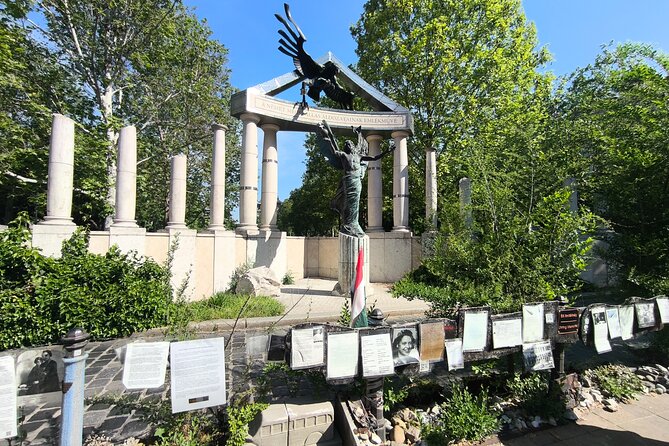
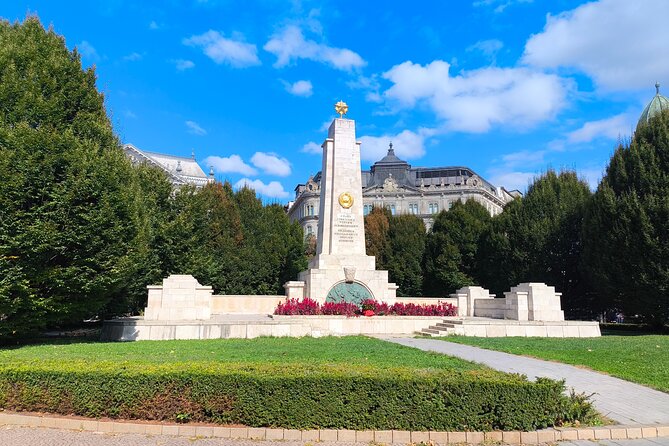
You begin at Szabadság Square, where the tour frames Hungary’s path into Soviet-aligned rule. The starting point sets the tone: not propaganda, but context—how events led to communist power and how the system took shape.
From there you move near surviving examples of Socialist Realism, also called Stalin Baroque. This is where Budapest becomes a kind of outdoor classroom. Reliefs, monumental forms, and even an oddly specific detail—there’s a statue of a bear riding a scooter—show how regimes used visual language to shape imagination, not just policy.
You’ll also notice a nearby pattern: symbolic “messages” in stone, the kind that can look decorative until you know what they were meant to say. That’s the tour’s best trick—turning “what am I looking at?” into “now I get why it’s here.”
This segment is light on admissions (free where noted) and heavy on meaning. The only drawback is that you’re outside for a chunk of time, so comfy shoes and weather planning pay off.
The darker Budapest, told after dusk
House of Terror exterior stop: the building as an argument
Next up is the House of Terror building area on Andrássy Avenue. Even without entering the museum, the stop works because the building itself carried power during World War II and later became tied to the communist secret police (ÁVH).
So you’re not just sightseeing. You’re seeing how one building can be repurposed as regimes change. It’s a good moment to remind yourself that totalitarian control isn’t only about one era—it’s also about methods that get recycled.
If you want more, you can visit the museum later on your own. The tour keeps this stop as a focused reference point so you don’t lose half a day inside when the route is doing something broader.
Bem József Memorial and 1956: how protests start in one square
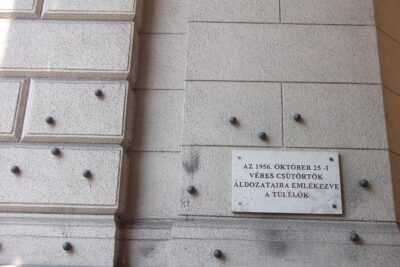
On the Buda side, you stop at Bem Square, where the Hungarian revolution of 1956 began. This part is short, but it gives you the anchor: the revolution didn’t bloom everywhere at once. It started with a specific place and then spread.
The guide connects the square to the early protests and the citywide ripple effects. If you’re the type who likes to understand turning points, this is one of the cleanest “history in spatial form” stops on the itinerary.
You’ll likely be on your feet and moving again soon, so the takeaway should be: remember this square when you see other 1956 references later in Budapest.
Bambi Café presszó: a communist-era time capsule for your caffeine break
When the day moves into the presszó world, it gets more human. Bambi Café is a communist-era coffee house/bar preserved in its original form.
It’s a fun stop, but not random fun. These places were part of how people spent time, and how everyday social life continued under systems that constantly monitored and directed public spaces.
You get about 30 minutes, which is long enough for a drink and a breather without turning the tour into a slow crawl. If you’re sensitive to eating/drinking on a schedule, just note that this stop is timed for the group flow.
Youth culture space: Marczibányi 1972 and the idea of managed free time
At the Marczibányi Square Culture Centre (Marczibányi Téri Művelődési Központ), built in 1972, you get a peek inside a youth-oriented cultural space. The tour frames its purpose honestly: meaningful activities were offered, but often with careful supervision.
You’ll step in briefly to see the reception hall and get a sense of the architecture and atmosphere from the time. This stop is a useful reminder that communist-era influence wasn’t only about police and monuments. It also reached into leisure.
It’s short (about 10 minutes), so you won’t feel stuck waiting around. The tradeoff is that you’re seeing a snapshot, not an all-day museum experience.
Hotel Budapest and Goulash Communism: the skyscraper message
One of the most visually striking stops is Hotel Budapest, a circular building completed in 1967. It’s the kind of structure people often miss because it doesn’t behave like a classic “must-see” landmark.
The tour explains the political messaging: socialist countries were signaling they could build modern-looking, high-status projects too. And Budapest, with its hilly skyline, makes that statement visible from far away.
Then comes the shift in theme into the post-1956 era called Goulash Communism, described as the Communist Block’s “happiest barrack.” Even if you disagree with the nickname’s tone, it’s a good framework for understanding why the later years could feel less brutal on the surface while still being controlled underneath.
Gellért Hill Liberty Statue: victory symbolism with Soviet overtones
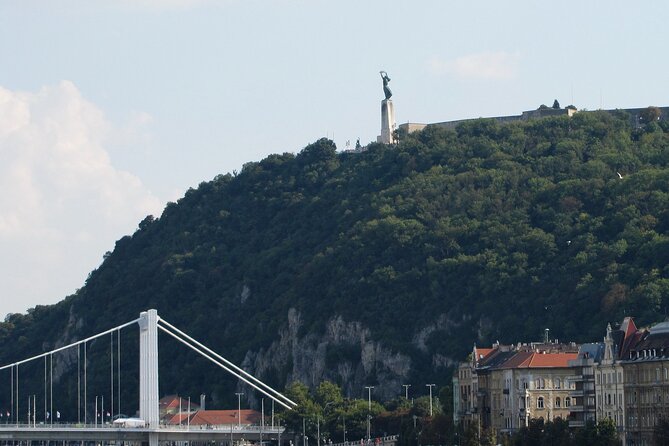
The Liberty Statue atop Gellért Hill has stood since April 5, 1947, meant to symbolize victory and peace. The tour also explains how that message got tied up with Soviet occupation over time.
You’ll learn about the original inscription referencing liberating Soviet heroes, and you get the story behind the model: the statue was based on Erzsébet Gaál, described as the “living Liberty Statue,” and her role carried blessing and curse.
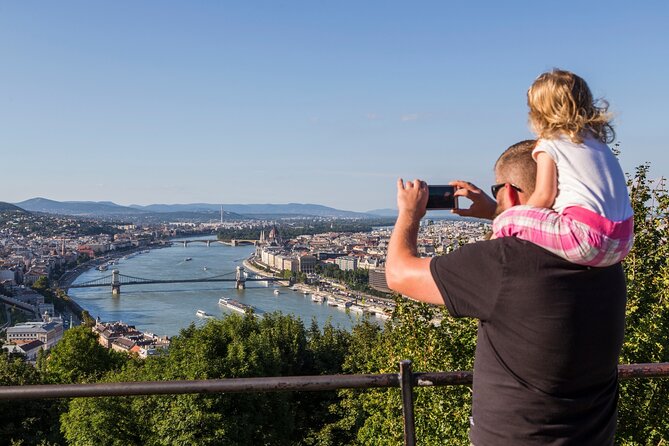
Right now, the site is under renovation, with a reopening expected in December 2025. That means the viewing experience may be slightly altered, but you can still walk around, climb the steps up to the monument, and use the area’s lookout spots for photos.
This stop is a big win for views, with a stop time of about 1 hour. The main consideration is effort: you’ll be climbing, and the hill area can be slippery if it’s wet.
Socialist Realism at the university buildings: Moscow awaits
Next is Budapest University of Technology and Economics, focusing on the H, T, and R buildings—some of the best surviving examples of Socialist Realist architecture in the city.
There’s a practical note here: on weekdays, you can often enter parts of the building, and the tour points out the feeling inside—summed up as Moscow awaiting. Even if that phrasing is a joke, the point is you’ll notice how interior spaces match the exterior style.
This stop is about 15 minutes. If you want more interior time, check whether your tour day falls on a weekday and ask the guide what’s accessible on that particular schedule.
Fehérvári Way market hall: brutalism you can actually walk through
The tour includes time at the Fehérvári Way market hall on Fehérvári Street. This is one of the most “real city life” stops, and it’s also about design choices and political influence on architecture.
Originally built in 1977 with a distinctive brutalist look, it was later covered with a bland white box-like exterior. The tour uses that change to talk about how brutalism was rejected rather than protected—good for architecture-minded travelers who notice how renovations can erase meaning.
Inside, you’ll see the concrete surfaces and the ramps, and you’ll have time to browse and shop Hungarian goods if you want. This stop is about 30 minutes, with opening hours listed for different days, so it’s smart to wear your flexible-time hat here.
Lunch at Restaurant Alba Regia: what to do if you only know a few Hungarian words
For lunch, the tour takes you to Restaurant Alba Regia, described as a local favorite away from heavy tourist traffic.
The menu is only in Hungarian, but the guide will help you choose something you’ll like. That’s a huge value-add because ordering in a foreign language can turn lunch into stress instead of a break.
The tour allocates about 1 hour. If you prefer a lighter meal (or need dietary accommodations), ask early and choose a simple item. The tour includes drinks and snacks too, so you’re not stuck hungry if lunch runs a bit long.
Communist-era church architecture: worship spaces without traditional shapes
One of the more surprising stops is a church built during the communist era. These churches sometimes don’t resemble the places of worship you’re used to, and this one is described as brutalist and constructed mostly from metal.
The stop is located at the base of stark communist-era residential towers, so it feels like an odd little pocket of meaning inside a hard-edged landscape.
This is brief (short stop time), but it’s a smart reminder: communist control didn’t erase religion, and it didn’t force all expression into one single look.
Tower block estate life: prefabricated housing and a quick photo moment
Then you move into the housing-estate world: a typical communist tower block area and its urban center. The guide explains construction and what it’s like to live in prefabricated blocks.
There’s also a nearby statue of three bulls, called out as a good photo opportunity. This is the kind of stop that makes the politics feel personal. When you stand near these buildings, you start to see why the system needed mass housing—and why it shaped daily routines.
If you’re visiting Budapest mainly for viewpoints and old streets, this is the part that may feel less glamorous at first. Give it 10 minutes and it becomes more interesting than you expect.
Experimental Housing Estate and Children’s Dentistry: where the guide lived
You stop at Children’s Dentistry briefly, tied to the Experimental Housing Estate, noted as one of the more successful communist-era housing examples in Budapest.
The guide also shares a personal detail: he lived there until age six. That’s an emotional pivot point in the tour, because it turns “architecture” into “childhood setting.”
This stop is only about 5 minutes, but it lingers because it changes how you interpret the whole area. It’s a reminder that regimes weren’t abstract to the people growing up inside them.
Csepel Island: Red Csepel, the iron works, and 1956 resistance
The tour shifts to the Csepel Island in the Danube, known as Red Csepel during the communist era because of its industrial hub role and working-class identity.
You visit the Csepel Iron Works, described as a massive industrial complex symbolizing Soviet-style industrialization. The scale is emphasized, including that tens of thousands of workers were involved, and that production covered steel, machinery, and vehicles.
Then the history turns political again: Csepel workers played a crucial role in the 1956 Revolution and held out longer even when other areas had fallen.
You also pass surrounding communist-style tower block housing estates, where you can spot surviving socialist realist art and architecture. This stop is about 40 minutes, and it’s a good pairing with the earlier housing-story stops—industry and housing are part of the same system.
Gubacsi Road Housing Estate: ceramic reliefs and a post-war transition
Another residential stop is Gubacsi Road Housing Estate, described as a hidden time capsule of Hungary’s post-war era near the Ráckevei-Danube riverfront.
The architecture is positioned as a transition from socialist realism toward modernism during the 1950s. And you get to see rare, colorful ceramic reliefs that connect the area to industrial and communist past themes.
This is short (about 15 minutes), but it gives you a visual “before and after” feel. If you enjoy how styles evolve under pressure, you’ll likely like this portion a lot.
Memento Park: the emotional end of the communist statue era
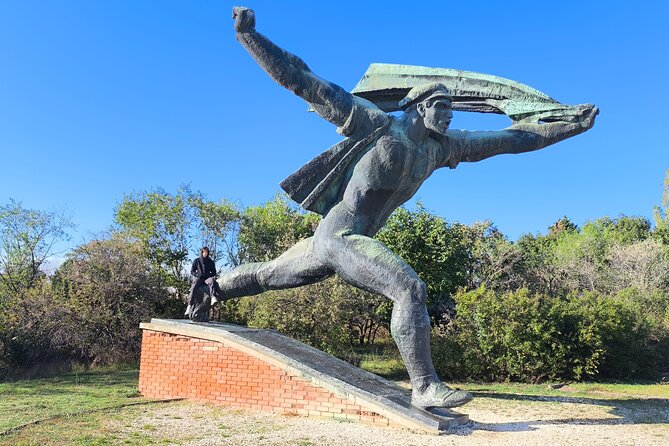
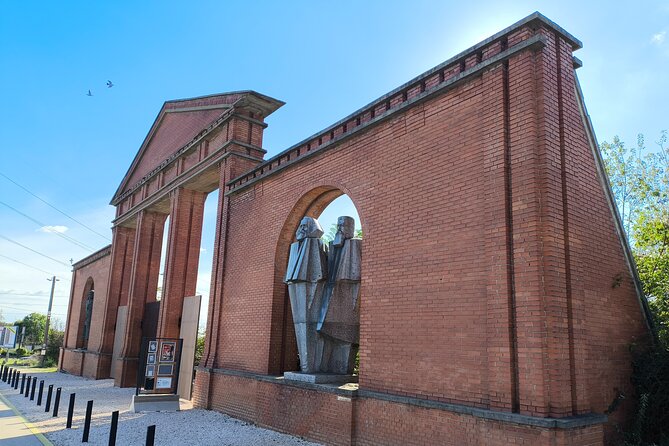
For many people, Memento Park is the emotional peak. It’s an open-air museum preserving the imposing statues and monuments that once served as regime symbols around Budapest.
You’ll walk among colossal relics, with the tour framing it as a final stretch of the dictatorship’s story and the bittersweet shift to democracy that followed. The mood is heavy but not theatrical. You’re meant to look, reflect, and understand how “public art” can function as political control.
Admission is not included, and the listed fee is $9.00 per person. Plan on about 1 hour 30 minutes here, and come ready for photos that look less like postcards and more like history.
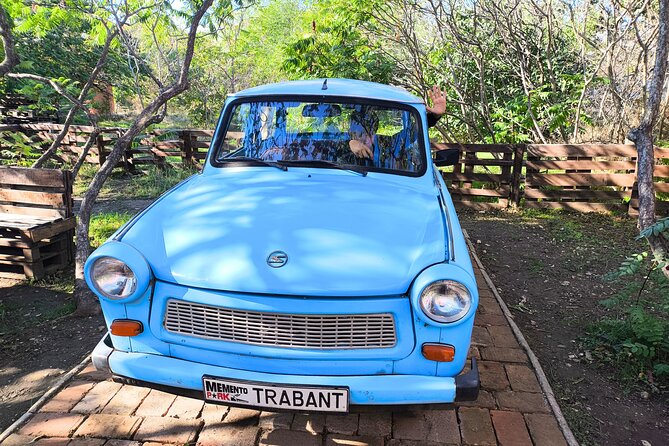
A fun detail is included too: there’s a real East-German Trabant available for a photo moment, described as likely one of the worst communist cars ever made. It’s a playful contrast that makes the heavier theme easier to carry.
Budapest Retro Interactive Museum: when you want play plus context
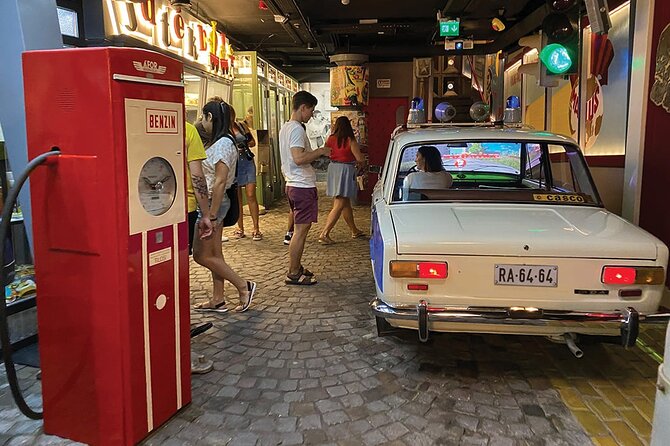
If time allows, the tour includes the Budapest Retro Interactive Museum. This is an interactive setup where you can experience everyday objects and themed exhibits about life during communism and other eras.
The tour also mentions a communist-era bistro where you can enjoy something after your nostalgic walk. Admission is not included, and the listed cost is $16.50 per person (with weekend price info also provided).
On a day with heavier traffic, this is the kind of stop that can be skipped to protect the rest of the schedule. If this is high on your list, tell the guide early so they can prioritize time.
Practical Tips for a smooth communist-era day
This itinerary mixes hills, outdoor viewing points, and short indoor possibilities. Wear shoes you trust, and bring a light layer even in warmer months—Budapest weather can flip fast.
The tour already provides bottled water, soda/pop, and snacks, which helps a lot when you’re moving for hours. Still, bring your own small umbrella if rain is possible.
Lunch is handled at Restaurant Alba Regia, but the menu is Hungarian only. I’d treat lunch as part of the cultural experience, not as something you must control with language.
For photos, charge your camera before you leave. The route includes multiple viewpoints (including Gellért Hill) and strong architectural textures where good light helps.
Finally, if you’re the kind of person who gets overwhelmed by political topics, you can manage that by asking the guide how much emotional weight to include. The tour is presented as neutral, but neutrality still doesn’t mean it feels light.
Should you book the Private Tour of Communist Era Budapest?
Book it if you want a structured, all-day route that connects the big public symbols to everyday life—especially if you like architecture, housing estates, and industrial history.
Consider skipping (or shortening expectations) if you only want classic sightseeing. This tour spends serious time on less-touristy areas like Csepel Island housing and multiple residential zones, so it won’t feel like a highlights reel.
If you’re curious about how a city gets shaped by ideology—then later rewritten by renovation, neglect, and memory—this is a strong choice. With Tamas Varga guiding the story in English, plus the comfort of private transport and snacks, it’s a practical way to see a Budapest most visitors never connect into one narrative.
FAQ
How long is the Private Tour of Communist Era Budapest?
It runs about 7 to 10 hours, depending on timing and how the day flows.
What does the tour price include?
Included are soda/pop, bottled water, snacks, and travel in an air-conditioned vehicle with a licensed professional driver/guide.
Is hotel pickup available?
Yes. Pickup is offered at your hotel or another agreed spot in Budapest at the departure time.
What extra admission fees should I budget for?
Memento Park costs $9.00 per person and is not included. The Budapest Retro Interactive Museum admission is also not included, listed at $16.50 per person (weekend pricing is referenced).
Is lunch included?
No, lunch is not included.
What language is the tour offered in?
The tour is offered in English.
Is this a private tour or a shared group tour?
It’s a private tour/activity. Only your group participates.
What are the operating hours?
The tour runs daily between 9:00 AM and 6:00 PM, with the overall availability listed from 11/11/2024 to 03/23/2027.
More Tour Reviews in Budapest





The Darker Side of Budapest



Private Budapest, Your Pace



Just Added: More Budapest Reviews
- Sightseeing flight over Budapest
★ 5.0 · 3 reviews - Budapest: Walking Tour with Chimney Cake & Polaroid Photos
★ 5.0 · 3 reviews - Self Guided Tour In Budapest With 100 Captivating Audio Stories
★ 5.0 · 3 reviews - Budapest Art Nouveau Walking Tour
★ 5.0 · 3 reviews - Hungary today: a no-taboo conversation
★ 5.0 · 3 reviews
Dark History & Ghost Tours, compared.
 ★ 4.6Buda Castle District Vampires and Myths Night TourFrom $233,830 reviews
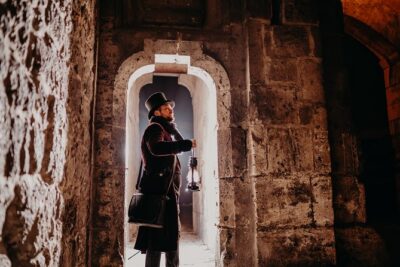 ★ 4.5Buda Castle District Dark History, Legends and Vampire Night TourFrom $211,240 reviews
 ★ 4.9BloodThirsty Hungary: Walking tour & Dark Historical StoriesFrom $21633 reviews
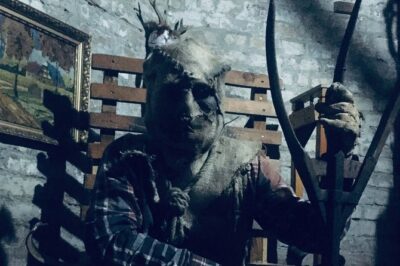 ★ 5.0Nightmare in Budapest Interactive Horror ExperienceFrom $24390 reviews
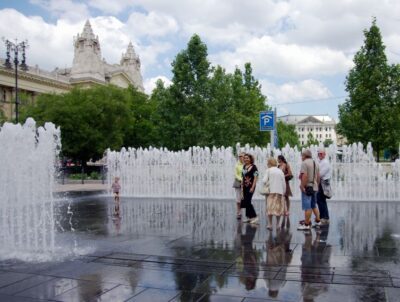 ★ 4.8Communist History Tour with House of Terror OptionFrom $58182 reviews
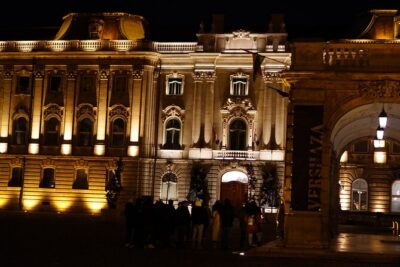 ★ 5.0BloodThirsty Hungary – Castle DistrictFrom $2180 reviews
 ★ 5.0Communism in Hungary with a HistorianFrom $5970 reviews
 ★ 4.73-Hour Walking Tour About Communism (Small Group)From $5770 reviews
Browse the lists this tour appears in