
Reviewed · DARK HISTORY & GHOST TOURS
Private Budapest Hammer & Sickle Communist Times Tour
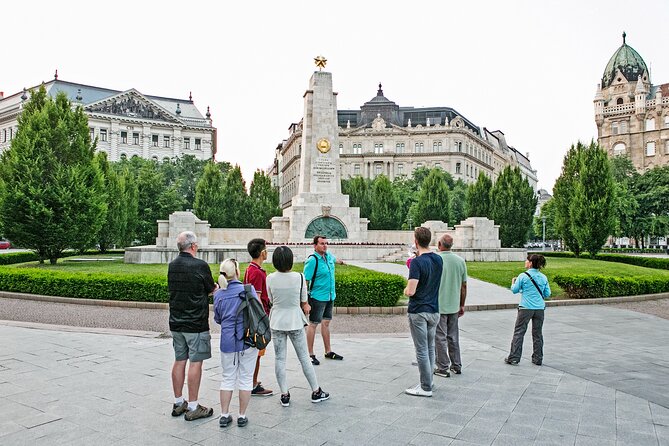
Streets remember what politics tried to bury. This private 20th-century walking tour in central Prague (the one described as Budapest-themed in the name) takes you past Nazi, Soviet, and communist touchpoints with an expert guide who turns dates into real places. I love the small-group size and how much you can ask in real time; I also like the fact that the route follows major events rather than stopping at random photo spots. The main drawback is practical: you’ll do about two hours of continuous walking on uneven ground, plus the topic is heavy, so wear comfy shoes and mental armor.
If you want context for how modern Prague was shaped—World War II into Soviet rule and then the Velvet Revolution—this is a strong way to get your bearings fast. Pickup is included and there’s a short refreshment stop to break up the walk, which helps on cold or rainy days.
In This Review
- Key Highlights You’ll Feel Immediately
- A Communist-Era Route in Central Prague (Not Budapest)
- How the Guides Make It Worth Your Time
- The Walking Reality: Weather, Uneven Ground, and Pace
- Bartolomejska Street: Wartime Prison and Secret-Police Power
- National Avenue: Protests from Nazi Occupation to Soviet Rule
- Wenceslas Square: The Prague Spring Moment You’ll Never Forget
- Republic Square: Independence, Resistance, and the Communist Turn
- Old Town Stops: Gottwald’s Balcony and the Uses of Power
- Einstein in Prague: Science, Influence, and the Atom Bomb Connection
- Old Jewish Cemetery and the SS and KGB Headquarters
- Letna Park Finale: Stalin’s Statue, Built and Destroyed
- Price and Value: Is $133.67 Worth It?
- Who Should Book This Tour—and Who Should Skip
- Quick Booking Advice (What to Ask Yourself)
- Should You Book This Private Communist Times Walk?
- FAQ
- How long is the Private Budapest Hammer & Sickle Communist Times Tour?
- Is pickup included, and is drop-off included?
- What’s included in the tour price?
- What kind of ticket do I receive?
- What’s the group size like?
- Does the tour run year-round, and how should I dress?
- Is this tour suitable for people with limited mobility?
- Is there free cancellation?
Key Highlights You’ll Feel Immediately
- Up to 15 people (and private-by-design): more conversation, fewer “listen-only” moments.
- Expert, licensed English-speaking guides who tell the story like it happened to real people.
- Major turning points in one sweep: Nazis, Soviet tanks, the Prague Spring, and communist takeover.
- Hard places, handled well: wartime prison sites, secret police history, and repression themes.
- Letna Park ending with the Stalin statue story—built fast, gone fast (1955 to 1962).
- Comfort add-ons: pickup offered, short beverage stop, and a mobile ticket.
Your own guide and your own timing in Budapest
- Private Budapest TukTuk Tour: Custom Route, Hotel Pickup★ 5.0 · 1,307 reviews
- Budapest Essentials Private Tour Highlights and Hidden Gems★ 5.0 · 861 reviews
- Budapest Private Luxury Sightseeing Tour with Guide and Transport★ 5.0 · 442 reviews
- Private Budapest City tour with Classic Russian Jeep or G-Wagon!★ 5.0 · 386 reviews
A Communist-Era Route in Central Prague (Not Budapest)
First, a quick sanity check. The tour title says Budapest, but every place named here is in Prague—Wenceslas Square, Republic Square, Old Town, the Old Jewish Cemetery, and Letna Park over the Vltava River. So before you lock anything in, go by the landmarks on the day rather than the name.
That said, the theme matches the “Hammer & Sickle Communist Times” idea: you’re seeing how the city lived under Nazi occupation, then later under communist rule, and how protest and resistance changed the outcome. You’re not getting medieval Prague on this walk. You’re getting the 20th century, street by street.
How the Guides Make It Worth Your Time
The best part of this kind of tour isn’t just the sites. It’s the guide’s choices: what to explain first, what to connect, and how to keep the pace human instead of lecturing.
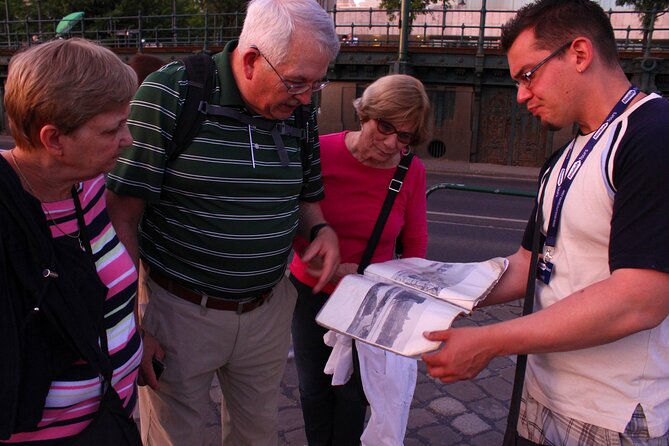
In the reviews, several guide names show up again and again—Honza, Jan, Martina, Yonas, Mike (also spelled Mikel), Martin, and Peter. A recurring theme is that the guides bring personal perspective when they can, and that their storytelling stays grounded in what happened in Prague—not just abstract world history. Some guides also use old photos and articles on a tablet, which can make you see the same streets with different eyes.
One more smart detail: some guides will adapt the emphasis to what you care about. If you want more Cold War angle, or if you’re focused on how people lived day to day under occupation and control, you can often steer the discussion.
The Walking Reality: Weather, Uneven Ground, and Pace
This is a walking tour with real movement, not a sit-down overview. The description calls out two hours of continuous walking and warns about high curbs, stairs, and slippery surfaces. That matters because Prague sidewalks can be uneven, and the tour runs in all weather.
If you have limited mobility, this is not the right fit. The same goes for anyone who gets worn out by long stretches of standing and walking in cold conditions. Reviews also mention that when weather turned rough, time outside felt intense—so if you’re booking in winter, plan for layers, gloves, and shoes with grip.
Language is another practical factor. Most guides are English-speaking by license, but at least one review notes difficulty understanding a guide with a lighter English. If that’s a concern for you, consider arriving early, asking questions right away, and letting the guide know if you want things repeated more slowly.
Bartolomejska Street: Wartime Prison and Secret-Police Power
You start in central Prague, then head toward Bartolomejska Street, a place tied to a WWII prison once used by secret police to torture prisoners. This is one of those moments where the “what” matters—because the building itself isn’t just architecture; it’s evidence of how control worked.
Expect your guide to explain the logic behind the fear: who was targeted, how information moved, and why the city felt unsafe in everyday ways. It’s not comfortable history, but it’s also not vague. You’ll connect the power of the occupying system to specific locations and actions.
The darker Budapest, told after dusk
National Avenue: Protests from Nazi Occupation to Soviet Rule
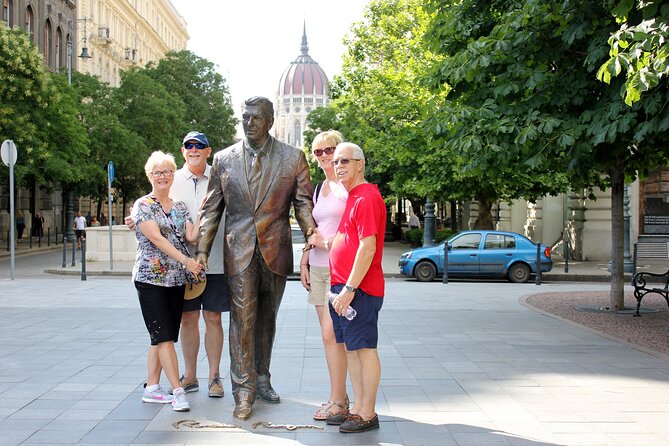
From there, the walk turns onto National Avenue, a wide thoroughfare that splits Old Town from the newer parts of the city. The scale of the avenue makes it a good place to understand how protests and government pressure played out in public.
Here’s what to watch for: you’ll hear about student protests against the occupying Nazis in 1939, then protests in 1989 against Soviet rule. The same kind of energy—young people taking risks, demanding change—shows up across decades, even though the political villains change. It’s a useful reminder that the communist story isn’t only about buildings and slogans. It’s also about people pushing back in streets.
Wenceslas Square: The Prague Spring Moment You’ll Never Forget
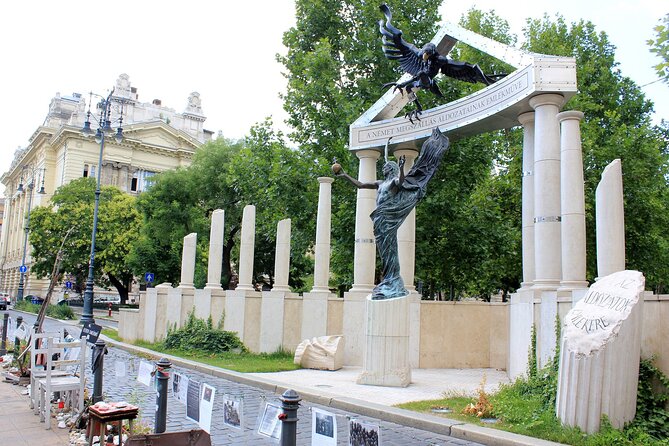
Wenceslas Square is one of Prague’s best-known stages, and your guide uses that fame for a purpose. This isn’t a casual stop for photos. It’s treated as the Czech focal point of struggle against foreign occupation.
You’ll be asked to imagine the square during 1968 and early 1969, right when Soviet tanks rolled in to crush the Prague Spring. The guide should help you understand what made the Prague Spring different—Czech liberalization, the hope for change—and then how that hope was shut down. After this section, you’ll likely look at the square and think of it as political gravity, not just a landmark.
Republic Square: Independence, Resistance, and the Communist Turn
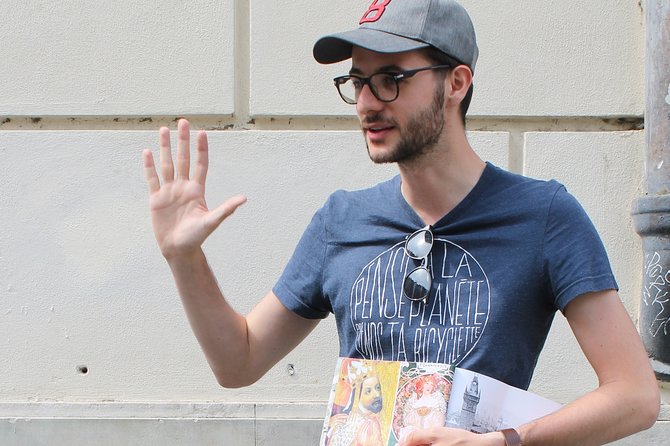
Republic Square is where you zoom out a bit and see how independence, resistance, and political power collide.
You’ll learn it was named after the 1918 proclamation of an independent Czechoslovakia. Then the story shifts into WWII: the Czech resistance used secret broadcast stations, and that radio-and-communication angle helped shape the 1945 Prague Uprising. If you love history where technology and courage meet, this part clicks.
Then comes the twist that makes the whole tour feel real: despite the resistance and uprising, the square became home to the Communist Party just three years later. It’s a sharp lesson that victories don’t always land where people expect.
Old Town Stops: Gottwald’s Balcony and the Uses of Power
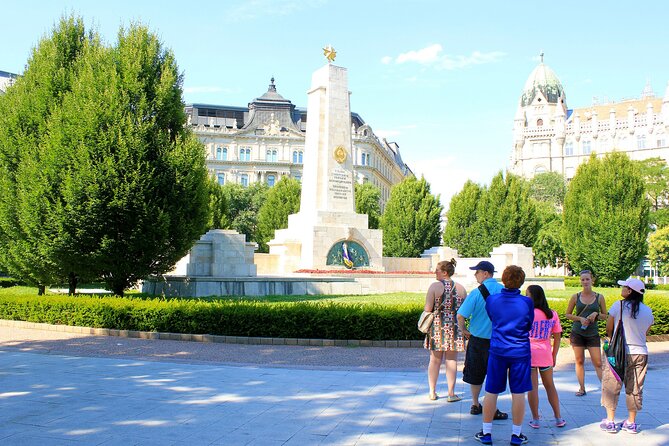
Once you move into Old Town, you’ll hit sites that explain how communist power was performed in public space. One standout is the balcony from where communist leader Klement Gottwald declared the government takeover in 1948.
That’s the kind of detail that makes the tour memorable. A balcony isn’t just a balcony—it’s a megaphone. Your guide should connect the announcement to the bigger shift in who held authority and how the new regime wanted people to perceive legitimacy.
If you like your history with specific visual cues, this is one of the best “look up” moments on the walk.
Einstein in Prague: Science, Influence, and the Atom Bomb Connection
Not every stop here is about tanks and prisons. You’ll also hear about Albert Einstein’s time living during his work at Charles University. The tour links his theories to the invention of the atom bomb, which can feel like a big leap—until your guide frames the scientific chain and the political consequences.
This is a good stop for you if you like when history shows spillover: ideas don’t stay in labs, and technology doesn’t stay neutral. You may leave this section thinking about how quickly the 20th century went from discovery to danger.
Old Jewish Cemetery and the SS and KGB Headquarters
You’ll pass the Old Jewish Cemetery and other landmarks tied to Nazi and communist terror mechanisms, including former headquarters associated with the Nazi SS and communist-era KGB.
This is heavy material, so don’t be surprised if your guide keeps the tone respectful and factual. The value here is that you’re seeing how different regimes used similar tools—surveillance, intimidation, forced silence—even if their uniforms and slogans changed.
Letna Park Finale: Stalin’s Statue, Built and Destroyed
The tour caps at Letna Park with a view along the Vltava River. It’s a nice change of pace visually, because the setting opens up. But the story doesn’t soften.
You’ll hear about the world’s largest statue of Stalin, built in 1955 and destroyed in 1962. That timeline is the point: communist monuments weren’t only about worship. They were about messaging, and messaging can reverse when power reverses.
This ending tends to stick because it’s not just history in a book. You’re learning how ideology leaves physical footprints—and how fast those footprints can get erased.
Price and Value: Is $133.67 Worth It?
At $133.67 per person, this tour isn’t a bargain-bucket activity. But it can be good value if you care about getting the story right.
Here’s what you’re paying for:
- A licensed English-speaking expert guide
- A private experience setup where only your group participates
- A small-group size ceiling (up to about 15)
- Pickup offered
- A short refreshment stop
- Mobile ticket access (so you’re not hunting for paper)
When history tours work, you walk away with context you can use the next day. You start to see connections between places that look unrelated on a map. If your trip includes Prague as more than a quick sightseeing sprint, this kind of guided orientation often pays off.
If you’re mainly here for architecture and views, you might find this focus too dark and specific. But if you want the “why” behind modern Prague, the cost is easier to justify.
Who Should Book This Tour—and Who Should Skip
This tour is a strong match if you:
- Love 20th-century history and want it tied to real streets
- Want more than museum time—just walking, explaining, and connecting
- Prefer smaller groups and a chance to ask questions
- Appreciate guides who bring photos, documents, and personal context
I’d skip it (or swap it for something else) if you:
- Have mobility limitations due to curbs, stairs, and slippery surfaces
- Are traveling with kids under 14 (it’s not recommended for them)
- Need a light, feel-good tour
- Have trouble with long outdoor walking sessions in cold weather
Quick Booking Advice (What to Ask Yourself)
Before you book, decide how you like to learn. If you’re the type who wants a timeline and “how did we get here,” this fits. If you prefer casual strolling with minimal interpretation, you may feel the pace is too focused on politics.
Also consider theme sensitivity. This tour includes prisons, torture history, and oppression themes. If that’s hard for you, still go—just plan your day around it and take breaks when you need them.
Should You Book This Private Communist Times Walk?
I think you should book this tour if you want a clear, street-level explanation of how Prague changed under occupation, then under communist rule, and then out of it. The small-group format, the guide quality (Honza, Martina, Yonas, Mike, Martin are just a few names you’ll see in the feedback), and the way the route ties major events to specific locations make it worth your time.
But if you’re mobility-limited, traveling with younger kids, or looking for a relaxed sightseeing day, look for another option.
FAQ
How long is the Private Budapest Hammer & Sickle Communist Times Tour?
It runs for about 3 hours (approximately), with the walk described as around 3.5 hours in the tour overview.
Is pickup included, and is drop-off included?
Pickup is offered as part of the experience. Drop-off is not included.
What’s included in the tour price?
You get a licensed English-speaking expert guide, a refreshment stop with a beverage, and pickup.
What kind of ticket do I receive?
The tour uses a mobile ticket.
What’s the group size like?
The tour is limited to a maximum of 15 people for a more personalized experience, and it is set up as a private tour/activity where only your group participates.
Does the tour run year-round, and how should I dress?
It runs in all weather. You should dress appropriately for cold or rainy conditions since it stays outdoors.
Is this tour suitable for people with limited mobility?
No. It involves about two hours of continuous walking on high curbs, stairs, and slippery surfaces, so it’s unsuitable for people with limited mobility.
Is there free cancellation?
Yes. Free cancellation is available, and you can cancel up to 24 hours in advance for a full refund.
More Tour Reviews in Budapest




The Darker Side of Budapest


Private Budapest, Your Pace


Just Added: More Budapest Reviews
- Sightseeing flight over Budapest
★ 5.0 · 3 reviews - Budapest: Walking Tour with Chimney Cake & Polaroid Photos
★ 5.0 · 3 reviews - Self Guided Tour In Budapest With 100 Captivating Audio Stories
★ 5.0 · 3 reviews - Budapest Art Nouveau Walking Tour
★ 5.0 · 3 reviews - Hungary today: a no-taboo conversation
★ 5.0 · 3 reviews
Dark History & Ghost Tours, compared.
 ★ 4.6Buda Castle District Vampires and Myths Night TourFrom $233,830 reviews
 ★ 4.5Buda Castle District Dark History, Legends and Vampire Night TourFrom $211,240 reviews
 ★ 4.9BloodThirsty Hungary: Walking tour & Dark Historical StoriesFrom $21633 reviews
 ★ 5.0Nightmare in Budapest Interactive Horror ExperienceFrom $24390 reviews
 ★ 4.8Communist History Tour with House of Terror OptionFrom $58182 reviews
 ★ 5.0BloodThirsty Hungary – Castle DistrictFrom $2180 reviews
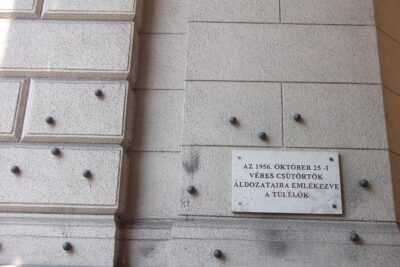 ★ 5.0Communism in Hungary with a HistorianFrom $5970 reviews
 ★ 4.73-Hour Walking Tour About Communism (Small Group)From $5770 reviews
Browse the lists this tour appears in