
Reviewed · DARK HISTORY & GHOST TOURS
Life Under Communism” with optional visit to the House of Terror
Budapest can read like a time machine. This private 3-hour communist-era walking tour takes you through visible relics of Soviet rule and the 1956 uprising, guided in English with handouts to help you connect the street scenes to the human stories behind them. You’ll also pause for coffee at Bambi Presszó, one of the places tied to that “last stronghold” feel of older political culture. Iron Curtain history, on foot and in context—without turning it into a lecture-only museum day.
Two things I really like about this experience are the firsthand-style storytelling from an experienced guide (you may hear names like Miklós, Balázs, or Agy depending on who’s leading your group) and the way the route ties landmark squares to what people actually faced—fear, resistance, and daily compromises. The tour also works well if you like real urban texture: you’re not stuck looking at plaques only.
One possible drawback: depending on which add-ons you choose, you’ll be spending more time outdoors and inside key sites, and it may feel heavy if you prefer lighter sightseeing. Also, the House of Terror and Memento Park are optional—double-check you selected the exact option you want, so you don’t end up with a shorter “city-only” version.
In This Review
- Key highlights that make this tour worth your time
- What this Budapest Communist walking tour really gives you
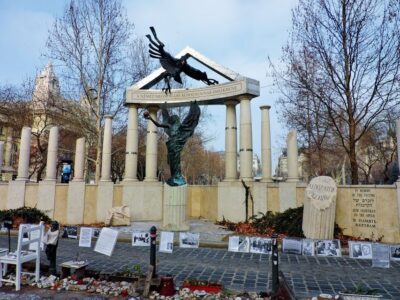
- Starting at Liberty Square and the Soviet Siege Memorial
- Szabadság tér: power, planning, and public space
- Kossuth Square and the Hungarian Parliament during 1956
- Petőfi Statue and Március 15. Square: everyday life around history
- Corvin köz: a resistance center you can still picture
- Crossing the bridge toward Gellért Hill and the view
- St Gellért Square and the Liberty statue
- Optional add-on: Memento Park when you want to see preserved propaganda
- Optional add-on: House of Terror Museum for the darker machinery of control
- Coffee at Bambi Presszó: a short pause with real atmosphere
- Value and pricing: paying per group can work in your favor
- Who should book this tour
- Quick travel tips to make the most of your 3-hour route
- Should you book this Budapest Communist-era walk?
- FAQ
- How long is the tour?
- Is this tour private?
- What language is the tour offered in?
- Where does the tour start?
- Is the House of Terror visit included?
- Is Memento Park included?
- Do I need to buy tickets separately?
- Is pickup available?
- Is the tour suitable for kids?
Key highlights that make this tour worth your time
- Communist-era landmarks you can still see today, from Soviet memorials to 1956 resistance sites
- English guide storytelling that connects squares and buildings to lived experience behind the Iron Curtain
- Coffee stop at Bambi Presszó, a small but memorable “pause” in the middle of history
- Built-in 1956 context at the places where revolution and its consequences played out
- Optional Memento Park (statues preserved after 1989) with admission included
- Optional House of Terror Museum with admission included, if you want the darker side of the story
The darker Budapest, told after dusk
- Budapest: Buda Castle District Vampires and Myths Night Tour★ 4.6 · 3,830 reviews
- Buda Castle District Dark History, Legends and Vampire Night Tour★ 4.5 · 1,240 reviews
- BloodThirsty Hungary: Walking tour & Dark Historical Stories★ 4.9 · 633 reviews
- Nightmare in Budapest Interactive Horror Experience★ 5.0 · 390 reviews
What this Budapest Communist walking tour really gives you
This isn’t a “here’s a monument” tour. It’s a walking route that teaches you how power shaped the street—through propaganda, fear, and control of public life—then shows what survived after Communism faded.
You’ll start in the city’s political heart and move square to square. Along the way, the guide is your translator: you learn what those places meant, why they were built or renamed, and how events like the 1956 revolution turned public space into a stage for civilians, not just soldiers.
It also helps that this is a private group (up to five). That matters. In a small group, you can ask questions, and the guide can adjust pace. You can also move more comfortably at the stops without feeling rushed by crowds.
Starting at Liberty Square and the Soviet Siege Memorial
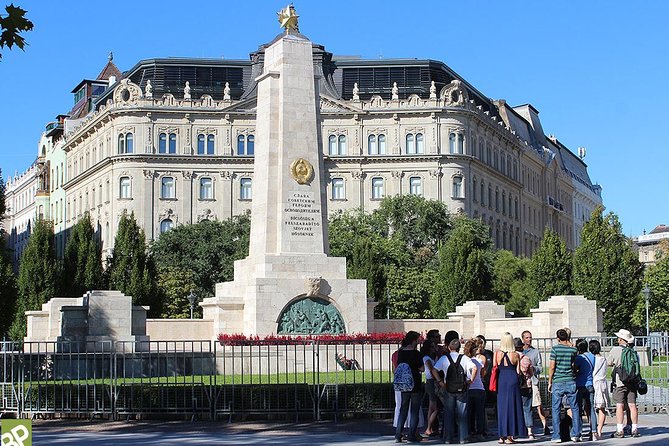
You begin at Liberty Square, where you’ll look at the memorial connected to the Siege of Budapest. This is an imposing structure—described as grandiose—that points to the brutal final phase of World War II, when Soviet forces encircled the Hungarian capital for about 50 days.
Here’s why this stop matters for your understanding: it gives you the “official story” layer first. The guide can then set up a useful contrast—how the same history can be framed very differently depending on who is in control of the narrative. If you’re only used to history books, this is where you start reading architecture like a political document.
What to consider: this memorial is powerful in tone and scale, so if you’re traveling with someone who wants a lighter day, it can set a serious mood early.
Szabadság tér: power, planning, and public space
Next comes Szabadság tér, one of the stateliest squares in central Budapest. The open space here isn’t accidental. The tour explains how the Habsburg-era layout shaped what you see today, including the former presence of the Újépület.
This stop is a good palate cleanser after heavy context, but it’s not “just pretty.” It’s a reminder that regime power isn’t only about fear and policing. It’s also about shaping how people move, where they gather, and what “normal life” looks like when planners control the map.
Practical tip: use this square to reset your pace and stretch your legs. It’s a space where you can catch your breath before the political turning points later.
Kossuth Square and the Hungarian Parliament during 1956
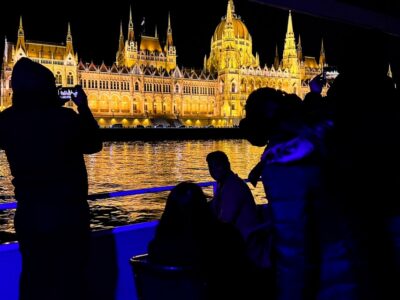
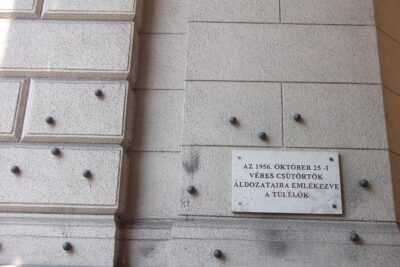
Then you move to Kossuth Square, home to the Hungarian Parliament building. The square is tied to the 1956 revolution, and the tour points out that a firefight began in front of the Parliament during those uprising days.
What makes this stop more than a photo opportunity is the way the guide describes the crowd composition—mixed civilians, not just “revolutionaries.” The square becomes a human geography: you understand that ordinary people were there—women, children, and the elderly included—and that later uncertainty about the deaths helped push the country closer to armed struggle.
The Parliament area itself is also useful for orientation in Budapest: if you want to connect the dots between political events and the city’s structure, this is where the route does it clearly.
What to watch for: the tour includes a ticket-free time for the Parliament stop (about 20 minutes), so don’t expect a long building interior visit here. It’s more about the square-level story.


Petőfi Statue and Március 15. Square: everyday life around history
At the foot of Erzsébet Bridge, the tour takes you to Petőfi Statue and Március 15. Square, near one of the oldest churches in Budapest.
This is where the tour gains a more human, “today” feel. The area is described as popular social space, and renovations around 2011 helped it become a natural meeting point—not only for tourists.
Why it’s valuable: it shows that Communist-era history didn’t freeze the city. People continued to live, gather, and celebrate in public spaces. You’re reminded that political control fights for attention, but cities keep being cities.
Corvin köz: a resistance center you can still picture
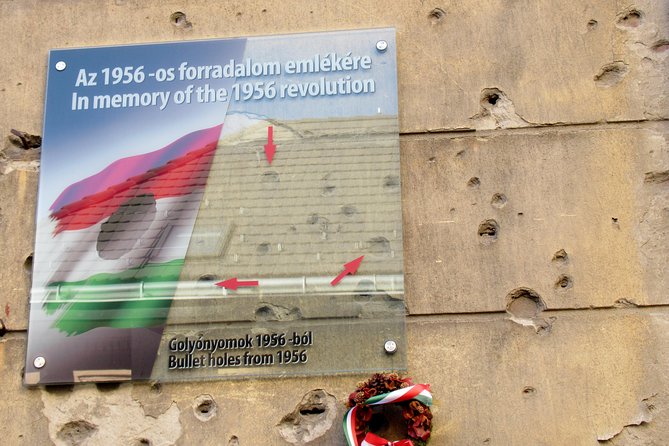
Next is Corvin köz, described as a major resistance center during 1956. This is where the tour places you near the kinds of actions people took against invading forces—using Molotov cocktails and improvised weapons taken from soldiers to fight tanks.
This stop works best if you let the guide slow down and build the scene. You’re not only seeing street corners; you’re understanding how resistance happened close to where teenagers and locals stood and acted.
A drawback for some people: the subject matter is intense. If you’re sensitive to violent-event descriptions, this is likely the emotional peak of the walking route.
Crossing the bridge toward Gellért Hill and the view
From Corvin köz, you cross one of Budapest’s most beautiful bridges to reach the base area of Gellért Hill. The reward here is the shift from “street-level” to “city-level.”
A good view helps history click. From higher ground—or at least from the hill’s vicinity—you can more easily picture where events would have moved, how people would have traveled, and why certain areas became strategic.
Practical tip: bridges are great for photos, but keep one hand free for uneven surfaces and wind.
St Gellért Square and the Liberty statue
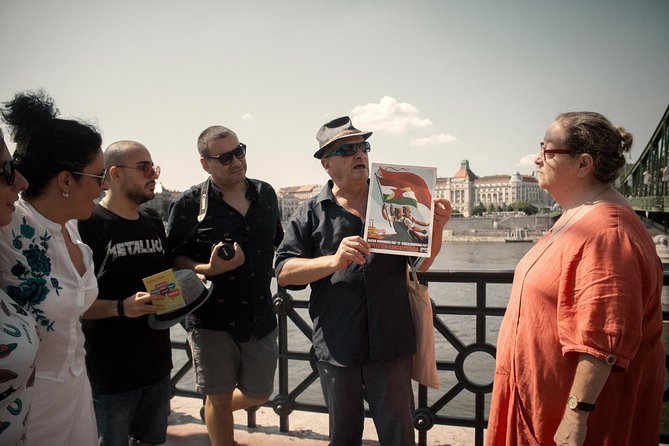
The tour continues at St Gellért Square in Buda, named for Bishop St Gellért, sometimes referred to as the Martyr for Hungarian Christendom. The guide then points out the view toward the Liberty statue, erected in 1947 as a remembrance of Soviet liberation of Hungary.
That phrase matters. It’s a classic “look again” moment: if the statue frames Soviet presence as liberation, then your earlier stops can help you understand why many Hungarians experienced the same reality as occupation or control. That’s the point of the tour—to show you how competing narratives share the same street canvas.
Optional add-on: Memento Park when you want to see preserved propaganda
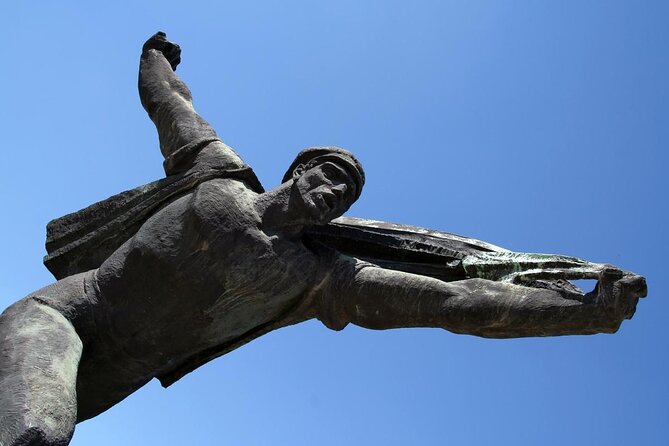
If you choose the Memento Park option, you’ll head to a place created after Communism collapsed in 1989. The tour explains that Budapest was left with public works of art celebrating the era, and instead of destroying them, the city decided to save the statues. The idea for Memento Park began in 1993.
This option is ideal if you want history with a more “archaeological” feel. You can see how symbols were built to impress, then watch them lose their power when the political system changes.
Included in this option is about one hour and the admission ticket. That also makes it good value compared to paying separately for an extra site.
What to consider: it’s still about the same ideology, just viewed through the lens of what the city chose to preserve. If you want the darkest personal-institution story, you might prefer the House of Terror instead.
Optional add-on: House of Terror Museum for the darker machinery of control
If you select the House of Terror Museum, expect a more intense visit. The tour notes that the building was renovated during reconstruction, with the exterior treated like a monument—black exterior structure elements creating strong contrast along Andrássy Avenue.
Inside, the visit includes a display such as a T-54 tank. This is the kind of museum where objects and architecture do a lot of storytelling, not just guided commentary.
Like Memento Park, the House of Terror option includes about one hour and the admission ticket. If you only have time for one add-on, this is the one that most directly targets the machinery of oppression.
A practical consideration: with museum time, you’ll likely trade some walking time for indoor exhibits. If you’re traveling with older family members or someone who tires easily, you’ll want to choose the option that matches your group’s energy.
Coffee at Bambi Presszó: a short pause with real atmosphere
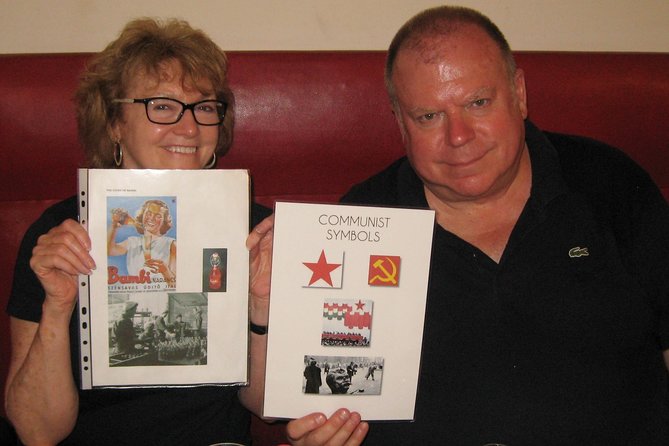
This tour builds in a coffee stop at Bambi Presszó, described as the last stronghold of communist culture. Even if you only stay briefly, the stop does something useful: it interrupts the heady intensity of political sites with a normal human routine.
Also, it’s a strong choice for photo and sensory memory. You’ll leave with something more than a route map—you’ll have a specific place name to carry home.
Just remember: food and drink aren’t listed as included overall, so plan on paying for whatever you order.
Value and pricing: paying per group can work in your favor
The price is listed at $280.33 per group, up to five people, for about 3 hours. That’s not “cheap,” but it can be a good deal when you’re splitting among a small group—especially compared to per-person rates common for walking tours with an English guide.
Here’s the value equation that matters:
- You’re getting a guide plus informative handouts.
- You’re also getting admission tickets for your chosen optional sites (Memento Park or House of Terror, when selected).
- The experience is private, so you’re not competing with a crowd for the guide’s attention.
The one caution is about matching the add-on you want. If you select the city tour only, you won’t be paying for museum time you never get. Double-check your option selection before you show up.
Who should book this tour
This fits well if you:
- Want an on-foot way to understand Budapest’s Communist era and 1956 from the street level up
- Like guided narrative that connects politics to daily life
- Are traveling in a small group and want a more question-friendly format
- Prefer practical city sights that you can later revisit on your own
It’s less ideal if:
- You strongly prefer light, scenic sightseeing with minimal political context
- You don’t handle emotionally heavy topics well (especially around resistance and state power)
Quick travel tips to make the most of your 3-hour route
- Wear shoes you can trust on bridges and cobblestones. This is a walking tour with multiple stops.
- Bring questions. If you’ve heard conflicting stories about 1956 or Soviet rule, this is a good day to ask your guide directly.
- If you choose either museum add-on, adjust your expectations for a longer overall day and plan around the indoor portion.
Should you book this Budapest Communist-era walk?
Yes, if you want a structured way to see how Communism shaped public space in Budapest—and you want your guide to translate that meaning into real human consequences. The biggest reasons to book are the focused route through iconic squares and the option to add Memento Park or the House of Terror Museum with admission included.
If your group wants only casual sightseeing, or if you’re unsure whether you’re choosing the exact add-on you want, then slow down and check your selection. When it’s matched to your interests, this is the kind of tour that sticks with you long after you’ve left the last square.
FAQ
How long is the tour?
The walking tour is about 3 hours.
Is this tour private?
Yes. It’s a private tour/activity, and only your group will participate.
What language is the tour offered in?
The tour is offered in English.
Where does the tour start?
It starts in Liberty Square.
Is the House of Terror visit included?
The House of Terror Museum visit is an optional add-on. If you choose it, admission is included.
Is Memento Park included?
Memento Park is also an optional add-on. If you choose it, admission is included.
Do I need to buy tickets separately?
Entrance tickets are included only for the optional visit types listed (Memento Park and/or House of Terror), depending on what you choose.
Is pickup available?
Pickup is offered, but hotel pickup and drop-off are not listed as included.
Is the tour suitable for kids?
Children must be accompanied by an adult. The tour is recommended for moderate physical fitness, so keep that in mind for younger legs. Service animals are allowed.
More Tour Reviews in Budapest





The Darker Side of Budapest





Just Added: More Budapest Reviews
- Sightseeing flight over Budapest
★ 5.0 · 3 reviews - Budapest: Walking Tour with Chimney Cake & Polaroid Photos
★ 5.0 · 3 reviews - Self Guided Tour In Budapest With 100 Captivating Audio Stories
★ 5.0 · 3 reviews - Budapest Art Nouveau Walking Tour
★ 5.0 · 3 reviews - Hungary today: a no-taboo conversation
★ 5.0 · 3 reviews
Dark History & Ghost Tours, compared.
 ★ 4.6Buda Castle District Vampires and Myths Night TourFrom $233,830 reviews
 ★ 4.5Buda Castle District Dark History, Legends and Vampire Night TourFrom $211,240 reviews
 ★ 4.9BloodThirsty Hungary: Walking tour & Dark Historical StoriesFrom $21633 reviews
 ★ 5.0Nightmare in Budapest Interactive Horror ExperienceFrom $24390 reviews
 ★ 4.8Communist History Tour with House of Terror OptionFrom $58182 reviews
 ★ 5.0BloodThirsty Hungary – Castle DistrictFrom $2180 reviews
 ★ 4.73-Hour Walking Tour About Communism (Small Group)From $5770 reviews
 ★ 5.0Communism in Hungary with a HistorianFrom $5970 reviews
Browse the lists this tour appears in