
Reviewed · DARK HISTORY & GHOST TOURS
Life Under Communism with House of Terror or Statue Park
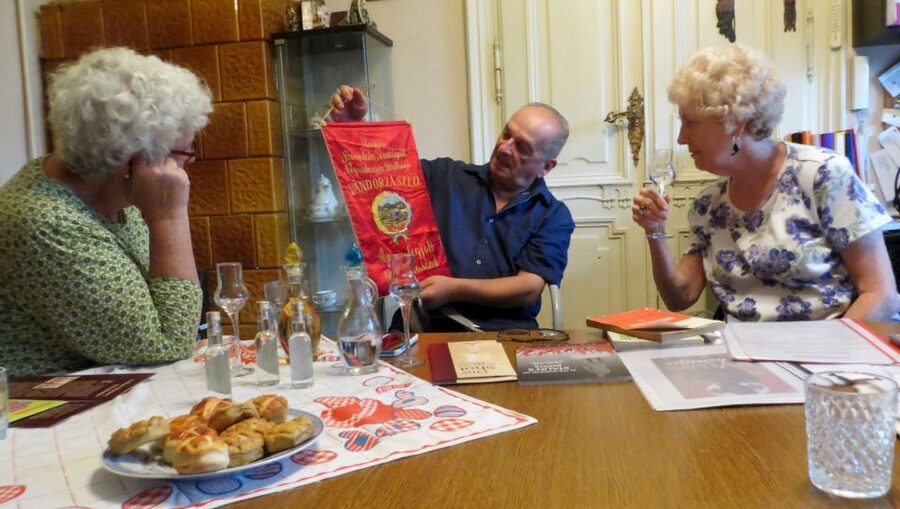
Budapest has layers, and this tour walks you through one of them. You’ll start at Bambi Eszpresszó, learn how the communist system worked from the 1960s to the late 1980s, and get an interactive, personal presentation rather than a lecture you just listen to. One thing to consider: the tour isn’t suitable for people with mobility impairments, since it involves walking and going around town.
What makes it especially effective is how practical the teaching feels. Instead of only big political headlines, you focus on how daily routines, shortages, rules, and public life shaped what people could do and buy—and what’s still visible today.
In This Review
- Key Highlights You’ll Actually Notice
- Stepping Into Communist-Era Budapest Without the Museum Fatigue
- Your 3-Hour Route: From Bambi Eszpresszó to Living Remnants
- What You Learn: How Communism Worked in Daily Life (1960s to Late 1980s)
- The Interactive Presentation: Tools, Not Just Talk
- Guides Annamaria and Miklos: Tailored, Engaging, and Direct
- Price and Value: $282 per Group Up to 5 (What That Means in Real Terms)
- Timing, Comfort, and What to Bring for a Town Tour
- Who Should Book This (and Who Might Want a Different Fit)
- Quick Reality Check: Combining With House of Terror or Statue Park
- Should You Book Life Under Communism in Budapest?
- FAQ
- How long is the Life Under Communism tour?
- Where does the tour start?
- Is pickup included?
- What languages are available for the live guide?
- What’s included in the tour price?
- Is the tour suitable for people with mobility impairments?
Key Highlights You’ll Actually Notice

- Bambi Eszpresszó start point: a symbolic meeting place from the 1980s that sets the tone right away
- Everyday communism, not just policy: you learn how the system worked on multiple levels in real life
- Truly interactive format: you get personal engagement, printed materials, and time for questions and dialogue
- Built around your interests: the route and pacing can be adjusted to the group’s knowledge and curiosity
- Public transport experience: you may get time to ride local transit and see parts of Budapest you might otherwise miss
- Expert guides lead it: Annamaria and Miklos run the program and tailor the experience within the 3-hour window
The darker Budapest, told after dusk
- Budapest: Buda Castle District Vampires and Myths Night Tour★ 4.6 · 3,830 reviews
- Buda Castle District Dark History, Legends and Vampire Night Tour★ 4.5 · 1,240 reviews
- BloodThirsty Hungary: Walking tour & Dark Historical Stories★ 4.9 · 633 reviews
- Nightmare in Budapest Interactive Horror Experience★ 5.0 · 390 reviews
Stepping Into Communist-Era Budapest Without the Museum Fatigue
There’s a specific kind of learning that happens when history is tied to daily routines. That’s what this Life Under Communism tour aims to do. You’ll travel through the communist period in Hungary by focusing on what people actually faced day to day—rules, shortages, social pressure, and the quiet ways the state showed up in ordinary life.
Two things I particularly like about this approach: first, the start at Bambi Eszpresszó. It’s not an abstract topic; it begins in a real-world, period-linked setting. Second, the format is genuinely interactive. You’re not just collecting dates. You’re getting an experience that’s meant to answer the kinds of questions you’d have if you were living there in the 1970s.
The main consideration is physical practicality. This is not set up for mobility-impaired visitors, so if walking is an issue, you’ll want to plan carefully.
Your 3-Hour Route: From Bambi Eszpresszó to Living Remnants
The tour is short—just 3 hours—but it’s built to feel like a guided “time shift,” not a quick stop-and-snap. It begins at Bambi Eszpresszó, described as an emblematic meeting place of the 1980s. That matters because it immediately frames the era as something social: meeting points, routines, and the everyday culture around them.
From there, your guide leads the group onward together (in whatever walking/transit mix fits the plan). A key detail: pickup is included. Your guide meets you at your accommodation in Budapest, and then you head to the first stop together.
What you can expect after the start:
- You’ll likely move through areas where the “remnants” of communist decades are visible in the urban fabric and public life.
- You’ll get an explanation of how the system worked, then see how those realities connect back to what you’re seeing around you.
- You may have a chance to ride public transportation, which can be one of the quickest ways to understand how a city functions day-to-day.
Even without a full list of every street-level stop, the tour’s structure is clear: it’s designed to connect an era of rules and planning to physical places and daily movement. That’s how the lesson sticks.
Possible drawback to keep in mind: because the program is designed to be personal and adjustable, your exact path may vary based on your group. That’s a plus for customization, but it does mean you should treat this as an experience first—not a checklist of must-see landmarks.
What You Learn: How Communism Worked in Daily Life (1960s to Late 1980s)
A lot of history tours talk about political systems like they’re operating in a vacuum. This one focuses on how the communist system functioned at multiple levels—including the stuff you’d feel as a normal person.
You’ll learn about everyday communist life in Budapest across decades, specifically from the 1960s through the late 1980s. That time span is useful because it wasn’t one single “moment.” Things changed over time. The tour is structured to help you see those shifts instead of treating communism as one unchanging block.
In practical terms, here’s what that means you should listen for during the tour:
- How policies turned into daily limits or expectations for ordinary life
- How public systems and everyday routines shaped what people could do
- How the long influence of decades shows up in Hungary even after the system changed
The tour also contrasts the communist era with changes made over roughly the past fifty years, so you’re not only learning what life was like—you’re also connecting it to what you can still notice today.
And since the session is interactive, you’re not stuck with one-way info. If you care about how people traveled, worked, bought goods, or dealt with social expectations, you can guide the conversation (within what the tour time allows).
The Interactive Presentation: Tools, Not Just Talk
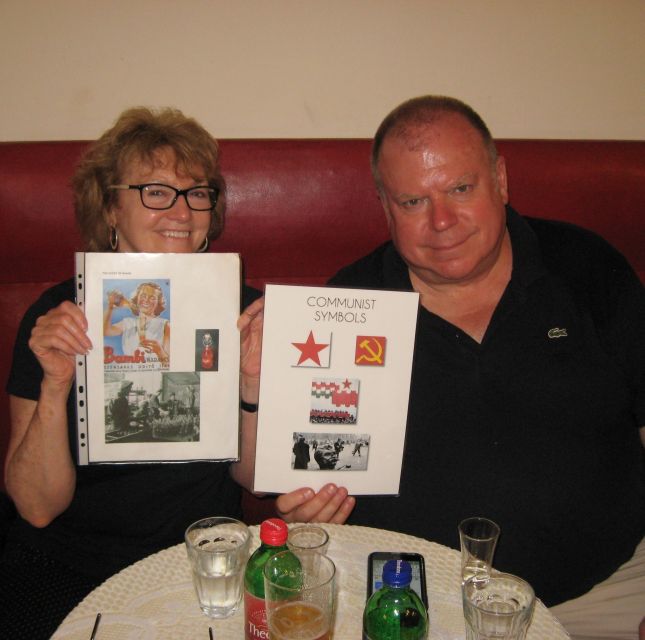
One of the smartest parts of this tour is that it’s not only verbal. You receive an interactive, personal presentation plus printed materials and even notebooks and pens. That’s not fluff. It signals that the guide wants you to process the information while you’re in the moment, not just after you’ve walked away.
You’ll also get some kind of structured explanation during the lecture portion, but the difference is the pace. The tour is meant to include an honest back-and-forth, with room for questions.
From the reviews, there’s a clear pattern: the best moments tend to be the dialogues—when the guide can tailor responses based on what the group is curious about, and when there’s time to ask follow-ups instead of racing on.
If you’re the type who likes learning with questions—this format usually fits your style well.



Guides Annamaria and Miklos: Tailored, Engaging, and Direct
This tour is conducted by Annamaria and Miklos, and that matters because the experience is described as personal and interactive. In practice, that means your guide isn’t just delivering a script.
What I’d expect you to get from guides like this:
- Adjusting the tour to the group’s interest and knowledge level
- Communicating clearly in the available languages
- Making space for genuine dialogue rather than a one-way lecture
The tour offers live guiding in English, German, and French, so you should have a smooth experience if you speak one of those languages.
Also, you’re not on your own. Since the guide meets you at your accommodation, you start with a human presence immediately—less confusion, fewer logistics worries, and more time to focus on the actual learning.
Price and Value: $282 per Group Up to 5 (What That Means in Real Terms)
The price is $282 per group up to 5, for a 3-hour private tour. That’s often a better value than it looks on first glance, because you’re not paying per person in the usual way.
Here’s a quick way to think about it:
- If you have 5 people, the cost comes to about $56 per person
- If you have 2 people, it’s about $141 per person
- If you’re solo, it’s the full $282
So this tour shines when you can share the group cost—especially with a couple of friends or family members.
What you’re paying for isn’t only the guide. You’re paying for a private experience, an interactive format, pickup from your accommodation, and the guide’s ability to tailor the discussion to your questions.
If you’re traveling as a larger group and want an on-the-ground explanation of communist-era life in Budapest, this price can make sense fast.
Timing, Comfort, and What to Bring for a Town Tour
This is a walking and transit type of experience, even if the amount of walking isn’t spelled out line-by-line. The tour is only 3 hours, so you’ll want to be comfortable enough to move without stressing.
Bring:
- Comfortable shoes
- Weather-appropriate clothing
- Comfortable clothes you can move in
Because the tour isn’t designed for mobility impairments, it’s smart to plan around your own walking tolerance.
Also, plan for the basics: food and drinks aren’t included. If you tend to get hungry during tours, grab a snack before you start—or plan to stop after.
Who Should Book This (and Who Might Want a Different Fit)
This tour is best for:
- History buffs who want more than dates and political slogans
- People who like learning about daily life—how systems affect the ordinary
- Travelers who prefer interactive tours where they can ask questions
- Small groups who can split the group price
It may not be the best fit if:
- You need accommodations for mobility impairments, since the tour isn’t suitable for that
- You’re looking only for major attractions and fixed landmark photos—this is more about explanation and lived realities
If your goal is to understand why communist-era Hungary shaped modern Budapest in subtle ways, this is a strong choice.
Quick Reality Check: Combining With House of Terror or Statue Park
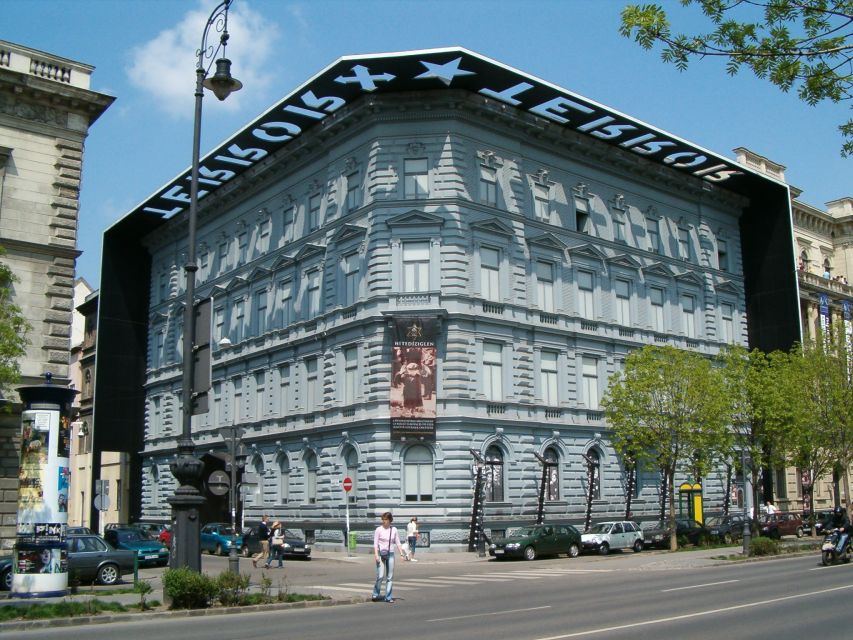
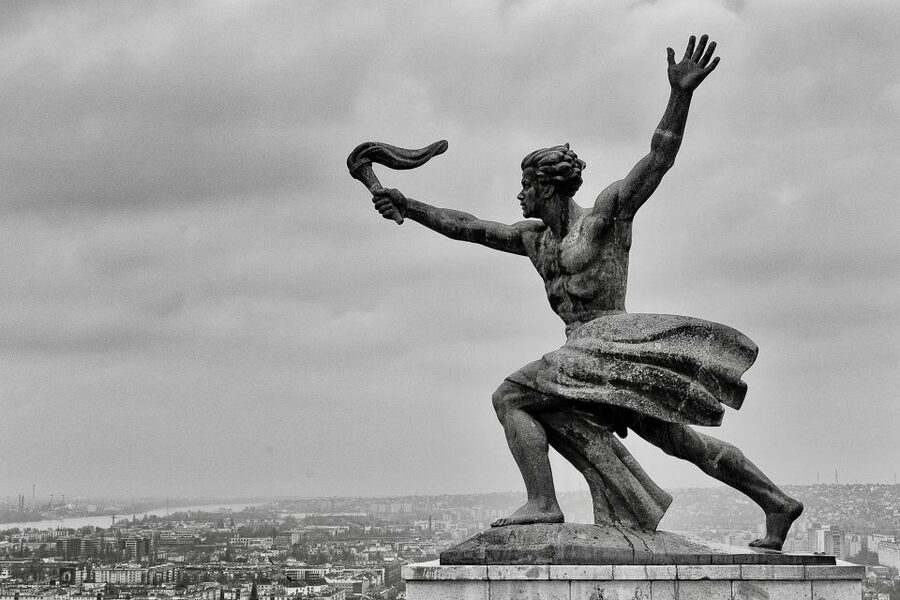
The tour name includes House of Terror or Statue Park. If your booking combines this experience with one of those options, think of this communist-life session as the context side of the story.
Even when you add another site, this kind of tour helps you interpret what you’re seeing with less confusion and fewer blank spots.
(Just make sure your combined plan leaves enough time for the 3-hour program without feeling rushed.)
Should You Book Life Under Communism in Budapest?
If you like history that explains daily life—rules, routines, and real-world consequences—this is a very solid booking. The private format, the interactive presentation, and the start at Bambi Eszpresszó give it a grounded feel that’s hard to get from standard sightseeing.
Book it when:
- You can split the cost across up to 5 people
- You want a guide-led, question-friendly experience
- You’re curious about the communist period beyond headlines
Skip or reconsider if:
- Walking is difficult for you
- You want only “top attractions” instead of an explanation-heavy experience
Overall, it’s the kind of short tour that can change how you read a city for the rest of your trip.
FAQ
How long is the Life Under Communism tour?
The tour lasts 3 hours.
Where does the tour start?
It starts at Bambi Eszpresszó in Budapest.
Is pickup included?
Yes. Your guide meets you at your accommodation in Budapest, then you go together to the first stop.
What languages are available for the live guide?
The live tour guide is available in English, German, and French.
What’s included in the tour price?
You get an interactive, personal presentation plus printed materials, notebooks, and pens.
Is the tour suitable for people with mobility impairments?
No, it is not suitable for people with mobility impairments.
More Tour Reviews in Budapest






The Darker Side of Budapest






Just Added: More Budapest Reviews
- Sightseeing flight over Budapest
★ 5.0 · 3 reviews - Budapest: Walking Tour with Chimney Cake & Polaroid Photos
★ 5.0 · 3 reviews - Self Guided Tour In Budapest With 100 Captivating Audio Stories
★ 5.0 · 3 reviews - Budapest Art Nouveau Walking Tour
★ 5.0 · 3 reviews - Hungary today: a no-taboo conversation
★ 5.0 · 3 reviews
Dark History & Ghost Tours, compared.
 ★ 4.6Buda Castle District Vampires and Myths Night TourFrom $233,830 reviews
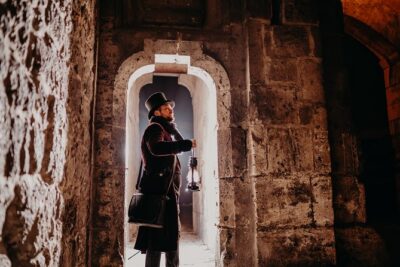 ★ 4.5Buda Castle District Dark History, Legends and Vampire Night TourFrom $211,240 reviews
 ★ 4.9BloodThirsty Hungary: Walking tour & Dark Historical StoriesFrom $21633 reviews
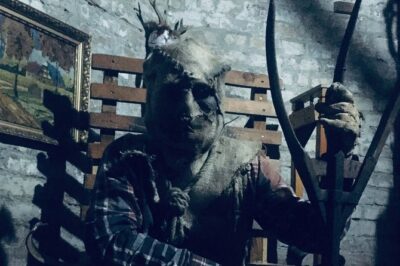 ★ 5.0Nightmare in Budapest Interactive Horror ExperienceFrom $24390 reviews
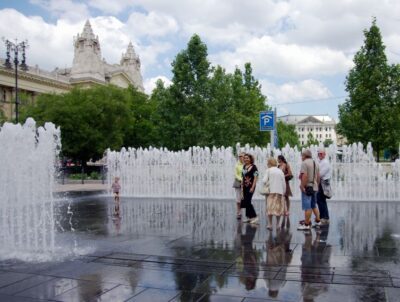 ★ 4.8Communist History Tour with House of Terror OptionFrom $58182 reviews
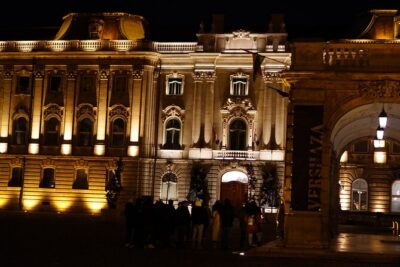 ★ 5.0BloodThirsty Hungary – Castle DistrictFrom $2180 reviews
 ★ 5.0Communism in Hungary with a HistorianFrom $5970 reviews
 ★ 4.73-Hour Walking Tour About Communism (Small Group)From $5770 reviews
Browse the lists this tour appears in