
Reviewed · DARK HISTORY & GHOST TOURS
Budapest: Memento Park and Icons of Communism Guided Tour
Communism feels weirdly close at Memento Park. You’ll tour an open-air museum of communist monuments built for propaganda, then stand near Stalin’s boots, the relic that replaced a toppled dictator.
What I really liked was the way the tour turns giant statues into clear, human stories. With guide Victor, you get context that makes the ideology and the intimidation tactics feel understandable, not abstract. It’s also small-group friendly, so the questions you ask actually get answered.
One thing to consider: this is an outdoor walk with a heavy topic. If you’re sensitive to political history tied to fear and repression, you may want to approach it with a calmer mindset.
In This Review
- Key things that make this tour worth your time
- Meeting at Batthyány Square, then heading out in a private car
- Memento Park’s 41 statues: when propaganda becomes architecture
- Stalin’s Grandstand and the Boots of Stalin: the scene you can feel
- How fear worked: secret police recruitment and intimidation tactics
- Victor’s approach: laminated photos, shade, and real answers
- Timing and flow: what 3 hours feels like on the ground
- Photo breaks and the souvenir shop: making it memorable without overbuying
- Price and value: what $68 buys you (and why it’s fair)
- Who this tour suits best in Budapest
- Should you book this Budapest Memento Park icons of communism tour?
- FAQ
- Where is the meeting point?
- How long is the tour?
- How big is the group?
- Is the tour guide available in English?
- What is included in the price?
- Can I take photos at Memento Park?
- Is there free time at the museum?
- What is the cancellation policy?
- Is there a reserve now, pay later option?
Key things that make this tour worth your time
- Small-group access (up to 7) with a licensed English guide
- 41 communist-era icons in an open-air setting designed to send messages
- Stalin’s Grandstand and Boots of Stalin as the emotional core of the park
- Propaganda mechanics in plain language, including how rule of law changed
- Photo help at the statues, plus a bottle of water for the walk
The darker Budapest, told after dusk
- Budapest: Buda Castle District Vampires and Myths Night Tour★ 4.6 · 3,830 reviews
- Buda Castle District Dark History, Legends and Vampire Night Tour★ 4.5 · 1,240 reviews
- BloodThirsty Hungary: Walking tour & Dark Historical Stories★ 4.9 · 633 reviews
- Nightmare in Budapest Interactive Horror Experience★ 5.0 · 390 reviews
Meeting at Batthyány Square, then heading out in a private car
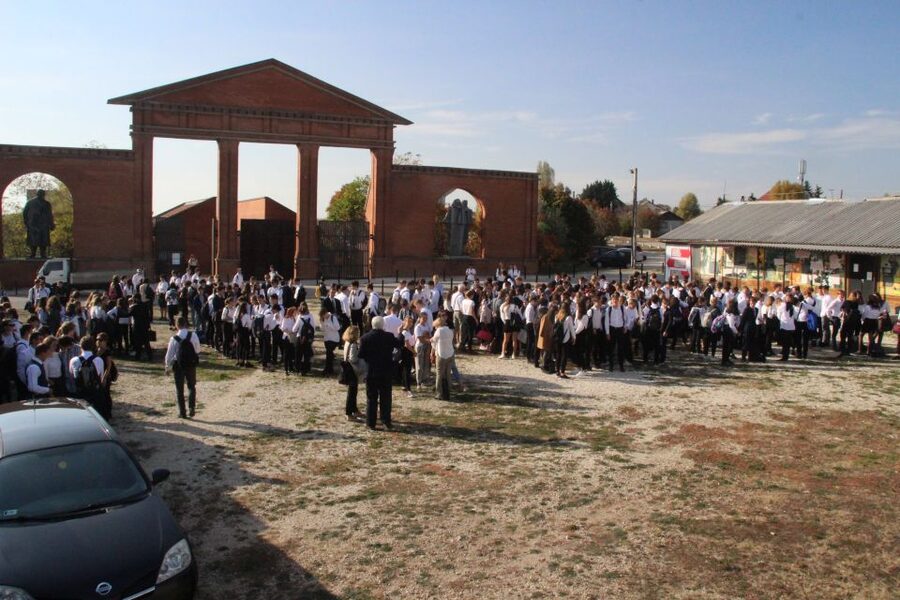
You start at Batthyány Square, right by the Danube, in the heart of the city’s bustle. The practical part is easy: get yourself to the St. Anne church area with its two towers, and look for the spot where the group assembles.
Then you ride out by private car. It’s about 10 miles (16 km) from central Budapest, and the transfer takes roughly 45 minutes each way. This matters more than it sounds. Memento Park isn’t just a quick stroll from downtown, and having transport built in saves you time and hassle, especially if you’d rather not wrangle public transit after a museum walk.
During the drive, you’ll usually be mentally primed for what you’re about to see. That setup pays off once the statues start appearing, because the park is laid out like a message machine: big, staged, and impossible to ignore.
Memento Park’s 41 statues: when propaganda becomes architecture
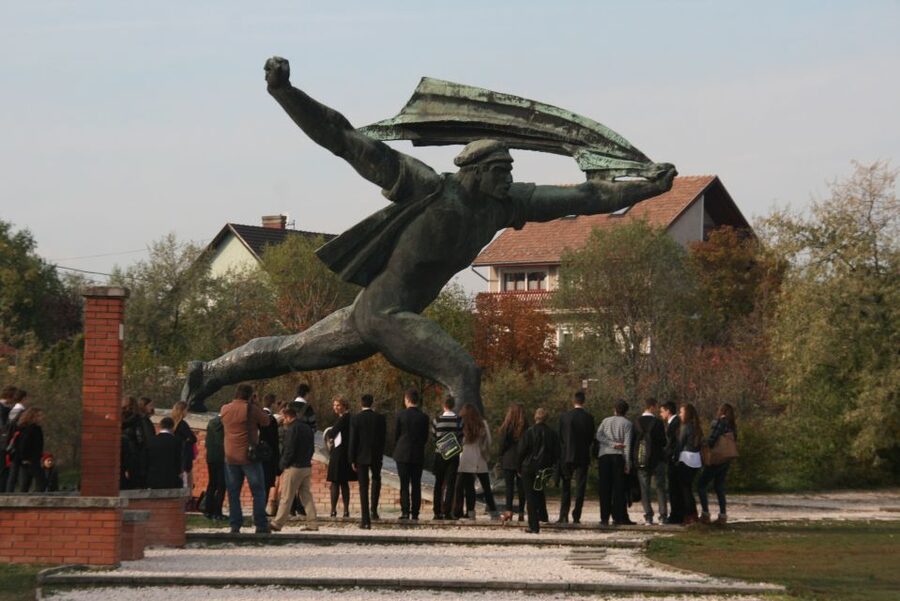
Memento Park is an open-air museum created after the communist system fell. The park displays 41 monumental sculptures from the communist past, including figures tied to Marx, Engels, and Lenin. The point wasn’t art for art’s sake. It was power displayed in metal and stone, meant to shape what people believed was normal and inevitable.
On this guided tour, you don’t just read placards. You learn how the communist rule changed everyday life and how the broader system worked. You’ll get explanations for:
- why the communist ideology gained room in Hungary after World War II
- how the theory of Marx was sold as a new future
- how that same system turned into a nightmare for millions
That contrast is the heart of the visit. The statues are giant. The message is simplified. And the guide keeps bringing you back to what that kind of messaging does to real people: it can flatten complexity, replace truth with repetition, and push citizens into a constant guessing game about what is safe to say.
A detail I appreciate here is that the guide ties the monuments to the broader shift in the rule of law once communists gained power. That’s useful because it helps you see the statues as part of governance, not just leftover decoration. You start to understand the park as a map of control—built to teach the public what to fear and what to obey.
Stalin’s Grandstand and the Boots of Stalin: the scene you can feel
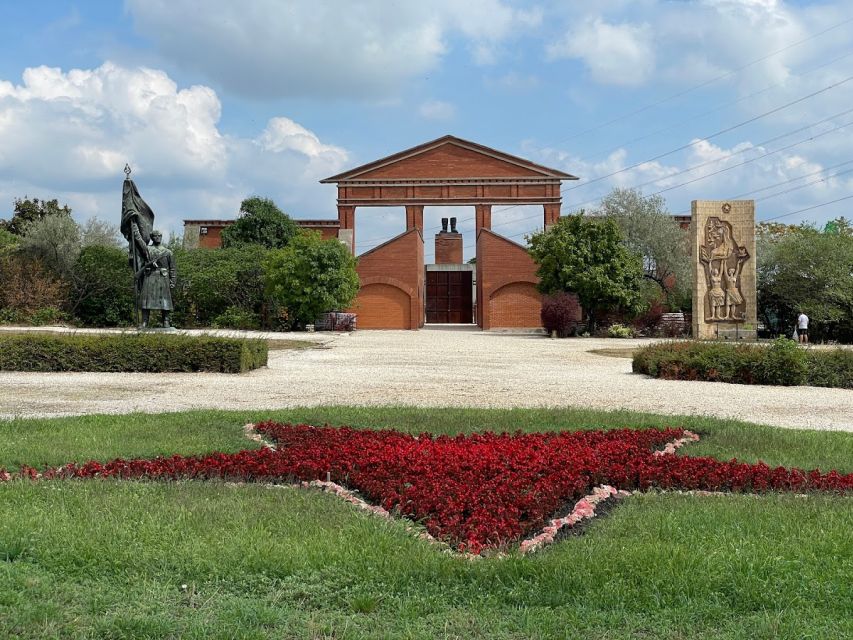
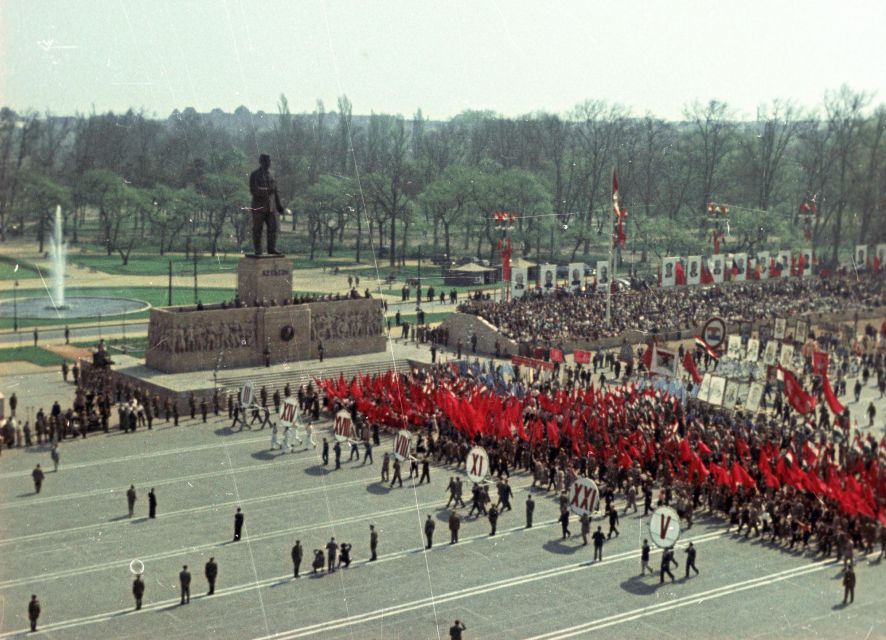
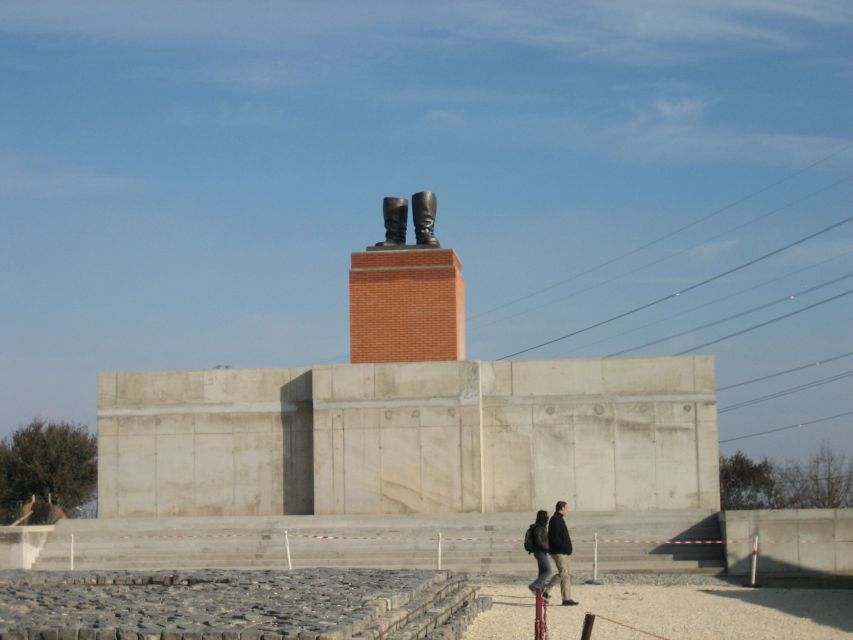
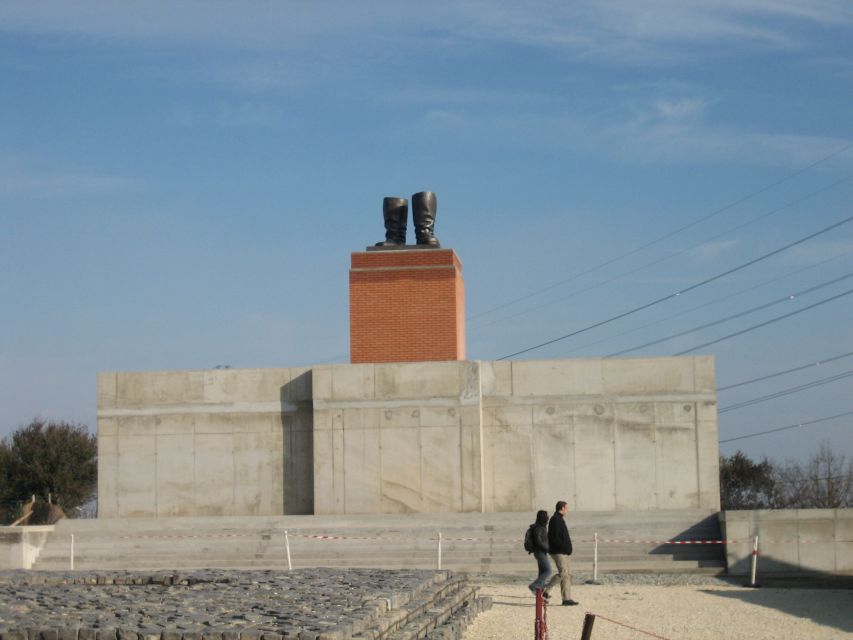
Every propaganda project wants a symbol, and this one picked a heavyweight. The tour takes you to the area connected with Stalin’s Grandstand. Here, you can imagine the angry crowd that helped pull down the huge statue of the hated dictator.
Today, you mainly see the Boots of Stalin—the replacement that left behind something both physical and symbolic. The guide explains why these boots matter: they represent people’s longing for freedom. It’s a strange thing to say about footwear, but that’s exactly why it hits. The monument is no longer whole. It’s reduced to a remnant that still carries emotion.
I find this part of the tour especially effective because it flips the usual monument experience. In many historic sites, monuments survive to tell a story from the victors’ side. Here, you’re looking at a dictator’s imagery after it has been rejected—literally knocked down. That tension makes the site feel more honest, even if the history is painful.
Also, if you like photo opportunities that don’t feel like tourist clichés, this is where you can make your own connection. The statues are built to be photographed, and the scale makes it hard to take a boring picture.
How fear worked: secret police recruitment and intimidation tactics
The tour’s story doesn’t stop at monuments. It goes after what the monuments were trying to protect: the system of control underneath.
You’ll hear about the secret police under Soviet rule—how recruitment worked, and how ordinary people could be intimidated. The guide frames it in practical terms: the point wasn’t just punishing people who opposed the regime. The point was to make everyone question whether they were safe, and to shrink the space for independent thinking.
This section is valuable because it helps you connect the park’s visuals to the emotional atmosphere of the dictatorship era. When you see how propaganda builds a single permitted version of reality, it becomes easier to understand why changing behavior mattered so much. The statues don’t only glorify leaders; they also train people to read authority everywhere.
One of the best qualities of this tour is that it doesn’t treat history like a closed textbook. You’ll learn about how manipulation worked and how brave people could escape. Even when the story is grim, it adds a human thread: resistance wasn’t theoretical. It had choices, costs, and consequences.
More days smoothed over by a local
Victor’s approach: laminated photos, shade, and real answers
The tour guide here makes a noticeable difference. In the experiences shared, Victor is consistently described as engaging, knowledgeable, and friendly, with a style that keeps things clear without talking down to you.
A specific detail I’d call out: Victor brings laminated photos to support explanations. That helps you connect what you see in front of you with how the monuments were meant to work at the time. It also makes it easier to follow the chain of meaning when you’re walking around big outdoor structures.
You may also notice the tour runs with care for comfort. On hotter days, the guide has offered bottled water and helped guests stand in the shade when possible. If you’re visiting during warm weather, plan for time outside. This is an open-air park, and the 1.5-hour museum and walk segment means you’ll want to pace yourself.
The other practical win is photo assistance. The guide will help you get pictures with the monuments, and that support is included. If you want a photo where you look like you’re standing right beside the statues, you won’t be left guessing how to pose.
Timing and flow: what 3 hours feels like on the ground
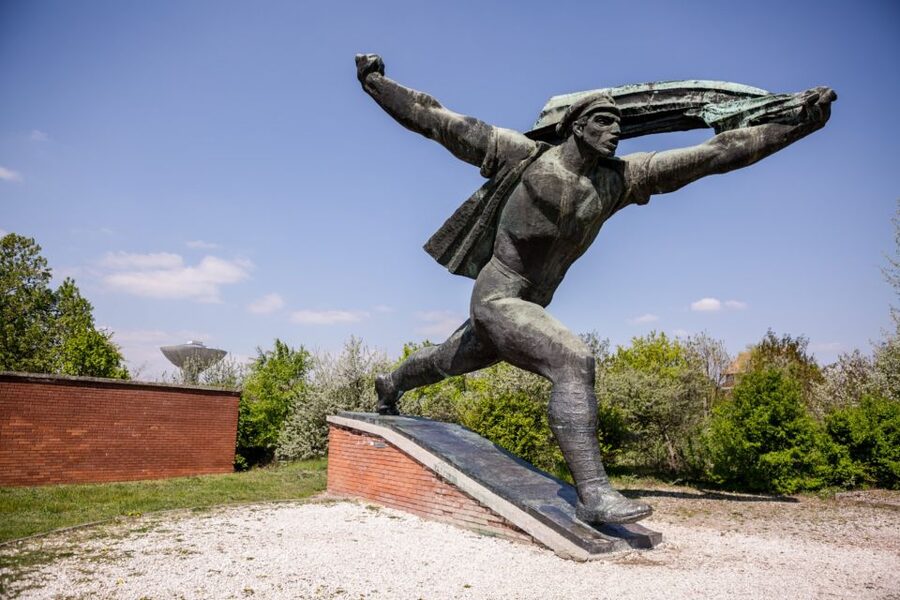
This is a tight, focused 3-hour experience. You’re picked up at Batthyány Square, drive to the park, spend about 1.5 hours at Memento Park with guided time plus sightseeing and free time, and then return to the city.
That schedule works well because it doesn’t try to turn Memento Park into a half-day project. The park is visual and emotionally intense. You absorb more when you’re not rushing, but you don’t need hours to let the meaning sink in.
Here’s how the flow typically feels:
- Ride out: you shift into history mode before you arrive
- On-site: guided walking plus time to look around and take photos
- Break after: you head back before you get museum-fatigued
If your Budapest plan includes classic sights like the Parliament area, Buda Castle, or the thermal baths, this tour can balance the day: you get a very different lens on the city, without forcing you into a long schedule.
Photo breaks and the souvenir shop: making it memorable without overbuying
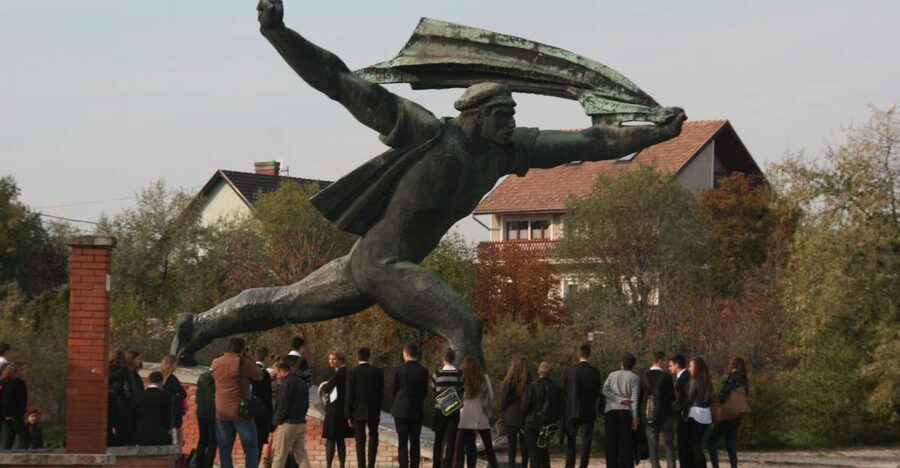
Memento Park offers photo opportunities directly at the statues. The setting is designed for scale, and the guide’s help can make the difference between a blurry shot and one where you clearly look like part of the scene.
After that, there’s a shop where you can buy souvenirs, postcards, and related items. Souvenirs aren’t included, so set expectations for your budget. I like having this option because it gives you something tangible to remember the trip, without pressuring you to buy right away.
If you want to keep it light, you can also just focus on photos and postcards. The park is photogenic, and that tends to do more for memory than a small item you’ll forget in a drawer.
Price and value: what $68 buys you (and why it’s fair)
At $68 per person for about 3 hours, you’re paying for more than entrance to a museum. Your money covers:
- pickup at Batthyány Square and transport by private car
- the museum entrance fee
- a live English-speaking licensed guide
- time at the park for guided viewing plus free time
- bottled water
- skip-the-ticket-line service
The big value driver is logistics. Getting to Memento Park by yourself takes planning and time. A guided small-group tour compresses the effort into a simple plan: you show up, ride out, learn, take photos, return.
The other value driver is the guide. This isn’t a generic audio experience. With Victor, you’re getting explanations, examples, and context designed to help you understand why communists had about 40 years in power in Hungary. That meaning is the real product here.
And because the group is limited to 7, it feels less like a bus tour and more like a guided walk where you can ask questions. For $68, that combination is a solid deal if you’re interested in politics, history, or how propaganda works.
Who this tour suits best in Budapest
This tour fits you if you:
- want a strong educational stop that goes beyond monuments as scenery
- like your history explained in clear cause-and-effect terms
- enjoy small-group tours with time for questions and photos
It may not suit you if:
- you prefer purely upbeat sightseeing days
- you don’t want to spend time with themes tied to repression and intimidation
It also works especially well for families and teens, as some bookings included younger visitors who reportedly enjoyed Victor’s style and humor. Still, the content is serious, so use your judgment based on your group’s comfort level.
Should you book this Budapest Memento Park icons of communism tour?
If you’re trying to choose between Budapest sightseeing that’s all postcard views and one tour that challenges your understanding, I’d book this one. The park’s scale is unforgettable, and the guide turns those giant figures into a clear explanation of propaganda, rule-of-law change, and how fear got manufactured.
Go for it if you want context and a guided experience with time to photograph the monuments. Skip it if you’re tired of politics and prefer lighter stops.
Bottom line: for $68, you get the key ingredients you’d otherwise have to piece together yourself—transport, entrance, and a guide who helps the story make sense while you’re standing right in the middle of it.
FAQ
Where is the meeting point?
You meet at Batthyány Square, near St. Anne church (the church with two towers).
How long is the tour?
The total duration is 3 hours.
How big is the group?
The tour is limited to 7 participants.
Is the tour guide available in English?
Yes, the guide is English-speaking.
What is included in the price?
Pickup and transport by car to Memento Park and back, the entrance fee, a live licensed English guide, bottle of water, and skip-the-ticket-line service.
Can I take photos at Memento Park?
Yes. There is free time at the park, and you can take pictures of the statues. The guide can help you take photos too.
Is there free time at the museum?
Yes, you’ll have guided time plus free time for sightseeing and walking during your visit.
What is the cancellation policy?
You can cancel up to 24 hours in advance for a full refund.
Is there a reserve now, pay later option?
Yes. You can reserve now and pay later to keep your plans flexible.
More Tours in Budapest

More Tour Reviews in Budapest




The Darker Side of Budapest




Just Added: More Budapest Reviews
- Sightseeing flight over Budapest
★ 5.0 · 3 reviews - Budapest: Walking Tour with Chimney Cake & Polaroid Photos
★ 5.0 · 3 reviews - Self Guided Tour In Budapest With 100 Captivating Audio Stories
★ 5.0 · 3 reviews - Budapest Art Nouveau Walking Tour
★ 5.0 · 3 reviews - Hungary today: a no-taboo conversation
★ 5.0 · 3 reviews
Dark History & Ghost Tours, compared.
 ★ 4.6Buda Castle District Vampires and Myths Night TourFrom $233,830 reviews
 ★ 4.5Buda Castle District Dark History, Legends and Vampire Night TourFrom $211,240 reviews
 ★ 4.9BloodThirsty Hungary: Walking tour & Dark Historical StoriesFrom $21633 reviews
 ★ 5.0Nightmare in Budapest Interactive Horror ExperienceFrom $24390 reviews
 ★ 4.8Communist History Tour with House of Terror OptionFrom $58182 reviews
 ★ 5.0BloodThirsty Hungary – Castle DistrictFrom $2180 reviews
 ★ 5.0Communism in Hungary with a HistorianFrom $5970 reviews
 ★ 4.73-Hour Walking Tour About Communism (Small Group)From $5770 reviews
Browse the lists this tour appears in