
Reviewed · FOOD & CULINARY TOURS
Budapest Essential Walk&Food tasting
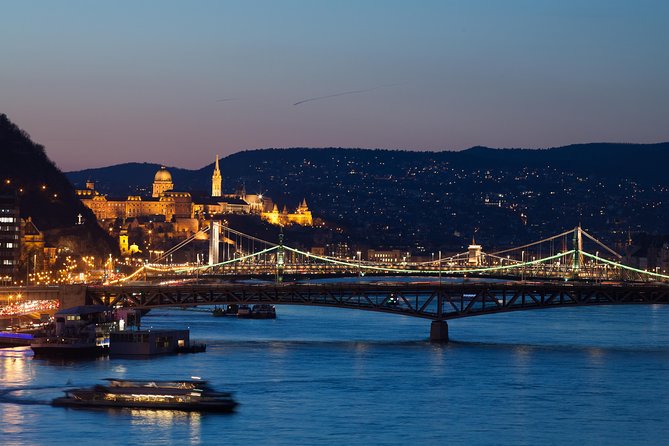
Budapest, served in one walking loop. This Essential walk-and-food tasting ties together Deák Ferenc Square, Heroes’ Square, Széchenyi Baths, St. Stephen’s Basilica, the Parliament area, Castle Hill, and the Chain Bridge, with a strudel-and-coffee break.
I like that it’s a private tour, so you move at your group’s pace and you can ask questions as you go. I also like the way the route uses real city transit, including the Millennium Underground and Metro 2, instead of just pointing at landmarks.
One consideration: the mix of outdoor walking, short rides, and a proper food stop can push the experience later than you’d expect from a tight 3-hour plan.
In This Review
- Key things to know before you go
- What This Budapest Walk-and-Food Tour Gets Right in 3–4 Hours
- Deák Ferenc Square to Elizabeth Square and the Opera Area
- Heroes’ Square, Vajdahunyad Castle, and a Ride on the Millennium Underground
- Széchenyi Baths: Thermal History and Outdoor-Pool Glimpses
- St. Stephen’s Basilica and the Names That Shaped Hungary
- Strudel Break at Szabadság tér: Food That Fits the Route
- Parliament, Kossuth tér, and the Shoes on the Danube Promenade
- Fisherman’s Bastion Views and Castle Hill Walking Toward Royal Areas
- Funicular Descent to Széchenyi Chain Bridge (and Those Lion Stories)
- Price and Value: Is $90.11 a Good Deal?
- The Guide Factor: What Gabor’s Style Adds to the Day
- Who This Tour Suits Best (and Who Might Prefer Something Else)
- Should You Book Budapest Essential Walk&Food Tasting?
- FAQ
- How long is the Budapest Essential Walk&Food tasting?
- Where do you meet for the tour?
- Where does the tour end?
- How much does the tour cost?
- Is this a private tour?
- Are tickets needed for the stops?
- Is the tour affected by weather?
- When does the tour run?
Key things to know before you go

- A classic Budapest route, in “story order”: Deák tér → Heroes’ Square → Széchenyi area → Parliament → Castle Hill
- Transit as part of the tour: Millennium Underground and Metro 2 aren’t just shortcuts; they’re explained
- Thermal-bath stop is history-focused: you learn the story and may peek at outdoor pools via a side entrance
- You get a real taste moment: a scheduled break for strudel and coffee
- Private group only: your guide’s attention stays on your small group, not a bus of people
- Route includes Danube icons: Shoes on the Danube Promenade and Chain Bridge are both on the plan
Still hungry? More markets, mains and tavern stops
- Countryside Half-day Gastro-Wine Tour from Budapest Meal & pickup★ 5.0 · 1,450 reviews
- Budapest Food Walking Tour: Eat, Sip & Explore Like a Local★ 4.8 · 1,027 reviews
- Budapest Centre Food Tour with 10+ Tastings, Wine & Street Food★ 5.0 · 810 reviews
- Budapest Guided Food Walking Tour with Drinks Included★ 4.8 · 472 reviews
What This Budapest Walk-and-Food Tour Gets Right in 3–4 Hours
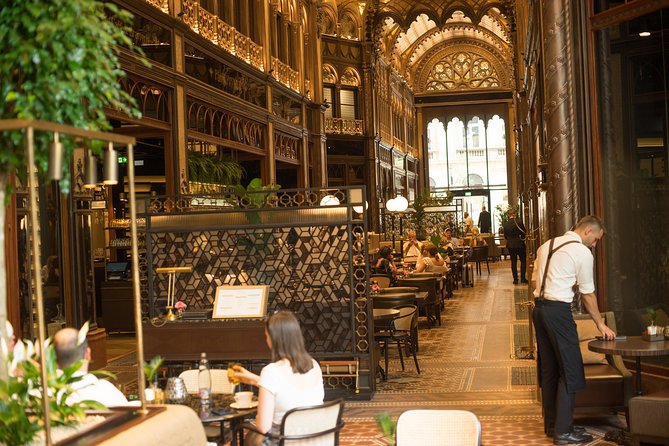
This tour is built for people who want the big-picture Budapest highlights without piecing together tickets and transit on their own. In one afternoon/evening run, you’ll cover multiple “zones” of the city: downtown squares, the Danube edges, and the Castle Hill viewpoints.
The other smart part is the guide-led structure. You don’t just walk past monuments; you get context for why buildings look the way they do and why certain places matter in Hungarian memory and politics. When the guide knows the route well, you can ask practical questions too, like what to see first the next day or how to handle tight sightseeing time.
And yes, there’s food. Not a random snack at the first place you pass, but an actual strudel-and-coffee stop that turns the tour from pure sight-seeing into a Budapest-style evening.
Deák Ferenc Square to Elizabeth Square and the Opera Area
You begin at the Lutheran church steps at Deák Ferenc tér 4, a central meeting point that’s easy to reach by public transit. From there, the walk immediately links you to Budapest’s “arrival zone”: Deák tér is where people naturally cross between neighborhoods.
The tour uses this area to set the tone for the rest of the city. You’ll take a short walk toward Elizabeth Square and the Opera house zone, with the guide pointing out what to look for from the outside—street-level details you might otherwise miss while rushing to the next photo spot.
If you like architecture but don’t want a full-on museum day, this start is a good fit. You’re learning how the city’s grander buildings show power and style—without having to buy entry tickets right away.
Heroes’ Square, Vajdahunyad Castle, and a Ride on the Millennium Underground
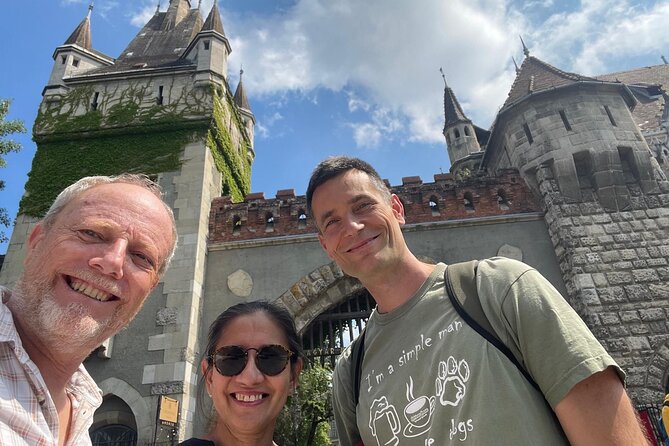
Next you head toward Heroes’ Square and City Park. This is where Budapest starts feeling ceremonial: wide views, large monuments, and a skyline that makes you slow down even if you’re usually a brisk walker.
A standout element here is the Millennium Underground ride. The tour brings you onto Europe’s first underground line for a short transit connection, and the guide ties it to what you’re seeing above. That’s a fun reminder that Budapest isn’t only about old palaces and cathedrals—it also has a history of smart transport.
From the Heroes’ Square area, you’ll visit Vajdahunyad Castle and learn about its architecture. The value is simple: you’ll know what you’re looking at while you look at it, instead of staring at “random medieval vibes” and hoping it all makes sense.
If you’re trying to plan a first visit, this section helps you get the city’s scale fast: you’ll see how the city organizes space for national pride and public gatherings.
Széchenyi Baths: Thermal History and Outdoor-Pool Glimpses
After Heroes’ Square, the tour turns toward the Széchenyi Baths area. You’ll get acquainted with the history of Budapest’s most visited thermal bath. This stop works best if you like cultural context—why the baths became so central to how people understand Budapest.
The plan isn’t presented as a full spa day. Instead, you’re there for the story and, if conditions allow, a glimpse of the outdoor pools by using a side entrance. That keeps the tour moving while still giving you a real feel for what makes Széchenyi special.
If you do want actual bathing time, you’ll likely need a separate visit with paid entry. But for a walk-and-food evening tour, this approach is efficient: you get the atmosphere and the significance without turning your tour into an all-day project.
More Budapest on foot

St. Stephen’s Basilica and the Names That Shaped Hungary
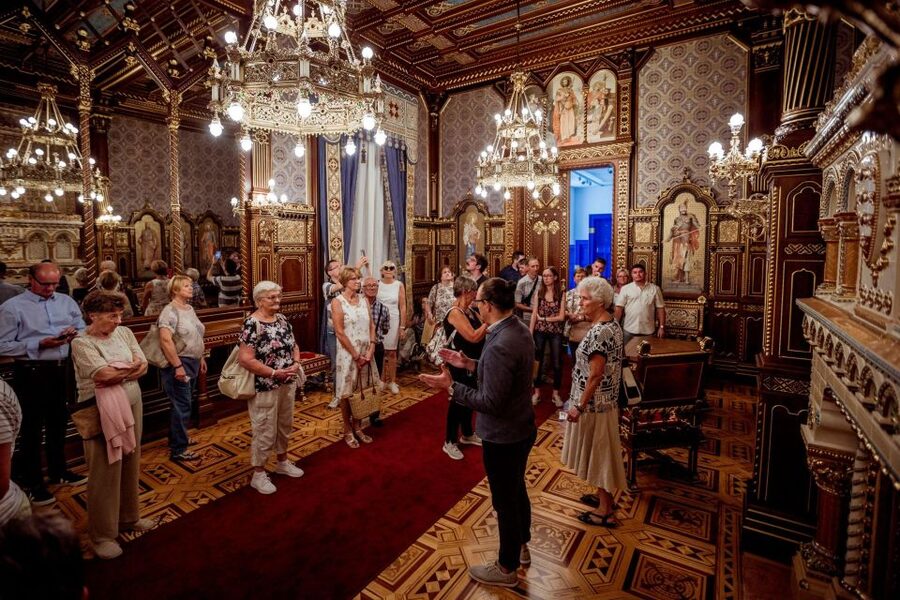
You continue onward to St. Stephen’s Basilica (Szent Istvan Bazilika). Here the guide focuses on the birth of Catholic Hungary and King Stephen, the founder figure tied to Hungary’s early statehood.
What I like about this stop is that it doesn’t stay in medieval times. The tour also introduces other major Hungarian personalities, including Ferenc Puskás. That detail matters because it helps you see how national identity shows up in more than just religion and royalty—it also shows up in sports and popular memory.
Even if you only spend about 15 minutes here, you walk away with a few grounded anchors. When you return later on your trip, you’ll recognize names and themes instead of only shapes and domes.
Strudel Break at Szabadság tér: Food That Fits the Route
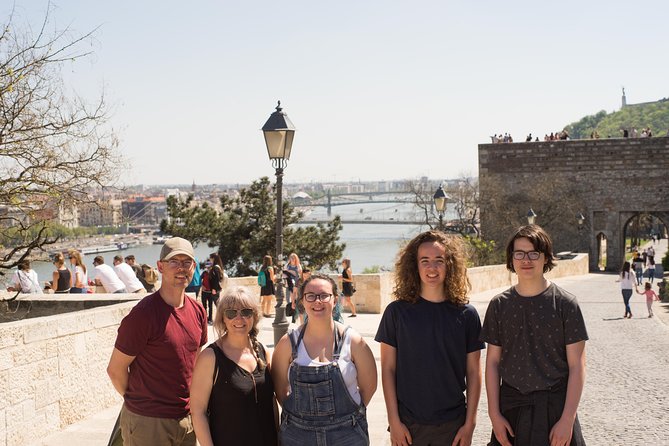
Now comes a practical, very Budapest moment: a break at a Strudel house for strudel and coffee. This lines up well with the rhythm of the walk—after several landmark stops, you get a chance to warm up, sit down, and reset.
Szabadság tér itself is part of the lesson. The guide points out the last remaining Soviet statue, the American embassy, and the memorial of the German occupation. That’s a lot of 20th-century history, placed right inside a modern city square.
I like that the food stop happens here, because it keeps the tour human. You’re learning hard history, but you’re also eating something that feels like a normal Budapest evening rather than a school lecture in public.
If you have a sweet tooth, you’ll likely appreciate the stop even more. One strong highlight from the tour style is pushing past the standard ask. The guide can steer you toward choices like poppy seed strudel, which is exactly the kind of detail that turns a tasting into an actual memory.
Parliament, Kossuth tér, and the Shoes on the Danube Promenade
From Szabadság tér, you move toward Kossuth tér and the Hungarian Parliament Building. This is one of Budapest’s most photogenic buildings, but the tour doesn’t treat it like a backdrop. You get architecture talk plus history and politics tied to both past and more recent issues.
Then comes one of the most affecting stops on the route: the Shoes on the Danube Promenade close to Parliament. This small stretch of riverfront memorial is powerful because it’s quiet and specific. You can stand there and understand it without needing to be fluent in anything complicated.
The practical value here is timing and flow. Since you’re already in the Parliament area, you don’t need to figure out how to reach the Danube memorial from somewhere else. The tour handles the navigation and keeps the context front and center.
If you prefer a tour that makes big monuments feel grounded in real stories, this is a good portion of the experience.
Fisherman’s Bastion Views and Castle Hill Walking Toward Royal Areas
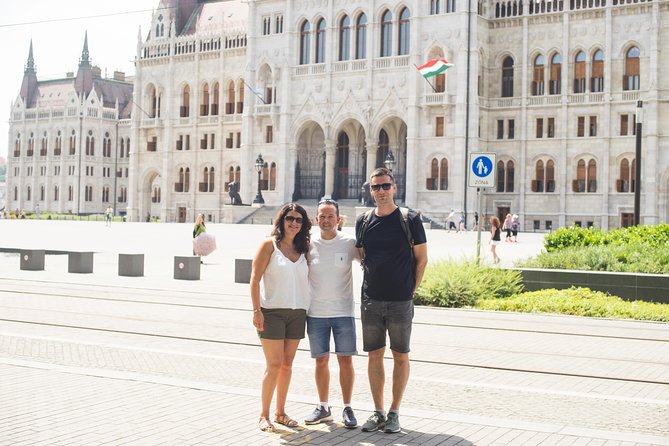
After Parliament, you take Metro 2, the red line under the Danube, and head toward Castle Hill. This isn’t just transportation; it’s a “why this matters” connection. The guide uses the move to set you up for the changing city views as you climb.
At Castle Hill, you start your historical journey at Fisherman’s Bastion. The main draw is the panoramic viewpoint from the lookout terrace. You’ll see the Danube angles and the city’s layout in a way that’s hard to match on street level.
From there, the tour continues on foot toward the Royal Palace area. Even if you’re only on the hill for a limited time, the walking route helps you understand how the Castle District sits above the river and why people treat these views as a must-do in Budapest.
One practical note: Castle Hill includes hills and steps. Comfortable shoes matter more here than anywhere else on the route.
Funicular Descent to Széchenyi Chain Bridge (and Those Lion Stories)
The finale leans into one of Budapest’s most iconic images: Széchenyi Chain Bridge. The tour takes you down Castle Hill along the funicular, so you aren’t doing the steepest part purely by foot.
Once you’re near the bridge, the guide shares stories about the first permanent bridge and the lions associated with it. That’s exactly the kind of detail that changes a bridge from a photo stop into a real story you can retell.
About the ending: the tour lists Széchenyi Chain Bridge as the end point. At the same time, the walk finishes in the Castle district area near Holy Trinity Square (Szentháromság tér) just off Matthias Church. In practice, plan for a finale around the central Castle/bridge connection zone so you can transition easily to dinner or your hotel.
Price and Value: Is $90.11 a Good Deal?
At $90.11 per person, this tour sits in the category of paid private guiding rather than budget group tours. The value comes from what’s included in the experience design: a private guide, multiple major sights, transit connections, and a planned food tasting.
Also, the itinerary lists admission ticket free for each stop. That doesn’t mean every Budapest site is always free to enter on your own, but it does suggest you’re not expected to buy separate tickets throughout the run. Instead, you’re paying for the guide’s pacing and interpretation.
Duration is listed as 3 to 4 hours, but a real-world pattern is that it can run later when weather is rough or when the guide gives extra time at key moments. With a private tour, that flexibility can be a benefit rather than a problem—especially if your guide keeps you on plan during rain instead of cutting the route.
In plain terms: pay $90.11 if you want a guided route that hits the essentials, explains what you’re seeing, and still feeds you.
The Guide Factor: What Gabor’s Style Adds to the Day
A big part of the positive reputation here comes from the guide’s temperament and adaptability. One standout account describes Gabor pushing forward even with downpour and strong wind at around 2 pm, without swapping out the plan just because the weather turned ugly.
That matters because Budapest afternoons can change fast. If you’re the type who gets annoyed when plans collapse at the first bit of bad weather, a guide who keeps moving and handles discomfort well can turn the day from annoying to surprisingly fun.
The same guide style shows up in the details. He used public transit during the tour and brought the group to the Strudel restaurant for the tasting. He also had broad historical storytelling, not only local facts but context beyond Europe too, so the tour felt connected rather than stuck in one narrow lane.
When you book a private tour, you’re not just buying facts. You’re buying how those facts get delivered, and a guide like Gabor can make a sightseeing loop feel like a conversation.
Who This Tour Suits Best (and Who Might Prefer Something Else)
This is a good match for first-timers who want a guided route across multiple Budapest neighborhoods in a single afternoon/evening. It’s also a great fit for couples and small groups, since private guiding means you can ask questions without waiting for a large group to catch up.
You should also consider this if you like history tied to specific places: Soviet-era symbols, Danube memorials, and political context around Parliament. The tour doesn’t treat history like a pile of dates.
On the other hand, if you’re the kind of traveler who wants lots of free time for museum interiors, long sit-down meals, or slow wandering without transit and timing, you might find this route a bit structured. It’s designed to cover ground and hit major stops, not to sprawl.
Finally, if you’re traveling with service animals, the tour allows them, and the meeting spots are near public transportation, which helps keep the logistics simple.
Should You Book Budapest Essential Walk&Food Tasting?
Yes, if you want a guided “essentials” loop that mixes major sights, transit shortcuts with stories, and a real strudel-and-coffee stop. The route covers Deák tér, Heroes’ Square, thermal-bath history, St. Stephen’s Basilica, Parliament and the Danube memorial, then Castle Hill viewpoints and Chain Bridge.
Book it if you value interpretation. You’ll get meaning attached to places, from national founders to 20th-century memory, plus the kind of details that make photos more than decoration.
Skip it if you’re planning an ultra-slow day or if you’re only interested in one area of Budapest. This tour is about movement and coverage. It’s not the best choice for travelers who want to linger for long inside buildings.
FAQ
How long is the Budapest Essential Walk&Food tasting?
The tour lasts about 3 to 4 hours.
Where do you meet for the tour?
You meet at the stairs of the Lutheran church of Deák tér, Deák Ferenc tér 4, 1052 Hungary.
Where does the tour end?
The tour is listed as ending at Széchenyi Chain Bridge. The route also finishes in the Castle district area near Holy Trinity Square (Szentháromság tér) just off Matthias Church.
How much does the tour cost?
The price is $90.11 per person.
Is this a private tour?
Yes. Only your group participates.
Are tickets needed for the stops?
The itinerary lists admission ticket free for the stops included on the walk-and-food route.
Is the tour affected by weather?
The experience requires good weather, and if it’s canceled due to poor weather you’ll be offered a different date or a full refund.
When does the tour run?
The listed operating hours are Monday through Sunday from 3:00 PM to 9:00 PM, within the date range shown for the experience.
Still Walking Budapest




More Tour Reviews in Budapest






Eat Budapest: More Food Walks




Just Added: More Budapest Reviews
- Sightseeing flight over Budapest
★ 5.0 · 3 reviews - Budapest: Walking Tour with Chimney Cake & Polaroid Photos
★ 5.0 · 3 reviews - Self Guided Tour In Budapest With 100 Captivating Audio Stories
★ 5.0 · 3 reviews - Budapest Art Nouveau Walking Tour
★ 5.0 · 3 reviews - Hungary today: a no-taboo conversation
★ 5.0 · 3 reviews
Food & Culinary Tours, compared.
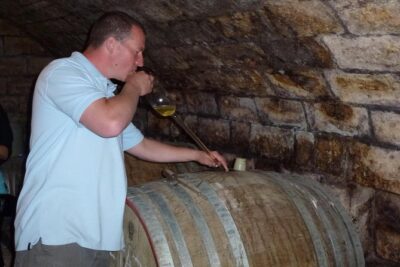 ★ 5.0Countryside Half-day Gastro-Wine Tour from Budapest Meal & pickupFrom $991,450 reviews
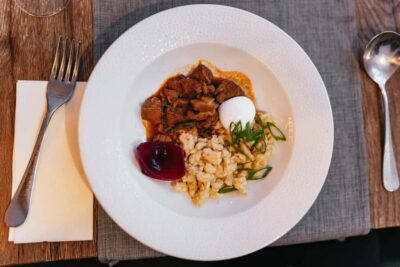 ★ 4.8Budapest Food Walking Tour: Eat, Sip & Explore Like a LocalFrom $731,027 reviews
Budapest Centre Food Tour with 10+ Tastings, Wine & Street FoodFrom $118810 reviews
★ 4.8Budapest Food Walking Tour: Eat, Sip & Explore Like a LocalFrom $731,027 reviews
Budapest Centre Food Tour with 10+ Tastings, Wine & Street FoodFrom $118810 reviews
 ★ 4.8Budapest Guided Food Walking Tour with Drinks IncludedFrom $69472 reviews
 ★ 5.0Budapest Food Tour: Market to Tavern with 14+ Tasters & WinesFrom $76434 reviews
 ★ 5.0Budapest Culinary & Wine WalkFrom $120397 reviews
 ★ 4.9Food Tour Market to Tavern: 14+ Tasters & WinesFrom $78375 reviews
 ★ 5.0Budapest Tipsy Food Tour with Wines, Small Group & Local GuideFrom $84234 reviews
Browse the lists this tour appears in