
Budapest food hits different on a walking tour. This one strings together 10+ tastings with Hungarian wine and street food, while you also pass big-city landmarks and learn how the country thinks about food. One practical catch: it involves a fair amount of walking, so plan for comfort first.
I like that the tour is built for small-group attention (max 12 people) and for real-life eating habits, not just museum-style stops. The main drawback to weigh is that the itinerary and menu can shift with weather and availability, so you should expect a flexible plan rather than a guaranteed exact order of every bite.
In This Review
- Key Things I’d Pay Attention To
- Entering The Day at the Hungarian State Opera
- The Walking Route: Basilica, a Lipótváros Square, and Parliament Views
- What 10+ Tastings Really Means for Your Day
- Strudel and Coffee: The Sweet Starter That Makes the Rest Make Sense
- Lángos: The Crispy Street-Food Moment You Can’t Skip
- Sausages, Cheeses, and Pickles: The Lunch-Board Feel
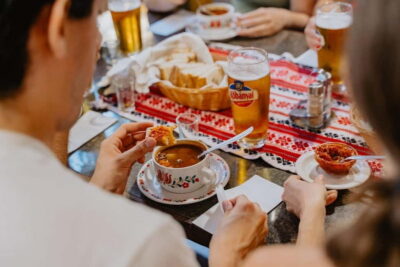
- Gulyás Soup: The Hearty Finish That Feels Like Comfort
- The Secret Dish Finale
- Wine and Coffee: How the Tour Keeps the Pace Social
- Small Group Energy: Why Guides Like George and Zoltán Matter
- Price and Logistics: Is $118.51 Worth It?
- Who This Tour Suits Best (and Who Should Rethink It)
- Should You Book This Budapest Centre Food Tour?
- FAQ
- How long is the Budapest Centre Food Tour?
- What’s the price per person?
- How big is the group?
- Where do I meet and where does the tour end?
- What food and drink are included?
- Is hotel pickup included?
- Is the tour offered in English?
- Can the itinerary or menu change?
- Can I get a refund if my plans change?
Key Things I’d Pay Attention To
- Opera-area meeting point at Andrássy út 22 sets the tone fast and keeps you in the city center.
- 10+ included tastings cover sweet, savory, soup, bread, and coffee, so you actually eat your way through the culture.
- Hungarian wine (red or white) plus water keeps the pacing fun and social without turning it into a drinking contest.
- Max 12 travelers means you can ask questions and actually hear the answers while you’re walking.
- Historic stops that connect to food culture (Opera, Basilica, Lipótváros square, Parliament) make the background feel relevant.
- A final Secret Dish stop adds a wildcard element that many food tours don’t bother with.
Still hungry? More markets, mains and tavern stops
- Countryside Half-day Gastro-Wine Tour from Budapest Meal & pickup★ 5.0 · 1,450 reviews
- Budapest Food Walking Tour: Eat, Sip & Explore Like a Local★ 4.8 · 1,027 reviews
- Budapest Centre Food Tour with 10+ Tastings, Wine & Street Food★ 5.0 · 810 reviews
- Budapest Guided Food Walking Tour with Drinks Included★ 4.8 · 472 reviews
Entering The Day at the Hungarian State Opera
You start at the Hungarian State Opera, right on Andrássy út. Even if you don’t go inside, standing in front of a world-famous building like this tells you you’re in the “center of gravity” part of Budapest. It also makes the tour feel less like a random snack crawl and more like a guided walk through places that shaped modern Hungarian life.
The tour includes a short stop timed around 15 minutes, with an admission ticket noted as free for that portion. This is a nice way to avoid that common problem of food tours where you only peek at landmarks from outside.
My practical tip: arrive a few minutes early and take a quick look around before you meet. Andrássy Avenue is straight, grand, and photogenic, so you’ll get a head start on the vibe.
The Walking Route: Basilica, a Lipótváros Square, and Parliament Views
After the Opera start, the route moves you into a more religious and civic Budapest feel with a stop at the Roman Catholic Basilica named for Stephen, Hungary’s first King. What makes this stop stick is the story connection: the basilica is associated with Stephen’s supposed right hand, housed in the reliquary. Even if you’re not the church-and-history type, that’s the kind of detail that helps the city make sense.
Next comes a public square in the Lipótváros neighborhood. Lipótváros is where you see government, institutions, and the kind of “official Budapest” energy that pairs well with a food story about tradition meeting modern life. Your guide’s commentary ties the food you’re about to eat (or just ate) to how people have lived here—socially, culturally, and economically.
Then the tour heads toward the Hungarian Parliament building. This is your big visual payoff. You get the sense of how power and ceremony shaped public life, including what ends up in public imagination about Hungarian identity.
Potential downside: because the landmarks are spread out on foot, you’ll want comfortable shoes and a steady pace. If you’re hoping for a sit-down-only experience, this isn’t that.
What 10+ Tastings Really Means for Your Day
This is not a “one bite each” tour. It’s a structured sequence of stops built around 10+ tastings that add up to an actual meal experience. The included list reads like a map of classic Hungarian comfort food and café culture: strudel, láŋos, pickled vegetables, Hungarian sausages, local cheeses, gulyás soup, bread, and coffee.
Here’s why that matters. If you only eat one dish in a new country, you miss the pattern. On this tour, the pattern shows up fast:
- You start moving through sweet (strudel) and coffeehouse rhythm.
- You hit street-food energy with crispy láŋos.
- You finish with deeper, heavier savory comfort like gulyás and a broader tasting mix.
Strudel and Coffee: The Sweet Starter That Makes the Rest Make Sense
One of the tasting stops focuses on strudel and coffee or tea (plus other dessert elements, depending on the day). In Hungarian food culture, pastries aren’t just desserts. They’re part of how people slow down, chat, and spend time.
If you’ve ever had pastry in a tourist area, you know the difference. On a good food tour, the pastry feels like it belongs in the neighborhood. That’s the goal here.
What to do: eat enough to enjoy it, but don’t overdo it. You’ve got savory street food ahead.
More Budapest plates and glasses worth the walk
Lángos: The Crispy Street-Food Moment You Can’t Skip
Lángos is the other centerpiece. Think of it as a crispy, hot, topping-friendly snack that feels like Budapest’s street-food version of a comfort dish. The included menu calls out crisp láŋos, and this is usually where the tour turns from “cultural context” to “food joy.”
This is also where pickled vegetables show up in the mix. That sharp tang matters because it cuts through the fried texture and helps you keep going without feeling overloaded.
Sausages, Cheeses, and Pickles: The Lunch-Board Feel
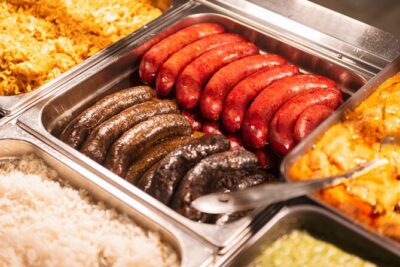
As you move through the savory part of the tour, you’ll get included plates and tastings that emphasize Hungarian staples: Hungarian sausages and local cheeses, with pickled vegetables playing a key role. This combo gives you more than flavor variety. It gives you the sense that Hungarian meals often involve bold bites with clear personality.
If you like tasting boards at wine bars, you’ll appreciate how the tour mirrors that format.
Gulyás Soup: The Hearty Finish That Feels Like Comfort
Gulyás soup shows up as one of the included tastings. This is the part where Hungarian food culture feels most straightforward: warm, filling, built for winter days and long conversations.
Pro tip: gulyás is satisfying. If you tend to eat slowly, pace yourself so you still have room for the rest of the tour’s included items.
The Secret Dish Finale
You’ll also get Our delicious Secret Dish. The exact dish isn’t spelled out in the basic description, but the point is that the tour leaves you with one more moment of surprise after the big “known” dishes. Reviews also mention a memorable end-of-tour spirit moment (palinka) and a finish that can feel more private and tasting-room like.
Since menus and stops can change with availability, treat the “Secret Dish” as a wildcard you’ll be glad to meet.
Wine and Coffee: How the Tour Keeps the Pace Social
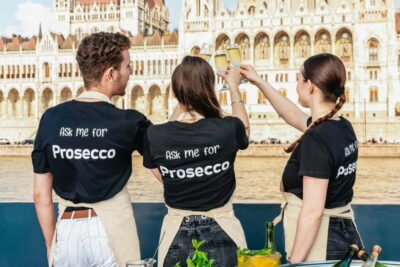
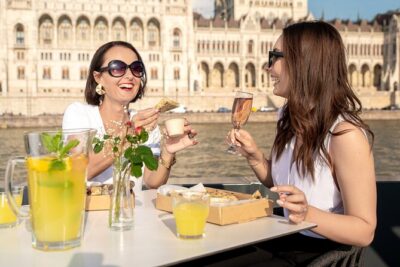
The included drinks are straightforward: red or white Hungarian wine plus water. That’s a good balance. You get a classic pairing without it turning into a full-on alcohol-focused event. Coffee is also included, and it’s a smart choice in a walking tour because it gives you a lift after lunch-level food.
I like that this tour doesn’t feel like it’s trying to sell you on drinking. It feels like food-and-culture with refreshments that match the meal rhythm.
Small caution: if you’re sensitive to alcohol, remember the tour includes wine. Pace yourself, take water breaks, and don’t feel shy asking your guide for help with what to pair together.
Small Group Energy: Why Guides Like George and Zoltán Matter
This tour is capped at 12 people, and the guides repeatedly get praised for turning history and culture into something you can actually use while walking. Names that show up often include George and Zoltán, plus other guides like Angela, Kitti, and Gábor. Across the feedback, a common theme is that the guide keeps the storytelling clear, humorous, and paced so you can follow along.
What that means for you is simple: you’re not stuck with a lecture you can’t hear. You get attention. You can ask questions. And your guide can steer you toward recommendations that fit your interests.
My practical tip: if you’re into a particular angle—history, regional flavors, or modern Hungarian life—bring that with you at the start. Guides on this route are clearly good at responding to questions, so give them something to work with.
Price and Logistics: Is $118.51 Worth It?
At $118.51 per person for about 3 hours, this isn’t a bargain snack. But it also isn’t overpriced for what you get if you compare it to the real costs of multiple sit-down tastings plus wine in central Budapest.
Here’s where the value comes from:
- You’re getting 10+ included tastings, not just a couple of bites.
- Wine and coffee are included, which adds real cost if you’d order separately.
- The tour saves you guesswork on where to eat and what to order in a city where menus can be intimidating if you don’t speak the language.
- The small group size helps you turn the food into a learning experience instead of standing in a line.
Logistically, there’s no hotel pickup and drop-off, so you should plan to get to the start at Budapest, Andrássy út 22 on your own. The tour ends near West Station, at Báthory utca 23, with Hun&Only Club as a reference point.
Quick planning tip: if West Station is on your route later, this ending location can be a win. If you’re going elsewhere after, just map it before you start.
Who This Tour Suits Best (and Who Should Rethink It)
This works best if you want:
- A first or early introduction to Hungarian food in Budapest
- A walking tour that ties landmarks to what people actually eat
- A day where you eat your way through sweet, savory, and hearty bites
- A guide-led experience with room for questions thanks to the small group size
It may be less ideal if:
- You don’t like walking or have limited stamina
- You only want a light snack (this tour is filling)
- You want a strictly independent-only restaurant route with no chain-style stops. The tour aims to reflect everyday eating culture, which can include a mix of venue types.
If you’re on a tight schedule and want an efficient “tastes plus context” day, this is a strong pick.
Should You Book This Budapest Centre Food Tour?
I’d book it if you want a guided food-and-culture hit that feeds you properly. The inclusion list makes sense as a set: strudel and coffee to start, láŋos and pickles for street-food punch, sausages and cheeses for variety, gulyás for comfort, plus a Secret Dish and wine to finish the story.
If you’re the type who always asks what locals eat, this is also the right kind of tour. The route is built around major central Budapest sights, but the real payoff is how the food choices connect to those places.
Skip it only if walking is a problem for you or if you prefer food experiences that are entirely spontaneous with no set tastings. For most people—especially first-timers in Budapest—this tour is one of the cleanest ways to turn “sightseeing” into “I actually ate the city.”
FAQ
How long is the Budapest Centre Food Tour?
It runs for about 3 hours.
What’s the price per person?
The price is $118.51 per person.
How big is the group?
The group is capped at a maximum of 12 travelers.
Where do I meet and where does the tour end?
It starts at Budapest, Andrássy út 22, 1061 Hungary, and ends at Budapest, Báthory utca 23-1054, 1054 Hungary.
What food and drink are included?
Included items include strudel, crispy Hungarian lángos, pickled vegetables, Hungarian sausages, local cheeses, gulyás soup, bread, coffee, a Secret Dish, Hungarian wine (red or white), and water.
Is hotel pickup included?
No, hotel pickup and drop-off are not included.
Is the tour offered in English?
Yes, it’s offered in English.
Can the itinerary or menu change?
Yes. The itinerary and menu can change based on location availability, weather, and other circumstances.
Can I get a refund if my plans change?
You can cancel for a full refund up to 24 hours before the experience start time. Cancellation less than 24 hours before start time is not refundable.
More Tours in Budapest




More Tour Reviews in Budapest






Eat Budapest: More Food Walks



Just Added: More Budapest Reviews
- Sightseeing flight over Budapest
★ 5.0 · 3 reviews - Budapest: Walking Tour with Chimney Cake & Polaroid Photos
★ 5.0 · 3 reviews - Self Guided Tour In Budapest With 100 Captivating Audio Stories
★ 5.0 · 3 reviews - Budapest Art Nouveau Walking Tour
★ 5.0 · 3 reviews - Hungary today: a no-taboo conversation
★ 5.0 · 3 reviews
Food & Culinary Tours, compared.
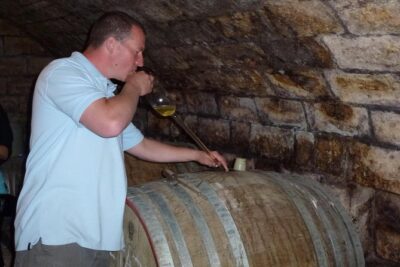 ★ 5.0Countryside Half-day Gastro-Wine Tour from Budapest Meal & pickupFrom $991,450 reviews
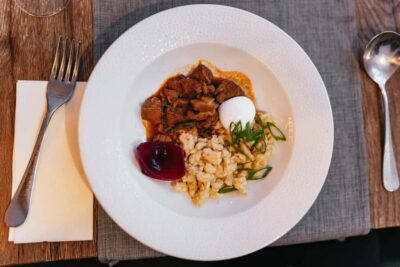 ★ 4.8Budapest Food Walking Tour: Eat, Sip & Explore Like a LocalFrom $731,027 reviews
 ★ 4.8Budapest Guided Food Walking Tour with Drinks IncludedFrom $69472 reviews
 ★ 5.0Budapest Food Tour: Market to Tavern with 14+ Tasters & WinesFrom $76434 reviews
 ★ 5.0Budapest Culinary & Wine WalkFrom $120397 reviews
 ★ 4.9Food Tour Market to Tavern: 14+ Tasters & WinesFrom $78375 reviews
 ★ 5.0Budapest Tipsy Food Tour with Wines, Small Group & Local GuideFrom $84234 reviews
 ★ 4.8Guided Bike & E-bike Tour with a GoulashFrom $54220 reviews
Browse the lists this tour appears in