
Reviewed · DARK HISTORY & GHOST TOURS
Born Under The Red Star – Communist tour with Coffee in a Retro Bar
One of the best ways to read Budapest is through politics. Born Under The Red Star is a focused, 3-hour walking tour through the symbols of 20th-century power, fear, and resistance, with a stop for a classic soda in a Communist-themed retro bar. I love how the guide’s commentary turns place names into real stories, and I like that you end with practical maps and tips for what to explore next on your own. The tone is serious, though, and you’ll be on your feet for a full run of short stops.
What makes this tour feel worthwhile is the way it packs big themes into a tight route. You’ll see the places tied to WWII-era memory, the Communist and fascist regimes, and the pushback that shaped modern Hungary—without wasting your day on long detours. I also appreciate the group stays small (up to 15), and I’ve seen how it can even run as a tight pairing, with a guide named Ferenc described as explaining the political landscape in plain language.
One possible drawback to consider: two major attractions on the route (St. Stephen’s Basilica and the Hungarian Parliament Building) are not included, so you may pay extra if you want more time inside or plan to ticket both.
In This Review
- Quick hits before you go
- Why this tour is different: the communist route ends with a soda
- Price and value: $90.31 for 3 hours that include real stops
- Start at the Hungarian State Opera, then walk where the city tells the truth
- Stop 1: Soviet Heroic Memorial and the WWII memory lesson
- Stop 2: House of Terror Museum for the hardest, most important context
- Stop 3: St. Stephen’s Basilica for a religious counterpoint
- Stop 3 continuation: Liberty Statue / Freedom Statue on Gellért Hill
- Stop 4: Szabadság tér, where memorials can be controversial
- Stop 5: The 1956 Revolution memorial for national resistance
- Stop 6: Hungarian Parliament Building as a final landmark moment
- The retro bar break: Communist-themed decor and a classic soda
- Maps and tips: what to do after you hit Liberty Square
- Who this tour suits best (and who should consider alternatives)
- Should you book Born Under The Red Star?
Quick hits before you go
- A small group (max 15) keeps the walk conversational and lets the guide pace the story.
- Free entry at key sites such as House of Terror and the Soviet Heroic Memorial keeps the price easier to handle.
- You’ll see both repression and response, from House of Terror to the 1956 Revolution memorial.
- The Liberty Square stops are built for perspective, including memorials tied to the Holocaust and Soviet liberation.
- A retro Communist-themed bar break includes a classic soda, with coffee or tea also part of the included time.
- You get maps plus recommendations so you can keep the thread going after the tour ends.
The darker Budapest, told after dusk
- Budapest: Buda Castle District Vampires and Myths Night Tour★ 4.6 · 3,830 reviews
- Buda Castle District Dark History, Legends and Vampire Night Tour★ 4.5 · 1,240 reviews
- BloodThirsty Hungary: Walking tour & Dark Historical Stories★ 4.9 · 633 reviews
- Nightmare in Budapest Interactive Horror Experience★ 5.0 · 390 reviews
Why this tour is different: the communist route ends with a soda
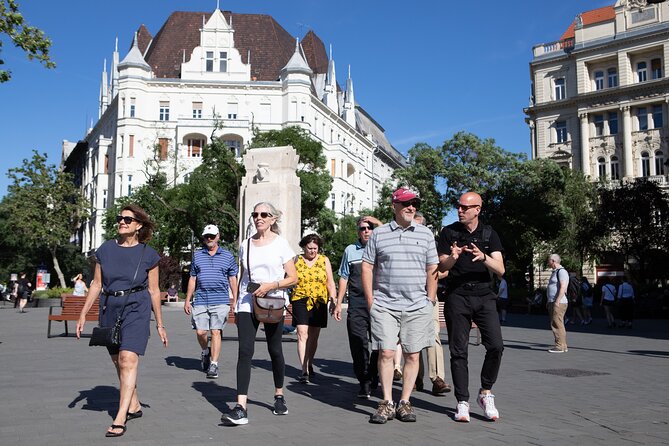
This is not just a collection of monuments. It’s a guided walk that links what you see to what happened—then gives you a breather with food-adjacent comfort. The included classic soda in a Communist-themed retro bar isn’t just a gimmick. It gives you a moment to reset your brain after stops that focus on detention, interrogation, torture, and victims of regimes.
You’ll also notice the balance in the route. The tour hits oppression (House of Terror) and then moves toward remembrance and national identity (the 1956 memorial, Liberty Statue/Freedom Statue, and the Liberty Square context). That mix helps you understand why Budapest doesn’t treat these topics as museum-only—they show up right in the city’s public space.
And the small-group nature matters. If the group is under the cap, the guide can slow down and answer the questions you actually have instead of herding everyone like a school trip.
Price and value: $90.31 for 3 hours that include real stops
At $90.31 per person for about 3 hours, you’re paying for guided interpretation, timed entry into key locations, and the included refreshments. The value becomes clearer because several stops are free: the Soviet Heroic Memorial, House of Terror Museum, Szabadság ter, and the Memorial to the 1956 Hungarian Revolution and War of Independence.
Where costs can move up is outside those free stops. St. Stephen’s Basilica and the Hungarian Parliament Building are marked as not included. So if you plan to go inside for more than quick viewing, you should budget for those tickets separately.
What you do get even before you spend extra is a built-in focus. Instead of wandering around political sites without context, the guide helps you read what the city is communicating. That kind of context is exactly what makes a route like this feel like more than photos.
Start at the Hungarian State Opera, then walk where the city tells the truth
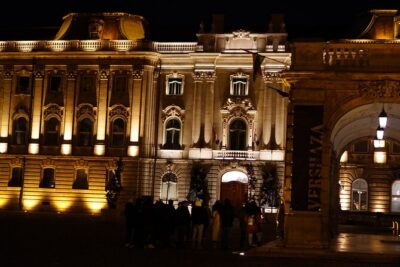
You meet at the Hungarian State Opera area on Andrássy út (Andrássy út 22). The tour ends at Liberty Square (Szabadság tér). That end point is handy: Liberty Square sits in the Lipótváros neighborhood and connects well to other parts of the city for your next move.
The tour runs in English and is set up for most travelers who can handle a few short walks between stops. It’s capped at 15 people, which usually makes questions easier. You’ll also use a mobile ticket, which keeps the day simple once you’re there.
One practical note: the tour requires good weather. If the day looks questionable, you’ll be offered another date or a full refund. Plan layers and comfortable shoes, because even though each stop is about 15 minutes, your walking adds up.
Stop 1: Soviet Heroic Memorial and the WWII memory lesson
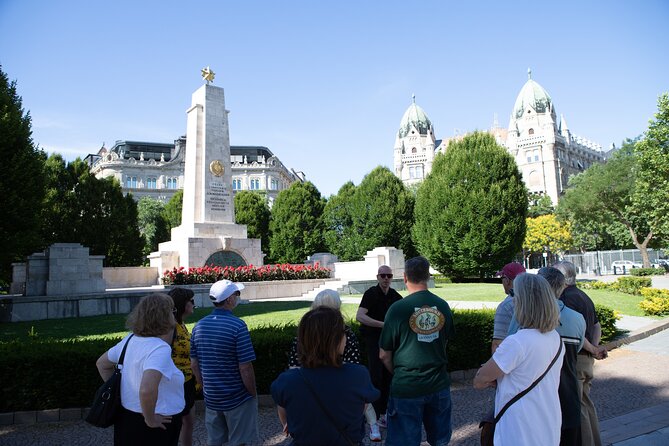
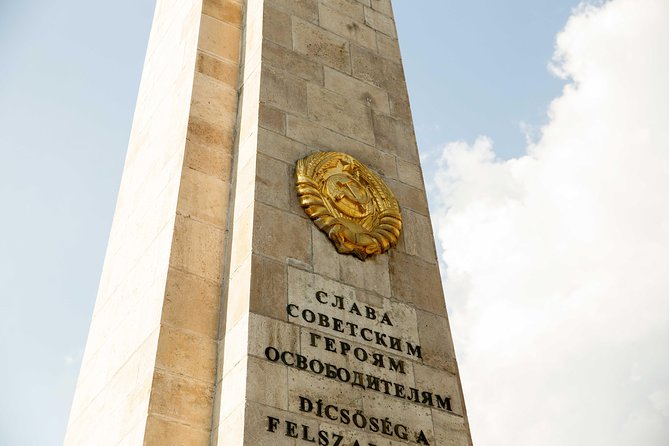
The walk begins at the Soviet Heroic Memorial, a white obelisk in a landscaped park. It commemorates Russian military who served in WWII. You get about 15 minutes here, and admission is free.
This stop works best if you treat it like a reading exercise. A monument is never just a stone. It’s a statement about who gets remembered and how. The guide’s commentary is the key here—without it, you might see an obelisk and miss the political message that comes with it.
Even if you’re not deep into WWII details, you’ll likely pick up how these memorials can shape public memory long after the battles are over.
More Budapest bars to pull up a stool at



Stop 2: House of Terror Museum for the hardest, most important context
Next is House of Terror Museum on Andrássy út 60. The tour clocks around 15 minutes, and admission is free.
This is the most emotionally heavy stop. The museum contains exhibits related to fascist and communist regimes in 20th-century Hungary, and it also serves as a memorial to victims detained, interrogated, tortured, or killed in the building. The name itself points you toward the theme, but what matters is what you learn while standing in the space.
In a short visit, you can’t read everything. So the guide’s job is to help you focus on what to notice: what the exhibits communicate about control, fear, and punishment—and why remembering them is part of how a society defines itself.
If you’re sensitive to dark topics, this still may be the right tour for you, as long as you’re ready for intensity. The short format can actually help. You get the core context without turning the whole day into one long, draining museum marathon.
Stop 3: St. Stephen’s Basilica for a religious counterpoint
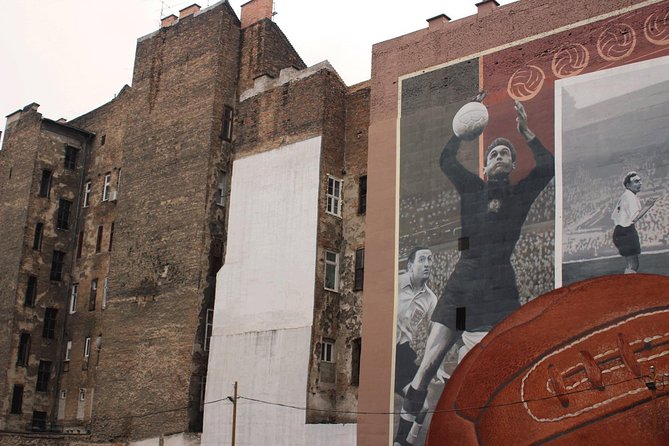
The tour then moves to St. Stephen’s Basilica (Szent Istvan Bazilika). Expect around 15 minutes, but admission is not included.
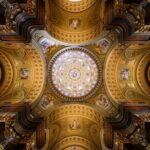
Even if you don’t go inside, this stop gives you a counterpoint to the political story. The basilica is a Roman Catholic church named for Stephen, the first King of Hungary, and the reliquary holds his right hand. The building was also described as the sixth largest church building in Hungary before 1920.
This is a good moment to look up from the heavy themes. Religion, national identity, and political legitimacy have always had overlap here. A quick guided framing can help you see how symbols compete and coexist across time.
If you want extra time, plan for extra costs or bring your own ticket timing for the Basilica since it’s not included.
Stop 3 continuation: Liberty Statue / Freedom Statue on Gellért Hill
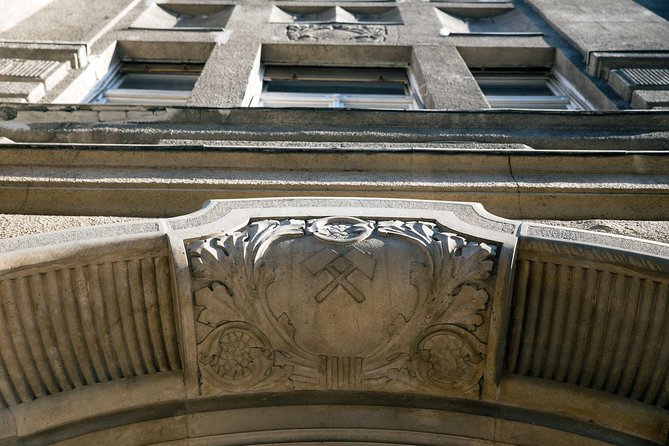
From the Basilica area, the route includes the Liberty Statue, also called the Freedom Statue (Szabadság-szobor) located on Gellért Hill. This stop is part of the same running itinerary between major points and is timed similarly as part of the short-view structure.
This monument commemorates those who sacrificed their lives for Hungary’s independence, freedom, and prosperity. In other words, it’s a “what comes after oppression” message—people imagined a future and paid for it.
It’s also a practical photo moment. You’ll likely get better angles and a clearer sense of the surrounding area from this hill setting, even if the tour time here stays brief.
Stop 4: Szabadság tér, where memorials can be controversial
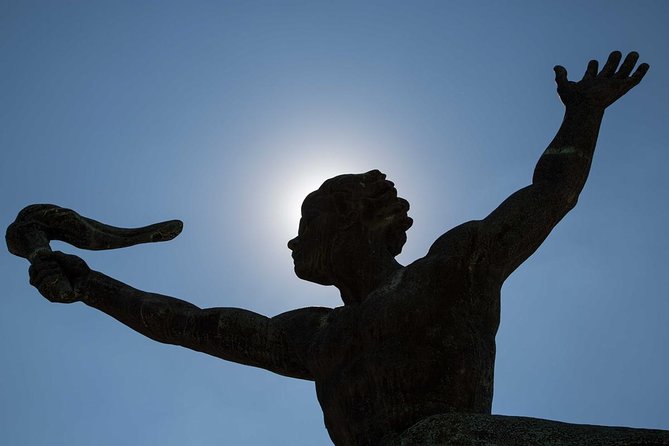
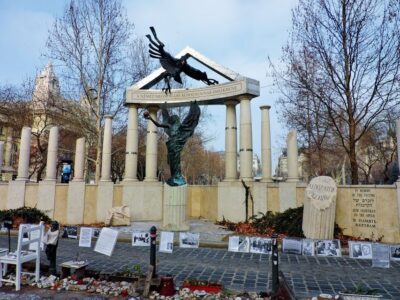
At Szabadsag ter (Liberty Square), you get about 15 minutes, and admission is free. This square is famous for two controversial memorials: one commemorating Hungarian Jewish victims of the Holocaust, and another commemorating Soviet soldiers who liberated Budapest from the Nazis in 1945.
That pairing is powerful and complicated. It’s a rare public space where you see how remembrance can reflect different narratives—and how different groups experienced the same era with different stakes. The guide’s job is to help you hold both truths in your head without turning it into a simplistic good-vs-bad story.
On the west side of the square, you’ll also see the historicist-style headquarters of the Hungarian National Bank and the United States Embassy in Hungary. Even if you only glance at them, it helps you understand how this area mixes national memory, diplomacy, and modern institutions in one public stage.
Stop 5: The 1956 Revolution memorial for national resistance
Next is the Memorial to the 1956 Hungarian Revolution and War of Independence. Again, about 15 minutes, and admission is free.
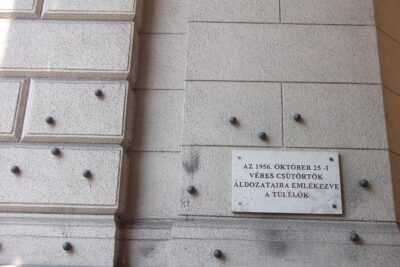
This stop is dedicated to the heroes of the 1956 uprising against the communist regime. That’s the key shift from the earlier sites: instead of only learning about repression and foreign power, you’re also seeing how people pushed back and how the city chooses to remember that refusal.
I like that this segment gives you a cleaner emotional direction. The earlier stops are about fear and control; this one is about agency and resistance. It’s a different kind of learning, and it makes the tour feel complete.
Stop 6: Hungarian Parliament Building as a final landmark moment
The walk finishes at the Hungarian Parliament Building (Országház), also referred to as the House of the Country or House of the Nation. You’ll spend about 15 minutes here, and admission is not included.
The Parliament is the seat of the National Assembly of Hungary and a notable landmark, and it’s described as a popular tourist destination. From a tour perspective, this is the “where power sits now” stop. You’ve spent the morning walking through memory and resistance. Ending at the Parliament helps you connect past and present: politics isn’t just history here.
If you want to go inside, you’ll need to plan separately since admission isn’t included. But even without tickets, this is a satisfying finish line because it puts a recognizable face on what all those earlier themes were fighting for or against.
The retro bar break: Communist-themed decor and a classic soda
Included in the experience is a retro soda in a Communist-themed bar, plus coffee and/or tea. This is one of the tour highlights, and I get why.
After you’ve visited sites connected to detention and torture, it’s hard to keep your brain in story mode. A break like this does two things: it resets you and it keeps the tour from feeling like a march through grim themes only.
Also, the bar theme matches the day’s subject. It’s not random comfort; it’s part of how the city turns a complicated past into everyday space. That contrast is the point.
If you’re the type who wants to talk after your drink, this is a good moment to ask the guide what to do next—because the guide’s recommendations are included, and you’re already primed to understand them.
Maps and tips: what to do after you hit Liberty Square
One of the most useful parts is that the tour includes maps and further recommendations. This matters because a route like this gives you a set of names and places you can then follow up on independently.
The highlights specifically mention getting tips for other places to visit independently. My advice: treat those recommendations like a choose-your-own-adventure. Pick one extra site that continues the political thread and one that shifts you into the city’s everyday rhythm—so you don’t carry only heavy themes the rest of the trip.
Also, since the tour ends at Liberty Square, you’re in a smart spot to branch out. It’s a central public meeting point, and you don’t need to backtrack across town just to start exploring.
Who this tour suits best (and who should consider alternatives)
This is a great fit if you want a guided, structured way to understand Budapest through 20th-century political memory. If you enjoy history that explains why places matter—not just when they were built—this will land well.
It’s also a good choice if you like short time blocks. Every main stop is about 15 minutes. So you get to sample multiple sites without spending your whole day locked into one museum.
It may be less ideal if you only want “lighter sightseeing.” Even with short visits, House of Terror is part of the route, and the theme is hard.
Finally, consider the extra-ticket stops. If you’re set on spending longer inside St. Stephen’s Basilica or on a full visit to the Parliament Building, you’ll likely want to add those plans separately to avoid feeling rushed by the guided schedule.
Should you book Born Under The Red Star?
I think you should book this tour if you want a tight 3-hour route that links monuments to meaning, includes free access to several key stops, and finishes with a practical map bundle plus a classic soda break. The small group cap makes it easier to ask questions, and the serious topic is handled through brief, purposeful stops rather than dragging you through hours of reading.
Skip it only if you’re not up for political and human-suffering themes, or if you dislike tours where a couple of major attractions require additional tickets.
If you do book, come ready for an intentionally focused walk: wear comfortable shoes, bring a curious mindset, and use the included recommendations to keep the story going after Liberty Square.
More Tours in Budapest




More Tour Reviews in Budapest




The Darker Side of Budapest




Just Added: More Budapest Reviews
- Sightseeing flight over Budapest
★ 5.0 · 3 reviews - Budapest: Walking Tour with Chimney Cake & Polaroid Photos
★ 5.0 · 3 reviews - Self Guided Tour In Budapest With 100 Captivating Audio Stories
★ 5.0 · 3 reviews - Budapest Art Nouveau Walking Tour
★ 5.0 · 3 reviews - Hungary today: a no-taboo conversation
★ 5.0 · 3 reviews
Dark History & Ghost Tours, compared.
 ★ 4.6Buda Castle District Vampires and Myths Night TourFrom $233,830 reviews
 ★ 4.5Buda Castle District Dark History, Legends and Vampire Night TourFrom $211,240 reviews
 ★ 4.9BloodThirsty Hungary: Walking tour & Dark Historical StoriesFrom $21633 reviews
 ★ 5.0Nightmare in Budapest Interactive Horror ExperienceFrom $24390 reviews
 ★ 4.8Communist History Tour with House of Terror OptionFrom $58182 reviews
 ★ 5.0BloodThirsty Hungary – Castle DistrictFrom $2180 reviews
 ★ 5.0Communism in Hungary with a HistorianFrom $5970 reviews
 ★ 4.73-Hour Walking Tour About Communism (Small Group)From $5770 reviews
Browse the lists this tour appears in