

Reviewed · BUDAPEST WALKING TOURS
Welcome to BUDA and PEST Private Walking tour
Budapest is best when you connect the dots. This private 4-hour tour lines up Millennium Underground with Castle Hill’s most photogenic sights, so you get history plus city-life context in one go. I especially like how it pairs major landmarks—Matthias Church and St. Stephen’s Basilica—with a guide who explains what people actually do and how the city works day to day. The only drawback to plan around: you’ll cover a lot of walking in a short time, and entrance fees aren’t included.
What makes it work is the licensed, professional art historian guide, plus hotel pickup and return public transport tickets. If you want a clean route across both river sides with the option to add viewpoints (like St. Stephen’s top), this is a smart way to get your bearings fast—even if it’s your first trip.
In This Review
- Key points you’ll care about
- How this tour strings together Budapest’s best “why”
- Meeting your guide: private, flexible, and built for comfort
- Heroes’ Square and City Park: where the city flexes its civic pride
- Andrássy Boulevard and the State Opera House: architecture with a purpose
- St. Stephen’s Basilica: the big church stop, plus optional altitude
- Millennium Underground ride: making transit part of the story
- Castle Hill: Fishermen’s Bastion and Matthias Church up close
- A note on optional moments and “route variations”
- The café break: where Budapest turns from monuments into daily life
- The skip-the-line angle (and what it really means)
- Price and value: $377 per group for a private, structured highlights day
- What kind of traveler this fits best
- Should you book BUDA and PEST? My take for making the call
- FAQ
- How long is the BUDA and PEST private walking tour?
- Where do I meet my guide?
- What sights does the tour include?
- Do I ride the Millennium Underground on this tour?
- Is there a stop at St. Stephen’s Basilica’s top viewpoint?
- Are entrance fees included?
- What’s included with the drink at the café?
- Is transportation included?
- What languages are available for the live guide?
- Is the tour wheelchair accessible?
Key points you’ll care about
- Millennium Underground ride that turns transit into part of the sightseeing
- Castle Hill focus on Fishermen’s Bastion and Matthias Church
- St. Stephen’s Basilica viewpoint option when you want the extra height
- Café break with your guide to talk daily life, not just monuments
- A route built around your meeting point, while still hitting the core highlights
Budapest at street level, more routes on foot
- Big Bus Budapest Hop-On Hop-Off Bus and Walking Tour★ 3.5 · 2,206 reviews
- Budapest: Buda Castle District Walking Tour★ 4.6 · 2,108 reviews
- 3-Hour Orientation Walking Tour of Buda and Pest★ 4.8 · 1,834 reviews
- Budapest Historical Sightseeing – Free Walking Tour★ 5.0 · 1,302 reviews
How this tour strings together Budapest’s best “why”
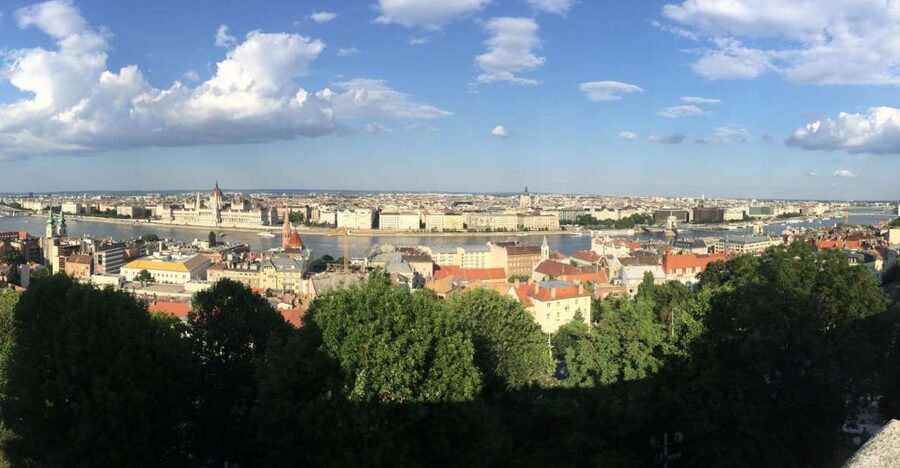
The fastest way to enjoy Budapest is to understand how it hangs together. This tour does that by stitching together the big-symbol areas on both sides of the Danube: grand civic spaces, a major boulevard, a classic church stop, then up to Castle Hill. It’s not just a checklist. It’s a guided path that helps you read the city like a story.
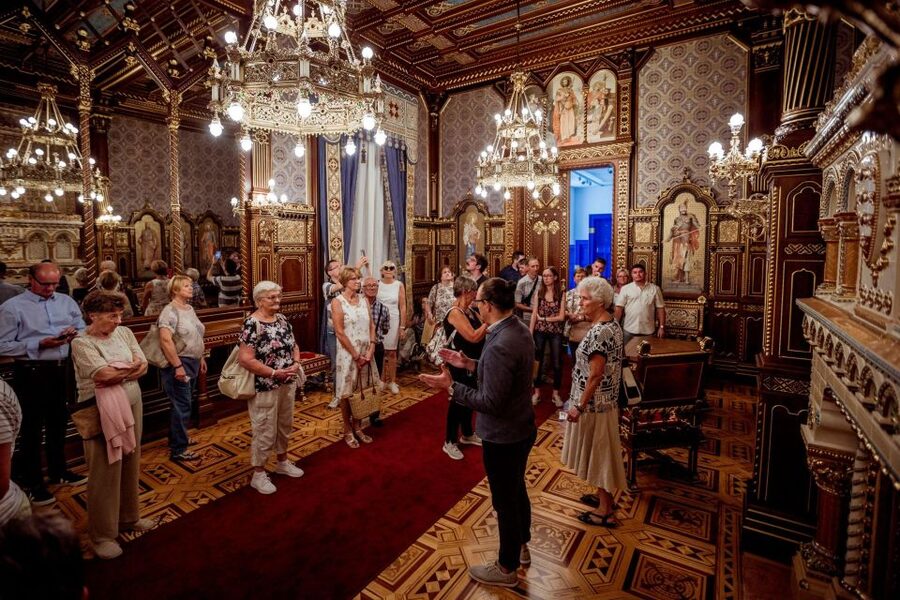
Your guide is a professional, licensed art historian. That matters because Budapest’s landmarks aren’t only pretty—they’re tied to how the country changed over centuries. Expect explanation of art, architecture, and the meaning behind what you’re seeing, not just dates and names. And because the guide is local, you get more than monuments. You’ll talk about culture and social life too, including how Budapesters think and live.
Meeting your guide: private, flexible, and built for comfort
You meet your professional guide at a pre-arranged spot—often at your hotel reception, but it can be your apartment or another city location. Because it’s tailor-made, the exact route can shift depending on where you start. That flexibility helps you avoid the most annoying first-day problem in any city: wasting time figuring out what’s closest.
You also get return tickets on public transportation, and the tour includes a ride on the famous Millennium Underground (a UNESCO-protected line). That’s a big advantage for value and energy. Instead of spending your whole day in the saddle of a tour bus, you’ll mix walking with transit that locals actually use.
Practical note: bring comfortable shoes. This is a highlights walk with real ground covered, and you’ll want your legs to be happy.
Heroes’ Square and City Park: where the city flexes its civic pride
A classic Budapest intro often starts with a grand outdoor scene. This tour includes Heroes’ Square and the City Park area, so you can launch into the “big picture” right away.
Why this matters: Heroes’ Square isn’t just a wide open photo spot. It’s a visual statement of national identity. From there, City Park gives you room to breathe and reset before the more detailed architecture and landmark stops later. It’s also a good moment to start absorbing the city’s tone—Budapest has a formal, monumental side that you’ll see again and again once you’re oriented.
If you’re the kind of traveler who likes context, you’ll appreciate how the guide frames what you’re seeing here before the tour climbs toward the hilltop sights.
Andrássy Boulevard and the State Opera House: architecture with a purpose
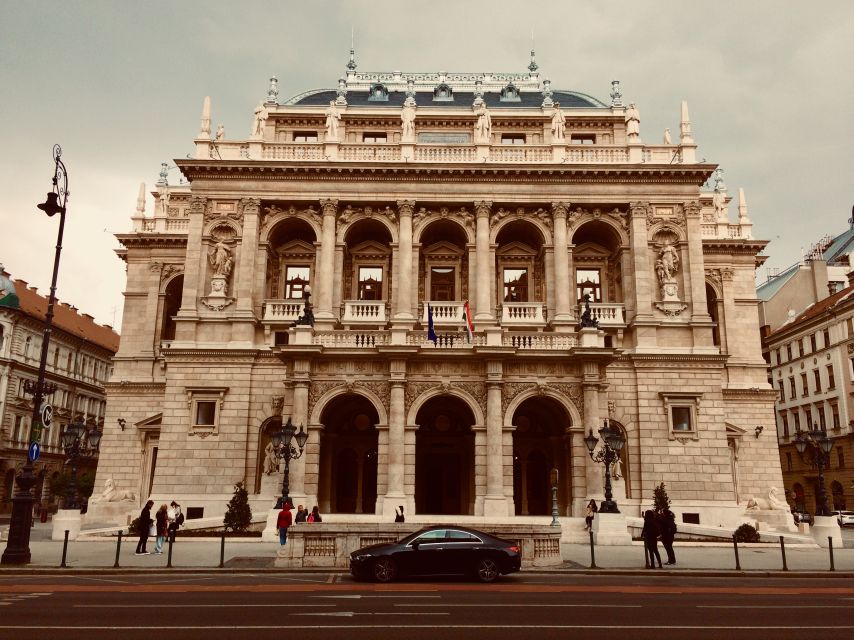
Next comes Andrássy Boulevard, a major axis of the city, paired with a stop near the State Opera House. This is where Budapest starts feeling like “a capital,” with a long, elegant street shape that pulls your attention along the buildings.
In practice, this section is great for travelers who want both scale and detail. You get:
- a sense of the city’s planning and grandeur
- a walk where architecture becomes part of your understanding, not background wallpaper
A drawback to keep in mind: this boulevard-style sightseeing can feel slower if you’re expecting constant dramatic views. But it’s worth it if you like architecture and want your guide’s explanations to turn stonework into meaning.
More Budapest on foot

St. Stephen’s Basilica: the big church stop, plus optional altitude
St. Stephen’s Basilica is a key part of this route. It’s one of those stops where even if you’ve seen photos, seeing it in person changes the experience. The scale is real, and the design details look sharper up close.
The tour includes time at the basilica and offers an optional climb up to the top for views. If you want that extra perspective, this is one of the best ways to get it. If you don’t, you can still enjoy the church area and keep your energy for the Castle Hill climb later.
Consideration: because the option depends on your choice, you’ll want to be honest with yourself about pacing. If stairs or crowds are a concern, you can skip the top and focus on the main visit.
Millennium Underground ride: making transit part of the story
One of the tour highlights is a ride on the Millennium Underground, the UNESCO-protected line. This is a smart inclusion because it changes how you experience the city.
Instead of using transit as a necessary transfer, you use it as a cultural moment. And because it’s timed into the sightseeing flow, it helps you connect parts of the city without turning the day into a “sprint and catch up” routine.
For many people, it’s also a fun reset. You’re still moving, still seeing the urban vibe, but you’re not burning your legs while you travel between major zones.
Castle Hill: Fishermen’s Bastion and Matthias Church up close
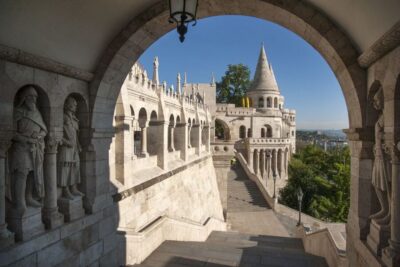
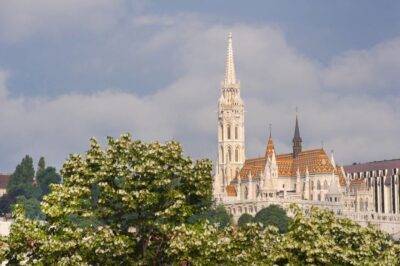
Then comes the reward: Castle Hill, with Fishermen’s Bastion and Matthias Church.
This is the section where Budapest most clearly shows its postcard reputation—but with context. The guide can help you understand how the hilltop area became a cultural stage, not just an old neighborhood. Fishermen’s Bastion is visually dramatic, but the best part is learning what the viewpoint represents in terms of identity and storytelling. Matthias Church adds the art and architectural depth that ties the look of the place to its significance.
If you’re trying to decide whether to prioritize these sites on a first visit, this tour is built to make that easy. It’s structured so you don’t have to plan separately for each hilltop stop. You also get a guided route that keeps you from wandering in circles on the steep streets.
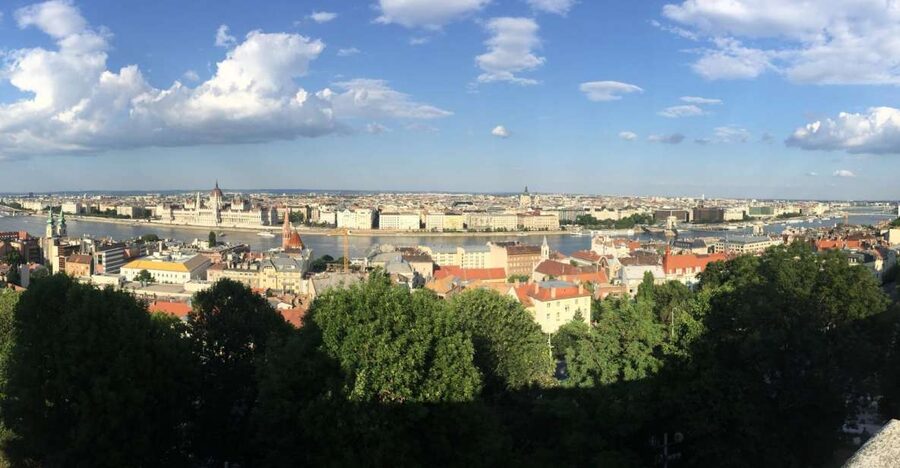
One more helpful detail: the tour is designed to show you top sights on both sides of the river, and Castle Hill is where that panoramic payoff often lands. Even if you don’t climb higher than the normal visiting areas, the overall views from this zone are part of the experience.
A note on optional moments and “route variations”
Because the tour is tailor-made based on your meeting point, you might also encounter additional historical sights. For example, one route variation includes stopping to learn about parts of the ghetto wall area. If that topic interests you, ask your guide what you’ll pass by once you meet—they may adjust the story to match your route.
The café break: where Budapest turns from monuments into daily life
You get a break in a café with your local guide. The tour includes a drink—either coffee or a soft drink—and this pause is more than a rest stop.
This is where the conversation shifts from buildings to people. You can ask about local habits, social life, what daily routines look like, and how living in Budapest feels beyond the tourist zones. If you like travel that teaches you how locals actually live, you’ll enjoy this part.
I like café stops when they’re planned, not random. Here, it’s built into the rhythm of the day, so you don’t lose the thread of the sightseeing just because you needed a sit-down.
The skip-the-line angle (and what it really means)
Entrance fees aren’t included, but you can get a skip-the-line option if you choose to enter sights with your official tour guiding license.
This is a real value point in high-demand locations. Even if you’re not paying for the entry fee through the tour price, saving time on lines can be the difference between enjoying a sight or watching the day slide away.
Still, it helps to plan: if you want to enter multiple paid sites, you’ll pay those entrance fees separately. Your guide can help you decide what’s worth it once you’re on the ground.
Price and value: $377 per group for a private, structured highlights day
The price is listed as $377 per group up to 30, for a duration of about 4 hours. That sounds like a group rate, and it is.
Here’s how to judge value. If you’re traveling with multiple people, the per-person cost can drop quickly, making this an efficient way to get expert interpretation plus a tight route. If you’re traveling as a small party (say two), it can feel like a premium compared with standard group tours—but you’re paying for privacy, hotel pickup, and a guide that can adjust the day to you.
You’re also getting:
- hotel pickup (depending on where you meet)
- a professional licensed art historian guide
- a drink during the café break
- return public transportation tickets
- the Millennium Underground ride
That mix is what keeps it from being just another walk. It’s a structured route with time-saving logistics, and it’s designed to cover both sides of the river with the key sights that usually take planning.
What kind of traveler this fits best
This tour fits best if you want:
- a guided “highlights route” without spending hours on planning
- art and architecture explained in plain, usable language
- context about culture and everyday life, not only monumental history
- a private experience with flexible route changes based on where you start
It’s also a good choice if you’re short on time and want to hit Heroes’ Square through Castle Hill in one morning/afternoon block.
If you’re the type who likes long, meandering exploration with lots of free time, you might find the pace a bit full. This is built for coverage and clarity—so go into it with comfortable shoes and a willingness to keep moving.
Should you book BUDA and PEST? My take for making the call
Book this tour if you want a guided, efficient introduction to Budapest that goes beyond photos. The combination of the Millennium Underground ride, St. Stephen’s Basilica (with viewpoint option), and Castle Hill’s Matthias Church and Fishermen’s Bastion gives you the city’s signature scenes—plus a café pause where your guide brings it back to real life.
Skip or rethink it if you don’t want to walk much in a 3.5–4 hour window, or if you prefer to design your own day without a structured route. Also, if you’re only interested in one or two paid interiors, you’ll want to budget for entrances separately since they aren’t included.
One last tip: when you meet your guide, tell them what you care about most—views, architecture, or everyday culture. With a private setup, they can shape the day around your preferences while still hitting the big landmarks.
FAQ
How long is the BUDA and PEST private walking tour?
The tour lasts around 3.5 to 4 hours.
Where do I meet my guide?
You meet your professional private guide at a previously arranged place, commonly your hotel reception, your apartment, or another spot in the city.
What sights does the tour include?
It includes Heroes’ Square, City Park, Andrássy Boulevard, the State Opera House, St. Stephen’s Basilica, and Castle Hill, including Fishermen’s Bastion and Matthias Church.
Do I ride the Millennium Underground on this tour?
Yes. The tour includes a ride on the UNESCO-protected Millennium Underground.
Is there a stop at St. Stephen’s Basilica’s top viewpoint?
The basilica visit includes the option to go up to the top to see the view.
Are entrance fees included?
No. Entrance fees are not included, though you can choose to enter sights and request a skip-the-line option with the guide’s official license.
What’s included with the drink at the café?
The tour includes a coffee or a soft drink during a break in one of the city’s historical cafés.
Is transportation included?
Yes. You get return tickets on public transportation, and the tour features the Millennium Underground ride.
What languages are available for the live guide?
The live guide is available in Spanish, English, French, Italian, Portuguese, and Russian.
Is the tour wheelchair accessible?
Yes, the tour is wheelchair accessible.
More Tours in Budapest





More Tour Reviews in Budapest






More of Budapest, Step by Step




Just Added: More Budapest Reviews
- Sightseeing flight over Budapest
★ 5.0 · 3 reviews - Budapest: Walking Tour with Chimney Cake & Polaroid Photos
★ 5.0 · 3 reviews - Self Guided Tour In Budapest With 100 Captivating Audio Stories
★ 5.0 · 3 reviews - Budapest Art Nouveau Walking Tour
★ 5.0 · 3 reviews - Hungary today: a no-taboo conversation
★ 5.0 · 3 reviews
Budapest Walking Tours, compared.
 ★ 3.5Big Bus Budapest Hop-On Hop-Off Bus and Walking TourFrom $422,206 reviews
 ★ 4.6Buda Castle District Walking TourFrom $142,108 reviews
 ★ 4.83-Hour Orientation Walking Tour of Buda and PestFrom $411,834 reviews
 ★ 5.0Budapest Historical Sightseeing – Free Walking TourFrom $31,302 reviews
 ★ 5.0Budapest All in One Small Group Walking Tour with Strudel StopFrom $1001,277 reviews
 ★ 4.8Budapest Food Walking Tour: Eat, Sip & Explore Like a LocalFrom $731,027 reviews
 ★ 4.9Buda Castle District Walking Tour with a HistorianFrom $63867 reviews
 ★ 4.9BloodThirsty Hungary: Walking tour & Dark Historical StoriesFrom $21633 reviews
Browse the lists this tour appears in