
Reviewed · DANUBE RIVER CRUISES
River Cruise ticket and Walking Tour in Budapest
Budapest hits fast from the water and the sidewalk. This 2.5-hour English tour pairs a Danube river cruise ticket with a guided walk past top landmarks, with a mix of big architecture, quirky statues, and moments that hit hard. It’s a compact way to get your bearings quickly while still learning what you’re actually looking at.
I really like two things here: the small-group pace (up to 20) and the way the route moves from grand sights to deeply emotional ones. You’ll get playful stops like the Fat Policeman Statue right next to the Shoes on the Danube Bank memorial. That contrast makes the whole experience feel real, not just scenic.
One possible consideration: museum tickets aren’t included, and several of the major sights are viewed from the outside during the tour. If you’re hoping to go inside for specific exhibits, you may want to budget extra time and money.
In This Review
- Key things I’d watch for
- A practical way to see Budapest’s big hitters in 2.5 hours
- Where you start (and where you end) matters more than you think
- Stop-by-stop: what you’ll see along the Danube corridor
- 1) Szent István Bazilika: outside views and the story behind the relic
- 2) The Fat Policeman Statue: whimsical, local, and easy to photograph
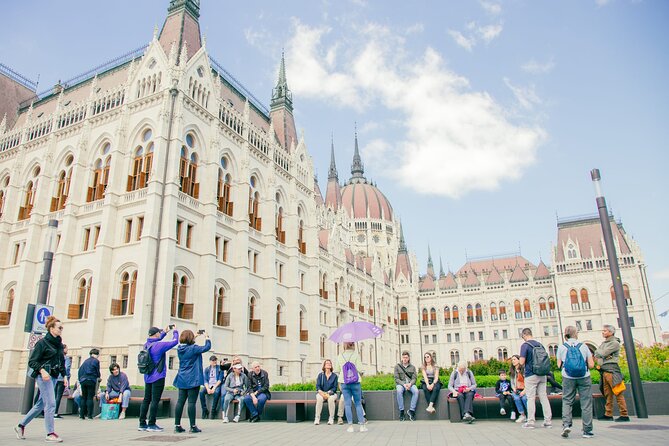
- 3) Budapest Parliament: Gothic Revival from the Danube, plus the Holy Crown connection
- 4) Shoes on the Danube Bank: the emotional stop you shouldn’t rush
- 5) Hungarian Academy of Sciences: neoclassical looks with a language angle
- 6) Gresham Palace: Art Nouveau glamour, now Four Seasons Hotel
- 7) Széchenyi Lánchíd (Chain Bridge): a walking viewpoint with major symbolism
- 8) Little Princess Statue: a playful Danube-side detail you might miss on your own
- 9) Margaret Island: a quick green break with a medieval touch
- What the cruise part actually adds (and how to use it for better photos)
- Price and value: what you’re really paying for
- Who this tour suits best (and who might want a different pace)
- My quick decision guide: should you book?
- FAQ
- How long is the River Cruise ticket and Walking Tour in Budapest?
- How much does it cost?
- Is the tour offered in English?
- What’s included in the price?
- Are museum tickets included for the stops?
- Where do I meet, and where does the tour end?
- How big is the group?
- What is the cancellation policy?
Key things I’d watch for
- Up to 20 people means the guide can actually keep an easy rhythm.
- English guiding on a tight route helps you understand what you’re seeing.
- Poignant WWII stop at Shoes on the Danube Bank adds real context.
- Outside-view sightseeing keeps the pace moving since admission isn’t included.
- Chain Bridge viewpoints are built in, so you’re not scrambling for photos.
- Afternoon timing can be gold if you want the city lit up near the end.
Not sure which sailing? Line up a few more on the Danube
- Budapest: City Highlights Sightseeing Cruise★ 4.6 · 43,981 reviews
- Budapest: Unlimited Prosecco, Beer and Aperol Spritz Cruise★ 4.8 · 37,304 reviews
- Budapest: Nighttime or Daytime Sightseeing Cruise★ 4.2 · 21,062 reviews
- Budapest: By Night Sightseeing Cruise with Welcome Drink★ 4.3 · 15,533 reviews
A practical way to see Budapest’s big hitters in 2.5 hours
This experience is built for people who want major Budapest sights without doing a whole day of logistics. You’re not bouncing around the city trying to connect neighborhoods. The route stays focused and keeps you near the Danube corridor, where the views naturally line up.
The core idea is simple: you walk, you pause, you look, you learn. Then you switch to the river side for a cruise break with drinks available on board. That change of scenery matters more than you’d think. After a few stops on foot, the water time resets your legs and gives you a different angle on the skyline.
The fact it’s offered in English also helps a lot. You’ll understand stories as you stand in front of the buildings and memorials, rather than needing to “figure it out later.” And if your guide is Panna (a name that shows up often), expect a friendly style, plenty of humor, and patience with questions. That combination makes the tour feel like a conversation, not a lecture.
Where you start (and where you end) matters more than you think
You meet at Szent István Bazilika in Budapest (1051). It’s a landmark you can find without stress, and it also makes the start of the walk feel anchored. For an easier day, try to arrive a few minutes early so you’re not rushing at the exact handoff time.
The tour ends at Vigadó tér, specifically at Budapest Dock #6 (5 ponton). I like this kind of finish because it leaves you in a spot where you can keep exploring. You’re still in the Danube area, and you’re not suddenly dropped somewhere inconvenient for your next plan.
Since it’s near public transportation, you’ll usually be able to get back to your hotel with minimal fuss. Just plan your post-tour snack or drink stop with enough time to regroup after the cruise and walking.
Stop-by-stop: what you’ll see along the Danube corridor
The route moves through some of Budapest’s most recognizable landmarks, but it’s not just a checklist. Each stop has a different job: give context, hit emotion, show architecture, or frame viewpoints.
1) Szent István Bazilika: outside views and the story behind the relic
You’ll spend time at Szent István Bazilika, one of the city’s most important religious landmarks. It’s named after Hungary’s first king, St. Stephen, and the basilica’s construction took a long stretch of time—about a century. You’ll hear that background as you stand in front of the building.
The standout detail is the relic tied to St. Stephen: the mummified right hand. You don’t enter during the tour, so this is about the symbolism and the scale more than interior time. Also, the basilica reaches 96 meters tall, and it shares the tallest-building title in Budapest with the Parliament.
What to do here: look up and notice the overall shape and height, not just the facade. It helps you connect the basilica’s place in the skyline with the political power you’ll see later.
Budapest at street level, more routes on foot
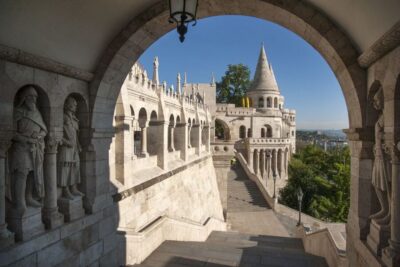
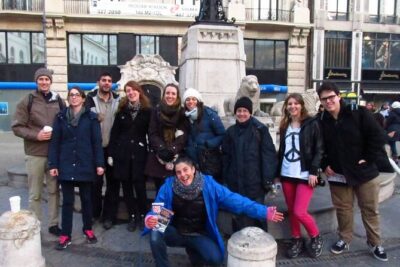
2) The Fat Policeman Statue: whimsical, local, and easy to photograph
Next comes the Fat Policeman Statue, a beloved bronze figure with a round belly and a mustache that looks ready to grin. It represents the friendly face of the Austro-Hungarian era’s gendarmerie.
There’s a local tradition tied to it: rubbing the belly is said to bring good luck. You’ll see it for what it is—fun relief in the middle of serious sights—and it’s an easy photo stop without any ticket lines.
What to do here: take your picture, then move on quickly. This stop is short by design, so treat it as a quick reset for your eyes.
3) Budapest Parliament: Gothic Revival from the Danube, plus the Holy Crown connection
Then you’ll arrive at Budapest Parliament, one of Europe’s biggest and most impressive legislative buildings. Its architecture is Gothic Revival, and the position right along the Danube turns it into a skyline icon.
Inside, the building holds something legendary: the Holy Crown of Hungary, a priceless relic used to crown Hungarian kings for centuries. You won’t enter during this tour, so your time is spent on exterior views and the story behind why it matters.
What to watch for: the building’s details from the riverfront side. From the outside, you can still pick up the “power and pride” feel the site is built to project.
4) Shoes on the Danube Bank: the emotional stop you shouldn’t rush
This is the one you’ll feel. Shoes on the Danube Bank is a memorial for Jewish victims killed during World War II. The iron shoes along the bank represent people who were forced to remove their footwear before being shot into the Danube.
It’s heavy, and it’s supposed to be. The stop gives the background so you understand this isn’t just an artistic display—it’s tied to the Holocaust in Hungary.
My practical advice: don’t treat it like a quick photo moment. Spend your time reading and absorbing. If you’re sensitive to dark history, give yourself permission to pause, stand back, and take it in at your pace.
5) Hungarian Academy of Sciences: neoclassical looks with a language angle
Next is the Hungarian Academy of Sciences, a neoclassical building along the Danube. The key point here is not just architecture. It’s a hub for research and discovery in Hungary, and it also plays a role in promoting and preserving the Hungarian language—important for national identity.
This stop is short, but it adds a different type of “Budapest pride.” Instead of kings, parliament, or war memorials, you get a reminder that culture and knowledge are also part of the story.
6) Gresham Palace: Art Nouveau glamour, now Four Seasons Hotel
You’ll pass by Gresham Palace, famous for its Art Nouveau style and grand presence. Today, it’s home to the Four Seasons Hotel, but the building started life as a luxury apartment building.
What I like about this stop is how it connects architecture to real-world life. It’s the kind of place where you can imagine power breakfasts and big-city glamour. The building has welcomed famous guests over the years, including Queen Elizabeth II, Prince Charles, and celebrities like Beyoncé and Brad Pitt.
This is more about seeing the facade and recognizing the style than buying an entry ticket.
7) Széchenyi Lánchíd (Chain Bridge): a walking viewpoint with major symbolism
The tour then crosses or walks along Széchenyi Lánchíd, the Chain Bridge. It’s the first permanent bridge connecting Buda and Pest, opened in 1849.
You’ll notice the iconic stone lions and the iron chains. It’s also a practical sightseeing moment, because walking the bridge gives some of the best panoramic views of Budapest.
What to do here: slow down mid-span if you can. That’s where the city opens up on both sides.
8) Little Princess Statue: a playful Danube-side detail you might miss on your own
Along the river you’ll spot the Little Princess Statue, a bronze sculpture tucked away along the Danube. It’s charming and cheeky, made by sculptor László Marton.
This is the kind of stop that can feel small, but I like it because it reminds you Budapest isn’t only about monuments. There’s wit, personality, and everyday charm built into the city’s public art.
9) Margaret Island: a quick green break with a medieval touch
Finally, you reach Margaret Island. Even though you won’t have tons of time, it gives you a calmer moment in the middle of big sights. You’ll get greenery, gardens, and panoramic views from Margaret Bridge.
There’s also historical texture here: medieval ruins of a Dominican convent. It’s the perfect ending if you want your last photos to look softer and more relaxed.
What the cruise part actually adds (and how to use it for better photos)

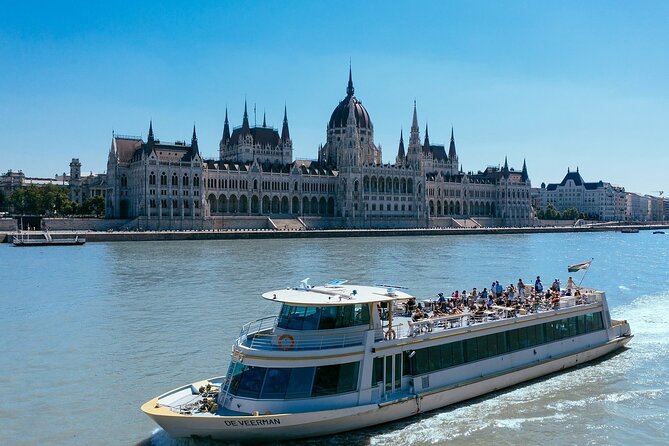
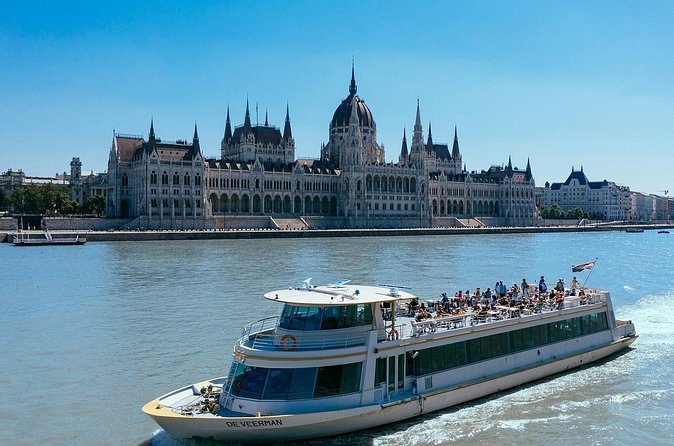
This package includes a river cruise ticket, and you’ll also have drinks available on the boat. I like this pairing because the Danube acts like a moving “gallery.” From the water, you see the buildings with a different depth and scale.
The cruise time also helps you manage energy. A walking tour can start to feel repetitive if the stops are all similar. Here, the river break gives you variety while keeping the same general route logic.
One smart tip: if you can choose an afternoon session, do it. Many people recommend that timing because you finish as the light changes and the city starts to glow. It’s not just about weather. It’s about seeing Budapest at different “moods” in the same outing.
Price and value: what you’re really paying for

At $71.20 per person, this isn’t a cheap add-on, but it’s also not trying to be a luxury private tour. You’re paying for three real components:
- a guided English walk that strings together major landmarks in about 2 hours 30 minutes
- a Danube river cruise ticket
- drinks available on the boat
You’re also getting a small group size (max 20), which usually means better pacing and less “herding” than bigger bus-style tours.
The catch is the one you should plan for: museum tickets aren’t included. The basilica and other major stops are presented without museum entry, and admission tickets are specifically noted as not included. So if your dream includes inside visits—chapels, museum rooms, or ticketed interiors—you’ll want to pair this with separate time later.
Still, for first-time visitors, the value is strong. You get the big names plus context, without spending your day figuring out where to go next.
Who this tour suits best (and who might want a different pace)
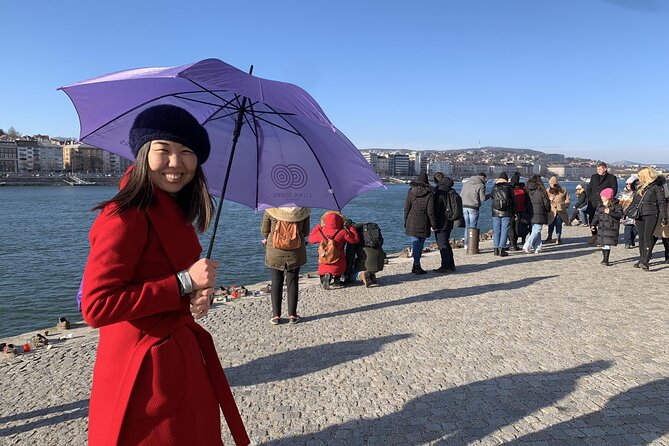
This fits you well if you want a guided hit list with meaning. It’s also great if you like history but appreciate when it’s explained on the spot, not after you’ve left.
I’d especially recommend it if you:
- want a Danube-focused route with skyline views
- enjoy architecture (Parliament, Chain Bridge, Gresham Palace)
- want a tour that includes both fun stops and serious context
- prefer a group under control, not a crowd
It may be less ideal if you need long, slow breaks at each place or if you’re mainly looking to go inside museums. Since museum admissions aren’t included, you’ll likely finish and still want to pick a few add-on sites.
My quick decision guide: should you book?
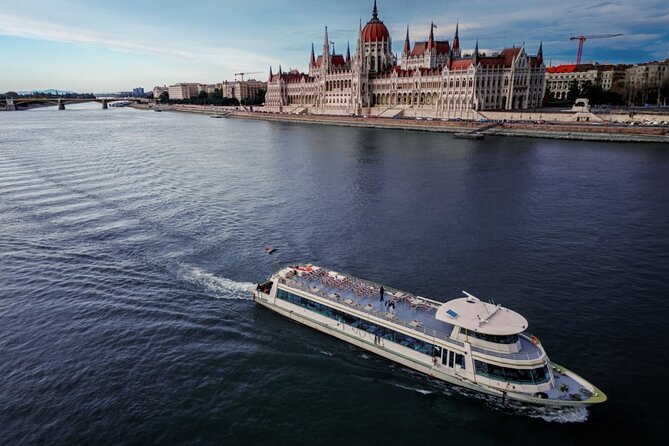
Book it if you want a guided Budapest loop that mixes big sights, river views, and emotional history in one efficient 2.5-hour outing. The small group size, English narration, and included cruise ticket make it feel like more than just walking.
Skip or plan differently if your main goal is to enter multiple buildings with included museum tickets. Since admissions aren’t part of this experience, you’ll probably need extra time and separate reservations for interiors.
If you’re on the fence, choose timing carefully. The afternoon option can be a simple way to add extra wow to your photos as the city lights up near the end.
FAQ
How long is the River Cruise ticket and Walking Tour in Budapest?
It lasts about 2 hours 30 minutes.
How much does it cost?
The price is $71.20 per person.
Is the tour offered in English?
Yes, it’s offered in English.
What’s included in the price?
You get a river cruise ticket, a guided walking tour, and drinks are available on the boat.
Are museum tickets included for the stops?
No. Museum tickets are not included, and admission tickets for the listed stops are not included as part of the tour.
Where do I meet, and where does the tour end?
You start at Szent István Bazilika in Budapest and end at Vigadó tér (5 ponton), at Budapest Dock #6.
How big is the group?
The tour has a maximum of 20 travelers.
What is the cancellation policy?
Free cancellation is available up to 24 hours in advance for a full refund.
More Tour Reviews in Budapest





More of Budapest, Step by Step




The Danube, a Few More Sailings

Just Added: More Budapest Reviews
- Sightseeing flight over Budapest
★ 5.0 · 3 reviews - Budapest: Walking Tour with Chimney Cake & Polaroid Photos
★ 5.0 · 3 reviews - Self Guided Tour In Budapest With 100 Captivating Audio Stories
★ 5.0 · 3 reviews - Budapest Art Nouveau Walking Tour
★ 5.0 · 3 reviews - Hungary today: a no-taboo conversation
★ 5.0 · 3 reviews
Danube River Cruises, compared.
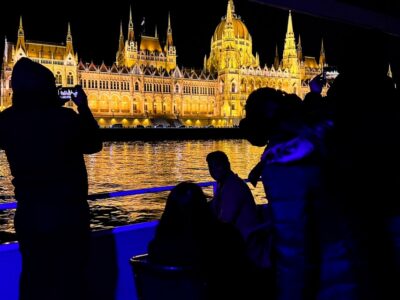 ★ 4.6City Highlights Sightseeing CruiseFrom $1843,981 reviews
 ★ 4.8Unlimited Prosecco, Beer and Aperol Spritz CruiseFrom $2937,304 reviews
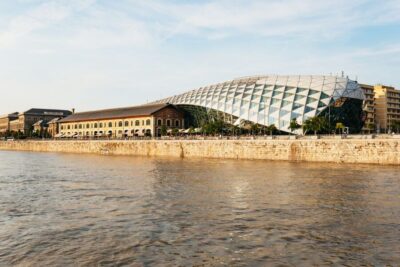 ★ 4.2Nighttime or Daytime Sightseeing CruiseFrom $1421,062 reviews
 ★ 4.3By Night Sightseeing Cruise with Welcome DrinkFrom $1515,533 reviews
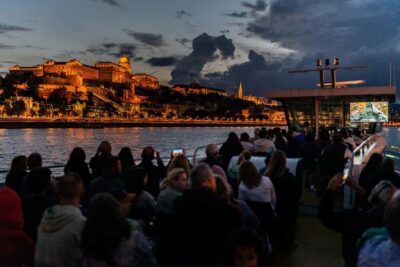 ★ 4.51-Hour Evening Sightseeing Cruise with DrinkFrom $299,421 reviews
 ★ 4.5Budapest Danube Cruise and Dinner Options, Live Music and DanceFrom $547,428 reviews
 ★ 4.2Evening Cruise including Drink OptionsFrom $216,896 reviews
 ★ 4.7Historic Cruise with Welcome DrinkFrom $126,512 reviews
Browse the lists this tour appears in