
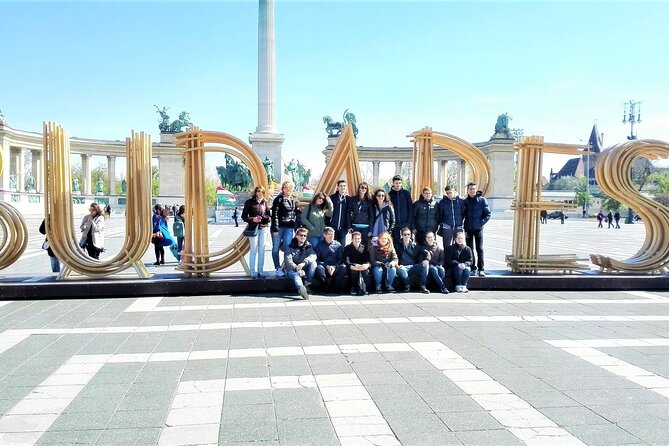
Reviewed · BUDAPEST WALKING TOURS
Original Budapest Walking Tour
One tour, one city, and a lot to see. This Original Budapest Walking Tour strings together major landmarks with guide stories that help the places click, not just get photographed.
I especially like the value: it’s priced super low, and the listed stops are admission ticket free, so you’re not paying extra just to look around. I also like the guide-style—multiple guides have been praised for pace, engaging facts, and answering questions with real character (I’ve seen guides named Istvan, Robert, and Janet lead groups).
One consideration: the route can feel history-heavy, and at least one booking note suggests the walk may not always line up with a full Buda-side plan for every schedule. If you’re counting on a same-day visit for something specific (like Buda Castle), give yourself buffer time.
In This Review
- Key Things That Make This Walk Worth Your Time
- Why This Walk Works When You Only Have One Half-Day
- Meeting at St. Stephen’s Basilica and Starting Smooth
- Parliament to Chain Bridge: Budapest’s Power Corridor
- Hungarian Parliament Building
- Széchenyi Chain Bridge
- Castle Hill: Buda Castle, Matthias Church, and the Best View Payoff
- Buda Castle (Royal Palace complex)
- Matthias Church
- Fisherman’s Bastion
- Pest Landmarks: Basilica Energy, Ferris Wheel Views, and Andrássy Avenue
- St. Stephen’s Basilica stop (again)
- Liberty Square
- Ferris Wheel of Budapest
- Andrássy Avenue (World Heritage boulevard)
- Shoes on the Danube: A Memorial Stop You Won’t Forget
- Margaret Island to Gellért Hill: Nature Breaks and Big Views
- Margaret Island
- Gellért Hill
- Széchenyi Square: The Statue Moment and a Final City Angle
- Price and Value: What $2.88 Really Buys You Here
- Who This Tour Fits Best (and Who Might Want Something Else)
- Practical Tips So You Enjoy Every Stop
- Should You Book This Original Budapest Walking Tour?
- FAQ
- Is the tour in English?
- How long is the walk?
- Where does the tour start?
- Are admission tickets included for the main stops?
- What’s included and what should I bring?
- What if the weather is bad?
Key Things That Make This Walk Worth Your Time

- Big-name Budapest icons, packed into a walk you can actually finish in about 3.5 hours
- Free entry at every listed stop, so your budget stays calm
- Guides use stories and trivia-style engagement that make the city easier to remember
- You get practical orientation so you can navigate on your own afterward
- The route touches both sides of the Danube, with classic viewpoints and memorials
- Group size is capped at 100, but you may see smaller groups in practice
Budapest at street level, more routes on foot
- Big Bus Budapest Hop-On Hop-Off Bus and Walking Tour★ 3.5 · 2,206 reviews
- Budapest: Buda Castle District Walking Tour★ 4.6 · 2,108 reviews
- 3-Hour Orientation Walking Tour of Buda and Pest★ 4.8 · 1,834 reviews
- Budapest Historical Sightseeing – Free Walking Tour★ 5.0 · 1,302 reviews
Why This Walk Works When You Only Have One Half-Day
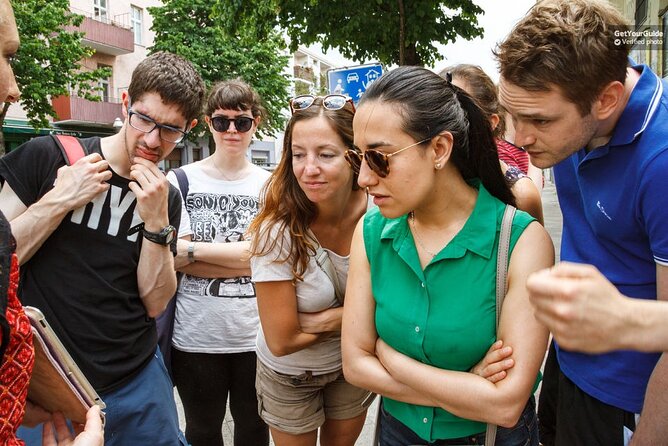
Budapest can be big, steep in places, and full of “wait, what am I looking at?” moments. This tour is built to prevent that. In a short stretch—about 3 hours 30 minutes—you move through the city’s most recognizable hits and learn the key context so each stop feels connected.
For me, the best part isn’t that you see famous spots. It’s that you learn what to notice while you’re there. The guide stories help you understand why these buildings matter, why they were built the way they were, and what changed over time. The result is that you leave with a mental map, not just a camera roll.
Also, the $2.88 price makes this one of the easiest budget wins in Budapest. Add in that the listed stops are free to enter, and you get an honest “spend less, see more” setup—especially if you’re traveling with a tight daily budget.
Meeting at St. Stephen’s Basilica and Starting Smooth
You start at St. Stephen’s Basilica (Szent István tér 1, 1051) with a start time of 11:00 am. That matters because it puts you in a central, landmark-heavy area right away, so the day doesn’t begin with guesswork.
Bring comfy shoes. Even though each stop is timed (often 10 to 20 minutes), the total walking adds up. And some segments include hills and uneven sidewalks, especially as you move toward Castle Hill and lookout areas.
One helpful detail: you get a mobile ticket, and the tour is offered in English. If you want a calmer experience, aim to show up a little early so you can settle the group and not feel rushed when you hear the first background story.
Parliament to Chain Bridge: Budapest’s Power Corridor
The tour’s early highlights are pure “postcard Budapest,” but the key is how the guide frames them.
Hungarian Parliament Building
You’ll spend about 10 minutes at the Hungarian Parliament Building, a landmark and the seat of Hungary’s National Assembly. Even if you’ve seen photos before, a guide can point out what’s going on symbolically—so it’s not just “big building, cool photos.” This is one of those stops where you’ll start noticing styles and details you might’ve otherwise missed.
More Budapest on foot


Széchenyi Chain Bridge
Next is the Széchenyi Chain Bridge (about 15 minutes). Walking across it is one of the most popular things to do in Budapest, and this tour uses it for a reason: it’s the literal link between Buda and Pest. Once you’re mid-bridge, the city suddenly makes sense in layers—river views, skyline angles, and how both sides feel like their own worlds.
Practical tip: plan for wind around the river. Even when the forecast looks fine, the Danube area can feel cooler than the streets.
Castle Hill: Buda Castle, Matthias Church, and the Best View Payoff
This is where the tour earns its keep for people who love architecture and viewpoints.
Buda Castle (Royal Palace complex)
You’ll get about 20 minutes at Buda Castle, first completed in 1265, with the current major Baroque palace built between 1749 and 1769. That date range is useful because it explains why what you see feels both medieval and palace-era at the same time. A good guide will also help you connect the castle complex to the larger political story of Hungary.
Even if you don’t go deep into every corner, this stop is a strong visual anchor. You’ll start to understand the Castle District as the city’s “old core.”
Matthias Church
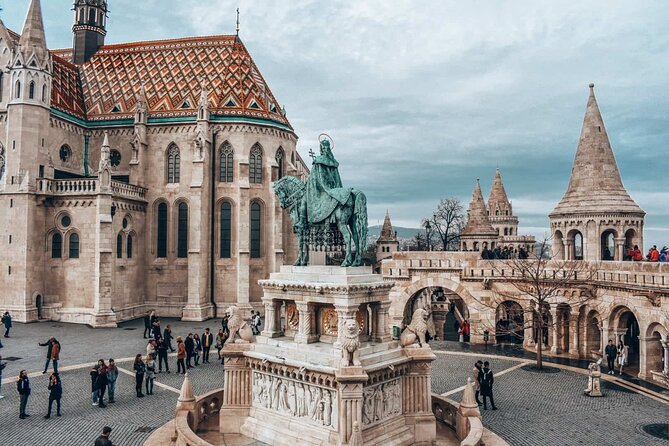
Then it’s Matthias Church (about 20 minutes) in Holy Trinity Square, in front of Fisherman’s Bastion. The tour helps you locate the church in the Castle District’s layout—so you’re not wandering blind between viewpoints. It’s also a Roman Catholic church tied to Hungarian identity and tradition.
Fisherman’s Bastion
After Matthias Church, you’ll hit Fisherman’s Bastion for about 20 minutes. This one is a viewpoint magnet. The neo-Romanesque terraces are famous for a reason: the panoramas over the Danube and across to Pest can feel unreal, especially from the terraces closest to the river angles.
If the day is clear, prioritize photos here. If it’s cloudy, still go—because the guide context helps you appreciate the structure, not just the weather-dependent scenery.
Pest Landmarks: Basilica Energy, Ferris Wheel Views, and Andrássy Avenue
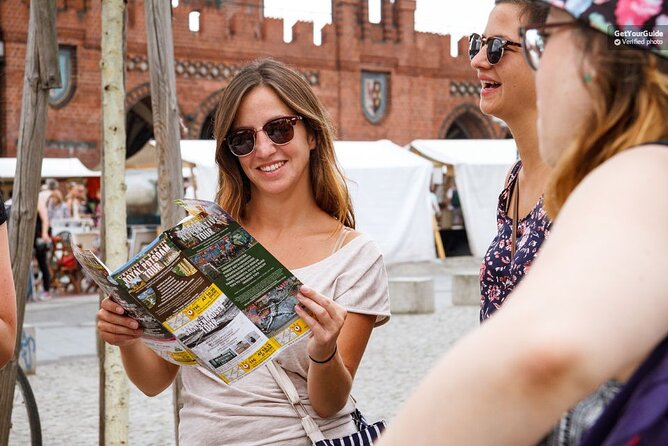
Budapest isn’t only about Buda’s hills. The tour balances that with major Pest landmarks.
St. Stephen’s Basilica stop (again)
Even though you start at St. Stephen’s Basilica, you’ll also see it again as a timed stop (about 20 minutes). This is actually smart. Your first look is “meet-up and orientation.” Later it becomes “understand what you’re looking at,” when you’ve already learned how the city is organized.
Liberty Square
You also spend time at Liberty Square (Szabadság tér) (about 10 minutes). It’s a mix of business and residential, and what’s useful for you is how it’s surrounded by major institutions. The US Embassy and historic headquarters of the Hungarian National Bank are on the west side, and some buildings show Art Nouveau styling. The guide can help you read the square as a slice of Budapest’s modern identity, not just a blank open space.
Ferris Wheel of Budapest
The Ferris Wheel of Budapest gets about 15 minutes. It’s nicknamed the Eye of Budapest, and even if you don’t ride it, it helps you imagine the city from above. The Danube, Buda Castle, and Pest’s church towers are all visible themes of the view, and the guide will point out what to look for if you decide to go later.
Andrássy Avenue (World Heritage boulevard)
Finally, you’ll walk and stop on Andrássy Avenue for about 15 minutes. Dating back to 1872, it’s lined with Neo-renaissance townhouses and mansions, and it was recognized as a World Heritage Site in 2002. This is the kind of street where a guide can help you notice the repeating façade details—the style becomes more than decoration once you know what it’s trying to say.
Shoes on the Danube: A Memorial Stop You Won’t Forget
Not every stop is meant to be cheerful, and that’s part of why the tour earns trust. You’ll spend about 15 minutes at Shoes on the Danube Bank.
This memorial was erected on April 16, 2005 in memory of people who lost their lives during the Arrow Cross rule. It’s made as 60 pairs of iron shoes anchored to the ground, created by film director Can Togay and sculptor Gyula Pauer. Standing there, the guide’s job is to keep it human and clear—why it exists, what it represents, and how the river became part of the story.
If you prefer light sightseeing only, this can feel heavy. If you’re okay with a solemn moment, it’s one of the most powerful stops on the route.
Margaret Island to Gellért Hill: Nature Breaks and Big Views
The tour shifts from city monuments to a quieter “between-worlds” feeling with river-side green space.
Margaret Island
You’ll have time at Margaret Island, described as a tranquil getaway in the city. What makes this stop useful is that you get a sense of how Budapest breathes: pedestrian promenades, an Art Nouveau water tower, ruins of a 13th-century Dominican convent, and a musical fountain. The tour also notes a small zoo, plus walking tracks and access to thermal spas and swimming pools.
In summer, the island can feel more social, with pop-up bars and restaurants and live music. Even if your visit isn’t in peak season, knowing it exists helps you plan a future half-day.
Gellért Hill
Then it’s up toward Gellért Hill for about 15 minutes. It rises to 235 meters overlooking the Danube, located in Budapest’s 1st and 11th districts. The hill was named after Saint Gerard, thrown to death from the hill. A guide can connect the viewpoint to the story—so the location feels purposeful, not random.
Széchenyi Square: The Statue Moment and a Final City Angle
You’ll finish with Széchenyi Square (about 10 minutes) and a specific detail that helps you recognize the place later: the statue of Széchenyi, in place since 1880, long before Roosevelt. This quick stop is more than a photo pause—it’s a way to end with a “name you’ll remember,” so you can anchor your mental map of Budapest afterward.
From there, you’ll have enough orientation to choose your next move—whether that’s a museum, a thermal bath, or a low-key meal nearby.
Price and Value: What $2.88 Really Buys You Here
Let’s be honest. $2.88 feels almost too good for a guided 3.5-hour walk—so you should ask what you’re actually paying for.
You’re paying for:
- A local tour guide
- A structured route through major landmarks
- Context that helps you understand what you see
- Free entry at the listed stops
- A pace that aims to keep you moving without turning it into a marathon
One big value point is the “you can navigate after” goal. If you’ve ever toured a city and felt like you forgot everything the moment you walked away, this is the opposite. The city’s layout becomes easier once you’ve walked key connections: river crossing, Castle District viewpoint clusters, and Pest’s grand boulevards.
Two small practical notes:
- Bottled water isn’t included, so bring your own.
- If it’s poor weather, you might find the tour is offered on a different date or you can get a refund. Budapest weather changes fast, and this kind of walk needs decent conditions.
Who This Tour Fits Best (and Who Might Want Something Else)
This walking tour fits best if you want an efficient first pass at Budapest. If you love architecture, memorials, and city panoramas—and you want a guide to connect the dots—this is a strong match.
It can be less ideal if you’re expecting a very playful, food-and-music-first style day. The content leans toward stories tied to heritage and history, and one guest explicitly preferred more varied topics like music or daily life moments. If that’s your taste, you might pair this with an evening plan that’s more about Budapest’s vibe.
It’s also a good choice for solo travelers or couples, because the structure keeps you from getting lost, and the guide Q&A style has been praised (with guides like Robert described as very responsive to questions).
Practical Tips So You Enjoy Every Stop
Here’s how to make this walk feel easy instead of tiring:
- Wear shoes you can handle on hills. Castle Hill areas and lookout approaches can be slow in bad footwear.
- Bring water. Bottled water isn’t included, and a hot day in Budapest makes dehydration sneak up.
- Ask questions at the stops. This tour works best when you use the guide as your translator for what you’re seeing.
- Use the time windows. Most stops are around 10–20 minutes, so treat them like “get what you need here” blocks: photos, quick notes, then move on.
- If you’re tight on time after the tour, plan a buffer—especially for anything on the Buda side. Some schedules may prioritize certain areas, and you don’t want your next plan crushed by a late finish.
Should You Book This Original Budapest Walking Tour?
If you’re spending a half-day getting oriented and you want big Budapest highlights with free entry stops, I’d book this. The pricing is hard to beat, and the guide-led stories help you understand the city instead of just collecting landmarks.
I’d think twice only if you have a very specific Buda-focused plan that needs exact timing, or if you strongly dislike history-heavy narration. Otherwise, this tour is an efficient, budget-friendly way to see Budapest’s greatest hits and learn enough context to keep exploring on your own afterward.
FAQ
Is the tour in English?
Yes. This experience is offered in English.
How long is the walk?
It runs for about 3 hours 30 minutes (approx.).
Where does the tour start?
The meeting point is St. Stephen’s Basilica at Szent István tér 1, 1051 Hungary, with a start time of 11:00 am.
Are admission tickets included for the main stops?
For the listed stops, admission ticket fees are shown as free.
What’s included and what should I bring?
Included is a local tour guide. Bottled water is not included, so bring your own.
What if the weather is bad?
The tour requires good weather. If it’s canceled due to poor weather, you’ll be offered a different date or a full refund.
More Tours in Budapest






More Tour Reviews in Budapest






More of Budapest, Step by Step





Just Added: More Budapest Reviews
- Sightseeing flight over Budapest
★ 5.0 · 3 reviews - Budapest: Walking Tour with Chimney Cake & Polaroid Photos
★ 5.0 · 3 reviews - Self Guided Tour In Budapest With 100 Captivating Audio Stories
★ 5.0 · 3 reviews - Budapest Art Nouveau Walking Tour
★ 5.0 · 3 reviews - Hungary today: a no-taboo conversation
★ 5.0 · 3 reviews
Budapest Walking Tours, compared.
 ★ 3.5Big Bus Budapest Hop-On Hop-Off Bus and Walking TourFrom $422,206 reviews
 ★ 4.6Buda Castle District Walking TourFrom $142,108 reviews
 ★ 4.83-Hour Orientation Walking Tour of Buda and PestFrom $411,834 reviews
 ★ 5.0Budapest Historical Sightseeing – Free Walking TourFrom $31,302 reviews
 ★ 5.0Budapest All in One Small Group Walking Tour with Strudel StopFrom $1001,277 reviews
 ★ 4.8Budapest Food Walking Tour: Eat, Sip & Explore Like a LocalFrom $731,027 reviews
 ★ 4.9Buda Castle District Walking Tour with a HistorianFrom $63867 reviews
 ★ 4.9BloodThirsty Hungary: Walking tour & Dark Historical StoriesFrom $21633 reviews
Browse the lists this tour appears in