

Reviewed · BUDA CASTLE & FISHERMAN'S BASTION
Live virtual walking tour in the Buda Castle quarter
This live virtual walking tour of Budapest’s Buda Castle quarter is a smart way to see big sights without hiking up and down cobblestones. You’ll follow the story of the area in real time, from the Castle approaches to Fisherman’s Bastion, with the guide pointing out what changed and what endured.
I especially like the tour’s visual setup: a high-end gimbal is used to make the streaming footage feel steady and watchable. I also like that the walk isn’t just monuments-on-a-map; you get clear historical connections, including how WWII-era rebuilding shaped what you see today.
One consideration: this is weather-dependent, so your best results come when the skies cooperate, and you may still need separate budgeting if you want an admission ticket at the finale (admission isn’t included for Fisherman’s Bastion).
In This Review
- Key highlights you’ll actually use
- How This Virtual Walk Flows From Sándor Palace
- Alexander Palace: Spotting the Castle Quarter’s Time Layers
- The Northern Facade of Buda Castle: What to Watch For
- From Royal Space to Residential Streets: Jewish Quarter, Sieges, and WWII Repairs
- Buda Hills Views and the 110 Cherry Tree Moment
- Matthias Church to Fisherman’s Bastion: The Pest Skyline Finale
- The Cinematic Streaming Advantage (and How to Use It)
- Price and Value: What $180.62 per Group Really Means
- Who This Tour Fits Best in Your Travel Plans
- Quick Planning Notes Before You Click Join
- Should You Book This Buda Castle Quarter Virtual Walk?
- FAQ
- How long is the live virtual walking tour?
- What language is the tour offered in?
- How many people are in a group?
- Is admission included for Fisherman’s Bastion?
- Where does the tour start and end?
- Does the tour depend on weather?
Key highlights you’ll actually use

- Cinematic gimbal streaming that helps you follow details and frame screenshots
- History told by layers, from royal-zone changes to later residential life
- Jewish quarter and WWII restoration context tied to what you’re seeing
- Seasonal cherry-tree timing: you might catch bloom from 110 cherry trees
- Matthias Church to Fisherman’s Bastion route, ending with views of Pest
- Private group format (up to 15) with time for Q&A at the end
More of Castle Hill, turrets and the river below
- Budapest: Buda Castle Cave Tour★ 4.7 · 5,677 reviews
- Budapest: Buda Castle District Vampires and Myths Night Tour★ 4.6 · 3,830 reviews
- Budapest: Buda Castle Walk with Saint Stephen’s Hall★ 4.5 · 3,012 reviews
- Budapest: Buda Castle District Walking Tour★ 4.6 · 2,108 reviews
How This Virtual Walk Flows From Sándor Palace
You start near Sándor Palace, at Szent György tér 1 (1014), and the tour ends at Fisherman’s Bastion. Even though you’re at home or in an office, the pacing is built like an on-foot stroll: short sections, then new “look here” moments as the guide moves through the Buda Castle quarter.
The format is simple: it’s live, streamed through a video conference system. You also get a mobile ticket, which matters because it reduces friction on your end—less fiddling, more watching. The tour runs about 1 hour and is offered in English.
This is also a private tour/activity, meaning only your group joins. With a group limit of up to 15, you can usually expect a more controlled, less chaotic experience than a huge public event. If you like Q&A, the structure helps: you’ll save it for the end at Fisherman’s Bastion.
Alexander Palace: Spotting the Castle Quarter’s Time Layers
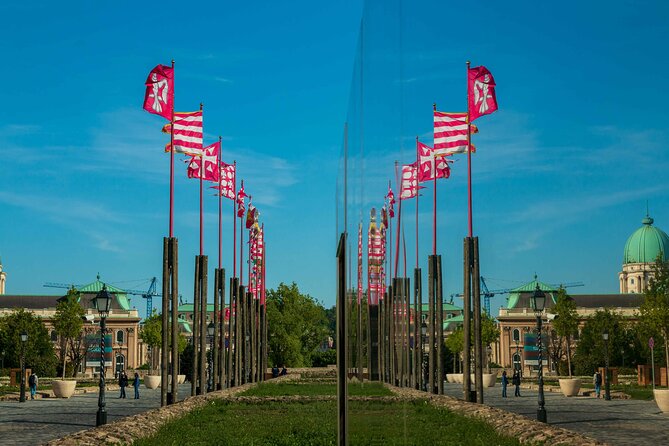
One of the first stops is a pass by Alexander Palace. This is where the tour sets up the main theme: the Buda Castle quarter isn’t frozen in time. It has multiple historical layers, and the guide connects earlier eras to what’s changing now.
That “time layers” approach is useful because it trains your eyes. When you look at old stone in the Castle area, it’s tempting to think it’s all one era. Instead, you learn to expect renovations, rebuilding, and modernization—and you understand why future construction could keep reshaping what the quarter feels like.
The practical win here is mindset. If you’ve ever watched a walking tour and felt like it was just a list of landmarks, this part helps you read the neighborhood like a timeline. Even on a virtual screen, you’ll be looking for what’s older, what’s repaired, and what might soon change.
The Northern Facade of Buda Castle: What to Watch For
Next you walk by the Northern facade of the Buda Castle. This is one of those moments where architecture becomes a story tool. The guide doesn’t treat the facade like wallpaper; you get to think about how buildings in the Castle area reflect shifting needs—power, defense, and later preservation and adaptation.
Because you’re watching on live video, your attention matters. You’ll get the best experience if you treat this part like a slow scan: notice lines, openings, and surfaces as the guide steers you where to look. The tour’s camera approach (helped along by that gimbal setup) makes it easier to follow your focus without fighting shaky frames.
A small but real benefit of doing this virtually is that the guide can pace the “look here” moments. On a physical walking tour, you can get stuck moving with the crowd. Here, the viewing rhythm is easier to control on your side: pause your attention, take a note, and keep moving when you’re ready.
From Royal Space to Residential Streets: Jewish Quarter, Sieges, and WWII Repairs

After the tour leaves the so-called royal part, it moves into the residential neighborhood of the Castle quarter. This is where the tour becomes more than scenic. You get time for bigger context: the first Jewish quarter of Buda, sieges, and how buildings were restored after WWII.
This section is valuable because it balances the postcard view with the lived city behind it. The Castle area can feel like a museum from a distance. But once you hear about the Jewish quarter’s early presence and the impact of repeated conflicts, you start seeing the area as a place people had to rebuild, not just a place that was photographed.
And WWII restoration matters here, even on a screen. You’re essentially learning what you might see if you were walking with the same guide in the same direction: the mix of surviving forms, replaced sections, and the long aftermath that shaped the neighborhood’s modern shape.
If you like history with consequences—what happened, then what changed—you’ll probably enjoy this portion the most. It turns the walk into a cause-and-effect story, not just an arrangement of famous buildings.
Budapest at street level, more routes on foot

Buda Hills Views and the 110 Cherry Tree Moment
The route then opens up toward views of the Buda hills. This is where the tour gives you a breather, visually and mentally. You can shift from “read the buildings” to “read the geography,” understanding why the Castle quarter commands views over the city.
Depending on the season, you might also get the cherry-tree highlight: 110 cherry trees that may be blooming. That’s a small detail, but it’s the kind that makes a virtual walk feel real. If you’re booking in spring or early summer, this is the moment you should watch for the color shift and the mood it creates.
Virtual walking tours can sometimes feel like you’re always locked onto stone. This part helps you expand the frame to sky, slope, and distance. Even if you only get a partial view in your feed, the guide’s timing helps you catch the view before it passes.
Matthias Church to Fisherman’s Bastion: The Pest Skyline Finale
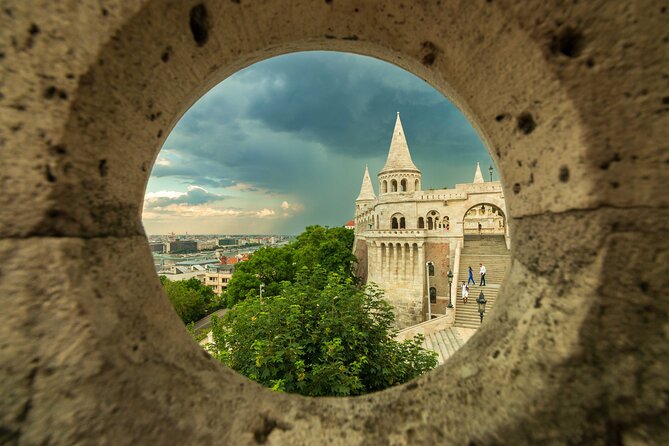
As you continue, you’ll walk by Matthias Church on the way to Fisherman’s Bastion. Matthias Church is one of the most instantly recognizable stops in the Castle area, so it works well as a “you’re here” anchor before the tour’s big payoff.
Then comes the finale: the tour concludes at Fisherman’s Bastion, where you admire views of Pest. This is the moment built for your eyes. You’re moving from local details to the city-wide perspective—Buda’s upper story meeting Pest’s wider streets far below.
There’s also practical follow-through: you’ll get time for Q&A and a wrap-up right at the end. If anything about the Jewish quarter, sieges, or post-WWII restoration connected with you, this is when you can ask follow-up questions.
One logistics note: admission ticket isn’t included at Fisherman’s Bastion. If your goal is only to see the views from the area, you may be fine. If you want to enter and go further, plan for extra costs.
The Cinematic Streaming Advantage (and How to Use It)

The experience doesn’t just rely on a guide speaking clearly. It also relies on presentation. A high-end gimbal is used to enhance the cinematic feel, and that matters more than it sounds. When camera movement is smooth, you can actually follow visual cues instead of feeling seasick or distracted.
On top of that, the guide uses visual support. In past sessions, the host has shown historic pictures of sites to make the changes over time easier to grasp. That’s a big deal for a virtual tour, because it replaces some of what you’d normally get by physically walking closer to surfaces.
There’s also a strong emphasis on framing. The guide has a reputation for creating the right angles for online photos, and that’s why I consider this a tour even if you’re only half listening. You can treat it like a guided photo mission: pause where the guide points, then capture screenshots for later memory.
If you want the best experience, keep your setup simple. Use headphones if you can, keep your screen brightness comfortable, and have a notes app open for the key facts you’ll want later.
Price and Value: What $180.62 per Group Really Means
The price is listed as $180.62 per group, up to 15 people. That sounds steep if you assume it’s per person, but it’s priced like a private activity. For groups, that can be a fair deal—especially if you split the cost and you’re getting an entire hour of live guidance plus a structured route.
To sanity-check value, look at cost per person based on your group size. If you have 3 people, you’re paying about $60 each. If you have 6, it drops to about $30 each. If you have a full group closer to 15, it becomes bargain territory per person.
You’re also paying for the format: live streaming, a mobile ticket, and a route that’s paced like a real walk. Plus, the Q&A at the end is part of the value, because it turns passive viewing into a two-way conversation.
If you’re traveling solo and not splitting with friends or family, it’s still an interesting “preview” option. Just know the price is built around group participation, not budget individual tourism.
Who This Tour Fits Best in Your Travel Plans
This works well if you want the Castle quarter story but you don’t want the physical grind. It’s also a good pick if your schedule is tight. You get a focused hour with a beginning, middle, and end that lands on the Pest skyline from Fisherman’s Bastion.
Because the tour is live and in English, it also fits groups who want to learn together. A private group format can be helpful for families, departments doing virtual events, and anyone who likes interactive history rather than recorded videos.
The data also says service animals are allowed and most travelers can participate. That doesn’t guarantee specific medical or mobility details, but it does suggest the format isn’t overly restrictive in practice.
If you’re the type who enjoys asking why a neighborhood looks the way it does—rather than just what to see—this one delivers. The route intentionally moves from monumental sites to residential context, then returns to a major viewpoint at the end.
Quick Planning Notes Before You Click Join
Because this is weather dependent, pay attention to the conditions around your scheduled time. If it gets canceled due to poor weather, you should expect a different date or a full refund (that’s the stated safety net).
Also, test your tech in advance. Live streaming is only as good as your connection, and your audio matters for the history parts. If you plan to take screenshots, clear a little space on your device so you can save photos without rushing.
Finally, come ready to watch for transitions. The tour changes zones—royal core to residential—then adds seasonal cherry bloom depending on timing. Those shifts are the point, not an accident.
Should You Book This Buda Castle Quarter Virtual Walk?
I’d book this if you want a guided, story-driven look at Budapest’s Castle quarter with serious attention to visuals and pacing. The mix of royal-era context, residential history, and WWII restoration themes gives you a fuller picture than the usual “famous views only” approach.
It’s especially worth it if you’re coming in with questions, like how different communities and conflicts shaped the built environment you see today. And if your group can split the cost, the value becomes even more convincing.
Skip it only if you’re looking for a fully hands-on, walk-in-place experience. This is a virtual route, so the physical atmosphere of stepping through the streets won’t be the same as being there. But as a guided preview or a smart add-on, it’s a strong choice.
FAQ
How long is the live virtual walking tour?
It runs for about 1 hour.
What language is the tour offered in?
The tour is offered in English.
How many people are in a group?
It’s a private experience, with groups of up to 15 people.
Is admission included for Fisherman’s Bastion?
No. The admission ticket is not included for the Fisherman’s Bastion stop.
Where does the tour start and end?
It starts at Sándor Palace, Szent György tér 1, 1014 Hungary and ends at Fisherman’s Bastion, Budapest 1014.
Does the tour depend on weather?
Yes. The experience requires good weather. If it’s canceled due to poor weather, you’ll be offered a different date or a full refund.
More Tour Reviews in Budapest






More of Budapest, Step by Step






More of Castle Hill




Just Added: More Budapest Reviews
- Sightseeing flight over Budapest
★ 5.0 · 3 reviews - Budapest: Walking Tour with Chimney Cake & Polaroid Photos
★ 5.0 · 3 reviews - Self Guided Tour In Budapest With 100 Captivating Audio Stories
★ 5.0 · 3 reviews - Budapest Art Nouveau Walking Tour
★ 5.0 · 3 reviews - Hungary today: a no-taboo conversation
★ 5.0 · 3 reviews
Buda Castle & Fisherman's Bastion, compared.
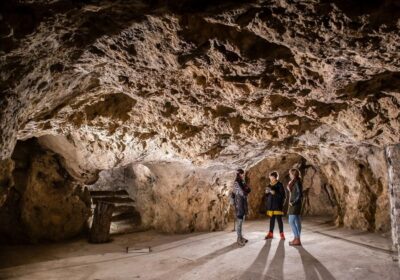 ★ 4.7Buda Castle Cave TourFrom $195,677 reviews
 ★ 4.6Buda Castle District Vampires and Myths Night TourFrom $233,830 reviews
 ★ 4.6Buda Castle District Walking TourFrom $142,108 reviews
 ★ 4.33-Hour Grand City Tour and Castle WalkFrom $491,437 reviews
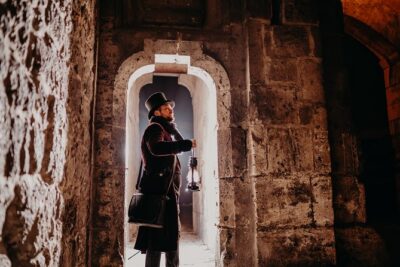 ★ 4.5Buda Castle District Dark History, Legends and Vampire Night TourFrom $211,240 reviews
 ★ 4.9Buda Castle District Walking Tour with a HistorianFrom $63867 reviews
 ★ 4.6Classical Music Concerts in Matthias ChurchFrom $70792 reviews
 ★ 4.6Matthias Church Entry TicketFrom $25787 reviews
Browse the lists this tour appears in