
Budapest reads fast when you have a smart local beside you. This private Grand Budapest walking tour strings together royal Buda and headline-making Pest with clear stories, not random facts, and guides like Katalin and Susan are known for making history feel human. I love the big-picture feel you get in one day, and I love that you can steer the pace with your guide; one possible drawback is the day still adds up to a lot of walking, so comfy shoes matter.
You’ll get a rare “from kings to Communism” way of seeing Budapest, with meaningful stops that explain what you’re looking at and why it matters. I also like the built-in structure: you cross from historic viewpoints in Buda to major civic sights in Pest, then finish in City Park so the day ends with more breathing room. Just plan for the fact that admission tickets aren’t included for every stop, even though some are free.
In This Review
- Key highlights worth your time
- A Private Budapest Walk That Feels Like a Local Friend
- Two Guides and a Smooth Start: How Logistics Affect Your Enjoyment
- Buda Castle District: Royal Views and the Stories Behind Them
- Heroes’ Square: A 30-Minute History Lesson on National Identity
- St. Stephen’s Basilica Square: Quick Context Without the Rush
- Hungarian Parliament Building and the Chain Bridge Contrast
- Dohány Street Synagogue: Culture, Identity, and Meaning in One Stop
- Hungarian State Opera House: Why the Exterior Still Matters
- City Park and the Széchenyi Baths Zone: End With Space
- Pace, Comfort, and Timing for a 7-Hour Day
- Price and Value: $350 Per Group Up to 6
- Who This Grand Budapest Tour Suits Best
- Should You Book This Tour?
- FAQ
- FAQ
- How long is the Grand Budapest walking tour?
- What does the tour cost, and is it a private group?
- Is pickup available?
- What time does the tour start?
- Are tickets included for all stops?
- Is the tour offered in English?
- Is there a mobile ticket?
- Is lunch included?
- What is the cancellation window?
Key highlights worth your time
- Private group experience (up to 6): your guide can adjust the route and pace to your interests.
- Buda Castle District focus: Matthias Church and the Fisherman’s Bastion area are the visual payoff early.
- Danube moment at Chain Bridge: a classic Budapest view without wasting time.
- Big-scope history: you connect monarchs, national identity, and later 20th-century politics to real buildings.
- Cultural stops across faith and art: Great Synagogue and the Opera House show different sides of the city.
- City Park finale: time near Vajdahunyad Castle and Széchenyi Baths, if you want to add-on.
Budapest at street level, more routes on foot
- Big Bus Budapest Hop-On Hop-Off Bus and Walking Tour★ 3.5 · 2,206 reviews
- Budapest: Buda Castle District Walking Tour★ 4.6 · 2,108 reviews
- 3-Hour Orientation Walking Tour of Buda and Pest★ 4.8 · 1,834 reviews
- Budapest Historical Sightseeing – Free Walking Tour★ 5.0 · 1,302 reviews
A Private Budapest Walk That Feels Like a Local Friend
This tour is set up like a conversation with a knowledgeable Budapest watcher, not a rigid script. You’re never stuck staring at a monument with no context. Instead, you’ll walk through the city while your guide explains the “why,” using the buildings and squares as clues.
What makes it especially good for first-timers is the sweep. You cover royal Buda viewpoints, then shift into Pest’s civic power centers, then end at City Park for a more open, park-like mood. It’s a helpful way to get your bearings fast.
And yes, you can hit the kind of highlights that usually eat half a day on their own: the Parliament area, St. Stephen’s Basilica’s neighborhood, Chain Bridge, and the Jewish and arts districts.
Two Guides and a Smooth Start: How Logistics Affect Your Enjoyment
The tour includes both a local guide and a professional guide. That usually shows up in how quickly you start understanding what you’re seeing, and how often you get a practical answer when questions pop up. It’s also a good sign for families, since one guide can keep the story moving while the other watches the group’s energy.
Pickup is offered from hotels, hostels, apartments, and AirBnBs. If you’re staying outside the most central zone, that can save you time and stress on day one. You also get a mobile ticket, which reduces friction when you’re moving from stop to stop.
The start time is 9:00 am, and the tour runs about 7 hours. That timing matters because Budapest’s sights look best earlier in the day, and crowds tend to build as the morning turns into afternoon.
Buda Castle District: Royal Views and the Stories Behind Them
You begin in the Buda Castle District, which is the easiest way to understand Budapest’s “two halves” idea. From here, the city looks layered, and the Danube feels like the hinge between worlds.
Expect to spend around 2 hours in this area, with stops at the Royal Palace, Matthias Church, and the Fisherman’s Bastion. These aren’t just pretty postcard stops. Your guide uses them to explain how Buda’s status changed over time and how Hungarian identity was shaped by the people who ruled, fought, and rebuilt.
Two things I’d highlight:
- Matthias Church gives you an immediate sense of how style and power can travel together.
- Fisherman’s Bastion is where the viewpoint does the work. Even if you’re not planning to go inside anything, the skyline view is part of the lesson.
Admission here is marked as free, which is a rare bonus. Still, wear shoes that handle uneven ground. Castle District streets can be cobbly and steep in short stretches.
Heroes’ Square: A 30-Minute History Lesson on National Identity
From Buda, you head toward the grand ceremonial space of Heroes’ Square. This is one of those places where the scale can feel overwhelming if you don’t know what you’re looking at. That’s exactly where a guide helps.
You’ll have about 30 minutes around Heroes’ Square, including views tied to the nearby Fine Arts Museum and Modern Art Museum. The key value here is learning how Hungary presents itself through monuments: who gets honored, who gets left out, and how political moods leave physical marks.
If you like history that you can see, this stop hits well. If you prefer quiet time, keep expectations realistic: it’s a “look, understand, move on” kind of stop.
Admission isn’t included for this segment, so if you’re aiming to go into museums, you’ll want to budget extra time and costs. This tour’s focus is on the sights and meaning around them, not museum marathons.
More Budapest on foot
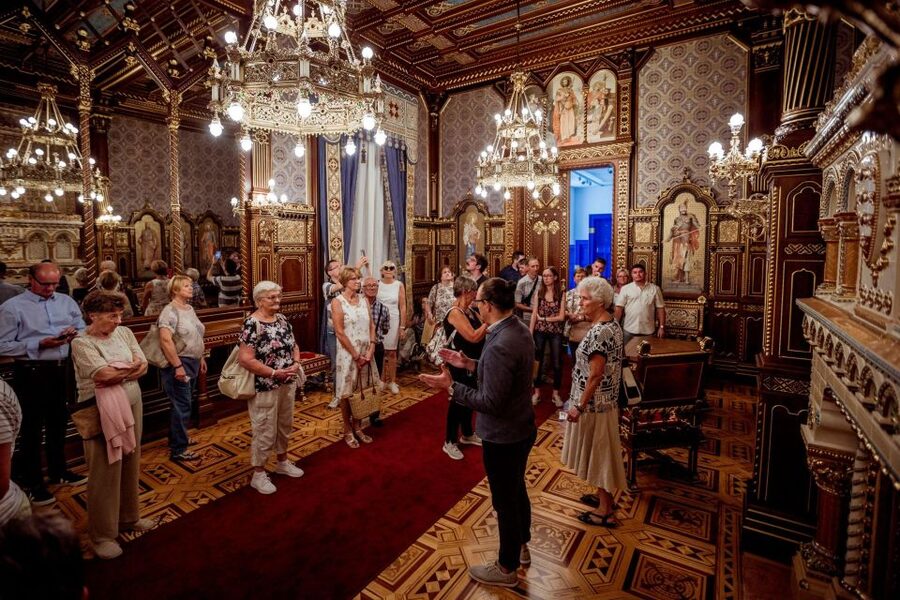

St. Stephen’s Basilica Square: Quick Context Without the Rush
Next up is St. Stephen’s Square with St. Stephen’s Basilica (Szent István Bazilika) nearby. You’ll likely spend about 30 minutes, which is enough to understand the square’s role and appreciate the basilica’s presence without feeling like you’ve done a full church visit.
This is a good breather stop, too. You’re moving from huge memorial energy into a place that represents religious and cultural identity in a very visible way. Your guide should connect the basilica’s significance to Hungary’s broader story, not just its architecture.
Admission isn’t included here, so if you want to go inside, plan to add that on yourself. Even so, the exterior views and the feel of the square usually make the stop worth it.
Hungarian Parliament Building and the Chain Bridge Contrast
One of the most satisfying pairs on this tour is Hungarian Parliament followed by Chain Bridge. Together, they show two sides of Budapest’s public life: formal governance in one direction, and the Danube as the city’s living connector in the other.
You’ll spend around 30 minutes near the Hungarian Parliament Building around Kossuth Square. Expect commentary that helps you read the building as more than a photo background. This is where your guide typically explains how the idea of the nation is reflected in power structures and how later eras reused or reinterpreted those symbols.
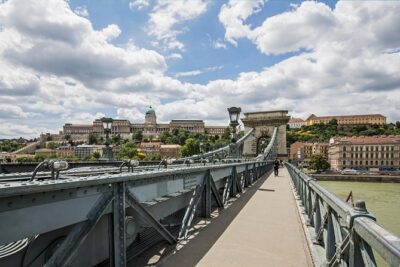
Then you move to Szechenyi Lanchid (Chain Bridge) for another 30 minutes and the Danube crossing views. Admission is listed as free for this stop, which means you’re not paying to enjoy the iconic sight.
Chain Bridge is where the city finally “clicks” for many people. You see the geometry of Budapest in a single glance, and you feel the physical reality of how Buda and Pest evolved side by side.
If you like photos, this is your moment. If you’re not big on photos, it’s still a key story stop because the bridge is a symbol of connection and modernization.
Dohány Street Synagogue: Culture, Identity, and Meaning in One Stop
The tour includes Dohány Street Synagogue area, including the Great Synagogue. You’ll have about 30 minutes at 30 minutes for this stop.
This is not just a “look at the building” moment. Budapest’s Jewish history is woven into the city’s story, and a good guide helps you see the community’s resilience and impact. It’s one of the most meaningful stops on the walk because it adds depth you often miss when you only chase the most famous landmarks.
Admission isn’t included, so if you want to step inside, you’ll need to handle it separately. Still, even time spent outside can be valuable if your guide frames what you’re seeing.
This is also a stop that tends to work well for families because it’s concrete and story-driven. If your group likes history with personal human meaning, this is a great place to slow down a minute and ask questions.
Hungarian State Opera House: Why the Exterior Still Matters
Next, you’ll pass by the Hungarian State Opera House (Magyar Állami Operaház) for about 30 minutes. Since admission isn’t included, the value here is what your guide does with the exterior and the setting.
Opera might sound like a “special interest” stop, but it’s actually useful for understanding Budapest as a cultural capital. The opera house is tied to how money, identity, and prestige expressed themselves through the arts.
If you love architecture, pay attention to details at this stop even from the sidewalk. If you don’t, it still helps to hear why this building matters in the city’s timeline.
City Park and the Széchenyi Baths Zone: End With Space
You finish in City Park (Varosliget/City Park) area, with about 1 hour of time. This is a smart ending because it shifts the tone from dense historic streets and political monuments to a calmer, park-focused environment.
You may see Vajdahunyad Castle and the Széchenyi Baths area. Admission isn’t included, so if you want to enter the baths, you’ll need to arrange that separately. Still, even without tickets, the park setting makes the end of the day feel less rushed.
This hour is also a chance to regroup. By this point, you’ll likely have walked through enough major sights that your brain wants a slower rhythm.
Pace, Comfort, and Timing for a 7-Hour Day
This is a walking tour, and the data calls for moderate physical fitness. That doesn’t mean you need to be an athlete. It does mean you should expect hills and steady walking for several hours.
I recommend planning around weather too. If it’s hot, Budapest’s open squares can bake in the afternoon. If it’s rainy, you’ll still be moving between stops, so bring something that keeps you comfortable.
One practical trick: if you have other plans later (like a river cruise or separate tours), tell your guide what you already booked. One of the best examples from the guide style you may encounter is customization that avoids repeating what you’ll already see.
Most private tours feel flexible. This one tends to feel flexible in a useful way: the guide can adjust emphasis without turning your day into chaos.
Price and Value: $350 Per Group Up to 6
The price is $350 per group for up to 6 people, which makes a real difference if you’re traveling with friends or family. If you fill the group, you’re essentially spreading the cost across multiple people. If you travel solo or as a couple, it’s still a fair option if you value a guided day over DIY planning and wandering.
Think of it this way: you’re paying for time saved and for context delivered on the spot. Budapest has a lot of landmarks, and without guidance it’s easy to see things without really learning why they’re there.
It also matters that the tour is private. You’re not squeezed into a larger group where questions get cut short and the pace doesn’t match your needs. For many people, that alone is worth paying a premium over basic walking tours.
Who This Grand Budapest Tour Suits Best
This tour makes the most sense if you want a guided overview that still feels personal. It’s a great fit for first-time visitors who want the major sights and the story connections, not just a checklist.
It’s also a strong choice for families who want a friendly guide and a day that doesn’t require advanced planning. Multiple guide names in the mix, including Katalin, Susan, Kate, and Zsuzsanna, point to a style that works across different group types.
If you’re the type who hates logistics and just wants to spend the day moving with someone who knows where to go and what to notice, you’ll probably like this format.
Should You Book This Tour?
Book it if you want Budapest to make sense fast. The combination of royal Buda viewpoints, major Pest landmarks, and a finish at City Park gives you a full-day framework you can build on later.
Skip it (or consider trimming expectations) if you’re hoping for a slow, leisurely day with lots of free time inside buildings. Admission is not included for many stops, and the tour is built around walking and seeing the city’s key settings rather than deep museum hours.
My bottom line: if you’re in Budapest for a short stretch and want a guide who connects what you see to how the city got that way, this is a solid use of a day.
FAQ
FAQ
How long is the Grand Budapest walking tour?
The tour lasts about 7 hours.
What does the tour cost, and is it a private group?
It costs $350 per group (up to 6 people). It is a private tour, so only your group participates.
Is pickup available?
Yes. Pickup is offered from hotels, hostels, apartments, and AirBnBs. Pickup details are included after booking.
What time does the tour start?
The start time is 9:00 am.
Are tickets included for all stops?
Not for all stops. Admission is free at Buda Castle and at Chain Bridge, while admission is not included at several other stops.
Is the tour offered in English?
Yes, it is offered in English.
Is there a mobile ticket?
Yes, a mobile ticket is included.
Is lunch included?
No. Lunch is not included.
What is the cancellation window?
You can cancel up to 24 hours in advance for a full refund.
More Tours in Budapest






More Tour Reviews in Budapest






More of Budapest, Step by Step





Just Added: More Budapest Reviews
- Sightseeing flight over Budapest
★ 5.0 · 3 reviews - Budapest: Walking Tour with Chimney Cake & Polaroid Photos
★ 5.0 · 3 reviews - Self Guided Tour In Budapest With 100 Captivating Audio Stories
★ 5.0 · 3 reviews - Budapest Art Nouveau Walking Tour
★ 5.0 · 3 reviews - Hungary today: a no-taboo conversation
★ 5.0 · 3 reviews
Budapest Walking Tours, compared.
 ★ 3.5Big Bus Budapest Hop-On Hop-Off Bus and Walking TourFrom $422,206 reviews
 ★ 4.6Buda Castle District Walking TourFrom $142,108 reviews
 ★ 4.83-Hour Orientation Walking Tour of Buda and PestFrom $411,834 reviews
 ★ 5.0Budapest Historical Sightseeing – Free Walking TourFrom $31,302 reviews
 ★ 5.0Budapest All in One Small Group Walking Tour with Strudel StopFrom $1001,277 reviews
 ★ 4.8Budapest Food Walking Tour: Eat, Sip & Explore Like a LocalFrom $731,027 reviews
 ★ 4.9Buda Castle District Walking Tour with a HistorianFrom $63867 reviews
 ★ 4.9BloodThirsty Hungary: Walking tour & Dark Historical StoriesFrom $21633 reviews
Browse the lists this tour appears in