
Reviewed · BUDAPEST WALKING TOURS
Downtown Pest Walking Tour
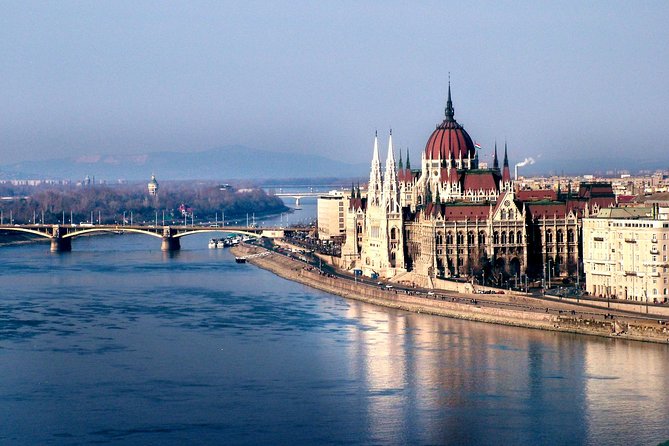
Budapest’s Pest reads like a power map. A historian guide helps you connect the dots across Hungary’s 19th-century rise with an easy downtown route. I love the mix of grand landmarks and human stories, especially the Hungarian Parliament and the riverside memorials. You’ll also see the kind of Art Nouveau detail Budapest is famous for. One caution: it’s a steady 3-hour walk, so wear comfortable shoes and don’t plan it as your only daytime stroll.
If you enjoy understanding how a city got its look, this tour delivers. From Kossuth Square to Heroes Square, you get a clear line from political and financial power to religion, identity, and national celebration. The guide style matters too, and the tour has featured well-regarded English-speaking guides like András and Zsofia in past sessions.
In This Review
- Key Things to Know Before You Go
- Kossuth Square And the Hungarian Parliament’s 1896 Grandeur
- The Holocaust Monument by the Danube: How This Tour Handles Memory
- Freedom Square and the Stock Exchange Palace: Budapest’s Financial Power Center
- Cardinal Mindszenty and the Politics of Faith in Communist Times
- St. Stephen’s Basilica, Art Nouveau Streets, and Jewish Budapest’s Landmark Presence
- Andrássy Boulevard: The Nobility Esplanade and a Quick Opera House Pause
- Heroes Square and the 1896 1,000-Year Anniversary Celebration
- Price and Value: What $123 Buys You in Real Guide Time
- How Much You’ll Walk (and Why 3 Hours Feels Right)
- Who This Tour Fits Best
- Should You Book This Pest Walking Tour?
- FAQ
- Where does the tour meet?
- How long is the tour?
- How much does it cost?
- What language is the tour offered in?
- What are the main sights on the route?
- Is it a private or small-group tour?
- When does it start and where does it end?
- Is there a cancellation option?
Key Things to Know Before You Go
- Historian-led, not just sightseeing: the guide explains how Pest became Hungary’s political and religious center.
- Iconic stops, tightly connected: Parliament, Freedom Square, St. Stephen’s Basilica, Andrassy Boulevard, and Heroes Square all tie to the same story.
- Real, sobering context: you’ll visit the Holocaust Monument area near the Danube.
- Budapest’s Art Nouveau in practical walking form: you’ll pass the facades and streets that make the city look the way it does.
- Andrássy Boulevard’s nobility design: you’ll walk a route planned for Hungary’s upper class, not random urban sprawl.
Budapest at street level, more routes on foot
- Big Bus Budapest Hop-On Hop-Off Bus and Walking Tour★ 3.5 · 2,206 reviews
- Budapest: Buda Castle District Walking Tour★ 4.6 · 2,108 reviews
- 3-Hour Orientation Walking Tour of Buda and Pest★ 4.8 · 1,834 reviews
- Budapest Historical Sightseeing – Free Walking Tour★ 5.0 · 1,302 reviews
Kossuth Square And the Hungarian Parliament’s 1896 Grandeur
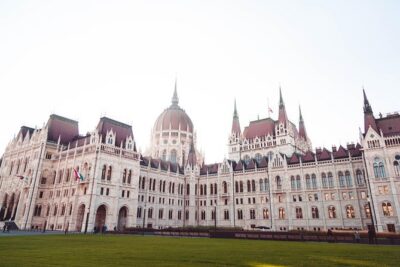
Your tour starts at Szamos Café at Kossuth Lajos tér 10, then heads toward Kossuth Square, right in front of Hungary’s Parliament. The setting is already a lesson: this was designed to feel monumental, because it was meant to represent a newly confident nation.
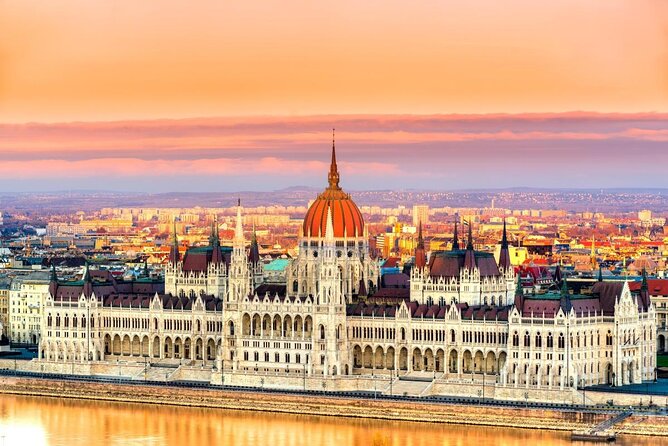
The Hungarian Parliament’s big moment was its 1896 inauguration. At that time, it was described as the largest and most costly structure ever built in Hungary—so from the outside, you get the scale. The best part is what you do with that scale. Your guide doesn’t treat it like a photo stop. You learn why such a building mattered to politics and national identity at the time. Inside, you’ll hear about the art that decorates it—works representing nearly every famous Hungarian painter and sculptor of the era—so the building becomes more than architecture.
Practical note: if you’re sensitive to heavy crowds around famous landmarks, plan to be patient here. This area is central to everything, and you’ll be sharing the public space with other visitors and commuters.
The Holocaust Monument by the Danube: How This Tour Handles Memory
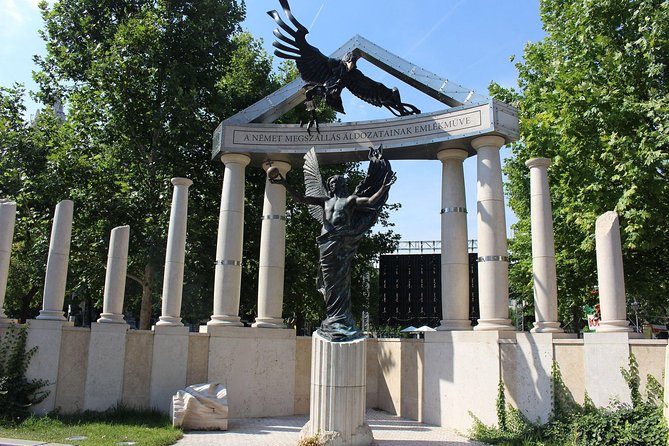
Next comes a stop that changes the mood, and for good reason: the Holocaust Monument on the banks of the Danube, just behind Parliament. It’s a tribute to thousands of Jewish residents of Budapest who were tragically killed in the last months of World War II, right on this same spot.
A lot of tours skip over memorial sites because they’re uncomfortable or hard to explain. This one doesn’t. You’ll get context that helps you understand what you’re looking at instead of just passing by. That’s the value of the historian format here: you don’t leave with only images; you leave with meaning.
If you’re visiting with kids, or you know you’ll find this difficult, consider how you want to pace your day. A quiet moment of reflection is natural here. Don’t rush the stop, even if the guide keeps the tour moving—this kind of site deserves a slower eye.
Freedom Square and the Stock Exchange Palace: Budapest’s Financial Power Center
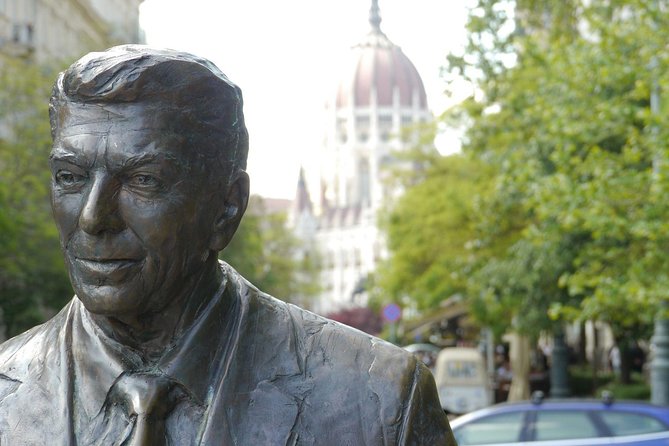
After Parliament, you move into Freedom Square—a place that was originally built as the city’s financial center. It’s often described as one of Budapest’s most beautiful squares, and that reputation comes from the density of impressive buildings around it, not just one standout view.
The headline is the Stock Exchange Palace, a massive structure that signals money and influence in stone. This is one of those moments where a guide earns their fee. Instead of just telling you what a building looks like, your historian connects the architecture to the era when Pest became the opulent political and financial hub of the newborn Hungarian nation.
You’ll also see opulent buildings that still house banks. That detail matters. It’s not just a preserved relic. The financial role has shaped the area’s identity over time, and you can feel it in the layout and presence of the institutions.
Tip for your photos: Freedom Square can look best when you frame the buildings symmetrically or capture the open space between them. When you do that, you’ll be photographing the planning as much as the facades.
Cardinal Mindszenty and the Politics of Faith in Communist Times
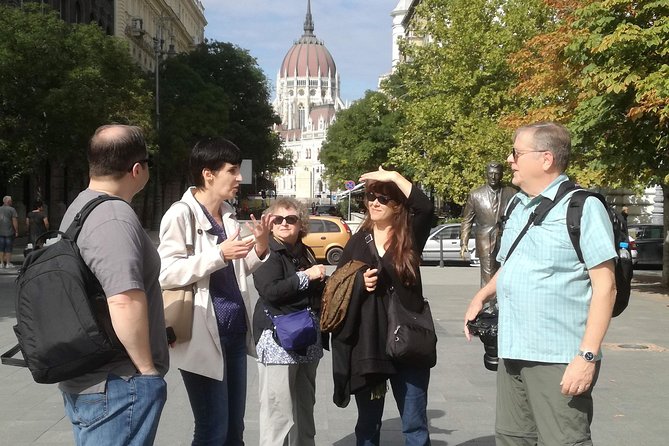
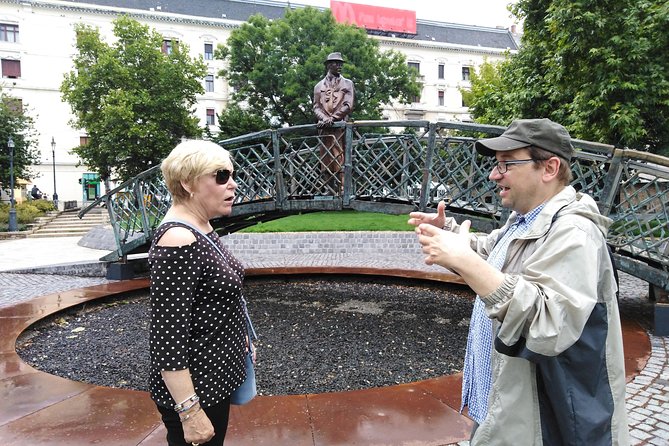
From the square’s public grandeur, you shift to a more personal historical thread: a statue of Cardinal Mindszenty. This isn’t a random monument; it points to the tension between religious leadership and state power in Hungary’s 20th-century political struggles.
Your guide explains that Cardinal Mindszenty, head of the Catholic Church in Hungary, lived hidden for 15 years in the U.S. embassy while on the run from the communists. That story gives you a different lens for the buildings around you. Suddenly, those grand 19th-century structures feel like more than style—they’re part of a long national narrative that keeps colliding politics, faith, and identity.
This stop is also a good reminder that tours like this are about continuity. You’re not only moving through time periods; you’re also seeing how one era’s tensions echo into another.
More Budapest on foot
St. Stephen’s Basilica, Art Nouveau Streets, and Jewish Budapest’s Landmark Presence
As the tour continues toward St. Stephen’s Basilica, you pass several of the city’s famous Art Nouveau buildings. This is the kind of street-level beauty that can feel easy to miss if you’re walking on autopilot. With a guide pointing things out, you start noticing the details—ornament, style, and how the facades communicate wealth and civic pride.
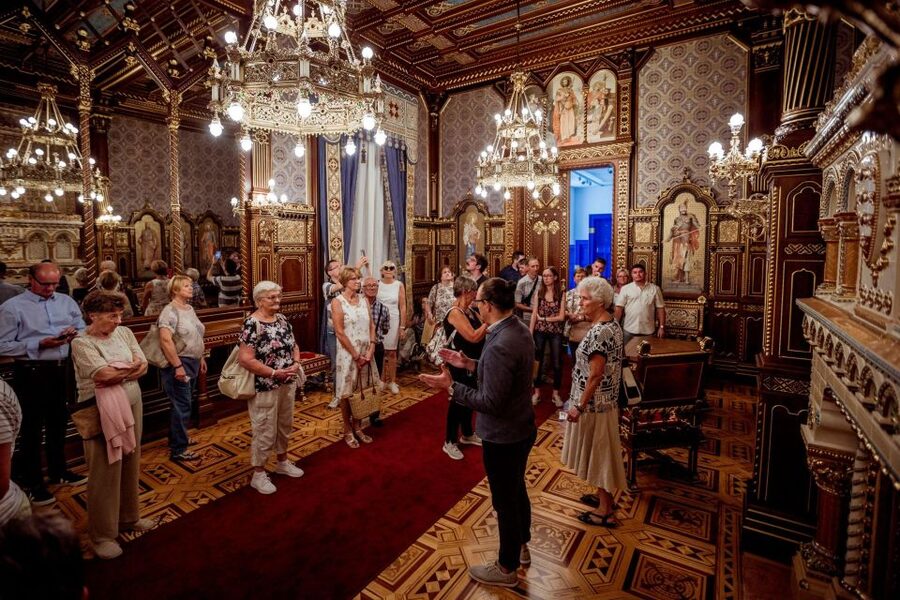
Along the way, you’ll also reach the second-largest synagogue in the world. It isn’t presented as a standalone sight. Instead, it connects to the vital role of Budapest’s Jewish population and the wealthy bourgeois in shaping the city’s development. That matters because it reframes what “downtown history” means. Pest’s growth isn’t just a government story; it’s also a community and economic story.
St. Stephen’s Basilica becomes your anchor near the end of this segment. Even if you’ve seen big churches before, your guide’s context helps you place it in a broader religious and cultural map—why certain institutions were visible, celebrated, and strategically located.
If you like your sightseeing with a strong sense of meaning, this is one of the tour’s best stretches.
Andrássy Boulevard: The Nobility Esplanade and a Quick Opera House Pause
Now you get to one of Budapest’s signature walks: Andrássy Boulevard. Your guide explains that it was designed as an esplanade for Hungary’s nobility. That simple idea changes how you interpret what you see. This wasn’t planned for random foot traffic. It was planned for social display and status.
You’ll walk along and even under Andrássy Boulevard, which gives you variety in the experience. Instead of a single flat streetscape, you get a change in perspective that makes the area feel engineered and intentional.
Then there’s a short stop at the Opera House. It’s not a long detour, but it’s a meaningful one. Your guide uses it to reinforce the theme of prestige—cultural institutions as symbols of national confidence and urban sophistication.
This segment is also where your feet will start to feel the day. It’s still manageable, but it’s good to remember: you’re doing a cohesive 3-hour loop, not a hop-on, hop-off stop spree.
Heroes Square and the 1896 1,000-Year Anniversary Celebration
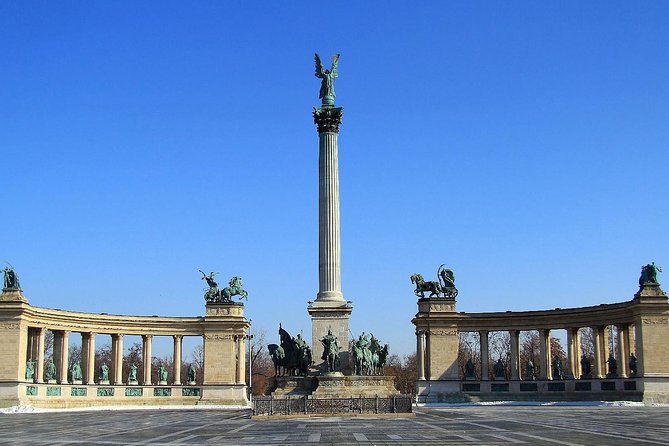
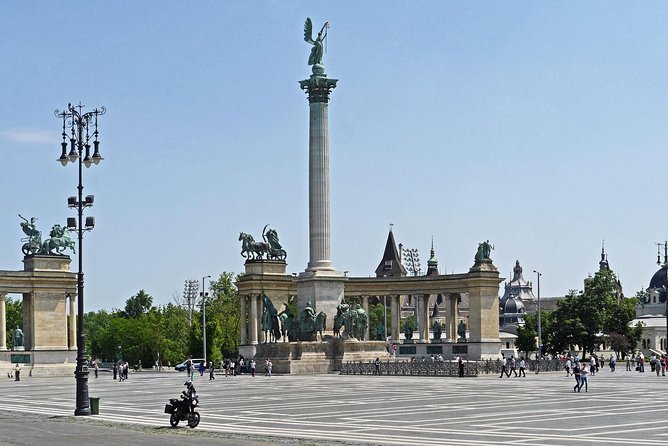
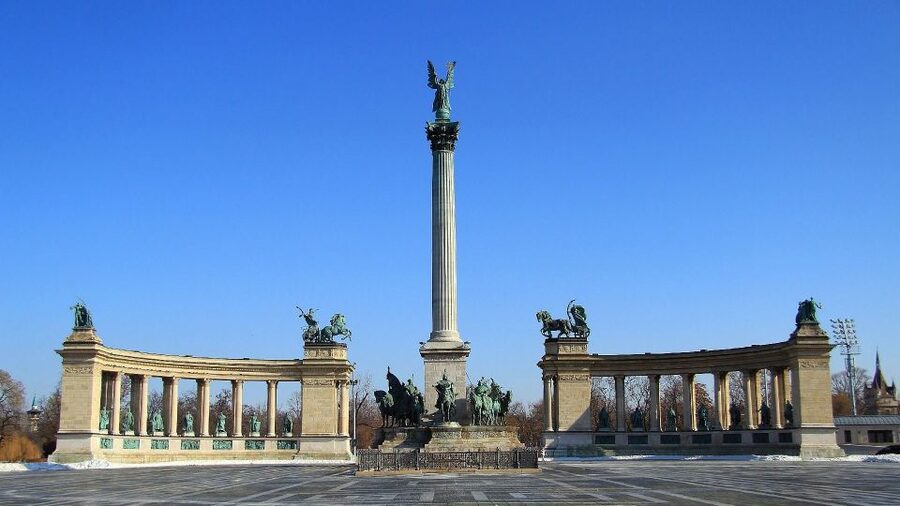
The tour ends at Heroes Square, where in 1896 Hungarians celebrated the 1,000-year anniversary of their kingdom’s founding. Your guide uses this final stop to land the story the earlier sights started.
Heroes Square is a conclusion in stone. If you’ve felt like earlier locations were about power, faith, and finance, this is where those threads become national mythology—how a young nation chose to frame its past and declare its place in Europe.
It’s also a great moment to catch your breath. The square gives you open space for a last look, plus a clean endpoint where you can decide what to do next: keep exploring nearby streets, head toward the river, or grab a meal without having to re-orient.
Price and Value: What $123 Buys You in Real Guide Time
At $123 per person for a 3-hour guided walk, the price can feel steep until you focus on what you’re actually paying for: a historian guide in English who connects major sites into one coherent story.
If you self-guided this route, you’d see the landmarks, sure. But you’d likely miss the links—why Parliament’s 1896 scale mattered, how Freedom Square functioned as a financial center, why the synagogue is presented in relation to Budapest’s development, and how Mindszenty’s story reframes religious power in modern Hungary.
The small-group or private option also affects value. When you’re in a smaller setting, you can ask questions and get answers that sharpen the experience instead of feeling like you’re only being rushed from one picture to the next.
I think the strongest value here is the sense of direction. You leave with a clearer mental map of Pest as Hungary’s political and religious center in the late 1800s, plus the modern memory layer added at the Danube memorial.
How Much You’ll Walk (and Why 3 Hours Feels Right)
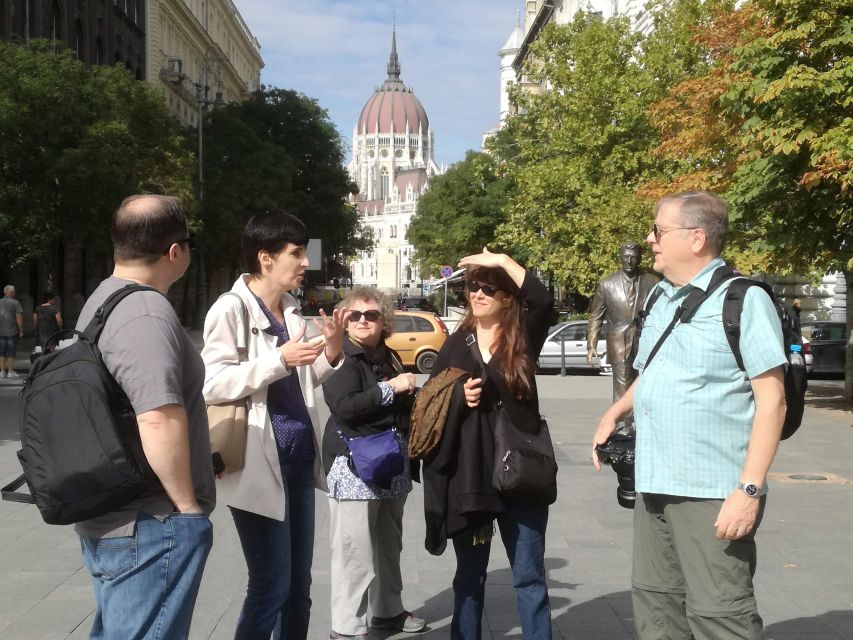
This is a downtown route designed for a single focused session. You start near Parliament, then progress through major squares and corridors, ending at Heroes Square. The pace is guided, so you’re not stuck planning every turn—still, you are on your feet the whole time.
Three hours is long enough to get depth without turning the day into a marathon. You’ll have context at each stop, not just a quick label. That timing matters because many Budapest sights can blur together if you don’t have a storyline. Here, the storyline keeps you oriented.
If you’re the type who likes to linger, this tour may feel a bit structured. The good news: the guide time is spent on explanation, not just moving faster. In past sessions, the guides have been praised for not rushing and for answering questions patiently, which is exactly what you want on a tour like this.
Who This Tour Fits Best
This is a strong choice if you want Budapest’s “center of gravity” on foot: Pest’s major institutions, streets, and landmarks tied to Hungary’s national story.
It’s especially good for:
- First-time visitors who want an efficient introduction to downtown Pest beyond the riverfront basics
- People who enjoy architecture when it’s explained as part of politics and identity
- Travelers who want context at serious memorial sites, not just sightseeing
It might be less ideal if you want a relaxed stroll with lots of free wandering. This is guided learning with set stops, and the route is designed to hit several major monuments in one go.
Should You Book This Pest Walking Tour?
I’d book it if you like your city visits with structure and meaning. The combination of the Hungarian Parliament, Freedom Square, Art Nouveau streets, Andrássy Boulevard’s nobility theme, and a thoughtful memorial stop makes the tour feel complete instead of random.
You should also book it if you care about getting the “why” behind the “what.” For Budapest, that’s the difference between seeing pretty buildings and understanding why Pest became the opulent center of a newborn nation.
If you’re mainly looking for a lightweight, purely scenic walk, you might prefer something less historical. But if you want to walk away with a real grasp of downtown Pest, this one is a solid, value-driven way to spend 3 hours.
FAQ
Where does the tour meet?
It meets at Szamos Café, Budapest Kossuth Lajos tér 10.
How long is the tour?
The walking tour lasts 3 hours.
How much does it cost?
The price is $123 per person.
What language is the tour offered in?
The live tour guide speaks English.
What are the main sights on the route?
You’ll see the Hungarian Parliament, the Holocaust Monument area by the Danube, Freedom Square and the Stock Exchange Palace, Cardinal Mindszenty’s statue, St. Stephen’s Basilica, the second-largest synagogue, Andrássy Boulevard (including the Opera House stop), and you end at Heroes Square.
Is it a private or small-group tour?
It offers private or small groups.
When does it start and where does it end?
It starts at the Parliament area in Kossuth Square and ends at Heroes Square.
Is there a cancellation option?
Yes. Free cancellation is available up to 24 hours in advance for a full refund.
More Tours in Budapest




More Tour Reviews in Budapest






More of Budapest, Step by Step


Just Added: More Budapest Reviews
- Sightseeing flight over Budapest
★ 5.0 · 3 reviews - Budapest: Walking Tour with Chimney Cake & Polaroid Photos
★ 5.0 · 3 reviews - Self Guided Tour In Budapest With 100 Captivating Audio Stories
★ 5.0 · 3 reviews - Budapest Art Nouveau Walking Tour
★ 5.0 · 3 reviews - Hungary today: a no-taboo conversation
★ 5.0 · 3 reviews
Budapest Walking Tours, compared.
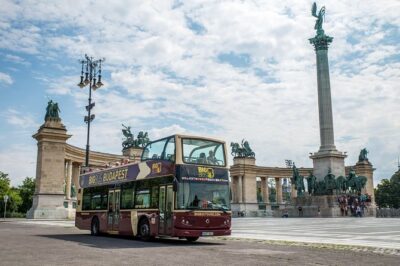 ★ 3.5Big Bus Budapest Hop-On Hop-Off Bus and Walking TourFrom $422,206 reviews
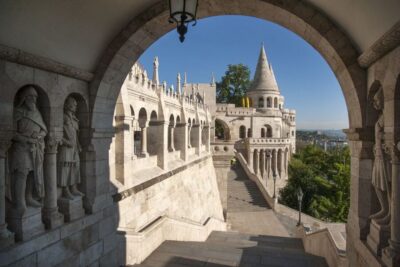 ★ 4.6Buda Castle District Walking TourFrom $142,108 reviews
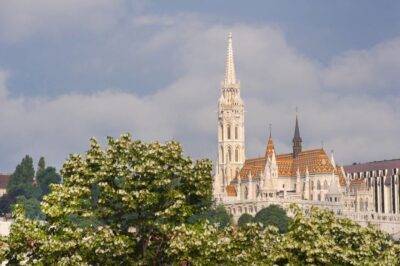 ★ 4.83-Hour Orientation Walking Tour of Buda and PestFrom $411,834 reviews
 ★ 5.0Budapest Historical Sightseeing – Free Walking TourFrom $31,302 reviews
 ★ 5.0Budapest All in One Small Group Walking Tour with Strudel StopFrom $1001,277 reviews
 ★ 4.8Budapest Food Walking Tour: Eat, Sip & Explore Like a LocalFrom $731,027 reviews
 ★ 4.9Buda Castle District Walking Tour with a HistorianFrom $63867 reviews
 ★ 4.9BloodThirsty Hungary: Walking tour & Dark Historical StoriesFrom $21633 reviews
Browse the lists this tour appears in