
Reviewed · BUDAPEST WALKING TOURS
Budapest Walking Tour with Your Private Guide: 10+ Highlights
Budapest clicks into place fast. This 3-hour private walk from Pest toward Buda gives you a licensed guide and a real sense of how the city layers over time, led by Lara. I especially liked her pre-walk history setup and the flexible, helpful way she pointed out what to do next. One thing to plan for: admission fees are not included, so if you want to go inside certain stops, you’ll pay separately.
You’ll move along a route that’s meant to feel like time travel, starting on the Pest side and easing “back in time” toward the Buda side, with a finish at the Fisherman’s Bastion area. Along the way, you’ll hit major landmarks that most first-timers want to see—then you’ll leave with clearer context and sharper photo-and-walk instincts.
At about 3 hours, it’s a strong option if you want an efficient orientation without turning your day into a marathon. The tour runs daily within the listed hours, starts and ends at the same meeting spot, and uses a mobile ticket for check-in.
In This Review
- Key highlights I think you’ll feel right away
- Getting your bearings: Pest-to-Buda time travel in about 3 hours
- Price and value: what $162.56 covers (and what it doesn’t)
- Your starting point: Elizabeth Square and easy getting-on-the-map
- Stop 1: St. Stephen’s Basilica and the first “anchor” moment
- Stop 2: Hungarian Parliament Building and how civic power shows up in stone
- Stop 3: Kossuth Lajos Square as the bridge between big ideas and everyday space
- Stop 4: Széchenyi Lanchid (Chain Bridge) and the practical genius of crossing
- Stop 5: Hungarian Academy of Sciences and the quieter side of importance
- Stop 6: Little Princess Statue and why the tour includes something playful
- Stop 7: Sandor Palace and the air of official life
- Stop 8: Matthias Church and the narrative shift deeper into the Buda side
- Stop 9 (Finale): Fisherman’s Bastion and why the ending matters
- The guide factor: Lara’s flexibility and practical help
- Who this tour is best for (and who might skip it)
- Should you book Budapest Walking Tour with Your Private Guide?
- FAQ
- How long is the Budapest walking tour?
- Where does the tour start and end?
- Is this tour private?
- What’s included in the price?
- Are admission fees included?
- What language is the tour offered in?
- What are the tour hours?
Key highlights I think you’ll feel right away

- A Pest-to-Buda route that feels like a timeline rather than random sightseeing
- Lara-led, licensed private guiding in English for a smoother first visit
- 10+ signature stops in about 3 hours so you cover the main arcs efficiently
- Practical city help beyond photos, including recommendations and help with onward transit
- Ends at Fisherman’s Bastion so your walk lands on a big, memorable finale
Budapest at street level, more routes on foot
- Big Bus Budapest Hop-On Hop-Off Bus and Walking Tour★ 3.5 · 2,206 reviews
- Budapest: Buda Castle District Walking Tour★ 4.6 · 2,108 reviews
- 3-Hour Orientation Walking Tour of Buda and Pest★ 4.8 · 1,834 reviews
- Budapest Historical Sightseeing – Free Walking Tour★ 5.0 · 1,302 reviews
Getting your bearings: Pest-to-Buda time travel in about 3 hours
This walk is built around one smart idea: Budapest is split into two big “stories” on either side of the river—Pest and Buda—and they don’t feel the same. You start on the Pest side, then move toward the Buda side as the tour’s narrative goes farther back in time. If Budapest feels confusing on your first day, this kind of guided pacing helps you put the city into order.
The timing matters. At roughly 3 hours, you get a concentrated sweep of top landmarks without burning the whole day. It’s also long enough for real explanation. Short, self-guided wandering can leave you staring at buildings and guessing. A guided approach gives you handles—who built what, why the place matters, and how the streets you see now connect to older eras.
I like that the tour’s stated goal is not just sight-seeing. It’s an introduction that also sets you up with recommendations for what else to do after the walk. That last part is what turns a “nice tour” into something you can actually use.
Possible drawback: if you’re the type who wants to go inside every major stop, this kind of highlight tour can feel like it moves on too soon. Since admission fees aren’t included, you’ll want to decide in advance which places matter enough to pay for entry.
Price and value: what $162.56 covers (and what it doesn’t)
It’s priced at $162.56 per person, and that price buys you a licensed tourist guide and a private group experience in English. You’re not paying for entrance tickets—admission fees are not included—so the value here is mostly interpretation and route design.
To judge value, I’d focus on three questions:
- Do you want someone to explain the big picture while you walk?
- Are you likely to benefit from a guided route that connects stops in a meaningful order?
- Will you use the recommendations after the tour, so the day continues better?
If you’re visiting for the first time, the answer to those is often yes. You can spend hours piecing together a Budapest timeline from guidebooks. This tour gives you that timeline while you’re standing in front of the places that anchor it.
If you’re already comfortable with Budapest’s history and you’re purely chasing quick photos, then you might feel the price more than the benefits. But if you want a smarter first pass—especially with a guide who adapts—this price can feel very reasonable.
Your starting point: Elizabeth Square and easy getting-on-the-map
The walk starts at Elizabeth Square, at Deák Ferenc tér 2, 1052 Hungary, and it ends back at the meeting point. That “home base” structure is great in practical terms. You don’t have to guess how to return or how to line up your next activity right after the tour.
It also helps with confidence. When you know you’re coming back to the same spot, you’re freer to enjoy the walk instead of managing logistics the whole time.
The area is also described as near public transportation, so if you’re arriving by bus, tram, or metro, you can plan a clean meetup without complicated transfers. And since it’s offered in English with a mobile ticket, you can usually keep your phone ready and your paperwork minimal.
Stop 1: St. Stephen’s Basilica and the first “anchor” moment
You begin at St. Stephen’s Basilica (Szent Istvan Bazilika). As the opening stop, it works like a visual anchor. The guide can set the tone here and help you understand how to read what you’re seeing rather than just naming it.
This is also where a strong guide makes a difference. One review standout was Lara giving a mini history lesson before the walk started, which means you’re not learning in total silence while you stare upward. That kind of setup makes later stops easier to connect—so the city feels less like a pile of monuments and more like a story.
What to watch for at this first stop: pay attention to what the guide points out as the key takeaway. Usually, the first stop is where you’re taught the “rules” for the rest of the route. If you treat it like the beginning of a timeline, the later landmarks start clicking.
Possible consideration: if you want to go inside, you’ll need to plan for admission because the tour doesn’t include entrance fees. If you’re only there for the exterior and the explanation, you can treat it as a free mental warm-up.
Your own guide and your own timing in Budapest

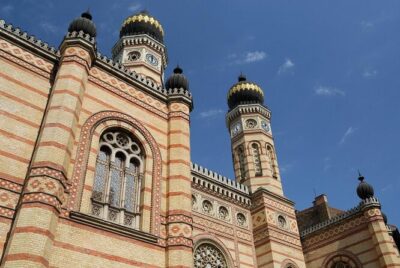
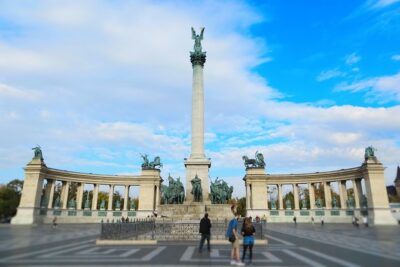
Stop 2: Hungarian Parliament Building and how civic power shows up in stone
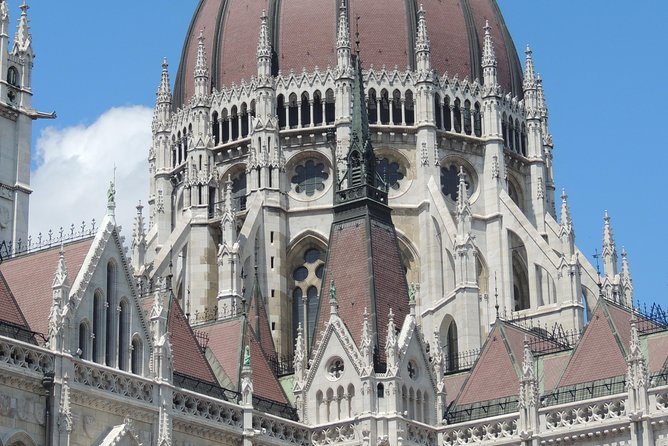
Next is the Hungarian Parliament Building. This stop shifts the focus from religious symbolism to government and civic identity. That’s one reason the order matters. When you go from a major basilica to Parliament, you can quickly feel how Budapest’s key institutions express themselves through the city’s layout.
A good guide doesn’t just point; they connect. The strongest part of the tour style here is the way you get context that helps you interpret why a building like this is such a headline landmark. Instead of thinking, I’ve seen a pretty building, you start thinking, this is where public power is expressed and performed.
Practical tip for you: if you’re photographing, slow down and capture the wider view first. Then get closer only if your guide’s explanation makes you want a specific detail. The guide’s narrative will tell you what detail is worth your effort, and what you can ignore.
Possible drawback: since admission isn’t included, don’t assume you can walk in. Treat it as a guided exterior-and-context stop unless you’ve confirmed otherwise.
Stop 3: Kossuth Lajos Square as the bridge between big ideas and everyday space
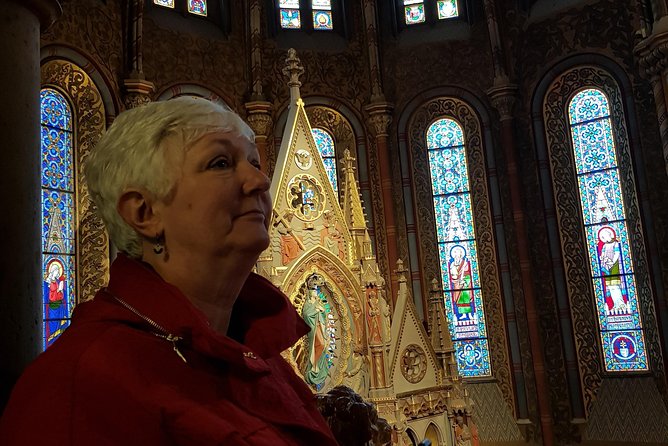
Then you head to Kossuth Lajos Square. Squares are where a city’s “big story” becomes visible in everyday movement. Even without going inside buildings, a square stop can help you understand how people gather, how the city frames important structures, and how power and public life are staged in open space.
This is a good time to listen for the guide’s “why this spot exists” explanation. When you learn how the square fits into the broader city plan, the rest of the route feels more intentional.
Possible consideration: this is also the kind of area where you might have to keep an eye on your footing and space as you move with the group. The tour is designed for walking, so wear comfortable shoes and keep your attention on where your guide is directing you.
Stop 4: Széchenyi Lanchid (Chain Bridge) and the practical genius of crossing

Now you reach Szechenyi Lanchid, the Chain Bridge. A bridge stop is more than a photo moment. It’s literally the link between sides, and it also works as a turning point in the tour’s narrative.
In a walking tour built around time travel, the bridge is a natural “hinge.” It marks the shift in perspective as you move through Budapest’s layered geography. You’ll get that feeling of crossing from one world of the city to another, and it makes the later Buda-side stops land better.
What I like here is the way it supports the tour’s structure. Even if you’ve seen bridge images online, walking beside it with a guide who explains what the city needed, and why major crossings matter, makes it more than a landmark.
Possible drawback: bridges can be windy or crowded depending on the day. The data doesn’t say anything about weather or crowds, so I can’t promise conditions—but I’d still bring a light layer if you run cold.
Stop 5: Hungarian Academy of Sciences and the quieter side of importance
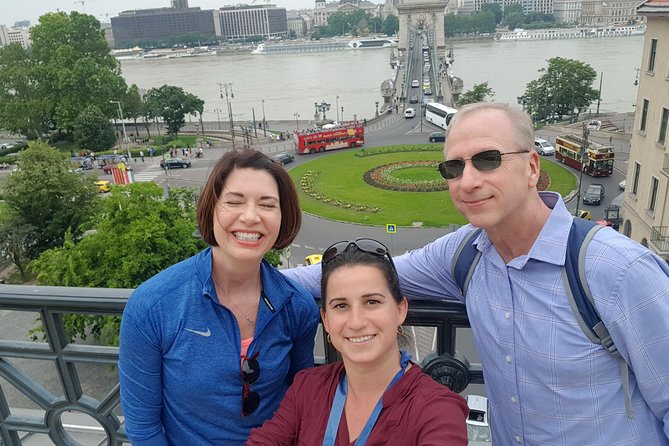
Next up is the Hungarian Academy of Sciences. This stop adds a different kind of significance: knowledge, research, and a city’s investment in learning. It widens the tour beyond politics and monuments into something that shapes the future.
When a guide threads this kind of stop into the route, it helps you see Budapest as more than a historic postcard. It’s also a modern city with institutions that keep making the place move.
Practical advice: listen for the guide’s cues about what to notice from the outside. If you’re the type who wants interior access, remember that admission isn’t included, so the tour likely focuses on what you can see from the street.
Stop 6: Little Princess Statue and why the tour includes something playful
You’ll also visit the Little Princess Statue. Including a smaller, more whimsical landmark in the middle of a major-route tour is smart. It breaks up the heavy monument feeling and gives you a human-scaled moment.
This is where Lara’s style—flexible and anecdotal—can really shine. A guide who adds stories will help you remember that not every stop in a city has to be grand to be meaningful. Sometimes a small statue helps you understand local culture through a specific reference point.
If you like tours that keep you awake and curious, this is the kind of stop that does it.
Stop 7: Sandor Palace and the air of official life
Then you reach Sandor Palace. Palace stops in city walks tend to do two things: they show you where official life is centered, and they remind you that historical power often lives in recognizable, controlled settings.
This is another stop where a guide helps you connect the dots. Without context, a palace can feel like a beautiful building you can’t really access. With context, it becomes a clue about how authority and architecture worked together in different eras.
Possible consideration: palaces are frequently restricted. Since the tour data doesn’t promise interior access, treat this as an exterior-and-explanation stop unless told otherwise on the day.
Stop 8: Matthias Church and the narrative shift deeper into the Buda side
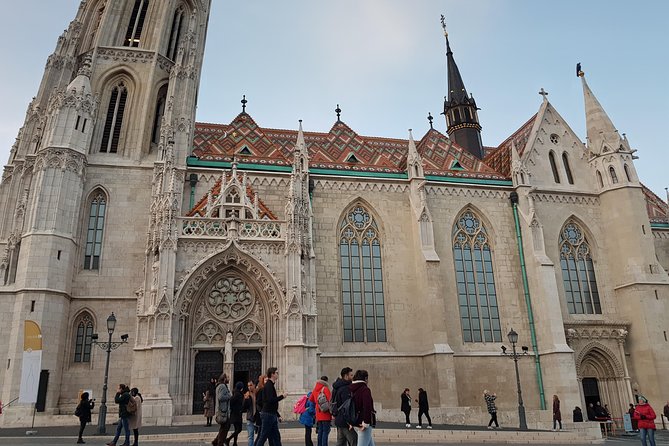
As the tour continues, you arrive at Matthias Church. By now, you’ve already shifted from the Pest side toward Buda, and the tour’s “go back in time” storyline should feel clearer. Church stops are often where that timeline comes into focus fast, because they represent long-running cultural identity.
What’s valuable here is how a guide ties together prior stops. If Parliament was civic power and the basilica was an opening anchor, then Matthias Church helps you feel how the city’s earlier eras left their mark.
Possible drawback: if you’re expecting a fast photo spree, this part might feel more “listen and look” than “move along.” That’s not bad—it’s just the style. If you’re in it for learning, you’ll like it.
Stop 9 (Finale): Fisherman’s Bastion and why the ending matters
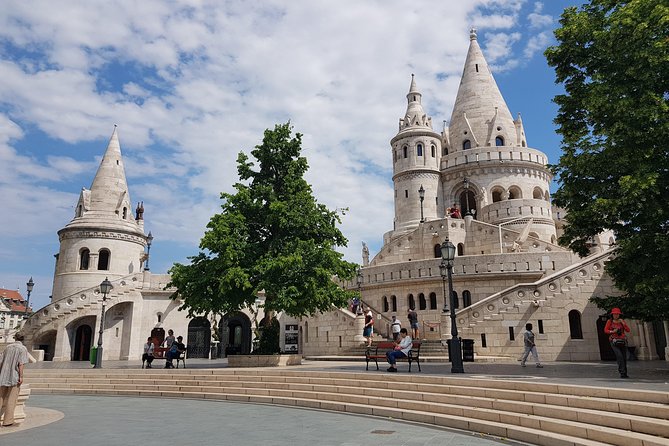
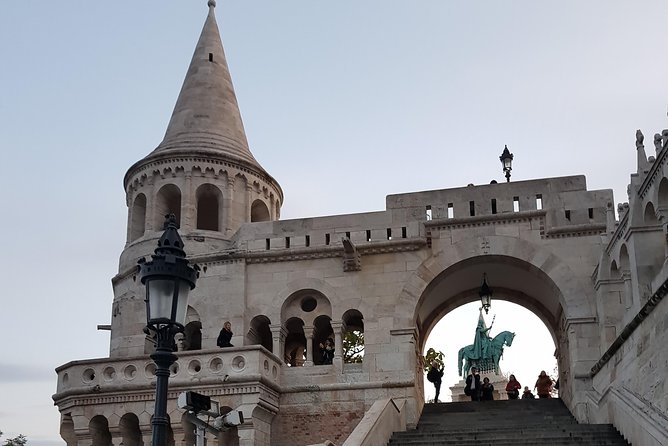
The walk finishes at the Fisherman’s Bastion. Ending at a viewpoint-type landmark is a classic move for a reason: it gives your day a satisfying visual cap and a sense of arrival.
This stop also makes the timeline work. Starting in Pest and ending on the Buda side means you close the route with the kind of landmark that helps you remember the city as a whole—two sides, one story, different moods.
One of the best practical benefits: you finish near a major destination area, so you’re well-positioned to continue exploring on your own right after the tour. And since the tour ends back at the meeting point, you’re not stuck planning an awkward return right when you’re ready to roam.
The guide factor: Lara’s flexibility and practical help
The most praised element of this experience is the guide. Lara stood out for being a perfect, flexible host-guide, not just delivering facts but adjusting to how the walk is going.
Two details I’d file away for your expectations:
- She gives a mini history lesson at the start, so you have background that improves everything you see after.
- She doesn’t end the tour at the final stop; she also offers help with onward transit. In one case, she helped with bus tickets to get back to a hotel.
That kind of support turns the walk into a launching pad, not a one-off performance. If you like guides who can talk, read your pace, and steer you to smart next steps, this tour format fits that.
Who this tour is best for (and who might skip it)
You’ll likely love this tour if:
- You’re seeing Budapest for the first time and want quick orientation without guessing.
- You want your landmarks connected by a timeline, not just a list.
- You enjoy asking questions and getting recommendations for what to do next.
You might consider skipping (or pairing) if:
- You already know Budapest’s story well and you mainly want independent browsing.
- You plan to pay for lots of interior admissions and want a tour that guarantees entry.
It’s also a good match for groups who want a private experience. The tour is private, meaning only your group participates.
Should you book Budapest Walking Tour with Your Private Guide?
Yes, if your goal is a smart first pass through Budapest with guidance that helps you understand what you’re seeing. The price is solid for what you get: a licensed English-speaking guide, a 3-hour Pest-to-Buda route built around a 1000+ year introduction, and a finale at Fisherman’s Bastion that gives the walk a clear payoff.
I’d book especially if you value the human side of guiding: context up front, anecdotes that fill in blanks, and help with figuring out what comes after the tour. If you’re the kind of traveler who likes to get your bearings fast, this is a very efficient way to do it.
FAQ
How long is the Budapest walking tour?
It lasts about 3 hours.
Where does the tour start and end?
It starts at Elizabeth Square (Deák Ferenc tér 2, 1052 Hungary) and ends back at the meeting point.
Is this tour private?
Yes. It’s a private tour/activity, and only your group will participate.
What’s included in the price?
A licensed tourist guide is included.
Are admission fees included?
No. Admission fees are not included.
What language is the tour offered in?
It’s offered in English.
What are the tour hours?
The listed daily hours are 10:30 AM to 3:30 PM, within the provided date range.
If you want, tell me your travel dates and whether you prefer shorter stops or more time at each landmark, and I’ll suggest how to plan the rest of your day around this route.
More Tour Reviews in Budapest






Private Budapest, Your Pace






More of Budapest, Step by Step






Just Added: More Budapest Reviews
- Sightseeing flight over Budapest
★ 5.0 · 3 reviews - Budapest: Walking Tour with Chimney Cake & Polaroid Photos
★ 5.0 · 3 reviews - Self Guided Tour In Budapest With 100 Captivating Audio Stories
★ 5.0 · 3 reviews - Budapest Art Nouveau Walking Tour
★ 5.0 · 3 reviews - Hungary today: a no-taboo conversation
★ 5.0 · 3 reviews
Budapest Walking Tours, compared.
 ★ 3.5Big Bus Budapest Hop-On Hop-Off Bus and Walking TourFrom $422,206 reviews
 ★ 4.6Buda Castle District Walking TourFrom $142,108 reviews
 ★ 4.83-Hour Orientation Walking Tour of Buda and PestFrom $411,834 reviews
 ★ 5.0Budapest Historical Sightseeing – Free Walking TourFrom $31,302 reviews
 ★ 5.0Budapest All in One Small Group Walking Tour with Strudel StopFrom $1001,277 reviews
 ★ 4.8Budapest Food Walking Tour: Eat, Sip & Explore Like a LocalFrom $731,027 reviews
 ★ 4.9Buda Castle District Walking Tour with a HistorianFrom $63867 reviews
 ★ 4.9BloodThirsty Hungary: Walking tour & Dark Historical StoriesFrom $21633 reviews
Browse the lists this tour appears in