
Reviewed · WALKING TOURS
Budapest Grand Walk
Budapest has a way of rewarding a good stroll. This 4-hour guided walk strings together the big sights and the side streets, with real context about how Hungary got to today. You start with a sparkling wine toast, move through Pest’s major landmarks, then end with Danube views that make the whole trip feel bigger than the time you spend.
I love two things most: the mix of famous stops and less-obvious corners (from Andrassy Avenue to the former Jewish Quarter), and the way the guide connects the buildings to the people and events that shaped them. You’ll also get a coffee break built in, plus short public-transport rides that keep the pacing efficient.
One drawback to factor in: it’s a moderate walking tour, and the 4-hour plan can run longer if you’re not careful about where you need to go next.
In This Review
- Key things to know before you go
- Starting at Tasting Table Budapest: the wine toast and Pest orientation
- Pest Palace district to Andrassy Avenue: buildings you can actually picture
- St. Stephen’s Basilica and the oldest metro line break
- Heroes Square and the Danube edge: the city’s showpieces in one line
- The former Jewish Quarter: Grand Synagogue area and Király utca energy
- Parliament, Chain Bridge, and Buda Castle views from the promenade
- What the metro and transport mix really does for you
- Group size, pacing, and comfort level for your day plan
- Price and value: is $125 worth it?
- Who should book this tour?
- Should you book Budapest Grand Walk?
- FAQ
- How long is the Budapest Grand Walk tour?
- How much does it cost?
- Where do I meet the guide, and where does the tour end?
- Is this tour offered in English?
- How big are the groups?
- What refreshments are included?
- Do we use public transportation during the tour?
- How much walking should I expect?
- What are the main sights covered?
- What if I need to cancel?
Key things to know before you go

- Sparkling wine start at Tasting Table Budapest sets a relaxed tone and beats the usual lineup-before-sightseeing feeling
- Pest’s highlights with real political context, including the National Radio Building’s role tied to 1956
- St. Stephen’s Basilica + a coffee stop breaks up the walking and helps you recharge mid-tour
- Europe’s oldest metro line ride adds a smart local-history angle without eating up your whole day
- Former Jewish Quarter stops include the Grand Synagogue area and lively Király utca
- Shoes on the Danube Memorial + Danube promenade views make the final stretch feel powerful and memorable
More Budapest on foot
- Budapest: Buda Castle Walk with Saint Stephen’s Hall★ 4.5 · 3,012 reviews
- Big Bus Budapest Hop-On Hop-Off Bus and Walking Tour★ 3.5 · 2,206 reviews
- Budapest: Buda Castle District Walking Tour★ 4.6 · 2,108 reviews
- Budapest City Landmarks Walking Tour in 2 Hours★ 5.0 · 2,048 reviews
Starting at Tasting Table Budapest: the wine toast and Pest orientation
The tour begins in the mid-afternoon in Pest at Tasting Table Budapest (Bródy Sándor u. 22). You’ll meet your guide at this wine cellar, then start with an aperitif of Hungarian sparkling wine. It’s a simple start, but it matters: you’re not stumbling through your first hours in Budapest with no rhythm. You’re already in “walk mode,” warmed up, and ready to notice details.
Right away, your guide frames the city as more than postcard views. Expect a guided thread through Budapest’s past and present, with stories that connect major players—kings, dictators, freedom fighters, architects, writers—to the streets you’re walking. If you love history, this is the part that clicks fast. If you don’t, it still works because the tour keeps pointing you to what you can see in front of you.
From a logistics point of view, meeting in Pest is also practical. You’re in the best spot to cover big sights efficiently before you cross toward the Castle area later on your own.
Pest Palace district to Andrassy Avenue: buildings you can actually picture
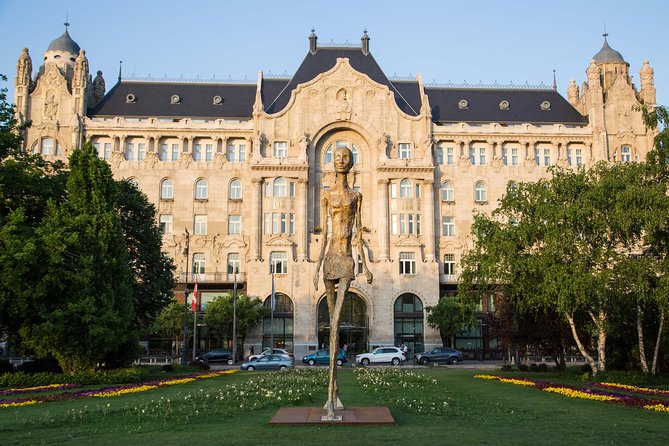
After the toast, you head into Pest’s handsome streets, including the Palace district area where you’ll pass the Hungarian National Radio Building. This stop gives the 1956 Revolution context, which is exactly the kind of detail you’ll miss if you only do guidebook-style photo stops. The guide ties the building to what happened around it, so it stops being just another impressive facade.
You’ll also work in major landmarks like the National Museum area and then move along Andrássy út, Budapest’s famous boulevard. The big draw here is architecture. You pass by the Hungarian State Opera House, a neo-Renaissance building designed by Miklós Ybl. Even if opera isn’t your thing, Ybl’s work helps you understand why this avenue looks so ceremonial and grand—Budapest wanted to present itself as modern and serious.
A nice part of this segment is the pacing. It’s not one long “march.” You get repeated photo and question moments along the way. That turns the walk into something interactive, not just sightseeing pressure.
St. Stephen’s Basilica and the oldest metro line break
Next up is St. Stephen’s Basilica (Szent István Bazilika), named for Stephen, Hungary’s first king. The tour spotlights the idea of the mummified right hand housed in the church, which is one of those details that makes people stop and ask questions. The basilica is also a strong “reset” point. You’ve built up information on the streets, then you’re given a major landmark to absorb visually.
Then comes one of the more clever inclusions: a ride on Europe’s oldest metro line. It’s short, but it gives you a feeling for how Budapest moves—plus it’s an easy way to break up the walking without losing momentum.
You’ll also stop for coffee at a favorite local café during this stretch. The tour includes a coffee break (one coffee/drink included, plus coffee/tea). Even if you don’t drink coffee, this is still a useful pause. You’ll be walking for hours, and having a scheduled chance to sit helps you stay present for the rest of the day.
Heroes Square and the Danube edge: the city’s showpieces in one line
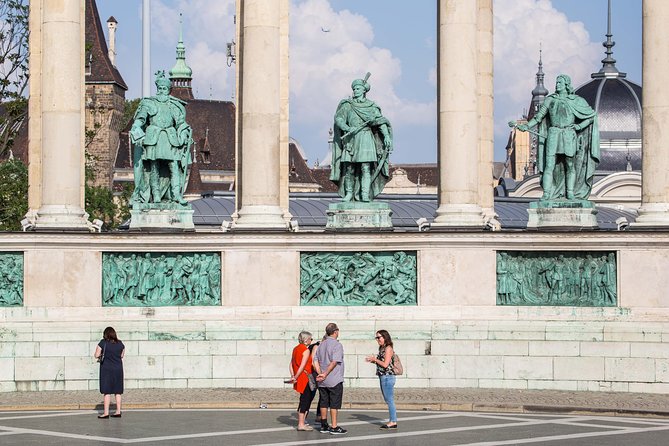
As the tour moves toward the Danube, you hit major monuments like Heroes Square. This is one of those places where the scale can hit you in the chest. The guide’s job here isn’t just to point at statues—it’s to explain what they’re saying about national identity and political shifts over time.
Then the Danube becomes part of your story. You get to see the sweeping relationship between Pest and Buda across the water. That’s the key: you’re not only visiting points on a map. You’re learning how the city was designed to be seen from the river.
This is where the tour starts to feel less like a walking route and more like a “why Budapest looks the way it does” lesson. And it sets you up well for independent exploring afterward.



The former Jewish Quarter: Grand Synagogue area and Király utca energy
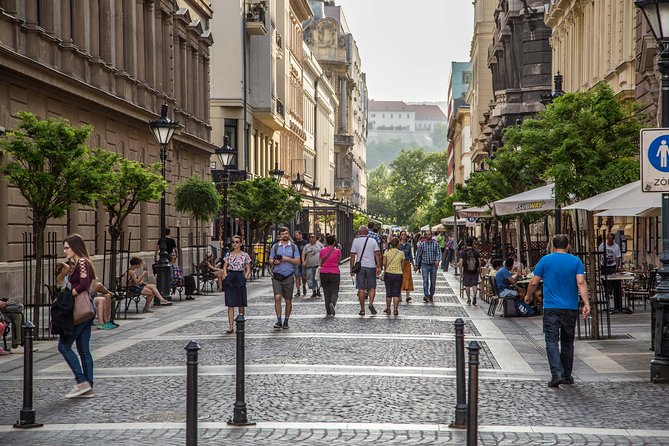
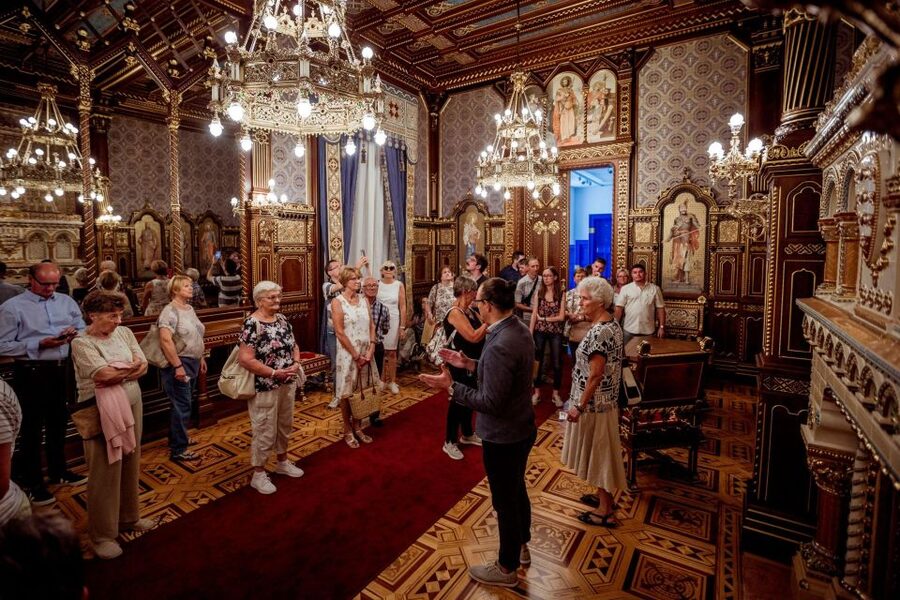
One of the tour’s strongest sections is the time spent in the former Jewish Quarter. You’ll see the Grand Synagogue area, described as Europe’s largest, along with nearby stops like the Gozsdu udvar complex and the lively Király utca street scene.
What I like about including this area is balance. You get both the monument-level meaning and the human-scale street energy. The guide gives historical context, but you’re also walking through parts of the city that feel like they have a pulse, not just a museum label.
This part of Budapest can be emotionally heavy, but it’s also visually engaging. Even if you only give it part of your attention, the sights and the stories help you understand why this neighborhood’s history can’t be reduced to one era.
Parliament, Chain Bridge, and Buda Castle views from the promenade

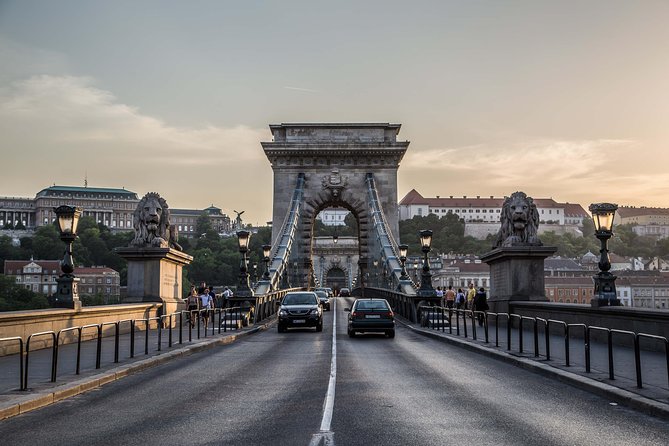
The tour’s closing arc is all about the Danube panoramas. You’ll pass the neo-Gothic Parliament building, which dominates the Danube bank. From here, the city’s “river-front theater” becomes obvious: Budapest wants you to look across water, not only along streets.
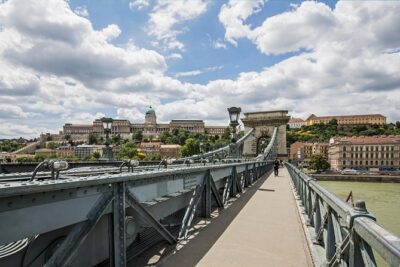
Then you reach the Chain Bridge area. The tour ends near the Chain Bridge on the Pest side, and you’re set up to cross to continue your own exploration of Buda Castle. That handoff is smart. You get the guided version of the story, then you’re free to spend your energy how you want on the Castle Hill side—slowly, with viewpoints, snacks, and time for photos.
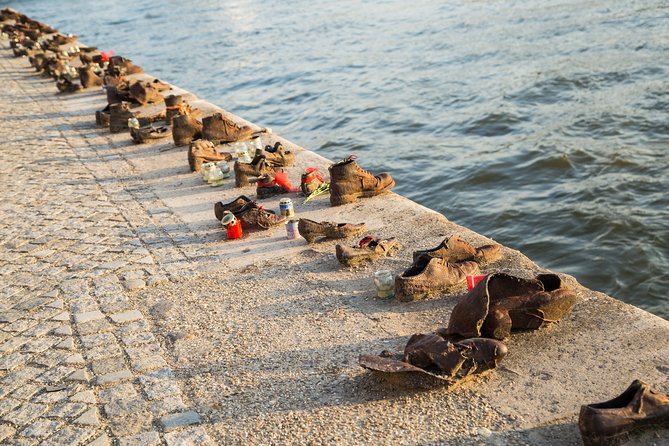
Before that ending, you also see major monuments along the promenade. The Shoes on the Danube Holocaust Memorial is a standout. It’s not a decorative stop. It lands because it makes the history feel immediate and personal. The guide’s narration helps you connect why it’s placed where it is and what it’s meant to remember.
There are also references to other commemorations, including a Soviet Monument and mentions of memorial figures such as a US major and Ronald Reagan. If you’re the type who notices names on plaques, you’ll likely find this segment especially satisfying.
What the metro and transport mix really does for you
This tour doesn’t treat transit as an afterthought. It includes a few short trips on public transportation, including that metro line ride. That affects your experience in a practical way: you spend more time looking at Budapest and less time figuring out routes.
For many visitors, walking alone from Pest highlights to Jewish Quarter to the river can take longer than they expect—especially if you stop for photos at every turn. Using public transport in small chunks keeps the walk “grand,” not exhausting.
One more thing: the tour is near public transportation, so if you need to jump off early for dinner plans, you’re not stuck far from the system.
Group size, pacing, and comfort level for your day plan
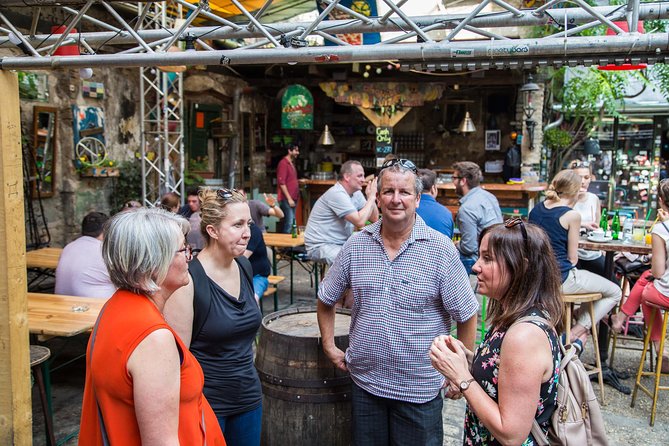
This is a shared small-group tour with a maximum of 8 guests, and typically six or fewer. That small size matters. More people usually means louder groups, more stop-start, and less time for questions. Here, you’re more likely to get answers that match your interests, whether you care about architecture, political events, or just what life used to look like on these streets.
The walking is described as moderate, so good shoes are enough for most people. But you should still plan around it. If you’re coming from long travel days or you’ve got stiff legs, schedule lighter activities for the rest of the evening.
Also note the timing flexibility: it’s listed as about 4 hours, but it can stretch longer if you have no urgency and the guide keeps going. If you need to be somewhere at a specific time, tell your guide at the start so they can pace appropriately.
Price and value: is $125 worth it?
At $125 per person for about four hours, you’re paying for more than sightseeing. You’re getting a bundle of things that add up fast on your own: guided narration, a sparkling wine start, a coffee stop, and included public transport moments. The tour also includes mobile ticketing and plenty of photo stops plus time for questions.
Here’s the value logic I’d use if I were deciding: if you want a first-day overview that makes later self-guided walking easier, this is a strong use of time. If you already know Budapest well, or you’re traveling with a very small time window, you might question the cost. But for most people doing Budapest for the first time, paying for a guide at the start usually saves money later—because you’ll spend time on the right neighborhoods instead of wandering.
The reviews also highlight that guides like Aniko/Anako and Angela can turn the day into a detailed, date-rich story session, not just a “see the sights” loop. That kind of interpretation is where your money starts to feel earned.
Who should book this tour?
I’d steer you toward Budapest Grand Walk if:
- you want a guided overview early in your trip
- you like history that’s connected to real places, not just dates
- you appreciate architecture and memorials as part of understanding a city
- you’d rather spend money on interpretation than spend extra time piecing together transit and neighborhoods
I’d think twice if:
- you hate walking and long stop-and-go tours
- you’re only in Budapest for a short time and already know exactly which neighborhoods you want to hit
- you want zero emotion on your route, because the Danube memorial stop is heavy
Should you book Budapest Grand Walk?
Yes, if you’re the kind of traveler who likes the city explained while you’re actually standing inside it. The tour’s structure—wine start, Pest highlights, Basilica + metro + coffee break, Jewish Quarter segment, then Danube memorial and postcard views—builds a full Budapest picture in a single afternoon.
If you book, do two things to make it pay off: wear comfortable shoes, and come ready to ask questions. The best moments happen when you’re curious enough to go beyond the obvious photos.
FAQ
How long is the Budapest Grand Walk tour?
The tour runs about 4 hours.
How much does it cost?
It costs $125.00 per person.
Where do I meet the guide, and where does the tour end?
You start at Tasting Table Budapest, Bródy Sándor u. 22, 1088 Hungary, and you end near the Chain Bridge at Széchenyi Lánchíd, Budapest, Hungary.
Is this tour offered in English?
Yes, the tour is offered in English.
How big are the groups?
It’s a shared small-group tour with 2 to 8 guests, and there is a maximum of 8 travelers.
What refreshments are included?
You start with a glass of Hungarian sparkling wine, and there is a coffee break during the tour. Coffee and/or tea are also included, and alcoholic beverages are included.
Do we use public transportation during the tour?
Yes. The tour includes a few short trips on public transportation, including the continent’s oldest metro line.
How much walking should I expect?
Expect a moderate amount of walking, and comfortable shoes are recommended.
What are the main sights covered?
The tour includes Heroes Square, Andrassy Avenue, St. Stephen’s Basilica, the former Jewish Quarter (including the Grand Synagogue area), the Shoes on the Danube Holocaust Memorial, Parliament, Chain Bridge, and views toward Buda Castle, along with other Pest highlights.
What if I need to cancel?
This experience is non-refundable and can’t be changed. It requires a minimum number of travelers, and if that minimum isn’t met, you may be offered an alternative date/experience or a full refund.
Still Walking Budapest




More Tour Reviews in Budapest






Just Added: More Budapest Reviews
- Sightseeing flight over Budapest
★ 5.0 · 3 reviews - Budapest: Walking Tour with Chimney Cake & Polaroid Photos
★ 5.0 · 3 reviews - Self Guided Tour In Budapest With 100 Captivating Audio Stories
★ 5.0 · 3 reviews - Budapest Art Nouveau Walking Tour
★ 5.0 · 3 reviews - Hungary today: a no-taboo conversation
★ 5.0 · 3 reviews
Walking Tours, compared.
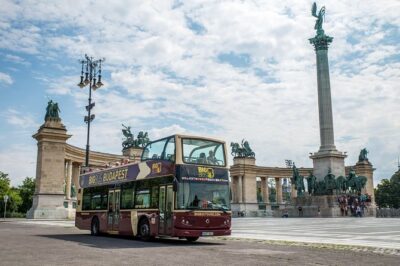 ★ 3.5Big Bus Budapest Hop-On Hop-Off Bus and Walking TourFrom $422,206 reviews
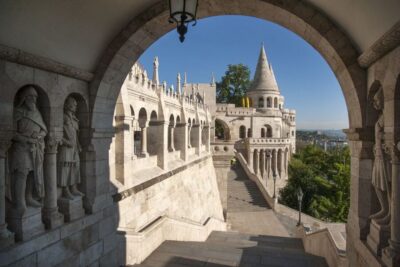 ★ 4.6Buda Castle District Walking TourFrom $142,108 reviews
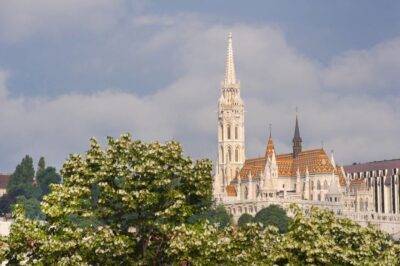 ★ 4.83-Hour Orientation Walking Tour of Buda and PestFrom $411,834 reviews
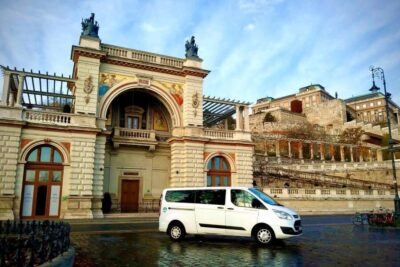 ★ 4.33-Hour Grand City Tour and Castle WalkFrom $491,437 reviews
 ★ 5.0Budapest Historical Sightseeing – Free Walking TourFrom $31,302 reviews
 ★ 5.0Budapest All in One Small Group Walking Tour with Strudel StopFrom $1001,277 reviews
 ★ 4.8Budapest Food Walking Tour: Eat, Sip & Explore Like a LocalFrom $731,027 reviews
 ★ 4.9Buda Castle District Walking Tour with a HistorianFrom $63867 reviews
Browse the lists this tour appears in